Choosing between Replit and Lovable comes down to one question: how much technical depth do you need, and what do you plan to ship? Replit is a cloud development environment with an embedded AI agent, built for developers who write and run code in the browser. Lovable is a prompt-to-app platform aimed at founders and makers who want a working product without touching code. Both have real strengths. Both serve different audiences. And if you are a professional web creator who needs to ship production-grade websites, apps, dashboards, and tools for clients or for yourself, there is a third option worth knowing: Sticklight, the vibe-coding platform for professional web creators, built by the Elementor team and powered by Claude.
Key takeaways
- Replit is a cloud-based coding environment with an AI agent. It suits developers who are comfortable managing code, environments, and deployments.
- Lovable is a prompt-to-app generator built for non-technical founders and makers who want to go from idea to working app quickly.
- Both tools have clear strengths for prototyping and early-stage products. Neither is designed specifically for professional web creators shipping production work.
- Sticklight is the vibe-coding platform for professional web creators, built by the Elementor team and powered by Claude. It goes beyond websites: the same prompt-first flow builds apps, dashboards, CMS, booking systems, internal tools, and full digital experiences.
- Sticklight’s Skills system embeds packaged expert know-how (SEO, Accessibility, Performance, Design System, and more) into every build with one click, and every project ships with a security scan, SEO, hosting, and custom domain included.
- Built by the Elementor team. Powered by Claude. Sticklight brings a decade of professional web creation pedigree to every prompt.
What Replit is: a cloud coding environment with an AI coding agent.
Replit is a cloud-based integrated development environment that lets users write, run, and deploy code entirely in the browser, with no local setup required. It supports a broad range of programming languages and frameworks, including Python, JavaScript, TypeScript, Go, and Rust. The platform later added an AI coding agent that can generate and iterate on code from natural language instructions, opening it to a wider audience beyond pure developers.
The core product is still a developer tool. You get a file tree, a terminal, a code editor, and a live preview pane. The AI agent can scaffold a project, write functions, fix bugs, and iterate on your instructions. You are working inside a development environment. You see the code. You manage the project structure. You decide how to deploy.
Replit also supports collaborative workspaces, public project sharing, and a community of open projects. It is used widely in education, for quick scripts and bots, and by developers who want a zero-setup environment for short-lived projects or experiments.
Who Replit is for.
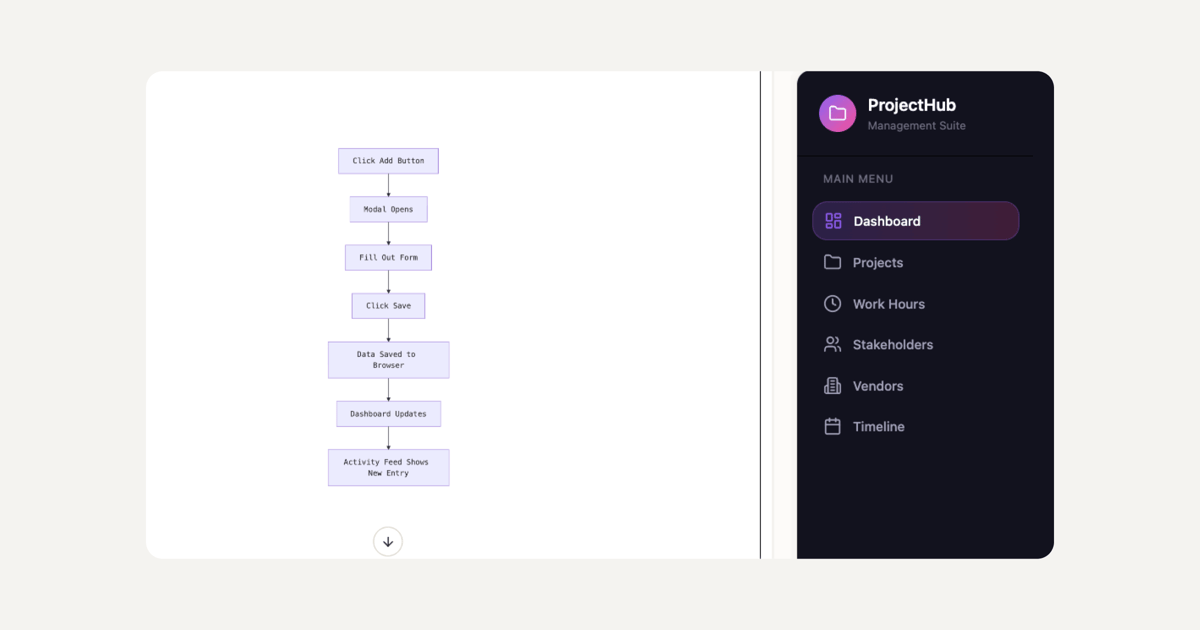
Replit serves developers, students, and technical creators. If you are comfortable reading and modifying code, value a broad language selection, and want AI assistance that works inside a full coding environment rather than abstracting it away, Replit fits that profile. It is also a strong choice for team projects where shared workspaces matter and where you want to see exactly what the AI generated before shipping anything.
Replit strengths.
- Broad language support across dozens of programming environments.
- Zero local setup. Everything runs in the browser, on Replit’s infrastructure.
- AI agent that can generate, edit, and iterate on real code.
- Collaborative by default, with shared workspaces and a public project ecosystem.
- Good for scripts, bots, quick experiments, and developer-owned web projects.
Replit pricing model.
Replit offers a free tier with access to the core coding environment and community features. Paid plans add AI agent capabilities, more compute, private projects, and higher resource limits. Pricing scales with usage and the level of AI access required. Check the Replit website for current plan details, as these change with feature updates.
What Lovable is: a prompt-to-app AI builder for non-technical founders.
Lovable is an AI-powered app builder that generates full-stack web applications from natural language prompts. The pitch is direct: describe what you want to build, and Lovable produces a working application. It handles both frontend UI and some backend logic, and it is oriented toward makers, indie founders, and non-technical people who want to move from idea to app without writing code from scratch.
Lovable targets a different mental model than Replit. Where Replit keeps the code visible and central, Lovable abstracts it. You interact through prompts and a visual output. The generated app can include interactive components, forms, data storage, and some integrations. The platform has an active community and ships feature updates regularly.
Founders prototyping a SaaS idea, marketers building a campaign tool, or makers validating a concept find that Lovable compresses the time between idea and something demonstrable. That speed is real, and it is Lovable’s clearest advantage for early-stage work.
Who Lovable is for.
Lovable is built for non-technical founders, indie makers, and developers who want to prototype new product ideas quickly without writing code from scratch. It fits well for early-stage products where proving the concept matters more than the production architecture. It is less suited to projects where design precision, custom domain publishing, and client-delivery standards are the primary concern.
Lovable strengths.
- Fast prompt-to-app generation with minimal technical knowledge required.
- Handles frontend and some backend logic from a single prompt.
- Good for spinning up MVPs and marketing applications quickly.
- Active community and an improving feature set.
- Accessible to non-technical users who want a working app, not a coding course.
Lovable pricing model.
Lovable uses a credit-based model, where generating and iterating on projects consumes credits. A free tier lets new users try the platform. Paid plans add more credits, private projects, and higher usage limits. Check the Lovable website for current pricing, as credit allocations change with plan updates.
Replit vs Lovable: how they compare across key dimensions.
The core difference between Replit and Lovable as AI app builders is the intended user. Replit keeps the developer in the code. Lovable keeps the non-technical founder away from it. The table below adds Sticklight as a third reference point, showing where the professional web creator fits in this landscape.
| Dimension | Replit | Lovable | Sticklight |
|---|---|---|---|
| Primary audience | Developers and technical creators | Non-technical founders and makers | Professional web creators, agencies, freelancers |
| Core interface | Cloud code editor with AI agent | Prompt-to-app generator | Prompt-first canvas with full manual control |
| What you can build | Code projects, scripts, bots, web apps | Web apps, marketing tools, MVPs | Websites, apps, dashboards, CMS, booking systems, internal tools, forms, databases |
| Code visibility | Full code editor, always visible | Abstracted; generated code accessible | Full canvas control plus direct code editing on canvas |
| Design control | Developer-driven, no design canvas | Prompt-driven layout, limited manual control | Edit every pixel by hand after the AI builds |
| Expert know-how | Developer brings their own | AI generates from prompt | Nine live Skills (SEO, Accessibility, Performance, Design System, Copywriting, Localization, Micro-interactions, Onboarding, 3D) |
| SEO built in | Manual | Limited | Yes, including meta, schema, sitemap, on-page best practices |
| Security scan | Manual | Not standard | Yes, on every build |
| Publishing | Manual deployment configuration | Hosted by platform | Custom domain, hosting, SEO, security all in Publish phase |
| Pedigree | VC-backed developer platform | VC-backed AI startup | Built by the Elementor team. Powered by Claude. |
Where Replit and Lovable each do their best work.
Replit is strongest when the creator is technical and the output is a developer-owned project. A script that runs on a schedule, a small API, a bot, a quick internal tool built by an engineer: these are Replit’s natural terrain. The AI agent accelerates code writing. The cloud environment removes local setup friction. The result is still a codebase the developer manages.
Lovable is strongest when the goal is to validate an idea fast. A founder who needs to show an investor a working prototype, or a maker who wants to test whether a product concept has legs before committing development resources, finds that Lovable compresses that cycle. The output can be impressive for early-stage work, and the speed of generation is real.
Where both tools show their limits is in professional web creation. Agencies and freelancers delivering client work need outputs that meet a production standard. A client website needs to load fast, rank in search, pass accessibility checks, look exactly right, and publish to a custom domain without the creator managing deployment infrastructure. A dashboard or booking system needs to work as a finished product, not as a prototype rebuilt later. That is a different requirement than what either Replit or Lovable was built to solve.
Why professional web creators choose Sticklight over Replit and Lovable.
Sticklight is the vibe-coding platform for professional web creators, built by the Elementor team and powered by Claude. Where Replit is a cloud IDE and Lovable is a prototype generator, Sticklight is a full-stack AI creation platform that goes beyond websites. The same prompt-first flow produces websites, landing pages, apps, dashboards, CMS, booking systems, internal tools, forms, and databases. That is not a positioning claim. It is the surface range that Sticklight’s Prompt, Build, and Publish phases are built to deliver.
The difference is clearest in what happens after the AI finishes.
In Replit, after the AI agent generates code, you are back inside a development environment. You own the deployment. You configure the infrastructure. You decide how the thing gets to a URL a client can visit. For developers who want that level of control, it is a feature. For professional web creators who need to ship ten client projects this month, it is a different workflow entirely.
In Lovable, after the AI generates the app, the creator works with the output through prompts. The prompt-driven refinement loop works well for rapid prototyping. For client work where a specific layout, color, or component needs to be exactly right, prompt-only iteration is a different approach than the pixel-level manual control Sticklight provides.
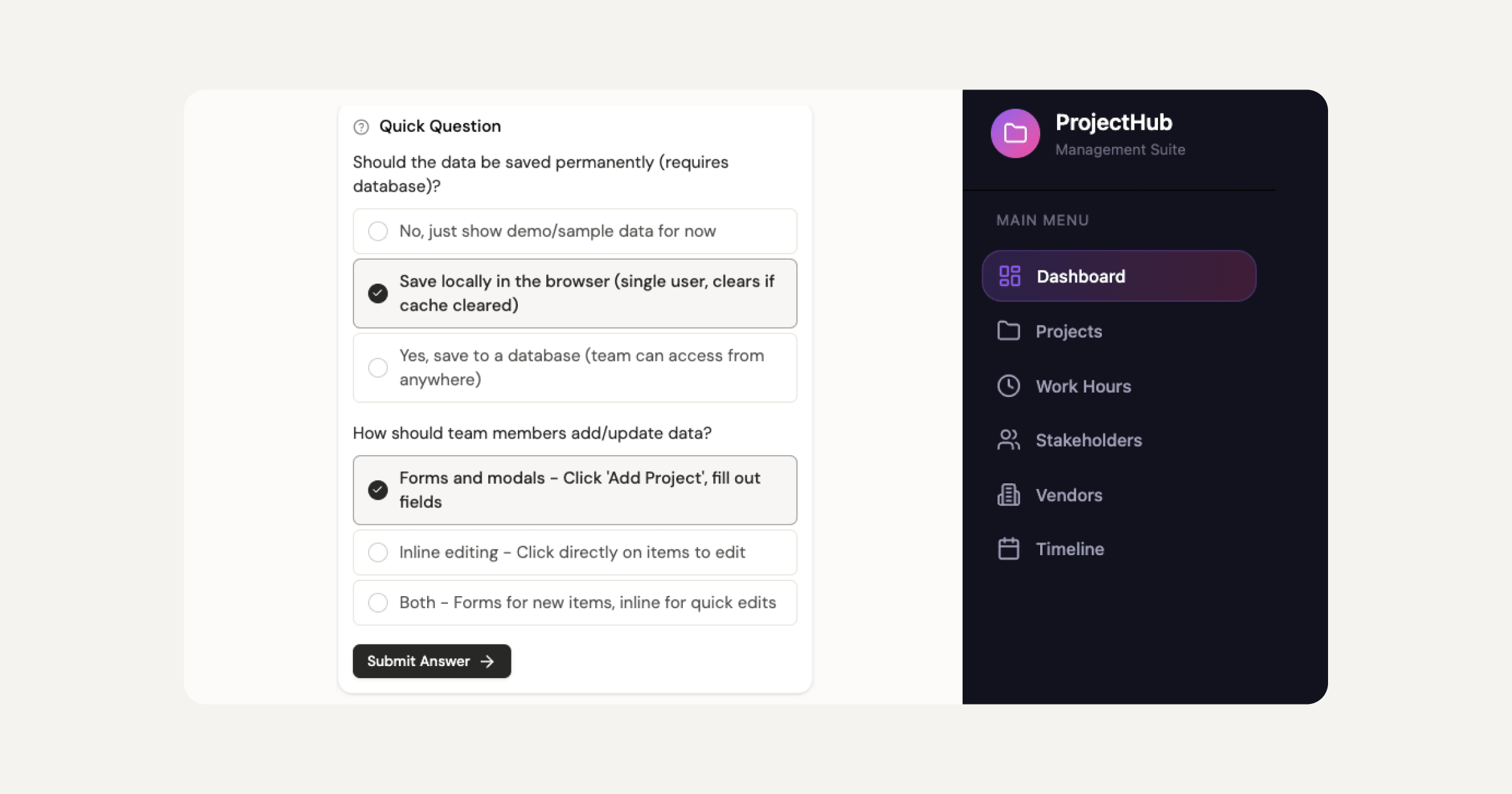
Sticklight is built differently. AI does the heavy lifting from the first prompt. Then the creator takes over: full canvas control, editing every pixel by hand, with direct code editing available on the canvas. The creator keeps the craft. The AI accelerates the start.
The Skills system: packaged expert know-how in one click.
Nine Skills are live in Sticklight today. Each one is a packaged unit of expert know-how added to any prompt with one click during the Build phase. The nine live Skills are: Accessibility, SEO, Design System, Performance, Copywriting, Localization, Micro-interactions, Onboarding, and 3D Web Experience.
The SEO Skill ships meta tags, schema markup, a sitemap, and on-page best practices, without the creator writing a single line of SEO configuration. The Accessibility Skill produces WCAG-compliant markup, focus states, and ARIA attributes. The Performance Skill applies production-grade loading and rendering optimizations. These are not suggestions or checklists. They are applied directly to the build.
Skills compound across projects. The tenth product a creator ships with Sticklight benefits from the accumulated know-how of the nine before it. No prompt-only generator can replicate that structural advantage.
The Publish phase: production-ready, not a prototype you rebuild later.
Sticklight’s Publish phase is built for production from the start. Every build gets a security scan. SEO is built in. Custom domain connection and app hosting are included. A professional web creator does not manage deployment configuration or set up a CDN. The product ships to a live URL that meets the standard a client expects.
Replit requires the creator to handle deployment. Lovable publishes to the platform’s domain, with custom domain options depending on the plan. Neither gives the creator the full Prompt, Build, and Publish flow that Sticklight packages into a single platform.
Go beyond websites and become a full-stack web creator.
The clearest reason professional web creators choose Sticklight over alternatives is the surface range. A freelancer or agency that builds websites today can use Sticklight to build apps, dashboards, booking systems, and internal tools using the same prompt-first workflow. That expands what they can offer clients without expanding their technical stack. The full-stack creator story is real, and it is where Sticklight earns its position in the market.
Built by the Elementor team. Powered by Claude. That combination means a decade of pedigree in professional web creation, backed by one of the most capable AI models available. The result is the Sticklight standard: the craft of a senior designer and developer, from the first prompt.
Plan Mode and Sticklight MCP: more control for complex projects.
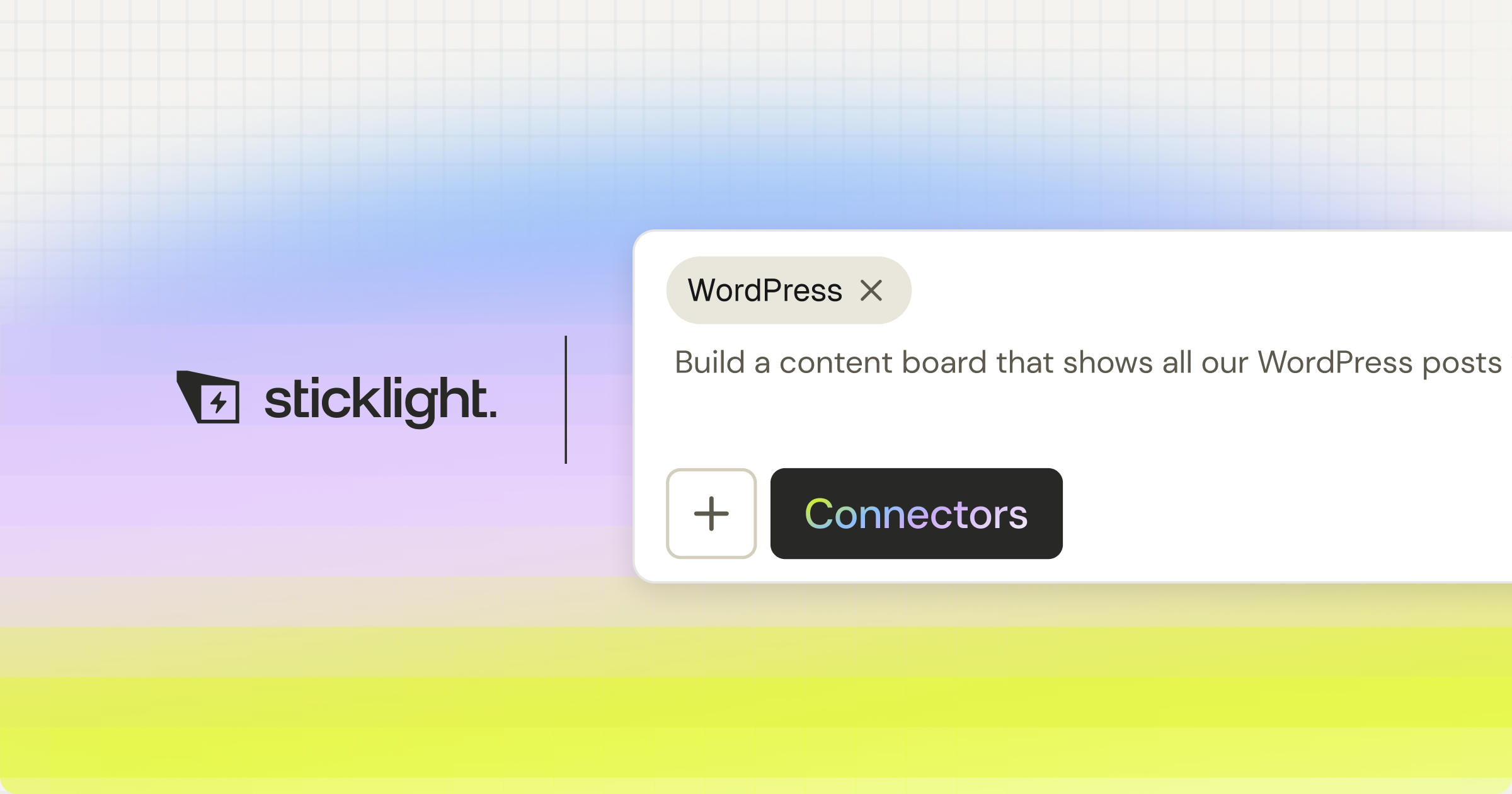
For complex projects, Plan Mode simplifies the task by breaking a large build into steps, letting the creator approach it with more structure and control. Sticklight MCP connects Sticklight to the tools a creator already uses, so the platform fits into an existing workflow rather than replacing it. WordPress remains a source of truth to build on and connect to. Sticklight is additive to every tool a professional web creator already relies on, including Elementor and WordPress.
“Replit and Lovable each solve a real problem, but they solve different ones. Replit is for developers who want AI inside their coding environment. Lovable is for makers who want a fast prototype. Neither was built for professional web creators who need to ship to a production standard, manage client expectations, and go beyond a website into apps, dashboards, and tools. Sticklight fills that gap with a platform that takes the creator from prompt to published product, with the skills, the control, and the Elementor team’s pedigree behind it.”
Itamar Haim, AI for WordPress Specialist
The Elementor connection: same mission, expanded for the AI era.
Sticklight shares Elementor’s mission: empowering web creators to build their future. Professional web creators who build WordPress sites with Elementor and who want to expand into AI-native creation find Sticklight is the natural next step, not a replacement for anything they already use.
WordPress is framed as a source of truth in Sticklight’s world: something to build on and connect to, not something to move away from. If you build with Elementor, nothing changes. If you want to add AI-native products, apps, and full digital experiences to what you can deliver, Sticklight adds that capability. Different tools for different jobs, for professionals smart enough to use both.
You can learn more about building for the web professionally at the Elementor blog, which covers everything from WordPress workflows to the latest in AI-powered web creation. And you can explore the Elementor ecosystem at elementor.com to see how the platform continues to evolve for professional web creators.
Frequently asked questions about Replit vs Lovable.
What is the main difference between Replit and Lovable as AI app builders?
Replit is a cloud-based development environment with an AI coding agent, built for people who are comfortable working inside code. Lovable is a prompt-to-app generator that abstracts the code layer entirely: you describe what you want, and Lovable generates an application. Replit suits developers and technical creators. Lovable suits non-technical founders and makers who want a fast prototype without writing code.
Which AI app builder is better for non-developers: Replit or Lovable?
For non-technical users, Lovable has a lower barrier to entry. It accepts natural language prompts and produces a working application without requiring the user to interact with code. Replit, while improved with AI features, still centers the code editing experience. Non-technical users who want to build something quickly and are not interested in managing code will generally find Lovable more approachable than Replit.
Can Replit or Lovable produce production-ready websites for client delivery?
Both tools can produce working apps, but neither is specifically designed for professional web creator delivery standards. Replit requires the creator to handle deployment, SEO, and performance configuration. Lovable offers hosted publishing but has limited manual design control. Agencies and freelancers who need to ship client work to a professional standard, with SEO built in, a security scan on every build, and custom domain publishing, will find Sticklight is built for that requirement.
What is Sticklight and how does it compare to Replit and Lovable?
Sticklight is the vibe-coding platform for professional web creators, built by the Elementor team and powered by Claude. Where Replit is a cloud IDE and Lovable is a prototype generator, Sticklight is a full-stack AI creation platform with a Prompt, Build, and Publish flow. It builds websites, landing pages, apps, dashboards, CMS, booking systems, internal tools, forms, and databases from a single prompt-first workflow. Sticklight adds a Skills system with nine live Skills that embed expert know-how into every build, and its Publish phase includes SEO, a security scan, hosting, and custom domain connection.
What are Sticklight Skills and why do they matter for professional web creators?
Skills are Sticklight’s core differentiator in the Build phase. A Skill is a packaged unit of expert know-how added to any prompt with one click. Nine Skills are live: Accessibility, SEO, Design System, Performance, Copywriting, Localization, Micro-interactions, Onboarding, and 3D Web Experience (Three.js). The SEO Skill ships meta, schema, sitemap, and on-page optimization. The Accessibility Skill produces WCAG-compliant markup. Skills compound across projects, meaning each build benefits from the expertise that went into every one before it. No prompt-only generator replicates that packaged expertise.
Is Sticklight built on or connected to WordPress?
Sticklight is an AI-native, platform-agnostic creation tool built by the Elementor team, which shares Elementor’s mission of empowering professional web creators. WordPress is framed in Sticklight’s world as a source of truth to build on and connect to. Sticklight does not replace the WordPress workflow. It expands what professional web creators can build, from websites and landing pages to apps, dashboards, and full digital experiences, without requiring them to leave any platform they already trust. Sticklight MCP connects Sticklight projects to the broader tool ecosystem a creator uses.
What kinds of products can I build with Sticklight that I cannot build with Replit or Lovable?
The surface range is the clearest difference. Sticklight is designed to build websites, landing pages, web apps, dashboards, CMS, booking systems, internal tools, forms, databases, and full digital experiences, all from the same prompt-first workflow, with the complete Publish phase built in. A professional web creator can expand from building websites to delivering full-stack digital products for clients without changing their primary platform. Replit is strong for code-centric projects and developer tools. Lovable is strong for app prototypes. Sticklight is built for the full range of what a professional web creator needs to ship.
Does Sticklight have a free plan?
Yes, Sticklight offers a free plan that lets creators try the platform and ship real products. Paid plans include Pro for independent creators, freelancers, and small studios; Team for multi-seat collaboration with more Skills and higher capacity; and Enterprise with SSO, security review, and dedicated support. A bring-your-own-keys option is available on select plans for LLM cost control. Pricing scales with seats and feature access, not page count or usage volume. Check Sticklight for current plan details.
What is Plan Mode in Sticklight?
Plan Mode is Sticklight’s entry point for complex tasks. Where a single prompt works well for focused builds, Plan Mode lets a creator break a larger project into steps and approach the build with more structure and control. It is part of the Prompt phase, which also includes Templates (remixable starting points), Connectors (use-case-based entry points), and Sticklight MCP (connecting Sticklight to a creator’s favorite tools). Agents are a roadmap feature coming soon.
Replit, Lovable, and Sticklight each represent a different approach to AI-assisted creation. Replit gives developers AI inside a coding environment. Lovable gives makers a fast path from prompt to prototype. Sticklight gives professional web creators a production platform that goes beyond websites, with the Sticklight standard on every output. For agencies, freelancers, and studios who build the web for a living, that is the meaningful difference. The right tool depends on what you are building and who you are building it for.
Let it glow.

