If you run a WordPress site, keeping up with global privacy rules can feel like a lot. OneTrust is an industry giant, and large enterprises trust it for good reason, but for most website owners it’s more complexity, weight, and cost than you need. You want to protect your visitors and meet legal requirements without wading through enterprise-level setups or bouncing between dashboards. And the good news: a fit for your site is easier to find than it looks. We tested the top privacy tools for 2026 to help you choose one that keeps your site fast, your compliance solid, and your visitor experience clean.
Key Takeaways
- Enterprise tools like OneTrust are often too heavy for standard WordPress sites.
- Native integrations keep setup simple by letting you manage cookie consent right from your dashboard.
- Google Consent Mode v2 support matters if you run analytics or tracking campaigns aimed at European visitors.
- Automated scanning and geo-targeting show accurate, localized banners without manual editing.
- Lighter solutions improve page speed and keep your visitor experience friendly.
Why Look for a OneTrust Alternative in 2026?
The privacy landscape has shifted fast. Not long ago, only massive corporations needed formal consent management. Now anyone running a blog or small shop has to handle visitor data carefully, with stricter rules every year.
OneTrust packs a deep feature set for global enterprises juggling offline data, vendor risk, and internal compliance databases. For a typical WordPress site, that’s more than you need: it can slow things down, take weeks to learn, and cost a fortune for features you’ll never touch.
What you actually need is a tool that stays out of your way: it blocks trackers before consent is given, shows a clear, friendly banner, and logs settings for audits. A tool built natively for your CMS skips external servers and complicated API connections, which is why so many WordPress creators favor built-in options like the Cookie Consent capability from Elementor, keeping everything organized inside your workspace.
Here’s how the top options compare.
Comparison of the Best OneTrust Alternatives
| Alternative Tool | Primary Focus | WordPress Native Dashboard? | Key Strength |
|---|---|---|---|
| Cookie Consent (by Elementor) | Native WP Compliance | Yes | 5-minute setup and brand design matching |
| Cookiebot | Automated Scanning | No (External Dashboard) | Deep monthly scanning schedules |
| CookieYes | Multi-platform Consent | No (External Web App) | Simple connection scripts |
| Complianz | Privacy Wizardry | Yes | Dynamic legal document generation |
| iubenda | All-in-one Legal Compliance | No (External Dashboard) | Privacy policy templates |
| Termly | Small Business Compliance | No (External SaaS) | Simple builder for policy drafting |
| Osano | Mid-market Data Privacy | No (SaaS Platform) | Broad vendor lawsuit defense pool |
| Usercentrics | Enterprise-lite Customization | No (SaaS Platform) | Highly detailed developer API |
| Didomi | Global Brand Preference | No (Enterprise SaaS) | Complex cross-device consent mapping |
| Consent Manager | Publishing Consent Optimization | No (External Console) | Strong ad-revenue optimization tools |
10 Best OneTrust Alternatives Reviewed
1. Cookie Consent (by Elementor)
If your site runs on WordPress, you’ll like how simple Cookie Consent from Elementor is: everything lives inside your dashboard, with no separate platform to log into for a banner tweak or an audit check.
Instead of wrestling with custom code or heavy scripts, you style your banner with tools you already know. It’s a solid pick for something modern that works out of the box without slowing your page down. (And yes, setup really is that quick.)
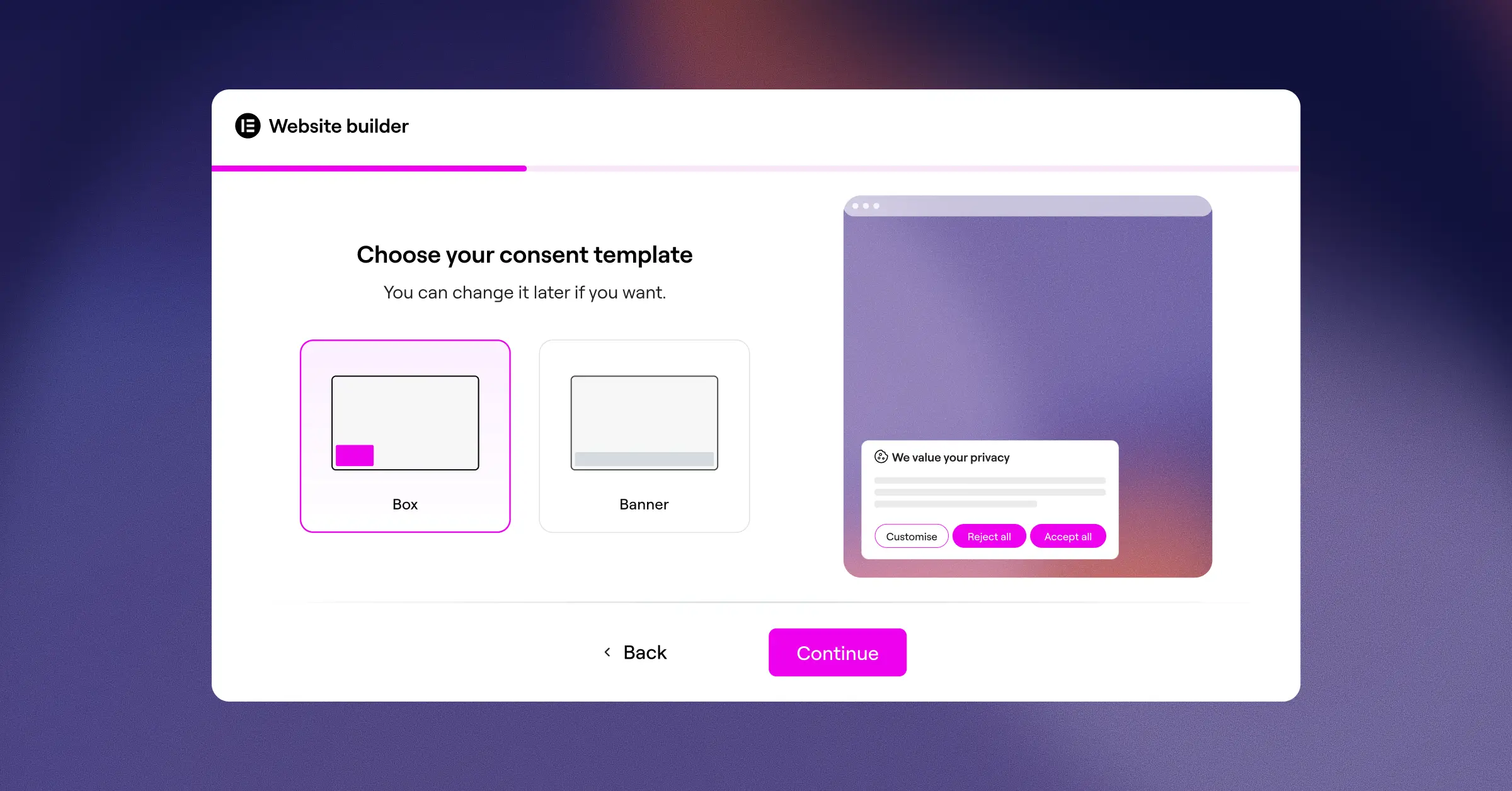
- Builds layouts that match your brand colors and typography.
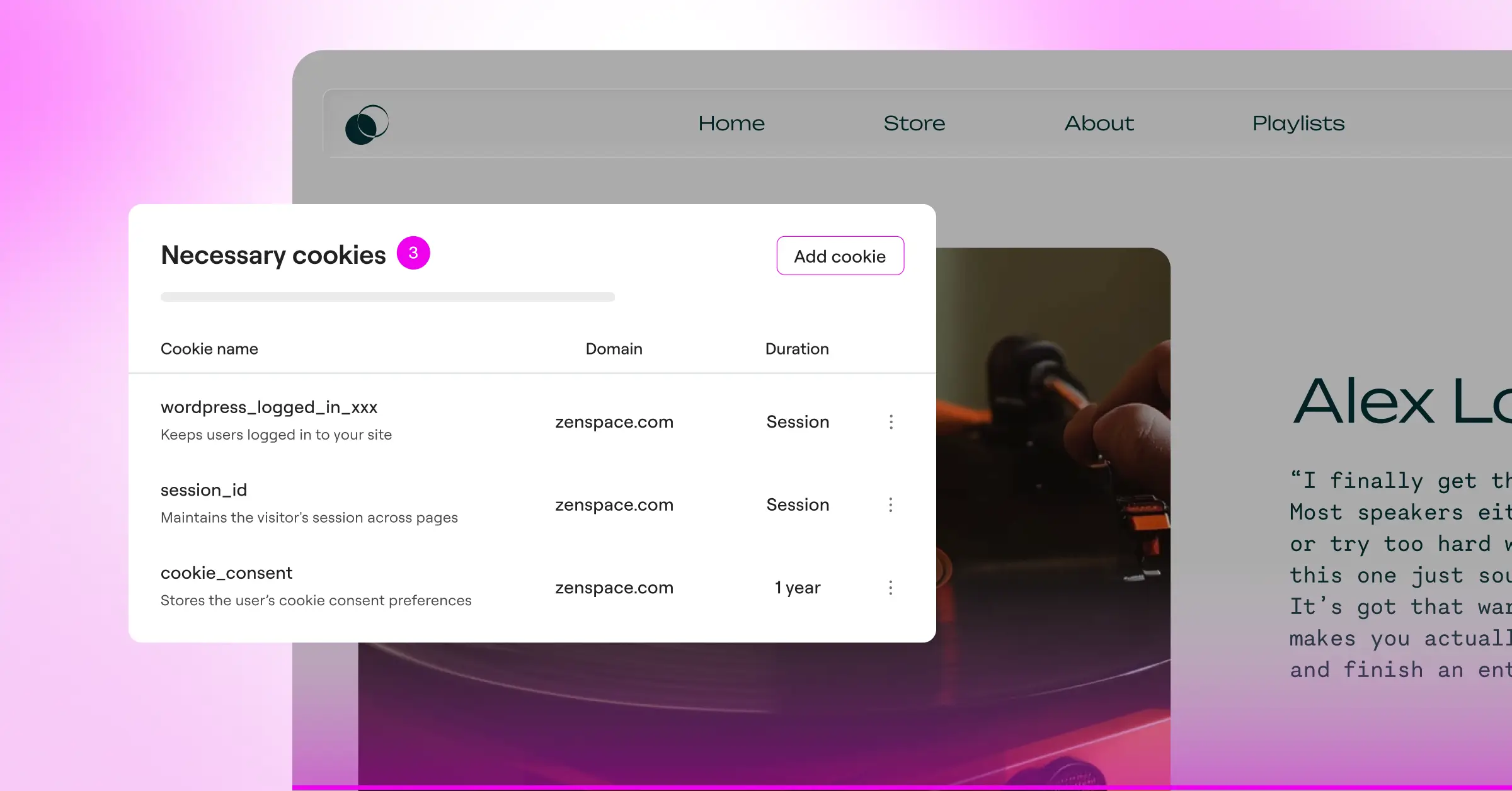
- Scans your cookies into clean, accurate categories automatically.
- Logs consent actions locally to create audit-ready trails.
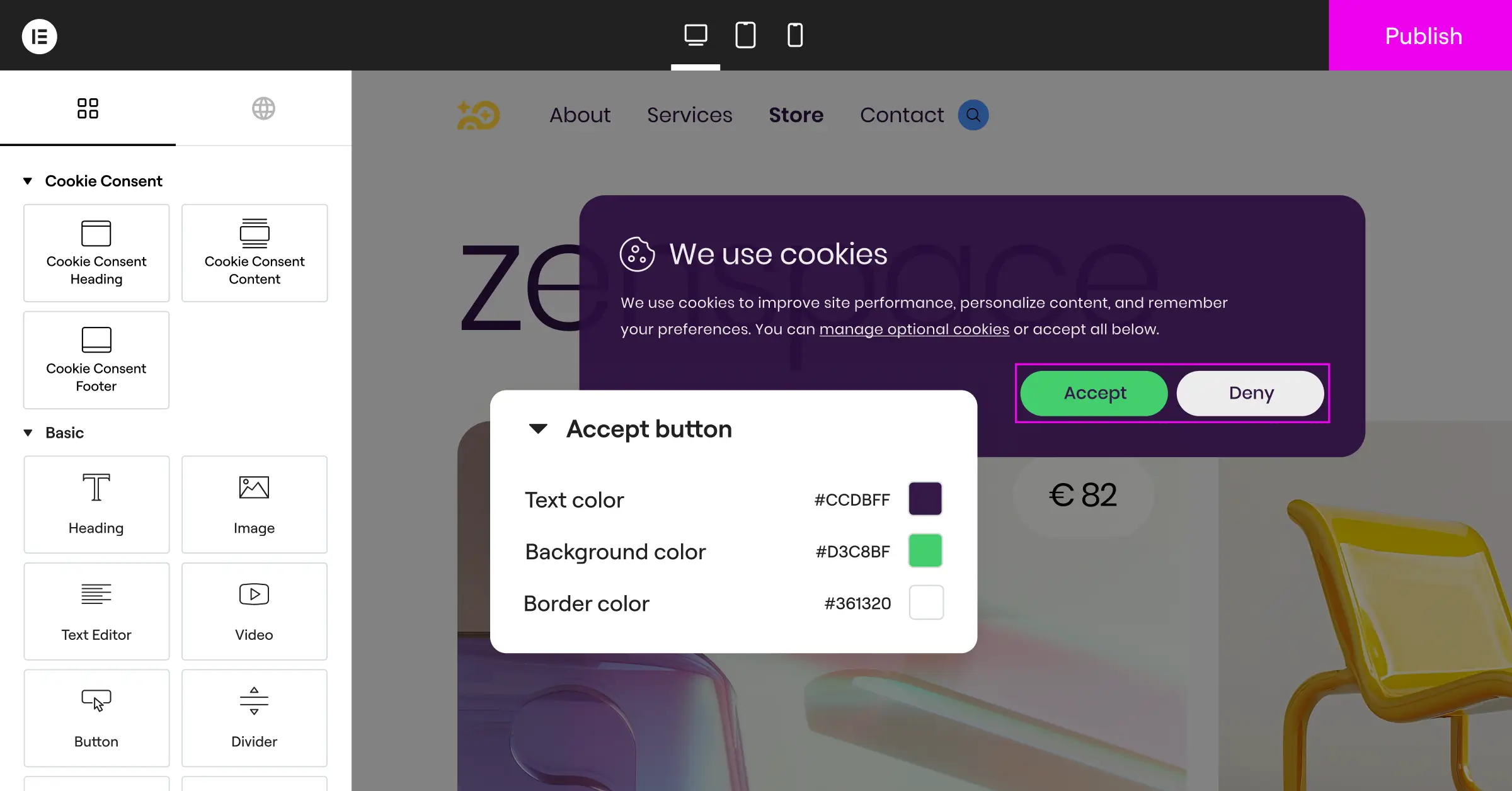
- Connects with Google Consent Mode v2 to manage tag behavior.
- Targets specific regions, showing banners only to EU or California visitors.
Pros:
- Requires zero external platform sign-ups or API keys.
- Matches your site styles without custom CSS.
- Includes a built-in privacy policy generator.
Cons:
- Requires the Elementor ecosystem to function.
- Focuses on website consent, not broad offline company data.
Our Verdict: The best pick for WordPress creators who want to stay compliant without third-party dashboards or slow scripts, and it’s included in Elementor One.
2. Cookiebot
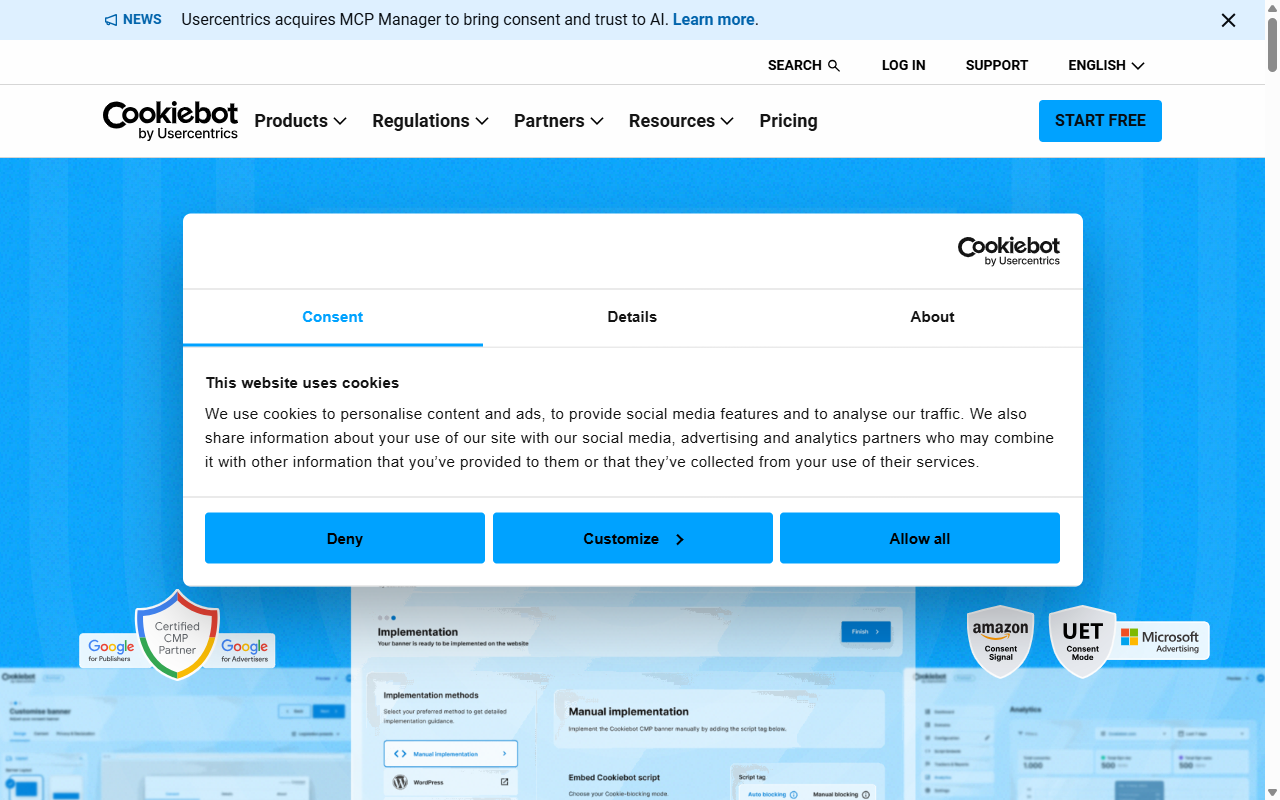
Cookiebot is a widely recognized cloud-hosted consent tool built around regular, automated scans that crawl your pages monthly, spotting new tracking scripts and updating banner descriptions.
This service runs outside WordPress, so you’ll log into their dashboard for configuration, analytics, and templates, useful for sites that swap ad partners often.
- Saves consent states securely in its cloud database.
- Generates a dynamic cookie declaration page automatically.
- Blocks unapproved tracking cookies until visitors accept them.
- Supports a wide range of languages automatically.
Pros:
- Thorough automatic monthly tracking audits.
- Handles multi-language sites with automated translations.
Cons:
- Requires an external dashboard for layout adjustments.
Our Verdict: A solid choice if your site changes scripts often and you want deep automated scanning, and don’t mind paying more as your page count grows.
3. CookieYes
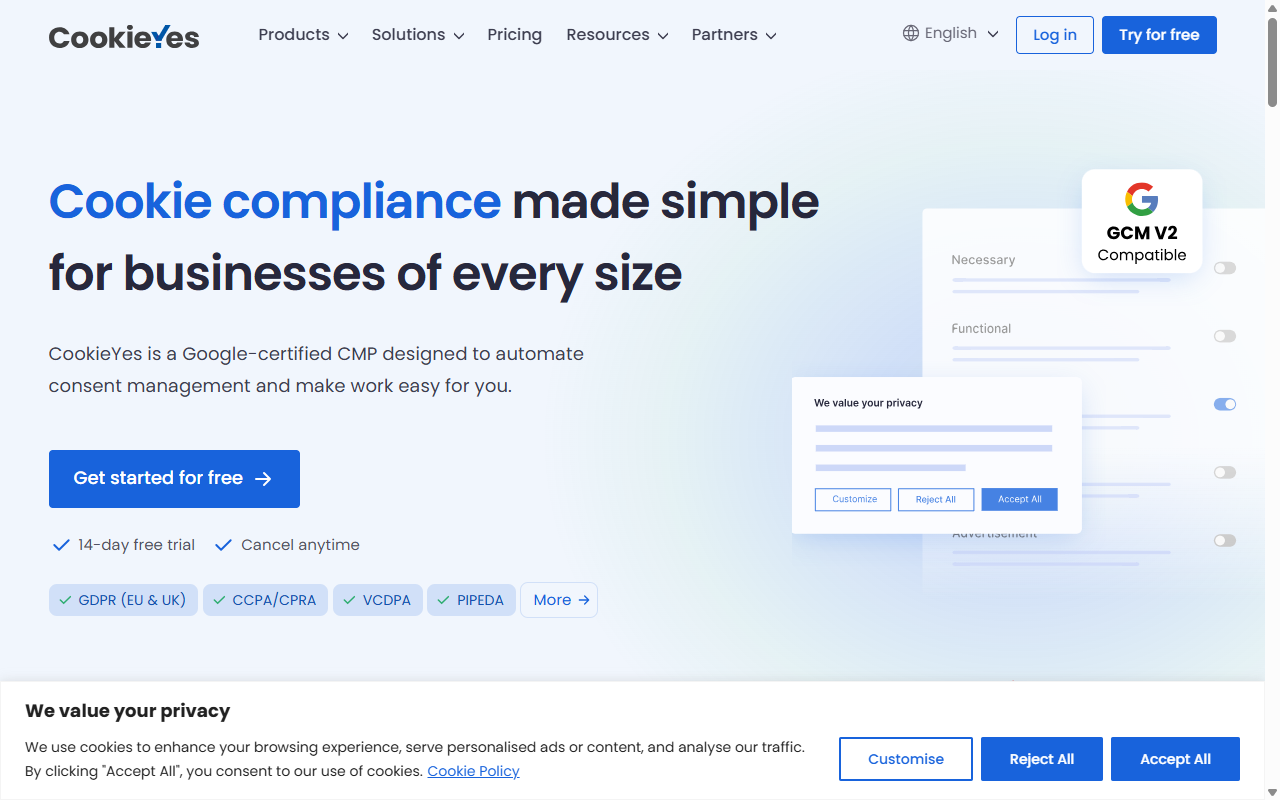
CookieYes is a friendly, web-based platform that simplifies cookie management across many content systems, with a clean interface for customizing banners and monitoring visitor choices without technical know-how.
It offers a WordPress connector, but you’ll manage most settings on its cloud platform. People like its straightforward setup and clear tracking visuals.
- Records consent choices to prove compliance during audits.
- Displays clean banners that adjust well to mobile screens.
- Schedules custom scans to discover newly active cookies.
- Applies geo-targeting rules based on visitor location.
Pros:
- The dashboard is clean and accessible for beginners.
- Generates light scripts with little impact on load speeds.
Cons:
- Entry-level plans cap monthly page views.
- Design changes often require their external portal.
Our Verdict: A solid cloud pick for several small sites across platforms like Shopify and WordPress, managed from one external hub.
Managing consent natively inside your site CMS avoids external API bottlenecks and keeps compliance workflows simple for the entire team.
– Itamar Haim, Web Compliance Specialist
4. Complianz
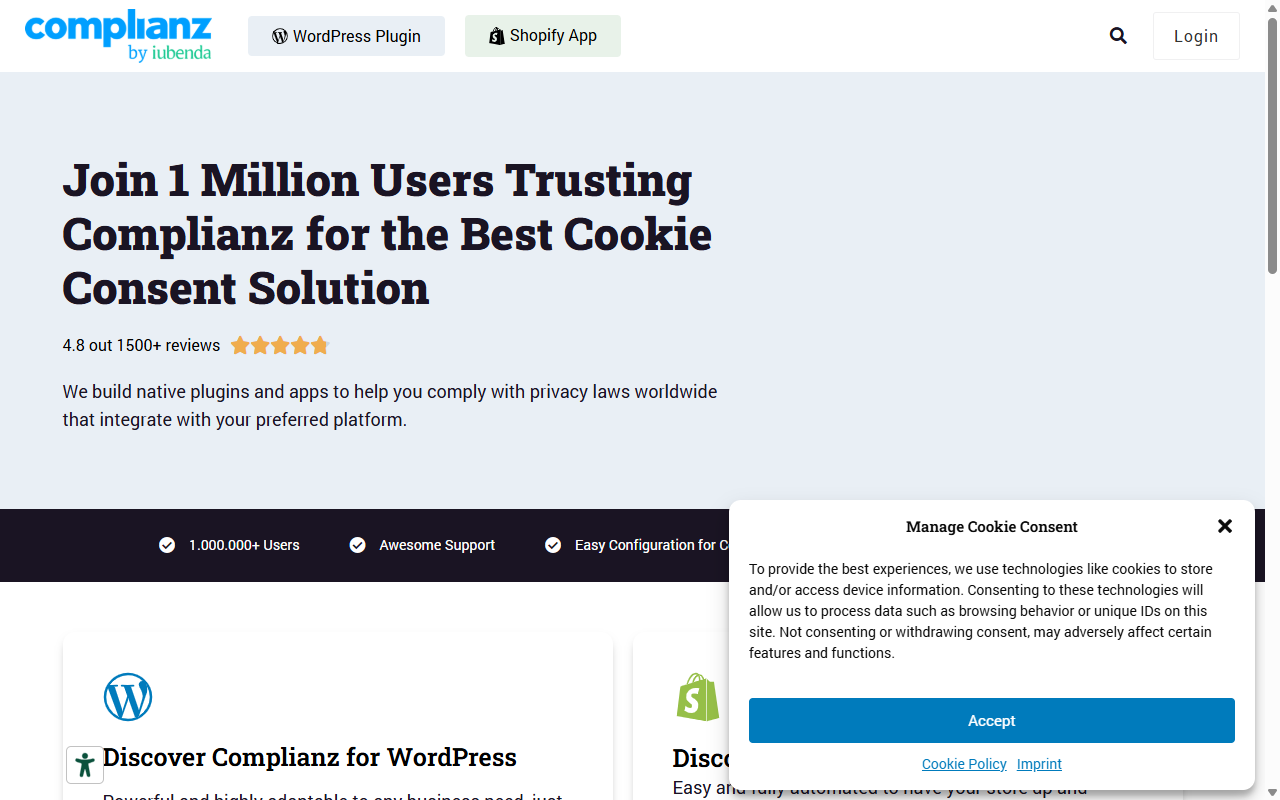
Complianz is a privacy tool built for WordPress. It works like a guided wizard, asking targeted questions about your business and site to build a setup that fits.
Running on your own server means you don’t have to worry about third-party integrations failing at the wrong moment, and it handles legal requirements across several regions too.
- Asks wizard questions to configure your legal requirements.
- Generates legal documents like cookie policies and terms of service.
- Integrates directly with local WordPress script managers and tracking systems.
- Detects whether your site needs specialized US privacy disclosures.
Pros:
- Self-hosted data keeps you in full control of compliance logs.
- The wizard is genuinely educational for newer site owners.
Cons:
- The interface can feel clinical for non-technical users.
- Styling banners can take some effort.
Our Verdict: A strong pick for technical WordPress owners who want local data hosting and don’t mind a detailed setup wizard.
5. iubenda
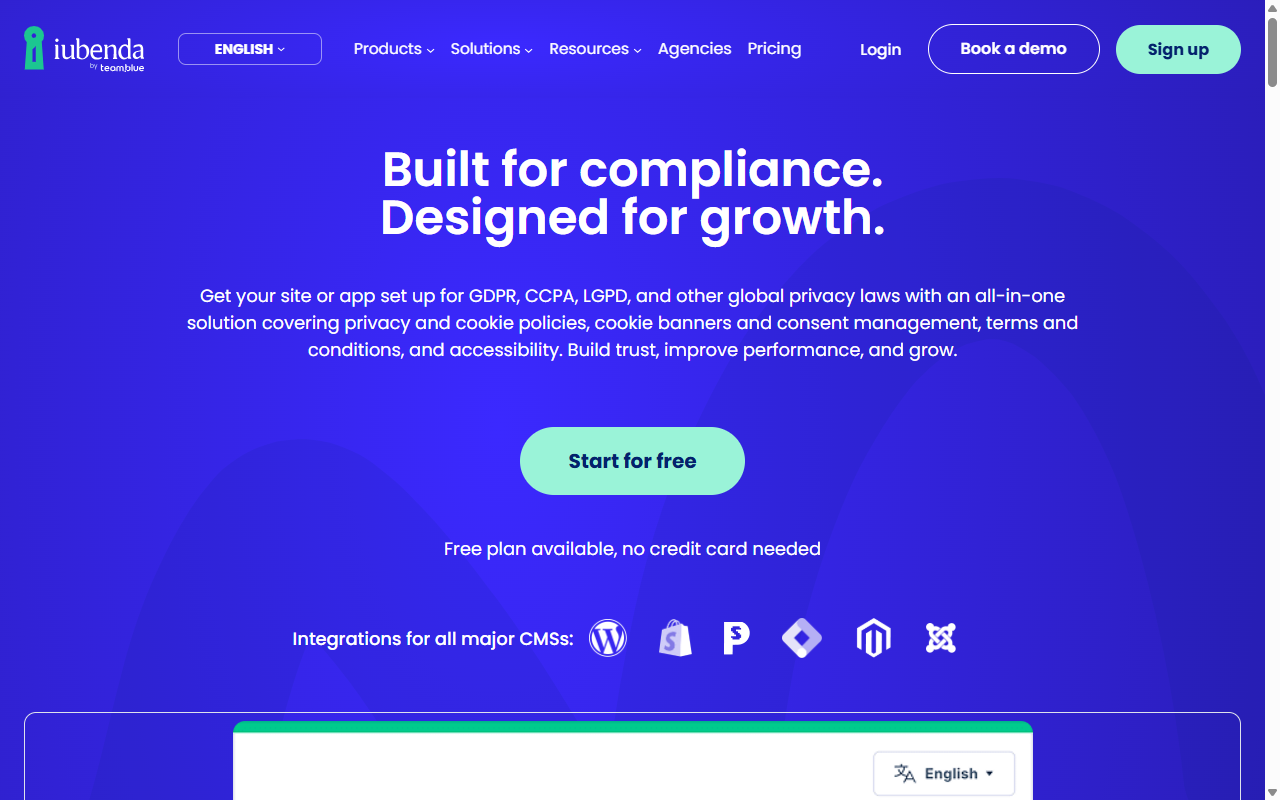
iubenda takes a broad legal approach to compliance, helping you write privacy policies, terms of service, and data processing agreements from one cloud platform.
It’s built for businesses that want every compliance base covered under one subscription, managing everything through an external dashboard by pasting code snippets onto your site.
- Drafts privacy policies written by certified legal professionals.
- Auto-updates your policies whenever global privacy rules change.
- Manages cookie settings and privacy policy forms in one place.
- Tracks user preferences across multiple websites you control.
Pros:
- Deep legal security with professional, pre-drafted clauses.
- Auto-updates keep you current without manual code changes.
Cons:
- The dashboard can feel complex given all the options.
Our Verdict: A strong choice if you want legal documents and your consent banner bundled together, though it’s more than you need for a simple banner.
6. Termly
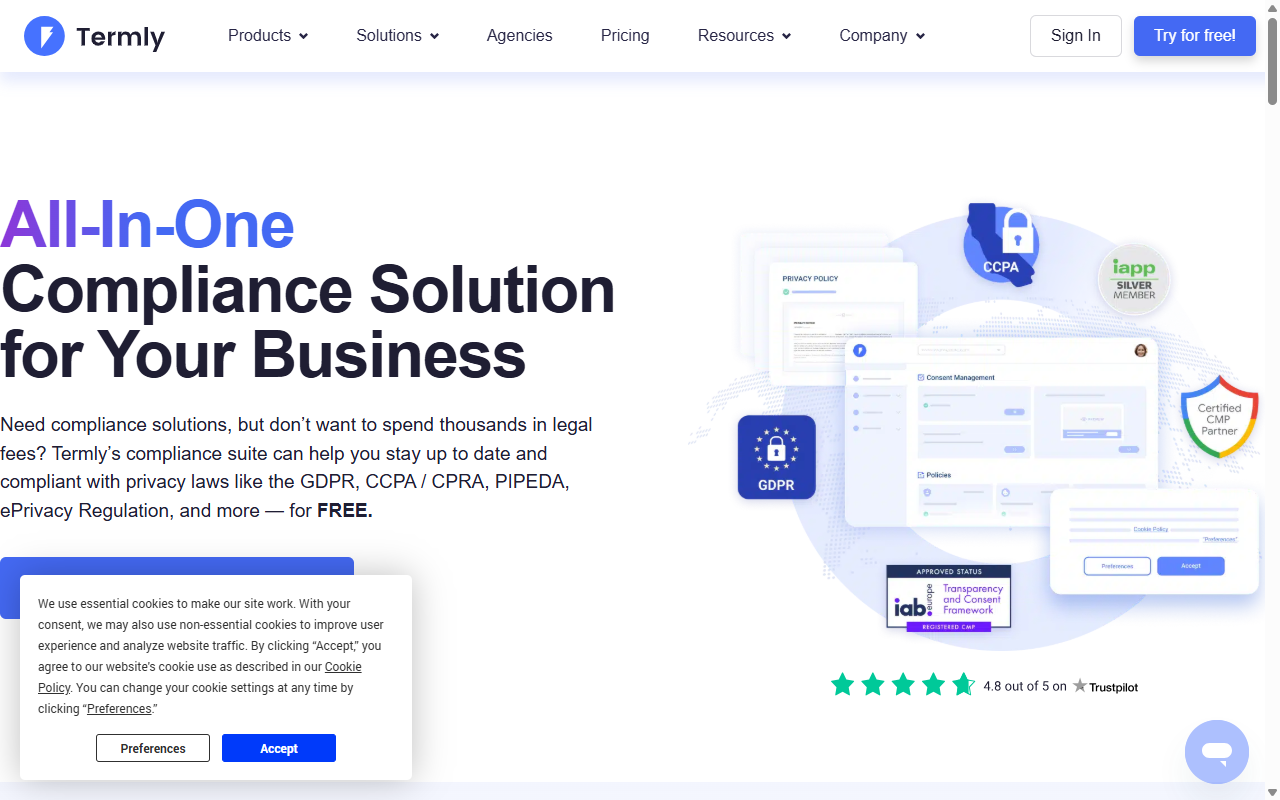
Termly is designed with small businesses in mind. It skips confusing jargon in favor of clear, step-by-step policy builders that guide you at a comfortable pace.
Like other cloud-based tools, Termly hosts your configurations and serves them via script files. It’s welcoming for anyone who finds privacy law overwhelming (and honestly, most of us do at first).
- Creates custom legal disclaimers, terms, and return policies.
- Maps cookies into simple, easy-to-read categories.
- Translates your banners based on visitor location.
- Matches business styles with simple color theme selectors.
Pros:
- Simple, supportive onboarding for beginners.
- A solid collection of basic legal templates.
Cons:
- Custom CSS options are limited on lower tiers.
- Not built for complex enterprise data flows.
Our Verdict: A stress-free pick for small agencies and solo owners who want straightforward legal coverage.
7. Osano
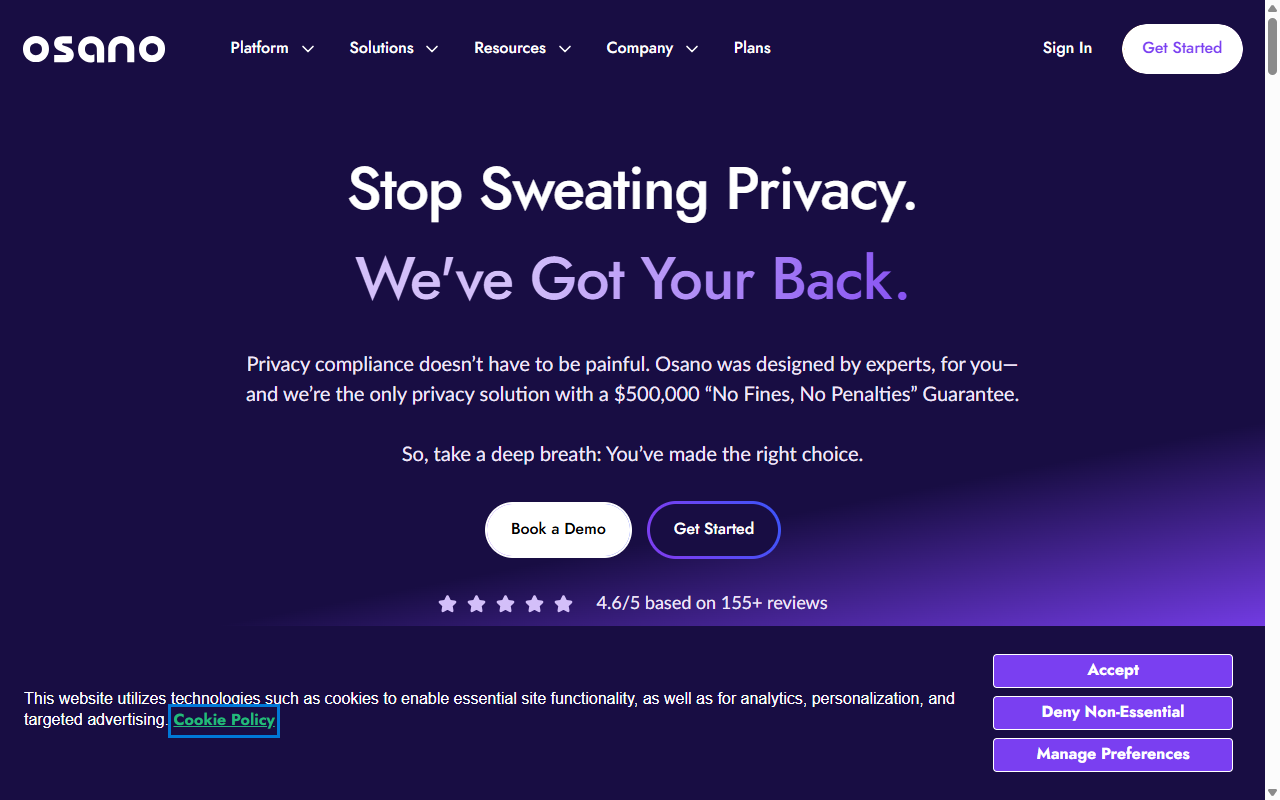
Osano is a polished, mid-market platform focused on data safety, known for a compliance guarantee promising financial backing if the software fails you.
It’s positioned for growing companies stepping away from OneTrust’s heavier weight while keeping strong corporate assurances, fully cloud-managed with setup as simple as one script tag.
- Monitors vendor scripts to flag risky third-party data handlers.
- Translates consent options into dozens of languages automatically.
- Aggregates user preferences across your subdomains.
- Secures compliance logs inside protected cloud systems.
Pros:
- High accuracy and a clear compliance commitment.
- The privacy rating system helps you evaluate vendors.
Cons:
- The high-end features may be more than a basic site needs.
Our Verdict: A premium pick for growing startups that want corporate-level assurances without OneTrust’s complexity.
8. Usercentrics
Usercentrics is a flexible consent management platform popular with dev teams, offering deep API control to build custom compliance experiences from scratch.
There’s a WordPress integration path, but its core strength is its adaptable script control engine, built for structured, precise developer workflows.
- Controls script loading sequences via precise API commands.
- Integrates with popular tag managers to control tracking dynamically.
- Maintains cross-device consent profiles for logged-in users.
- Saves audit-ready historical logs on secure cloud storage.
Pros:
- Flexible layout options for granular developer control.
- Strong integration with marketing analytics setups.
Cons:
- Needs moderate technical knowledge to configure correctly.
- Can feel complex if you just want a quick banner.
Our Verdict: Best suited for agencies and dev teams who want deep, granular API control over complex sites.
9. Didomi
Didomi is a European compliance platform for brands that want privacy to double as a trust-building feature, with detailed customization for multi-stage preference centers.
The platform is cloud-managed, with dashboards showing how banner layouts affect opt-in rates over time.
- Builds multi-layered preference centers for detailed visitor control.
- Tracks opt-in metrics to refine your marketing strategies.
- Syncs user consents with CRM systems like Salesforce.
- Adapts layout styles to complex brand guidelines.
Pros:
- Strong analytics that improve consent rates without violating rules.
- Fully compliant with strict European privacy policies.
Cons:
- Enterprise setup takes significant time investment.
- Pricing is often out of reach for average sites.
Our Verdict: A premium, data-driven option for larger e-commerce operations that want to optimize cookie prompts.
10. Consent Manager
Consent Manager is a GDPR-focused system popular among publishers and ad-heavy sites, helping them maintain compliance while maximizing ad revenue within the interactive advertising framework ecosystem.
The tool includes built-in A/B testing, letting you try banner text and color combinations to find the layout that secures the highest opt-in rates.
- A/B Tests banner variants to find the highest-performing layout.
- Integrates with standard advertising frameworks like IAB TCF v2.2.
- Stops unauthorized ad scripts automatically if consent is declined.
- Reports real-time compliance rates via automated email digests.
Pros:
- Built-in conversion optimization for publishers.
- Deeply integrated with European digital publishing.
Cons:
- The interface looks dated and technical.
- Can overwhelm if your site doesn’t show ads.
Our Verdict: A niche tool for digital magazines and news sites relying on programmatic ad networks.
Inside the WordPress Ecosystem: Why Native Rules
When you’re weighing these options, it’s easy to get lost in feature lists. But for most WordPress owners, the real daily struggle is keeping things simple: external tools mean jumping between tabs, managing accounts, copying script tags, and hoping nothing breaks during a WordPress update.
Choosing a native capability like Elementor’s Cookie Consent keeps everything under one roof. You adjust your banner right inside the editor you already use daily, with no custom code, no external API, and no surprise billing tied to page views. You can have a compliant banner live in under five minutes, matching your site’s look with no extra CSS work.
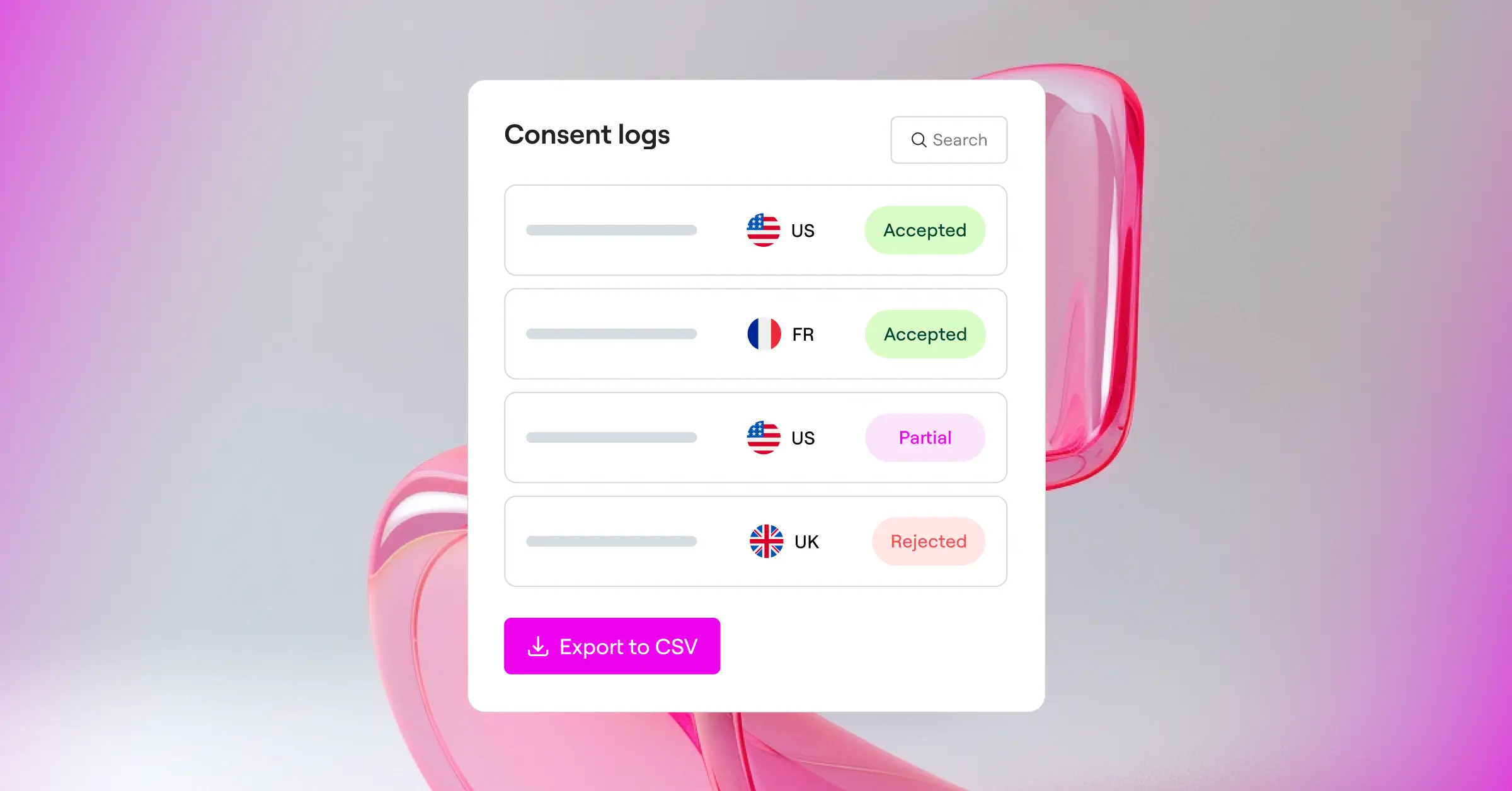
Here’s what makes a native approach so refreshing:
- Fast setup – You skip generating scripts on external platforms and pasting them into your header. The wizard walks you through it in three steps.
- Styling is a breeze – You use your existing theme variables, fonts, and colors directly, so your banner feels like part of your site, not an afterthought.
- Lighter page loads – Because the tool runs locally, there’s no external server call needed to load your banner, keeping your site fast and your Core Web Vitals happy.
Cookie Consent is also part of Elementor One, the all-in-one subscription bundling the website builder with compliance, accessibility, performance, and management capabilities, all working together natively under one account.
Frequently Asked Questions
Is OneTrust overkill for a standard WordPress site?
For most WordPress site owners, yes. OneTrust is built for global enterprises managing offline data, vendor risk, and internal compliance databases. For blogs, portfolios, and online shops, a native tool keeps things simple and saves setup hours.
What happens if I don’t use a cookie consent banner?
If you get visitors from regions with strict privacy laws like the EU (GDPR) or California (CCPA), running without a consent system leaves you open to audits and fines. Modern ad and analytics platforms often require active consent management too.
Do I need to hire a developer to install these alternatives?
Not at all. Many modern options suit site owners of every experience level. Some advanced systems like Usercentrics need technical setup, but Elementor’s Cookie Consent can be configured visually in a few steps. You’ve got this, even without any code.
What is Google Consent Mode v2 and do I need it?
Google Consent Mode v2 is a framework that lets your site pass visitor consent choices to Google’s ad and analytics systems. If you target visitors in the European Economic Area and use Google Ads or Analytics, supporting it keeps your tracking accurate and campaigns running.
Can a heavy cookie consent tool slow down my website?
Yes, and it’s a common issue. External cloud platforms often serve heavy JavaScript that has to load from remote servers before your page finishes rendering. A native WordPress capability keeps scripts light and load times fast (this trips up a lot of people, so it’s worth weighing).
Can I customize my consent banners to match my site design?
Absolutely. Some cloud platforms lock advanced design settings behind pricier tiers, but modern visual tools let you customize colors, buttons, fonts, and positions directly. Elementor’s Cookie Consent pulls in your theme styles automatically, so your banner feels like part of your design, not a third-party overlay.
Are free cookie consent tools safe to use?
Many free tools are perfectly safe, but watch for page view caps and missing features like automated scanning. Stick with a trusted, actively maintained developer so your logs stay secure and current as laws evolve.

