Table of Contents
In 2025, pricing models for website builders have shifted. It is no longer just about hosting and a drag-and-drop interface. You must calculate the cost of email marketing, domain renewals, premium integrations, and the subtle but impactful cost of not owning your data. This guide will dissect the Squarespace pricing structure with surgical precision, helping you determine if it offers true value or if a comprehensive solution like Elementor better serves your long-term growth.
Key Takeaways
- Base Pricing Is Just the Start: Squarespace plans range from $16 to $49+ per month, but the advertised price rarely reflects the total cost of ownership once you factor in add-ons and potential transaction fees.
- Transaction Fees Can Be a Dealbreaker: The popular “Business” plan charges a 3% transaction fee on sales. For a store generating $50,000 in revenue, that’s $1,500 lost—far more than the cost of the subscription itself.
- Flexibility vs. Convenience: While Squarespace offers a curated, “walled garden” experience, it often comes at the cost of design freedom and data ownership compared to open platforms like WordPress.
- The “Platform” Advantage: Modern solutions like the Elementor Website Builder Platform bridge the gap, offering the ease of a hosted solution with the limitless flexibility of open-source software.
- Scalability Costs: Scaling on a closed SaaS platform often requires upgrading to the highest tier to unlock basic features like abandoned cart recovery, whereas modular platforms allow you to add these features more affordably.
The Philosophy of Pricing: SaaS vs. Open Ecosystems
Before we analyze the specific dollar amounts, you must understand what you are actually paying for. Squarespace operates on a “Software as a Service” (SaaS) model. You are essentially renting a house. The landlord (Squarespace) handles the maintenance, security, and plumbing, which is convenient. However, you cannot knock down a wall to combine rooms, and if you stop paying rent, you lose the house entirely.
In contrast, an open ecosystem—like WordPress powered by the Elementor Website Builder—is akin to owning your home. You own the land (your data) and the structure. You can renovate, expand, and move whenever you like. While traditional WordPress setups required you to manage the utility lines (hosting), modern solutions like Elementor Hosting have bridged this gap, providing the managed infrastructure of a SaaS with the ownership of an open platform.
Understanding this fundamental difference is crucial because “price” is not just the monthly fee; it is the cost of limitations, the cost of migration, and the cost of future flexibility.
Deep Dive: Squarespace Pricing Plans (2025 Analysis)
Squarespace currently divides its offering into four primary tiers. We will analyze each not just by what they include, but by what they conspicuously lack.
1. The Personal Plan ($16–$25/month)
Best For: Hobbyists and simple portfolios.
The Personal plan is the entry point. At first glance, it appears sufficient for a basic professional presence. You get a custom domain (for the first year), SSL security, and access to their templates.
The Limitations:
- No E-commerce: You cannot sell a single item. If you decide to sell a digital guide or a piece of merchandise later, you must upgrade.
- Limited Customization: This is the most critical restriction for any serious brand. The Personal plan locks you out of CSS and JavaScript customization. If you want to tweak a specific design element that the visual editor does not support, you hit a hard wall.
- Analytics Lite: You receive only basic website metrics, denying you the granular data needed to optimize marketing campaigns.
Expert Verdict: This plan functions as a digital business card. It works if your needs are static, but for any business intending to grow or market aggressively, the inability to use custom code often forces an immediate upgrade.
2. The Business Plan ($23–$36/month)
Best For: Small businesses that need minor customization and occasional sales.
This is Squarespace’s most popular plan, primarily because it unlocks the CSS/JavaScript capabilities missing from the Personal tier. It also introduces “fully integrated e-commerce.”
The Hidden Cost: The “fully integrated e-commerce” comes with a significant catch: a 3% transaction fee on every sale.
Let’s do the math. If your website generates $2,000 a month in sales:
- Monthly Subscription: ~$23
- 3% Fee on $2,000: $60
- Total Monthly Cost: $83
You are effectively paying nearly quadruple the advertised price just for the privilege of selling. This penalizes success. The more you grow, the more you pay.
Expert Verdict: The Business plan is a stepping stone that often becomes a stumbling block. It creates a scenario where you are incentivized not to sell too much, lest the fees outweigh the cost of upgrading to the next tier.
3. Commerce Basic ($27–$36/month)
Best For: dedicated e-commerce stores with moderate volume.
This tier removes the 3% transaction fee, which is a massive relief for merchants. It also unlocks customer accounts and e-commerce analytics.
The Limitations:
- No Abandoned Cart Recovery: This is a standard feature in 2025 for maximizing revenue, yet it is gated behind the highest tier here.
- No Subscriptions: You cannot sell recurring products.
- No Advanced Shipping: You cannot calculate real-time shipping rates from carriers, which can lead to undercharging customers for shipping and eating the cost yourself.
4. Commerce Advanced ($49–$65/month)
Best For: High-volume sellers who need every built-in feature.
This is the “all-inclusive” option. It includes abandoned cart recovery, advanced shipping, subscription capabilities, and advanced discounts.
Expert Verdict: At nearly $600 per year (paid annually), you are entering a price bracket where you must ask if the “walled garden” is worth it. For this price, you still lack the ability to install third-party plugins that could handle specific niche requirements (like complex booking systems or advanced learning management features) that fall outside Squarespace’s native feature set.
The Hidden Costs of the “All-in-One” Promise
When asking “how much is squarespace website builder,” you rarely see the auxiliary costs on the pricing page. These are the expenses that creep onto your balance sheet in year two.
1. Domain Renewal Inflation
Most builders offer a “free domain for one year.” It is a classic hook. However, the renewal rates on proprietary platforms are often 20-50% higher than standard registrars like Namecheap or Google Domains. You are paying for the convenience of having the domain in the same dashboard, but that convenience compounds into a measurable cost over a decade.
2. Email Hosting (Google Workspace)
Unlike many hosting providers that include basic email hosting, Squarespace resells Google Workspace. While Google Workspace is excellent, it adds an additional ~$6-$12 per user/month. A team of five people will add $360 to $720 per year to your “website” costs.
3. The Cost of Inflexibility
This is the most abstract but damaging cost. What happens when your business needs a feature Squarespace doesn’t support?
- You might need a specific payment gateway for a high-risk industry.
- You might need a complex, logic-based form.
- You might need to integrate with a niche CRM.
On a closed platform, you cannot simply hire a developer to build a plugin. You are often forced to use “glued-together” solutions involving Zapier (another monthly cost) or expensive third-party embeds.
The Strategic Alternative: The Elementor Ecosystem
To understand value, we must look at the alternative. Elementor represents a paradigm shift from the “website builder” to the “Website Builder Platform.”
The Concept of a Web Creation Platform
Elementor operates on WordPress, the open-source software that powers over 40% of the web. Historically, this meant you had to manage your own hosting, security, and updates. However, the ecosystem has evolved.
With Elementor Hosting, you receive the same managed experience as a SaaS—Google Cloud infrastructure, Cloudflare Enterprise CDN, premium security—but you retain the open nature of WordPress. You are renting a house, but you have the keys to renovate, rebuild, and own the property.
Elementor Pricing Breakdown
- Elementor Hosting: Starts around $10-$15/month (billed annually). This includes the hosting, the Elementor Pro builder, and the Hello Theme.
- Elementor Pro Plugin: If you already have hosting, the plugin alone is $59/year.
The Value Delta: When you use Elementor Pro, you gain access to features that are often gated or non-existent on closed platforms:
- WooCommerce Builder: You can design every aspect of your store—cart, checkout, product pages—without paying transaction fees to the platform.
- Form Builder: A powerful tool that often replaces paid form plugins.
- Popup Builder: You can create advanced, behavior-triggered popups without buying a separate subscription (which often costs $20/month elsewhere).
The AI Advantage
In 2025, AI is not a gimmick; it is a workflow accelerator. The Elementor AI suite allows you to generate text, code, and images directly within the editor.
- Need a custom CSS snippet to animate a button? The AI writes it.
- Need to translate your site? The AI handles it.
- Need a wireframe? The AI Site Planner generates layouts in minutes.
By bundling these tools, the platform reduces the need for external subscriptions, lowering the Total Cost of Ownership (TCO).
Comparative Analysis: Functionality and Economics
Let’s look at the market landscape objectively. When evaluating platforms like Squarespace against the broader ecosystem, we see distinct differences in how they handle growth.
Squarespace
The Model: A curated, closed ecosystem. The Pro: The design templates are award-winning and require very little effort to look good. The interface is clean, and because features are limited, there are fewer ways to “break” the site. The Con: You are strictly bound by the platform’s roadmap. If they increase prices (as they have historically), you have few options. If they don’t release a feature you need, you are stuck. The 3% transaction fee on the Business plan is a significant friction point for growing companies.
The WordPress + Elementor Ecosystem
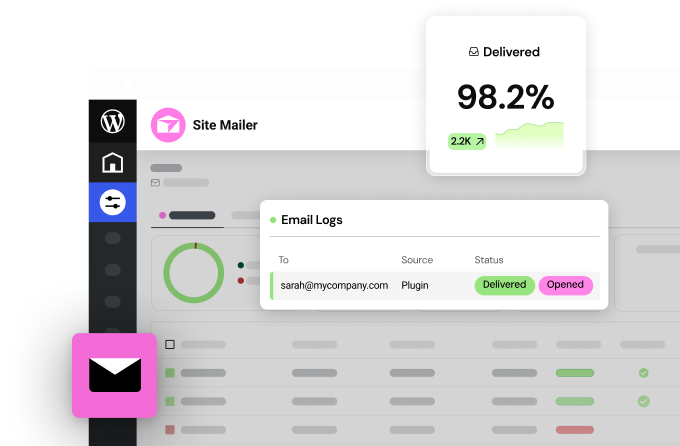
The Model: An open, modular platform. The Pro: Infinite extensibility. You can install Site Mailer by Elementor to ensure email deliverability. You can use Ally by Elementor to help meet accessibility standards. You can choose any payment processor, any shipping integration, and any marketing tool. The Con: It requires a slightly higher learning curve initially, though tools like the Hello Theme (a lightweight canvas) and pre-designed kits have drastically reduced this barrier.
For a visual on how these tools integrate, you might find this resource helpful: https://www.youtube.com/watch?v=gvuy5vSKJMg
Detailed Cost Scenarios: Who Pays What?
To truly answer “how much is it,” we must look at specific user profiles.
Scenario A: The Creative Portfolio
User: A freelance photographer showcasing work.
- Squarespace (Personal): ~$192/year.
- Verdict: A solid choice if the site never needs to sell prints or book appointments.
- Elementor Hosting (Basic): ~$180/year.
- Verdict: Comparable price, but allows for future expansion into sales or bookings without a platform migration.
Scenario B: The Growing Small Business
User: A local bakery taking orders and selling merch ($50k annual revenue).
- Squarespace (Business): ~$276/year (subscription) + ~$1,500 (3% transaction fees) = $1,776/year.
- Elementor Hosting (Business): ~$240/year + $0 transaction fees = $240/year.
- Verdict: The transaction fees on the closed platform make it nearly 7x more expensive in this specific revenue band. Even upgrading to the Squarespace Commerce Basic plan ($324/year) to remove fees leaves you paying more for less design flexibility.
Scenario C: The E-commerce Brand
User: A clothing brand needing custom product pages and dynamic filtering.
- Squarespace (Advanced): ~$588/year.
- Verdict: Good features, but customization of the product page layout is limited.
- Elementor Pro + Hosting: ~$250 – $350/year.
- Verdict: The WooCommerce Builder allows for pixel-perfect customization of the shopping experience, likely leading to higher conversion rates.
The Role of Performance in Pricing
We often forget that speed has a financial value. A slow site loses customers.
Squarespace sites are generally fast because they are hosted on a uniform architecture. However, you cannot optimize what you cannot access. You cannot swap out the image compression engine or fine-tune the caching rules.
The Elementor ecosystem prioritizes performance through tools like the Image Optimizer. This plugin automatically compresses media to Next-Gen formats (WebP/AVIF), ensuring that high-resolution visuals do not penalize your load times. Coupled with Elementor Hosting’s Google Cloud infrastructure, this setup often achieves top-tier Core Web Vitals scores, which directly correlates to lower bounce rates and higher SEO rankings.
Marketing and Growth Tools
Building the site is step one. Growing it is step two.
Email Marketing
Squarespace offers “Email Campaigns,” an add-on service that starts free but scales in price. It is integrated, which is nice, but it is another walled garden.
In the Elementor ecosystem, you have Send by Elementor. This is a comprehensive marketing solution that integrates deeply with your site forms and data. Because it is part of the broader WordPress environment, you can also choose to integrate with HubSpot, Mailchimp, or Klaviyo if your needs become enterprise-level. You are never locked into a single provider.
Visual Content Creation
Creating assets for your site usually requires a designer or a subscription to a design tool. Elementor AI helps bridge this gap by allowing you to generate and edit images directly in the editor. You can expand images, change aspects of a photo, or generate entirely new visuals without leaving your workflow. This consolidation of tools (hosting + builder + AI + marketing) is where the “Platform” value proposition becomes clear.
The Long-Term “Switching Cost”
One factor rarely discussed in pricing guides is the cost of leaving.
If you build on Squarespace and outgrow it, you cannot “export” your site. You can export your product data (CSV) and some text, but your design, your templates, and your site structure are tied to their proprietary code. Rebuilding on a new platform means starting from scratch. This is a massive hidden liability.
With Elementor, you are building on open standards. If you ever decide to move your hosting, you can pack up your site (database and files) and move to any server in the world. You own the asset. The value of this data sovereignty cannot be overstated for a business building long-term equity.
Is “Free” Actually Free?
You may see offers for free trials or “free” plans on various builders. Squarespace offers a 14-day trial. Elementor offers a free download of its core plugin.
The difference lies in utility. The free version of Elementor is robust enough to build a complete, functional website. You can add text, images, videos, and basic layouts without paying a dime (other than hosting). Squarespace’s trial is a sandbox; you cannot publish live without paying. This allows users to learn Elementor at their own pace, building competency before investing in the Pro features.
Conclusion
So, how much is the Squarespace website builder? The answer is: It depends on your ambition.
If you are a hobbyist or need a brochure site and value a “hands-off” experience above all else, the $16–$23 monthly fee is a reasonable convenience tax. It is a polished, capable product for static needs.
However, if you are a business owner, a creator, or an entrepreneur calculating the ROI of your digital presence, the math changes. When you factor in the 3% transaction fees on lower tiers, the high cost of advanced e-commerce features, and the inability to customize your site’s code, Squarespace often becomes the more expensive option over a 3-year horizon.
The Elementor Website Builder Platform offers a compelling alternative: a professional, scalable, and open environment where you pay for value, not for the removal of limitations. By combining hosting, design, AI, and marketing into a unified ecosystem, it provides the “best of both worlds”—the ease of SaaS with the power of WordPress.
In the end, the smartest investment is one that scales with you, rather than penalizing your growth.
Cited Expert: Itamar Haim
Frequently Asked Questions
1. Does Squarespace charge transaction fees on all plans? No, not all plans. The “Business” plan charges a 3% transaction fee on sales. However, the “Commerce Basic” and “Commerce Advanced” plans do not have transaction fees. You will still pay standard credit card processing fees (usually around 2.9% + 30¢) to the payment processor (like Stripe or PayPal), which is standard across all platforms, including Elementor.
2. Can I use a custom domain with the Personal plan? Yes, the Personal plan allows you to connect a custom domain. Squarespace typically offers one free domain registration for the first year if you pay annually. After that, you will pay their standard renewal rates, which can be higher than dedicated registrars.
3. Is Elementor Hosting harder to set up than Squarespace? Not anymore. Years ago, setting up WordPress required some technical know-how. Today, Elementor Hosting comes with WordPress pre-installed and the builder ready to go. It offers a very similar “sign up and start building” experience to SaaS builders, removing the technical barrier.
4. Why would I choose Elementor Pro over the free version? While the free version is powerful, Elementor Pro unlocks the Theme Builder (allowing you to design headers and footers), the Popup Builder, and the WooCommerce Builder. For professional sites, these features eliminate the need for multiple other paid plugins, saving you money in the long run.
5. Does Squarespace include email marketing? Squarespace has a feature called “Email Campaigns,” but it is an add-on subscription with its own monthly cost. It is not included for free in the base website plans. Similarly, Elementor offers Send by Elementor and integrates with huge marketing platforms, giving you more choices.
6. Can I move my Squarespace site to WordPress later? You can export certain data like blog posts and products to a CSV file, but you cannot export your design or templates. You will essentially have to rebuild your website’s look and feel from scratch if you migrate. This is known as “vendor lock-in.”
7. How does the AI Site Planner work? The Elementor AI Site Planner allows you to input details about your business and goals. It then generates a suggested site structure, wireframes, and layout ideas. This helps you overcome “blank page syndrome” and get a professional structure in minutes.
8. What is the benefit of the Hello Theme? The Hello Theme is a lightweight “starter” theme built specifically for Elementor. Unlike bulky premium themes that include features you don’t need (slowing down your site), Hello is a blank canvas designed for speed and stability, letting the builder handle the design.
9. Is Squarespace good for SEO? Squarespace has improved its SEO capabilities significantly and is sufficient for most basic users. However, it lacks the granular control of WordPress. With Elementor and WordPress, you can use powerful SEO plugins (like Yoast or RankMath) to control schema markup, redirects, and technical SEO aspects that Squarespace hides from users.
10. Do I need to pay for SSL on these platforms? Both Squarespace and Elementor Hosting include free SSL certificates with their plans. This is the standard security protocol (the little padlock in the browser bar) that encrypts data and is essential for both user trust and Google rankings.
Looking for fresh content?
By entering your email, you agree to receive Elementor emails, including marketing emails,
and agree to our Terms & Conditions and Privacy Policy.