
If you run a WordPress site, you’ve noticed how fast tracking rules are changing: major browsers restrict third-party tracking by default, and regulators are watching closely. Staying compliant while collecting useful analytics can feel like a moving target, but it’s more manageable than it looks.
Here are the ten best ways to handle third-party cookies on your WordPress site this year, from native dashboard tools to data strategies that work with privacy restrictions instead of around them.
Key Takeaways
- Native tools keep compliance tasks inside your admin dashboard, so your site avoids extra bloat.
- Google Consent Mode v2 is now essential for any site running ads to European Union visitors.
- Server-side tagging gives you a modern alternative to browser-based tracking cookies.
- Global Privacy Control (GPC) signals need to be honored to stay compliant with regional laws.
- First-party data strategies protect your marketing efforts from browser-enforced cookie blocks.
Understanding the Shift Away from Third-Party Cookies
For years, third-party cookies handled most online advertising, conversion tracking, and user profiling, small code snippets placed on visitors’ devices by outside domains. Privacy laws and browser rules are retiring them fast, so you need a clear privacy strategy that won’t break your analytics.
Modern compliance comes down to clear communication: if your site drops scripts for Google Analytics, Meta pixels, or embedded video players, ask permission first. Watchdogs keep a close eye on how sites document those decisions, but WordPress has plenty of tools to keep you compliant, no degree required.
1. Cookie Consent (Elementor’s Native Tool)
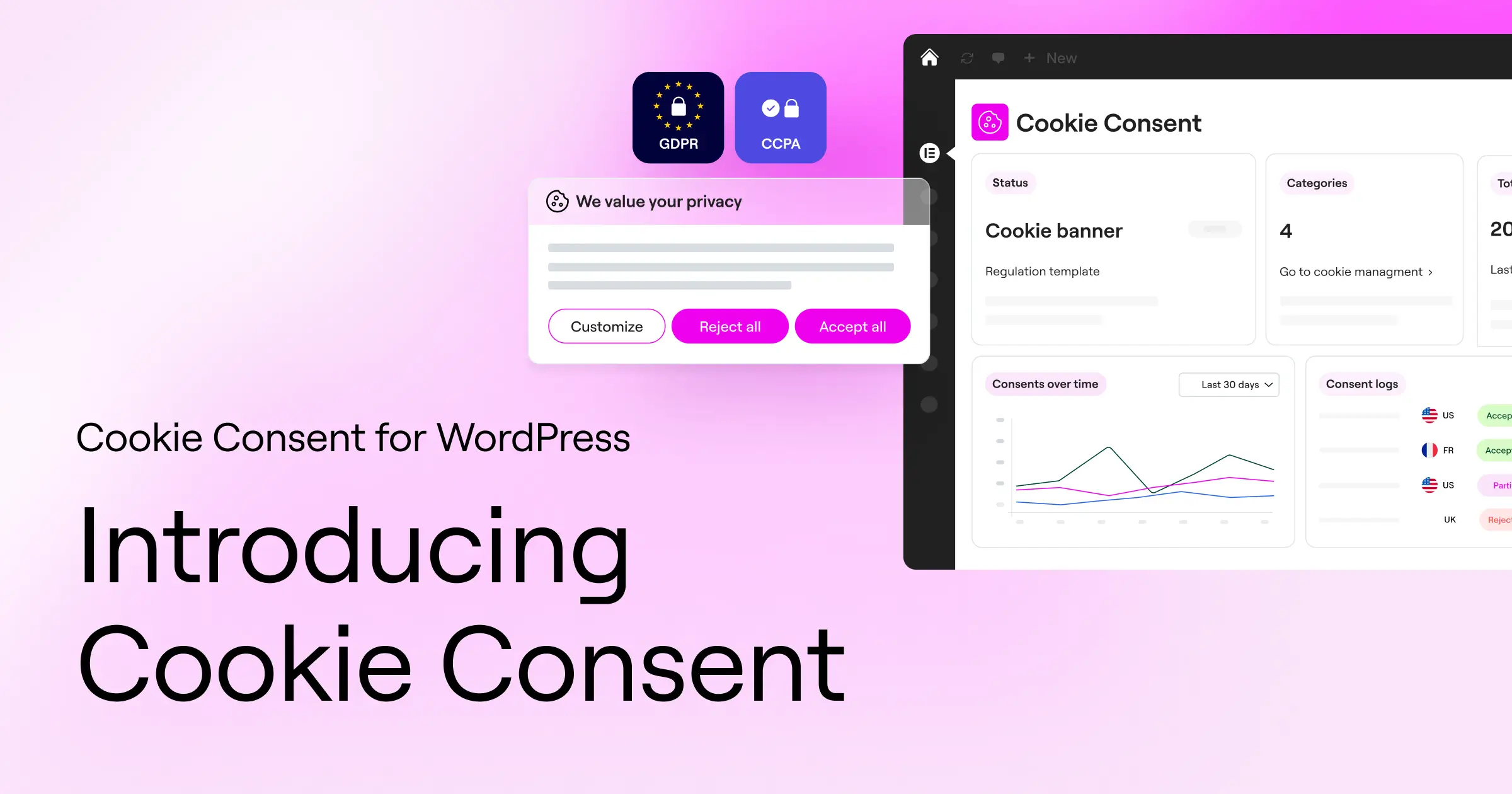
When you want to handle cookie management without leaving WordPress, Cookie Consent is the most cohesive option out there. Built as a native capability inside Elementor, it lets you manage GDPR and CCPA compliance from your existing setup, no external dashboards needed.
Setting up your banners is genuinely quick, a three-step flow under five minutes (simpler than it sounds). Built into the site editor, it gives you full design control over colors, typography, and spacing, so privacy notices look like part of your site, not an add-on.
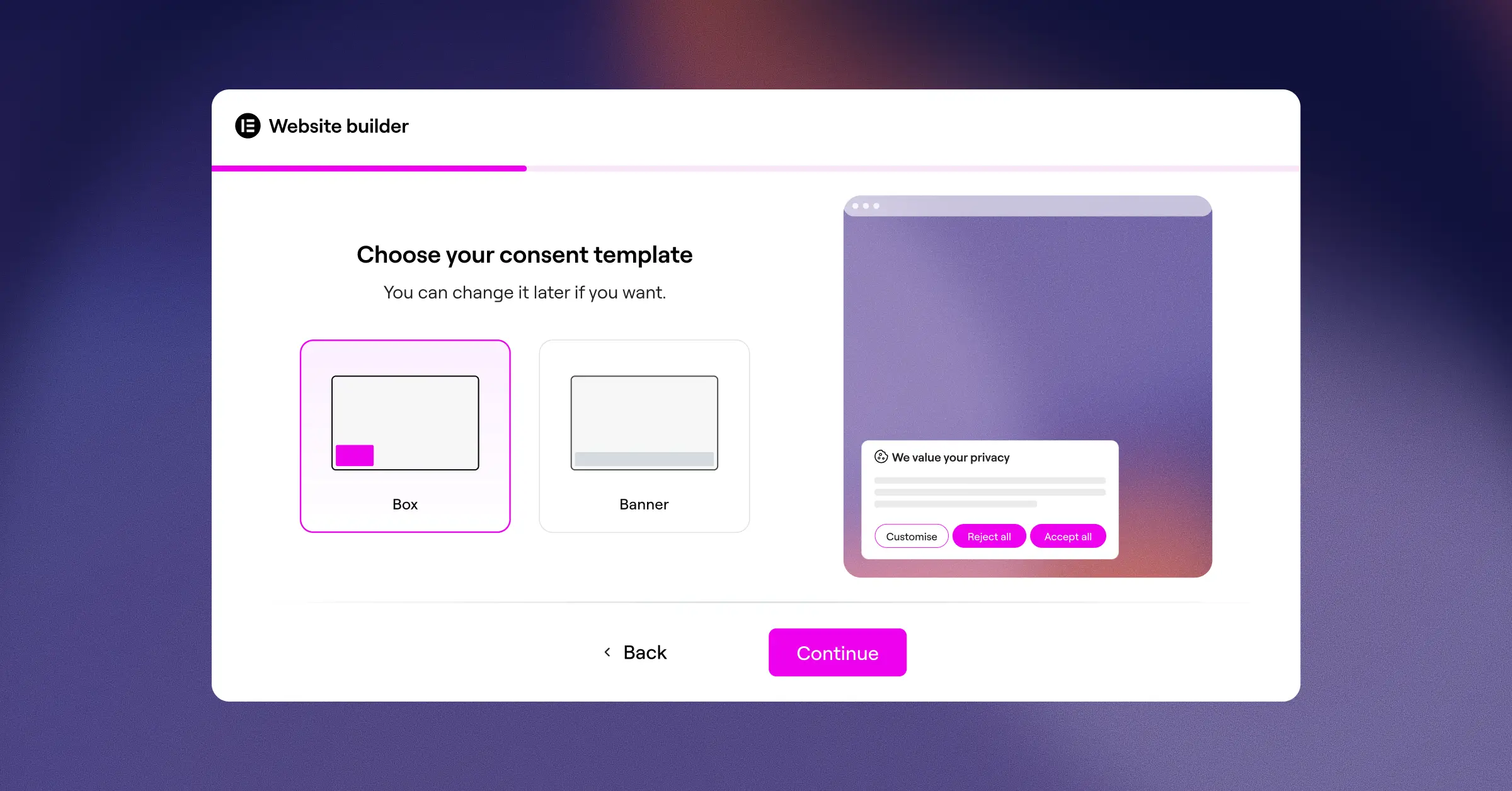
Behind the scenes, it also handles automatic cookie scanning, script blocking before consent, full support for Google Consent Mode v2, and GPC signals and geo-targeting, so European visitors get a strict opt-in banner while others see a notice tailored to local rules.
Key Features
- Saves setup time by running entirely inside the WordPress admin screen.
- Displays nicely designed consent prompts styled with editor controls.
- Blocks tracking scripts until a visitor actively clicks accept.
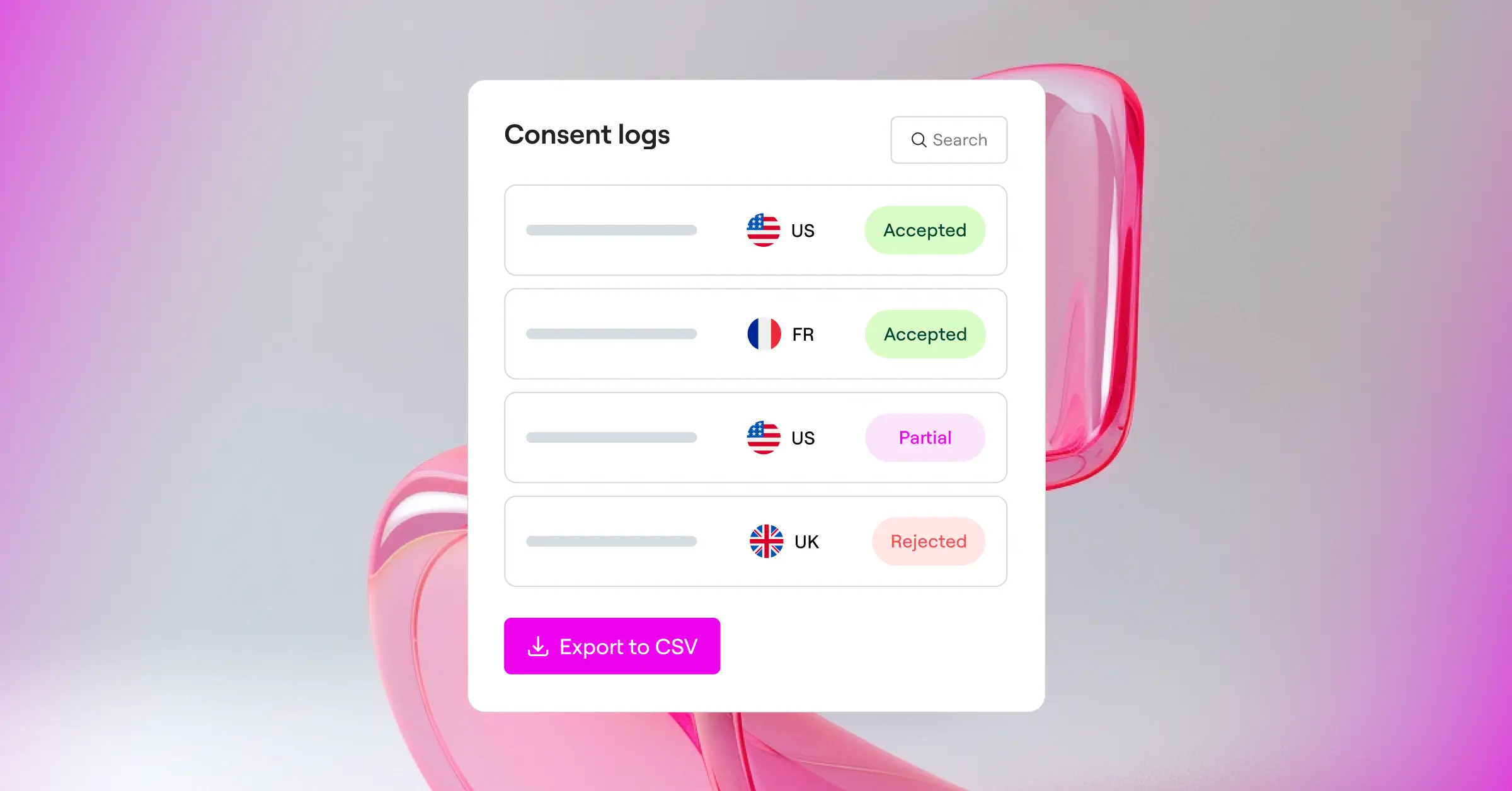
- Records consent logs locally for a solid audit trail.
- Recognizes regional visitor locations to show tailored consent settings.
- Supports multilingual setups so compliance copy translates for global audiences.
Cookie Consent includes a generous free tier for basic sites and comes bundled with Elementor One, a cost-effective option for growing businesses that want everything in one place.
Pros & Cons
- Pro – No dashboard hopping since it lives inside WordPress.
- Pro – Design tools that keep banners on-brand, no extra effort.
- Pro – Fast five-minute setup, no coding needed.
- Con – Works best paired with modern page-building workflows.
Verdict: The best pick for a fast, native, visually integrated solution that skips subscription bloat.
2. Cookiebot
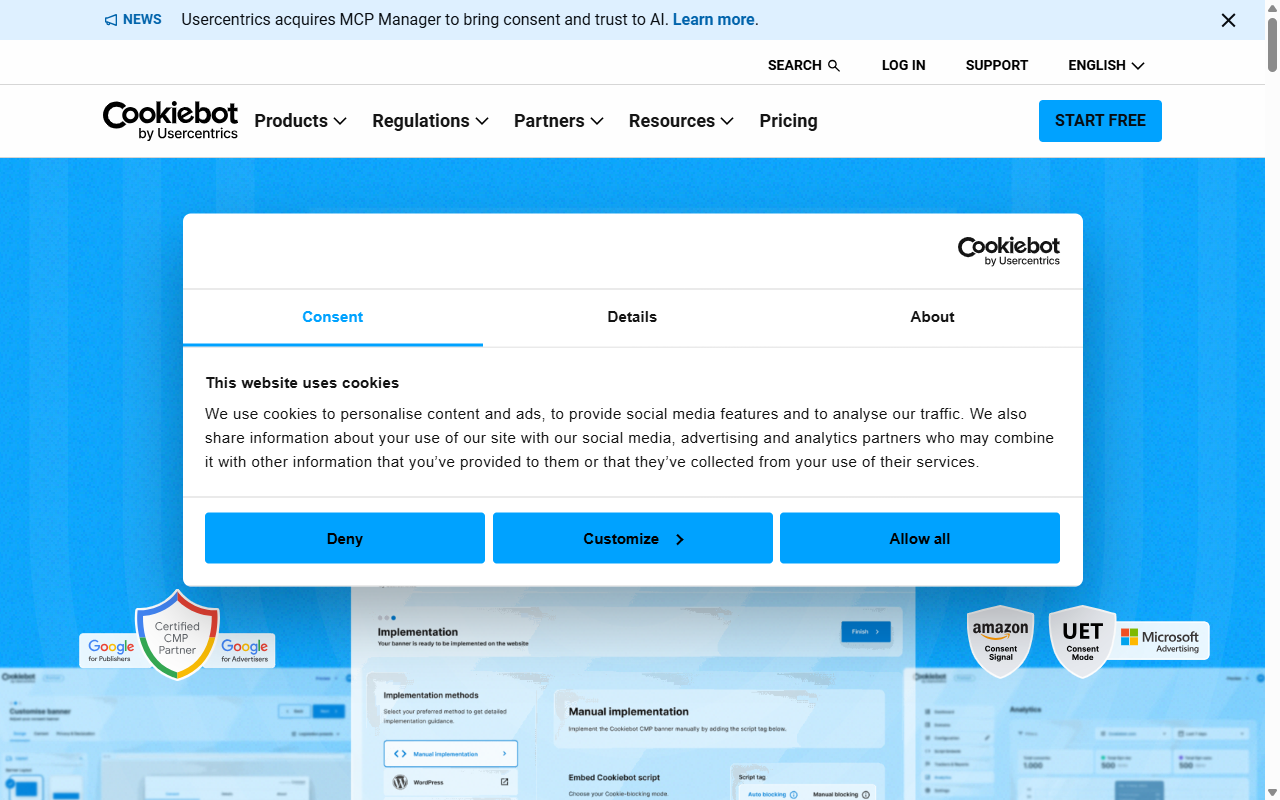
Cookiebot is an established, cloud-based consent platform for site owners who’d rather run things externally, scanning your site monthly for tracking scripts and cookies and sorting them automatically for visitors.
It keeps an organized consent record in its cloud database, and if you run several sites, Cookiebot lets you manage them all from one dashboard.
Key Features
- Scans your site monthly to catch new cookies or tracking codes.
- Builds automated cookie declarations that update your privacy policy page.
- Controls script execution depending on each visitor’s consent choices.
For larger sites, Cookiebot charges a monthly subscription based on your total page count.
Pros & Cons
- Pro – Automated scanning catches newly added scripts and cookies.
- Pro – Centralized dashboard works well for multi-platform portfolios.
- Con – The entry-level plan is limited to smaller projects.
- Con – Banners can load slowly since they pull from an external server.
Verdict: A reliable, hands-off pick if you have budget for a subscription and want automated monthly reports.
3. CookieYes
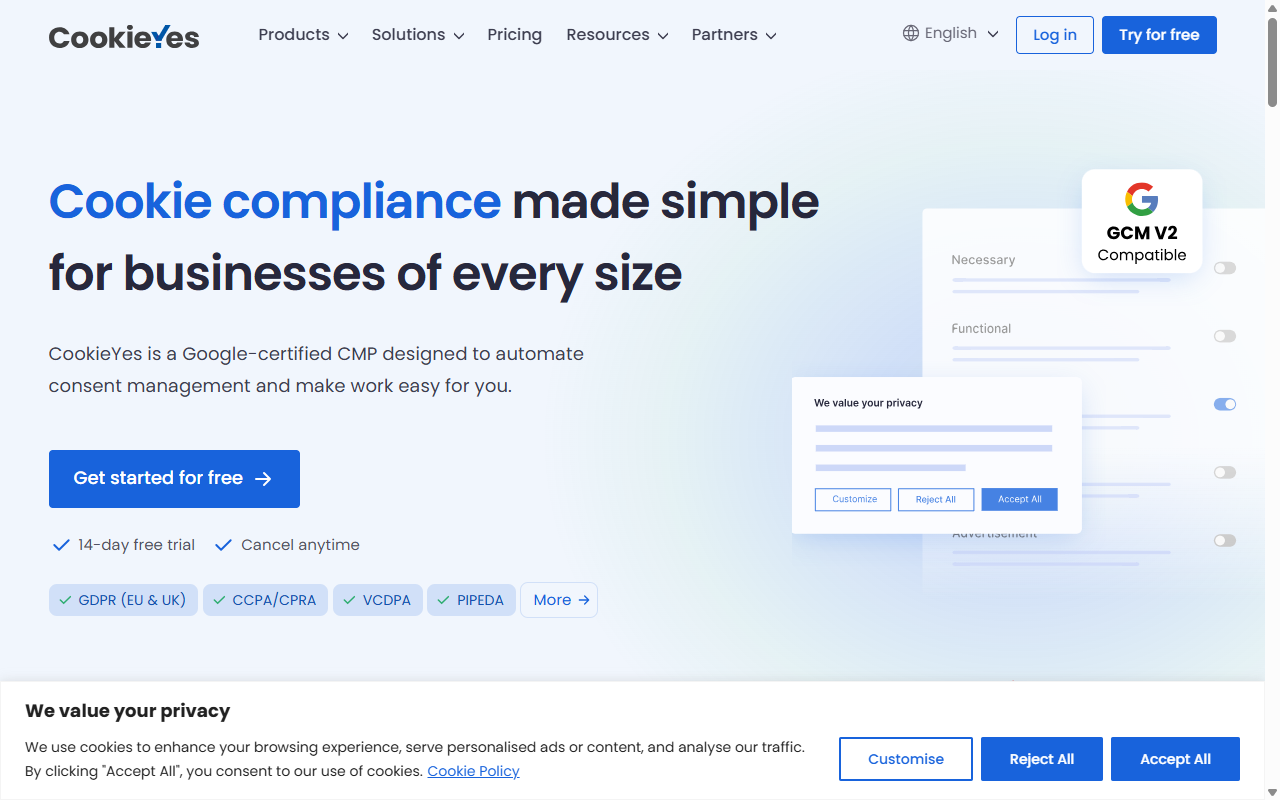
CookieYes bridges a web app and a WordPress tool, with a clean, minimal interface for customizing your cookie banner and consent settings.
It supports major privacy laws, including GDPR, CCPA, and Brazil’s LGPD, and stays approachable for beginners, though you’ll need their web portal to see your full consent history and analytics logs.
Key Features
- Manages your cookie consent history in a secure cloud repository.
- Translates your privacy banners into more than thirty languages automatically.
- Supports custom CSS if you want to fine-tune your banner layout.
Paid plans scale with page views, with features like geo-targeting available on higher tiers.
Pros & Cons
- Pro – Clean, easy-to-navigate interface that’s friendly for beginners.
- Pro – Strong multi-language support right out of the box.
- Con – You have to leave WordPress to view detailed compliance logs.
- Con – Custom layout options sit behind the higher paid plans.
Verdict: A solid choice if you like clean design and don’t mind an external app for visitor stats.
4. Complianz
Complianz takes a legal-first approach to cookie management, walking you through a setup wizard to figure out which regulations apply to your business.
It generates custom legal documents based on your answers, so selling to customers in California, Canada, and Germany gets you specific policies for each region, and it runs locally, keeping load times fast.
Key Features
- Generates legally sound privacy policies and cookie policy documents automatically.
- Integrates cleanly with popular WordPress translation tools.
- Detects browser preferences like Do Not Track and respects them right away.
The premium version adds advanced legal documents and multi-region consent forms on a yearly subscription.
Pros & Cons
- Pro – Step-by-step wizard that walks you through legal definitions clearly.
- Pro – Runs locally on your own server, keeping load times snappy.
- Con – The setup wizard can feel long and detail-heavy.
- Con – The dashboard can look like a lot for casual users.
Verdict: A great pick for deep, region-specific legal documents if you don’t mind detailed configuration.
5. iubenda
iubenda is a compliance suite for professional publishers and agencies, handling everything from cookie consent banners to auto-updating privacy policies, terms, and internal documentation.
What makes iubenda different is its team tracking global legislation continuously, so when a law changes, the scripts on your site update automatically (a real relief if you manage client sites).
Key Features
- Updates legal texts automatically as global compliance rules shift.
- Combines cookie consent with terms of service and privacy policy generation.
- Gives you agency dashboards to manage compliance across dozens of client domains.
Pricing runs on a credit system, flexible for custom needs but it takes a little getting used to.
Pros & Cons
- Pro – Backed by ongoing legal monitoring that keeps documents current.
- Pro – Automated legal updates that cut down on maintenance.
- Con – The credit system takes some getting used to.
- Con – Styling the banner naturally can be tricky without CSS knowledge.
Verdict: A good fit for agency owners who want professionally maintained legal automation across client sites.
6. OneTrust
OneTrust is an enterprise-level privacy platform for organizations with complex data pipelines, the standard choice if your site is part of a larger setup sharing data across mobile apps, CRM systems, and retail locations.
It includes deep compliance reporting, vendor risk assessments, and data subject access request (DSAR) portals, which usually makes it too complex and expensive for a standard blog or small shop.
Key Features
- Tracks consent across web, mobile, offline, and smart TV applications.
- Organizes full-scale vendor risk assessments for corporate audits.
- Automates consumer rights requests through dedicated, secure portals.
Pricing needs a sales call for a custom quote based on your organization’s needs.
Pros & Cons
- Pro – A recognized standard for large enterprise compliance programs.
- Pro – Detailed auditing and data tracking that covers complex scenarios.
- Con – Expensive for independent creators and small businesses.
- Con – Complex setup that usually needs a technical consultant.
Verdict: Essential for enterprise organizations, but overkill for standard business sites and blogs.
7. Transitioning to Server-Side Tagging
If you want to move away from third-party cookies entirely, server-side tagging is one of the most powerful methods available. Instead of loading tracking scripts in the browser, you send one secure data stream to a server you control, which forwards it to Google or Meta.
This gets you two real benefits: your site loads faster with fewer scripts running, and you get full control over what data gets shared, protecting privacy while keeping analytics accurate as browsers tighten restrictions.
How to Set Up Server-Side Tagging in WordPress
- Set up a Google Tag Manager container configured for server-side tracking.
- Provision a cloud server (usually Google Cloud or Stape) to host your tracking container.
- Point a custom subdomain (like tags.yourdomain.com) to your tracking server.
- Install a lightweight container on your WordPress site to send data to that subdomain.
- Map your tags, triggers, and variables in Google Tag Manager to send secure API requests to Facebook, Google, and other providers.
This takes a bit of setup upfront, but it’s future-proof and keeps your tracking independent of browser changes going forward.
8. Shifting to First-Party Data Strategies
The most resilient long-term move is to stop relying on third-party tracking. Focusing on first-party data collection means gathering information straight from your audience through their own interactions on your site.
When visitors willingly share their information, you build reliable data that browser changes can’t touch, turning your relationship with your audience into a direct, helpful conversation instead of a background tracking setup.
Great Ways to Collect First-Party Data
- Create high-value newsletter downloads that encourage visitors to sign up.
- Design interactive quizzes that help visitors find the right product for their needs.
- Build a loyalty program that rewards users for creating a free account.
- Host webinar events that require direct email registration to attend.
- Publish user polls on your articles to gather direct feedback on content preferences.
9. Implementing Global Privacy Control (GPC)
Global Privacy Control is an emerging browser standard letting people set a universal privacy preference once. Their browser then sends your site a simple signal saying whether they want their personal details sold or shared.
Many privacy laws now require sites to recognize and respect these signals automatically. If a visitor has GPC active, your site needs to treat it as a formal opt-out request for non-essential tracking scripts.
How to Handle GPC Signals in WordPress
- Confirm your cookie consent tool supports GPC detection out of the box.
- Configure your scripts to pause automatically when the GPC signal is active.
- Update your privacy policy page to state that you recognize and honor GPC browser requests.
Taking this step keeps your site compliant with strict consumer laws while giving privacy-conscious visitors real peace of mind. Elementor’s Cookie Consent capability supports GPC detection natively, so there’s nothing to wire up yourself.
10. Using Google Consent Mode v2
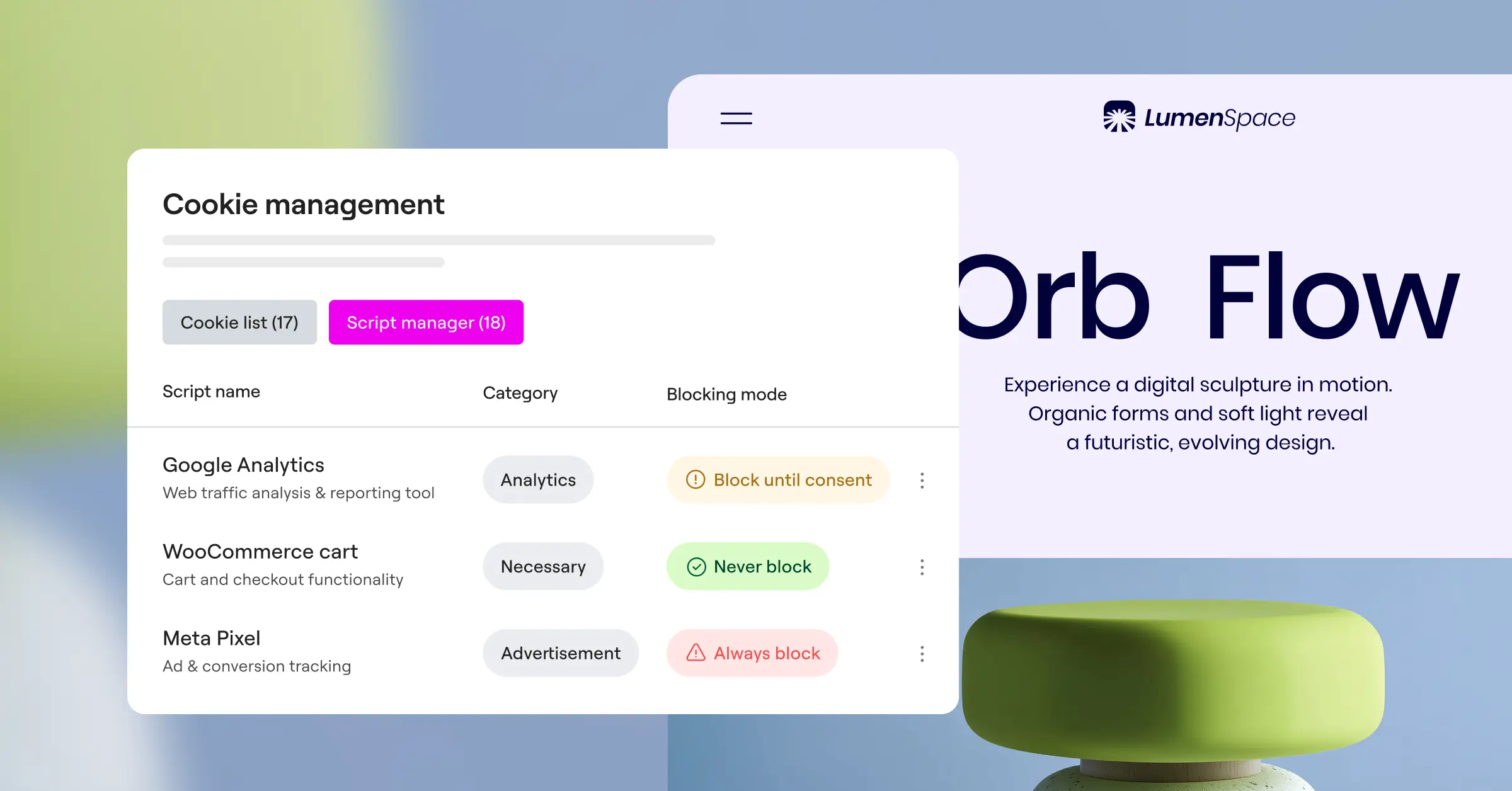
If you use Google Ads or Google Analytics, Google Consent Mode v2 isn’t optional anymore for sites with EU traffic, since it communicates visitor consent choices directly to Google’s tracking tags, keeping everything accurate and compliant.
When a visitor declines cookies, Consent Mode v2 doesn’t just stop tracking. It sends cookieless signals to Google, which models conversions and traffic trends with machine learning, so your marketing data stays useful without compromising privacy.
Why Google Consent Mode v2 Matters
- Preserves conversion tracking data even when visitors decline cookies.
- Protects your ability to run remarketing campaigns in European regions.
- Balances strict regulatory compliance with useful business reporting.
Using Elementor’s cookie consent capability makes this simple, since it includes native compatibility with Google’s framework built right in.
Compliance Tool Comparison Matrix
Here’s a quick look at how the top tools and strategies compare.
| Tool / Method | Dashboard Type | Setup Speed | Google Consent Mode v2 | Best For |
|---|---|---|---|---|
| Cookie Consent (Elementor) | WordPress-Native | Under 5 Mins | Yes (Native) | WordPress sites wanting smooth dashboard integration |
| Cookiebot | External SaaS | Medium | Yes | Sites requiring automated monthly scanner audits |
| CookieYes | External SaaS | Medium | Yes | Simple sites needing quick multi-language setups |
| Complianz | WordPress-Native | Slow (Wizard-based) | Yes | Sites needing detailed, local legal document generation |
| iubenda | External SaaS | Medium | Yes | Agencies managing diverse compliance portfolios |
| OneTrust | Enterprise Portal | Very Slow | Yes | Enterprise corporations with large compliance budgets |
“Modern privacy compliance is no longer about slapping a basic banner on your site. It’s about building real visitor trust while keeping your site performant and your analytics clean. Native dashboard tools make this transition incredibly simple.”
– Itamar Haim, Web Compliance Specialist
Frequently Asked Questions
Are third-party cookies completely gone now?
Browsers have heavily restricted third-party tracking, but they’re not entirely gone. Many block them by default now, so it’s worth moving your site to first-party data strategies and clean consent workflows soon.
What is the difference between first-party and third-party cookies?
First-party cookies come from the site you’re visiting, remembering things like shopping carts or login details. Third-party cookies come from outside sites, like ad networks or tracking pixels, to follow your behavior across unrelated sites.
Does a cookie consent banner slow down my WordPress site?
It can, if you’re using heavy external scripts that load slowly. A native capability like Cookie Consent keeps things quick since it runs directly within your site instead of waiting on an external cloud server.
Do I really need Google Consent Mode v2 if I don’t run ads?
If you use Google Analytics and get visitors from the European Economic Area, yes. It keeps your data collection compliant with European privacy rules and your analytics reports accurate.
Can I customize the look of my consent banner?
Yes, though how much depends on the tool. Elementor’s cookie consent capability lets you style everything right in your site builder to match your brand. External tools often need custom CSS for the same result.
How does Global Privacy Control work?
It’s a setting people turn on in their browser. When they visit your site, it sends a privacy signal, and your compliance tool treats it as a request to opt out of non-essential tracking.
What happens if I don’t use a cookie banner on my WordPress site?
Running tracking scripts without consent can lead to fines from data protection agencies, especially with visitors from regions with strict laws like California or Europe. It can also hurt user trust and get your ad accounts reviewed or suspended.
Do I need a privacy policy page if I have a consent banner?
Yes, a cookie banner and a privacy policy page work together: the banner handles immediate choices, while the policy page explains what data you collect, why, and how it can be deleted. Both matter for privacy compliance.

