
Keeping your WordPress site compliant with privacy law doesn’t have to be a chore. Rules keep changing worldwide, but plenty of tools do the heavy lifting for you, whether you run a simple blog or a busy store.
Below are ten of the best free and paid options, walked through so you can pick with confidence.
Key Takeaways
- Native tools save resources: WordPress-native options skip heavy external scripts and separate dashboards.
- Google Consent Mode v2 matters: If you serve European visitors and use Google services, your tool needs to support it.
- Free options work for simple sites: Basic blogs get by on entry-level plans; global businesses need geo-targeting.
- Consent logs matter for audits: Secure records protect your business if a regulator comes knocking.
What to Look For in a WordPress Cookie Tool
Here’s what makes a cookie tool worth your time: solid compliance balanced with a smooth visitor experience.
- Dashboard Integration: Managing everything from WordPress saves time; external portals feel disjointed.
- Performance Impact: Some tools lean on large scripts that hurt page speed. Look for lightweight options.
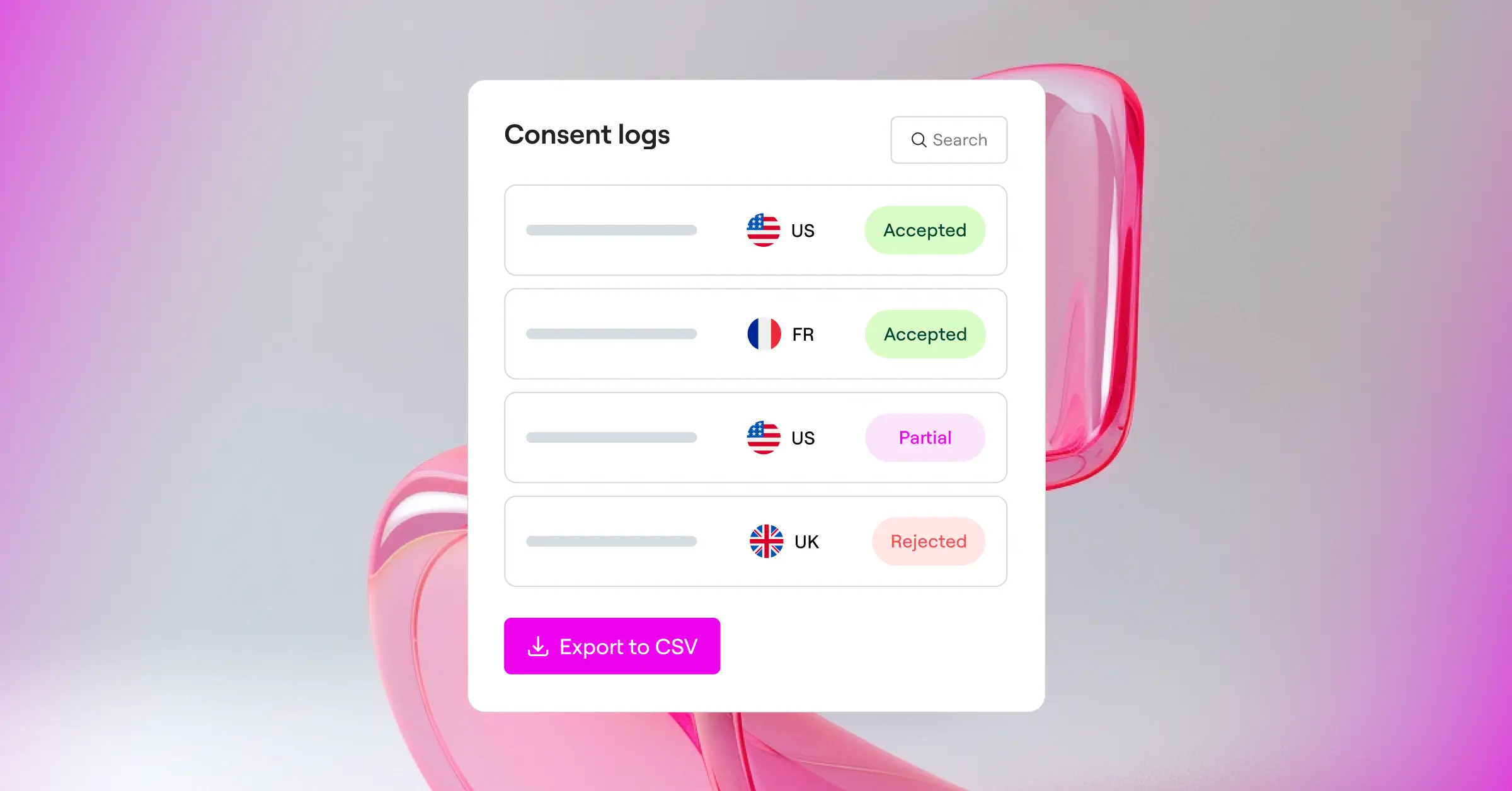
- Consent Records: If a regulator asks for proof, you’ll want clean logs of when and how a visitor opted in.
Free versus paid usually comes down to geo-targeting: free tools show one banner to everyone, while paid tools vary messages by location, like a stricter GDPR banner for Europe and a simpler opt-out for California.
1. Cookie Consent (by Elementor)
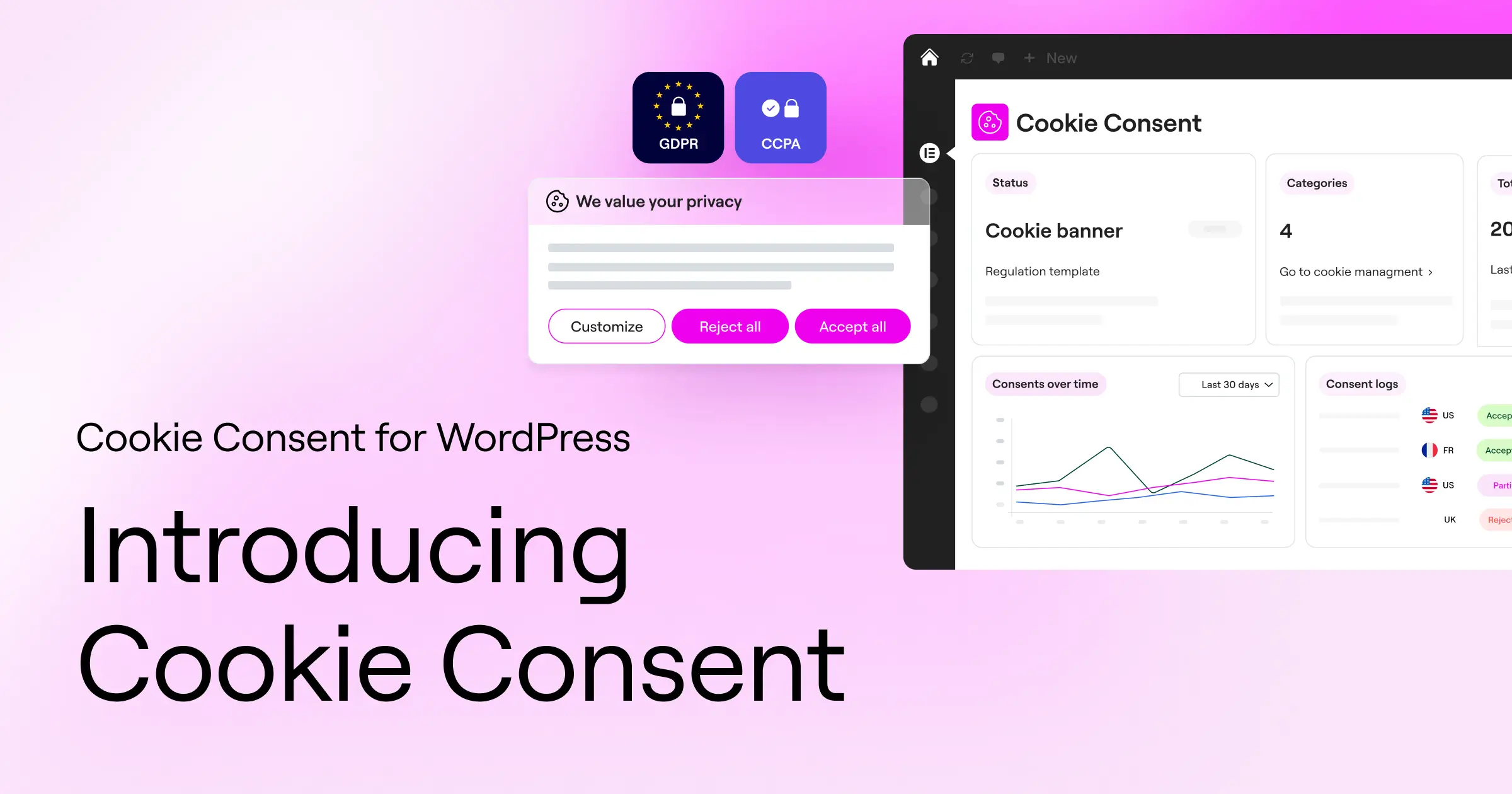
First up is Cookie Consent, the native cookie consent capability built for Elementor users. It lives inside your WordPress dashboard, manages GDPR and CCPA compliance from one place, and takes under five minutes to set up. It handles cookie scanning, consent logs, and multi-language setups out of the box, and comes included with Elementor One alongside capabilities like Web Accessibility.
Key Features
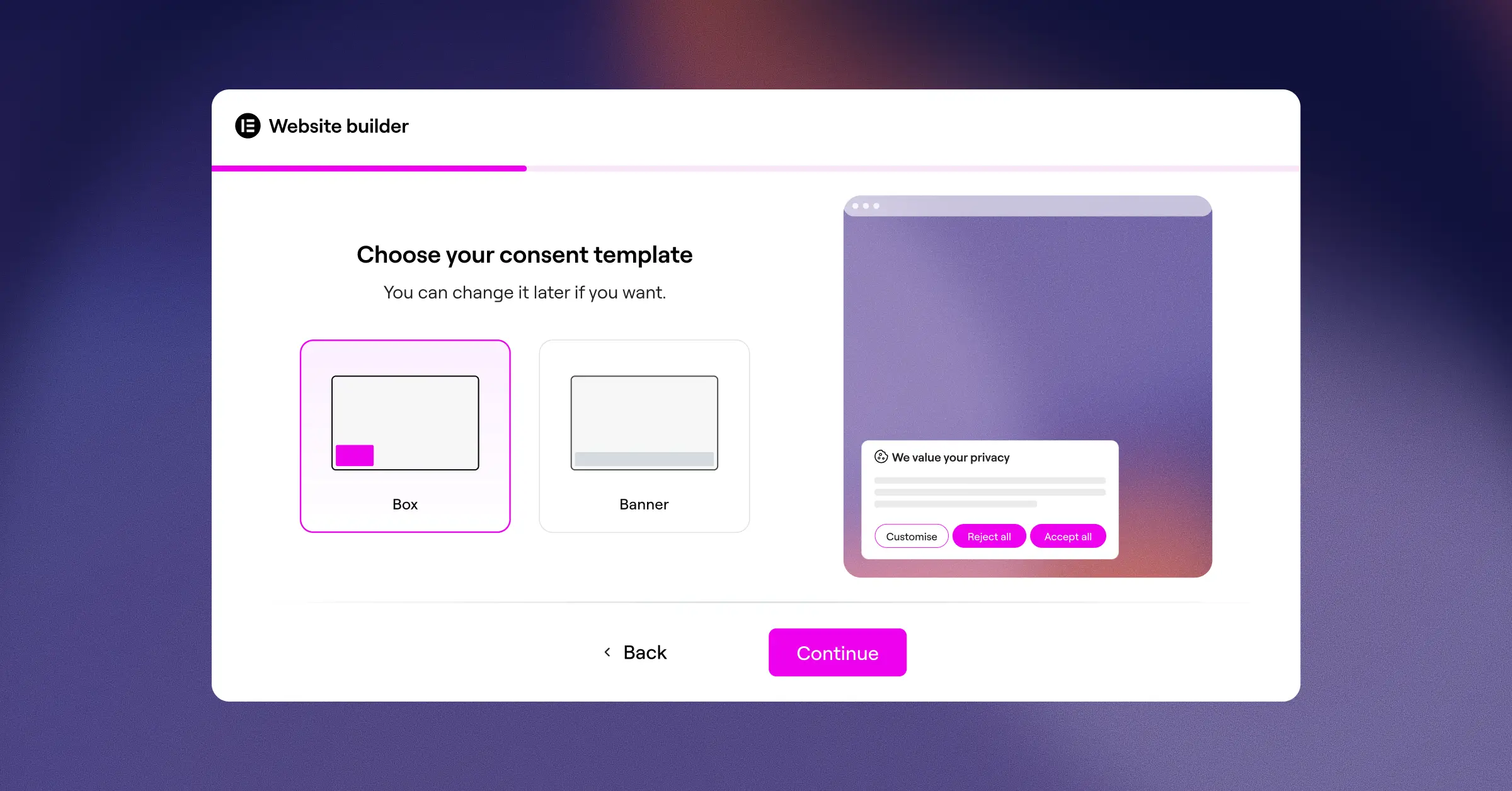
- Builds banners with native templates matching your site.
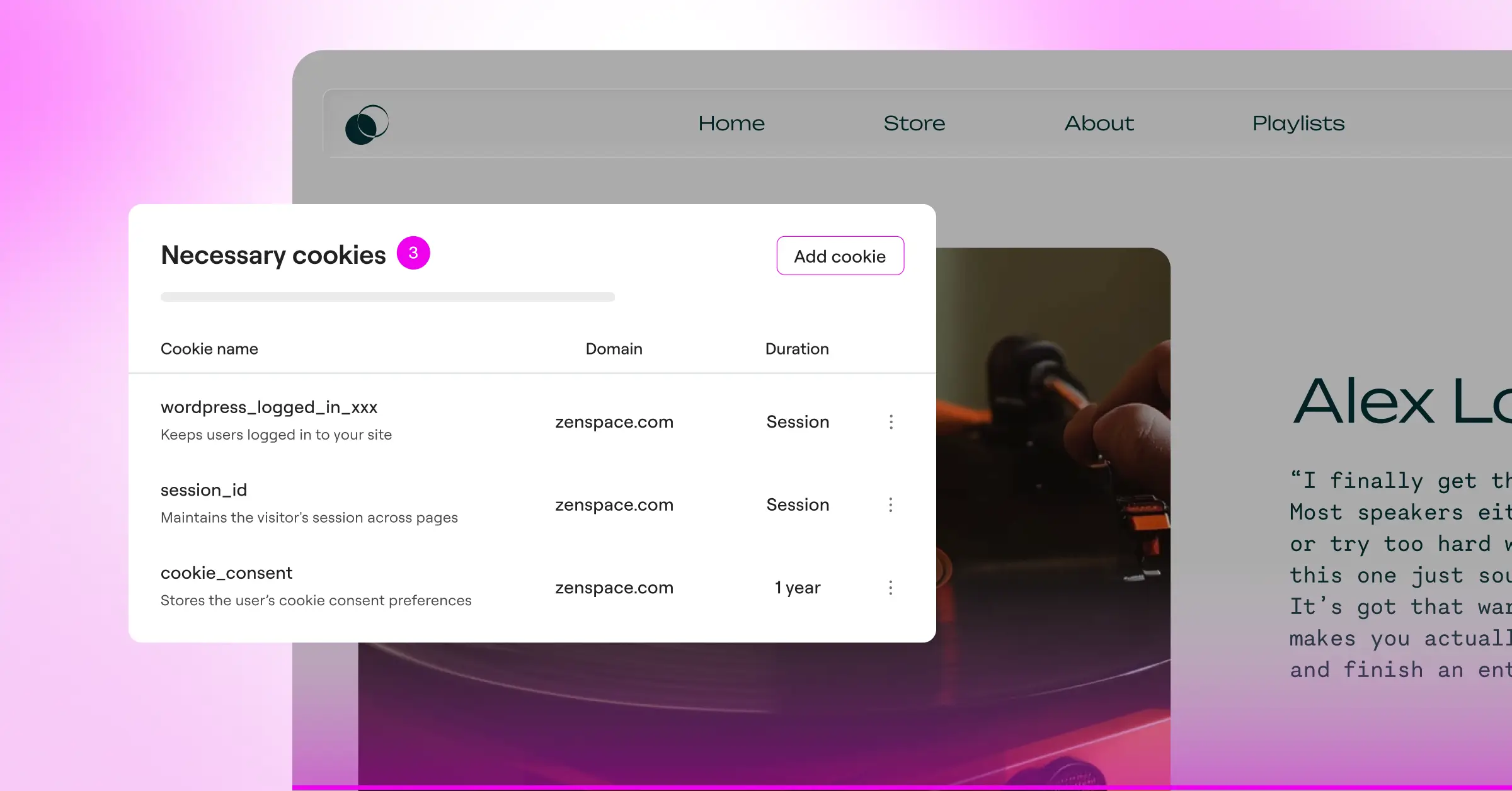
- Scans your site to find and categorize cookies.
- Keeps secure logs for compliance audits.
- Connects with Google Consent Mode v2 for accurate analytics.
- Pulls localized translations for each visitor.
- Filters banners by location for relevant notices.
Pros and Cons
- Pro: Runs entirely inside WordPress.
- Pro: Fast three-step setup, under five minutes.
- Pro: Excellent white-label options for agencies.
- Con: Works best within the Elementor ecosystem.
Our Verdict
The top overall pick if you value speed, design control, and one dashboard.
2. Cookiebot
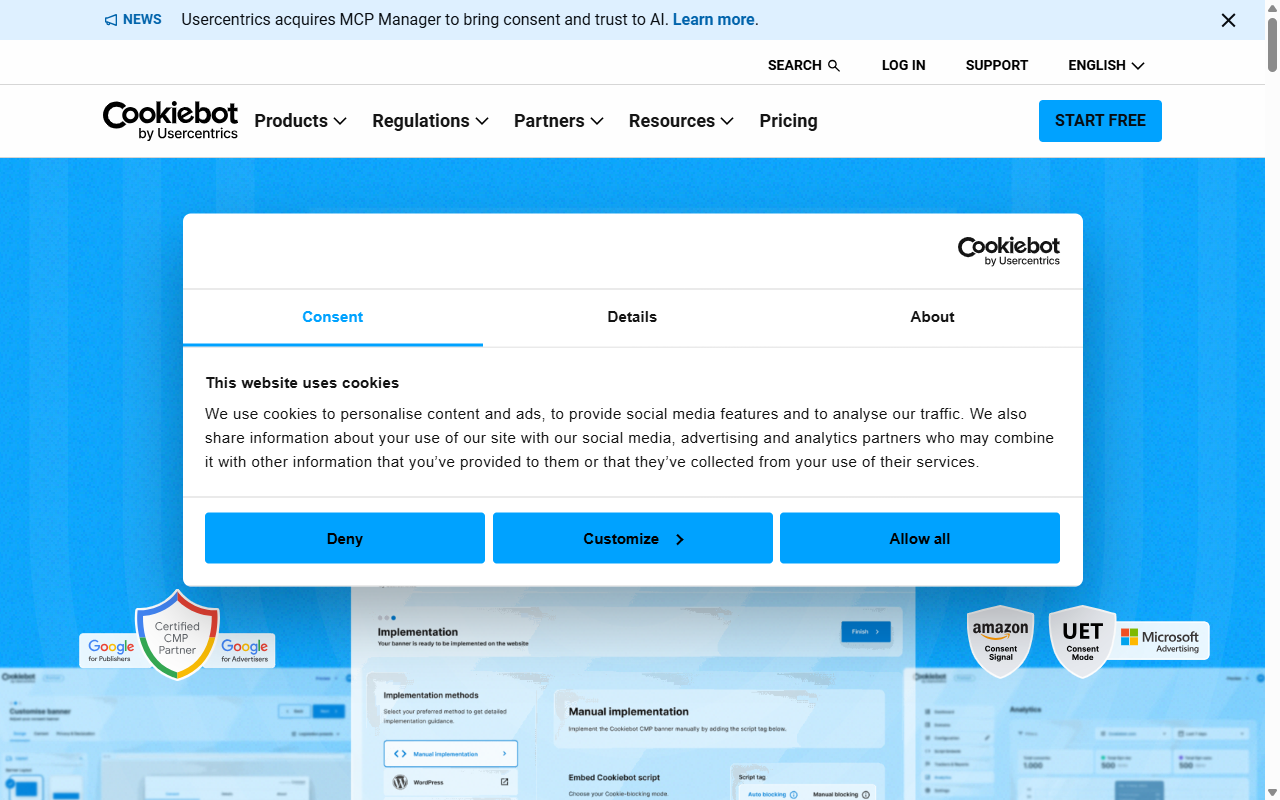
Cookiebot is a well-known name in privacy compliance, running as an external cloud service connected to WordPress through a helper script. It suits owners who want a hands-off approach: monthly scans update your cookie policy page automatically, though you’ll configure settings in its cloud dashboard rather than WordPress admin.
Key Features
- Schedules monthly automated scans of your site.
- Generates a dynamic cookie declaration page.
- Supports GDPR and CCPA legal requirements.
- Holds consent data securely in the cloud.
- Integrates with Google Tag Manager for blocking.
- Detects visitor location for the correct framework.
Pros and Cons
- Pro: Thorough scanning with a strong track record in Europe.
- Pro: Supports Google Consent Mode v2 out of the box.
- Con: Configuration happens outside WordPress admin.
- Con: Pricing scales with page count.
Our Verdict
Reliable and well-established, good if your site fits the free page limit or the scaling fee works.
3. CookieYes
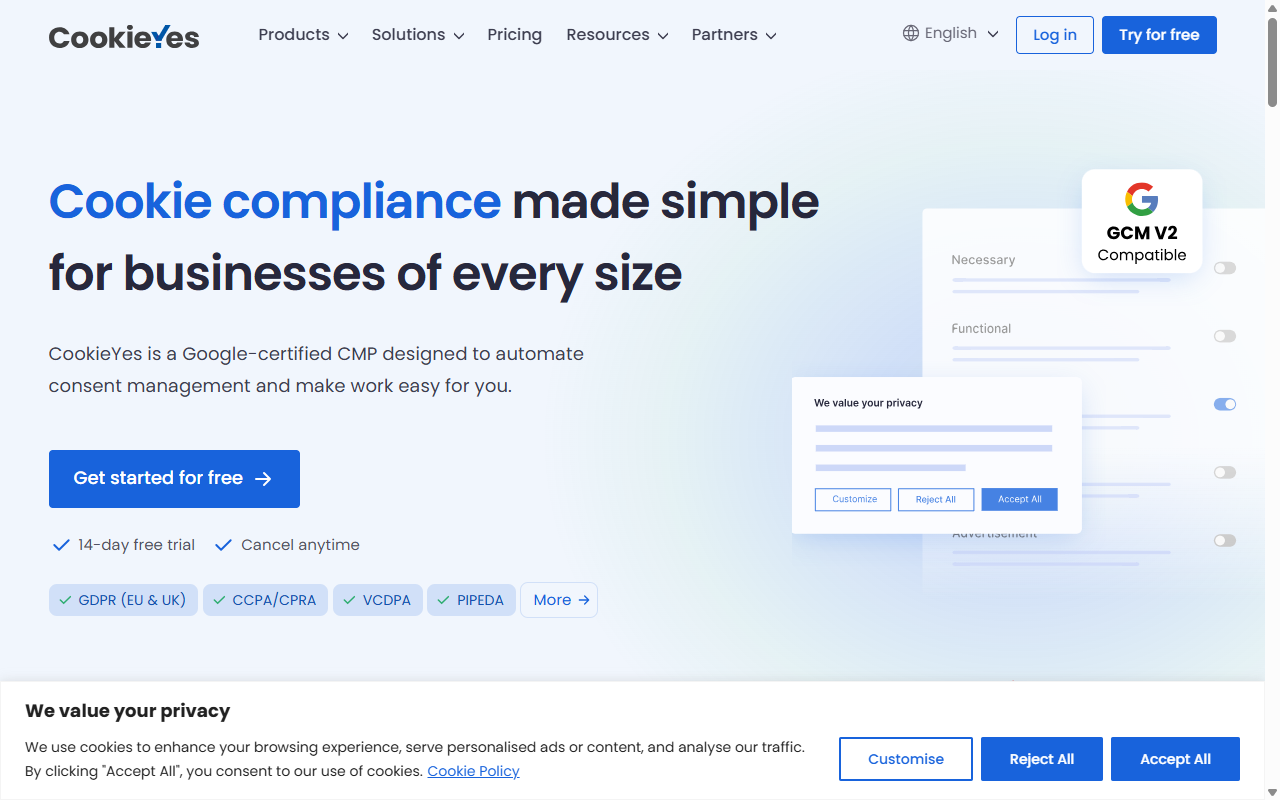
CookieYes blends cloud management with straightforward WordPress integration, known for its clean interface and generous entry-level plan. It shows modern, non-intrusive banners plus reliable scanning for tracking scripts. Setup happens mostly in an external web app, though the WordPress connector installs quickly.
Key Features
- Categorizes cookies automatically after every scan.
- Customizes banner designs to match your branding.
- Tracks consent actions through an analytics dashboard.
- Supports over thirty languages for global audiences.
- Blocks third-party scripts until consent is granted.
- Keeps records of consent for compliance checks.
Pros and Cons
- Pro: Friendly, genuinely easy interface.
- Pro: Entry-level plan is generous for personal blogs.
- Pro: Good selection of banner templates.
- Con: Requires an external account.
- Con: Geo-targeting sits behind paid tiers.
Our Verdict
A solid mid-range option if your site gets moderate traffic and you want a friendly cloud dashboard.
4. Complianz
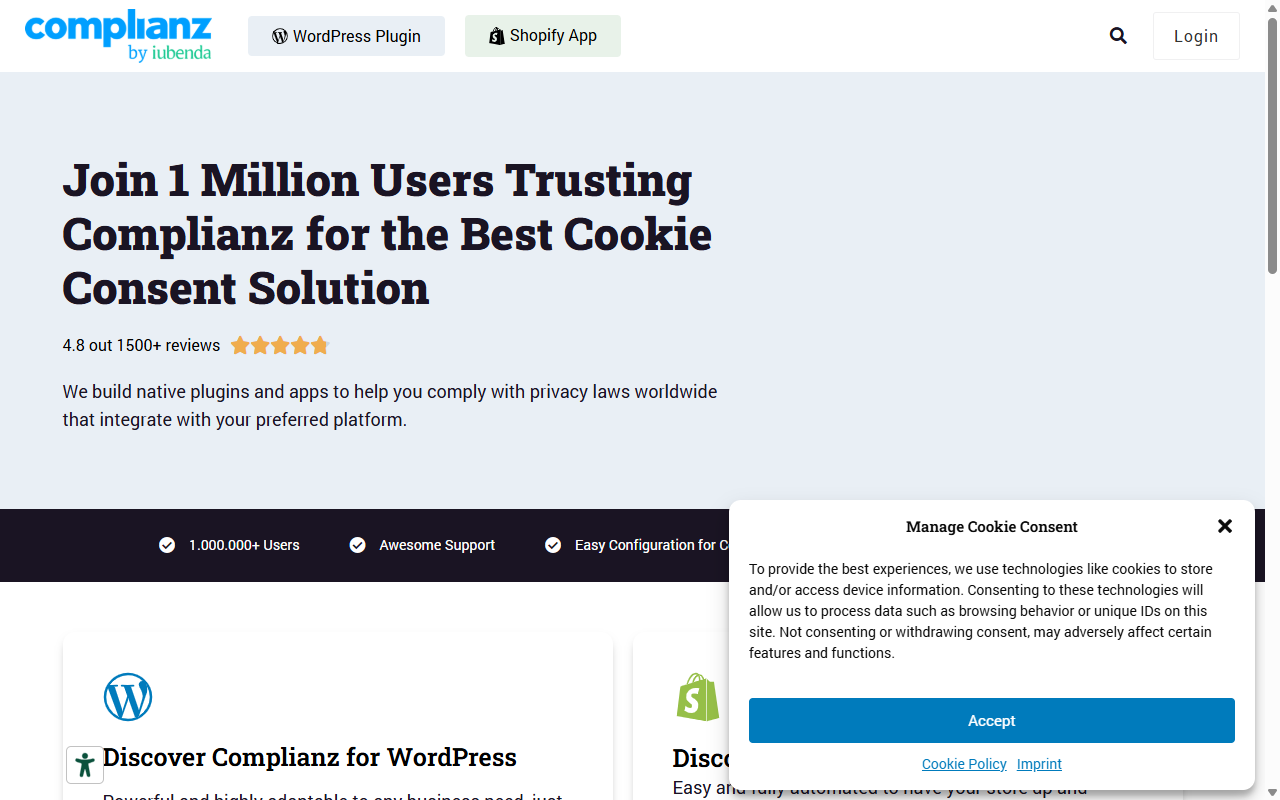
Complianz is built specifically for WordPress, known for a step-by-step wizard that walks you through legal documents and banner settings based on a questionnaire about your business. It runs on your server, figures out which privacy laws apply, and helps build a custom policy around your needs.
Key Features
- Guides you through a legal questionnaire to tailor setup.
- Generates customized legal documents like cookie policies.
- Integrates with major WordPress forms and tools.
- Configures banner styles for GDPR, CCPA, and COPPA.
- Blocks social embeds until tracking is accepted.
- Syncs with your existing WordPress theme.
Pros and Cons
- Pro: Wizard-driven setup, genuinely helpful for beginners.
- Pro: Generates actual legal documents, saving legal fees.
- Pro: Keeps data on your own server.
- Con: The number of settings can feel overwhelming at first.
- Con: Modern styling may take some CSS knowledge.
Our Verdict
Great for a local WordPress solution with help generating legal texts. Setup takes patience, the result is secure.
5. iubenda
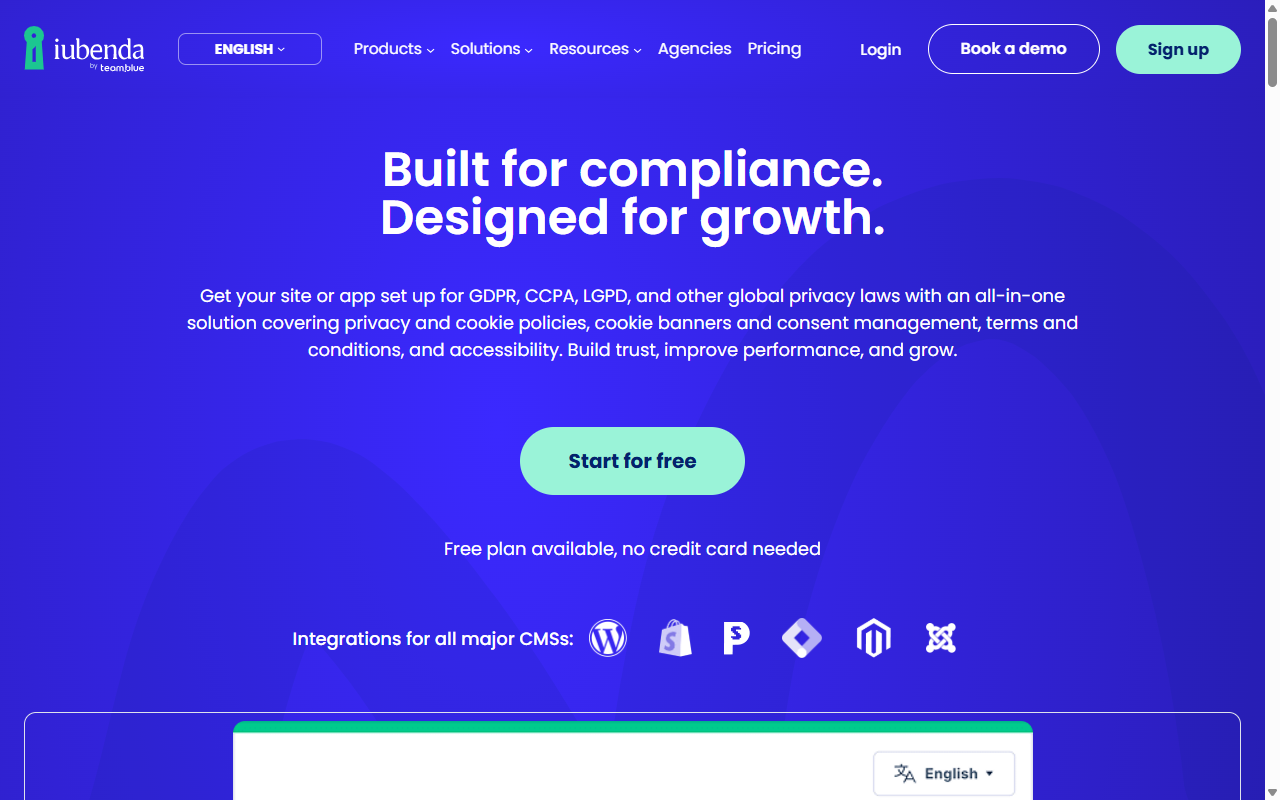
iubenda is a complete compliance suite for businesses managing privacy policies, terms of service, and cookie consent across multiple platforms. Since it’s a broader legal platform, the WordPress cookie feature is one part of a larger ecosystem, so you can add features as your business grows.
Key Features
- Monitors legal changes worldwide to keep policies updated.
- Generates privacy policies hosted on iubenda’s servers.
- Saves preferences for users across multiple domains.
- Configures detailed cookie banners with advanced options.
- Supports Google Consent Mode v2 and IAB TCF.
- Tracks consent analytics through a cloud panel.
Pros and Cons
- Pro: Professional infrastructure keeps policies current globally.
- Pro: Highly customizable system that grows with you.
- Pro: Great for multi-site and complex corporate needs.
- Con: Setup can feel complex with legal terminology.
- Con: Credit or subscription pricing is hard to predict.
Our Verdict
Strong for larger businesses or e-commerce needing full legal documents alongside cookie consent.
6. Termly
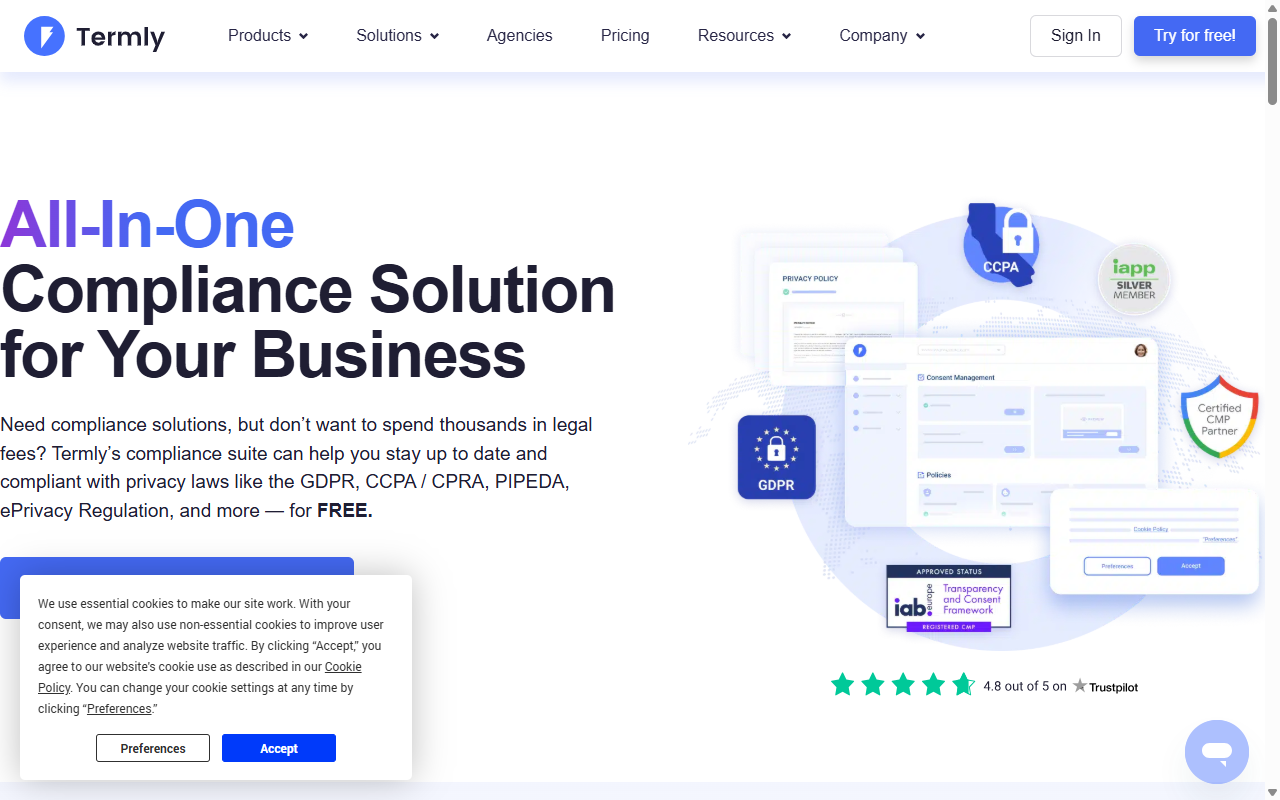
Termly helps small businesses meet legal requirements without heavy legal fees, covering cookie banners, privacy policy generators, and terms templates in one place. Its WordPress integration connects to Termly’s cloud platform, where you design your banner, run scans, and manage compliance records.
Key Features
- Scans your site for tracking scripts and cookies.
- Generates custom privacy policies and terms of service.
- Customizes banner layouts to fit your site’s style.
- Auto-categorizes common tracking scripts from Google and Facebook.
- Maintains a consent log for audit readiness.
- Supports GDPR, CCPA, and UK privacy laws.
Pros and Cons
- Pro: Clean, modern, easy-to-navigate dashboard.
- Pro: Good mix of consent and policy tools.
- Pro: Simple installation.
- Con: Entry-level plan shows a Termly logo on your banner.
- Con: Page view limit runs low for active sites.
Our Verdict
Great for small businesses wanting a simple, all-in-one package, though active sites will want to upgrade quickly.
7. OneTrust
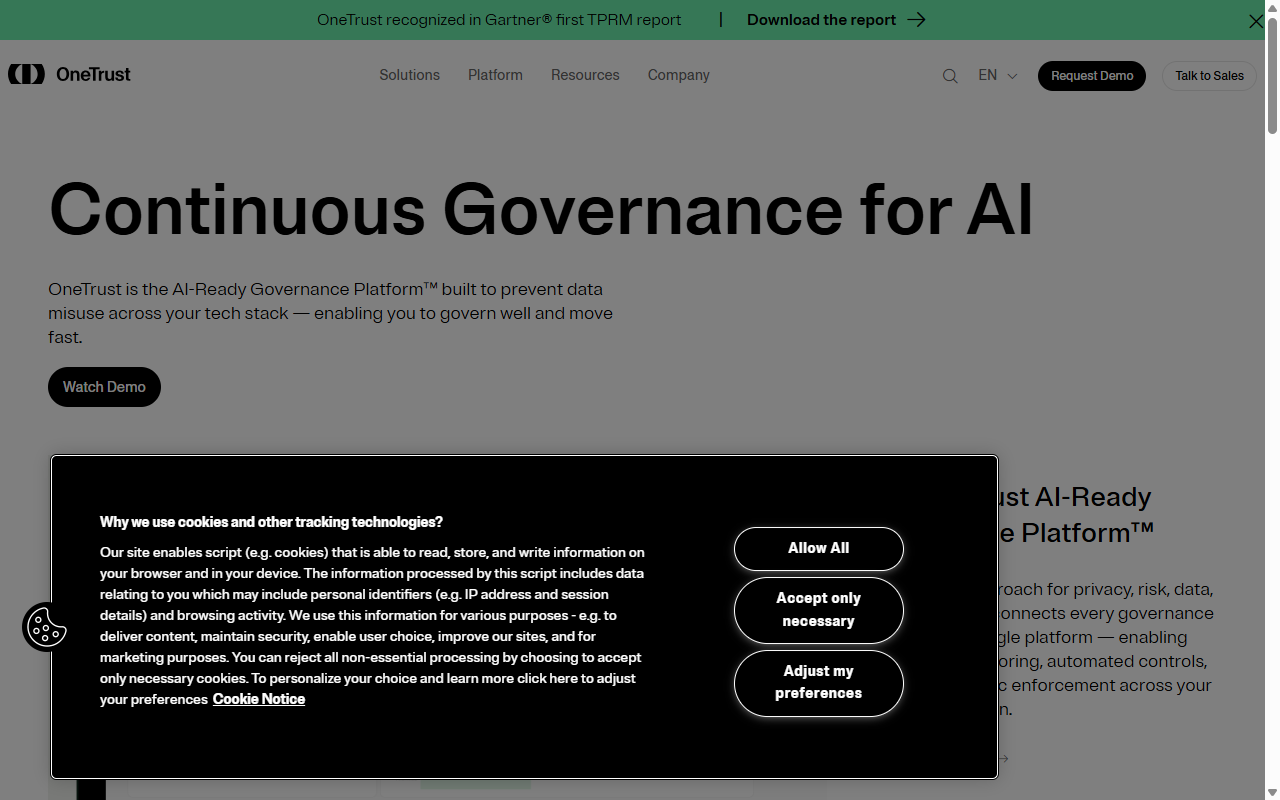
OneTrust is an enterprise-level privacy platform for large corporations, financial institutions, and global brands needing strict data governance across many properties. It’s typically more than a standard WordPress site needs, but for enterprise environments running WordPress as a headless CMS, it brings detailed security controls and advanced consent management.
Key Features
- Manages complex global compliance across thousands of domains.
- Runs detailed risk assessments and vendor checks.
- Connects with enterprise databases and CRM platforms.
- Supports advanced geo-targeting for every jurisdiction.
- Logs consent records with enterprise-grade security.
- Delivers analytics on opt-in rates and behavior.
Pros and Cons
- Pro: A well-established standard for corporate compliance.
- Pro: Deep feature set with extensive reporting.
- Pro: Strong security and governance infrastructure.
- Con: Setup is complex, often needing dedicated IT staff.
- Con: Pricing targets enterprise budgets.
Our Verdict
Built for enterprise needs and high-traffic corporate sites. Most small to medium businesses do better elsewhere on this list.
8. Osano
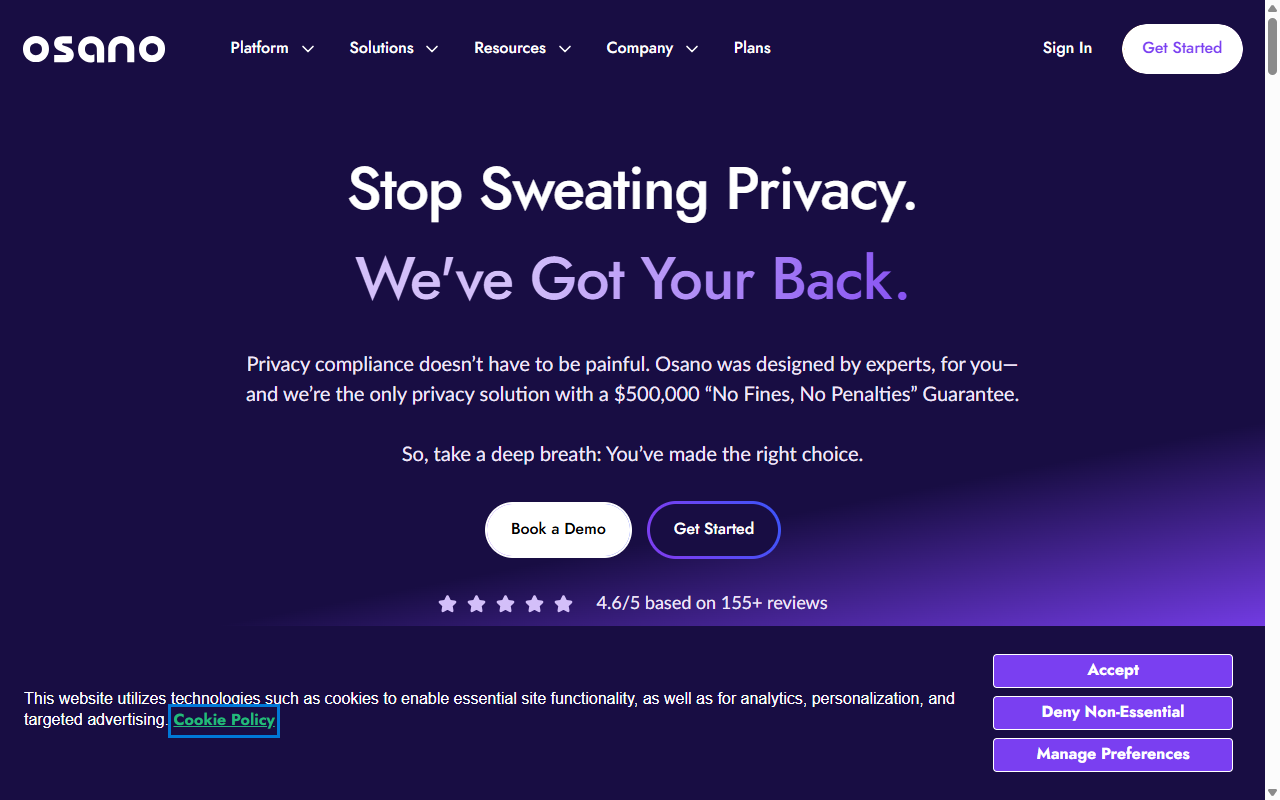
Osano is a B-Corp certified privacy platform focused on simplicity and reliability, known for offering enterprise customers a “no-fine guarantee.” It connects to WordPress through a simple script, then manages consent preferences, blocks unauthorized scripts, and monitors vendor compliance changes in the background.
Key Features
- Guarantees compliance with local laws to prevent fines.
- Blocks third-party trackers until the visitor consents.
- Translates your banner into dozens of languages.
- Monitors vendor data practices for privacy risks.
- Displays geo-targeted banners by real-time location.
- Exposes a developer API for custom integrations.
Pros and Cons
- Pro: B-Corp certification reflects ethical data practices.
- Pro: The “no-fine guarantee” brings reassurance.
- Pro: Clean, lightweight script that won’t slow your site.
- Con: Premium plans cost more than simpler options.
- Con: Entry-level plan is restrictive on page views.
Our Verdict
Reputable and professionally run, popular among medium to large organizations that want an ethical privacy partner.
9. Usercentrics
Usercentrics is a consent management platform with a strong foothold in Europe, helping businesses comply with GDPR, CCPA, and ECJ rulings. It’s built for teams wanting full control over consent flows, with an API for developers. Standard WordPress sites get a simpler path to a live banner.
Key Features
- Manages consent across websites, apps, and connected devices.
- Optimizes opt-in rates using built-in A/B testing.
- Integrates with major advertising and marketing stacks.
- Categorizes tracking technologies using a large script database.
- Supports Google Consent Mode v2 and IAB standards.
- Stores consent data securely with cloud encryption.
Pros and Cons
- Pro: Excellent design flexibility for developer-led teams.
- Pro: A/B testing improves opt-in rates within a compliant framework.
- Pro: Reliable cloud infrastructure with strong uptime.
- Con: Advanced setup needs technical knowledge.
- Con: Costs run high for straightforward sites.
Our Verdict
Capable and developer-friendly, well suited to teams that want to run experiments and scale with traffic.
10. Consent Manager
Consent Manager is a European-focused consent tool emphasizing data analytics and optimization, built to help publishers and e-commerce stores keep ad revenue healthy while staying compliant. Reporting dashboards show how visitors accept, reject, or customize preferences, helping you refine banner design over time.
Key Features
- Reports opt-in and bounce rates through analytics.
- Optimizes banner layouts using machine learning.
- Supports Google Consent Mode v2 and ad frameworks.
- Detects ad blockers and adjusts display behavior.
- Scans your site daily to keep cookie lists current.
- Integrates with major tag managers and analytics platforms.
Pros and Cons
- Pro: Strong analytical depth for data-driven teams.
- Pro: Machine learning helps surface the best banner design.
- Pro: Deep focus on European compliance developments.
- Con: The interface skews technical for non-technical users.
- Con: Entry-level plan features prominent branding.
Our Verdict
Powerful and data-focused for publishers and e-commerce stores that want to analyze consent behavior.
How to Choose the Right Option for Your Site
Now that you’ve seen all ten, here’s a quick guide by website profile:
- The Elementor User: If your site runs on Elementor, native Cookie Consent is the obvious choice, fast to set up with no external service to manage.
- The Global Publisher: Heavy on ad revenue and international traffic? Usercentrics or Consent Manager are worth a look.
- The Enterprise Store: Large corporate brand with a legal team? Osano or OneTrust offer the guarantees you need.
Feature Comparison Table
Here’s a side-by-side look at the key compliance features that matter most in 2026:
| Capability / Tool | WordPress Native? | Consent Mode v2? | Entry-Level Plan? | Setup Time |
|---|---|---|---|---|
| Cookie Consent | Yes | Yes | Yes | Under 5 Mins |
| Cookiebot | No (Cloud Integration) | Yes | Yes (Limited) | Moderate |
| CookieYes | No (Cloud Integration) | Yes | Yes | Fast |
| Complianz | Yes | Yes | Yes | Slow (Wizard) |
| iubenda | No (Cloud Integration) | Yes | Yes (Limited) | Moderate |
| Termly | No (Cloud Integration) | Yes | Yes (Limited) | Fast |
| OneTrust | No (Enterprise Cloud) | Yes | No | Complex |
| Osano | No (Cloud Integration) | Yes | Yes (Limited) | Moderate |
| Usercentrics | No (Cloud Integration) | Yes | Yes (Trial) | Moderate |
| Consent Manager | No (Cloud Integration) | Yes | Yes (Limited) | Moderate |
Expert Advice on Cookie Compliance
We asked a web compliance specialist about the most common mistakes site owners make with these banners.
“Too many website owners treat cookie banners like a decorative design element. In reality, it’s a crucial legal buffer. The most common pitfall is using a system that doesn’t actually block scripts before the user clicks ‘accept.’ If your tracking scripts run anyway before the visitor interacts with your banner, your consent mechanism is completely invalid under modern laws.”
– Itamar Haim, Web Compliance Specialist
To check your own site, open a private browsing window and pull up developer tools. Confirm no marketing or analytics cookies get stored until you click accept.
Frequently Asked Questions
Is a free cookie consent tool enough for GDPR compliance?
Yes, a free tool can be fully compliant with GDPR if it covers the basics: blocking cookies before consent, a clear “reject” option as easy to find as “accept,” and records of user choices.
What happens if I don’t use a cookie banner on my WordPress site?
If visitors come from regions with strict privacy laws, like the EU or California, skipping a consent banner risks regulatory action, and it can hurt your brand’s credibility too.
Do I need Google Consent Mode v2 for my site?
If you use Google Analytics or Ads and serve visitors in the European Economic Area, yes. It adjusts your Google tags to each visitor’s consent status, so you keep accurate ad measurement.
Will using a cookie consent tool slow down my WordPress site?
Some tools add a slight delay if they rely on external scripts from third-party servers. A native option like Cookie Consent runs on your own server, keeping load times fast.
What’s the difference between GDPR and CCPA on cookie consent?
GDPR (Europe) is “opt-in”: you can’t load tracking cookies until the visitor agrees. CCPA (California) has historically been “opt-out,” requiring a clear way to stop data sharing, like a “Do Not Sell My Personal Information” link.
What are consent logs and why do I need them?
Consent logs are secure records of when a visitor arrived, their consent preferences, and when they chose. Timestamped logs let you prove your site runs legally if a regulator reviews it.
Do I have to write my own cookie policy?
No, most tools include policy generators that create custom text based on the scripts found on your site. Paste it into a page and update it as your stack changes.
Can I customize the look of my consent banner?
Yes, nearly all modern tools let you adjust colors, fonts, and layout. Keep the text readable and the accept/decline options equally prominent, that’s a legal requirement, not just design.
Does my simple blog really need a cookie banner?
If your blog is purely informational with no analytics, forms, social embeds, or ad networks, you might skip it. But most blogs use some tracking, so you’ll need a proper way to get visitor consent.

