Table of Contents
Look, building a website doesn’t have to be a multi-month ordeal. Sometimes, you just need a single page to get the job done. And honestly, single-page sites often convert much better anyway.
But how do you actually put one together without pulling your hair out? You need a solid plan, the right tools, and a clear understanding of what makes a single scroll work in 2026. Here’s exactly how to build a high-performing single-page site from scratch.
Key Takeaways
- Mobile dominance is absolute – With 58.67% of 2026 web traffic coming from phones, your one-page site must prioritize mobile layouts first.
- Conversion rates soar – Single-page layouts yield up to 37% higher conversion rates by removing navigation distractions.
- Speed kills or cures – A 1-second delay in your mobile load time drops conversions by 20%.
- First impressions are instant – Users judge your brand credibility in exactly 0.05 seconds.
- Modern toolkits save time – Using Elementor Editor Pro gives you 118+ widgets to build anything without writing raw code.
- AI speeds up production – Agentic AI tools can generate production-ready WordPress assets in minutes, not days.
Prerequisites: Tools and Budget for 2026
You can’t build a house without bricks. (And you shouldn’t try building a website with outdated 2019 tools, either). Before you start dragging widgets around, you need to lock down your infrastructure.
So what does a professional stack actually cost this year? Let’s break down the exact numbers you’ll need to budget for a modern setup.
| Component | Purpose | 2026 Estimated Cost |
|---|---|---|
| Domain Name | Your permanent address on the web (like a .com or .io). | $10 to $15 per year |
| Managed Hosting | Servers built specifically to run WordPress fast. | $35 to $180 per year |
| Elementor Pro Essential | The visual editor to design the actual page layout. | $60 per year |
| Elementor One (Alternative) | Unified platform (Hosting + Pro + AI + Image Optimization). | $168 per year |
If you buy everything piecemeal, you’re looking at around $105 minimum just to get out the door. But piecemeal setups often cause plugin conflicts later. That’s why unified platforms make a lot more sense for single-page projects.
Is a free setup possible? Technically, yes. You could use free hosting and basic WordPress blocks. But 75% of consumers judge your entire business credibility based on design quality. quality hosting usually means slow loading times. And slow loading times mean lost money.
Planning Your Content Hierarchy
You can’t just throw text onto a canvas and hope people read it. One-page sites live or die based on their scroll logic. Users spend 80% of their time looking at the top half of your page. If that section fails, they bounce immediately.
Here’s how you structure the narrative flow to keep people scrolling all the way to the footer.
- Define the single action – What exactly do you want the user to do? Pick one thing. Buy a product, fill out a lead form, or download a guide. Everything on the page must point to this specific action.
- Craft the Hero Section – This sits right at the top. You need a massive headline, a clear subheadline, and your primary button. Make the value proposition instantly obvious.
- Introduce the Problem – Right below the fold, validate the user’s pain point. Why are they here? Show them you understand their struggle.
- Present the Solution (Services/Features) – Now introduce your offer. Keep this highly visual. Use a grid of three or four key benefits.
- Build Trust (Social Proof) – Drop in client logos, star ratings, or specific testimonials. People don’t trust you yet. They trust other people who bought from you.
- The Final Ask – Place your main contact form or checkout widget right near the bottom. Don’t make them scroll back to the top to give you money.
Roughly 60% of users will scroll to the absolute bottom of a long-form page if you maintain this logical hierarchy. Break the chain, and they leave.
Choosing Your Infrastructure
Speed isn’t a luxury anymore. It’s an absolute requirement for ranking on Google. For a “Good” LCP (Largest Contentful Paint) score today, your main visual needs to load in 2.5 seconds or less.
If your hosting server takes 3 seconds just to respond, you’ve already failed the test. Here’s what you need to look for when selecting your foundation.
- Managed WordPress architecture – Generic shared hosting puts thousands of sites on one server. You want a managed environment tuned specifically for WordPress database queries.
- Built-in CDN integration – A Content Delivery Network stores copies of your site around the world. (This means someone in Tokyo loads your site just as fast as someone in New York).
- Automatic backups – Things break. You need daily, automated backups stored off-site so you can restore your work with one click.
- Free SSL certificates – Browsers flag sites without HTTPS as dangerous. Your host should provide and renew this automatically.
Many developers opt for a bundled solution like Elementor Host Cloud. It runs on Google Cloud C2 servers and hits a 109ms Time to First Byte (TTFB). You don’t have to configure caching plugins or manage database optimizations manually. You just build the site.
Installing WordPress and Elementor Pro
Now we get our hands dirty. The installation process dictates how stable your site remains over the next few years. Skip a step here, and you’ll fight weird bugs later.
Follow this exact sequence to get your blank canvas ready for design.
- Deploy WordPress – Log into your hosting control panel. Look for the “Install WordPress” button. Fill in your site name, create a strong admin password (use at least 16 characters), and hit deploy. It usually takes about 47 seconds to spin up.
- Clean house – Go to the Plugins screen. Delete every pre-installed plugin you didn’t ask for. Go to Themes and delete everything except the active theme. You need a clean foundation.
- Install the Hello Theme – Go to Appearance > Themes > Add New. Search for “Hello Elementor”. It’s a forever-free, lightweight theme under 30KB. Activate it.
- Install Elementor Core – Go to Plugins > Add New. Search for Elementor, install, and activate it.
- Upload Elementor Pro – Log into your Elementor account and download the Pro zip file. Go back to your WordPress dashboard, click Upload Plugin, select the zip file, and activate it. Follow the prompt to connect your license key.
If you’re using the Elementor One unified platform, you can skip all five of those steps. The entire environment comes pre-installed the second you create your account.
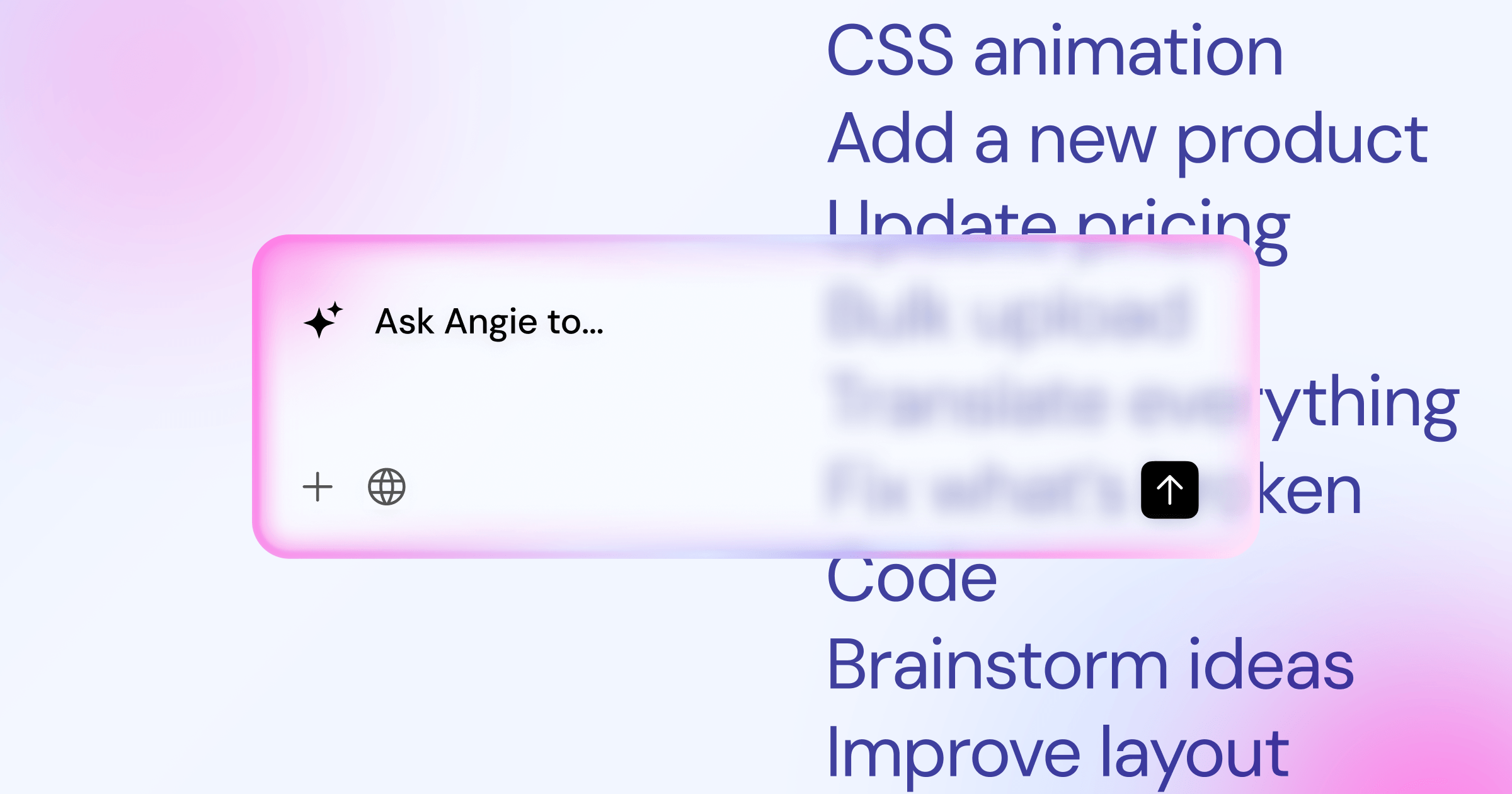
And if you hate starting from a completely blank screen? Use Angie. It’s a native agentic AI for WordPress that connects directly to your environment. You literally just type “build a one-page site for a landscaping business” into the chat. Angie acts as an agent, fetching the right components and generating a production-ready wireframe right inside your dashboard.
Designing the Layout with Flexbox Containers
The days of using rigid columns and sections are over. We’ve moved to Flexbox containers. They reduce the amount of code on your page dramatically, which makes everything load much faster.
Containers give you absolute control over how elements align, wrap, and shrink on different screen sizes. Here’s how to structure your sections using modern methods.
- Set the parent container – Drop a new container onto the page. Set its minimum height to 100VH (Viewport Height) for the Hero section. This forces the hero to take up the entire screen, no matter what device the user has.
- Direction matters – Choose “Column” if you want items stacked vertically (like a headline above a button). Choose “Row” if you want items side-by-side (like a picture next to text).
- Use the Loop Builder – Need to show three service packages? Don’t build them individually. Design one item in the Loop Builder, then let Elementor pull the data dynamically. It keeps your code incredibly clean.
- Apply global variables – Never manually pick colors for every button. Set up your Global Fonts and Global Colors in the Site Settings. When you change the primary color once, it updates across the entire page instantly.
- Master atomic elements – With the Editor V4 update, you’re building with CSS-first atomic elements. This means you assign a class to a container, and apply styling to that class rather than the element itself.
Flexbox takes a minute to learn. (It really does). But once you understand how “Justify Content” and “Align Items” behave, you’ll build layouts twice as fast.
Setting Up One-Page Navigation and Anchors
A one-page site needs a specific type of menu. When someone clicks “Services” at the top, they shouldn’t go to a new URL. The page should smoothly scroll down to the exact section they want.
This relies on HTML anchor links. They act like invisible bookmarks planted throughout your layout. Here’s the technical process for making them work flawlessly.
- Name your sections – Click on your first major container (e.g., the About section). Go to the Advanced tab in the left panel. Find the “CSS ID” field. Type in a simple word like `about` (no spaces, no capital letters). Repeat this for every major section (`services`, `contact`, `portfolio`).
- Create the WordPress menu – Go to Appearance > Menus in your dashboard. Create a new menu. Instead of adding Pages, click on “Custom Links”.
- Link the anchors – In the URL field, type the hashtag followed by your CSS ID (like `#about`). In the Link Text field, type what you want the user to see (like “About Us”). Add it to the menu.
- Build a sticky header – Open Elementor’s Theme Builder. Create a new Header. Drop in the Nav Menu widget. Then, go to the header section’s Advanced tab, find Motion Effects, and set “Sticky” to Top.
- Adjust the offset – When a user clicks a link, the page scrolls down. But your sticky header might cover the top of the section! To fix this, add top padding to your containers, or use custom CSS to create scroll margin.
Without a sticky header, users get trapped at the bottom of your page. Always give them an easy way to jump around.
Optimizing for the Mobile-First Index
Google doesn’t care what your site looks like on a desktop monitor. They index and rank your site based exclusively on the mobile version. If your text is too small on an iPhone, you lose rankings.
Since 53% of mobile site visits are abandoned if a page takes longer than 3 seconds to load, your mobile experience must be ruthless. Cut the fat. Hide things that don’t matter on small screens.
- Adjust responsive breakpoints – Click the mobile icon at the top of the Elementor editor. Change your font sizes explicitly for mobile. A 60px desktop headline needs to drop to around 32px on phones.
- Reverse column order – If you’ve an image on the left and text on the right on desktop, they will stack image-first on mobile. Sometimes you want the text first. Use the “Reverse Columns” toggle in the container’s responsive settings.
- Size buttons for thumbs – Make sure your call-to-action buttons have at least 15px of padding and sit far away from other clickable elements. Fat-finger clicks frustrate users quickly.
- Hide background videos – They look great on desktop. They murder mobile data plans and destroy load times. Go to the section’s responsive settings and hide the video background for tablet and mobile devices. Replace it with a static fallback image.
- Reduce scroll fatigue – A one-page site gets very long on a narrow screen. Use accordions or toggle widgets to hide long paragraphs of text. Let the user tap to reveal what they want to read.
Check your work on a real phone. Don’t just trust the editor preview. Actually open the staging link on your actual device and try clicking the links.
Final Performance Tuning and Launch
You’re almost done. But before you point your domain to the server and announce it to the world, you need to clean up the backend. A pretty site that scores a 30 on Google PageSpeed Insights is a failure.
Performance tuning requires methodical checks. Don’t skip this phase.
- Compress every image – Large photos destroy LCP scores. Use the Elementor Image Optimization to automatically convert your JPEGs and PNGs into next-gen WebP formats. This one step often reduces file sizes by up to 60%.
- Audit your typography – Every custom font weight you load (like Roboto 300, 400, 700) requires a separate server request. Pick two fonts. Pick two weights. Delete the rest from your global settings.
- Clean up heading tags – You only get one H1 tag per page. (And it should sit in your Hero section). Every other section title must be an H2. Subtitles inside sections are H3s. This structural hierarchy is mandatory for SEO.
- Check accessibility – Use the Ally integration to run a quick scan. It checks for color contrast issues and missing alt text across 180+ parameters. Fixing these makes your site usable for everyone.
blockquote>
“Single-page websites force a discipline that multi-page sites lack. You can’t hide bad copy on an ‘About’ page. Every single heading, every image payload, and every container flex setting must aggressively serve the primary conversion goal. If it doesn’t push the user down the funnel, delete it.”
Itamar Haim, SEO Team Lead at Elementor. A digital strategist merging SEO, AEO/GEO, and web development.
If you’re managing multiple single-page sites for clients, you might want to consider automating the initial builds. You can feed your client’s brief directly into Angie, and it will generate the CSS IDs, containers, and initial layout logic for you. You just step in at the end to apply the brand polish.
Frequently Asked Questions
Why is my anchor link jumping too far down the page?
This happens because your sticky header sits on top of the content area. When the browser jumps to your CSS ID, it puts that ID at the absolute top of the screen, underneath the header. You fix this by adding custom CSS scroll padding to your main wrapper, or by adding extra top padding to your individual containers.
How do I track conversions on one page?
You don’t have a “Thank You” URL to track, so you’ve to track events. Use Elementor’s Form Builder and configure the “Actions After Submit” setting to fire a custom script. You then catch that script in Google Analytics 4 as a lead event. It’s much more accurate than tracking page views anyway.
My mobile site is slow, what do I do?
You probably have heavy widgets loading above the fold. Check your hero section first. Remove any sliders or video backgrounds. Compress your hero image heavily. If you use motion effects or heavy animations, disable them completely for the mobile breakpoint. Simple loads faster.
Can a single-page site rank well for SEO?
Yes, but you’ve to be highly specific. A single page can’t rank for 15 different topics. You must target one primary keyword cluster. Make sure your H1, meta title, and URL slug all align with that specific intent. Long-form content on a single page actually performs very well for niche queries.
Do I really need a managed WordPress host?
Honestly, yes. Cheap shared hosting starves your database of resources. When you’ve all your content loading on a single long page, the initial server request has to be incredibly fast. Managed hosts use server-level caching that budget hosts simply don’t offer.
How many sections should my one-page site have?
Keep it between 5 and 7. Usually: Hero, Problem, Solution, Social Proof, Pricing/Details, FAQ, and Footer/Contact. If you build 15 sections, the user experiences scroll fatigue and bounces before seeing your final call to action. Keep the narrative tight.
Can I use Elementor’s AI tools to write the copy?
Yes. The Elementor AI creative assistant sits directly inside the text widget. You can ask it to generate shorter headlines, fix your tone, or translate the text. It’s distinct from Angie, which actually builds the structural assets. Use the inline AI for quick copy adjustments while designing.
Is the Hello Theme really necessary?
It’s highly recommended. Heavy themes load massive CSS files full of styling you aren’t even using. Since you’re building the entire layout visually with Elementor Pro anyway, you want the theme to be completely invisible. Hello Theme provides that blank, lightweight canvas.
What happens if I want to add a blog later?
You can easily transition a single-page site into a multi-page site. You just create a new page in WordPress, set it as your Posts page, and update your menu to include the new URL. The beautiful thing about WordPress is that it scales instantly when you’re ready to grow.
Should I use a popup on a single-page site?
Use them sparingly. An exit-intent popup works well to capture emails before someone leaves. But don’t use immediate entry popups. The user hasn’t even scrolled yet. Let them read the hero section before you hit them with a newsletter demand.
Looking for fresh content?
By entering your email, you agree to receive Elementor emails, including marketing emails,
and agree to our Terms & Conditions and Privacy Policy.

