Setting up a cookie consent banner on WordPress can feel like assembling a puzzle with half the pieces missing. You want to respect visitor privacy and stay compliant with GDPR and CCPA, but an external dashboard gets old fast. CookieYes is a well-known name in privacy compliance, but it’s far from your only option. Let’s walk through the best alternatives for managing consent smoothly.
Key Takeaways
- A WordPress-native option keeps your whole workflow in one dashboard, with no external logins needed.
- Google Consent Mode v2 support matters if you run Google Ads or Analytics in Europe.
- An automated cookie scanner keeps you compliant as you add new scripts or third-party tools.
- Design flexibility matters too, since your banner should match your brand, not look bolted on.
- Detailed consent logs give you the audit trail you need if regulators ever ask for proof of consent.
Why WordPress Site Owners Are Seeking CookieYes Alternatives in 2026
Online privacy rules keep shifting, and what worked a few years back doesn’t meet today’s standards. For years, site owners leaned on external cloud services for cookie banners and consent records, bouncing between dashboards and copying scripts by hand.
There’s also plenty of consolidation across the privacy market, with popular platforms changing pricing and packaging, pushing smaller site owners toward something more affordable and integrated. And when an external SaaS tool controls your banner, your load time depends on its server response too, hurting user experience and rankings.
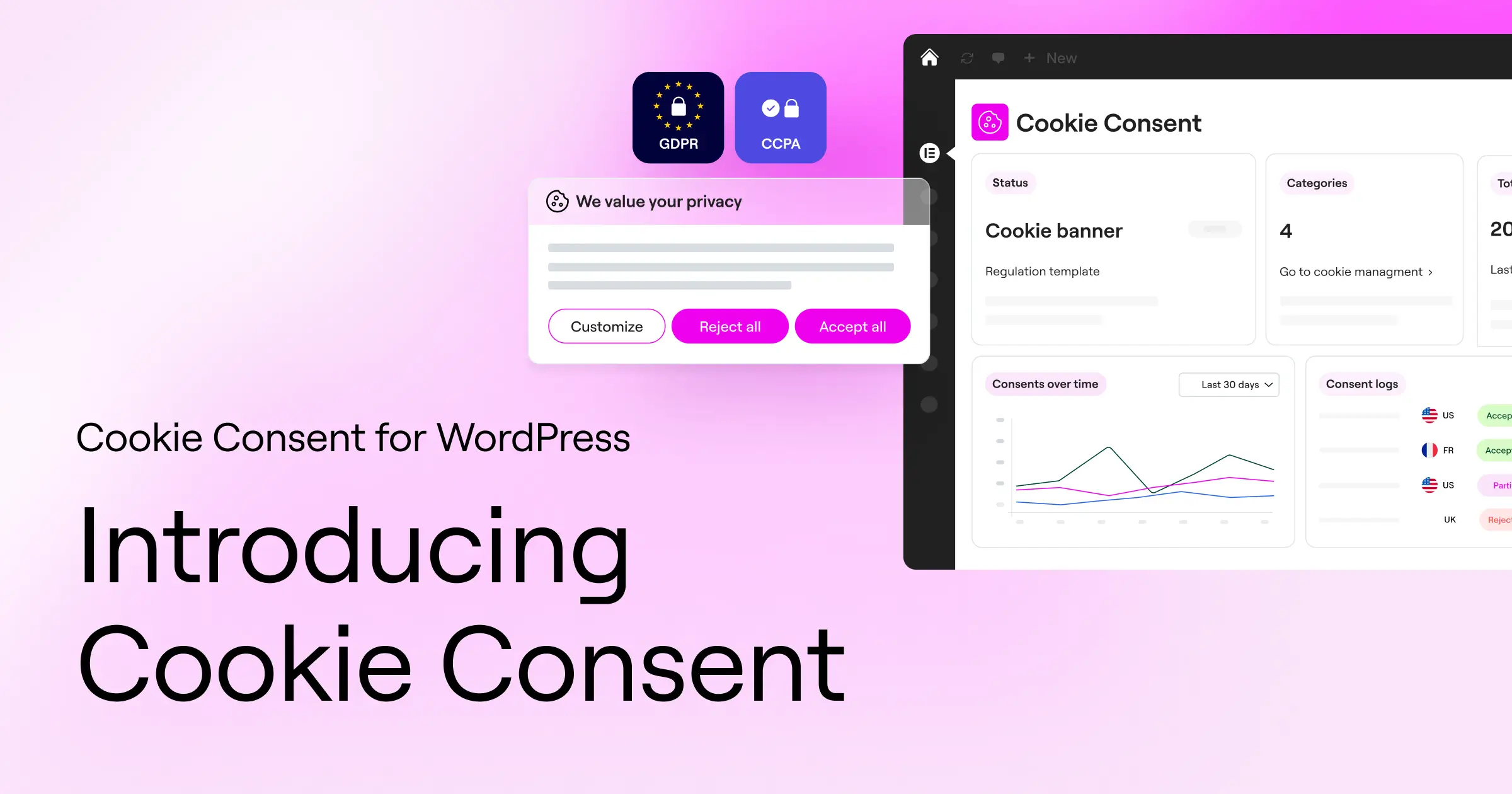
The good news? Tools built for WordPress have grown genuinely capable, so you don’t trade away design control or compliance depth to keep things simple. Modern options run from your own server, loading instantly and skipping the separate subscription. (It’s simpler than most people expect, and cleaner too.)
Key Requirements for Modern WordPress Privacy Tools
Before you pick a replacement, it helps to know what makes a consent tool reliable. A solid tool goes beyond a pop-up, handling background scripts, blocking cookies before consent, and respecting international legal standards automatically. Look for a tool that covers these core tasks:
- Scans your website automatically to identify active cookies and trackers.
- Logs user consent decisions to maintain clean, searchable audit records.
- Displays geo-targeted banners to show the correct notice based on visitor location.
- Supports Google Consent Mode v2 for accurate ad tracking compliance.
- Adapts to local languages with built-in multilingual translations.
- Generates customized privacy policies that update when your scripts change.
When these pieces work together, you get a system that protects your business while keeping visitors happy. (This trips people up: they assume any banner will do, but regulators look closely at how scripts actually get blocked.)
Comparison of the Best CookieYes Alternatives
Here’s a quick side-by-side of the top options, covering integration, compliance frameworks, and ease of use.
| Tool Name | WordPress-Native Integration | Google Consent Mode v2 | Best Suited For |
|---|---|---|---|
| Cookie Consent (by Elementor) | Yes (Fully Integrated) | Yes (Native Support) | WordPress creators looking for a zero-dashboard native workflow |
| Complianz | Yes | Yes | Users who prefer wizard-based legal configurations |
| Cookiebot | No (Cloud-based with connector) | Yes | Larger businesses needing multi-platform cloud syncing |
| iubenda | No (Script integration) | Yes | Sites needing complete legal document generation |
| Termly | No (External dashboard) | Yes | Small sites wanting general policy builders |
The 10 Best CookieYes Alternatives for WordPress in 2026
Let’s take a closer look at each option: how it performs, where it stores your data, and how easily it fits your workflow.
1. Cookie Consent (by Elementor)
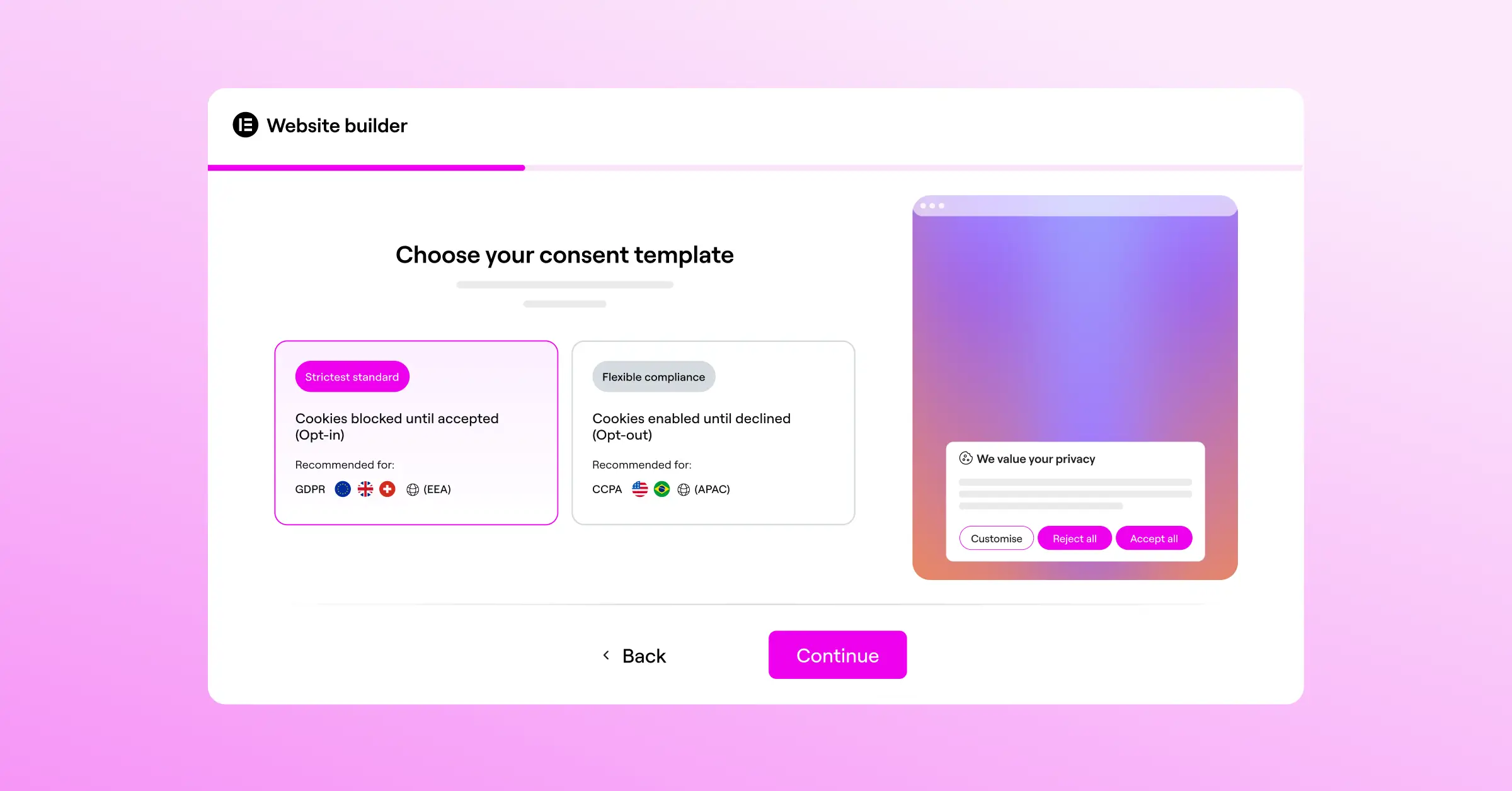
If you’d rather handle compliance without leaving your dashboard, Cookie Consent is worth a close look. Built as a native WordPress capability, it skips external setups or third-party cloud accounts, working right inside the Elementor ecosystem alongside your pages and media. Setup takes under five minutes with a three-step wizard, no coding required, covering major standards like GDPR and CCPA. Built into your editor, it gives full design control, matching your banner to your brand without custom CSS. It’s also part of Elementor One, with a genuinely useful free tier.
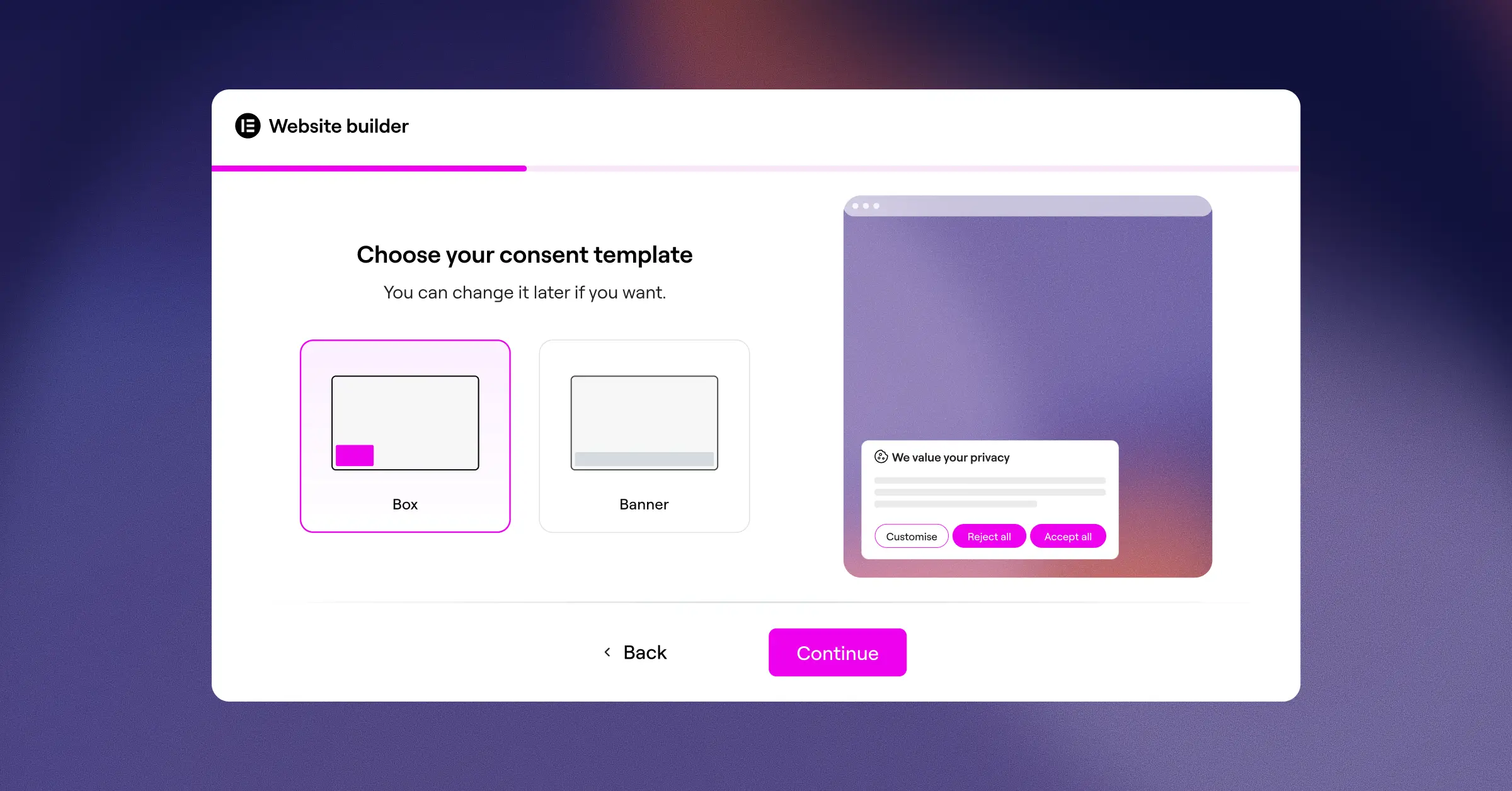
- Manages consent logs directly in WordPress for reliable audit readiness.
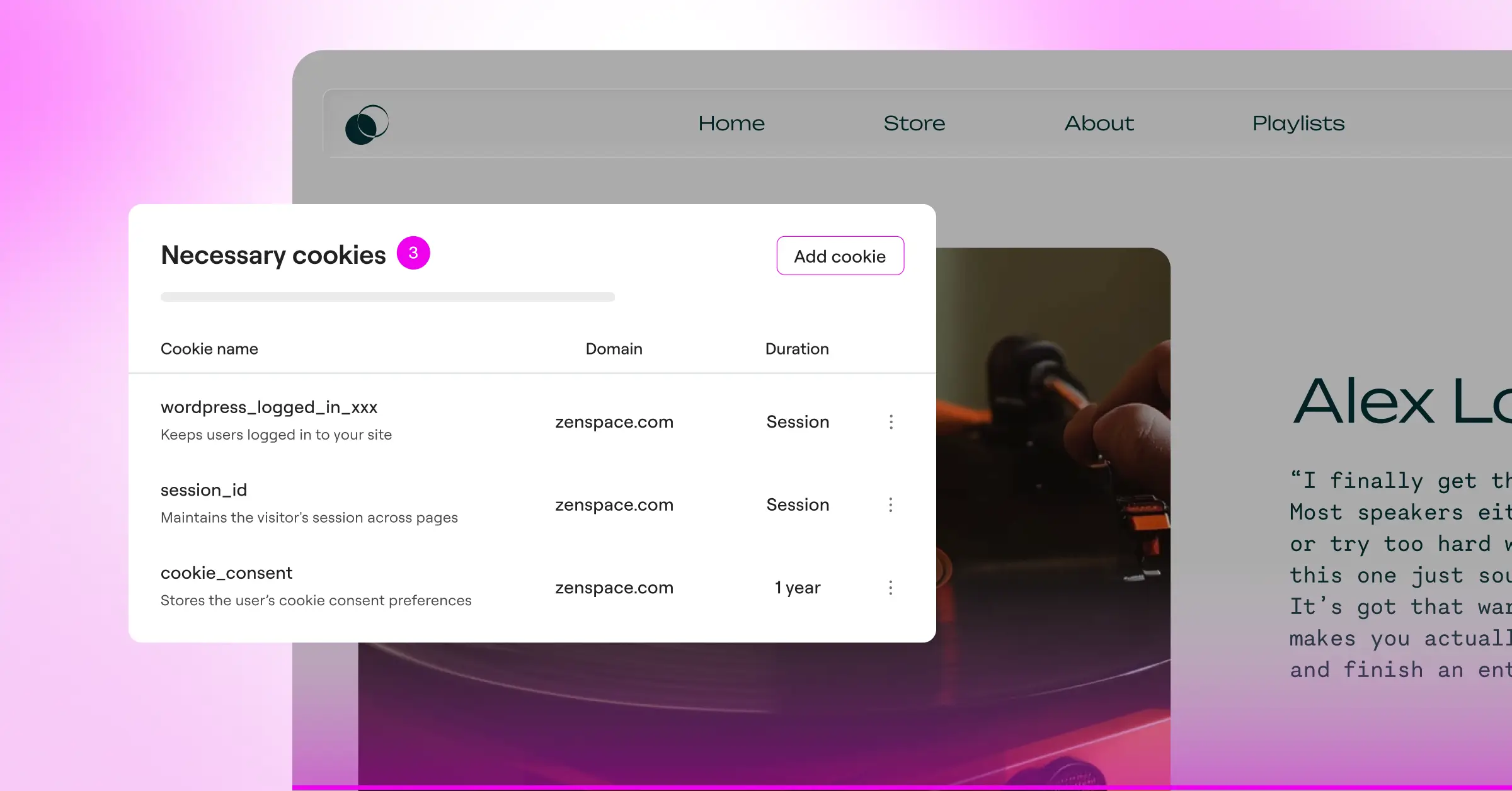
- Scans your website scripts to identify and categorize tracking cookies automatically.
- Supports Google Consent Mode v2 for accurate marketing tag compliance.
- Applies geo-targeting to show specific banners to European or Californian visitors.
- Pulls cloud-based templates to give you polished banner layouts instantly.
- Translates banners into multiple languages to support global audiences.
Keeping scripts, templates, and consent records on your own server gives you strong performance and full data ownership, a solid pick for designers and agency teams who want visitor trust without a complicated setup.
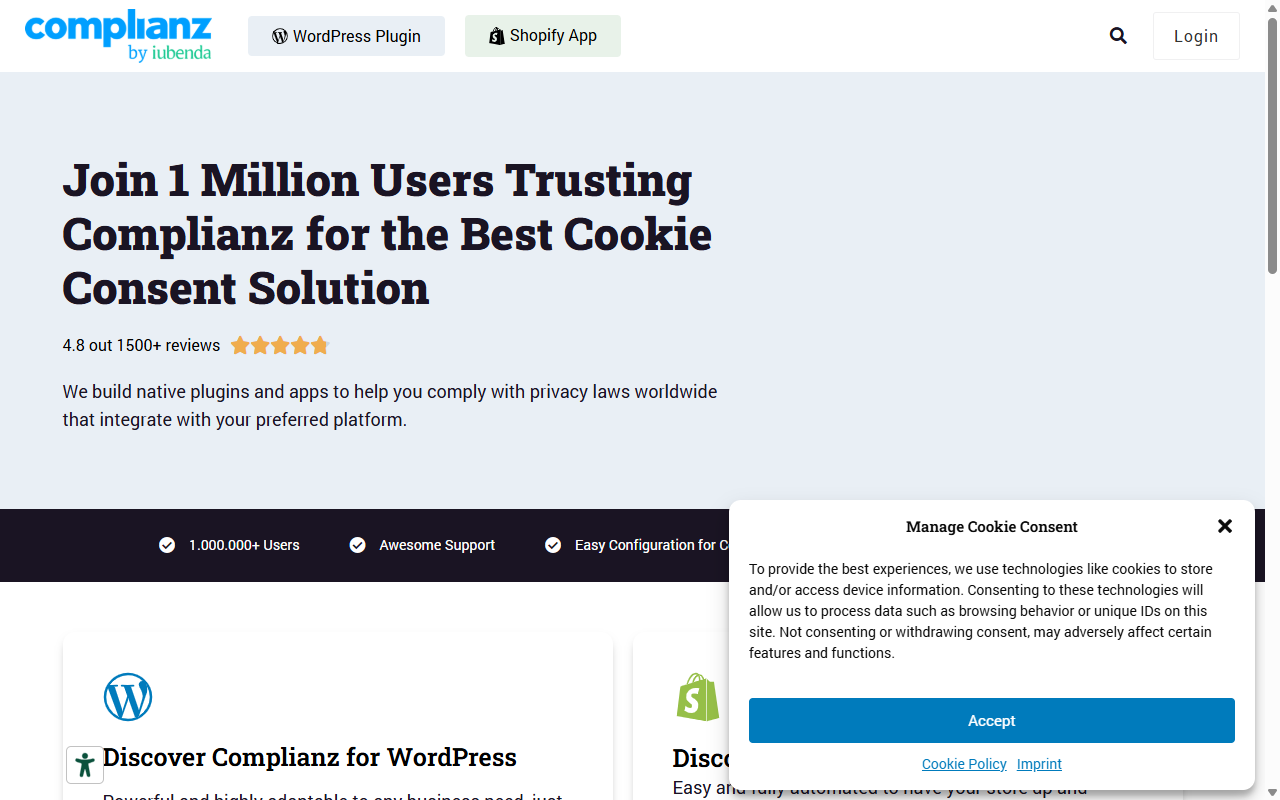
2. Complianz
Complianz is a well-established name in WordPress, known for its detailed setup wizard: a questionnaire about your business, data, and audience feeds a custom cookie policy and banner configuration automatically. It runs natively, with no external platform to configure. The entry-level plan covers basic GDPR requirements, while premium tiers add CCPA, PIPEDA, and UK privacy law support, plus translation tool integration for multilingual sites.
- Configures cookie banners automatically based on regional privacy settings.
- Integrates with major contact form and e-commerce tools on WordPress.
- Blocks third-party scripts before consent is explicitly given by the user.
- Generates legal documents like cookie policies and disclaimer pages.
- Builds a clean settings interface directly inside the WordPress backend.
3. Cookiebot
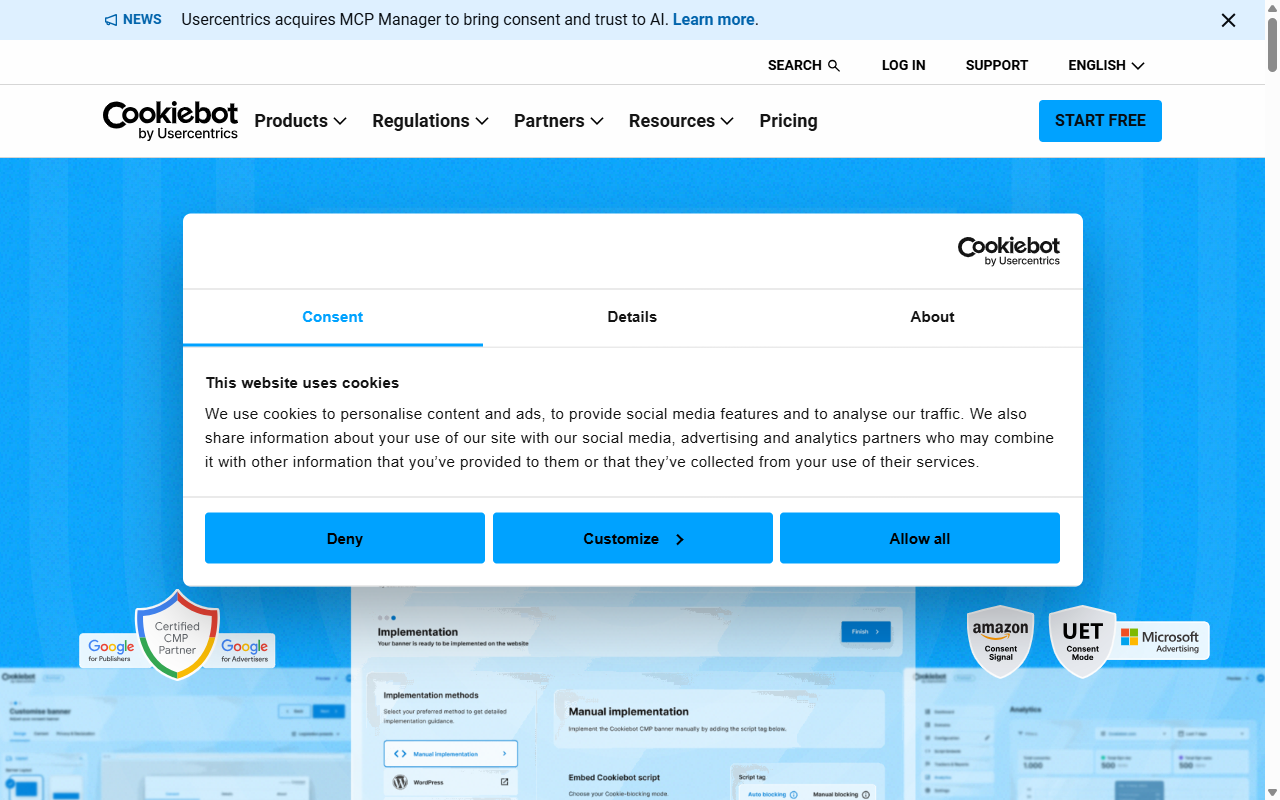
Cookiebot is a cloud-based consent platform that works across multiple website platforms. Instead of running on your WordPress server, it uses a cloud scanner to index your site, then categorizes cookies and updates your banner accordingly. You link it through a connector, but daily management happens in Cookiebot’s external dashboard, handy if you run a mix of WordPress sites, custom-coded pages, and Shopify stores under one hub.
- Automates periodic cookie scans and generates detailed compliance reports.
- Stores user consent data in cloud-based storage centers.
- Supports automated script-blocking based on detected cookie categories.
- Synchronizes consent settings across multiple domains.
- Delivers a widget-based editor for styling changes.
4. iubenda
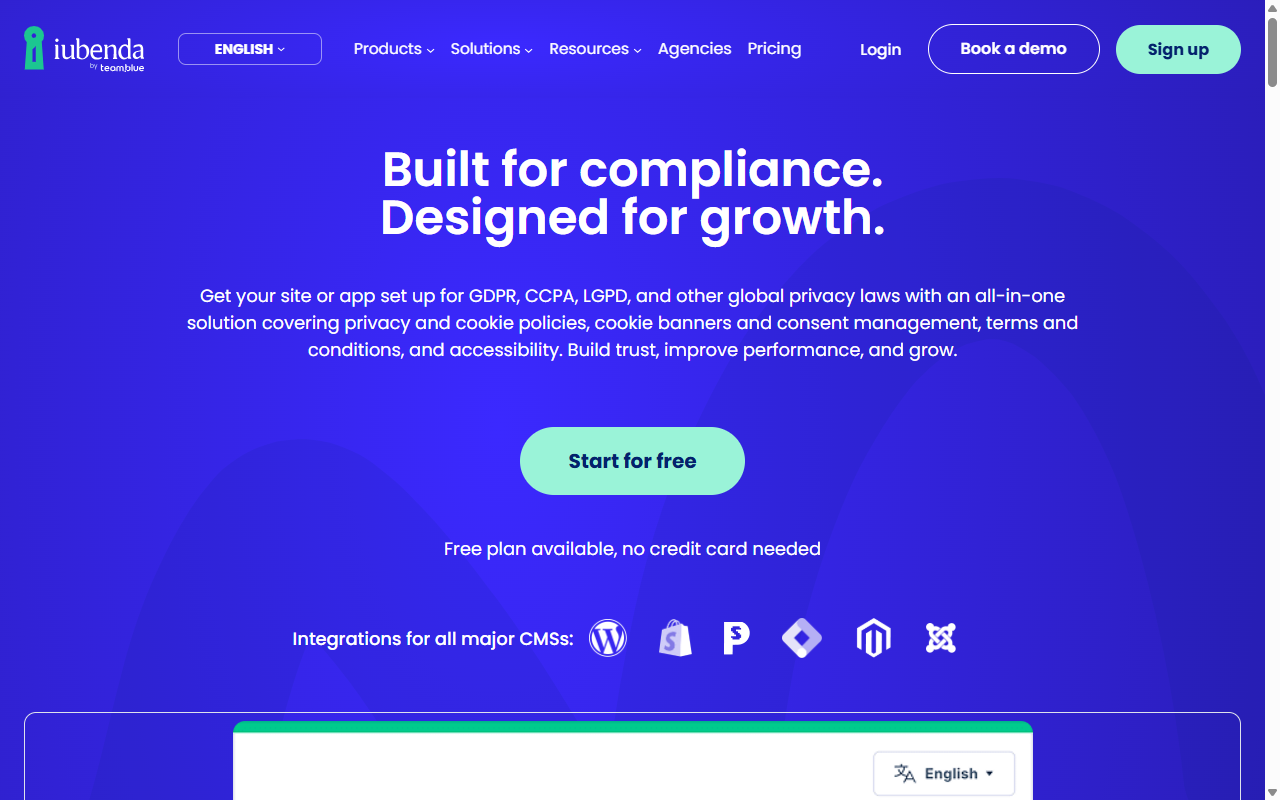
iubenda pairs a cookie banner with legal document generators for privacy policies, terms and conditions, and internal privacy practices, handy if your site handles a lot of personal data. You configure it in the iubenda cloud dashboard, then embed a script on your site; the tool detects visitor locations, shows the right banner, and updates your privacy policy text whenever you add a new tracking tool.
- Connects your cookie consent choices directly to your online privacy policy.
- Generates professional legal agreements drafted by legal experts.
- Detects target regions automatically to show compliant disclosures.
- Updates legal texts in real-time when tracking tools change.
- Allows deep customization of privacy widgets and alert boxes.
5. Termly
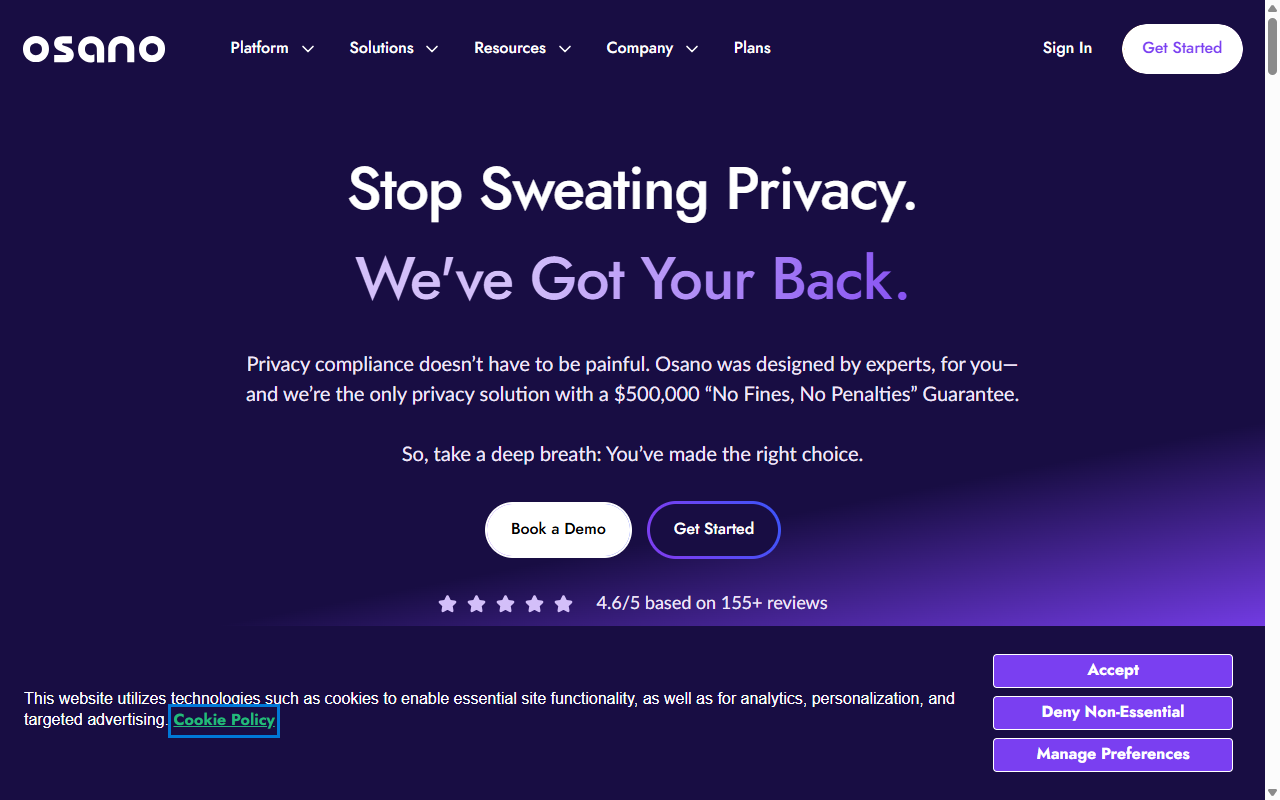
Termly is built mainly for small businesses and startups that need basic compliance quickly, bundling an easy policy generator with its core consent features. Setup means scanning your site through the Termly web app, picking a layout, and getting pre-written descriptions for standard trackers like Google Analytics and Facebook Pixels, friendly and direct even without a developer or legal team on hand.
- Builds custom cookie policies with simple click-to-select builders.
- Identifies standard marketing trackers and explains their functions clearly.
- Maintains basic consent logs to help you meet compliance regulations.
- Delivers pre-designed banner templates for fast implementation.
- Tracks user preferences with minimal impact on initial load times.
6. OneTrust
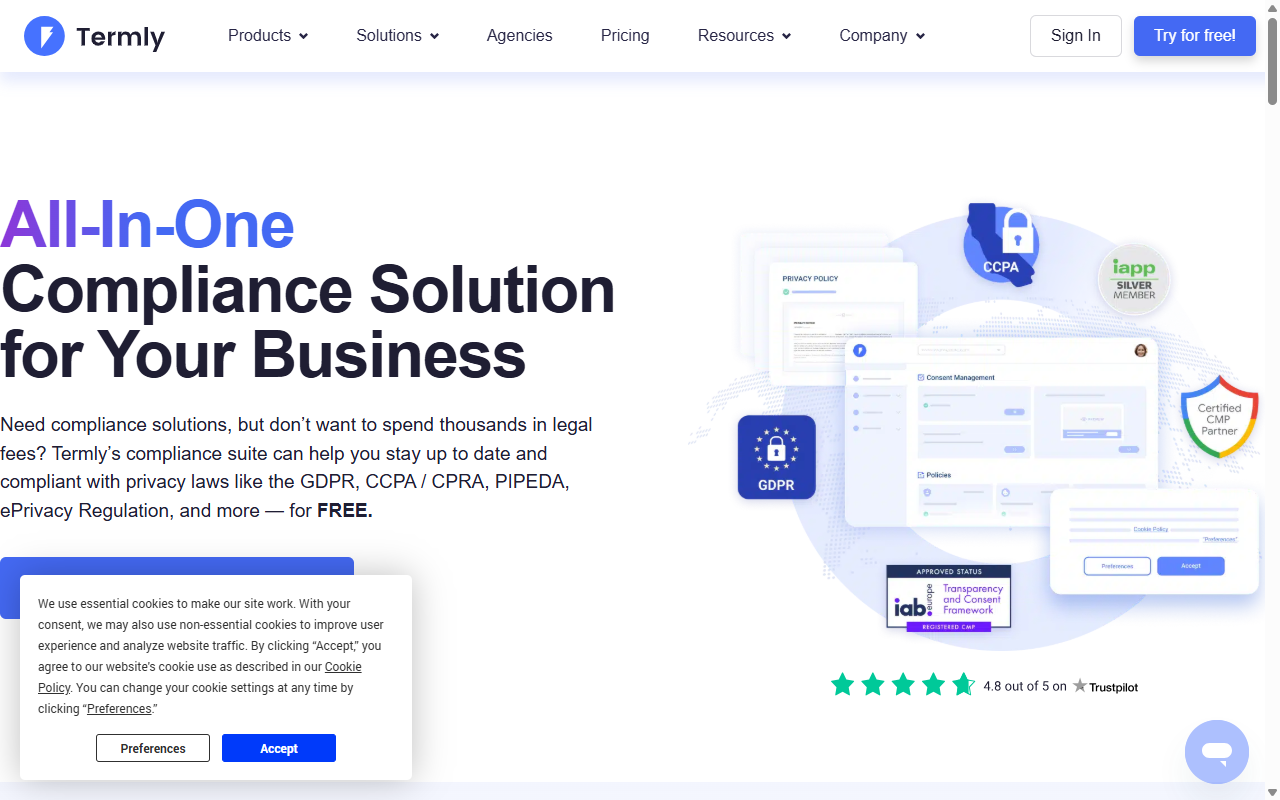
OneTrust is an enterprise-grade privacy platform for organizations with complex compliance needs, going well beyond a standard cookie banner with modules for vendor risk assessment, data mapping, and universal preference management. Because it’s built for large organizations, setup can be involved and typically needs help from a developer or privacy professional.
- Centralizes compliance records across large numbers of corporate domains.
- Coordinates consent preferences across mobile apps, websites, and offline systems.
- Delivers detailed reporting dashboards to monitor consent rates over time.
- Integrates with enterprise tag managers and data platforms.
- Supports highly granular consent settings for specific business divisions.
7. Osano
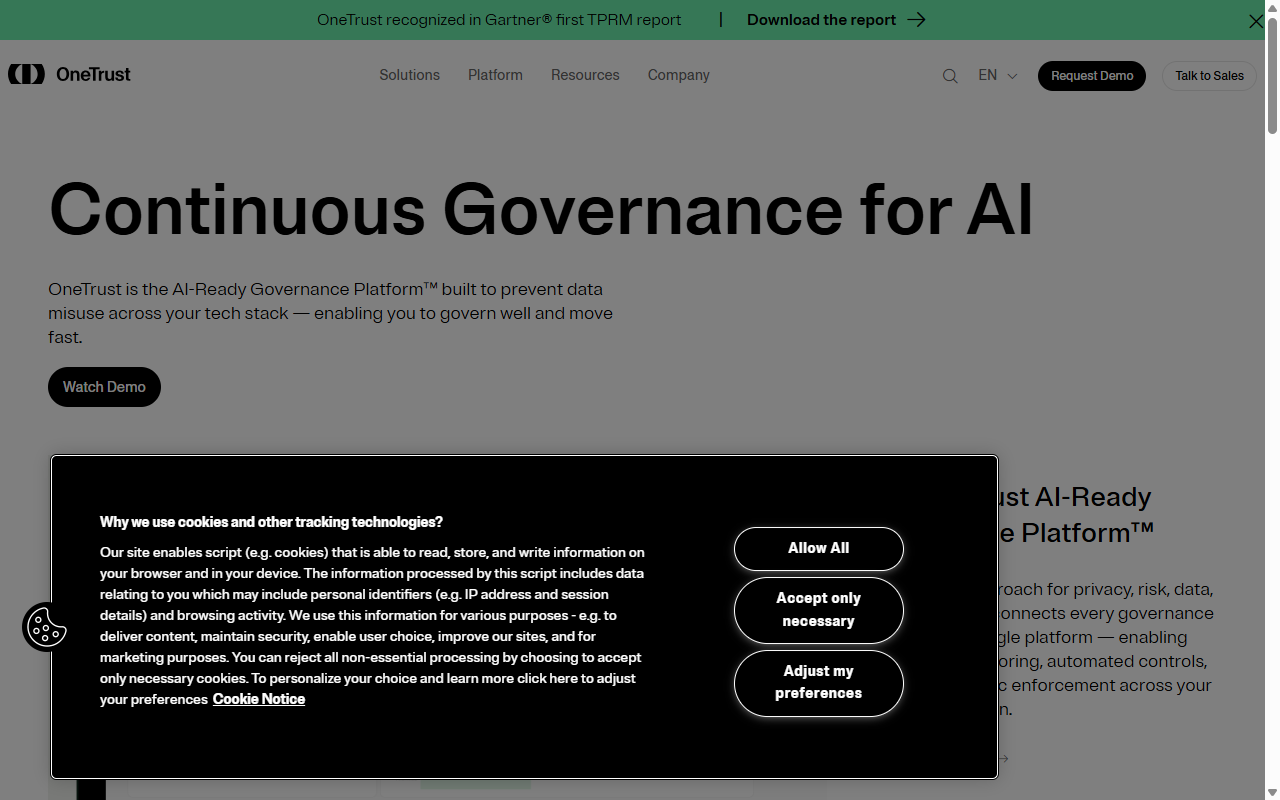
Osano leans into simplicity and reliability, backing its compliance standards with a legal pledge and scanning thousands of third-party scripts to track vendors and their privacy behavior. The interface is modern and approachable, letting you configure consent rules without wading through legal jargon, and Osano hosts your banner on a global content delivery network for consistent load speeds.
- Backs compliance with local regulations through a contractual legal pledge.
- Monitors third-party script vendors to flag potential data concerns.
- Serves banner scripts from global cloud servers for fast delivery.
- Translates banner content into dozens of languages automatically.
- Simplifies consent administration with a clean, modern management panel.
8. Usercentrics
Usercentrics is a consent management solution built for agencies, publishers, and developers who need deep control over tracking technologies, with a highly customizable interface and a strong API for custom consent experiences. It’s particularly strong at managing complex tag setups, giving you the rules and hooks to block or trigger tags precisely when marketing scripts fire on specific user actions.
- Controls complex tracking scripts via a developer-first API.
- Integrates deeply with major enterprise tag management platforms.
- Saves consent preferences across multiple subdomains and languages.
- Reports clearly on consent opt-in and opt-out percentages.
- Supports custom styles to build entirely custom consent layouts.
9. Klaro
Klaro is a lightweight, open-source consent manager popular with developers who prefer self-hosted software, skipping external cloud databases and subscription fees. You configure it with a simple JavaScript file listing your active trackers and scripts. Because it’s small by design, Klaro barely touches load speed, a great fit if you want full code transparency and don’t mind editing a config file by hand.
- Runs entirely on your own server without calling external APIs.
- Avoids recurring subscription charges through its open-source license.
- Minimizes script weight to maintain fast site performance.
- Gives developers full control over script execution via code blocks.
- Keeps all configuration logic inside a single, readable text file.
10. Securiti
Securiti is an automated data privacy platform that uses AI to find, catalog, and secure data assets across complex cloud setups, with a cookie consent module built to scale for sensitive data like financial or healthcare information. It automates mapping cookies to your privacy systems, keeping registries current as your team launches new pages or connects new cloud APIs.
- Scans complex web applications to identify hidden trackers automatically.
- Maps cookie consent records directly to your core data storage.
- Syncs compliance preferences across web, mobile, and cloud portals.
- Tracks detailed analytics on visitor interaction with your privacy banners.
- Automates compliance updates when global privacy standards change.
Expert Perspectives on Modern Privacy Standards
Choosing the right tool means balancing compliance with user experience and technical stability. A system that loads fast and lives where your content is already managed cuts your operational overhead. (Worth noting: compliance gaps usually happen not because a site picked the wrong tool, but because that tool sat in a dashboard nobody checked.)
“Using a consent tool that sits directly inside your CMS eliminates synchronization delays. When privacy regulations change, having your scripts, logs, and banner designs managed in one native place minimizes the risk of compliance gaps.”
– Itamar Haim, Web Compliance Specialist
Native compliance also means you skip the risk of external cloud outages. If your banner fails to load because of a server issue elsewhere, your site could technically run unauthorized scripts, real compliance exposure. Keeping your code local helps you stay in control.
How to Transition to a New Consent Management Solution
Moving from CookieYes to a new option is simpler than it sounds. (People often worry about losing settings or breaking tracking tags, but a careful step-by-step process keeps things smooth.)
Follow these steps for a clean transition:
- Audit your tracking setup. List every script on your site, like Google Analytics, pixel trackers, or ad tags, and note which ones CookieYes manages versus what’s hard-coded in your theme.
- Deactivate the old tool. Remove your current consent tool, or pull the CookieYes script from your header, so two banners don’t load at once.
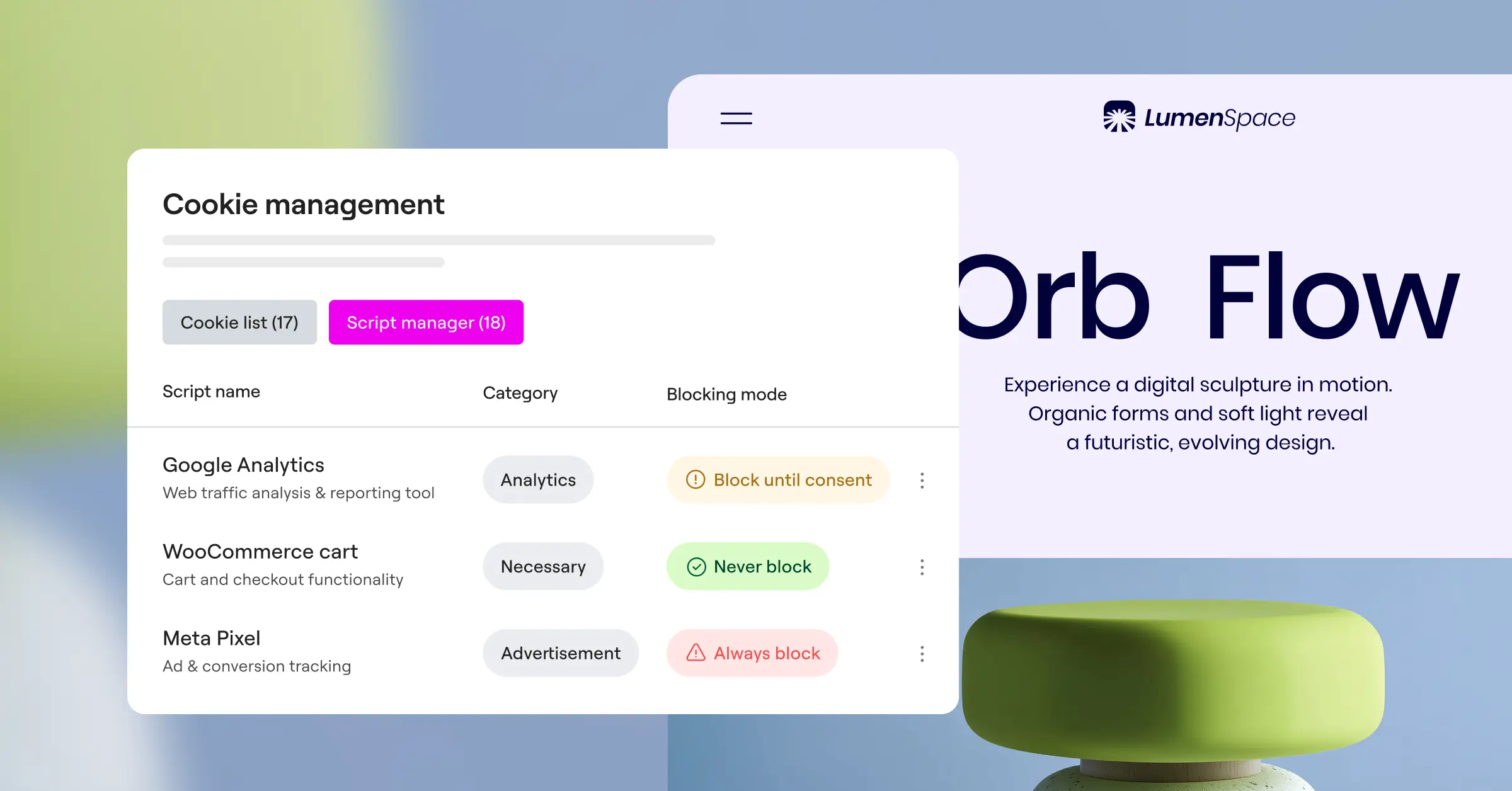
- Install your chosen alternative, like the native Cookie Consent capability. Scan your site, categorize your cookies, and adjust the banner styling to match your brand.
- Configure Google Consent Mode v2 if you use Google Ads or Analytics, so Google gets the right signals when visitors accept or decline cookies.
- Test script blocking. Open your site in an incognito window and check developer tools to confirm no tracking cookies get set before you click “Accept.”
A few extra minutes double-checking these settings during installation keeps your site compliant and your analytics accurate from day one.
Frequently Asked Questions
Is a WordPress-native consent tool better than a cloud-based option?
For most WordPress site owners, yes. A native tool keeps your settings and logs in your own database, cutting reliance on third-party servers, improving performance, and simplifying admin since everything lives in one dashboard.
Do I really need Google Consent Mode v2?
If your site serves traffic from the European Economic Area or the UK and uses Google Ads or Analytics, yes. Consent Mode v2 passes consent signals to Google’s servers, and without it you’ll lose tracking accuracy and ad measurement there.
How does geo-targeting work on cookie banners?
Geo-targeting uses the visitor’s IP address to determine location, showing a strict opt-in banner for European visitors under GDPR, a simpler opt-out notice for Californians under CCPA, or no banner at all elsewhere.
Will switching my cookie banner hurt my search engine optimization?
Switching won’t hurt your SEO, and it can help if you pick a lightweight, native option. External banners sometimes cause layout shifts or slow page speed, affecting core web vitals, while a fast native capability keeps ranking metrics healthy.
Can I customize the look of my consent banner without coding?
Yes, if you choose a tool with strong design integration. Capabilities like Cookie Consent let you style the banner right inside your existing site editor, matching typography, colors, button styles, and padding to your brand without custom CSS.
What happens if a regulator requests proof of user consent?
If a regulator audits your site, you need to show visitors actively agreed to your tracking scripts. Compliance tools with built-in consent logs keep organized records you can export as proof if you’re ever audited.
Is it possible to manage client sites with white-label options?
Yes, plenty of agencies and developers look for white-label features so client sites look clean and consistent. That lets you strip vendor branding from the dashboard for a more polished client experience.
How often should I scan my website for new cookies?
Scan whenever you install a new third-party tool, add a tracking pixel, or update your site structure. An automated scanner checks regularly so new cookies or scripts land in the right category, saving manual checks each time.

