
Running a multilingual website means juggling more than one privacy law, since a single English banner won’t cover visitors from Madrid, Munich, and Montreal alike. You need a setup that translates your legal text, respects local privacy choices, and loads fast. We tested the top options, from a five-minute setup to enterprise-grade data mapping.
Key Takeaways
- Native tools save time, selecting a tool that integrates directly into your WordPress dashboard means you won’t have to jump between external platforms to make simple changes.
- Google Consent Mode v2 is critical, if you use Google Analytics or Google Ads for European traffic, your cookie tool must support this standard.
- Language detection must be automatic, the best tools serve the correct translation based on user location or browser settings without any manual coding on your part.
- Geo-targeting keeps banners relevant, you can show strict GDPR banners to European users while displaying less intrusive notices to visitors from other regions.
Why Multilingual Cookie Consent Is Different in 2026
Consent on a single-language site is simple, but multilingual sites need more care: a visitor from Spain doesn’t want your settings in English, and a visitor from California doesn’t need France’s disclosures. Compliance is local, so your banner must detect language and block tracking scripts before anything loads. Slow external scripts hurt rankings and experience, favoring native WordPress tools in 2026.
1. Cookie Consent
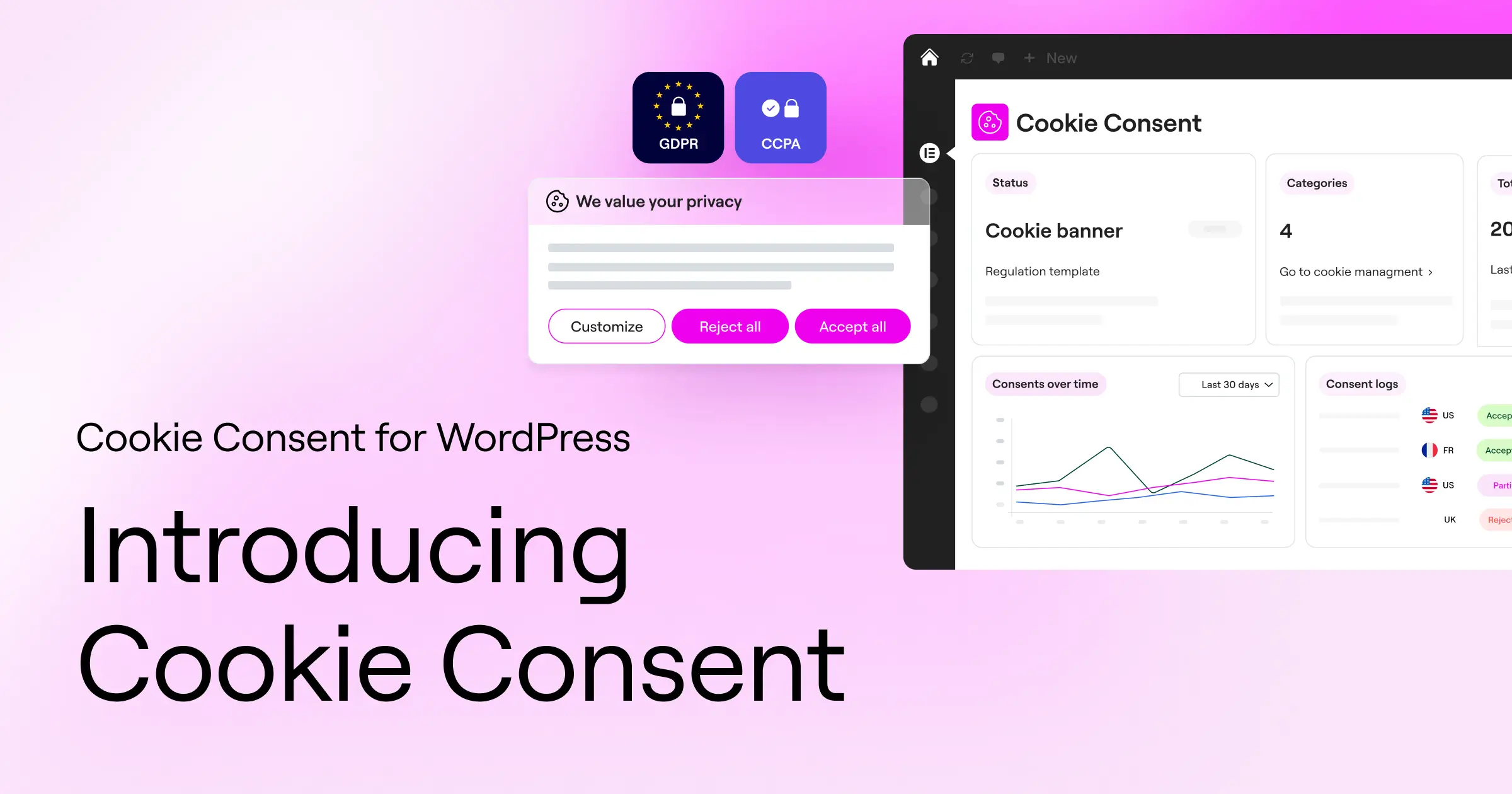
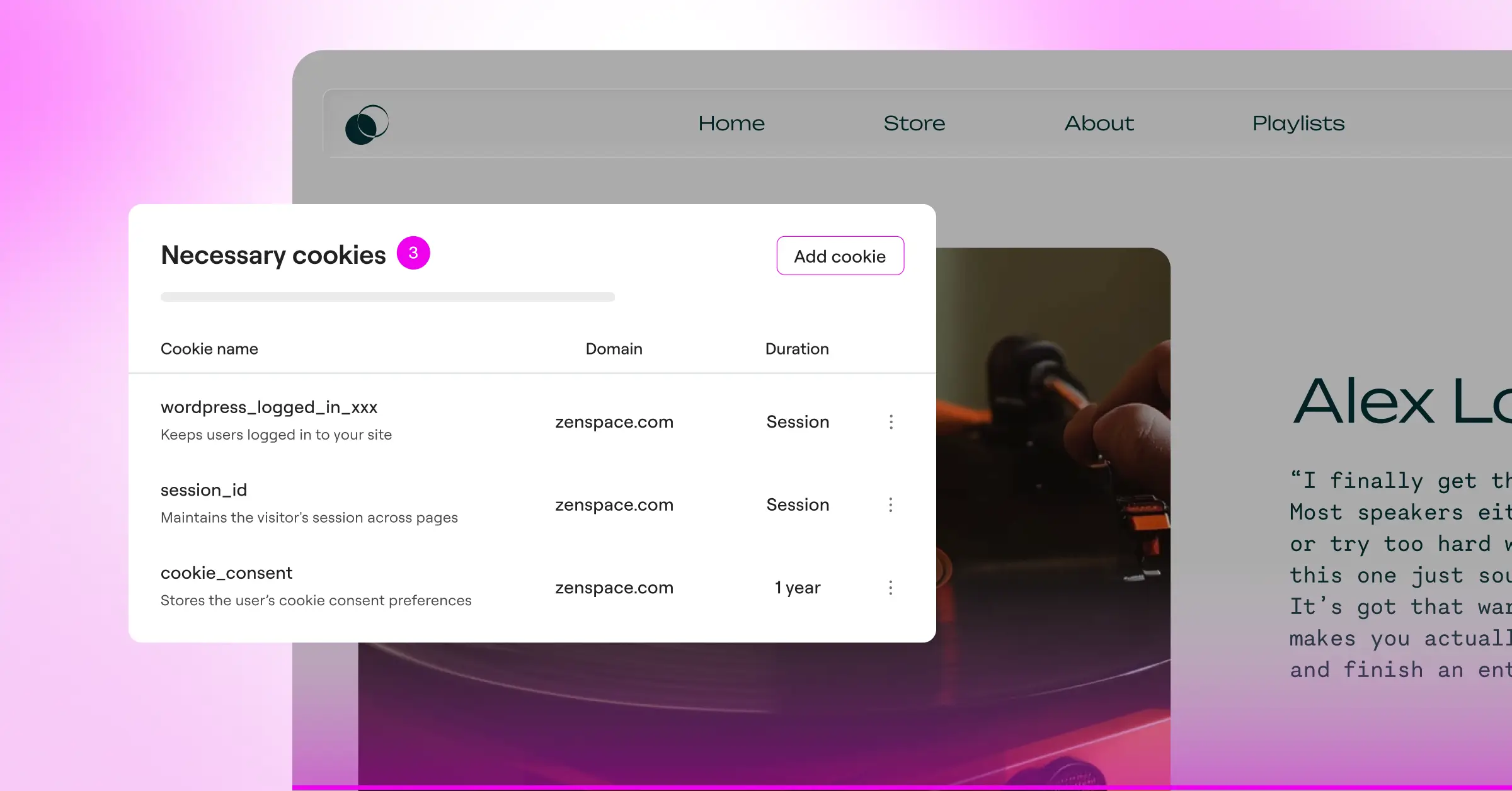
If you build with Elementor, Cookie Consent is the natural fit: a native capability that keeps your whole privacy setup in your dashboard, no external sign-ups needed. Setup takes under five minutes, with automatic cookie scanning, Google Consent Mode v2, and Global Privacy Control (GPC) built in, plus a banner you restyle without CSS.
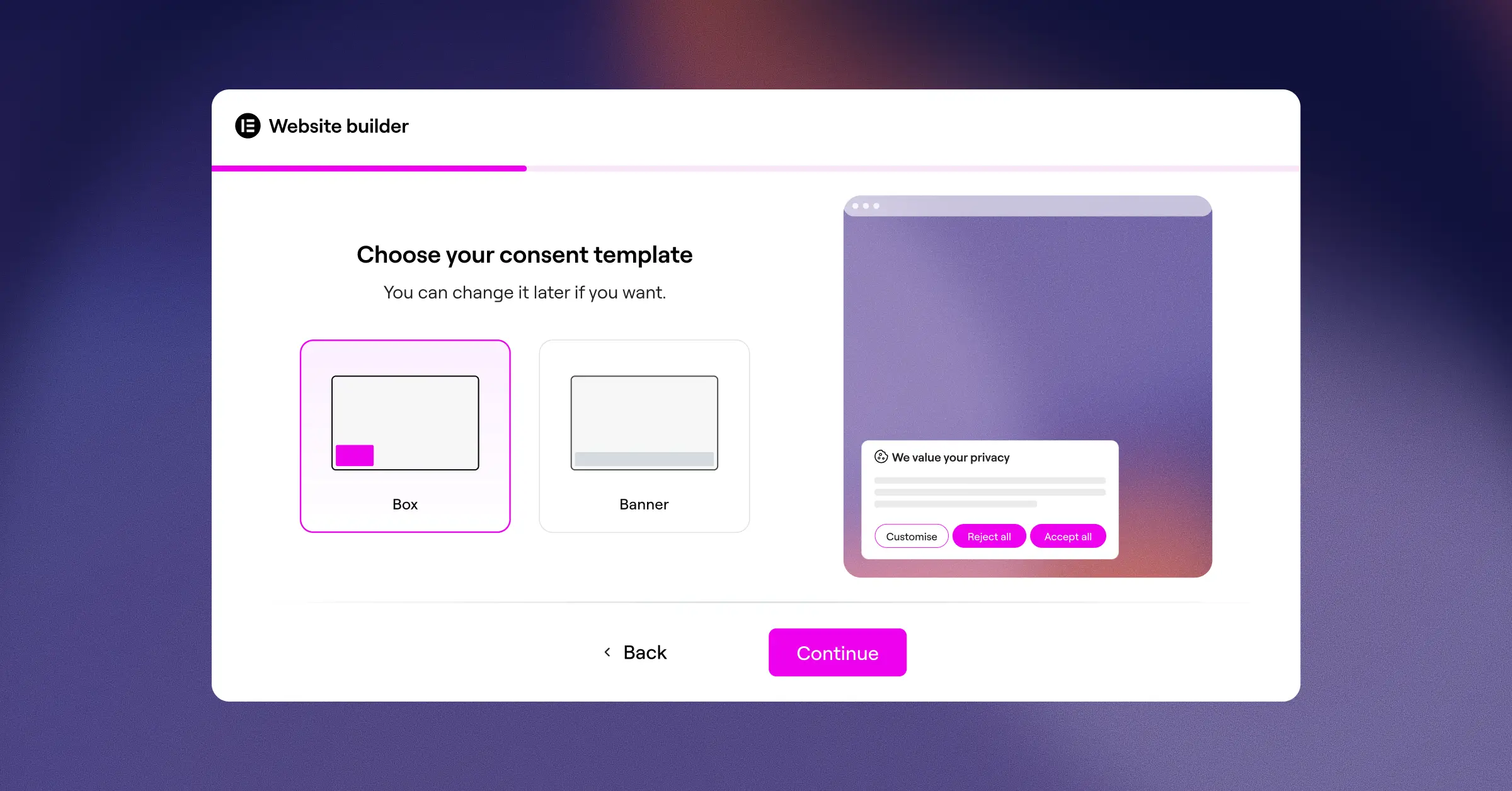
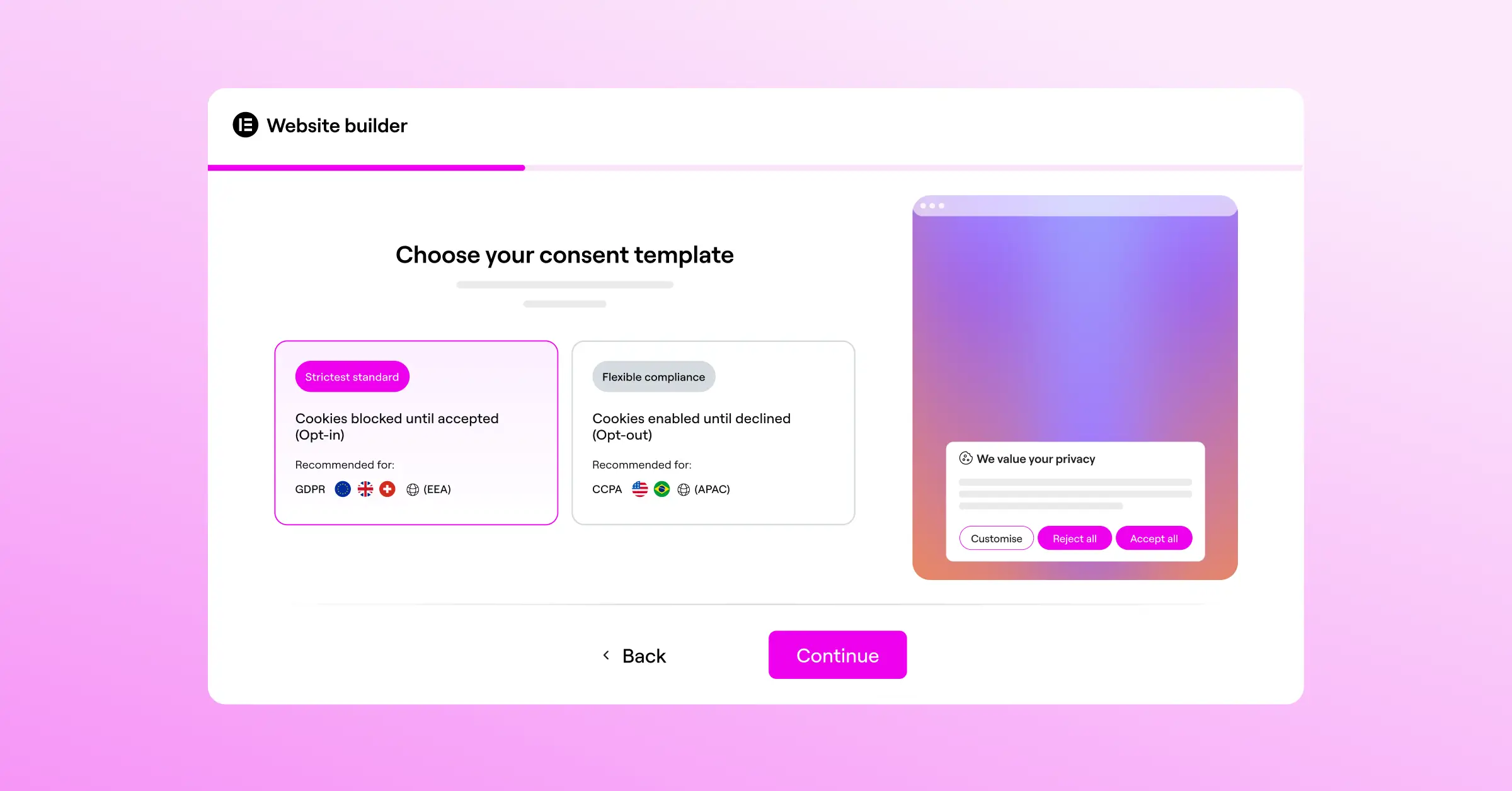
For multilingual sites, it plugs into your translation setup for banners per language profile, and geo-targeting adapts by location. It’s included with the Elementor One subscription, alongside a full compliance and design suite.
Key Features
- Scans and categorizes cookies to flag tracking technologies.
- Logs visitor consent for a clear audit trail.
- Supports Google Consent Mode v2 for ad and analytics protection.
- Displays geo-targeted banners so visitors see only regional notices.
- Generates draft privacy policies via a built-in tool.
- Applies design templates to match your site’s styling instantly.
Pros
- Runs entirely inside the WordPress dashboard, no external logins needed.
- Fast setup, done in under five minutes.
- Full design freedom to match your brand, no code needed.
- Deep integration with Google Consent Mode v2 and GPC.
Cons
- Best suited for sites built within the Elementor ecosystem.
- Advanced translation syncing may require standard translation tools.
Verdict: The simplest way to manage consent natively, with no separate subscription.
2. Cookiebot
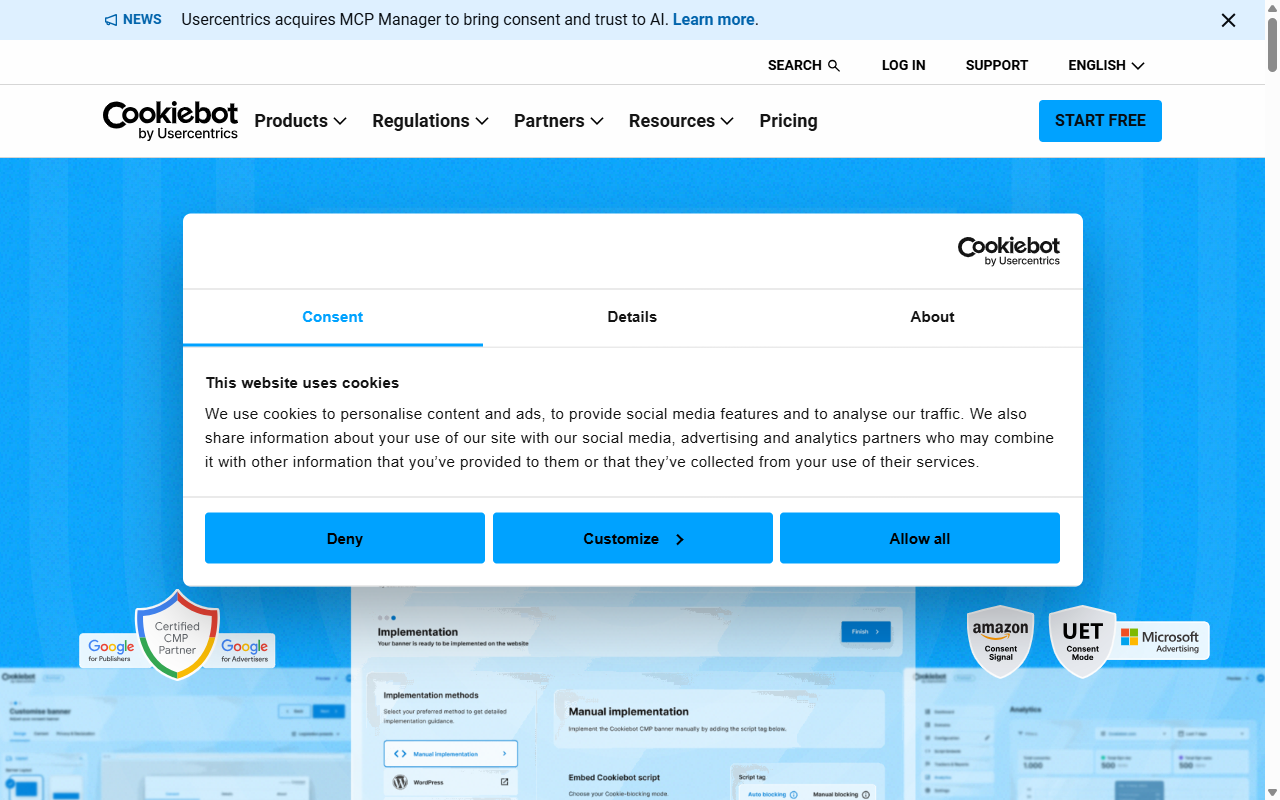
Cookiebot is a cloud-based platform for automated cookie scanning, managed through an external dashboard linked to WordPress by an integration script. It detects the visitor’s browser language automatically, drawing on a global cookie database built from its monthly scans.
Key Features
- Detects the visitor’s browser language for automatic translation.
- Saves consent data securely in an off-site repository.
- Generates cookie declaration pages that update monthly.
- Blocks unrecognized scripts until the user consents.
Pros
- Accurate automated cookie scanner and categorization engine.
- Strong support for international languages and translations.
- Good compliance reporting tools for legal audits.
Cons
- Requires an external dashboard, adding another platform to manage.
- Pricing scales with page count, raising costs for larger sites.
- Uses cloud-hosted scripts, which can affect front-end load times.
Verdict: A reliable, corporate-focused pick for external management and page-based pricing.
3. CookieYes
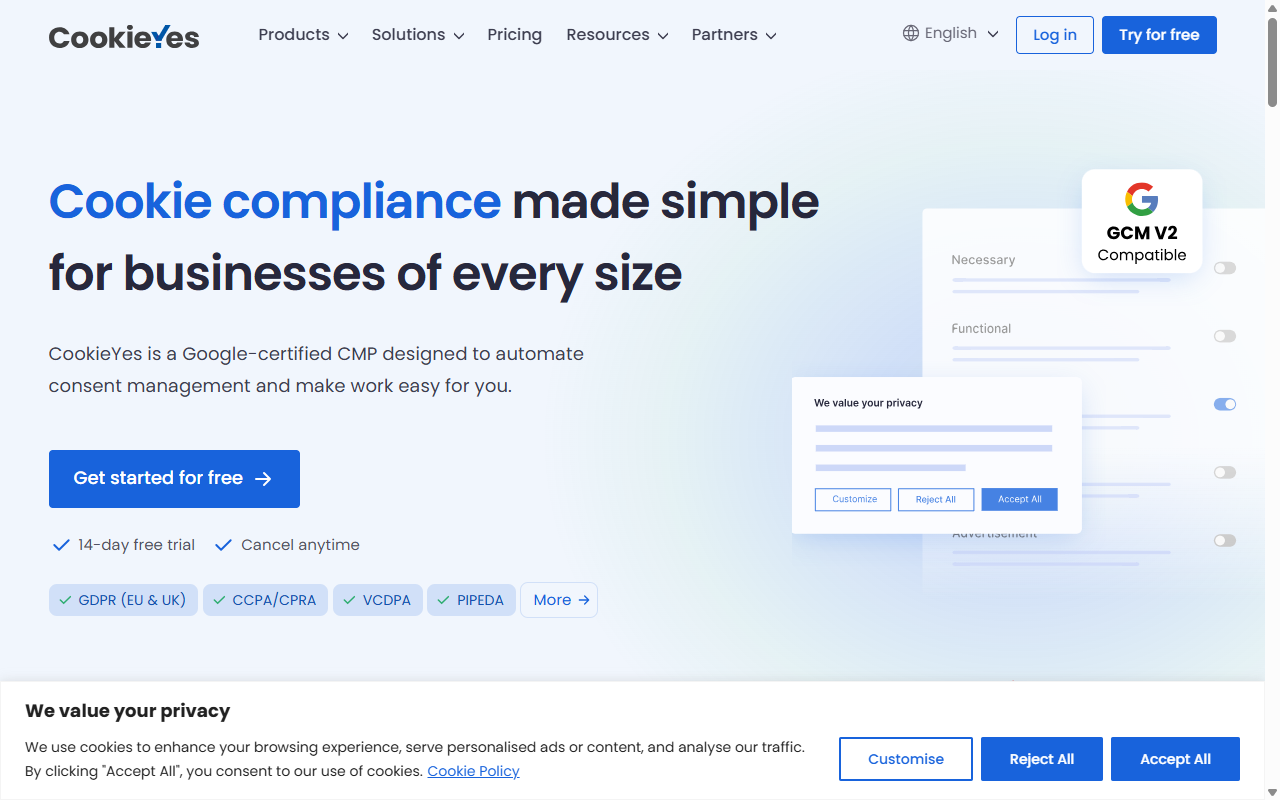
CookieYes is a SaaS platform with a strong WordPress following, handling banners, consent logs, and scheduled scans through a lightweight WordPress integration. It supports GDPR, CCPA, and Brazil’s LGPD, and lets you add multiple languages to a single banner from its console.
Key Features
- Translates cookie notices into 30-plus languages in one click.
- Keeps active consent records for audit readiness.
- Integrates with major tag managers and Google Consent Mode v2.
- Schedules periodic scans to detect new marketing pixels.
Pros
- Clean, user-friendly interface that’s easy to understand.
- Simple setup for multilingual banner translations.
- Includes geo-targeting on mid-tier plans.
Cons
- Entry-level plan limits monthly page views.
- Design changes happen outside WordPress, in the dashboard.
- Custom translation strings can require a manual sync.
Verdict: A solid, middle-of-the-road pick with decent multilingual support.
4. Complianz
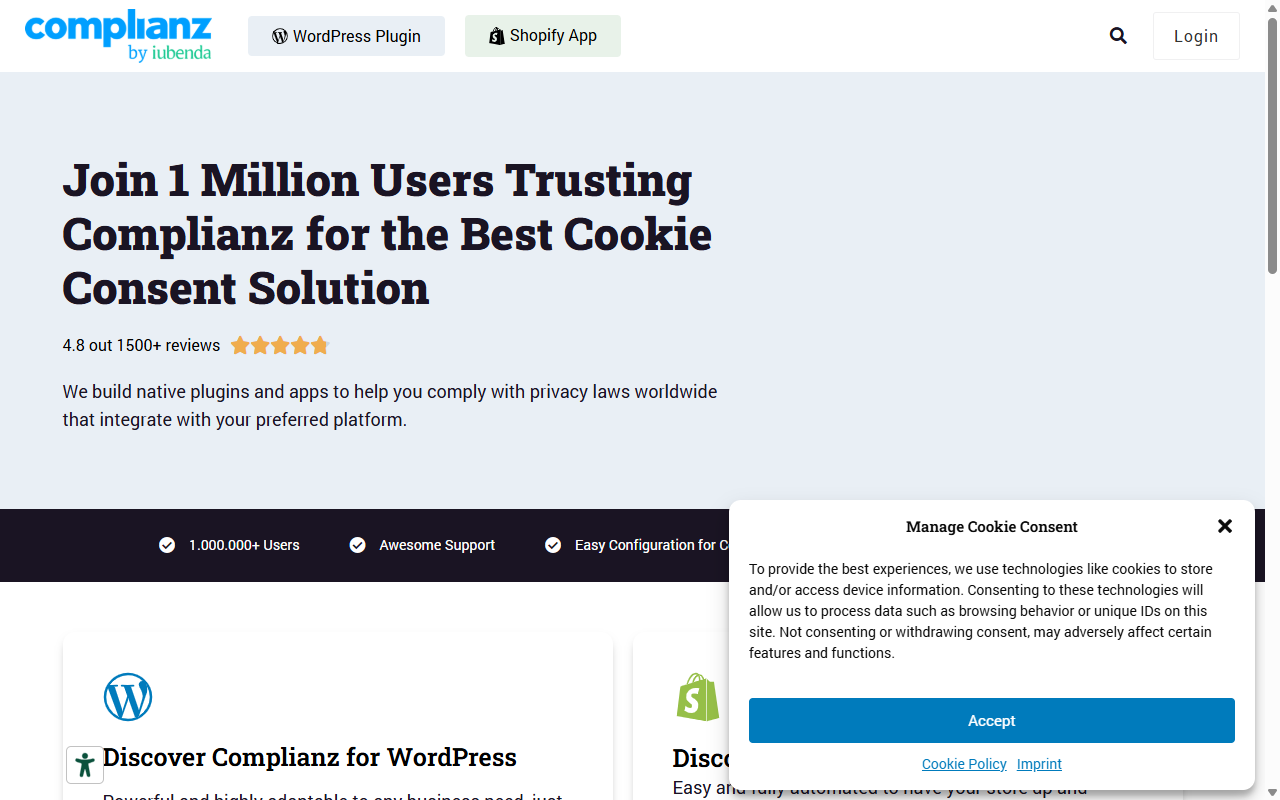
Complianz is a privacy suite built for WordPress that runs locally on your server, not the cloud. A step-by-step wizard configures your banner, connecting with WPML, Polylang, and TranslatePress to translate legal documents and banner text.
Key Features
- Configures consent requirements through a localized setup wizard.
- Generates dynamic legal documents like cookie policies and terms.
- Connects with popular multilingual tools to manage translations locally.
- Supports automatic script blocking for standard integrations.
Pros
- Keeps data on your own server, not a third-party cloud.
- Excellent integration with local WordPress translation tools.
- Generates localized legal documents automatically.
Cons
- Setup wizard involves several steps, taking longer for first-timers.
- Server-side script blocking can sometimes conflict with caching tools.
- Interface includes many settings, reflecting its range of options.
Verdict: A strong pick for local hosting and automated legal documents.
5. iubenda
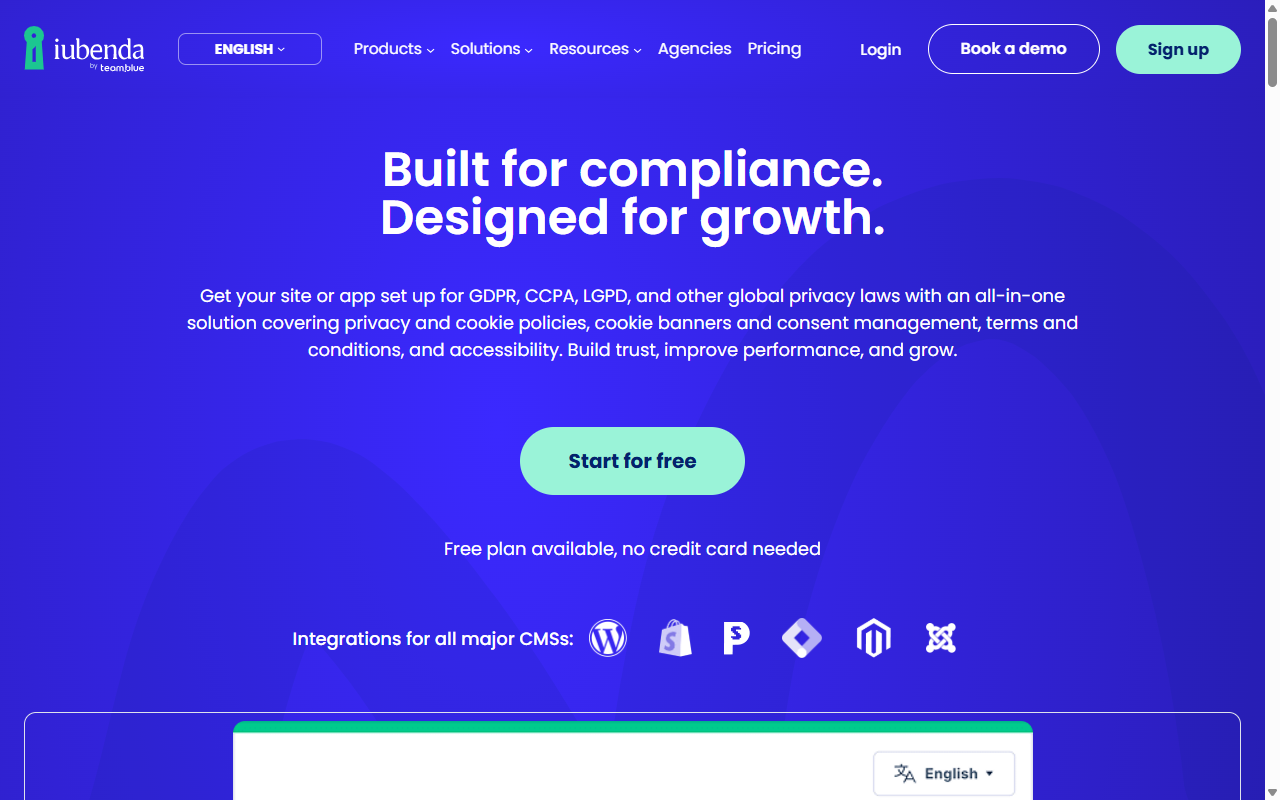
iubenda is a compliance service built by lawyers, covering cookie banners, privacy policies, and terms of service through modular packages embedded into WordPress. Its legal texts are translated into multiple languages and kept current by iubenda’s legal team as regulations change.
Key Features
- Generates attorney-reviewed privacy policies in multiple languages.
- Updates legal texts automatically as privacy laws change.
- Manages cookie consent settings from a centralized dashboard.
- Logs consent events to meet GDPR’s proof requirements.
Pros
- Professional legal documents drafted by actual lawyers.
- Banners and policies update automatically when laws change.
- Strong support for complex multilingual setups.
Cons
- Dashboard setup involves several steps and some technical familiarity.
- Integration runs through embedded scripts, not a native dashboard.
Verdict: An excellent pick for enterprise or high-liability sites.
6. Termly
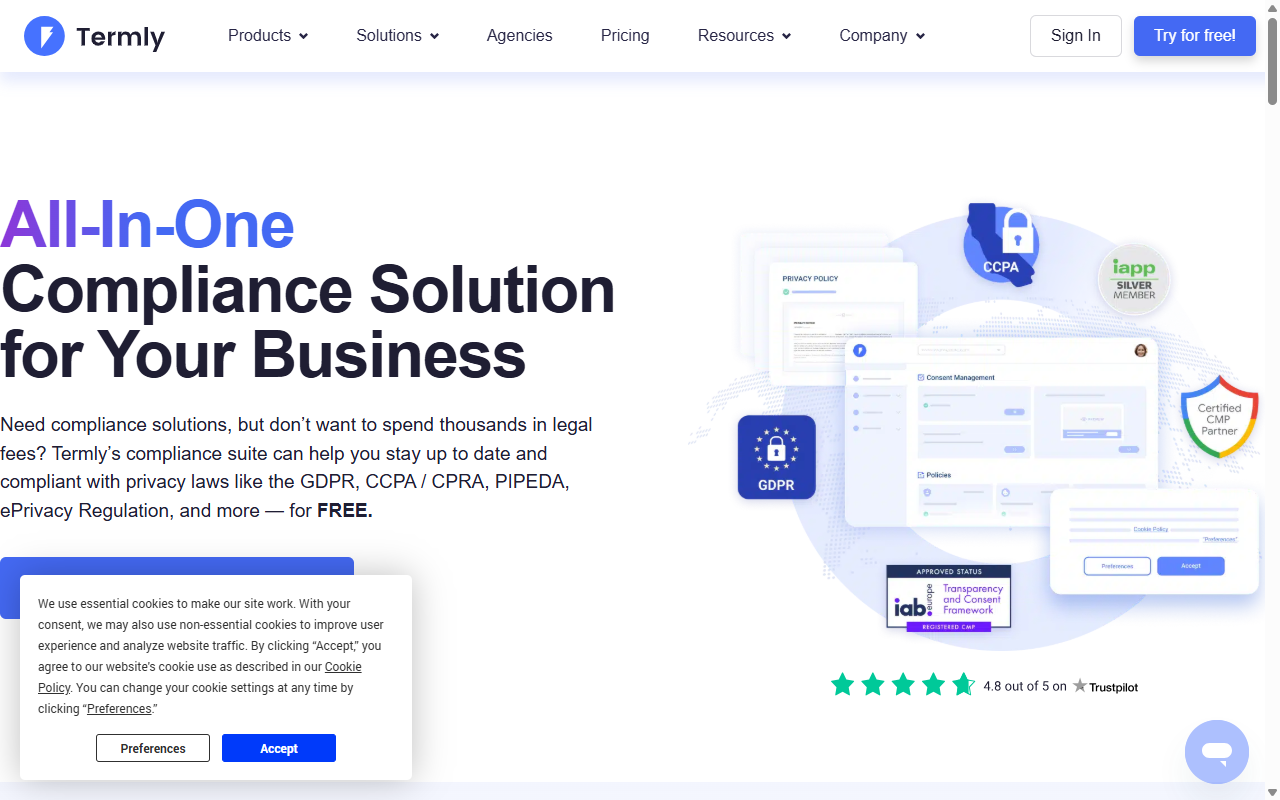
Termly is a compliance platform for small businesses, bundling a consent manager, privacy policy generator, terms generator, and cookie scanning in one place. Built mainly for English-speaking markets, its translation features now cover multilingual banners across European regions.
Key Features
- Scans your site for cookies and builds a compliance report.
- Builds custom privacy policies, terms, and disclaimer pages.
- Adds custom CSS options to style your banner.
- Supports consent logs for tracking compliance histories.
Pros
- Clean, friendly setup wizard for beginners.
- Great collection of standard legal policy templates.
- Affordable entry point for small business compliance.
Cons
- Not a native WordPress tool, so configuration happens externally.
- Translation options are lighter than specialized global platforms.
- Entry-level plan displays Termly branding on your banner.
Verdict: A solid pick for cookie banners and legal documents together.
7. OneTrust
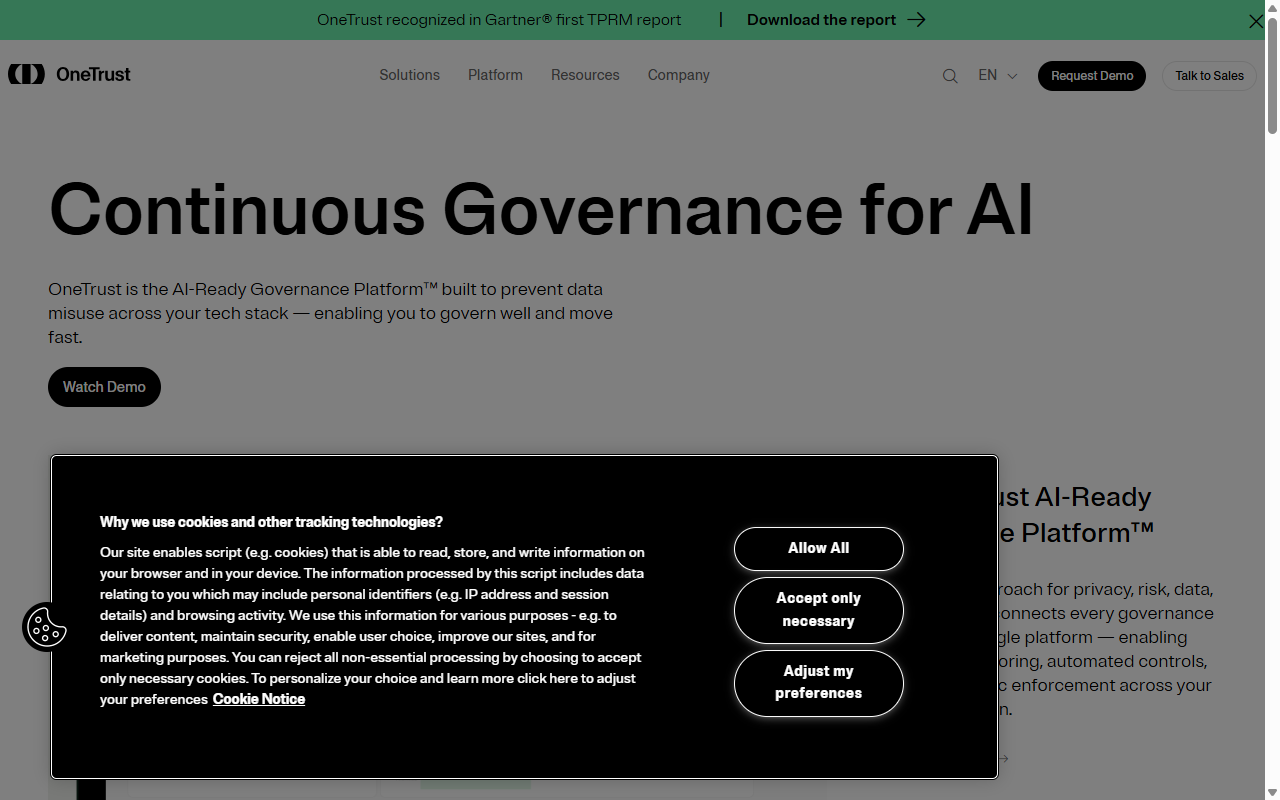
OneTrust is an enterprise-grade trust intelligence platform used by some of the largest companies in the world, covering data mapping, risk assessment, and consent management via a cloud script. It deploys specific consent rules across dozens of countries for global organizations.
Key Features
- Maps data structures across large corporate web properties.
- Deploys geo-targeted banners based on specific regional rules.
- Integrates with corporate databases and CRM systems.
- Delivers exhaustive reporting audits for legal defense teams.
Pros
- A recognized standard for corporate compliance and risk management.
- Strong localization and translation capabilities.
- Strong security and access management for large teams.
Cons
- Built for enterprise scale, with pricing suited to large organizations.
- Requires training and configuration time to deploy fully.
- Site speed depends on correct developer configuration.
Verdict: Best suited to enterprise corporations with dedicated compliance teams.
8. Osano
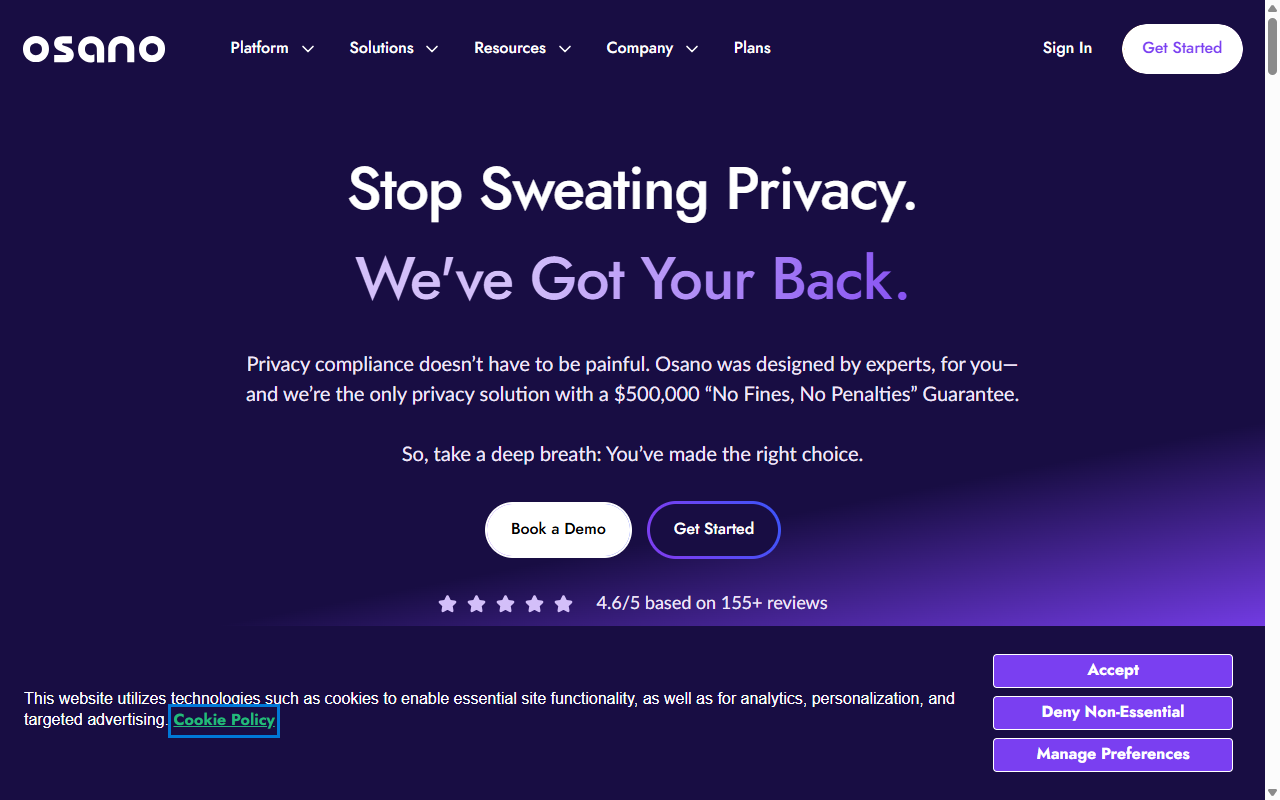
Osano is a B-corp certified privacy platform built around simplicity and a “no-fine guarantee” covering regulatory fines under supported settings. It manages scripts through an external tag wrapper, with pre-translated legal text in many languages.
Key Features
- Guarantees compliance with major regulations, backed by coverage.
- Blocks dynamic marketing scripts before consent is given.
- Translates cookie banner text into dozens of languages.
- Simplifies data subject access requests through an integrated portal.
Pros
- Peace of mind from their compliance guarantee.
- Reliable automated script blocking.
- Supports a wide range of international languages.
Cons
- Pricing scales with traffic, raising costs as a business grows.
- Runs on external hosting, so uptime depends on their CDN.
- Configuration dashboard has a learning curve.
Verdict: A premium platform for strong legal protection at a higher price.
9. WP GDPR Compliance
WP GDPR Compliance is a lightweight, community-supported tool for managing consent locally, no external service or cloud account, so visitor data stays in your database. It adds checkboxes to forms, comments, and WooCommerce checkout, plus a basic banner, via standard translation files.
Key Features
- Adds compliance checkboxes to popular forms and comment fields.
- Saves cookie consent selections locally in your database.
- Integrates with native translation files for multi-language support.
- Includes a simple dashboard to review consent selections.
Pros
- 100% free and open-source, no subscription fees.
- Lightweight with minimal impact on site performance.
- Keeps all regulatory data on your own server.
Cons
- Lacks automated cookie scanning or geo-targeting.
- Requires manual translation setup using translation files.
- Design customization is limited compared to newer builders.
Verdict: A handy, free pick for small blogs on a tight budget.
10. GDPR Cookie Consent (WebToffee)
GDPR Cookie Consent by WebToffee is one of the most downloaded consent tools on WordPress.org, running locally with full control over banner design and script blocking, no external subscription. It supports multilingual translations through popular engines right inside your admin panel.
Key Features
- Generates customizable cookie banners with multiple templates.
- Blocks common tracking scripts like Google Analytics until accepted.
- Connects with popular translation systems for localized texts.
- Imports and exports cookie lists across multiple sites.
Pros
- Well-established tool with a large, helpful community.
- Direct compatibility with major WordPress translation tools.
- Fairly priced premium licenses for single or multi-site setups.
Cons
- Interface uses an older WordPress admin style.
- Manual script blocking setup requires technical knowledge.
- Premium features like scanning need the paid upgrade.
Verdict: A reliable, traditional pick with a strong track record.
Multilingual Cookie Consent Tools Compared
Here’s how these tools compare on what matters most for multilingual sites:
| Tool Name | WordPress Native | Google Consent Mode v2 | Geo-Targeting Support | Translation Method | Dashboard Location |
|---|---|---|---|---|---|
| Cookie Consent | Yes | Yes | Yes | Native & Dynamic | WordPress Admin |
| Cookiebot | No | Yes | Yes | Cloud Auto-Translate | External SaaS |
| CookieYes | No | Yes | Yes (Paid) | Cloud Dashboard | External SaaS |
| Complianz | Yes | Yes | Yes (Paid) | WPML / Polylang | WordPress Admin |
| iubenda | No | Yes | Yes | Legal Dashboard | External SaaS |
| Termly | No | Yes | Yes | Cloud Dashboard | External SaaS |
| OneTrust | No | Yes | Yes | Enterprise Portal | External Enterprise |
| Osano | No | Yes | Yes | Cloud Translation | External SaaS |
| WP GDPR Compliance | Yes | No | No | Local PO/MO Files | WordPress Admin |
| GDPR Cookie Consent | Yes | Yes (Paid) | Yes (Paid) | WPML / Polylang | WordPress Admin |
An Expert’s View on Compliance
“Achieving multilingual compliance isn’t just about translating your text. It’s about understanding that a user’s location determines their legal rights. Your consent mechanism must be dynamic enough to respect regional differences instantly, or you risk falling short of global requirements.”
– Itamar Haim, Web Compliance Specialist
Translation is only half the job. Skip geo-targeting or Google Consent Mode v2, and you’re left with gaps. More on the Elementor blog.
How to Select the Right Consent Tool for Your Site
Picking the right tool doesn’t have to be stressful. Focus on your site and goals to narrow things fast.
1. Determine Your Site Builder and Ecosystem
If you built with modern visual tools, look for options that plug into that ecosystem. A native capability like Cookie Consent keeps things simple, no jumping platforms to edit a translation, with design tools and compliance in one place.
2. Assess Your Translation Workflow
Think about how you translate the rest of your site: automatic tools, or a team of translators?
- If you use translation tools like WPML or Polylang, look for a consent tool that hooks directly into those platforms.
- If you prefer to manage everything from a central web console, cloud-based tools might fit your workflow better.
- If you want things done instantly, native tools that support dynamic translations are usually the easiest to manage.
3. Map Your Compliance Needs
Not every site needs the same legal protection. A simple blog might need basic categorization and a translated privacy notice, while a store selling across Europe and California will need geo-targeting, consent logging, and Google Consent Mode v2.
Frequently Asked Questions
Is cookie consent mandatory for all multilingual websites?
Yes, if your website receives visitors from regions with strict privacy laws, such as the European Union (GDPR) or California (CCPA), you must provide a clear way for users to manage their cookies. That’s true regardless of where your business is physically located or what language your site is written in.
What is Google Consent Mode v2, and do I need it?
Google Consent Mode v2 is a system that communicates your visitors’ privacy choices directly to Google services like Analytics and Google Ads. If you run marketing campaigns targeting users in the European Economic Area, using a cookie tool that supports Google Consent Mode v2 is highly recommended to protect your ad performance and tracking accuracy.
Can I write my own cookie translations?
Absolutely. Most high-quality compliance tools let you customize and edit your own banner translations. This is often the best approach, since automated translations can sometimes miss the correct legal phrasing or fail to match your brand’s unique conversational tone.
Do cookie consent tools slow down my website load speed?
Some tools can affect speed, especially if they rely on heavy external JavaScript files that load from slow cloud servers before your page displays. Native WordPress capabilities are generally much faster because they run locally on your server and use optimized code to keep page load times fast.
What is geo-targeting in cookie consent?
Geo-targeting is a smart feature that detects where a user is browsing from and displays a banner designed for their local laws. For example, you can show a strict opt-in banner to visitors from the EU, a simpler opt-out notice to visitors from California, and no banner at all to users in countries without active cookie regulations.
Are consent logs really necessary?
Under regulations like the GDPR, the burden of proof is on the website owner to show that a user gave active consent before their data was tracked. Keeping a secure, anonymized consent log is the best way to protect your business during a regulatory audit.
What happens if I do not show a cookie banner to EU visitors?
Failing to comply with privacy regulations can result in significant legal consequences, including heavy fines from European data protection authorities. Major ad networks and analytics platforms may also restrict or disable your accounts if they detect you’re tracking European users without proper consent.