
Keeping cookie consent compliant across dozens of client sites can feel like spinning plates in a windstorm. Privacy rules keep getting stricter, but staying compliant doesn’t have to eat your billable hours. Here’s our pick of the top consent tools that keep clients safe, respect visitors, and free you up for the work you love.
Key Takeaways
- Dashboard integration saves agencies hours of switching between external browser tabs.
- Google Consent Mode v2 support is critical for clients running search ads or analytical scripts.
- Geo-targeting capabilities keep banners localized so visitors only see relevant privacy options.
- Consent logging provides a solid, verifiable audit trail in case of regulatory reviews.
- White-labeling options help agencies present a unified brand experience to their clients.
Why Managing Consent Across Multiple Sites in 2026 Is Different
The rules of the web have changed. Regulators aren’t handing out polite warnings anymore. They’re issuing real fines for small mistakes. A basic “OK” button banner doesn’t cut it today, since visitors expect clear choices and ad networks want explicit data signals.
For agencies, the real challenge is scale. Setting up and updating banners across thirty sites can turn into a full-time job with the wrong tools. You need to track scanning, script blocking, and consent logging, and if a client gets audited, you need proof fast.
Ad networks and search platforms also expect Google Consent Mode v2 now. If your client runs ads or tracks visitors in Europe or California, skipping it means their marketing data stops flowing. That’s why one solid tool that fits your workflow matters so much.
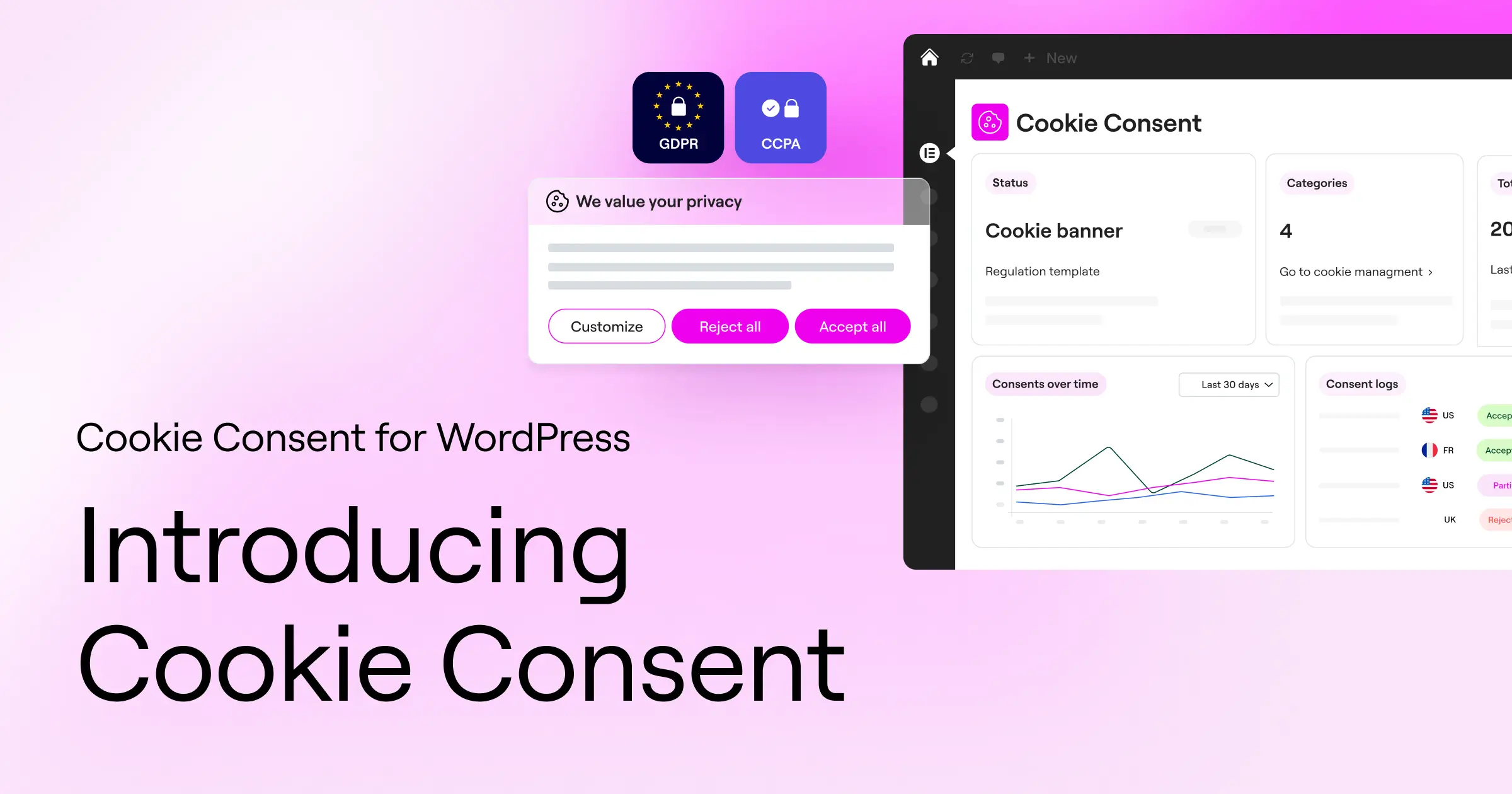
Building with Elementor and keeping everything inside the WordPress admin saves real time. Instead of juggling five external accounts, you get one place to check logs, run scans, and adjust branding, without piling on extra admin work.
The 10 Best Cookie Consent Management Solutions for Agencies
Finding the balance between design freedom and legal compliance is the goal. Here’s our list of the ten best solutions for agency teams.
1. Cookie Consent
Cookie Consent is the built-in consent management tool from Elementor, made for WordPress site builders. It handles GDPR and CCPA compliance right from your dashboard, no external platform or separate subscription needed. Set up banners, scan for trackers, and keep consent logs without leaving your site editor.
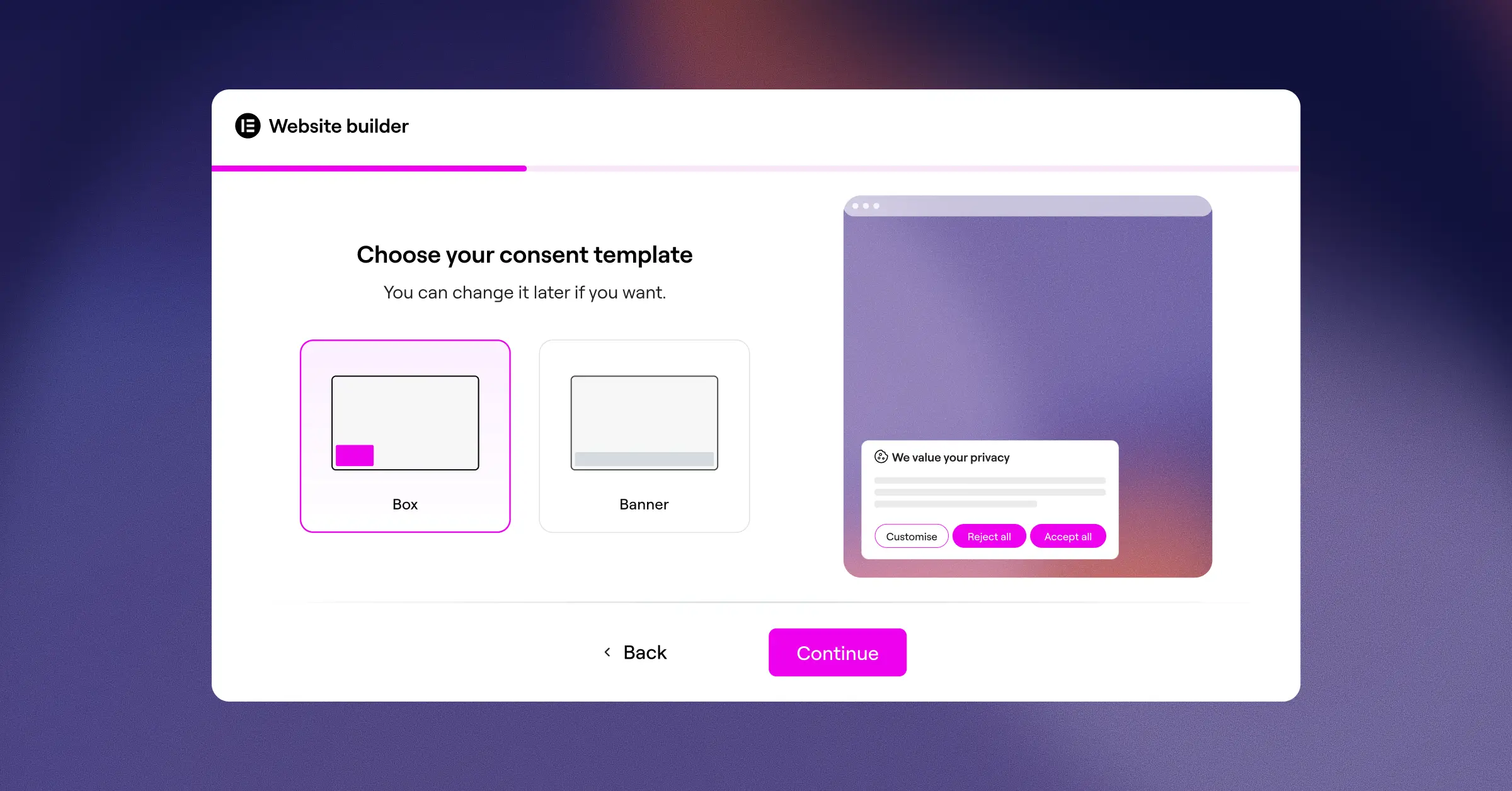
- Tracks active cookies with automated cloud scanning.
- Builds custom banners that match your client’s brand.
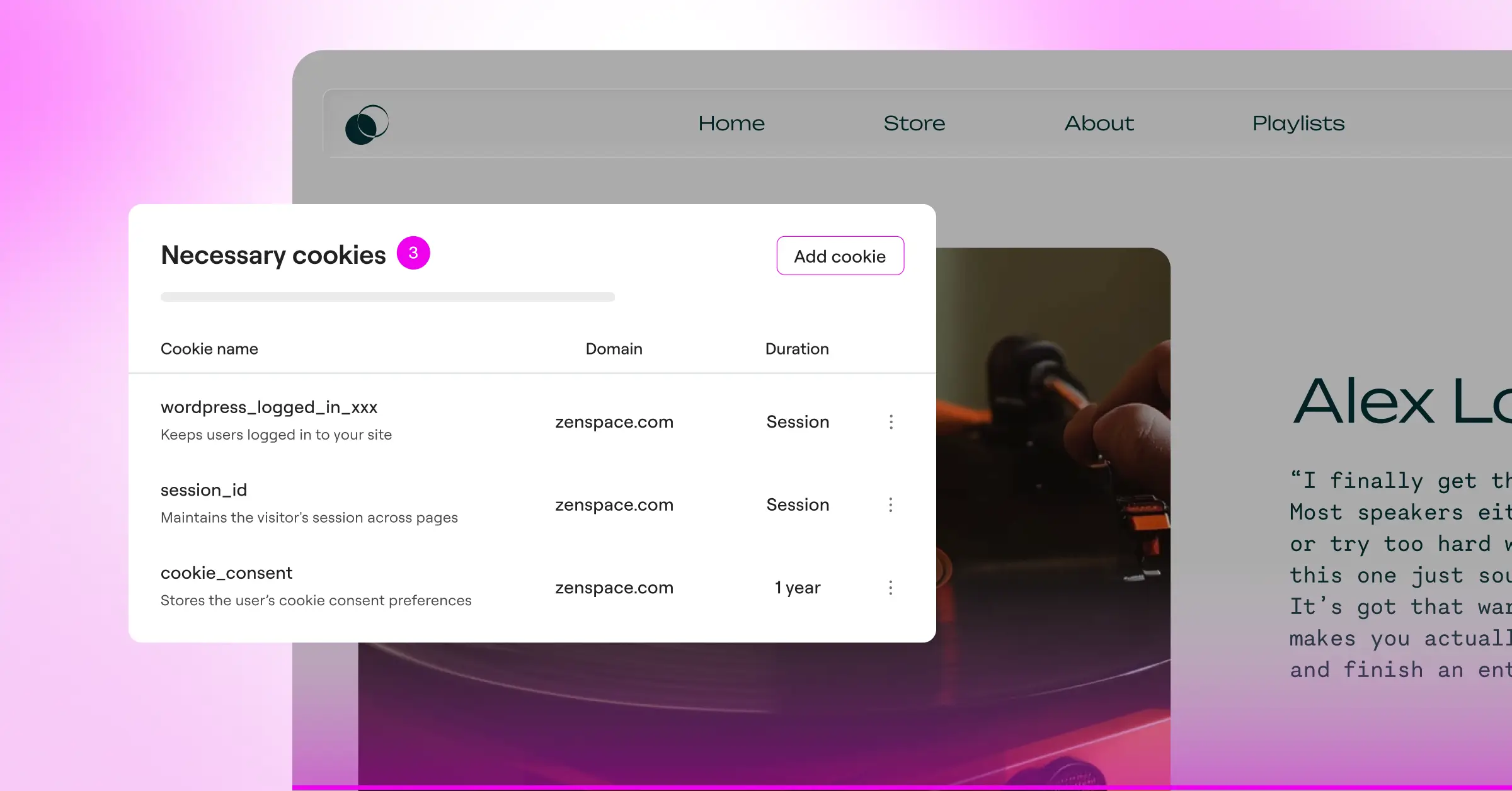
- Connects with Google Consent Mode v2 for compliant data flow.
- Pulls consent logs into your database for audits.
- Launches localized banners based on visitor location.
- Generates draft privacy policies with a built-in generator.
Pros:
- Full WordPress dashboard integration, no external accounts.
- Fast setup, under five minutes.
- Matches your site design, no custom code.
- White-labeling for agency presentation.
- Free tier, included in Elementor One.
Cons:
- WordPress-only, won’t run on other platforms.
Verdict: Best for agencies on Elementor One who want one simple, familiar space to manage everything.
2. Cookiebot
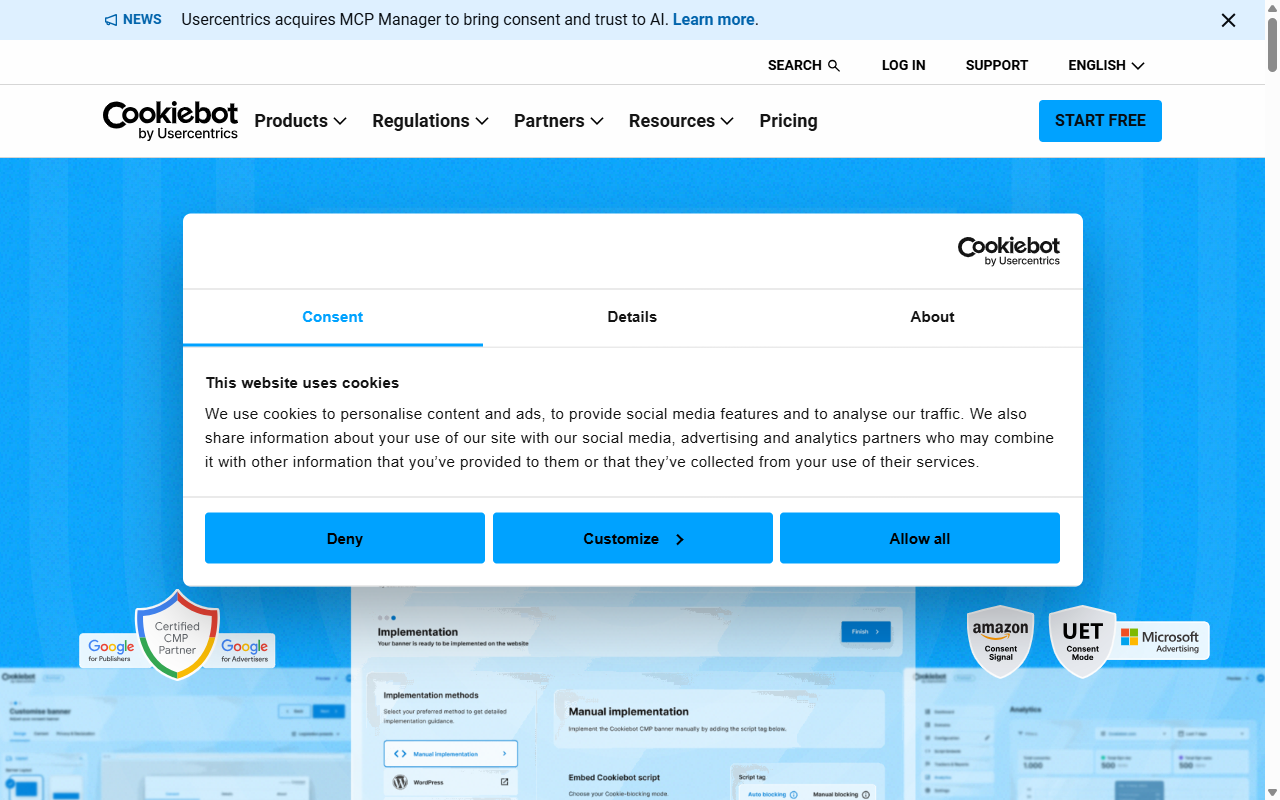
Cookiebot is a well-known cloud-based platform built around automated cookie scanning. It runs externally, connecting to sites through a dedicated integration, and is valued for catching even well-hidden trackers.
- Scans sites monthly to keep cookie lists current.
- Categorizes trackers into necessary, preference, statistics, and marketing groups.
- Saves consent states in an encrypted cloud database.
Pros:
- Highly accurate automated scanning.
- Wide language support for global audiences.
- Reliable compliance monitoring.
Cons:
- Settings managed in an external dashboard.
Verdict: Dependable for larger sites needing rigorous scanning, with page-based pricing.
3. CookieYes
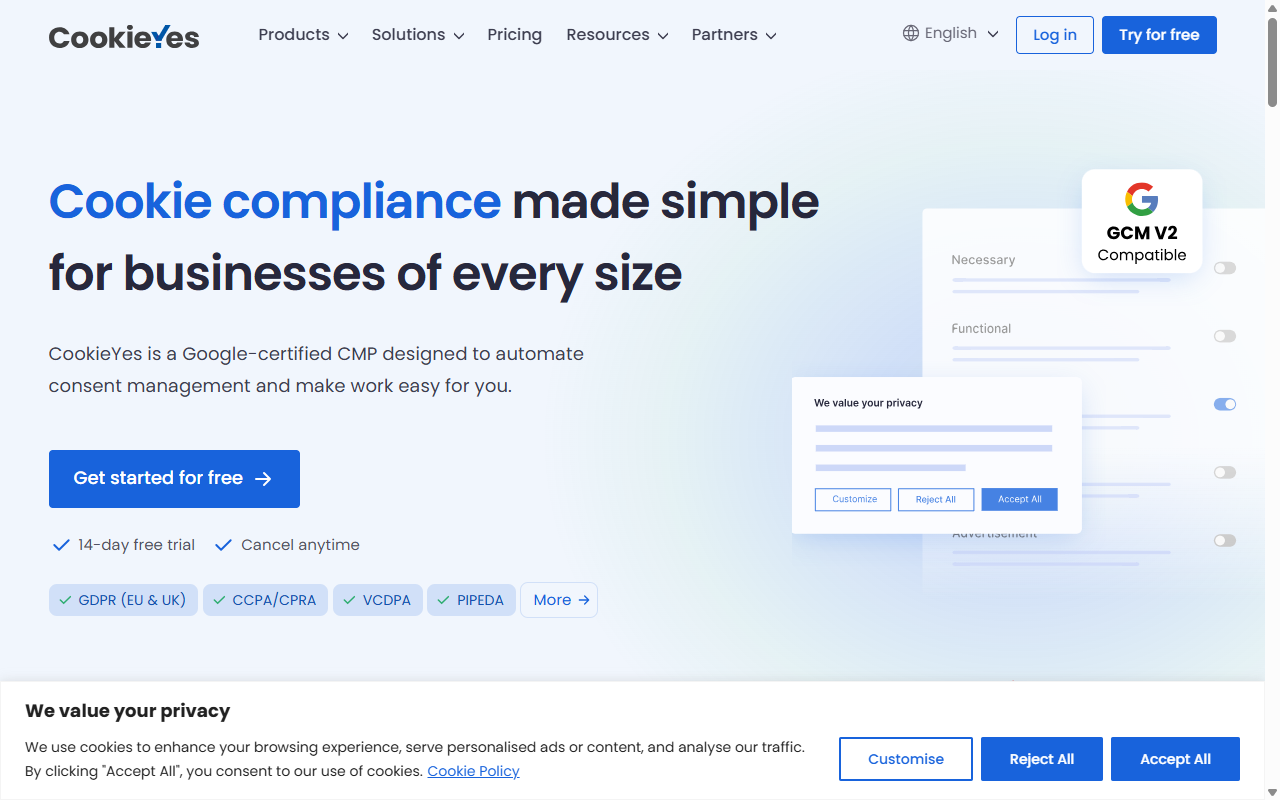
CookieYes is a popular consent platform used on millions of sites. Its web-based dashboard lets agencies monitor and adjust settings across properties, with a clean interface for handling several domains under one account.
- Blocks third-party scripts before a visitor consents.
- Displays clean, responsive banners for mobile and desktop.
- Stores consent records for compliance reviews.
Pros:
- Simple setup, minimal configuration.
- Solid documentation and agency support.
- Friendly pricing for growing agencies.
Cons:
- Custom branding takes extra styling work.
- Data syncs through external servers.
Verdict: Solid for agencies wanting one external dashboard for multiple client properties.
4. Complianz
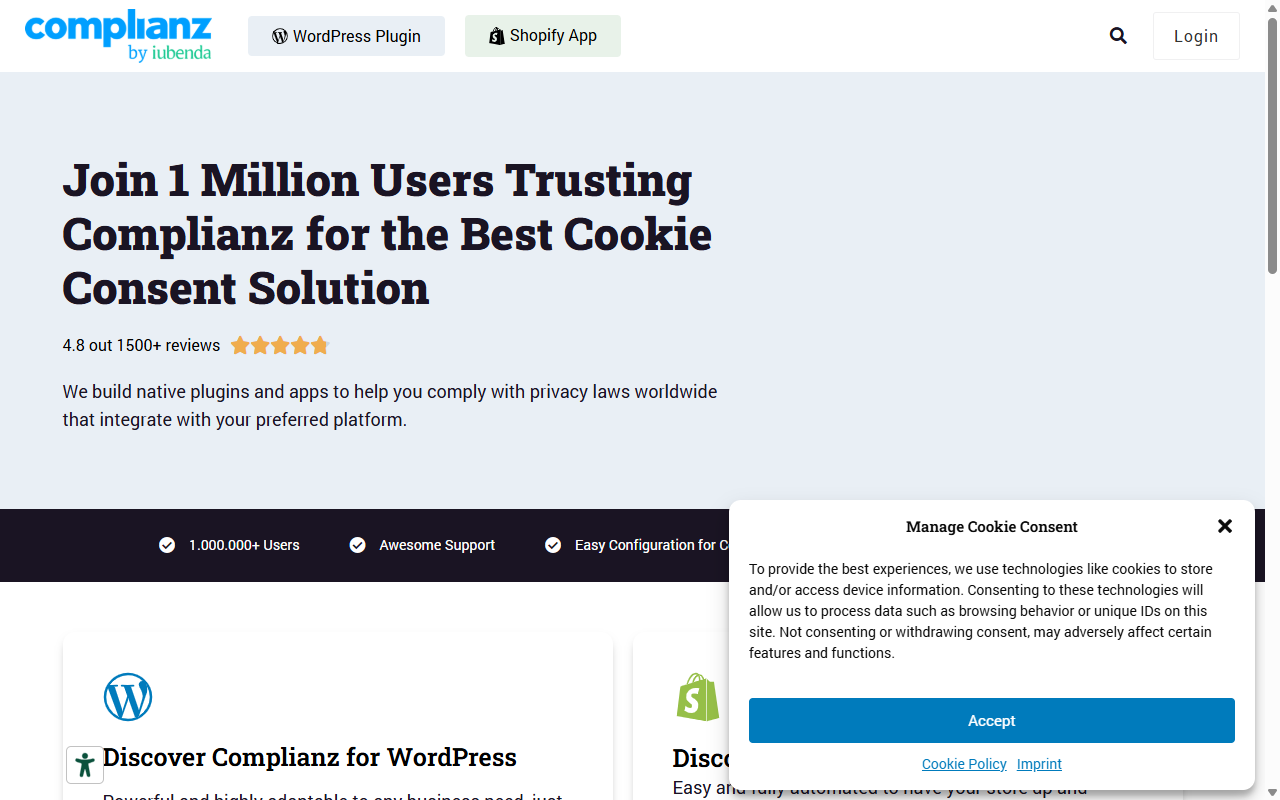
Complianz is a privacy suite built for WordPress. It works as a localized setup wizard, walking you through legal questions to generate custom privacy policies and cookie banners for each site.
- Configures consent options based on regional laws like GDPR or CCPA.
- Integrates with major WordPress translation tools.
- Generates legal documents and cookie policy pages automatically.
Pros:
- Deep WordPress core integration.
- Thorough legal wizard covering regional detail.
- No external monthly fees for basic use.
Cons:
- The wizard feels long across dozens of sites.
- Can feel heavy for simple sites.
Verdict: Best for a detailed, legal-wizard approach built into WordPress itself.
5. iubenda
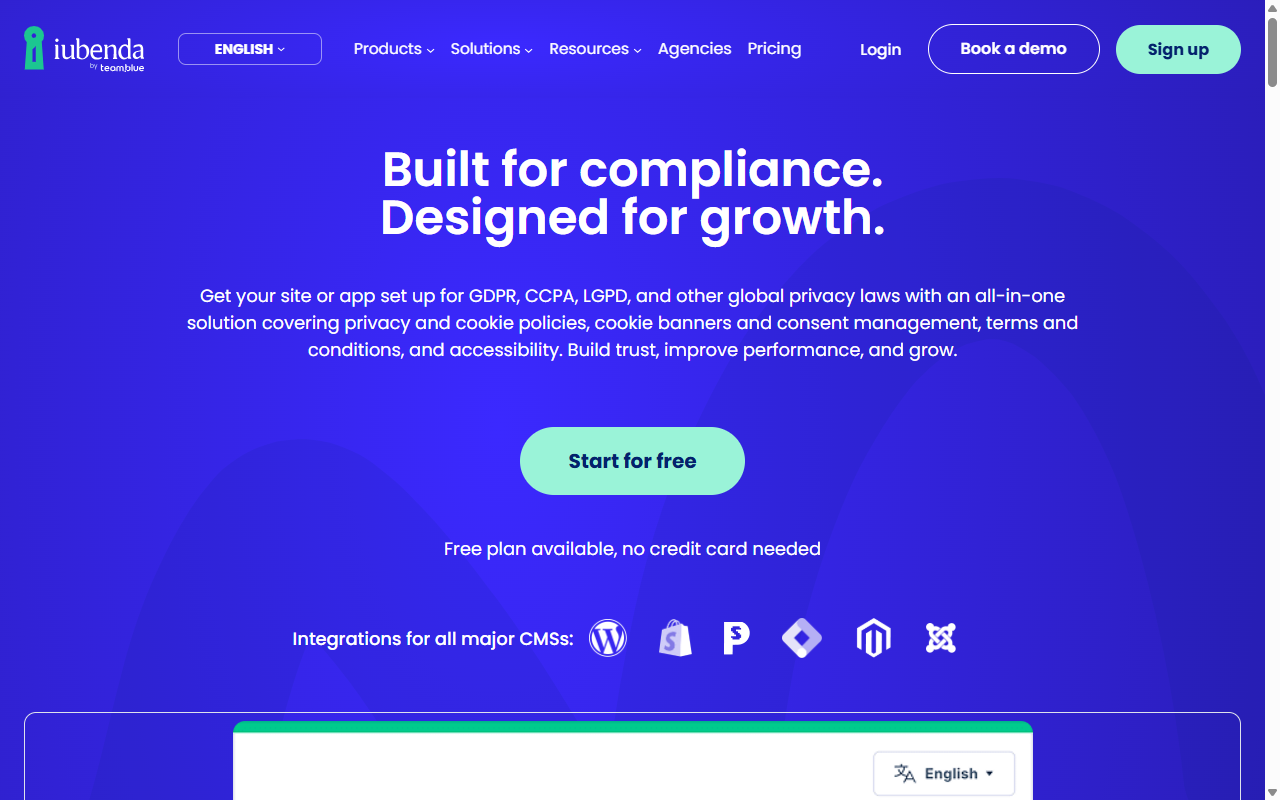
iubenda is an all-in-one compliance platform that goes beyond cookie banners, covering privacy policies, terms of service, and consent tools from one central dashboard.
- Generates auto-updating legal documents drafted by a legal team.
- Detects visitor location to show compliant legal text.
- Tracks consent preferences across platforms, including mobile apps.
Pros:
- Legal coverage beyond simple banners.
- Banners and policies update automatically with law changes.
- Solid for complex terms of service needs.
Cons:
- Dashboard has a learning curve.
- Costs add up across many clients.
Verdict: Good for clients needing legal documentation alongside consent banners.
6. Termly
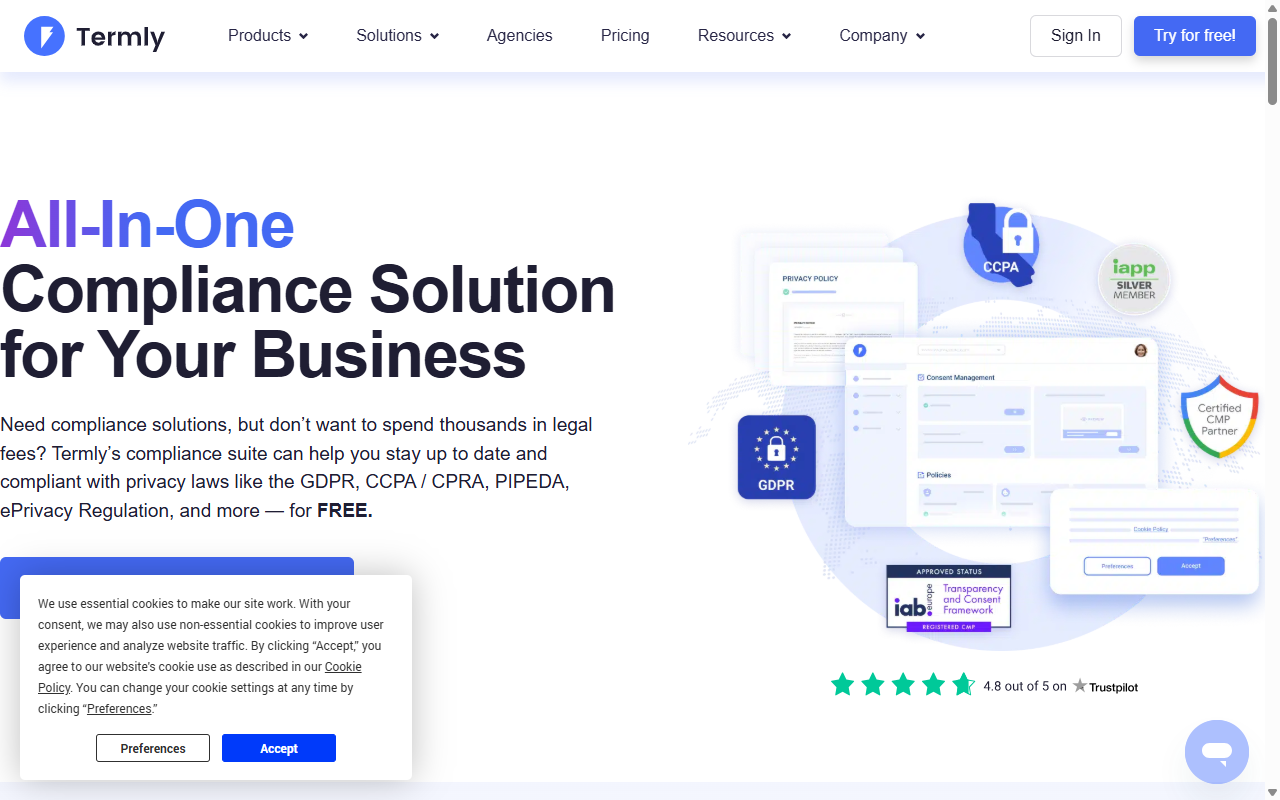
Termly is a compliance platform built for small businesses and their agencies. It offers builders for terms of service, privacy policies, and cookie consent, approachable without a legal background.
- Scans sites regularly to find and categorize tracking scripts.
- Creates simple, modern banners with a style customizer.
- Runs a clean generator to help set basic legal terms.
Pros:
- Clean, modern interface.
- Friendly guides explaining legal terms.
- Quick deployment for standard sites.
Cons:
- Limited customization versus developer tools.
- Not ideal for highly custom-coded projects.
Verdict: A good entry-level pick over deep design control.
7. OneTrust
OneTrust is an enterprise trust intelligence platform built for large corporations, financial institutions, and agencies with strict security needs.
- Maps complex data flows across thousands of touchpoints.
- Coordinates subject rights requests (DSAR) through a dedicated portal.
- Monitors compliance ratings across international jurisdictions.
Pros:
- High detail and administrative control.
- Trusted by large brands and legal teams.
- Scales well for corporate networks.
Cons:
- Too complex and costly for small-to-medium sites.
- Setup needs specialized training.
Verdict: Right for enterprise agencies needing corporate-grade tracking.
8. Osano
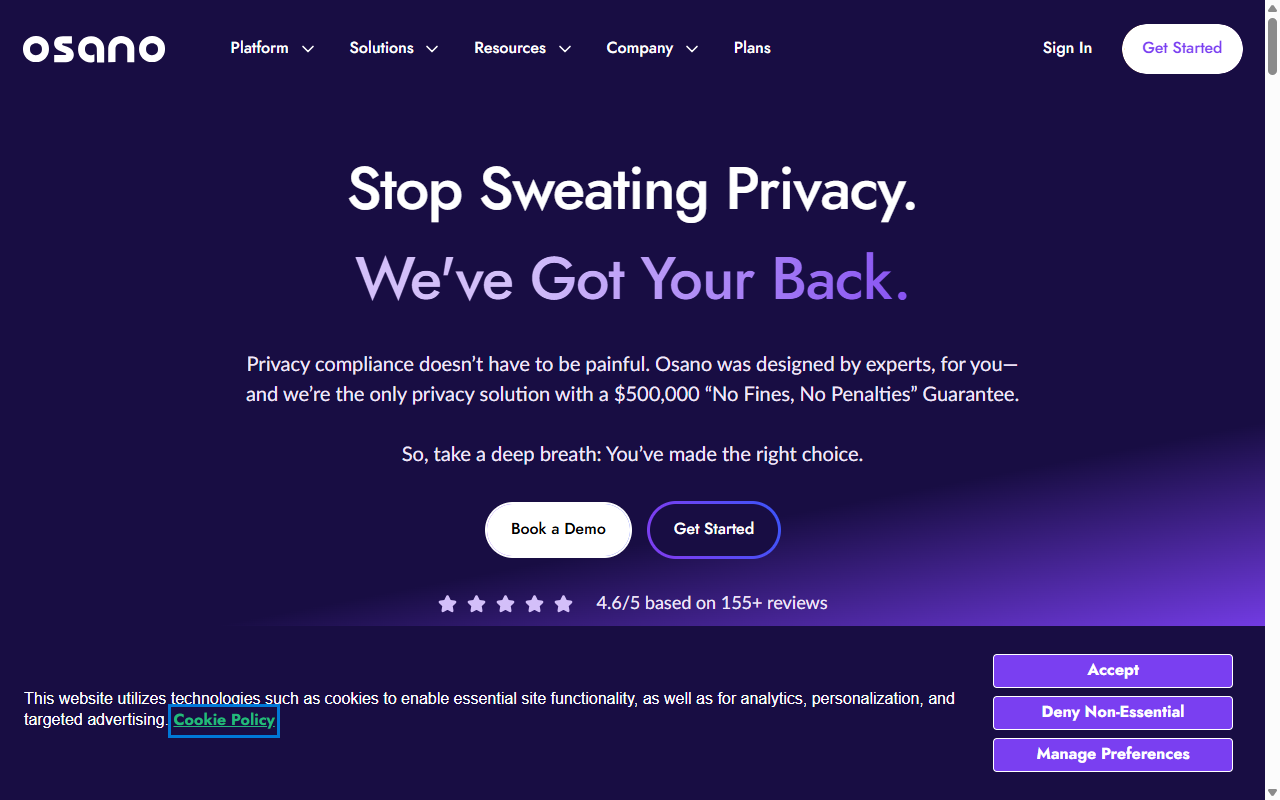
Osano is a privacy platform focused on reliability and legal safety, offering a guarantee to cover fines if the platform fails to keep your site compliant.
- Blocks scripts using a cloud-based directory of known trackers.
- Guarantees compliance with current regional privacy laws.
- Adds multi-site delegation for agency admins.
Pros:
- Compliance guarantee for real peace of mind.
- Reliable script blocking engine.
- Simple to install and configure.
Cons:
- Higher cost of entry.
- Design options feel rigid for creative agencies.
Verdict: Good for high-risk sectors where the guarantee outweighs the cost.
9. Usercentrics
Usercentrics is a developer-focused platform built for design freedom and deep technical integration, a favorite among custom development agencies and app builders.
- Aggregates consent data across apps, smart TVs, and websites.
- Customizes banner elements through a flexible API.
- Coordinates consent signals with advertising platforms.
Pros:
- Strong flexibility for custom developers.
- Solid support for cross-platform apps.
- Clean technical documentation.
Cons:
- Needs development knowledge to configure.
- No point-and-click setup.
Verdict: Good for custom app developers wanting full API control.
10. Consent Manager
Consent Manager is a compliance tool focused on data optimization and ad yield, built to help publishers and ad-heavy sites stay compliant without losing revenue.
- Optimizes opt-in rates with built-in A/B testing.
- Reports detailed analytics on consent trends.
- Supports the IAB TCF framework for publisher networks.
Pros:
- A/B testing maximizes advertising consent.
- Detailed reports on opt-in rates.
- Built for performance and fast load times.
Cons:
- Dashboard can feel data-heavy for basic sites.
- Setup gets complex given the ad-tech focus.
Verdict: Right for agencies handling high-traffic ad portals and publisher networks.
Side-by-Side Comparison of Agency Consent Tools
Here’s how these solutions stack up across the features that matter most to multi-site agencies.
| Solution | WP-Native Dashboard | Consent Mode v2 | Geo-Targeting | Best For |
|---|---|---|---|---|
| Cookie Consent | Yes (Fully Native) | Yes | Yes | WordPress & Elementor Agencies |
| Cookiebot | No (External SaaS) | Yes | Yes | Deep Cloud Scanning |
| CookieYes | No (External SaaS) | Yes | Yes | Simple SaaS Management |
| Complianz | Yes | Yes | Yes | Detailed Legal Wizards |
| iubenda | No (External SaaS) | Yes | Yes | Full Legal Document Packages |
| Termly | No (External SaaS) | Yes | Yes | Simple Policies & Banners |
| OneTrust | No (External SaaS) | Yes | Yes | Enterprise Clients |
| Osano | No (External SaaS) | Yes | Yes | Legal Compliance Guarantee |
| Usercentrics | No (External SaaS) | Yes | Yes | Custom API & App Developers |
| Consent Manager | No (External SaaS) | Yes | Yes | High-Traffic Publishers |
Key Features to Look For in an Agency-Grade Consent Tool
It’s easy to get pulled in by marketing buzzwords when evaluating options. What you need are features that make your daily workflow smoother.
A Native Dashboard to Keep Your Workflow Simple
There’s nothing more frustrating than logging into a dozen platforms just to check a scan. Managing consent right from the WordPress dashboard keeps your team in one workspace and spares clients extra logins. It sounds small, but it saves real hours every week.
Support for Google Consent Mode v2
If your clients run Google Ads or Analytics, this feature isn’t optional anymore. Consent Mode v2 sends signals to Google’s systems, telling them how to handle data based on each visitor’s choice. Skip it, and campaigns lose tracking accuracy and your reporting takes the hit.
Reliable Automated Scanning and Categorization
A good consent tool works like a quiet watchdog, running regular scans to catch new tracking scripts or third-party cookies, then sorting them automatically so you’re not digging through JavaScript files by hand (this trips up plenty of agencies).
“For multi-site agencies, managing consent isn’t just about avoiding a legal fine, it’s about preserving trust and data integrity at scale. If your tools aren’t deeply integrated into your actual development workspace, you’re spending hours on administration that should be automated.”
– Itamar Haim, Web Compliance Specialist
Design Customization That Matches the Client’s Brand
Your agency just spent weeks building a custom site. The last thing you want is a generic pop-up that clashes with the page. You need real design control: colors, corner radius, button styles, and typography, so the banner feels like a natural part of the site.
Consent Logging for Audit Readiness
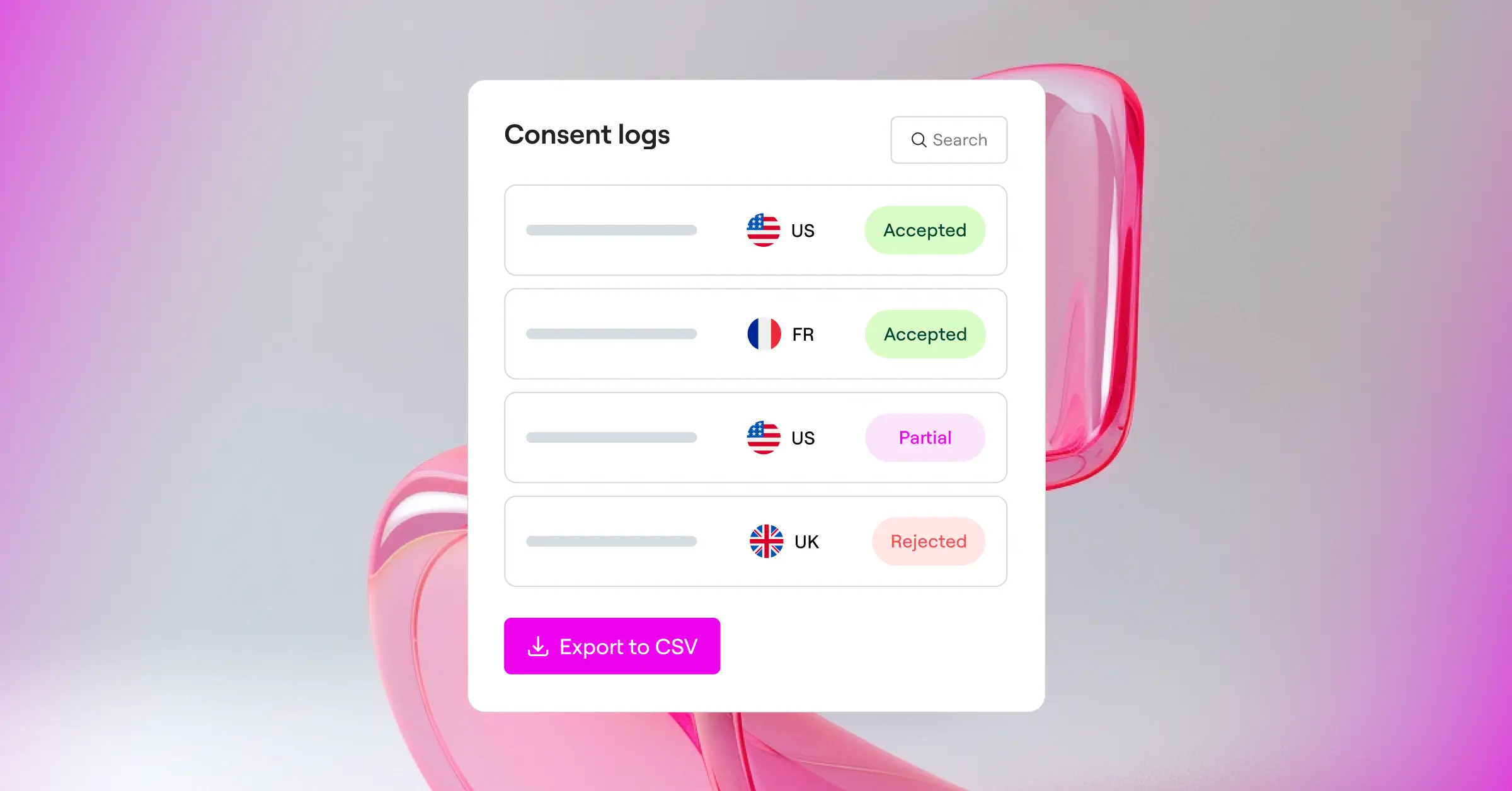
If a regulator questions a client’s tracking policies, they’ll ask for proof. Consent logs give a time-stamped record of exactly when and how each visitor made their choice. Keeping logs secure and organized protects both your client and your agency’s reputation.
Smart Geo-Targeting Capabilities
Every region has different privacy rules. EU visitors need strict opt-in choices; visitors elsewhere may only need a simple notice. Geo-targeting shows the right banner to the right visitor based on location, so you’re not forcing EU-level friction on everyone.
How to Implement a Consent Strategy for Your Clients
Rolling out a compliance strategy doesn’t have to be painful. Follow a clear system and you can deploy banners fast, keep projects secure, and offer compliance setup as a service clients are happy to pay for.
- Audit the existing site setup. Before installing banners, scan the client’s current site for analytics tools, pixel trackers, and social sharing elements. This gives you a clear baseline of what to handle.
- Choose your management tool. Pick something that fits your team’s style. On WordPress with Elementor, the built-in Cookie Consent tool keeps everything under one roof.
- Configure geo-targeting and Consent Mode v2. Set rules so the banner behaves correctly worldwide, and confirm Consent Mode v2 is active so marketing data keeps flowing.
- Style the banner to match the site design. Adjust fonts, brand colors, and layout so the banner feels friendly and visually at home.
- Set up automated scans and policy pages. Schedule regular scans to catch new scripts, and use a built-in generator to draft an up-to-date privacy policy linked from the banner.
- Run active testing before launch. Test the site in private browsing, confirming scripts stay blocked when rejected and load when accepted. You’ve got this, it’s easier than it sounds.
Frequently Asked Questions
Why is a WordPress-native dashboard better for agencies?
A WordPress-native dashboard saves your team from managing external API keys and cloud logins. You can configure styles, monitor logs, and run scans right where you build the site, making it easy to hand off projects without extra subscriptions.
Do my clients really need Google Consent Mode v2 in 2026?
Yes, absolutely. If clients use Google Ads, Analytics, or Tag Manager in regions with strict data laws, Consent Mode v2 is essential. Without it, Google stops collecting behavioral data, breaking conversion tracking and campaign performance.
What is the difference between GDPR and CCPA consent?
GDPR is Europe’s opt-in model, meaning no non-essential cookies run before explicit consent. CCPA, protecting California residents, is opt-out, meaning scripts can load by default but visitors need an easy way to stop tracking anytime.
How often should we scan client sites for cookies?
We recommend scanning client sites at least monthly. Sites change constantly, and clients often install new plugins or scripts without telling their agency. Regular scanning keeps categorization accurate and catches compliance gaps early.
Can I customize the banner design to match my client’s brand?
Yes, any quality consent tool should let you customize the banner. With Elementor’s Cookie Consent, you get full design freedom inside your editor to match brand colors, typography, buttons, and layouts.
What happens if a client site does not have a cookie consent banner?
Operating without a compliant banner puts clients at real legal risk, including fines. It can get sites flagged by search engines, and ad networks may block advertising accounts. A clear strategy helps agencies add real value.
Is there a free option for agencies testing these tools?
Yes, several tools on our list, including Elementor’s Cookie Consent, offer free tiers or trials. That lets your agency test the setup and show clients the layout before committing to paid plans.
What are consent logs and why are they important?
Consent logs are secure, time-stamped records proving a user made a specific privacy choice. They’re your legal paper trail, and the primary evidence a regulator will check during an audit.