
Keeping up with privacy law can feel like a lot, but you’re not stuck with one option. Plenty of WordPress owners lean on Complianz for cookie banners and consent, though it’s not the only choice. Maybe you want a simpler setup, a friendlier price, or a tool built right into your WordPress dashboard. Here are the best alternatives, so you can pick what fits your site.
Key Takeaways
- Native tools cut dashboard clutter: a WordPress-native option keeps your backend simple.
- Google Consent Mode v2 matters: your tool needs to support it if you run Google ads or analytics.
- Geo-targeting helps: show banners only where they’re legally required, and keep things clean everywhere else.
- Budget flexibility counts: solid free options exist alongside full-featured paid plans.
Why Look for a Complianz Alternative in 2026?
Privacy rules keep changing, and Complianz has been a dependable choice for WordPress users for years, though it isn’t right for every project. Some find its interface a bit involved for a simple banner, and others prefer skipping several single-purpose add-ons.
Data handling has shifted too. Google Consent Mode v2 is now required for sites using Google services in Europe, so your tool needs to talk directly to your tracking tags. If your setup feels heavier than it should, modern alternatives are easier to style and quicker to configure.
What to Look for in a Consent Tool
Shopping for a compliance tool, it’s easy to get lost in jargon. Keep it practical: think about where the tool lives. One that runs inside WordPress means no external dashboard just to check consent logs or update a policy.
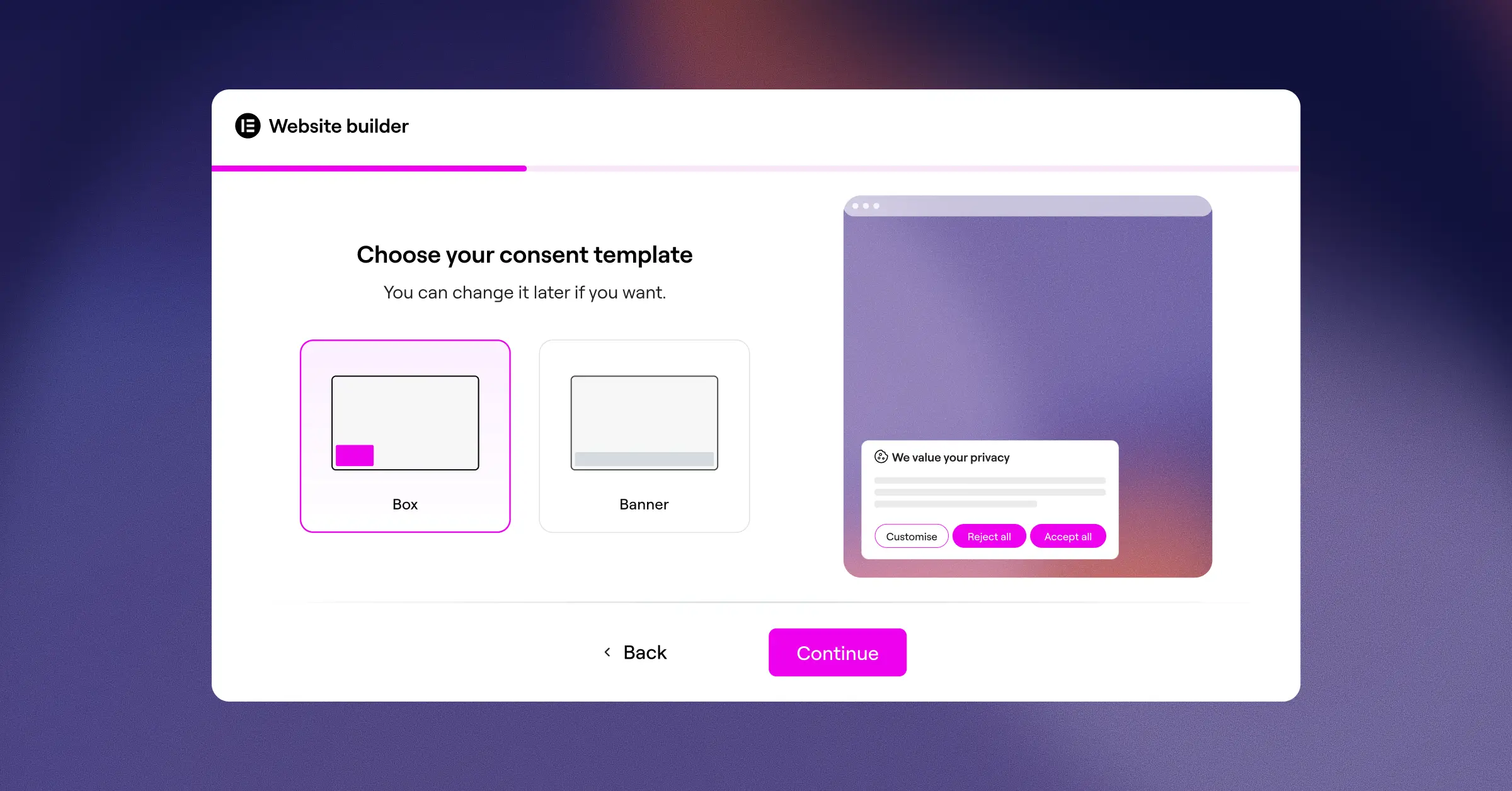
Second, look at the setup process: something that walks you through it step by step. And make sure the design is flexible enough for your brand.
Comparison Table: Top Complianz Alternatives at a Glance
Here’s how the top options stack up this year.
| Tool Name | WordPress Native Dashboard | Google Consent Mode v2 | entry-level plan Available | Key Advantage |
|---|---|---|---|---|
| Cookie Consent | Yes | Yes | Yes | Deep WordPress integration and 5-minute setup |
| Cookiebot | No (External Portal) | Yes | Yes (Limited) | Highly automated cloud scanning |
| CookieYes | No (External Portal) | Yes | Yes | Excellent multi-language support |
| iubenda | No (External Portal) | Yes | Yes (Limited) | Very complete legal policy generation |
| Termly | No (External Portal) | Yes | Yes (Limited) | Great for complete compliance suites |
| OneTrust | No (External Portal) | Yes | No | Built for enterprise-scale compliance |
| Complianz (Baseline) | Yes | Yes | Yes | Familiar native setup with many options |
1. Cookie Consent (The Best Native WordPress Alternative)
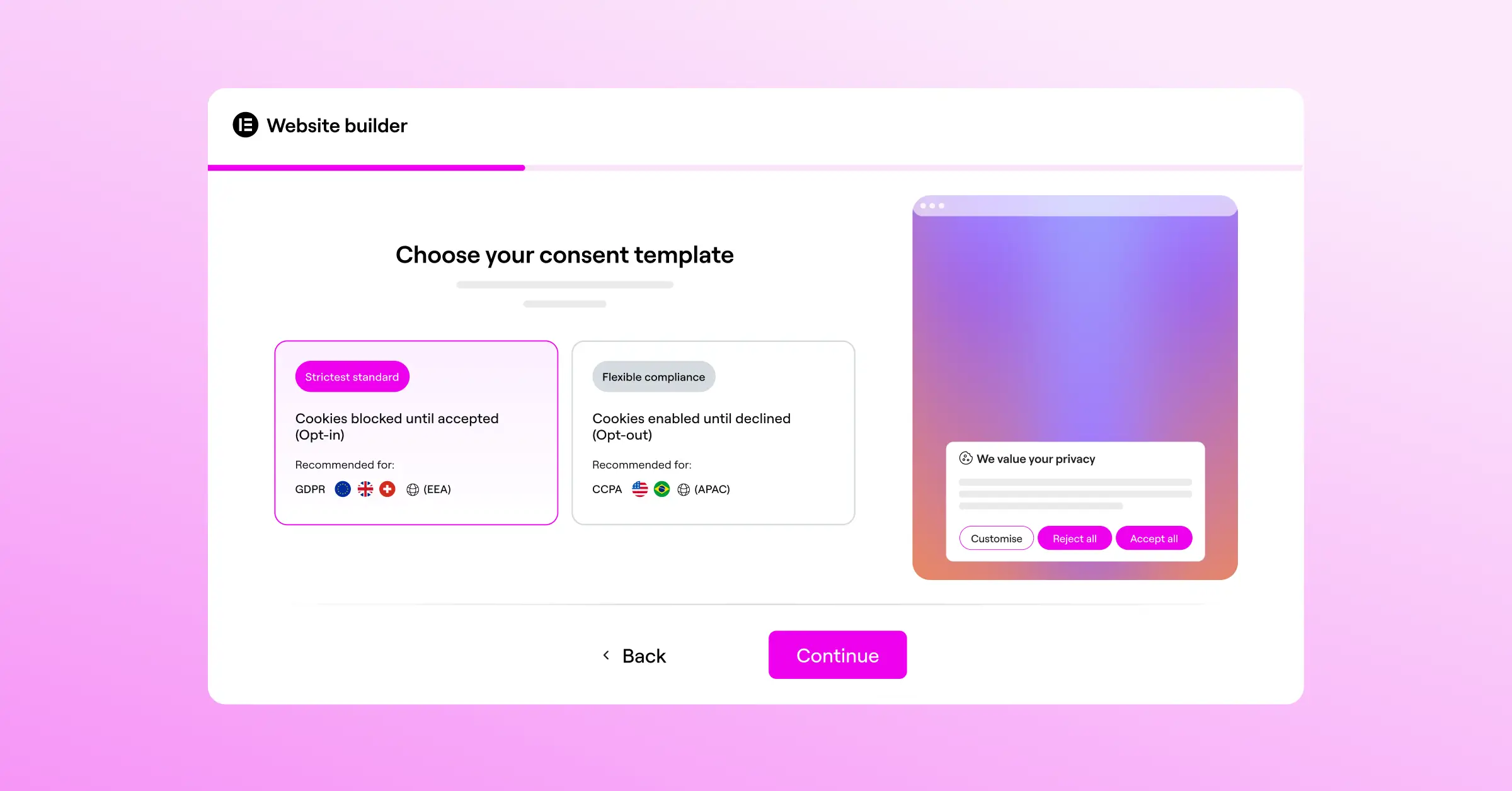
If you want a friendly way to handle cookie consent without leaving WordPress, Cookie Consent is the standout pick. Built by Elementor as a native capability, it makes compliance simple, fast, and low-stress, nothing external to sign up for or copy.
Getting your banner live takes under five minutes: a three-step wizard scans your site, sets categories, and publishes the banner. Built into your website editor, matching the design to your brand colors and typography is simple.
Key Features
- Builds banners with native design controls matching your branding.
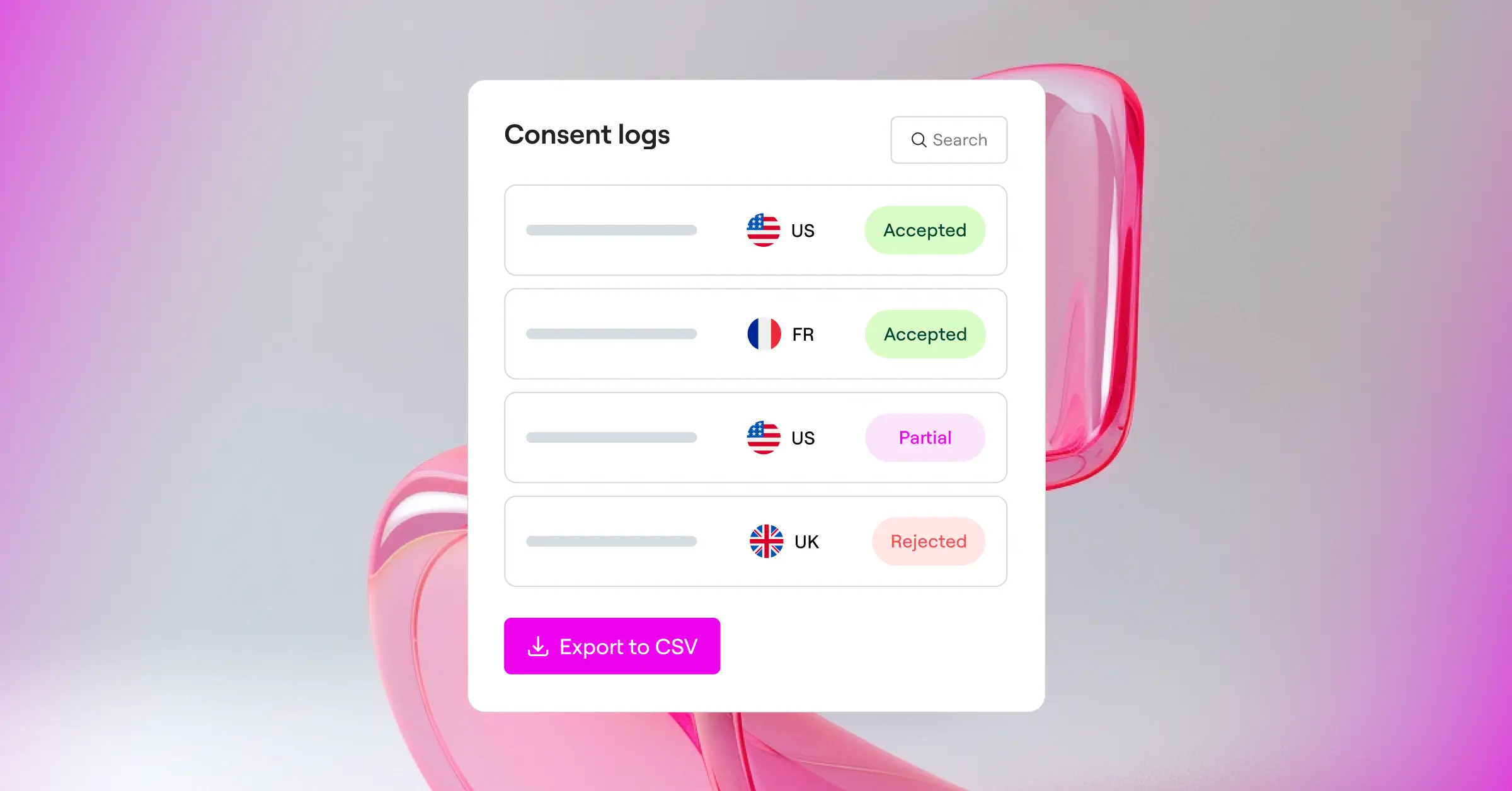
- Tracks visitor choices in secure, local consent logs for audit trails.
- Scans your site to identify and categorize active cookies and scripts.
- Supports Google Consent Mode v2 and Global Privacy Control.
- Targets visitors by region, showing banners only in the EU or California.
- Generates full privacy policies with a built-in assistant.
Pros
The biggest win is that it’s WordPress-native, so there’s no external dashboard to manage. It’s lightweight and won’t slow your page speed, and it’s included in Elementor One, great value for design and compliance in one place.
Cons
It isn’t built for non-WordPress platforms like Shopify or custom HTML sites, and a headless setup will need some adjustment.
Verdict
For WordPress users who want a fast, easy-to-use solution, Cookie Consent is the clear top pick. It takes the stress out of compliance and keeps things simple.
2. Cookiebot
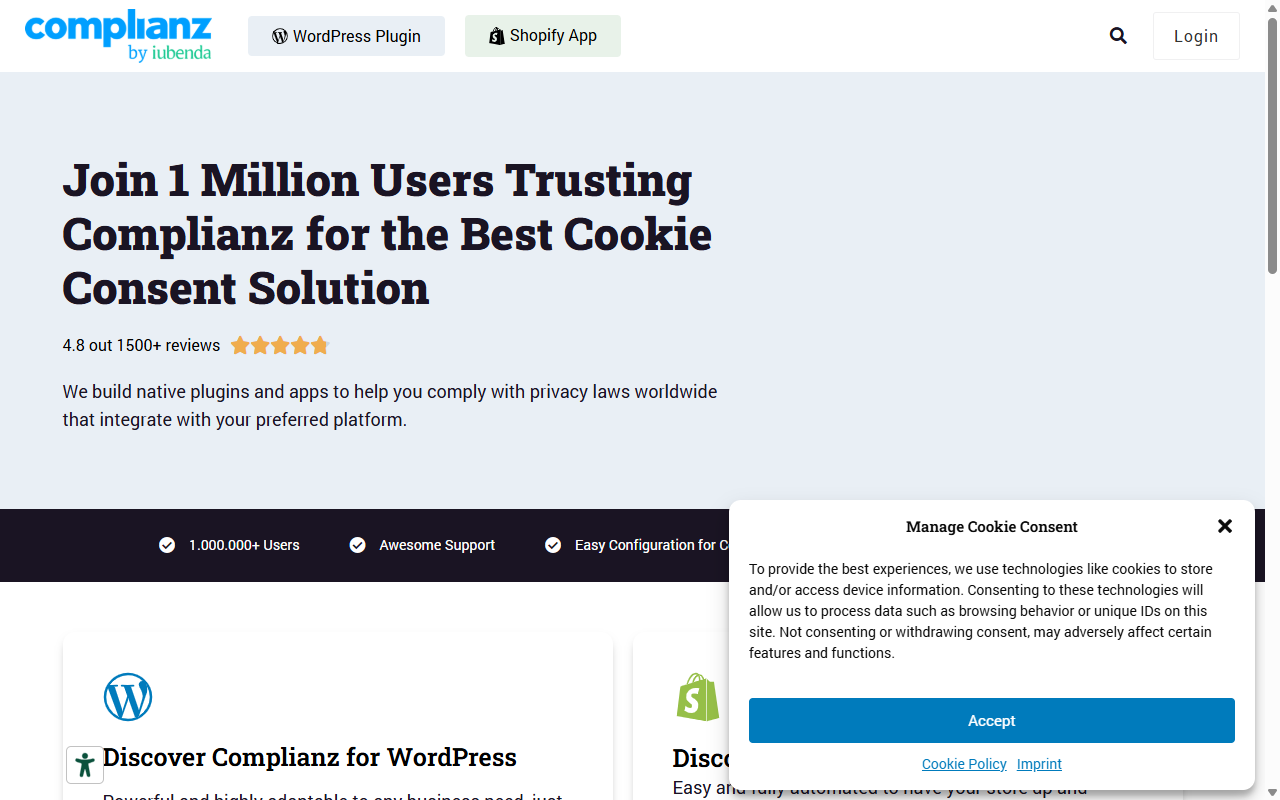
Cookiebot is a well-known name in privacy, built around a powerful cloud scanning engine, a highly automated system for hands-off cookie categorization.
Once installed, it scans your site monthly, finds tracking scripts, sorts them into the right categories, and updates your banner automatically.
Key Features
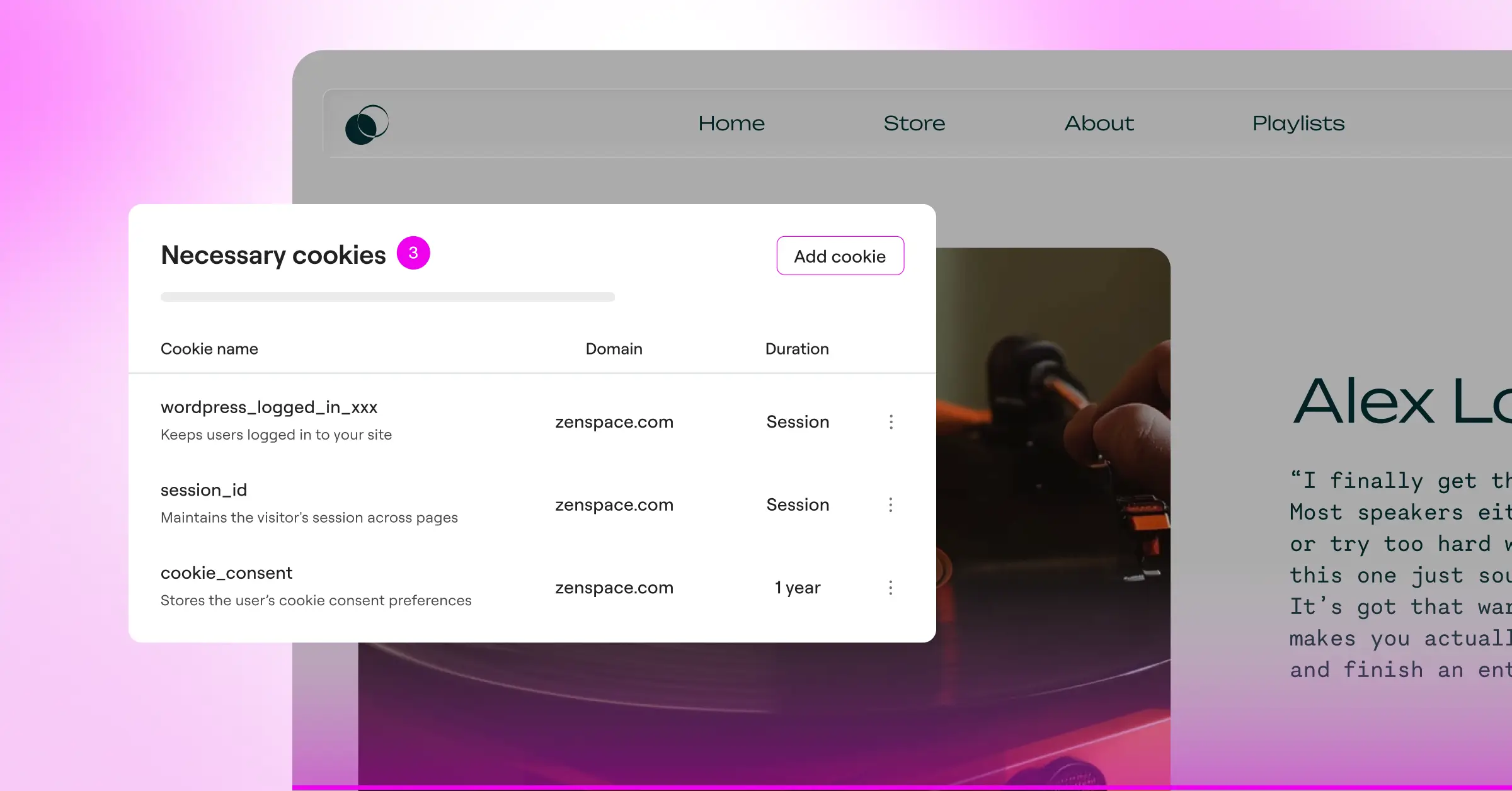
- Scans your whole site monthly to find new cookies and tracking technologies.
- Holds historical consent data securely in their cloud database.
- Translates banners automatically into dozens of languages based on visitor location.
- Syncs directly with Google Tag Manager to handle scripts based on user choice.
Pros
Automation is the big selling point, you rarely categorize a cookie by hand, a reliable pick for larger, complex sites.
Cons
You’ll leave WordPress to configure the banner. The entry-level plan covers one domain under 50 pages, and customization feels limited without custom CSS.
Verdict
Cookiebot suits larger sites wanting highly automated scanning, if an external portal doesn’t bother you.
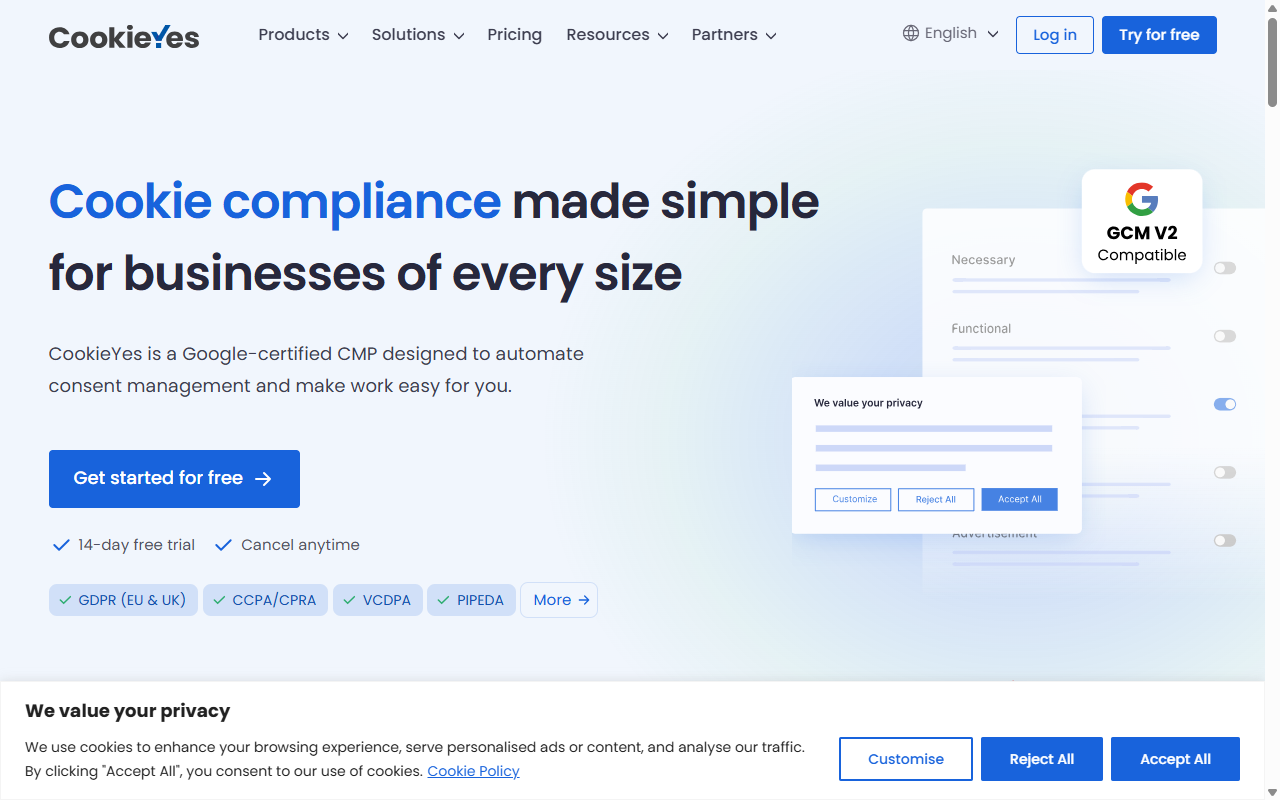
3. CookieYes
CookieYes is a friendly, modern compliance platform popular with WordPress users, balancing features and approachability with a never-too-technical interface.
It’s known for a generous entry-level plan, a popular starting point for small blogs and new sites, and it supports all the major global privacy regulations.
Key Features
- Displays clean, modern consent banners that load quickly on mobile devices.
- Blocks third-party scripts automatically until a visitor gives explicit consent.
- Allows visitors to update privacy preferences anytime via a floating widget.
- Integrates with major analytics and advertising networks to keep tracking compliant.
Pros
The interface is bright, clean, and easy to learn. The entry-level plan gives more room than many competitors, and geo-targeting shows different banners by region.
Cons
You still deal with an external account and portal, and some advanced styling needs a paid plan.
Verdict
CookieYes is a clean, user-friendly cloud solution that handles the basics well, with a solid free start.
4. iubenda
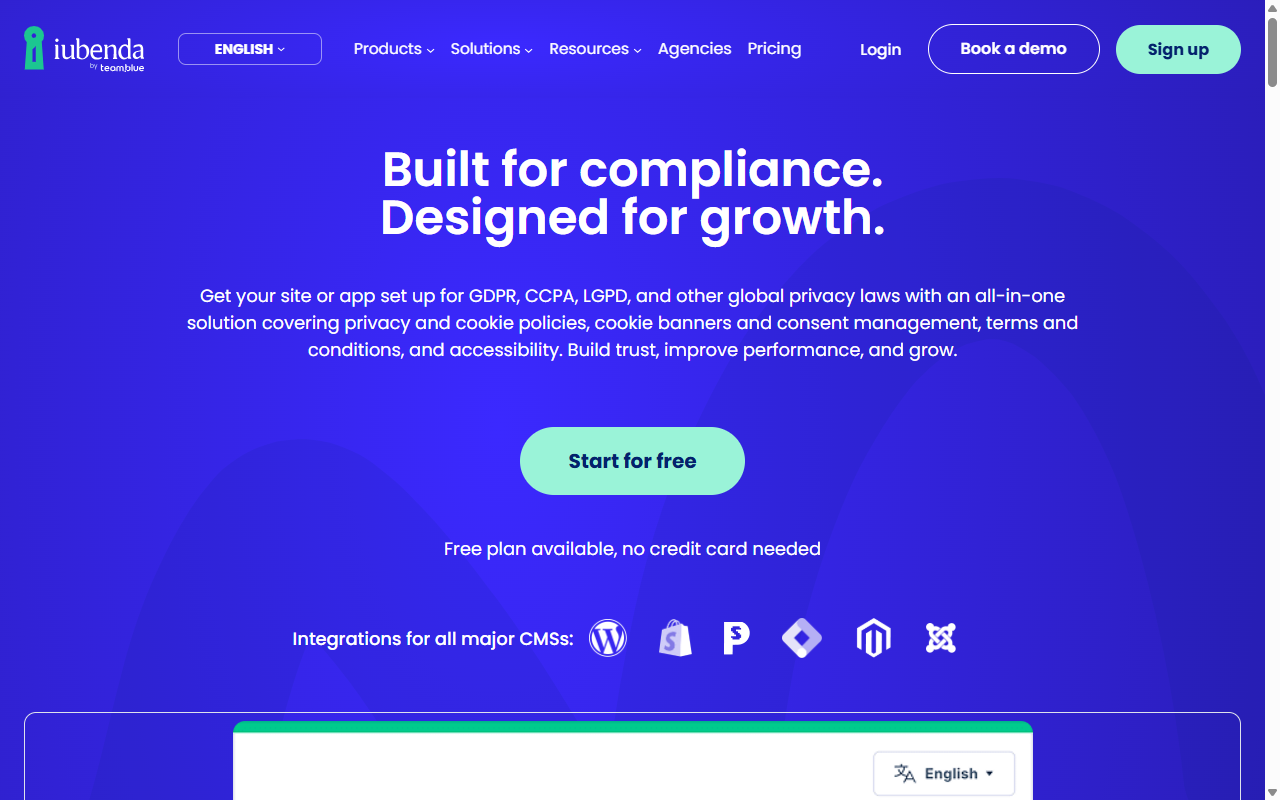
iubenda takes a different approach: a full legal suite rather than just cookie banners, with privacy policy generators, terms and conditions, and consent management in one toolkit.
The system is kept current by a team of lawyers, so when privacy laws shift anywhere, iubenda updates its templates automatically.
Key Features
- Generates legally structured privacy and cookie policies tailored to your business.
- Saves detailed consent records to help you meet GDPR auditing needs.
- Coordinates consent preferences across web, mobile, and app platforms.
- Configures banners to meet regional requirements with advanced geo-targeting.
Pros
The legal depth is a real differentiator, with templates covering almost every marketing tool or payment processor.
Cons
Setup can feel involved given how many legal questions you’ll answer, so budget some time getting started.
Verdict
iubenda is a strong option for stores or businesses needing thorough legal documentation alongside their cookie banner.
5. Termly
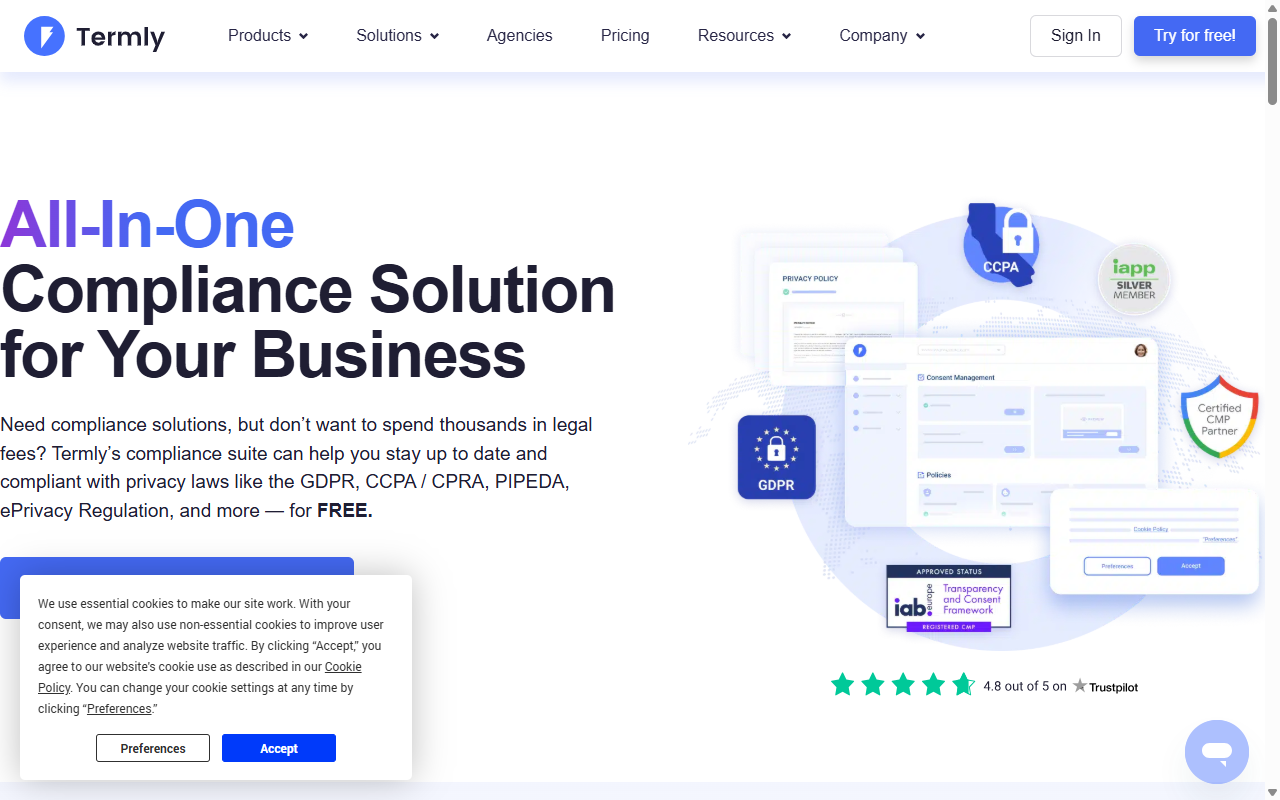
Termly is another all-in-one compliance platform for small businesses, offering privacy policy, terms of service, and return policy generators, plus a cookie consent manager for WordPress.
The banner builder is intuitive, with a step-by-step customizer for layouts, colors, and text, plus a scanner that lists active cookies.
Key Features
- Builds professional compliance policies using plain-language questionnaires.
- Categorizes cookies automatically to keep your consent banner clear.
- Responds dynamically to browser signals like Global Privacy Control.
- Delivers consent reporting dashboards so you can track opt-in rates.
Pros
Termly is approachable without a legal background: easy questionnaires, professional templates, and a banner that works well on mobile.
Cons
The entry-level plan limits page views and scans, so growing sites need to upgrade, and managing settings means logging into Termly’s external site.
Verdict
Termly fits startups and small agencies wanting a visual, beginner-friendly way to generate policies and clean cookie banners.
6. OneTrust
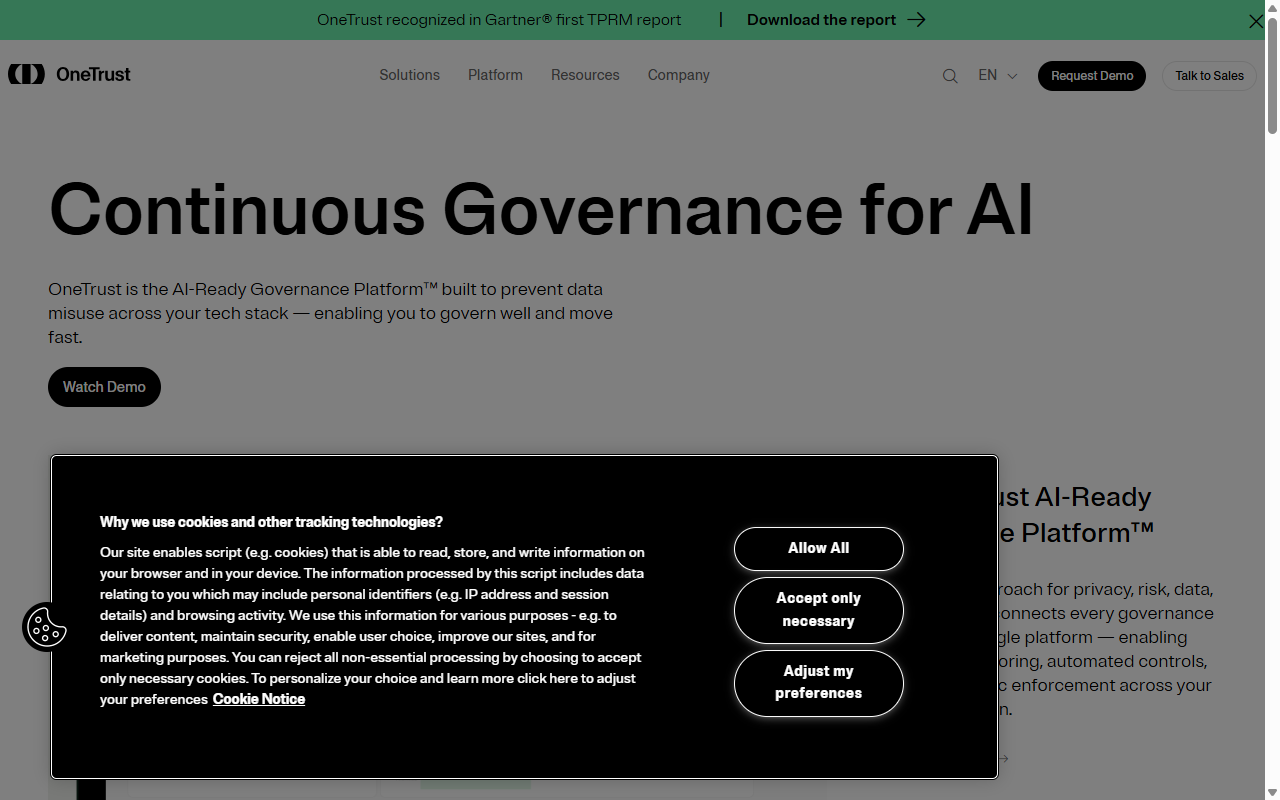
OneTrust is a major player in enterprise privacy, built for large corporations and complex web applications needing deep, customized compliance management.
It includes detailed auditing, risk assessment, and data mapping tools, less a cookie banner, more a full privacy operations platform.
Key Features
- Manages complex data requests and user rights choices across your organization.
- Maps data flows and tracking scripts across multiple global domains.
- Integrates with enterprise tag managers and customer relationship platforms.
- Runs detailed compliance reporting and risk analysis for legal teams.
Pros
The level of control and granularity is impressive, giving legal departments the reporting and compliance frameworks to satisfy global regulators.
Cons
It’s far more than a standard WordPress site needs, setup takes real training, and there’s no low-cost tier for smaller sites.
Verdict
OneTrust fits enterprise corporations and global operations, but it’s much more tool than the average WordPress user needs.
7. Osano
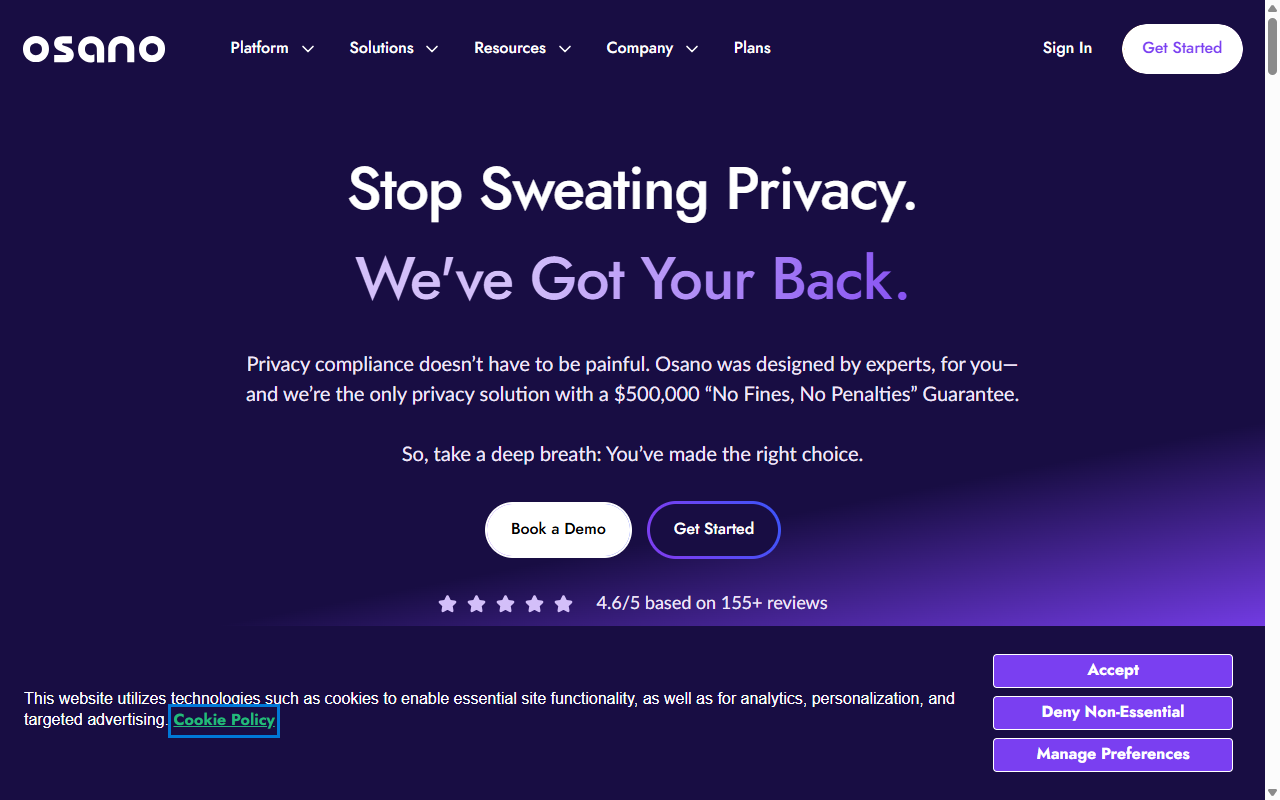
Osano is a privacy platform focused on straightforward compliance for growing businesses, an accessible alternative to heavier enterprise tools, covering cookie consent, data requests, and vendor risk assessments.
One notable feature is Osano’s “No-Fine Pledge,” promising to cover regulatory fines if your site has a compliance issue while using the tool correctly.
Key Features
- Guarantees compliance with a unique legal pledge for extra peace of mind.
- Blocks hidden trackers and scripts automatically until consent is granted.
- Tracks vendor privacy scores so you know which tools are safe to use.
- Supports automatic language translation for global visitors.
Pros
The simple setup and legal guarantee make Osano appealing for owners wanting extra assurance, and the platform feels clean.
Cons
The entry-level plan is fairly limited, and professional plans cost more than many options here, plus it’s an external SaaS tool.
Verdict
Osano suits growing businesses with budget for premium coverage who value the reassurance of a legal pledge.
8. Consent Manager
Consent Manager is a European consent provider focused on GDPR compliance and Google Consent Mode integration, built for publishers and ad-reliant sites needing high opt-in rates.
The platform has detailed styling and placement options, plus built-in A/B testing to find the banner design with the best opt-in results.
Key Features
- Optimizes banner acceptance rates using built-in A/B testing tools.
- Generates detailed compliance reports showing how visitors interact with your banner.
- Blocks ad networks and scripts dynamically based on individual consent levels.
- Supports a wide list of integrated tag managers and advertising networks.
Pros
The focus on conversion optimization is great for ad-supported blogs, and being based in Europe keeps them close to GDPR updates.
Cons
The dashboard can feel technical for beginners, and pricing may not suit very small sites or solo bloggers.
Verdict
A strong option for medium-to-large publishers wanting to optimize consent rates with real data.
9. Usercentrics
Usercentrics is a well-known European consent management platform, modular by design and built to integrate smoothly into WordPress or custom sites.
It has a customizable banner interface and a large database of pre-categorized technologies, making it easier to block and allow specific scripts based on user preferences.
Key Features
- Maintains a large library of pre-classified tracking scripts for fast categorization.
- Delivers customizable user interfaces to match your company design guidelines.
- Manages compliance across web, mobile apps, and smart TV platforms.
- Integrates with Google Consent Mode v2 for accurate ad tracking compliance.
Pros
The pre-classified cookie database removes guesswork from categorization, and flexible styling tools let you build brand-specific layouts.
Cons
The configuration portal is external and can feel involved for a fast, simple solution, and paid plans lean toward growing businesses.
Verdict
A solid choice for businesses wanting a reliable, legally grounded European consent solution with real design flexibility.
10. Ketch
Ketch is a modern data permissioning platform that goes beyond cookie banners, automating privacy compliance across a business’s entire data environment.
It’s a highly automated system suiting tech-forward companies wanting a genuine reputation for treating user data with care.
Key Features
- Automates data privacy controls across your entire tech stack, from website to databases.
- Displays clean, minimal consent banners that don’t disrupt the user experience.
- Tracks consent choices dynamically to update customer profiles in real time.
- Supports global privacy standards with smart regional targeting.
Pros
Connecting consent choices to backend database systems is a real asset for larger organizations, with a clean, forward-thinking interface.
Cons
It’s far more advanced than a typical WordPress site needs, and setup takes technical knowledge to configure across every system.
Verdict
Ketch suits SaaS companies and data-driven businesses wanting compliance built into the core of their data operations.
“When choosing a compliance tool for your website, look for simplicity and integration first. A native tool that keeps your consent logs secure right within WordPress will save you hours of technical troubleshooting down the road.”
– Itamar Haim, Web Compliance Specialist
How to Choose the Right Alternative for Your Website
With so many options out there, the best fit comes down to your comfort level and where you’d rather manage settings.
- Evaluate your platform: on WordPress, look for a tool like Cookie Consent built into your dashboard. On a custom stack, a cloud option like CookieYes or Cookiebot fits better.
- Check your tracking tools: make sure whatever you pick supports Google Consent Mode v2 if you use Google Analytics or Ads.
- Consider your budget: start with a tool with a generous entry-level plan or one bundled into something you already use, like Elementor One.
Don’t worry if this feels like a lot, setting up compliance is far more approachable than it used to be. Pick a tool that guides you step by step, and your banner can be live in minutes.
Frequently Asked Questions
Is Cookie Consent included in my Elementor subscription?
Yes, Cookie Consent is included in Elementor One, so you can add it without buying a separate tool.
Do I really need Google Consent Mode v2?
If your site serves visitors in Europe and you use Google Analytics or Ads, yes, it keeps tracking accurate while respecting user choices.
Will a cookie banner slow down my WordPress site?
Some external cloud banners add loading lag. Native tools like Cookie Consent load locally, keeping your site fast.
Can I customize the design of my cookie banner?
Yes. Most tools let you adjust colors, fonts, and buttons, and a native tool uses editor controls you already know.
What happens if I don’t show a cookie banner to my visitors?
You could be in violation of privacy laws like GDPR or CCPA, which can mean legal trouble or ad account restrictions.
Can I show different banners to visitors in different countries?
Yes, many tools support geo-targeting: a GDPR banner for European visitors, a CCPA notice for California, and none where it isn’t required.
What are consent logs and why do I need them?
Consent logs are secure records of when and how visitors chose their privacy settings, proof you’re handling data responsibly if audited.
How long does it take to set up a cookie consent banner?
With a native tool like Cookie Consent, setup takes under five minutes: run a scan, choose a design, publish.

