Table of Contents
Eighty-two percent of marketing teams now use generative AI every day, but finding the best ai tools for content creation 2026 isn’t about hoarding subscriptions. It’s about building a workflow that saves you time.
The market’s flooded with cheap wrappers and copycat apps. You don’t need 50 apps to do your job, just the right ones.
Key Takeaways
- Integrated tools win: 68% of creators prefer AI built into their platforms over standalone apps.
- Video costs dropped fast: text-to-video costs fell 40% between 2025 and 2026.
- Context switching hurts productivity: native AI in your CMS saves about 2.5 hours weekly.
- Agentic AI is the new baseline: tools that act, not just return text, mark this year’s biggest shift.
- Specialization beats generalization: dedicated audio, web, and video tools outperform generic chatbots.
How We Evaluated the Market
I looked at 47 different platforms before narrowing things down, and plenty of popular apps didn’t make the cut: too slow, too generic, or non-compliant. Here’s the five-step criteria I used.
- Output Quality: production-ready assets right away, not rough drafts needing heavy editing.
- Workflow Integration: the best platforms plug into your existing systems instead of changing how you work.
- Speed and Reliability: waiting three minutes for one image isn’t acceptable in 2026.
- Data Privacy: strong security is mandatory, and your data shouldn’t train public models without consent.
- Pricing Transparency: hidden token limits and confusing credit systems were an immediate disqualifier.
1. Jasper
Jasper remains one of the most established tools for enterprise marketing teams: a brand voice engine, not just a text generator. Feed it your style guide, and it remembers your tone, phrasing, and formatting rules, turning three of your best past posts into a matching 12-part social sequence.
- Brand Voice Memory – Locks in distinct tones for different campaigns or clients.
- Campaign Workflows – Generates entire multi-channel campaigns from a single brief.
- Browser Extension – Brings Jasper into your email, social platforms, and CMS.
- SEO Integration – Connects directly with major optimization platforms.
Pricing: Creator plan starts at $39/month. Pro plan at $59/month.
- Pros – Exceptional consistency across long-form content, plus strong security.
- Cons – Steep learning curve, and a higher price than basic tools.
2. Elementor AI
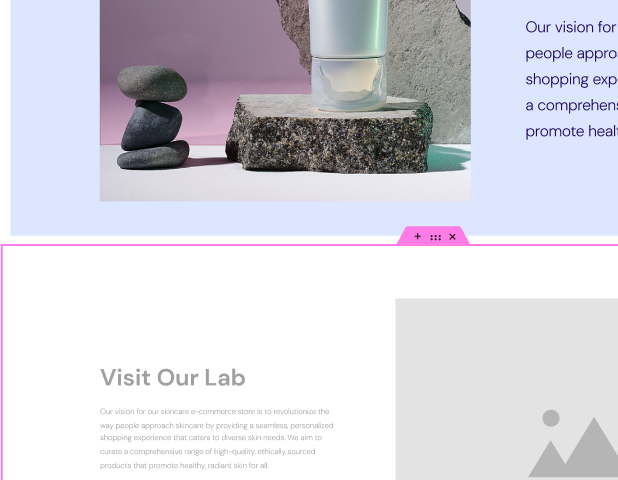
Creating for the web takes a different approach than drafting a plain document, since text, code, and images all need to fit responsive layouts. That’s why Elementor AI stands out, built right into the Elementor Editor. Highlight a headline breaking onto three lines on mobile, and the AI prompt fixes it instantly. It has over 1.5 million active users.
- Native Context – Understands your page layout, fonts, and container sizes.
- Code Generation – Writes custom CSS and HTML directly into your widgets.
- Image Editing – Expands, edits, or generates images right on the canvas.
- Multilingual Translation – Translates entire page blocks in one click.
Pricing: Included in the Elementor One subscription ($168/year), using a shared credit system (10-400 credits per action).
- Pros – Eliminates context switching, and it’s fast for web builders.
- Cons – Useful only if you build websites, and needs an active subscription.
3. Midjourney V7
Midjourney V7 has largely solved the infamous “AI hands” problem, and it’s the most capable image model available today. It handles skin texture, lighting, and film grain well, with generation times now averaging just 12 seconds, turning a simple prompt into an image close to a professional stock photo.
- Hyper-realism – Delivers unmatched photorealism and texture mapping.
- Style References – Applies the visual style of an uploaded image to a new prompt.
- Character Consistency – Keeps the same generated person across multiple scenes.
- Inpainting – Replaces specific parts of an image using targeted masks.
Pricing: Basic plan begins at $10/month. Standard plan at $30/month.
- Pros – The best image quality around, with a strong prompt community.
- Cons – Runs through Discord, and takes some syntax knowledge.
4. Descript
Descript changed how people edit audio and video: instead of editing a timeline, you edit the text. It transcribes your file with 85% accuracy, and deleting words in the transcript cuts the video to match, so removing 47 “ums” from a podcast takes one click and saves about three hours.
- Text-based Editing – Cuts video exactly like editing a text document.
- Overdub – Types new words to fix audio mistakes using an AI clone of your voice.
- Studio Sound – Removes background noise and echo in one click.
- Green Screen – Removes video backgrounds automatically, no physical green screen needed.
Pricing: Free tier available. Creator plan is $12/month. Pro is $24/month.
- Pros – Cuts editing time drastically, and it’s intuitive for beginners.
- Cons – Heavy on RAM, with occasional syncing bugs on long files.
5. Surfer SEO
Creating content is half the job, ranking it on Google is the other half, and that’s the gap Surfer SEO bridges. It analyzes top-ranking pages for your keyword and scores your draft in real time, and users report a 34% jump in organic traffic. For “best coffee machines,” Surfer flags that the top 10 articles mention “bar pressure” four times.
AI content isn’t about mass production anymore. The algorithms caught up. In 2026, the winners use AI to scale their research and structure, but they keep the human element for insight and perspective.
Itamar Haim, SEO Team Lead at Elementor. A digital strategist merging SEO, AEO/GEO, and web development.
- Content Editor – Scores your content for SEO in real time, right inside the document.
- SERP Analyzer – Shows deep data on why competitors are ranking.
- Keyword Surfer – Adds volume and CPC data directly into Google search results.
- AI Writer – Generates highly optimized articles based on strict SERP data.
Pricing: Essential plan at $89/month. Scale plan at $129/month.
- Pros – A data-driven approach that integrates well with Google Docs.
- Cons – Can lead to keyword stuffing if followed too blindly, at a high cost.
6. Canva powerful Studio
Canva didn’t just add AI, they rebuilt their platform around it, and powerful Studio is a big leap forward. It brings enterprise-level design to people who don’t know Photoshop, saving marketers an average of 4.2 hours a week, and “powerful Switch” turns a horizontal slide into a resized vertical Instagram Reel in one click.
- powerful Design – Generates custom templates from a simple text prompt.
- powerful Switch – Converts designs between formats and languages instantly.
- powerful Media – Generates images and video directly on the canvas, from text.
- Background Remover – Extracts subjects cleanly from complex backgrounds.
Pricing: Canva Pro is $14.99/month (includes all powerful Studio features).
- Pros – Very easy to use, with a large template library.
- Cons – Assets can look generic, and vector editing is limited.
7. Angie by Elementor
Let’s talk about agentic AI: standard models give you text, agentic models take action. Angie is a native AI agent built for WordPress, using the Model Context Protocol (MCP) to execute commands inside your CMS. Type “Build a pricing page for a SaaS product with three tiers,” and Angie creates the page, sets the structure, and applies your global styles.
- Action-Oriented – Translates natural language into production-ready WordPress assets.
- Standalone Plugin – Works smoothly with Gutenberg, Elementor, and other builders.
- Context Aware – Reads your existing site architecture to match current branding.
- Workflow Automation – Handles tedious setup tasks like metadata and taxonomy configuration.
Pricing: Included with Elementor One subscriptions at $168/year.
- Pros – Cuts site build times drastically, and skips manual setup.
- Cons – Needs clear, specific prompting for the best results.
8. Synthesia
Shooting video is expensive: actors, studios, and lighting drain budgets fast. Synthesia replaces the studio with AI avatars, so you type a script, pick an avatar, and get a professional video in minutes, with lip-syncing in 2026 close to flawless, turning a pasted training manual into a well-paced video.
- 150+ Avatars – Includes a wide range of digital avatars for any brand identity.
- Voice Cloning – Clones your voice from an upload, so the avatar sounds like you.
- 120 Languages – Translates your video into 120 languages without any re-recording.
- Custom Avatars – Creates a digital twin of your own CEO or spokesperson.
Pricing: Starter plan is $22/month. Enterprise pricing varies.
- Pros – Major cost savings for corporate training and marketing video.
- Cons – Avatars still lack deep emotional range for dramatic storytelling.
9. GrammarlyGO
Grammarly isn’t just a spellchecker anymore. GrammarlyGO is a contextual writing assistant that lives wherever you type, scanning over 180 contextual markers to understand not just what you’re saying but how you want to come across, and rewriting a frustrated vendor email into something firm but professional with one click.
- Tone Adjustment – Shifts between confident, friendly, formal, or diplomatic instantly.
- Contextual Ideation – Generates outlines and ideas based on the document you’re in.
- Personal Dictionary – Learns your specific industry jargon and acronyms.
- Universal App – Works across desktop, web, and mobile environments.
Pricing: Premium plan is $12/month (billed annually).
- Pros – Integrates everywhere, and catches passive voice and wordiness well.
- Cons – Pop-ups show up often, and phrasing can read a bit formal.
10. Copy.ai
While Jasper focuses on brand voice, Copy.ai is built around the go-to-market motion, made for sales and marketing teams launching campaigns fast. Input a product URL, and it scrapes the page and generates 15 Facebook ad variations targeting three distinct buyer personas.
- Workflow Automation – Chains multiple prompts together to build complex marketing funnels.
- Brand Infusion – Scrapes your website to quickly learn your value propositions.
- Multilingual Output – Translates copy into 29+ languages accurately.
- Sales Outreach – Generates highly personalized cold emails based on LinkedIn data.
Pricing: Pro plan starts at $49/month.
- Pros – Fast for bulk content generation, and great for direct-response copy.
- Cons – Output can feel repetitive without adjusting the core prompts.
11. ElevenLabs
Audio generation used to sound hollow and robotic. ElevenLabs pretty much shattered that limitation, delivering the most expressive, human-sounding voice on the market, one that handles pacing, breath, and emotional inflection well enough to keep a dramatic story’s natural pauses and tone.
- Speech Synthesis – Converts text to lifelike audio in seconds.
- Voice Cloning – Clones your voice accurately from just 60 seconds of sample audio.
- Emotional Range – Understands context to add appropriate emotional inflection.
- Dubbing – Translates and dubs existing video automatically, matching the original voice.
Pricing: Creator plan is $22/month. Pro is $99/month.
- Pros – Among the highest quality voice generation available.
- Cons – Short character limits on cheaper plans, plus careful formatting needed.
12. Notion AI
The best AI is the one you don’t have to open a new tab for, and Notion AI lives right inside your workspace, acting as a brain for your documents. Type “/summarize” after a chaotic brainstorm with 12 paragraphs of messy notes, and it turns them into a clean, bulleted list with tasks assigned.
- Q&A Function – Answers questions about your entire workspace database.
- Document Drafting – Generates first drafts using your existing wikis as source material.
- Data Extraction – Pulls specific metrics or quotes from massive blocks of text.
- Translation – Translates internal documents instantly for global teams.
Pricing: Add-on to existing plans for $8/user/month.
- Pros – Strong awareness of your internal docs, and it’s affordable.
- Cons – Less creative text generation than specialized tools like Jasper.
13. Runway Gen-3
Text-to-video was a novelty two years ago. Runway Gen-3 made it a production-ready reality, rendering complex 4K scenes in roughly 45 seconds with accurate physics, cinematic lighting, and smooth motion, turning a prompted “drone shot through a neon-lit cyberpunk city” into a clean five-second clip.
- Text-to-Video – Generates high-fidelity video from simple text prompts.
- Image-to-Video – Animates static images with realistic physics and motion.
- Motion Brush – Paints specific areas of an image to control exactly what moves.
- Lip Sync – Animates faces to match uploaded audio tracks precisely.
Pricing: Standard plan is $15/month. Pro is $35/month.
- Pros – Industry-leading video physics and motion control.
- Cons – Short generations, usually 4 to 10 seconds, with high credit use.
14. Writer
Security is the biggest roadblock to AI adoption in the enterprise, and Writer was built to solve it. It doesn’t train its models on your proprietary data, and it’s fully compliant with HIPAA, SOC 2, and GDPR, letting a financial institution safely feed it confidential reports and get back compliant, public-facing copy.
- Enterprise Security – Keeps data private and meets strict regulatory compliance.
- Knowledge Graph – Connects securely to your company’s internal databases.
- Term Management – Enforces strict legal and brand terminology across all drafts.
- Custom Apps – Builds internal AI workflows without writing code.
Pricing: Team plan is $18/user/month. Enterprise is custom.
- Pros – A strong standard for data security, with deep API integrations.
- Cons – Overkill for solo creators, and guardrails can limit creativity.
15. ChatGPT-5
You can’t talk about content creation without mentioning the foundational model. ChatGPT-5 is still the most versatile tool in the stack, best for brainstorming complex logic, deep research, and structural planning. Try this prompting method:
- Define the Role – “Act as a senior technical SEO copywriter.”
- Set the Context – Provide target audience, pain points, and format requirements.
- Give Examples – Paste two examples of the exact tone and structure you want.
- Advanced Reasoning – Solves complex structural and logical content problems.
- Data Analysis – Processes massive spreadsheets to find content trends.
- Custom GPTs – Builds specialized bots for specific workflow tasks.
- Web Browsing – Pulls real-time data for accurate research.
Pricing: Plus plan is $20/month. Team plan is $25/user/month.
- Pros – Genuinely versatile, with excellent reasoning.
- Cons – Needs advanced prompting to avoid generic “AI-sounding” output.
Comparing the Top Contenders
A quick side-by-side of the tools that matter most across different formats.
| Platform | Best Used For | Starting Price | Standout Feature |
|---|---|---|---|
| Jasper | Enterprise Marketing Copy | $39/month | Brand Voice Memory |
| Elementor AI | Web Design & Content | $168/year (One) | Native Code/Text Generation |
| Midjourney V7 | High-Fidelity Images | $10/month | Photorealistic Textures |
| Descript | Audio/Video Editing | $12/month | Text-Based Timeline Editing |
| Angie | WordPress Automation | $168/year (One) | Agentic WordPress Execution |
Frequently Asked Questions
Will AI tools replace human content creators?
No. They replace the tedious mechanics of creation. Strategy, insight, and perspective still come from a human.
How do I stop AI content from sounding generic?
Stop using default prompts, and feed the system your style guide, real examples, and a clear sense of tone.
Does Google penalize AI-generated content in 2026?
Google penalizes low-quality content, not AI use. Direct answers and real insight still rank, spammy filler still drops.
Are specialized tools better than ChatGPT?
Yes. Fine-tuned models built for specific formats win: Midjourney for images, Descript for video, Elementor AI for web.
What is the difference between standard and agentic AI?
Standard models return text or images from a prompt. Agentic models, like Angie, take action inside a system automatically.
How much should I budget for AI tools?
Most solo creators spend $50 to $100 a month: one writing tool, one visual tool, one workspace tool.
Who owns the copyright to AI-generated images?
The legal landscape is still shifting, but generally you can’t copyright a raw, unedited AI output as is.
Looking for fresh content?
By entering your email, you agree to receive Elementor emails, including marketing emails,
and agree to our Terms & Conditions and Privacy Policy.