If you are comparing Sticklight vs Bolt.new in 2026, you are looking at two vibe-coding tools that turn a prompt into a working web product. Sticklight is the AI website builder and vibe-coding platform for professional web creators who need to ship production-ready websites, apps, dashboards, and tools for clients and for themselves. Bolt.new is an AI-powered full-stack development environment for developers who want fast generated code they can inspect and modify. Both are capable. They are built for different people with different needs. This article compares Sticklight and Bolt.new on the dimensions that matter most to professionals using an AI website builder for real client work.
Key takeaways.
- Sticklight and Bolt.new both generate full web products from natural language prompts, but they are built for different audiences and different outcomes.
- Bolt.new targets developers comfortable working directly inside generated framework code. Sticklight is built for professional web creators who ship production products without an engineering workflow.
- Sticklight goes beyond websites: the same prompt-first AI web builder produces apps, dashboards, CMS, booking systems, internal tools, and full digital experiences from a single platform.
- The Skills system gives Sticklight users one-click access to packaged expert know-how across SEO, Accessibility, Performance, Design System, Copywriting, and more, applied at build time.
- Sticklight’s Publish phase includes SEO, a security scan on every build, hosting, and custom domain connection. These are built in, not bolted on.
- Built by the Elementor team. Powered by Claude. That pedigree matters for professionals who need to protect their reputation with every delivery.
What is Bolt.new and who is it for.
Bolt.new is an AI-powered full-stack web development environment from StackBlitz. Give it a prompt and it generates a complete web application, running live in a browser preview with no local setup required. The generated code is fully accessible. Developers can inspect it, modify it, and adapt it to whatever they need. Bolt.new supports a range of modern JavaScript frameworks and handles both frontend and backend generation from a single prompt.
The platform sits at the intersection of a traditional IDE and an AI code generator. Because the runtime is in-browser, there is no local Node.js setup, no terminal configuration, and no build step to manage before you see results. For developers who want a fast starting point for a full-stack application, Bolt.new gets there quickly.
Bolt.new is aimed at developers and technical creators who are comfortable reading and editing generated code. The expected workflow is to work inside the code, not just above it. For an audience that lives in code editors, that fits naturally.
What is Sticklight and what can it build.
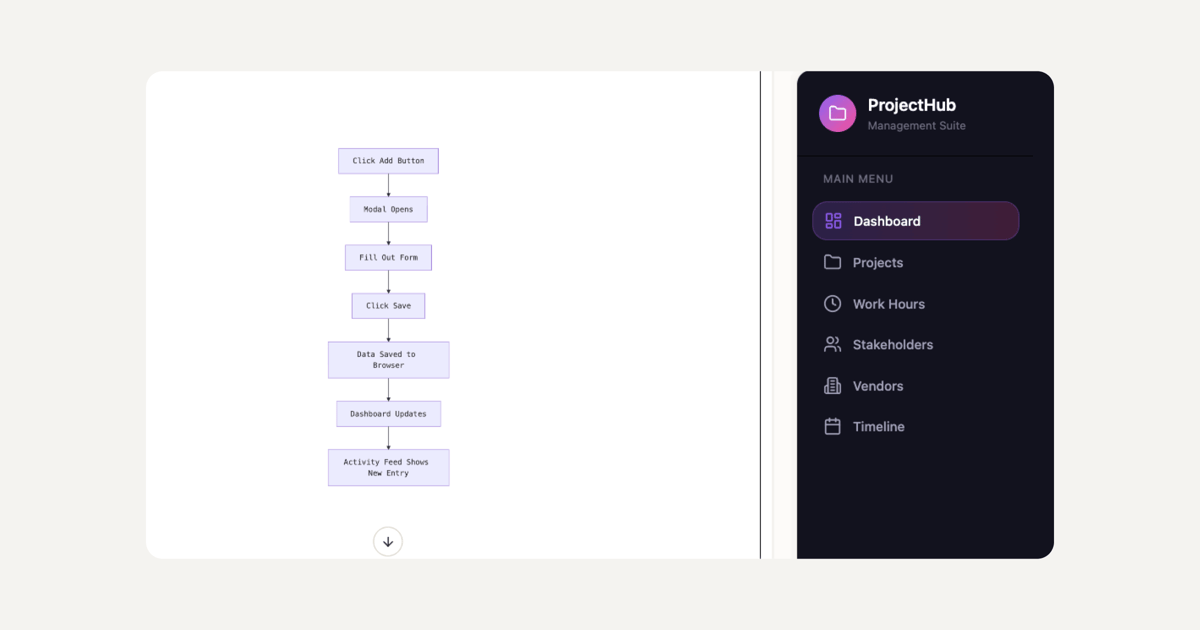
Sticklight is the vibe-coding platform for professional web creators, built by the Elementor team and powered by Claude. It turns a prompt into production-ready websites, landing pages, apps, dashboards, CMS, and other tools, with the combined craft of a senior designer and developer. That is the Sticklight standard.
The platform is organized around three creation pillars: Prompt, Build, and Publish. You start with the main prompt box, or use Plan Mode to work through more complex builds step by step. Sticklight MCP connects the platform to your favorite tools. Templates and Connectors give you structured starting points. During the Build phase, Skills add packaged expert know-how to any project with one click. Nine Skills are live: Accessibility, SEO, Design System, Performance, Copywriting, Localization, Micro-interactions, Onboarding, and 3D Web Experience (Three.js). After the AI builds, you take full manual control of the canvas and the code. The Publish phase ships with SEO, a security scan on every build, custom domain connection, and app hosting.
Sticklight is made for people who build the web for a living: agencies, freelancers, studios, and independent creators who know the difference between a production tool and a toy. It does not replace the craft. It carries more of the heavy lifting so the creator can go further, faster.
Who each tool is built for: developers versus professional web creators.
Bolt.new is designed for developers. Sticklight is designed for professional web creators. Knowing which side of that line you stand on makes the choice clear.
Bolt.new assumes familiarity with JavaScript frameworks, comfort reading generated component trees, and a willingness to work inside the code to get what you want. If your default instinct when something is slightly off is to open the file and fix it, Bolt.new is designed around you.
Sticklight is designed for professional web creators. That includes agencies running 30 to 100 projects a month, freelancers protecting their reputation with every delivery, studios building client work at pace, and independent creators launching their own products. Sticklight assumes you know what production-grade means and demands it. What it does not assume is that you want to manage framework dependencies or configure deployment infrastructure. You want to build, ship, and move on.
The distinction matters because the needs are genuinely different. A developer prototyping an app for personal use has different requirements than an agency shipping a CMS for a client. Sticklight is built for the latter, at the standard that protects the professional’s reputation.
Sticklight vs Bolt.new: capabilities compared side by side.
Both tools generate full web products from prompts. The differences show up in what surrounds the generation step.
| Dimension | Sticklight | Bolt.new |
|---|---|---|
| Primary audience | Professional web creators (agencies, freelancers, studios, independent builders) | Developers and technical creators |
| What you can build | Websites, landing pages, apps, dashboards, CMS, booking systems, internal tools, forms, databases, full digital experiences | Full-stack web applications across a range of JavaScript frameworks |
| Core workflow | Prompt, Build (with Skills), Publish | Prompt, review generated code, iterate inside the code |
| Skills system | 9 live Skills (SEO, Accessibility, Performance, Design System, Copywriting, Localization, Micro-interactions, Onboarding, 3D) | Not available |
| Manual canvas control | Full pixel-level editing after AI build, no engineering required | Edit via code directly |
| SEO at publish | Built into the Publish phase (meta, schema, sitemap, on-page) | Not built in; developer configures |
| Security scan | Every build, built into Publish | Not built in |
| Hosting | Included in the Publish phase with custom domain | Deploy to a hosting platform separately |
| Local environment required | No | No (in-browser runtime) |
| Plan Mode | Yes (simplifies complex multi-step builds) | No equivalent |
| Templates and Connectors | Yes | Limited |
| Pedigree | Built by the Elementor team. Powered by Claude. | StackBlitz |
| Pricing model | Free plan to paid tiers (Pro, Team, Enterprise) scaling by seats and features | Free plan to paid tiers scaling by usage |
The Build phase: where Sticklight compounds over time.
The Build phase is the biggest structural difference between Sticklight and Bolt.new. In Bolt.new, the build is the generated code. You shape it by editing that code, iterating on the prompt, or both. That works for developers. It is not a natural workflow for a web designer who thinks in layouts and design intent, not component trees.
In Sticklight, the Build phase sits between the prompt and the finished product and adds real depth. Skills are the key unit here. Each Skill is a packaged layer of expert know-how that applies to any project with one click. The SEO Skill ships meta, schema, sitemap, and on-page best practices automatically. The Accessibility Skill applies WCAG-compliant markup, focus states, and ARIA attributes. The Performance Skill optimizes load behavior. The Design System Skill brings visual consistency across the product. These are not prompts you write from scratch. They are reliable, repeatable layers that a professional would otherwise spend hours configuring manually.
Skills compound. The tenth project you ship with the SEO Skill active is faster and sharper than the first, because the output is predictable and the layer is already trusted. That matters for agencies and studios delivering at volume.
After Skills, Sticklight gives you the canvas. Every pixel is editable by hand, without writing a line of code. For professional web creators, this is how real production work gets done: the AI handles the heavy lifting, and you refine the details that protect your reputation.
The Publish phase: production-ready output versus a development starting point.
Sticklight’s Publish phase ships a live, client-ready product with SEO, security, hosting, and custom domain built in. That is the clearest separation between a production platform and a development environment.
With Bolt.new, publishing means exporting or deploying your generated code to a hosting service. That step is yours to manage. Connecting a domain, running a security review, setting up SEO metadata, configuring a deployment pipeline: all of this lives outside the tool. For a developer who manages infrastructure routinely, that is a normal part of the workflow. For a web creator billing by the project and needing to ship 20 sites a month, that overhead compounds quickly.
Sticklight’s Publish phase is part of the platform. SEO is built into every build, not an afterthought you add later. A security scan runs on every build. Hosting is included. You connect your own domain inside the platform. The result is a live product that meets the Sticklight standard: the output a senior designer and developer would sign off on.
Sticklight ships a live product the moment the Publish phase completes. With Bolt.new, deployment, domain connection, SEO, and security are steps the developer handles separately before handing anything to a client.
Going beyond websites: the full-stack AI web builder story.
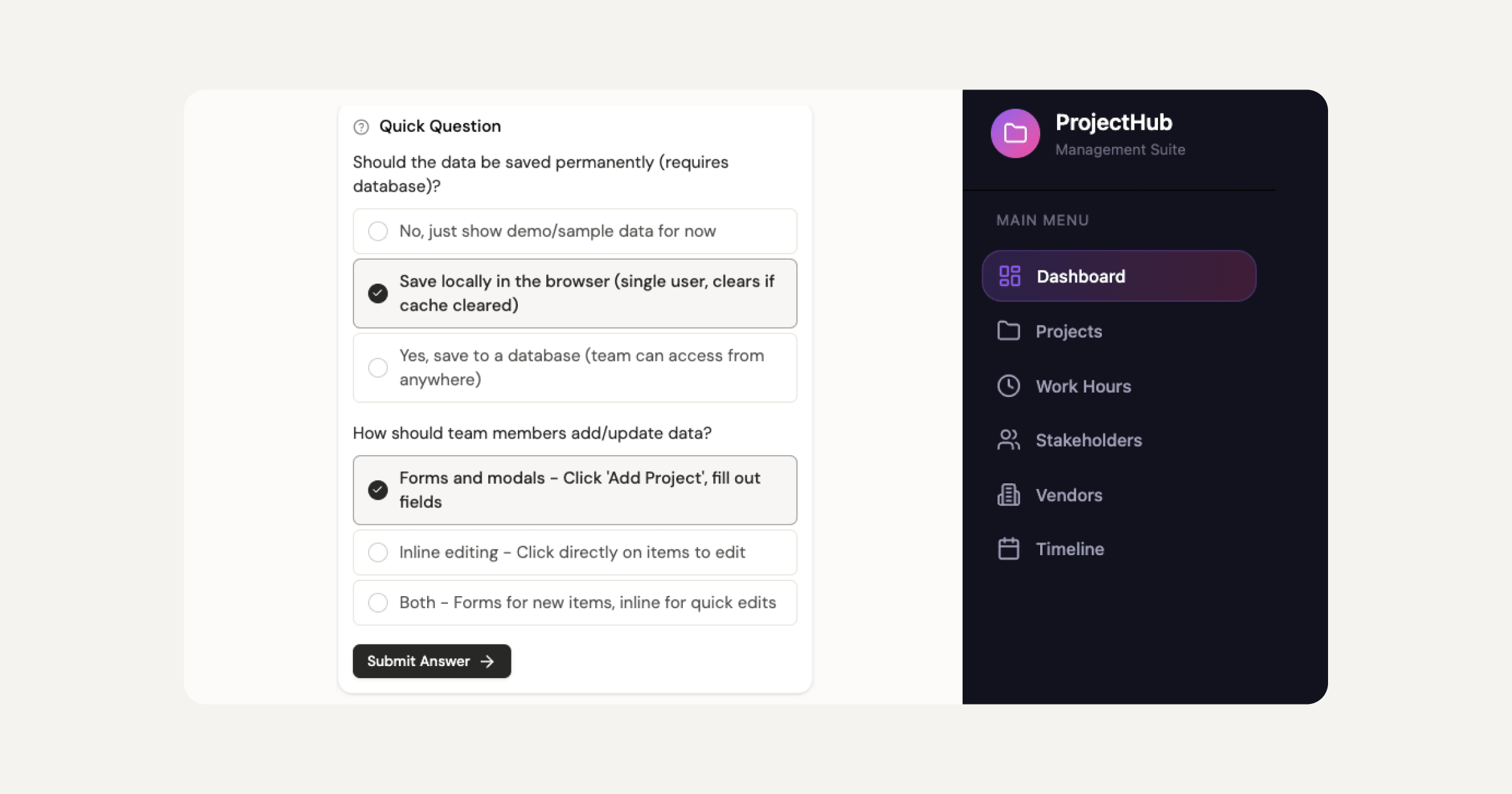
Sticklight is built to take professional web creators beyond websites and into the full range of digital products. From dashboards and CMS to booking systems and internal tools, the same prompt-first platform covers every surface. That breadth is what separates a full-stack AI web builder from a single-purpose generator.
Bolt.new generates full-stack web applications. That is a genuine capability, and for developers who need a fast starting point for a custom app, it delivers.
Sticklight’s surface range is broader by design. The same platform that builds a website also builds a dashboard for a client’s operations team, a CMS for a content-heavy product, a booking system for a service business, an internal tool for a team’s RevOps workflow, a form with a database behind it, and a full digital experience that goes beyond what a traditional website can do. All of this without leaving the platform, without switching tools, and without an engineering bottleneck.
This is the full-stack creator story. Web creators who learned their craft on websites can now build the full range of digital products using the skills and instincts they already have. Sticklight handles the AI heavy lifting and the production infrastructure. It is not a different category of work. It is the same work, taken further.
For an agency that currently sends certain client requests to a developer because the ask is “more than a website,” Sticklight changes that dynamic. The app, the dashboard, the internal tool: all within reach, from the same platform, to the same standard.
Plan Mode: built for complex client briefs.
Plan Mode is Sticklight’s dedicated entry point for complex builds. It breaks a complicated task into a structured plan before the build begins, reducing the gap between what you intended and what the AI produces on the first pass.
Bolt.new handles complex prompts through iteration. You prompt, review the output, adjust, and repeat. That loop works, and developers are accustomed to it.
For a professional managing a complex client brief with multiple sections, data requirements, and integration needs, Plan Mode is a practical tool that shortens the path to a shippable output. It is one of several prompt entry points in Sticklight’s system. Templates let you start from a proven structure and remix it. Connectors give you a starting point based on your specific use case. Each of these reduces the distance between an idea and a working product, for creators who need to move fast without sacrificing the output standard.
Why professional web creators choose Sticklight over other vibe-coding platforms.
Bolt.new is a capable tool for the developers it is built for. It generates full-stack applications quickly, exposes the code for developers who want to work inside it, and runs without a local environment. Those are real strengths for the right audience.
For professional web creators, the picture is different. The needs of an agency shipping client work, a freelancer protecting their reputation, or a studio building at volume are not the same as those of a developer prototyping a personal project. Production-readiness is not optional. Full control after the AI build is not optional. A Publish phase that includes SEO, security, hosting, and domain connection is not a nice-to-have. These are the baseline requirements of professional delivery.
Sticklight meets that baseline, and then goes further. The Skills system brings repeatable, expert-level layers to every project. Plan Mode handles complex builds without losing control. The full surface range, from websites through internal tools, means a professional creator does not have to turn work away or bring in a developer to deliver what the client needs.
Built by the Elementor team. Powered by Claude. That combination brings a decade of professional web creation pedigree and a frontier AI model to every prompt. For professionals who know what the Sticklight standard means, that is the foundation you build on.
Sticklight is also additive to the workflows professionals already trust. If you build on Elementor and WordPress, Sticklight expands what you can deliver, not what you have to leave behind. WordPress remains a source of truth to build on and connect to. Elementor and Sticklight share the same mission: empowering web creators to build their future, at different moments and in different ways. For creators who want to go further, Sticklight is the next step.
You can read more about the broader context of AI-powered web creation on the Elementor blog, where professional web creators share how they are building and shipping faster with AI at every step.
“When professional web creators compare vibe-coding tools, the question is never just ‘can it generate an app.’ The question is ‘will I stake my reputation on what comes out.’ Bolt.new is a developer tool that gets you to code fast. Sticklight is a production platform that gets you to a live, client-ready product. The Skills system, the Publish phase, and the full surface range from websites to dashboards: these are the things that make the difference at the professional level. For creators who build the web for a living, that distinction is everything.”
Itamar Haim, AI for WordPress Specialist
Pricing: what to expect from Sticklight and Bolt.new.
Neither tool publishes fixed pricing that belongs in a comparison article, because pricing structures change and exact figures go stale quickly. What matters for professionals evaluating either tool is the general model.
Sticklight offers a free plan that lets you try the platform and ship real products. Paid tiers scale from Pro for independent creators and freelancers, to Team for multi-seat collaboration with more Skills and higher capacity, to Enterprise with SSO, security review, and dedicated support. Pricing scales with seats and feature access, not with page count or usage volume. A bring-your-own-keys option is available on select plans for LLM cost control.
Bolt.new also offers a free plan and paid tiers that scale with usage. The cost model is generally usage-based, which means heavy iteration and generation can affect the cost more directly.
For agencies and studios evaluating a production platform, the Sticklight pricing model, seat-based with consistent feature access, is predictable in a way that matters when you are billing by the project and managing costs across a team.
You can find current Sticklight pricing and plan details at elementor.com.
Frequently asked questions.
Is Sticklight a direct competitor to Bolt.new?
Sticklight and Bolt.new serve different audiences, so the competition is less direct than it appears. Both tools generate web products from prompts, but Bolt.new is a full-stack development environment for developers who want to work inside the generated code, while Sticklight is a production platform for professional web creators who need client-ready output, a built-in Publish phase, and full canvas control without an engineering workflow. The surface similarity is real. The audiences are distinct.
Can Sticklight build the same things as Bolt.new?
Yes, and Sticklight goes further. Sticklight builds websites, landing pages, web apps, dashboards, CMS, booking systems, internal tools, forms, databases, and full digital experiences, all from one platform. The difference is in delivery: Sticklight ships to the Sticklight standard with a built-in Publish phase, while Bolt.new produces code that a developer takes forward to their own deployment setup.
Do I need to know how to code to use Sticklight?
No. Sticklight is built for professional web creators, not software engineers. The prompt-first flow, the Skills system, and the manual canvas all work without writing code. Direct code editing is available on the canvas for creators who want it, but it is an option, not a requirement.
What are the nine Skills available in Sticklight?
The nine live Skills are: Accessibility, SEO, Design System, Performance, Copywriting, Localization, Micro-interactions, Onboarding, and 3D Web Experience (Three.js). Each is a packaged unit of expert know-how added to any build with one click. The SEO Skill ships meta, schema, sitemap, and on-page best practices. The Accessibility Skill applies WCAG-compliant markup, focus states, and ARIA. Additional Skills are on the roadmap.
What is Plan Mode in Sticklight and when should I use it?
Plan Mode is an entry point in the Prompt phase that simplifies complex builds by breaking them into a structured plan before work begins. Instead of passing a long prompt and hoping the AI interprets every requirement correctly, Plan Mode reduces the gap between what you intended and what comes out on the first pass. Use it for complex client briefs, multi-section products, or any build with multiple data requirements and integration needs.
Does Sticklight work with Elementor and WordPress?
Yes, and the relationship is additive. Sticklight is built by the Elementor team and shares Elementor’s mission of empowering web creators. WordPress is framed as a source of truth you can build on and connect to. Sticklight expands what professional web creators can build without replacing the WordPress or Elementor workflows they already trust. Different tools for different moments in the creative process, for an audience smart enough to use both.
Is Bolt.new better for developers than Sticklight?
Bolt.new is designed for developers who want AI-generated full-stack code they can inspect and modify directly. For that workflow, it is purpose-built. Sticklight is not a code editor. Sticklight is a creation platform for professional web creators. Developers building personal projects or internal tools might prefer Bolt.new. Professional web creators building client work, production products, and full digital experiences under their own standard will find Sticklight is built for their needs.
What does vibe coding mean, and how does Sticklight use it?
Vibe coding refers to building software and web products through natural language prompts rather than by writing code from scratch. You describe what you want to build, the AI does the generation, and you refine and control the output from there. Sticklight is the vibe-coding platform built to the standard that professional web creators require: production-ready output, full canvas control after the AI builds, and a Publish phase that ships live products.
Does Sticklight have an agents feature?
Agents is on the Sticklight roadmap and is coming soon. Agents are not available as of June 2026. Do not rely on Agents as a current capability when evaluating the platform today.
Let it glow.

