Table of Contents
WordPress developers know the grind of building custom widgets, debugging PHP errors, and managing site operations. Classic generative AI helps write text, but it cannot run your site. That is changing. Agentic AI is the next phase of web development. It does not just generate ideas; it takes real action directly inside your system. By understanding your specific site context, agentic tools perform complex workflows autonomously. Let’s look at what agentic AI means for your development workflow.
Key Takeaways
- Connects directly to your WordPress ecosystem without requiring API keys or manual setup.
- Builds custom assets like custom Elementor widgets, admin snippets, and custom post types through conversation.
- Tests everything safely in a sandbox environment before deploying code to your live database.
- Runs bulk data operations and site-wide SEO fixes using an opt-in Super Admin Mode.
- Keeps developers in control with human-in-the-loop approvals for every major execution.
Understanding Agentic AI in the WordPress Ecosystem (2026)
An agentic assistant behaves like a skilled junior developer. It reads your files. It analyzes your database structure. It looks at your active plugins. Classic AI acts like a search engine with a chat interface. Agentic AI acts like a team member.
For years, we used AI to draft copy or suggest code snippets. You had to copy that code, paste it into a file, test it, and hope it didn’t break your site. Big pain.
Agentic tools change this dynamic completely. They have agency. They evaluate a goal, build a plan, connect to your local environment, and execute tasks.
It works.
You describe the outcome you want in plain English. The agent figures out the technical steps. It writes the code, configures the database, and integrates the feature. (This is huge.)
What makes an AI agentic?
Traditional generative AI produces static output based on a prompt. It lacks awareness of where that output goes. It doesn’t know if you’re using WooCommerce, a custom theme, or a specific caching plugin.
An agentic system possesses three unique traits:
- Contextual awareness – It reads the active state of your WordPress installation.
- Planning capabilities – It breaks a broad goal down into logical technical steps.
- Execution power – It writes to files, updates database tables, and interacts with APIs directly.
Think about it. Instead of asking how to create a custom loop for a custom post type, you tell the agent to build it. The system handles the register_post_type function, sets up the taxonomy, and designs the archive template. Fast.
The shift from generation to action
We’re moving away from simple text generation. The focus is now on direct system integration. WordPress is a complex platform with thousands of hooks, filters, and database relations.
Writing a snippet is only 10% of the job. The remaining 90% is testing, debugging, and styling. Agentic AI takes over that heavy lifting.
No bloat.
Because the AI understands your system, it writes code that matches your existing setup. It respects your active PHP version. It uses your global CSS variables. It targets your layout structures perfectly.
How Agentic AI Differs from Generative AI
The difference between these two technologies is night and day. Generative AI is conversational. Agentic AI is operational.
Generative systems are great for drafting ideas or explaining a concept. But they can’t fix a broken admin screen. They can’t run a database migration. They can’t update WooCommerce prices across five hundred products simultaneously.
Agentic AI does all of this. It operates as an active system administrator and developer inside your dashboard.
Generative tools versus agentic systems
Generative tools are external. You use them in a separate browser tab. You copy and paste constantly. This creates friction and invites errors.
Agentic systems run natively. They have read and write permissions within controlled boundaries. They inspect your WordPress hooks and database tables before they output a single line of code.
Safe. (Here’s why that matters.) If there’s a PHP conflict, the agent catches it before the code goes live.
Why does context matter for WordPress developers?
Every WordPress site is a unique puzzle. You’ve different plugins, custom themes, active translation packs, and server configurations. Generative AI can’t see this puzzle.
An agentic system reads your site’s exact state. It knows if you use Advanced Custom Fields or standard post meta. It knows if you build with Elementor or Gutenberg.
This contextual focus prevents code collisions. The agent doesn’t suggest deprecated functions. It uses the methods already available in your active stack.
| Feature / Capability | Generative AI Tools | Agentic AI Systems |
|---|---|---|
| Primary Output | Static text, code snippets, or raw suggestions. | Fully integrated, production-ready WordPress assets. |
| System Context | None. Operates entirely on generic training data. | Inherits theme, active plugins, and database structure. |
| Workflow Steps | Single prompt and response. | Planning, connection, execution, and iteration. |
| Execution Method | Manual copy-pasting by the developer. | Direct action inside a safe staging sandbox. |
| Site Operations | Can’t perform database updates or debug files. | Runs bulk updates, traces PHP errors, fixes SEO. |
Angie: The Native Agentic AI for WordPress
When looking at the agentic landscape, Angie by Elementor is the primary example of this technology in action. Built natively into WordPress, Angie replaces the older Elementor AI toolset.
Angie doesn’t focus on writing content or generating images. It’s built for developer action. It interacts with your plugins, your active theme, your structural data, and your visual templates.
No migration required.
Your current database, active plugins, and theme remain completely untouched. Angie works within your existing WordPress ecosystem. It integrates with tools like WooCommerce, Gutenberg, and ACF to build contextual solutions.
Built inside your actual environment
You don’t need to install complex node packages or connect external API keys. Angie is built directly into your WordPress dashboard as part of your page builder experience.
It acts on the actual data model of your site. If you’ve active custom post types, Angie recognizes them. If you run an online store, Angie interacts with your WooCommerce product loops.
This native approach eliminates the traditional setup time. You open the chat, state your goal, and watch the system build the solution. Simple.
How does it handle your theme and plugins?
Angie inspects your active environment. It recognizes custom styling variables, grid layouts, and active plugin dependencies.
If you ask Angie to build a custom registration form, it doesn’t just output basic HTML. It connects to your active form plugins, sets up the fields, and styling matches your theme’s global colors. (Without breaking your layout.)
It keeps everything unified. Your development stack remains clean and organized.
“Agentic AI marks a fundamental shift in how we manage websites. Instead of copying code from external chat windows, we now let AI coordinate tasks directly inside our database and code files, keeping the developer in full control of the execution.”– Itamar Haim, WordPress AI Specialist
How Agentic Workflows Function in Practice
Here’s the deal: agentic AI doesn’t operate on guesswork. It follows a structured, logical sequence to convert your natural language prompts into live, functioning web assets.
This process reduces developer overhead. You act as the architect. The AI acts as the builder, handling the tedious setup and coding phases.
Let’s look at how this sequence unfolds in real-time scenarios.
The 5-step operational framework
Angie uses a clear, structured five-step workflow to execute tasks. This keeps your development process safe and predictable.
- Prompt – Describe your goal in plain text, upload a layout screenshot, or paste a reference URL.
- Brief (Plan Mode) – For large tasks, the agent drafts a detailed technical plan and asks clarifying questions to align on scope.
- Connect – The system autonomously hooks into active plugins, your database, or the template engine with zero manual API setup.
- Execute – Angie writes clean code, builds the requested layout, or runs the necessary script in a secure sandbox.
- Iterate – Refine the output through simple back-and-forth chat until it matches your exact project specifications.
This workflow guarantees you never get a “black box” solution. You see the plan before any action is taken.
Can you review the actions before execution?
Yes. Human-in-the-loop control is central to agentic design. For minor changes, you see a direct preview. For massive backend shifts, Plan Mode requires explicit approval.
No manual setup.
You review the proposed changes, inspect the code, and click confirm. If something looks off, you tell the agent to modify the plan. This collaborative approach gives you the speed of automation with the safety of manual oversight.
Angie Code: Building Custom WordPress Assets Through Conversation
For developers, writing boilerplate code is a massive time sink. Registering custom post types, writing admin notices, and building interactive front-end elements take hours. Angie Code speeds up this process.
It takes plain text instructions and writes clean, production-ready assets. The output is fully editable inside your standard WordPress environment.
No lock-in.
You get complete access to the raw code. You can edit it manually, refine it via chat, or style it using your visual editor tools.
Creating custom Elementor widgets from scratch
Need a custom widget that doesn’t exist in your current plugin library? Angie Code builds it instantly.
- Builds customized Elementor widgets with unique fields, custom styling controls, and dynamic front-end behaviors.
- Extends existing widgets by adding advanced styling rules or new script parameters directly into the editor.
- Writes clean, optimized PHP class files that load quickly and follow WordPress core coding standards.
- Exposes custom control fields in the Elementor panel, allowing clients to change settings visually later.
This lets you deliver unique, bespoke features to your clients without adding heavy third-party plugins. (No more manual editing of functions.php.)
Adding dynamic front-end behaviors
A website needs interaction to convert. Adding custom animations, interactive forms, or unique navigation paths often requires external JS libraries. Angie simplifies this process.
- Constructs lightweight JavaScript routines for advanced layout transitions, custom cursors, and interactive scroll effects.
- Generates dynamic visual apps like custom mortgage calculators, product matching quizzes, and custom 404 search engines.
- Connects custom code blocks safely to your theme files without modifying core files or risking theme updates.
- Optimizes the generated scripts to ensure high Core Web Vitals scores and rapid asset loading.
This means you can build engaging, custom user interfaces through simple chat commands.
Super Admin Mode: Managing Site Operations Responsibly
Site management is more than just front-end design. You’ve to handle bulk product updates, fix database anomalies, and clean up broken metadata. Usually, this means writing custom SQL queries or running terminal commands.
With Angie’s Super Admin Mode, you run these system-level tasks through conversational prompts.
This is an opt-in capability. Because it grants write access to your database and file system, security is top-of-mind.
Always review the plan before giving the final go-ahead. (Always back up your site first.) This keeps your operational workflow fast but highly secure.
Bulk data operations at scale
Imagine your client changes their Doing this manually takes all afternoon.
- Updates database rows, product prices, stock levels, and metadata values in one single session.
- Modifies user roles, subscription statuses, or custom field values based on complex, multi-conditional prompts.
- Cleans orphaned post meta and removes heavy transient records to improve database query speeds.
- Processes large data sets safely by breaking the execution into smaller, managed batches to avoid server timeouts.
You describe what needs to change, review the targeted database tables, and confirm the execution. Zero hassle.
Debugging PHP errors and server conflicts
When a site crashes, finding the root cause is painful. You’ve to check error logs, disable plugins, and test functions one by one.
- Traces server errors, database connection issues, and plugin conflicts directly through the chat interface.
- Analyzes active stack traces to find the exact file and line number causing a PHP warning or critical error.
- Fixes broken configuration files, routing errors, and SMTP email delivery failures using direct file-system edits.
- Reverts faulty code modifications instantly if a conflict occurs during execution, keeping your site online.
This turns hours of troubleshooting into minutes of conversational problem-solving.
Sandbox Safety and Developer Control
Deploying AI-generated code directly to a live site is a bad idea. One missing semicolon can cause a critical error. That’s why agentic systems rely on sandboxed environments.
Every line of code Angie writes goes into a secure sandbox first. You test it, view the visual output, and inspect the performance impact before it touches your actual live setup.
Safe.
Your development workflow remains clean. You maintain full creative control, with the ability to switch between chat-based coding and visual layout adjustments in
Looking for fresh content?
By entering your email, you agree to receive Elementor emails, including marketing emails,
and agree to our Terms & Conditions and Privacy Policy.

- Prompt your Code & Add Custom Code, HTML, or CSS with ease
- Generate or edit with AI for Tailored Images
- Use Copilot for predictive stylized container layouts
- Prompt your Code & Add Custom Code, HTML, or CSS with ease
- Generate or edit with AI for Tailored Images
- Use Copilot for predictive stylized container layouts
- Craft or Translate Content at Lightning Speed
Top-Performing Website
- Super-Fast Websites
- Enterprise-Grade Security
- Any Site, Every Business
- 24/7 Expert Service

Top-Performing Website
- Super-Fast Websites
- Enterprise-Grade Security
- Any Site, Every Business
- 24/7 Expert Service
- A single, unified experience
- Bank of shared credits across capabilities
- Automatic access to new innovations
- Ensure Reliable Email Delivery for Your Website
- Simple Setup, No SMTP Configuration Needed
- Centralized Email Insights for Better Tracking
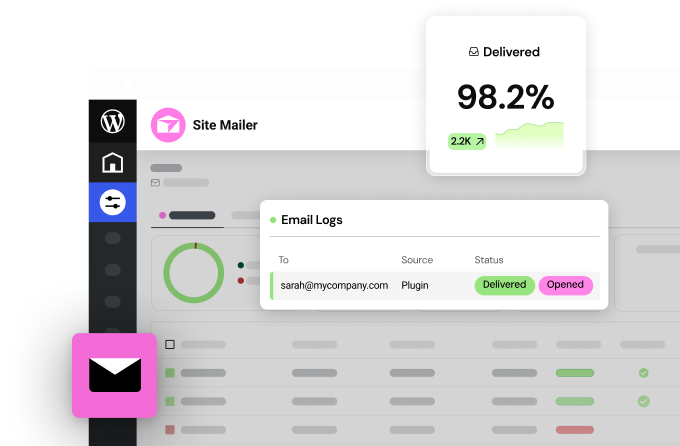
- Ensure Reliable Email Delivery for Your Website
- Simple Setup, No SMTP Configuration Needed
- Centralized Email Insights for Better Tracking
- A single, unified experience
- One credit pool across all capabilities
- Every new feature, automatically included

The Future of Web
Creation Inside Your Inbox
By entering your email, you agree to our Terms of Service and Privacy Policy.