Balancing legal compliance with marketing performance can feel like walking a tightrope. If you’re a conversion rate optimization (CRO) specialist, you know every pixel on a page matters, and a poorly designed cookie banner can spike your bounce rate and drain your analytics data. Here’s the good news: the sweet spot is easier to find than it looks. Test how visitors interact with your privacy prompts, and you can keep your data flowing and your visitors happy.
With privacy rules tightening worldwide, testing your consent interface isn’t optional anymore. It’s core to building visitor trust while protecting your marketing data, so let’s walk through the best strategies for testing your cookie banners in 2026.
Key Takeaways
- Balance compliance with design by testing layout changes that respect user choice while encouraging high opt-in rates.
- Test clear button hierarchies to guide users toward giving consent without using illegal dark patterns.
- Adopt localized banners to present customized privacy choices based on visitor location and local laws.
- Use a reliable dashboard tool like Elementor’s Cookie Consent to simplify your setup and control your styles directly.
- Track both opt-in rates and bounce rates to make sure your optimization efforts don’t hurt your overall website performance.
The Foundations of Cookie Banner A/B Testing in 2026
Before you test any banner elements, it helps to understand the rules of the road. Optimizing in the privacy space is genuinely different from standard CRO work, since you can’t lean on psychological tricks to push users toward an action. Regulators require consent to be freely given, specific, and informed, so focus your testing on clarity and user experience, not manipulation.
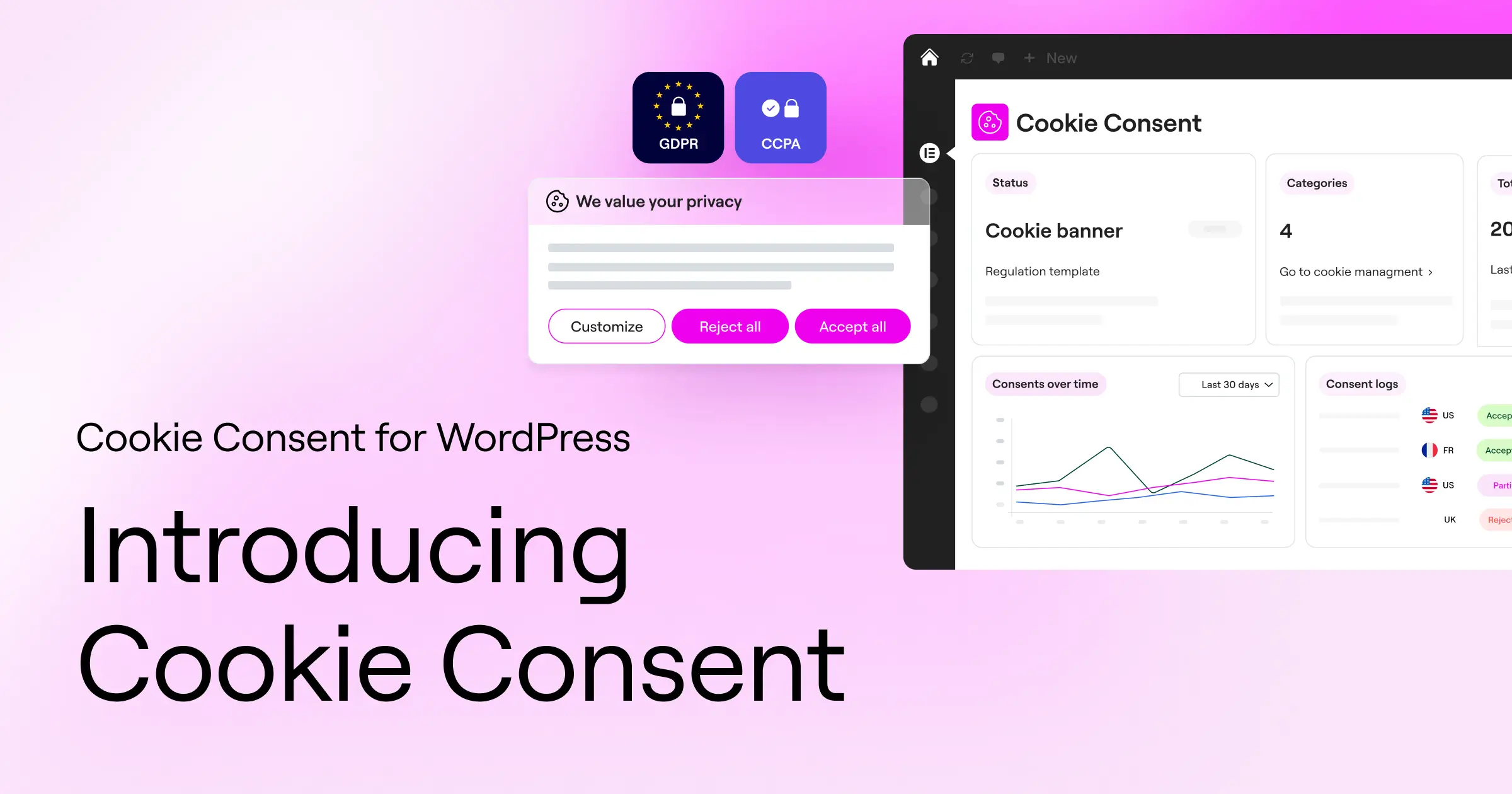
Setting up your tests well starts with a solid technical foundation that works with your tag management and analytics platforms. If your banner fails to load, or doesn’t block scripts before consent is given, you risk a compliance violation. A tool like Elementor’s Cookie Consent lets you build, style, and manage banners right inside your WordPress workspace, keeping things simple.
As you run these tests, you’re aiming for the design that wins the highest opt-in rate while keeping bounce rate low. Land users on a giant, confusing popup and plenty will leave. Aim for a privacy experience that feels like a natural part of visiting your site, not a roadblock.
10 Best Cookie Banner A/B Testing Strategies
Here are ten proven strategies for testing cookie consent banners, each focused on a specific design or copy element you can isolate and measure. The common thread: you’re always optimizing for clearer communication and a better experience, never for steering users away from their rights.
1. Banner Position and Layout
Where your banner shows up has a big impact on how users interact with your site. Three layouts are worth testing:
- A bottom footer bar that stays visible but out of the way of your main content.
- A top header banner that’s highly visible but can push your content down.
- A centered modal dialog that asks for a decision before the user can interact with the page.
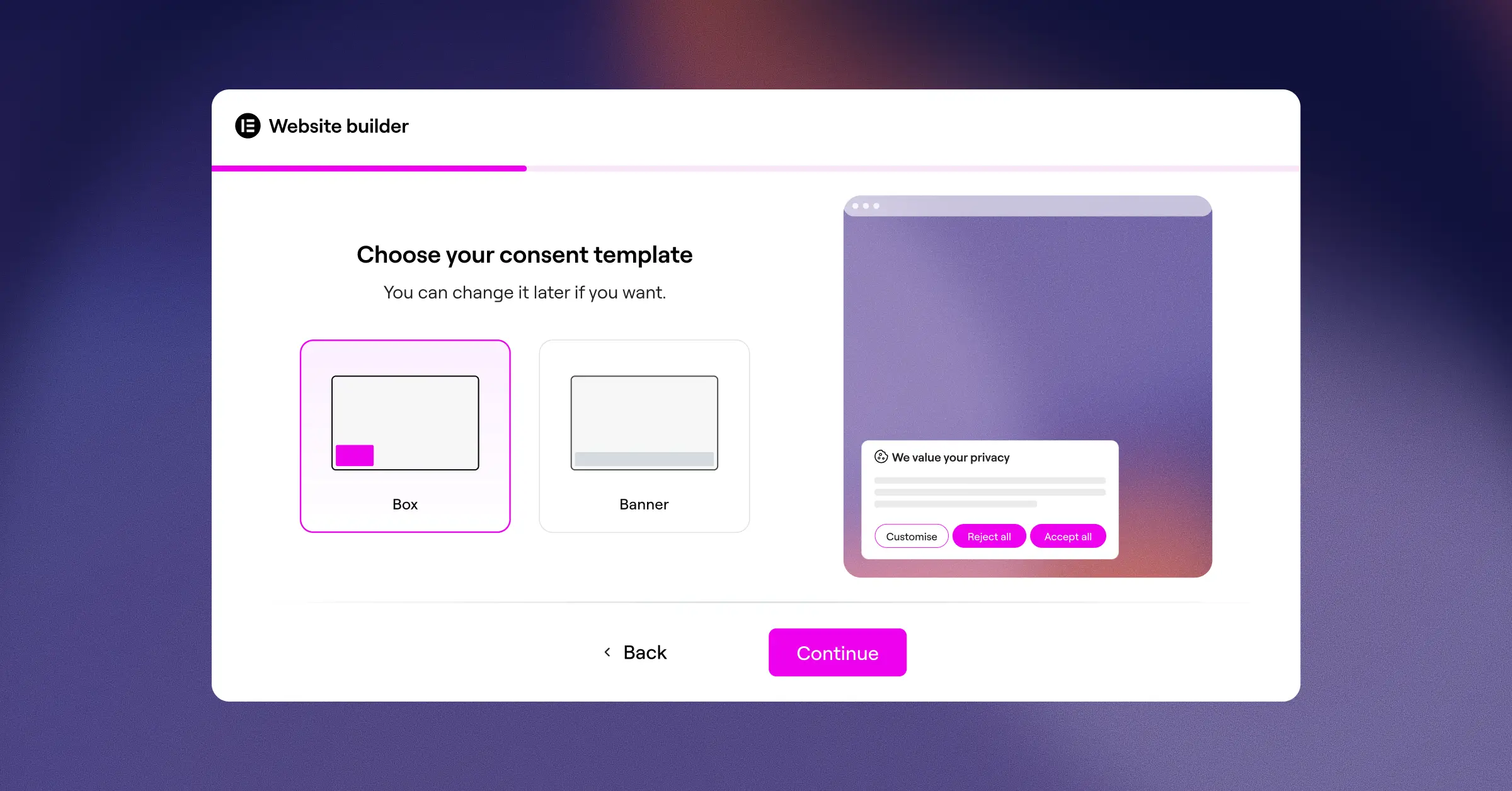
Center modals tend to win the highest consent rates because they can’t be ignored, though they can also raise bounce rates if intrusive. A bottom bar is less disruptive but may lead to delayed consent. Testing these positions helps you find the right balance for your audience.
2. Button Style and Visual Hierarchy
Button design is a powerful CRO tool, and there’s real nuance here. Test how the visual weight of your buttons shapes what users do, comparing a prominent primary button for “Accept All” against a secondary, less dominant button for “Reject All” or “Manage Preferences.”
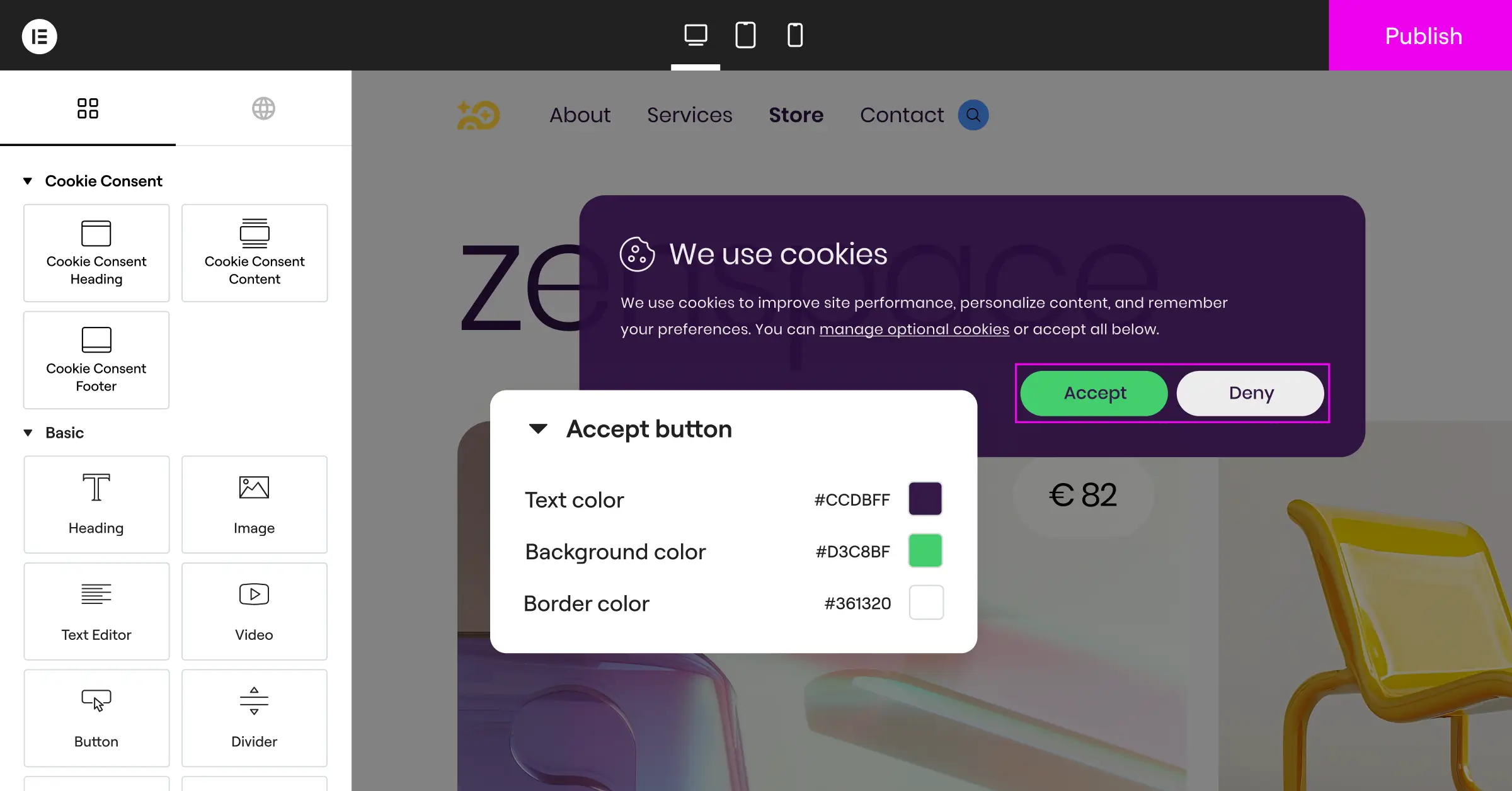
One compliance note: many regulations require both options to look equally accessible, and dark patterns like hiding or graying out the reject button are banned in the EU. What you’re testing are subtle, compliant variations, brand colors on the accept button, a neutral tone on the settings button, or small shifts in font weight and size. You’re measuring which presentation feels clearest, not steering anyone away.
3. Microcopy and Call-to-Action Wording
The words you choose can completely change how a user feels about sharing their data. Instead of dry legal jargon, try different copywriting styles to see what builds the most trust. A few approaches worth testing:
- The direct approach: “We use cookies to improve your experience.”
- The benefit-driven approach: “Help us make your browsing experience smoother.”
- The minimalist approach: “Accept and close.”
Friendlier, conversational language often puts users more at ease. Just keep your copy accurate and clear about what data you actually collect. Clarity builds trust; vagueness erodes it.
4. Color Contrast and Brand Integration
Plenty of sites still use default, generic cookie banners that look like afterthoughts, and a banner that looks like a third-party ad or security alert makes visitors suspicious. Testing a version in your exact brand colors and typography against a high-contrast black-and-white version shows how much design consistency matters to your audience.
When the banner matches your site’s theme, it feels like a natural part of the experience. Just don’t let it blend in so much that users miss it. Testing different contrast levels helps you find the sweet spot between feeling native and getting noticed.
5. Progressively Disclosed Privacy Information
A wall of legal text can overwhelm visitors before they read a single word. Test a simple two-step design, a brief summary first with an optional link to detailed categories, against a single-step layout that puts every category and checkbox upfront. Some visitors like seeing everything at once; others prefer a clean interface that lets them agree quickly and move on. Testing both tells you what your audience prefers, and the answer often varies by industry.
6. Geo-Targeted Banners
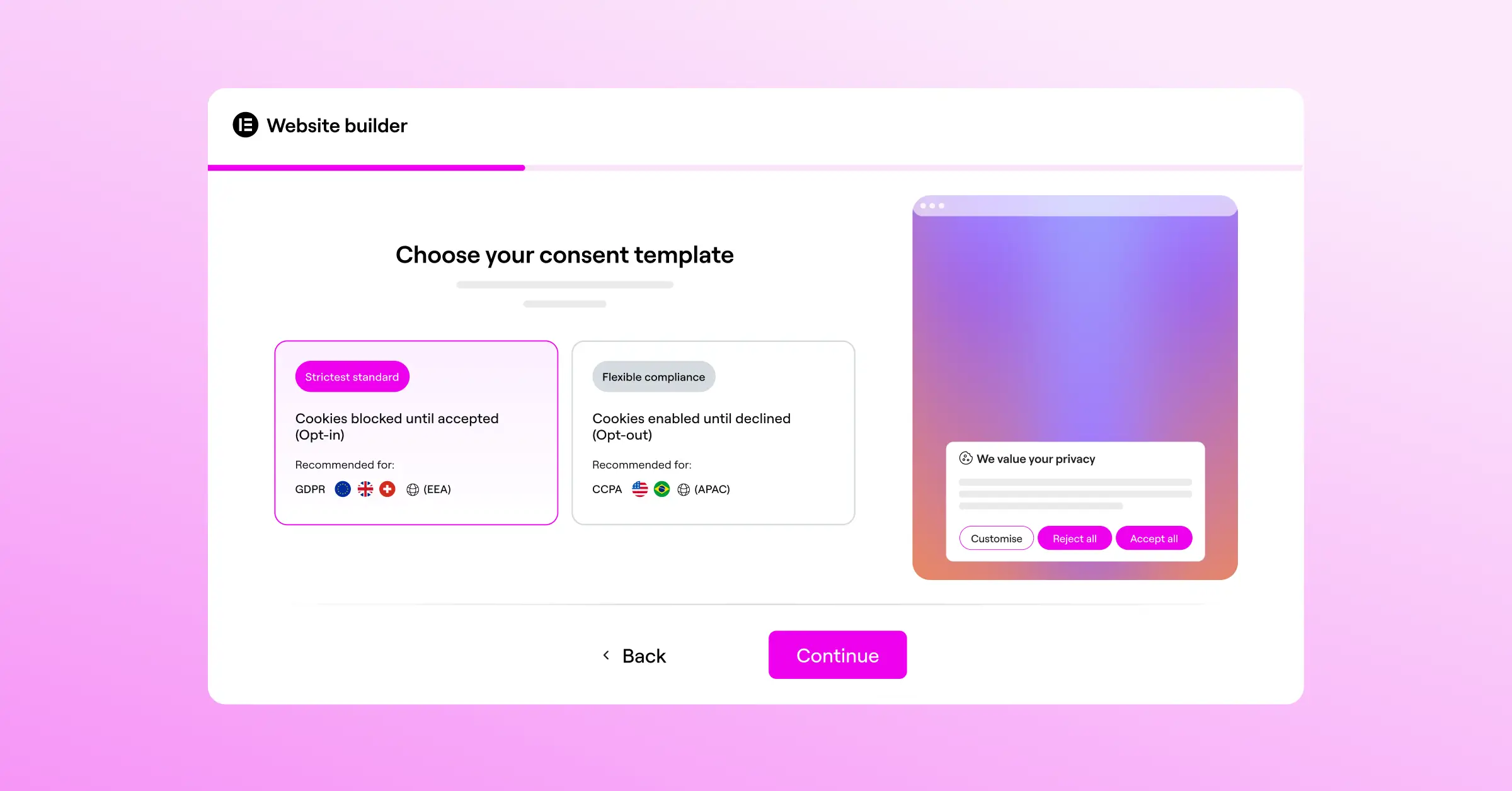
You don’t have to show every visitor the same restrictive banner. Visitors in regions with strict privacy laws, like the EU or California, need specific options and a clear path to consent, while visitors elsewhere might only need a simple notice. Testing geo-targeted variations lets you maximize data collection where it’s legally permitted, while keeping each region’s experience sized right.
With Cookie Consent, you can serve different compliance configurations based on visitor location, staying frictionless where rules are lighter and fully compliant where they’re stricter.
7. Timing and Display Triggers
Does your banner need to load the instant a user lands on your page? Not necessarily. Testing different timing configurations can turn up surprising things about visitor behavior. A few variations worth trying:
- Immediate display as soon as the HTML document loads.
- A short delay of three to five seconds, giving users a moment to see your main headline first.
- A scroll trigger that displays the banner after the user scrolls down 10% of the page.
Delaying the banner can cut down on instant bounces, but be careful, your analytics tags shouldn’t fire until consent is given. This needs coordination with your tracking setup, so get your technical checklist sorted before you run the test.
8. Accordion vs. Tabbed Preferences
For visitors who want to customize their settings, the layout of your preferences panel really matters. Test an accordion design, where categories expand vertically, against a tabbed layout where users click through categories instead. A well-organized panel makes it easy to opt into specific cookie types, like analytics or personalization, while skipping advertising ones. The easier it is to navigate, the more likely you’ll win partial consent.
9. The Presence of a Dismiss Button
Some banners include a small “X” in the corner that lets visitors close the prompt without a formal choice, and it’s worth testing whether that helps or hurts your conversion goals.
For some audiences, dismissing without choosing means they keep browsing on default, non-consented settings, which limits tracking. For others, forcing a binary choice pushes rejection rates higher. Only testing will tell you which works better for yours.
10. Mobile-Optimized Layouts
A banner that looks great on desktop can easily block an entire mobile viewport and make your site unusable. Test mobile-specific layouts, like bottom-sheet cards that slide up from the bottom of the screen, with tap targets large enough for fingers and text easy to read without zooming. Mobile optimization matters because search engines can penalize sites where cookie prompts get flagged as intrusive interstitials.
Technical Checklist for Setting Up Cookie Banner A/B Tests
Setting up your testing environment the right way keeps your data clean and your compliance intact. Work through this checklist before you run your first test:
- Audit your current tracking tags to confirm no cookies are set before a user interacts with your banner.
- Integrate with Google Consent Mode v2 to pass consent states directly to Google Analytics and Google Ads.
- Set up custom events in your testing tool to track actions like “Banner Shown,” “Accept All Clicked,” “Reject Clicked,” and “Settings Saved.”
- Configure your testing tool to split traffic evenly and make sure a single user sees the same banner variation throughout their entire session.
- Verify your consent logs to confirm your system continues saving accurate audit trails during the testing period.
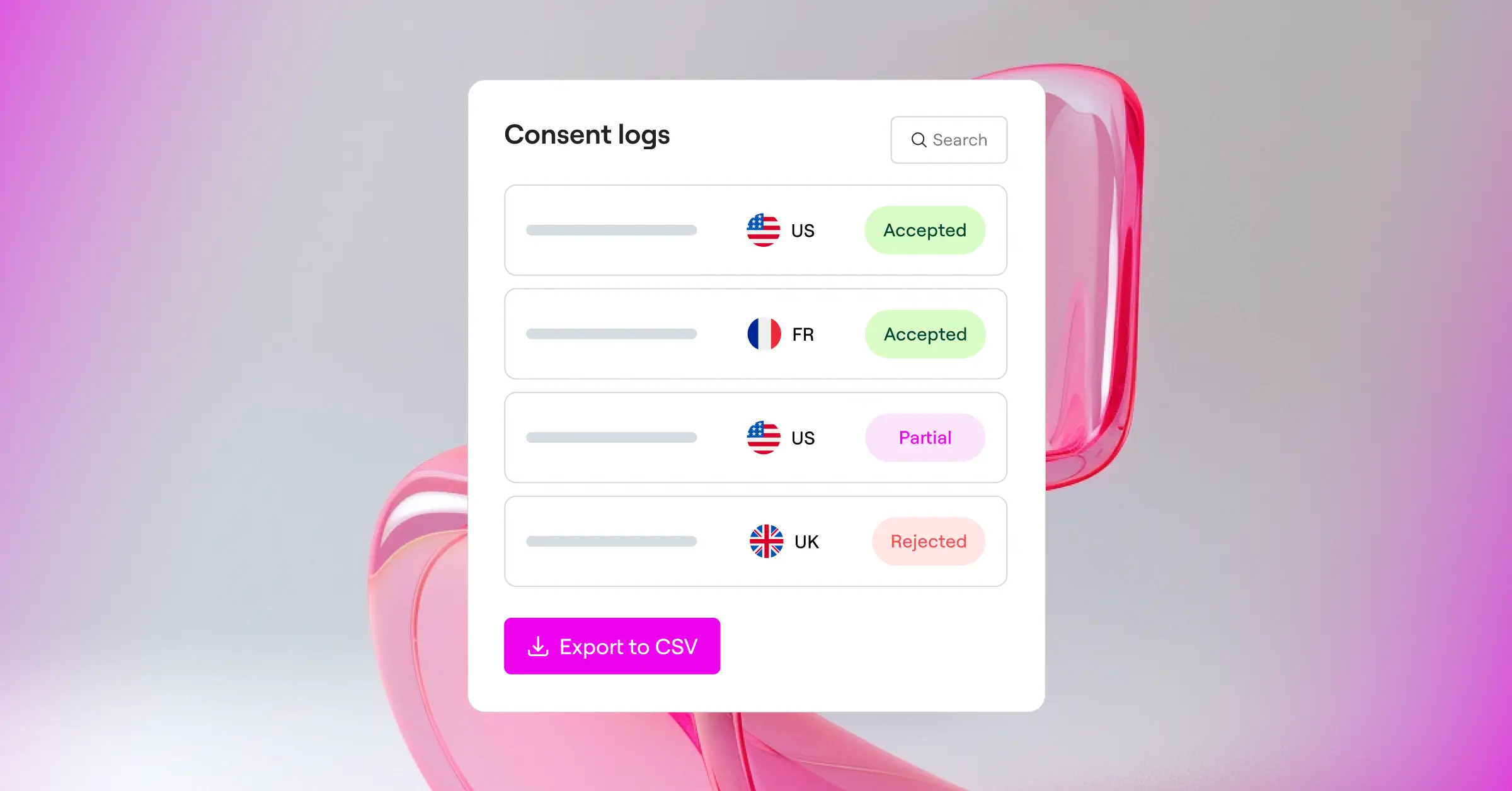
Clean consent logs matter during testing. Running multiple banner variations at once, you need to know exactly which one a visitor saw and what they chose. That data is your compliance record, not just an analytics input.
“Testing your cookie banners isn’t just about boosting your marketing numbers. It’s about learning how your visitors want to interact with your brand. When you respect their choices and make the privacy experience clear, you build long-term trust that naturally improves your conversion rates over time.”– Itamar Haim, Web Compliance Specialist
Evaluating the Top Cookie Consent Tools for Customization and Testing
To run successful tests, you need a flexible tool that lets you change designs without breaking your code. Here’s a factual comparison of popular consent tools to help you find the right fit.
| Consent Tool | Platform Type | Google Consent Mode v2 | Design Control Level | Primary Strength |
|---|---|---|---|---|
| Cookie Consent | WordPress Native | Fully Supported | High (via native builder) | Direct dashboard control with zero external logins needed. |
| Cookiebot | Cloud-based SaaS | Fully Supported | Medium (requires custom CSS) | Strong automated scanning and cloud-based template storage. |
| CookieYes | Cloud-based SaaS | Fully Supported | Medium (via web portal) | Simple web dashboard with multibrand support. |
| Complianz | WordPress | Fully Supported | Medium (via admin panel) | Wizard-driven setup designed specifically for WordPress. |
| OneTrust | Enterprise Suite | Fully Supported | High (complex setup) | Deep compliance features for large enterprise operations. |
| iubenda | Cloud-based SaaS | Fully Supported | Medium (via configuration generator) | Excellent auto-updating privacy policies and legal generation. |
When choosing a tool, think about how much time you want to spend switching between logins and dashboards. A WordPress-native option like Elementor’s Cookie Consent lets you design banner layouts right alongside your landing pages, keeping your workflow consistent and your team in one place.
Here’s a look at the core capabilities that matter most for testing and customization:
- Tracks user consent changes and maintains secure compliance logs in real time.
- Builds responsive layout structures that display correctly on desktop, tablet, and mobile screens.
- Connects smoothly to tag management setups to pause or activate scripts based on consent.
- Pulls localized translations automatically so visitors see privacy terms in their native language.
- Saves design templates to the cloud so you can deploy them across multiple client sites quickly.
- Categorizes discovered cookies automatically into strictly necessary, functional, analytical, and marketing buckets.
Advanced CRO Strategies for High-Traffic Sites
If you manage high-traffic websites, standard tests might not go deep enough. Focus on micro-optimizations that add up to major wins across millions of sessions. One advanced approach: analyze how consent choices affect your down-funnel metrics.
Sometimes a variation with a slightly lower “Accept All” rate ends up with a much higher checkout completion rate, because the banner set a trustworthy tone from the first interaction. Look beyond the opt-in percentage and track how different banner groups behave through the purchasing process. First impressions compound over time.
Page load performance during the consent check deserves attention too. A consent tool that relies on heavy external scripts can slow rendering and cost you visitors before they see your content. A native WordPress tool loads banner assets straight from your server, without extra lookups, keeping Core Web Vitals healthy and search rankings strong. It’s easy to overlook, so benchmark it early.
Frequently Asked Questions
Is it legal to A/B test different cookie banner designs?
Yes, it’s fully legal as long as every tested variation complies with local privacy regulations. Just don’t test dark patterns, like hiding the reject button or making “Reject All” harder to find than “Accept All.” Keep tests focused on layout, color contrast, microcopy, and timing, with accept and reject equally easy to use.
How does Google Consent Mode v2 affect my conversion tests?
Google Consent Mode v2 adjusts how your Google tags behave based on a user’s consent status. When testing banners, make sure your tag manager listens to those states correctly. Even if a user rejects cookies, Google can use anonymous pings to model conversions, preserving data accuracy during testing.
Can I use different banner copy for visitors in different locations?
Absolutely, and it’s a good idea. Visitors in the EU need opt-in consent before non-essential cookies are set, while visitors elsewhere may only need a simple notice. Customizing copy and settings by location keeps your site user-friendly everywhere while staying compliant where it matters.
How long should I run a cookie banner A/B test?
Run your test until you reach statistical significance, usually at least two full business cycles, or two to four weeks. That window captures weekly traffic swings and keeps you from deciding based on a temporary spike or slow stretch.
Will a large cookie banner increase my website’s bounce rate?
It can, if it’s poorly designed. A giant modal that blocks your content often triggers an immediate bounce. Testing less intrusive options, like a clean bottom banner, helps you find a layout that collects the consent you need without driving visitors away before they’ve read your headline.
What metrics should I track during a cookie banner test?
Track several things at once: opt-in rate, opt-out rate, preference customization rate, sitewide bounce rate, and average session duration. Looking at these together gives a clearer picture of how the banner affects both compliance and engagement. A banner that improves opt-ins but tanks session duration probably isn’t the winner it looks like on paper.
Do native WordPress consent tools perform better than cloud-based scripts?
Native tools often load faster since they run directly from your server without extra external lookups. They also simplify workflow by letting you control banner designs right from your WordPress dashboard, a real time-saver for growing sites and agencies managing multiple clients.