
If you’re building with React, Vue, or Svelte, you know single page apps feel fast and smooth. But privacy compliance is tricky: traditional consent tools expect a fresh page load to fire scripts, and once you switch to virtual routing, they quietly stop working. Fixing this is easier than it looks. Below are the best tools for managing consent in your SPA without losing performance.
Key Takeaways
- Virtual routing in SPAs calls for dynamic, state-aware consent checks, not simple page-reload triggers.
- WordPress-native tools like Elementor’s Cookie Consent can manage compliance for headless or hybrid setups.
- Google Consent Mode v2 integration matters whenever you use Google services on an SPA.
- Custom global state (React Context, Pinia) gives you the most control but needs more upkeep.
- Edge middleware and service workers can intercept cookies before they reach the browser, keeping performance high.
Why SPAs Break Traditional Consent Tools
Traditional websites lean on full page reloads. Each new page fires a document request, so compliance tools can check preferences and load trackers. SPAs work differently: they load one HTML shell and swap components with JavaScript, with no reload to hang consent logic on.
Because of that, a script might fire once on load but never update as routes change, causing two problems: tracking before consent, or analytics that stop firing on new routes. The fix is syncing your router with your compliance engine.
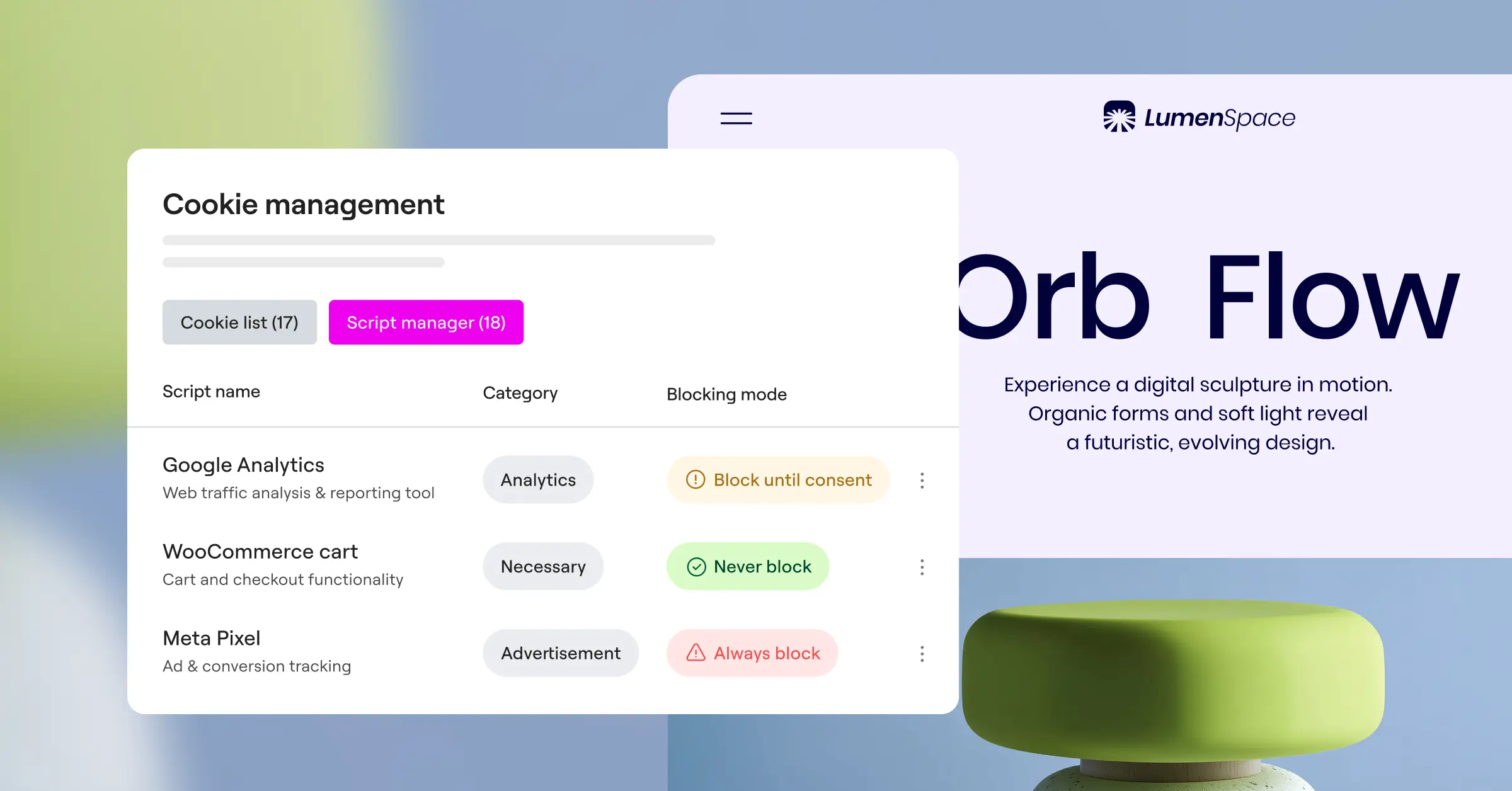
Dynamic DOM updates in React and Vue can clash with script-blocking: editing script tags directly can trigger render errors or break the virtual DOM. Managing state at the framework level is cleanest.
“Handling user data on dynamic single page applications requires a shift from static script-blocking to reactive state management. When you sync consent changes with virtual routes, you protect your users and your business.”
– Itamar Haim, Web Compliance Specialist
10 Best Ways to Handle Cookie Consent on Single Page Applications
Below are the best tools and approaches for handling this cleanly in 2026 while keeping your application compliant.
1. Cookie Consent
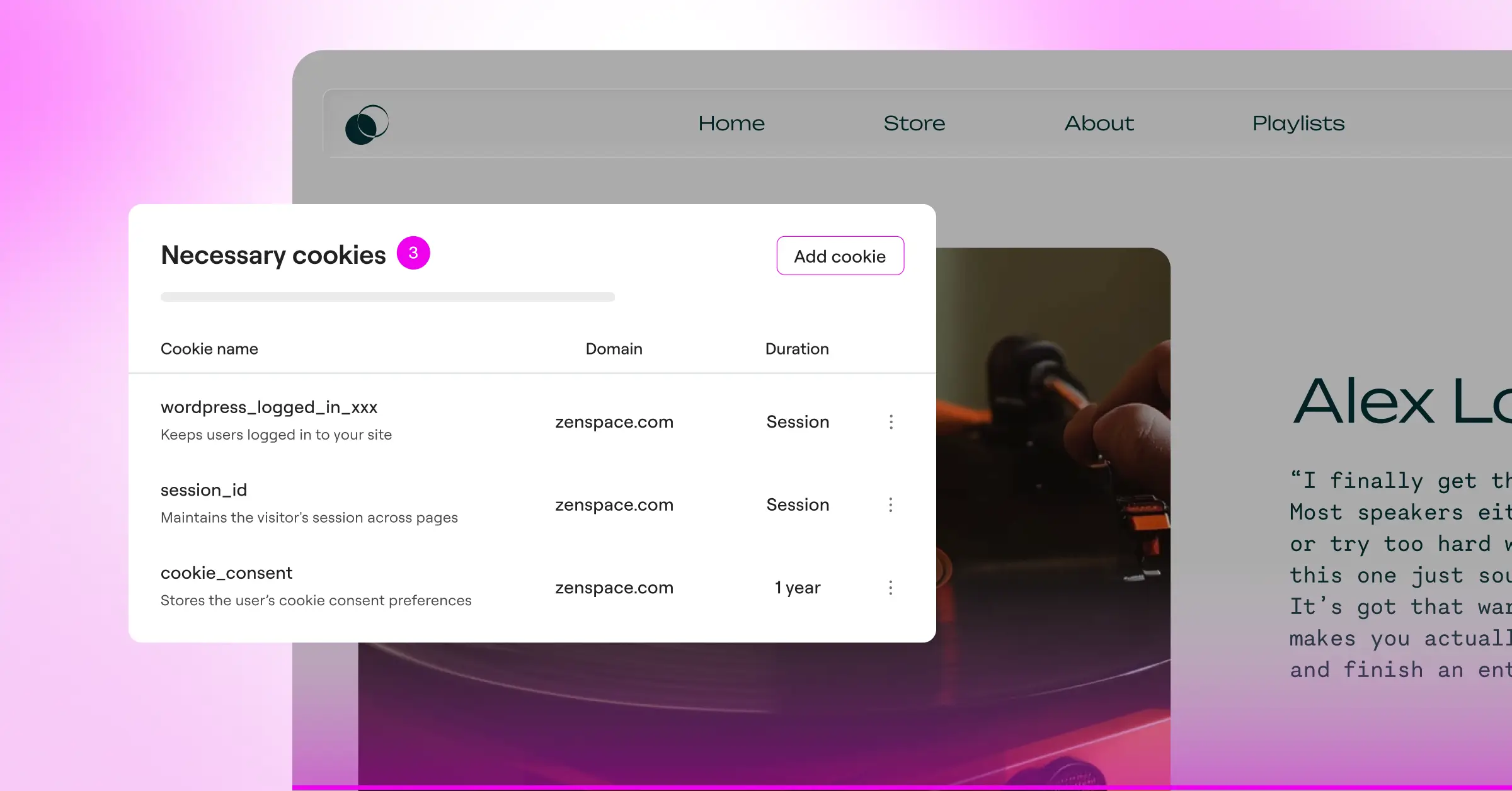
If your site runs on WordPress with a hybrid SPA or headless frontend, a native option makes sense. Cookie Consent is Elementor‘s native capability, handling compliance from your dashboard, no third-party service needed. Set up banners, scans, and consent logs in one place.
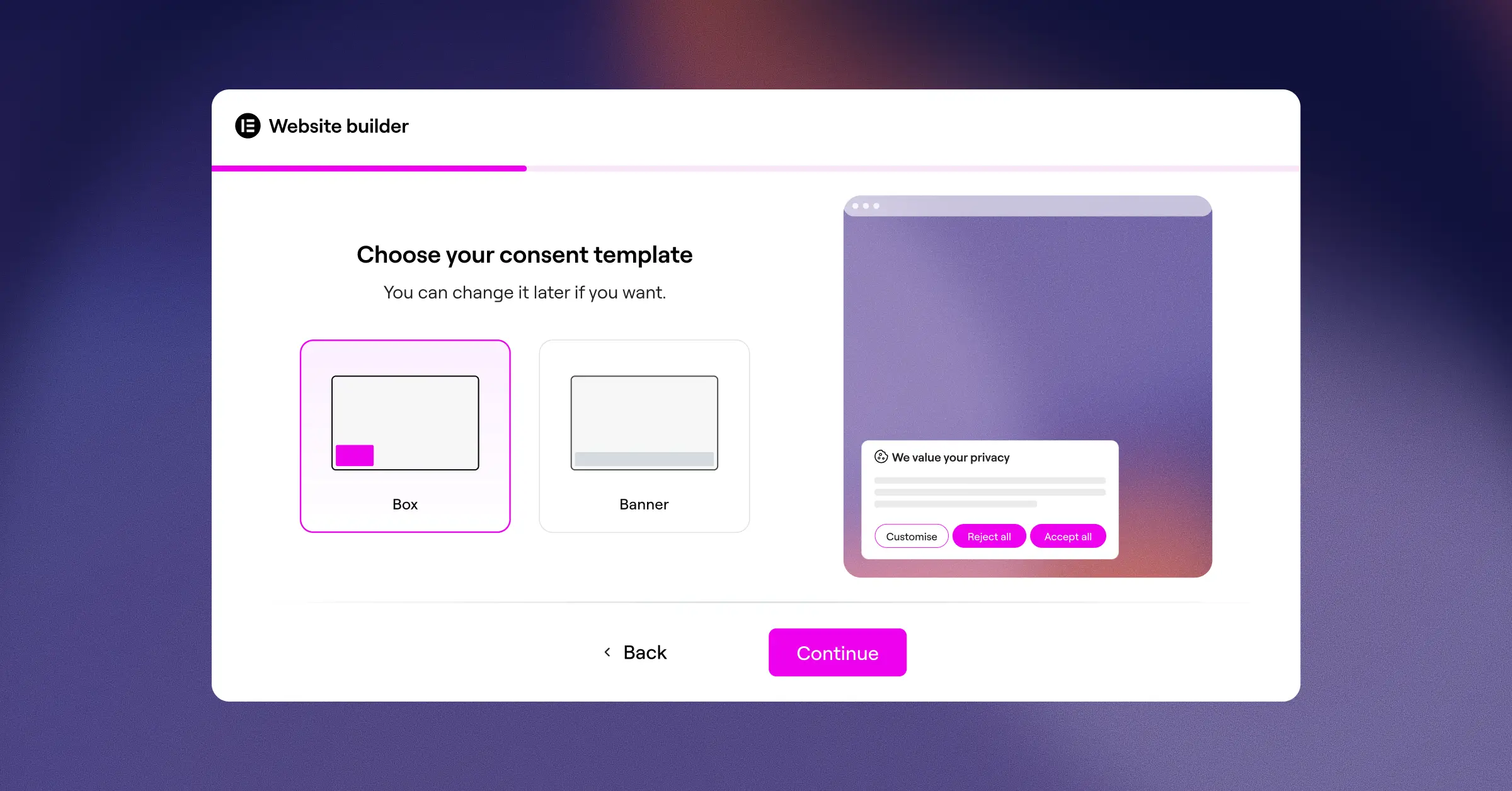
- Scans and categorizes cookies automatically for accurate compliance reports.
- Builds consent banners from templates matching your brand.
- Connects with Google Consent Mode v2 to keep analytics accurate.
- Logs consent choices securely for an audit trail.
- Restricts cookies by visitor location via built-in geo-targeting.
Pros and Cons
- Pro: No external dashboards or separate platforms.
- Pro: Full design customization inside the Elementor editor.
- Con: Best suited for hybrid or headless WordPress setups.
Our Verdict
A strong option for teams who’d rather skip a separate consent platform and keep compliance data close to their content. It’s included in Elementor One and also available free, a low-friction start for WordPress-backed projects.
2. Custom React Context or Vue Pinia Store
For developers who want full control over bundle size, a custom global state store is the classic route: a state container holding preferences, saved to local storage, giving components a reactive source of truth before loading any tracker.
- Tracks user choices in a reactive global state variable every component can read.
- Saves preferences to local storage or cookies client-side.
- Dispatches custom events whenever a user updates privacy settings.
- Wraps analytics components in conditional blocks that check your state store first.
Pros and Cons
- Pro: Zero impact on script-loading times and a tiny footprint.
- Pro: Total creative freedom over banner design and UX.
- Con: You’ll write your own policy docs and block every tracker yourself.
Our Verdict
The right choice for custom apps with tight bundle budgets and an in-house team comfortable owning compliance logic end to end.
3. Cookiebot
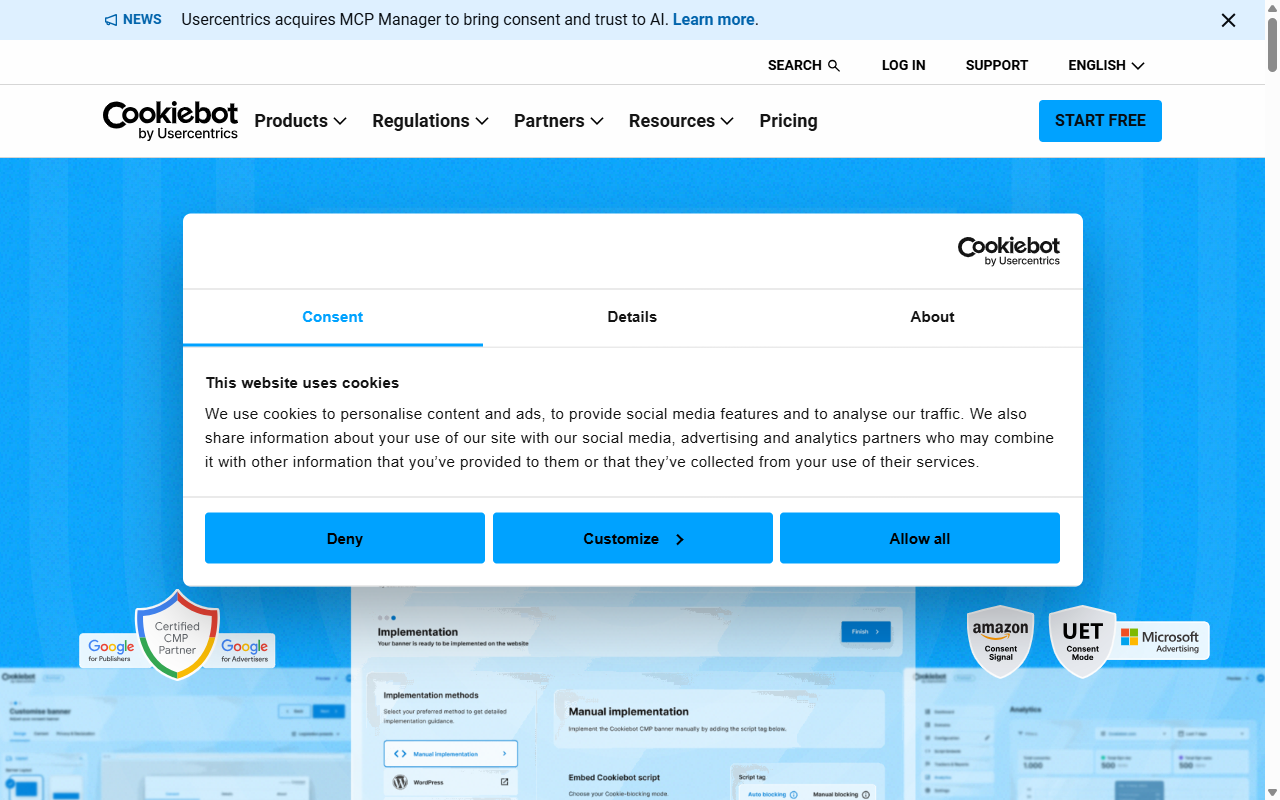
Cookiebot is an established, cloud-based consent platform that works well with modern SPA frameworks, with integration guides and developer APIs to link route changes with script execution.
- Triggers script re-evaluations whenever your router registers a new page view.
- Detects tracking scripts automatically and pauses them until a user consents.
- Supports Google Consent Mode v2 out of the box.
- Translates your privacy banner into dozens of languages by browser locale.
Pros and Cons
- Pro: Automatic cookie detection, reliable and updated often.
- Pro: Strong developer docs for React, Angular, and Vue.
- Con: Can slow initial page loads if not tuned carefully.
Our Verdict
A solid, compliant pick for companies needing automatic cookie scanning and multi-language support across an SPA.
4. CookieYes
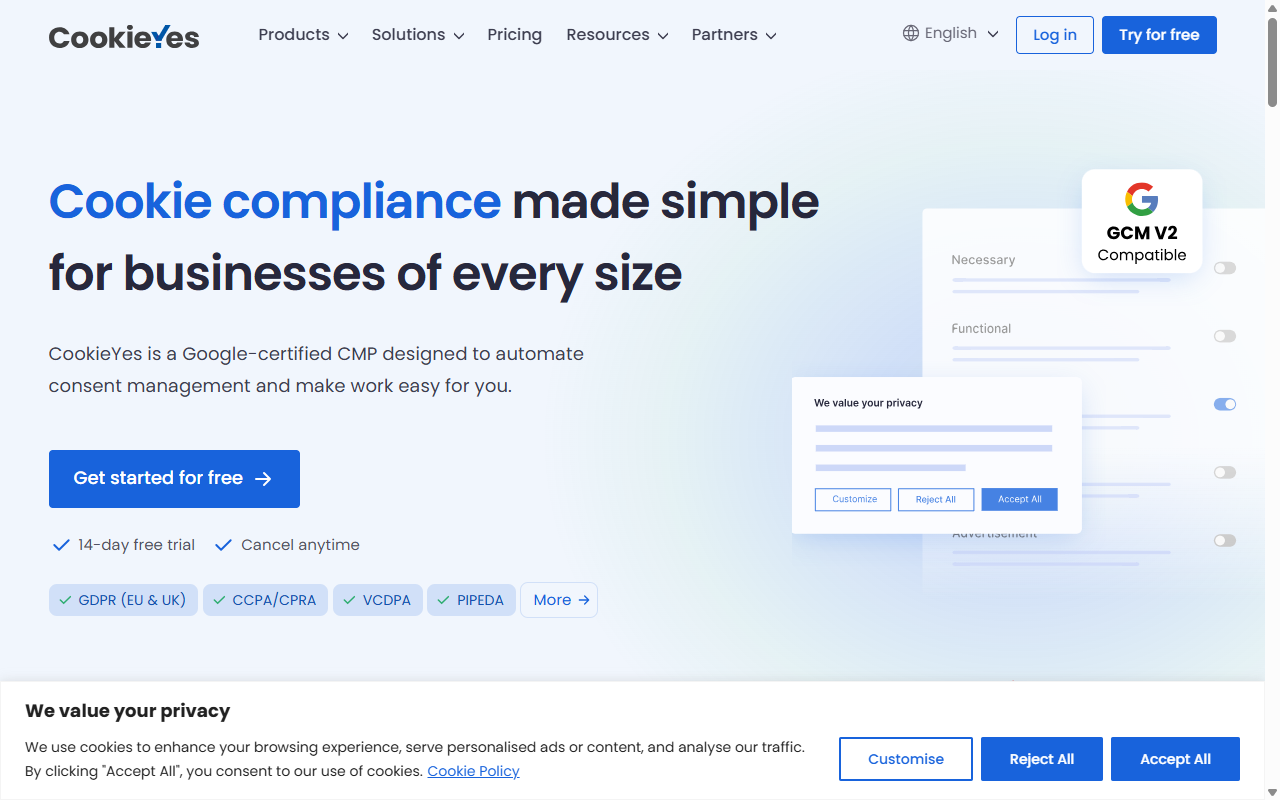
CookieYes is a lightweight compliance tool with simple JavaScript integration, practical for a quick setup without deep refactoring.
- Injects lightweight banners that don’t block your SPA’s main thread.
- Categorizes tracking cookies into functional, analytical, and advertisement groups.
- Delivers a clean API to check whether consent’s been granted.
- Generates a compliant cookie policy page that updates as new cookies show up.
Pros and Cons
- Pro: A simple install, under five minutes.
- Pro: Clean, fast, easy-to-navigate dashboard.
- Con: Deep framework-level integration needs some custom event listeners.
Our Verdict
A practical choice for small to medium apps where deployment speed matters more than fully custom components.
5. Complianz
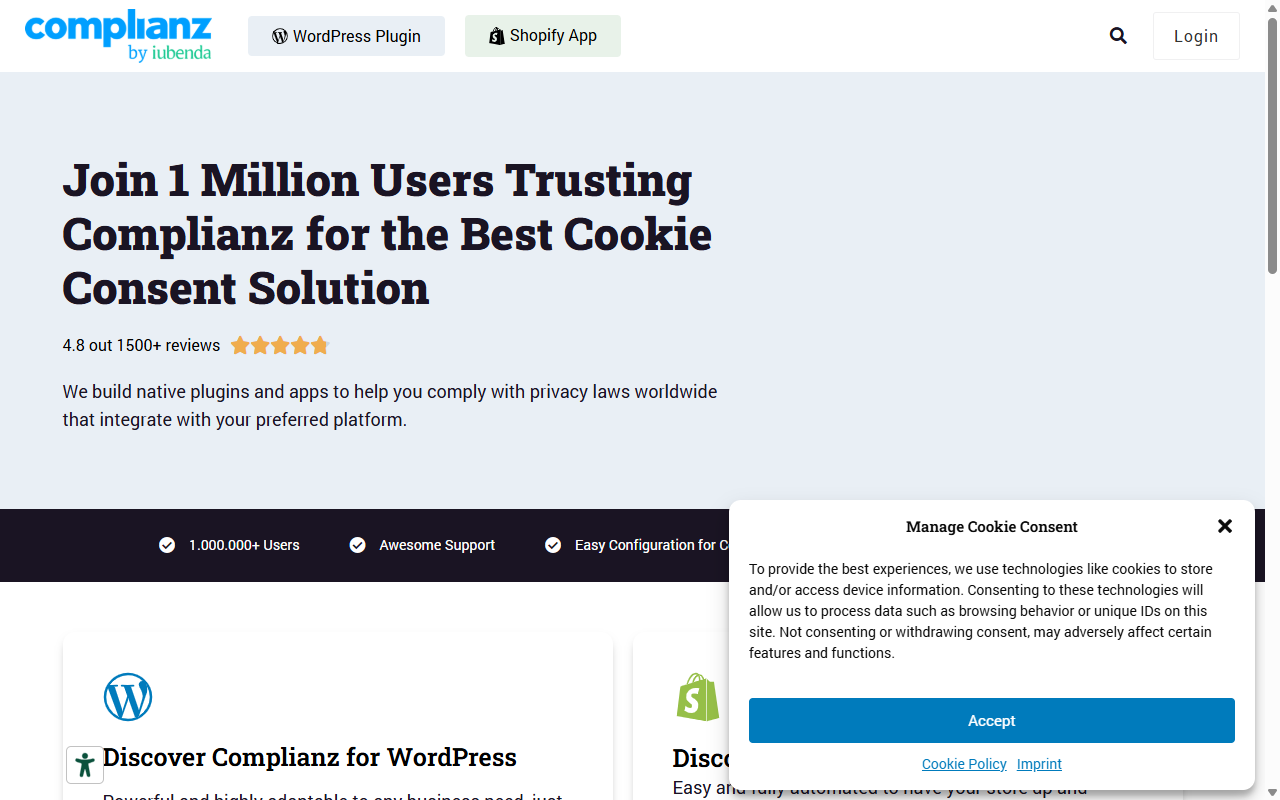
Complianz is known for its privacy suite, handling global privacy laws like GDPR, CCPA, and COPPA, and it plugs into headless environments through its API.
- Adapts the privacy banner automatically to regional requirements.
- Generates legally validated documents matching your site’s setup.
- Controls cookie injection via developer hooks and event listeners.
- Integrates with popular tag managers to simplify tracking.
Pros and Cons
- Pro: Thorough legal research behind its rules.
- Pro: Highly customizable design for complex interfaces.
- Con: Setup can feel involved given the configuration screens.
Our Verdict
A good fit for apps serving global audiences where legal precision and regional targeting matter.
6. iubenda
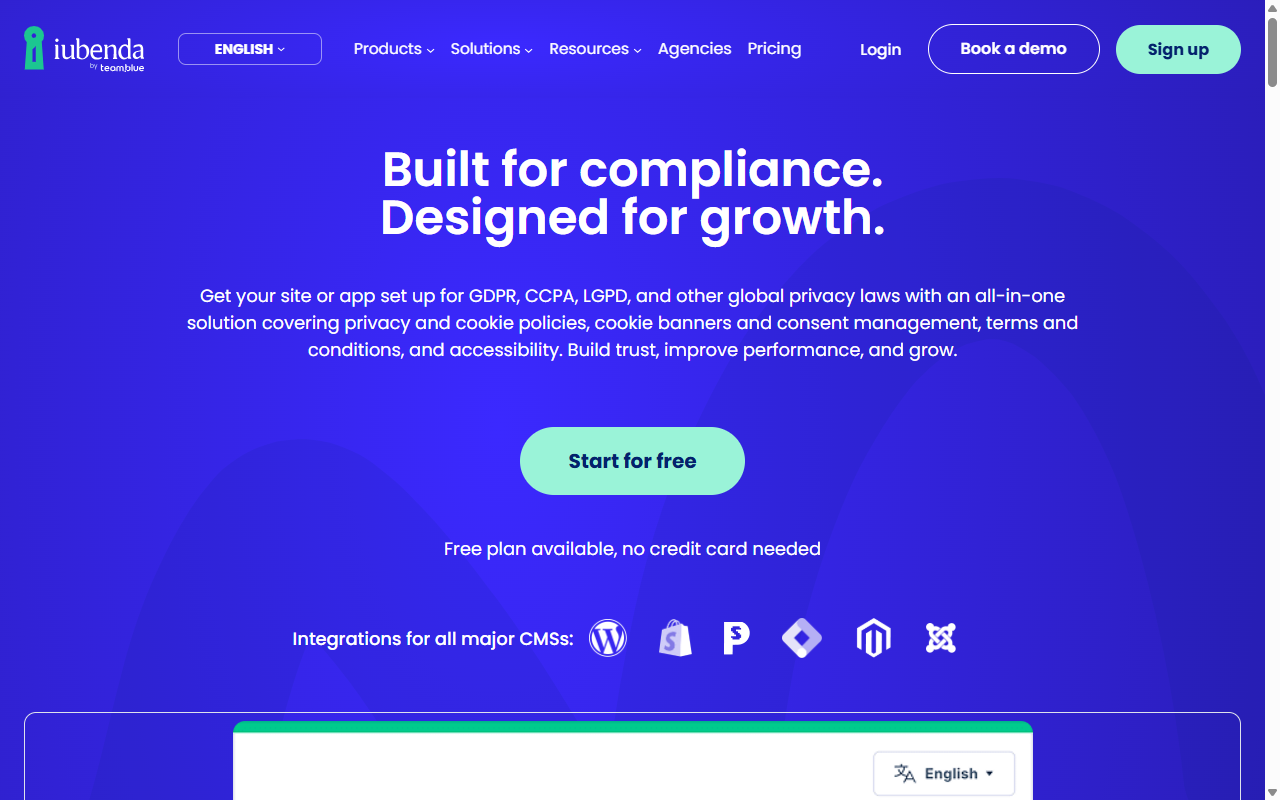
iubenda covers privacy policies, cookie policies, and consent management in one suite, with a developer-friendly API that makes SPA integration reasonably straightforward.
- Generates privacy and cookie policy documents that update as regulations change.
- Exposes a JavaScript API to query consent states from your framework code.
- Supports custom style integrations so the banner fits your component library.
- Saves detailed consent records to help meet GDPR proof-of-consent requirements.
Pros and Cons
- Pro: A solid all-in-one suite for legal documents and cookies.
- Pro: API-first design makes SPA integration manageable.
- Con: The interface has many options, which can feel overwhelming at first.
Our Verdict
A sensible pick if you want policy documents and a consent tool from the same vendor, keeping things consistent.
7. OneTrust
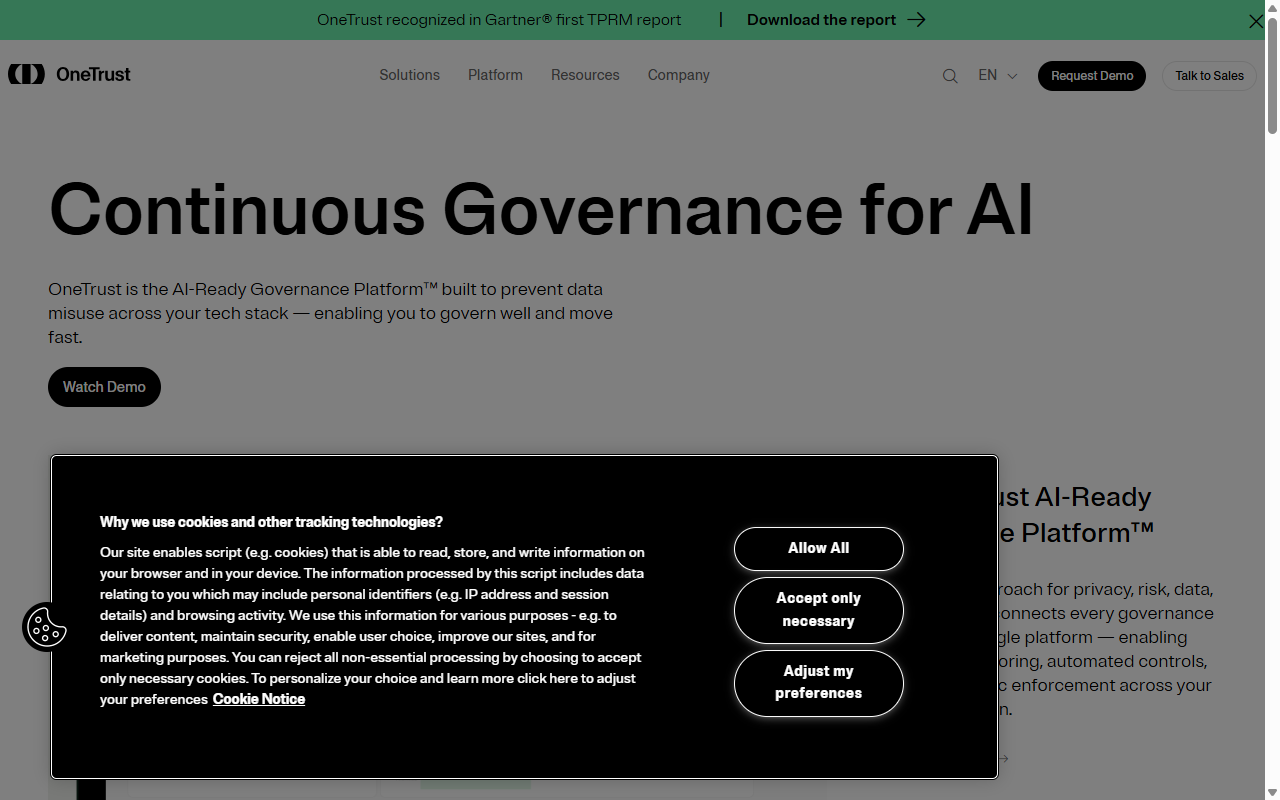
OneTrust is an enterprise privacy management platform for large organizations running complex SPAs across regions, offering deep compliance reporting, advanced developer SDKs, and granular control over consent data collection.
- Secures consent details across multiple domains and devices under one profile.
- Coordinates with advanced CMP SDKs built for single page applications.
- Builds audit trails and compliance reports for legal and privacy teams.
- Integrates with major enterprise data warehouses and CRM systems.
Pros and Cons
- Pro: Enterprise scalability and deep compliance reporting.
- Pro: Trusted by large organizations with strict security needs.
- Con: Can be more complex and costly than smaller projects need.
Our Verdict
A natural choice for large enterprise apps where security, compliance reporting, and legal auditing are non-negotiable.
8. Google Tag Manager Custom History Change Triggers
This is a technical approach, not a standalone platform. Pair Google Tag Manager (GTM) with your framework router to update consent state whenever a new virtual route loads, keeping tags and compliance logic in sync.
- Monitors changes in the browser history API via built-in GTM listeners.
- Pushes custom events to the
dataLayerwhenever a router transition begins. - Updates Google Consent Mode v2 variables before firing new tags.
- Coordinates all external tags in one container without touching your app bundle.
Pros and Cons
- Pro: Moves tracking scripts out of your application code.
- Pro: Gives marketing teams tracking control without constant developer involvement.
- Con: Needs clear developer-marketing communication to avoid breaking tags.
Our Verdict
An important approach for any SPA that leans on Google Tag Manager for campaigns and conversion tracking.
9. Vanilla JS MutationObserver Event Delegation
If you’re on a legacy SPA, or would rather skip external dependencies, browser-native APIs can monitor and intercept trackers directly. (This one trips developers up at first, but once it clicks, it’s genuinely elegant.)
- Watches the DOM for dynamic script injections via a native
MutationObserver. - Intercepts unauthorized script elements before they execute.
- Dispatches custom DOM events to share consent updates with third-party components.
- Executes blocking logic with zero framework overhead or extra bundle weight.
Pros and Cons
- Pro: Works with any framework, React, Vue, Svelte, or vanilla JS.
- Pro: High performance since it uses native browser interfaces.
- Con: Needs solid JavaScript skills to write, test, and maintain safely.
Our Verdict
A strong pattern for teams who like clean, dependency-free code and want full control over DOM execution.
10. Edge Middleware Cookie Interception
With hosting platforms like Vercel, Netlify, or Cloudflare Workers, you can handle cookie consent before your SPA reaches the browser. (This surprises people, since many assume consent has to live client-side.)
- Inspects incoming requests at the edge before serving the HTML shell.
- Strips tracking cookies from headers if a user hasn’t opted in.
- Injects the right environment configuration variables into the HTML payload.
- Reduces layout shifts by delivering pre-configured content blocks from edge servers.
Pros and Cons
- Pro: Real performance gains from keeping tracking scripts out of the initial payload.
- Pro: Consent handled server-side, so cookies never reach the browser without permission.
- Con: Needs hosting on a platform with serverless edge middleware.
Our Verdict
The advanced route for Jamstack developers chasing the most performance and security from modern edge networks.
Comparison of SPA Cookie Consent Methods
Here’s how these methods stack up.
| Consent Method | Ease of Integration | Performance Impact | Framework Agnostic | Best Suited For |
|---|---|---|---|---|
| Cookie Consent (Elementor) | High | Low | Yes (with Headless WordPress) | WordPress hybrid setups and client sites. |
| Custom React/Vue Store | Medium | None (Zero bloat) | No (Framework-specific) | Small projects with high performance requirements. |
| Cookiebot | Medium | Low to Medium | Yes | Global sites needing automatic cookie scans. |
| CookieYes | High | Low | Yes | Fast setups that need immediate legal coverage. |
| Complianz | Medium | Low | Yes | Complex setups needing high legal compliance. |
| iubenda | Medium | Low | Yes | All-in-one policy generation and consent setups. |
| OneTrust | Low (Complex) | Medium | Yes | Large enterprise systems and global corporations. |
| GTM Custom History | Medium | Low | Yes | Marketing-heavy websites tracking user conversions. |
| MutationObserver | Low (Hard) | Very Low | Yes | Experienced developers who avoid dependencies. |
| Edge Middleware | Low (Hard) | Very Low | Yes | Modern Jamstack architectures and edge deployments. |
A Developer’s Guide to Implementing Consent in SPAs
Here are the practical steps for setting up consent in a client-side environment. Getting the order right early saves debugging headaches later.
Step 1: Map Your Tracking Scripts
Before you write any code, list every script on your site: analytics, marketing pixels, CRM forms, error logging, all of it. Group them into three buckets: strictly necessary, analytical, and marketing.
Step 2: Choose Your State Storage Mechanism
Decide where your app will store preferences. Cookies are the standard pick since your server can read them, though local storage is often simpler to query client-side. Keep it in sync so nothing drifts.
Step 3: Connect to Your Application Router
With React Router, Vue Router, or SvelteKit, trigger a consent check on every route change. A global router guard or hook that checks whether preferences are already stored usually works best:
- Listen to the router’s after-each hook or page-change event.
- Verify whether user consent preferences are already stored locally.
- Push a custom event to the global window object so active tracking tools know the current page path.
Step 4: Configure Fallback UI for Unconsented States
What happens when someone lands on a page with an embedded video or map before granting consent? Show a friendly placeholder explaining that accepting cookies will load the content, with a button to open cookie settings.
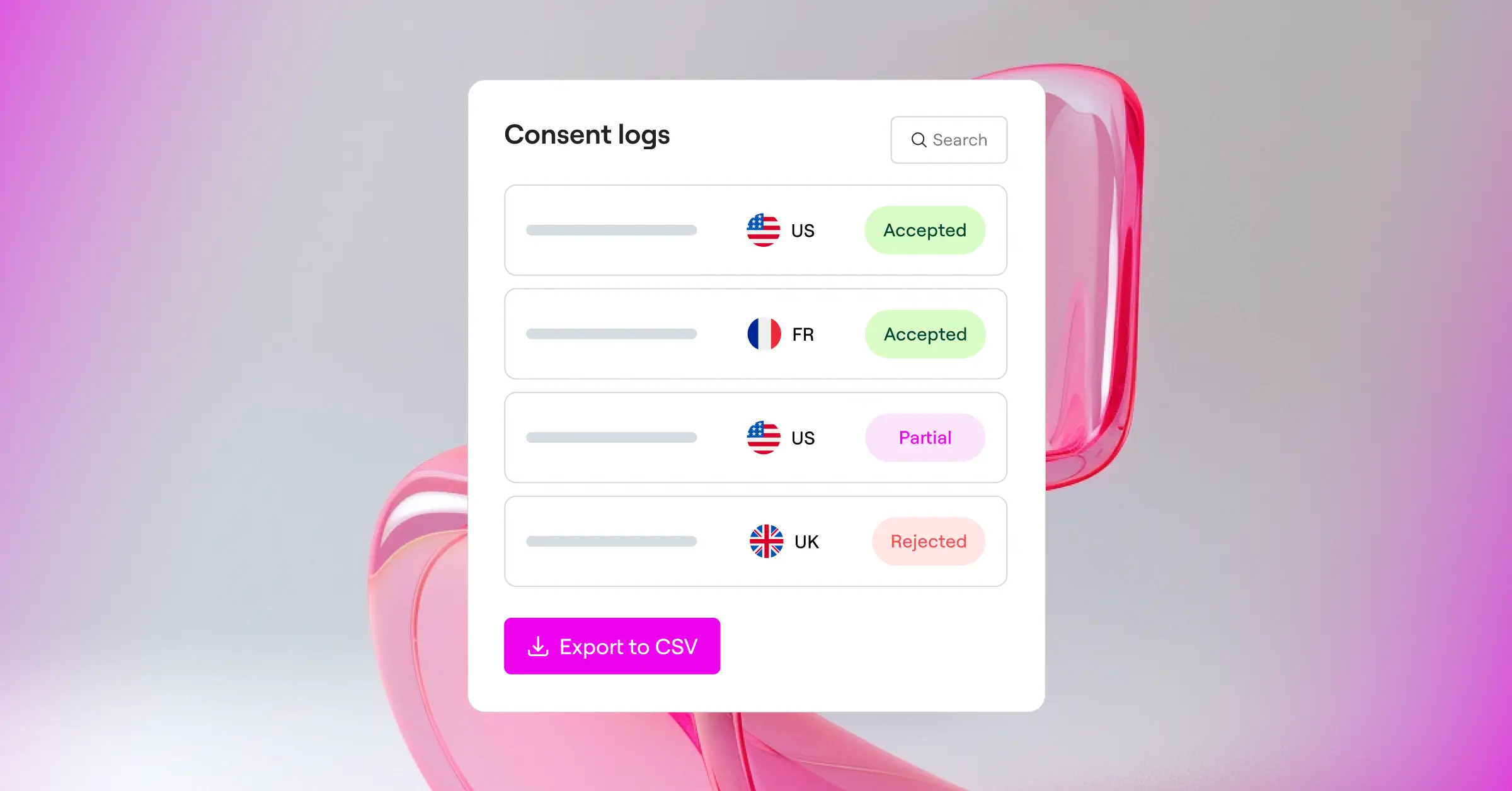
On a WordPress-backed architecture, Elementor’s Cookie Consent tool handles logs and geo-targeted banners automatically, cutting out much of the manual work in steps two through four. Worth checking if it fits your stack before building from scratch.
Frequently Asked Questions
Why does traditional cookie consent break on React or Vue applications?
Traditional tools rely on full browser reloads to read cookie headers and block scripts before they run. SPAs load once and handle routes dynamically, so triggers never fire again, causing compliance gaps or broken tracking.
Can I use Elementor’s Cookie Consent on a decoupled or headless website?
Yes. If WordPress is your backend and CMS, Elementor‘s Cookie Consent can manage consent logs, policy documentation, and configuration from the dashboard, a solid foundation for hybrid setups wanting compliance tooling without a separate platform.
How does Google Consent Mode v2 work with SPAs?
Google Consent Mode v2 sets a default state (usually ‘denied’ for ads and analytics) on load. When a user grants permission, you push updated state to the gtag queue, telling Google’s scripts to start collecting data without a refresh.
Is it better to use local storage or cookies to save privacy choices?
Both work, depending on setup. Cookies make sense with server-side rendering or edge middleware, since your server reads them before sending the response. For a client-side SPA, local storage is simpler to access and update.
Do I really need consent logs?
Yes. Under GDPR, the burden of proof sits with the site owner. If a regulator audits your app, you need to show a user explicitly consented before you loaded tracking scripts. Professional tools manage these logs automatically.
How do I block third-party scripts that get injected dynamically?
Use conditional rendering inside your framework, such as v-if in Vue or conditional JSX in React, so tracking components mount only when consent is active. Native JavaScript observers can also intercept script injection before unauthorized code runs.
What is the performance cost of external consent platforms?
An external platform relying on heavy cloud-based scripts can raise blocking time and lower Lighthouse scores. A native tool like Cookie Consent, or a lightweight custom state component, keeps your JS bundle lean and performance healthy.
How do I handle cookie consent for international users under different laws?
Use a tool with geo-targeting: it detects a visitor’s location from their IP and shows the right banner, a GDPR opt-in for EU visitors, a CCPA opt-out for California, or none where privacy laws don’t apply. Elementor’s Cookie Consent has this built in.