
Not long ago, privacy compliance meant a quick banner and calling it done. Times have changed. Browsers now block a lot of third-party tracking, and privacy rules keep tightening worldwide. Server-side cookie management keeps your analytics clean while honoring what visitors choose. We’ll walk through it step by step.
Key Takeaways
- Server-side cookie management keeps your site fast by moving tracking scripts off the browser onto the server.
- Google Consent Mode v2 is now required for sites using Google Analytics or ads targeting EU visitors.
- WordPress-native capabilities let you run your whole compliance workflow from one dashboard.
- Global privacy regulations like GDPR and CCPA call for clear audit logs of when visitors opted in.
Why Server-Side Cookie Management Matters in 2026
Websites used to load dozens of small JavaScript snippets in the browser to drop tracking files, measure clicks, and talk to advertising platforms. It was easy to set up, but it bloated page size, hurt rankings, and frustrated mobile visitors. Now browsers block a lot of these methods by default.
Server-side cookie management solves this. Your WordPress server receives the data first, processes it, and shares only what’s needed with tools like Google Analytics or Facebook. You get a lighter site and data you can trust.
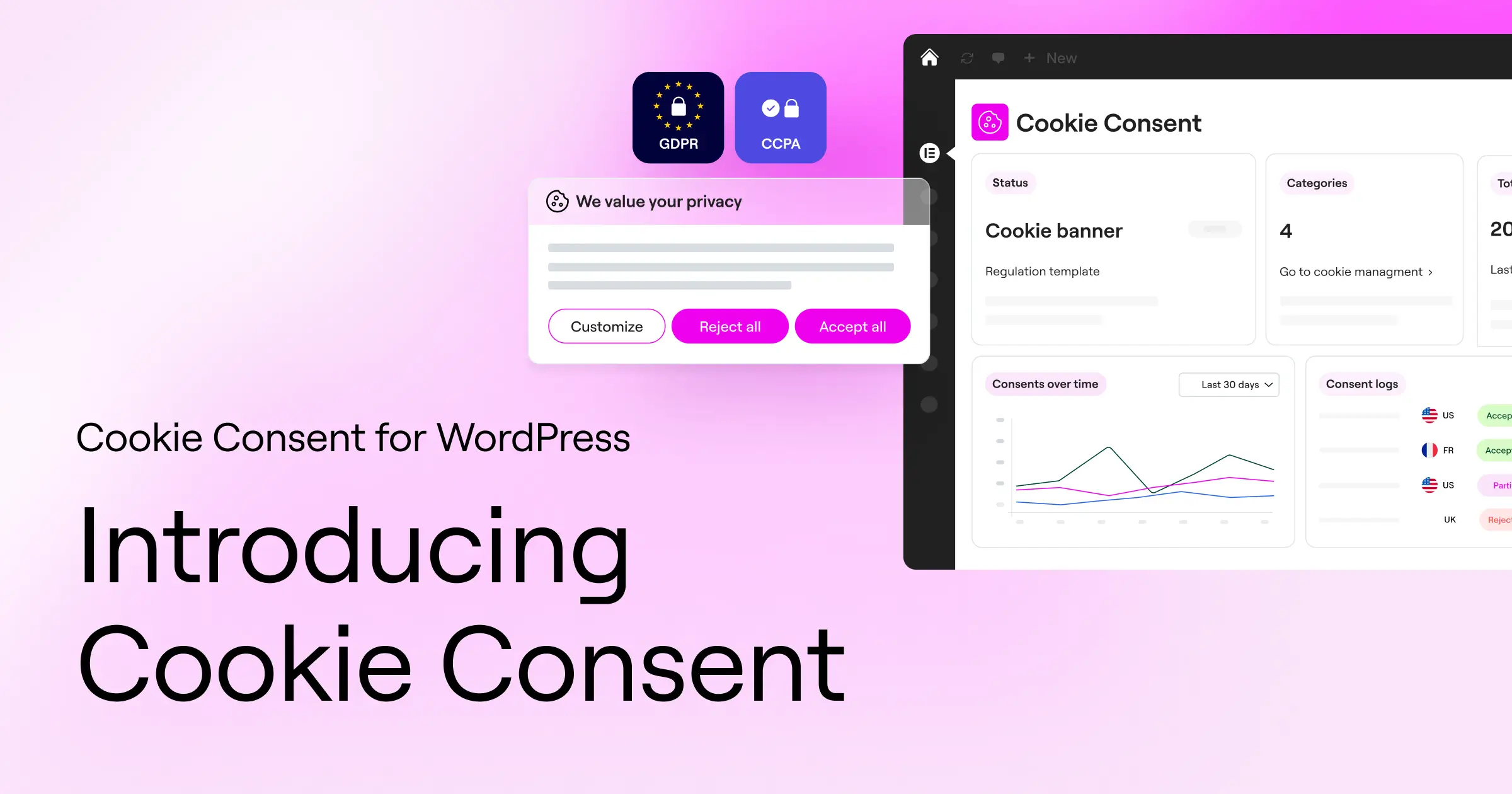
Choosing the right tool means balancing compliance with good user experience: a clunky banner hurts conversions, and one that doesn’t work can expose you to fines. Here’s a look at the best options for 2026.
1. Cookie Consent (by Elementor)
If you manage WordPress sites, you know the value of keeping essential tools in one place. Cookie Consent is a compliance capability built natively for WordPress by Elementor, keeping everything inside your dashboard. It gets your site compliant with GDPR, CCPA, and other privacy laws in minutes.
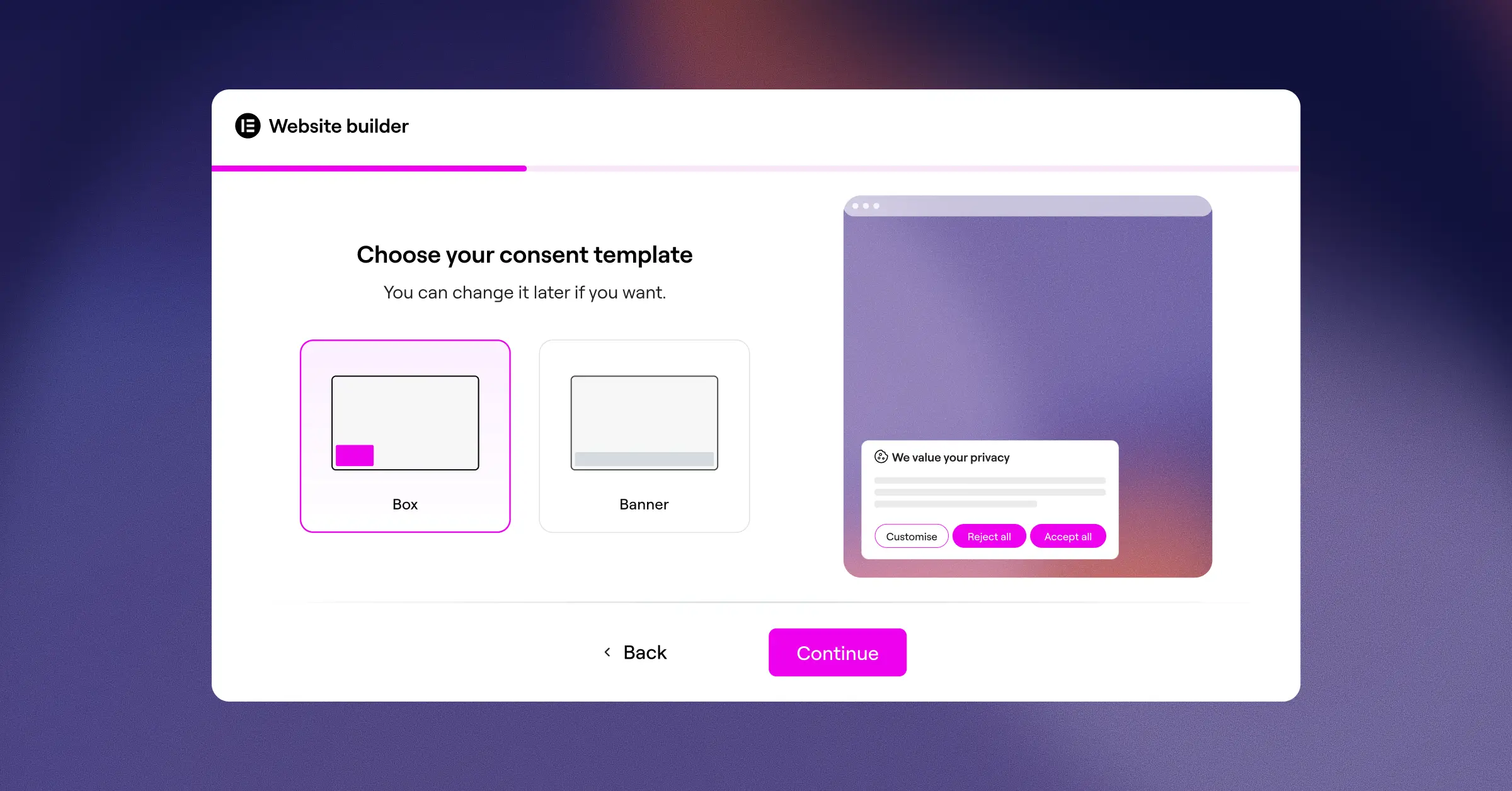
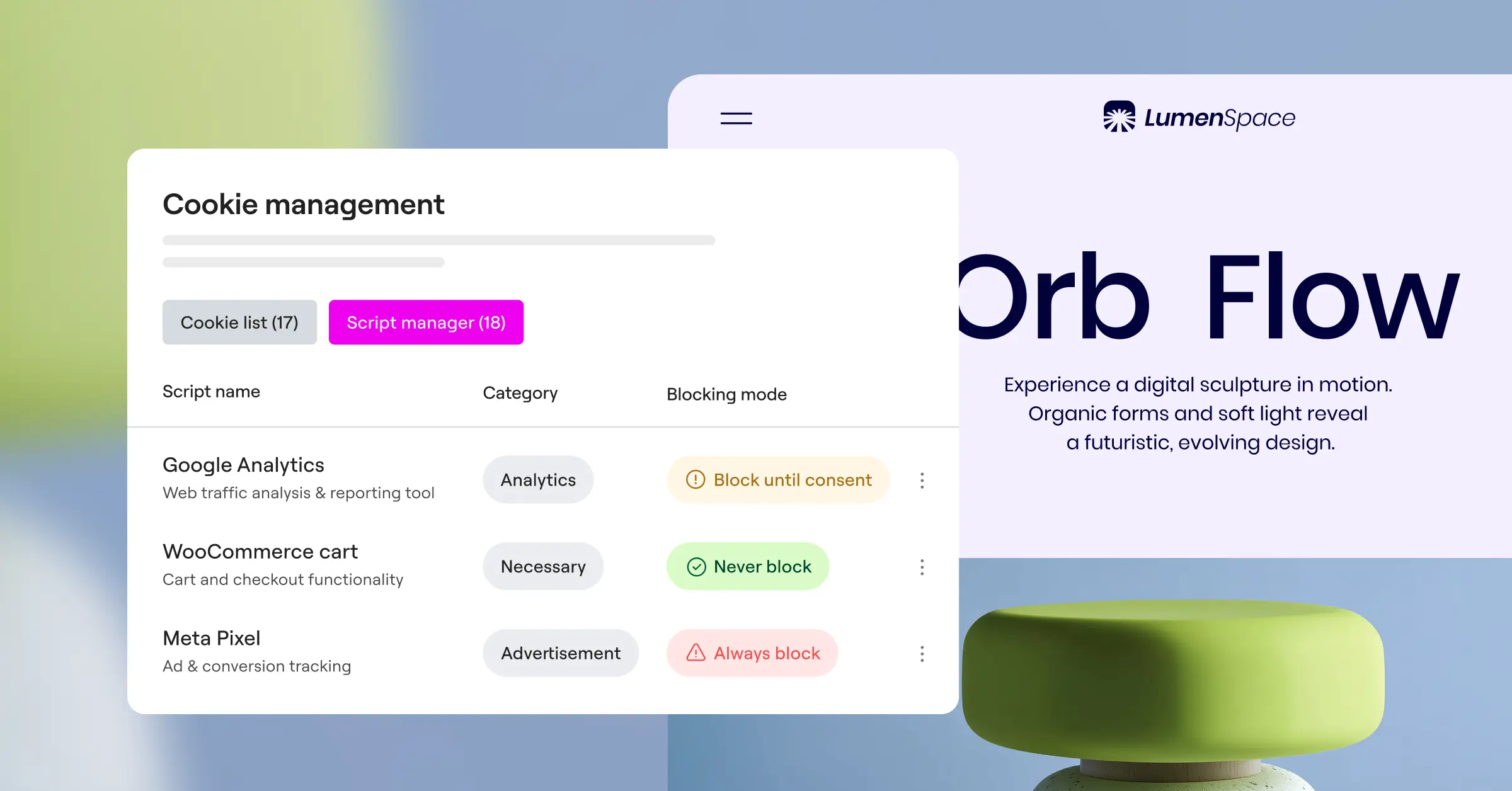
Setup takes three steps: the scanner crawls your site, finds active tracking files, and sorts them into categories. It works inside the editor, so you can style banners to match your brand without writing code, and handles Consent Mode v2 and GPC too.
Key Features
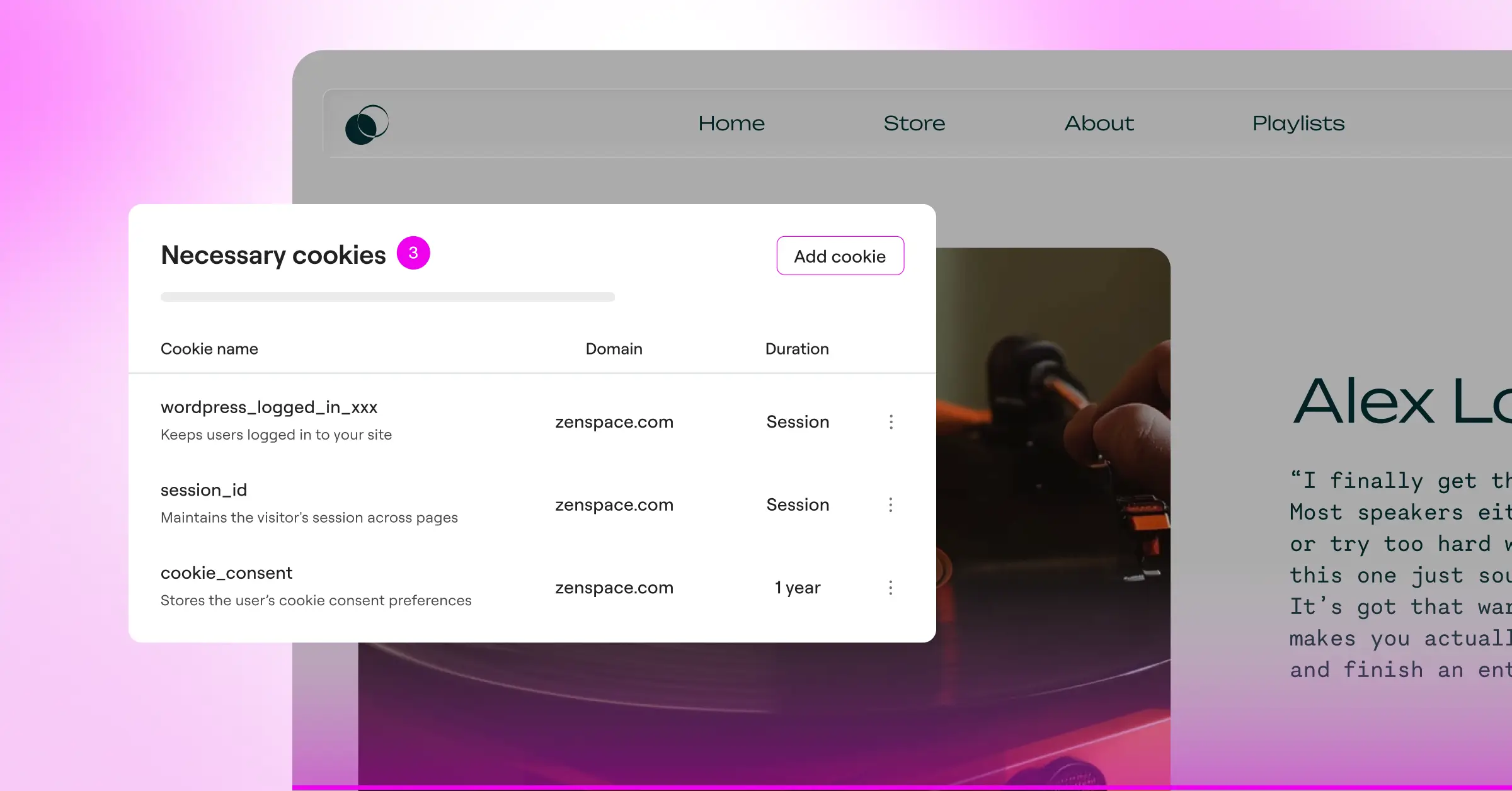
- Scans and categorizes tracking files automatically.
- Builds customizable consent banners for any screen size.
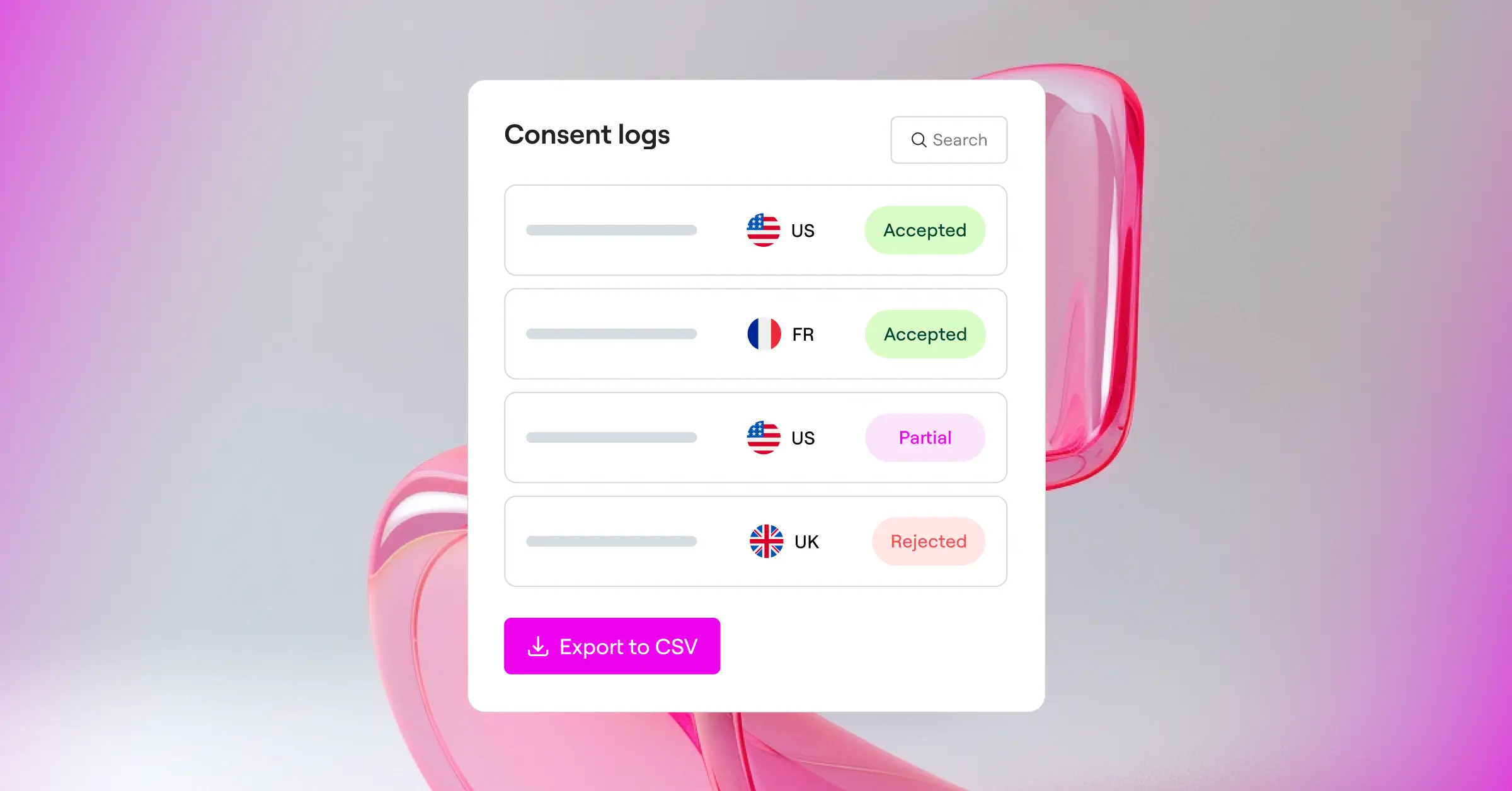
- Saves clear consent logs in your database for audits.
- Detects visitor locations to show region-specific banners.
- Translates your privacy notices into multiple languages.
- Generates basic privacy policy pages to save setup time.
Geo-targeting, consent logs, and Consent Mode v2 come with Elementor One; a free tier is available too. Check the Cookie Consent page for plans.
Pros & Cons
- Pro – Runs entirely inside your WordPress dashboard.
- Pro – Works with the visual builder to match your design.
- Pro – Supports Google Consent Mode v2 out of the box.
- Con – Needs the modern editor environment for full controls.
- Con – Doesn’t connect natively to legacy cloud tag managers.
Verdict: A great choice for teams that want a clean, WordPress-native solution.
“Managing consent at the server level is no longer just a technical option. It’s a fundamental shift in how we protect user trust and maintain accurate data in a privacy-first world.”
– Itamar Haim, Web Compliance Specialist
2. Cookiebot
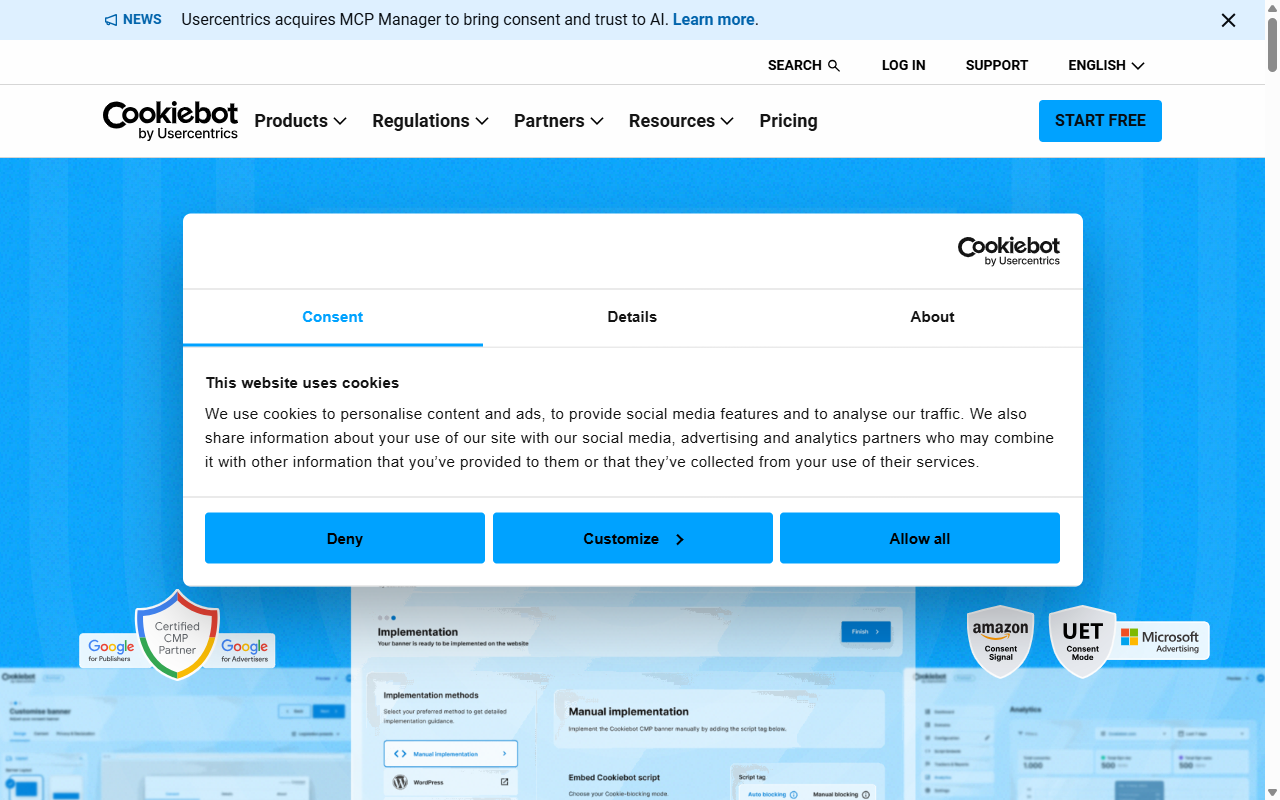
Cookiebot is a well-known cloud-based compliance tool built for deep automated scanning, popular among larger content sites and stores. It scans monthly, holds scripts back until a visitor chooses, and connects with server-side Google Tag Manager.
Key Features
- Tracks tracking files via a monthly automated cloud scan.
- Controls script execution to prevent early data collection.
- Connects with Google Tag Manager to coordinate consent.
- Displays clear opt-in and opt-out choices globally.
- Stores user choices securely in a cloud registry.
- Adapts banner languages to browser settings.
Paid tiers scale with page count.
Pros & Cons
- Pro – A strong scanner that finds hidden tracking scripts.
- Pro – Integrates well with Google Tag Manager.
- Con – Requires an external dashboard for detailed settings.
Verdict: Solid for larger sites already on Google Tag Manager needing high-volume scanning.
3. CookieYes
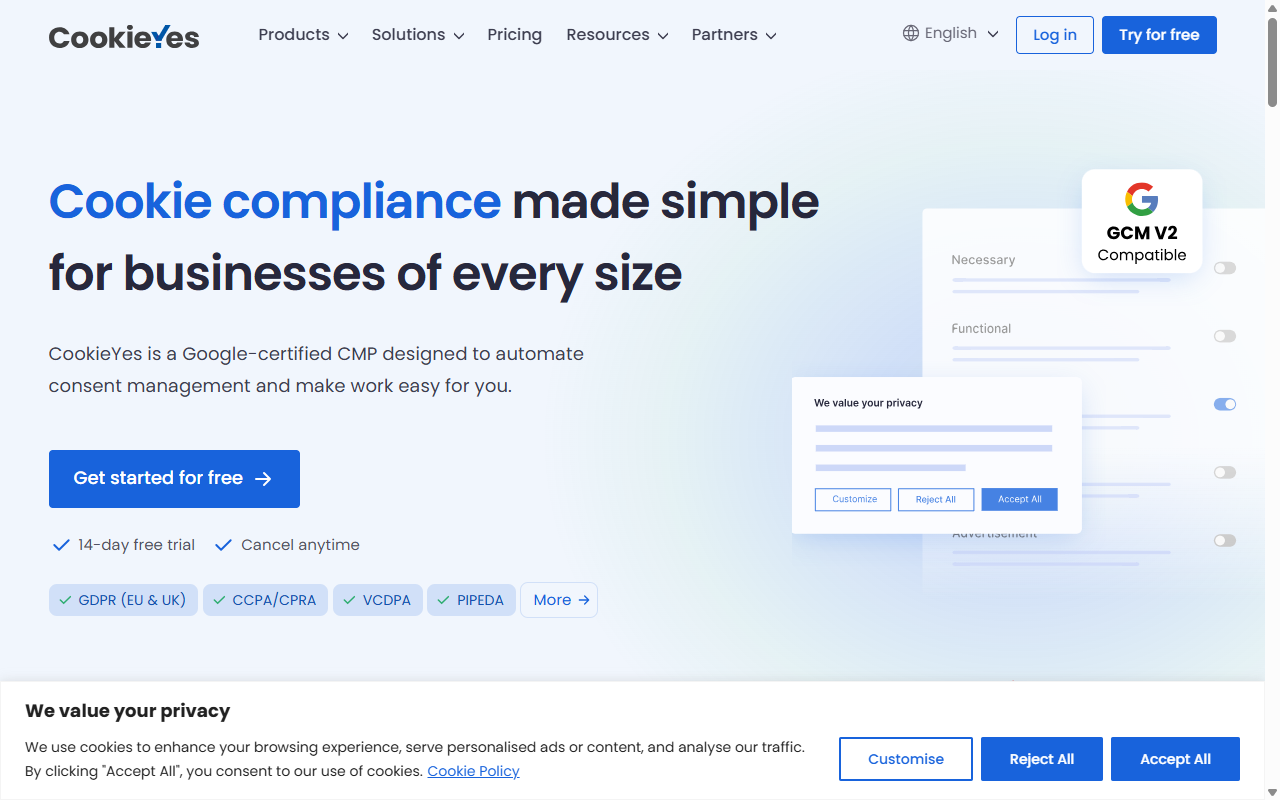
CookieYes is a popular pick for creators who want a simple setup and clean interface, running on millions of sites. Its wizard gets a basic banner live in a few clicks, handles consent collection, keeps cloud records, and supports Consent Mode v2.
Key Features
- Crawls your site to build a directory of active cookies.
- Builds clean, minimalist banners that don’t distract from content.
- Records consent transactions in an exportable CSV format.
- Supports Do Not Track and Global Privacy Control signals.
- Saves regional settings for EU and US visitors.
- Blocks third-party scripts until the visitor accepts.
Paid plans bill monthly or annually based on page views.
Pros & Cons
- Pro – A user-friendly dashboard, easy for non-technical people.
- Pro – Fast setup with helpful prompts.
- Con – The entry-level plan shows a small brand badge.
- Con – Custom styling is limited without custom CSS.
Verdict: A solid middle-ground pick for growing businesses that want reliable Consent Mode support.
4. Complianz
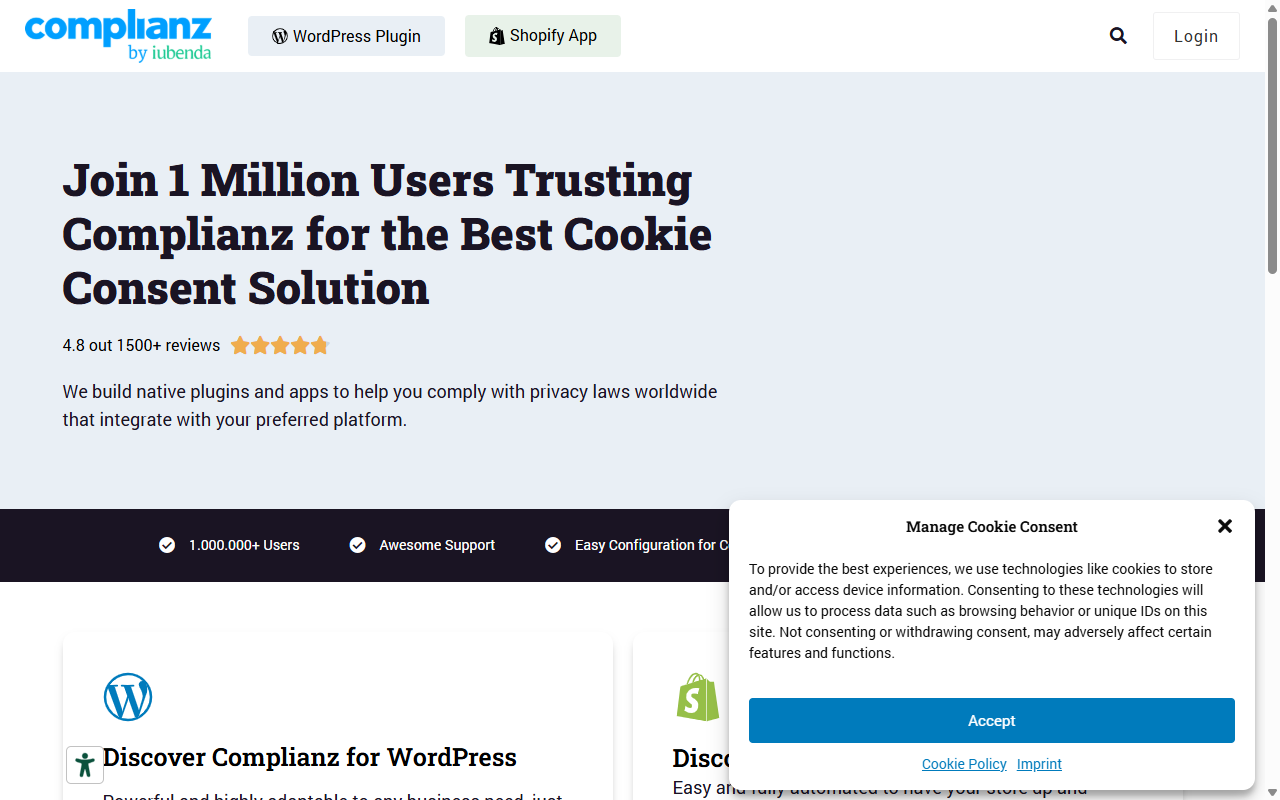
Complianz is a privacy tool built for the WordPress ecosystem that keeps your configuration data inside your own database, appealing to privacy advocates who want full ownership. Its wizard asks about your business and tracking practices, then generates the legal documents you need.
Key Features
- Generates legal documents for your regional business needs.
- Integrates with popular analytics scripts inside WordPress.
- Saves consent history on your own server, not a cloud.
- Blocks social embeds and maps until permission is given.
- Supports the official WP Consent API.
- Detects changes in local laws and alerts you.
Premium plans unlock geo-targeting and multi-site support.
Pros & Cons
- Pro – Keeps visitor data on your own server.
- Pro – The built-in policy generator saves money on legal drafts.
- Con – The setup wizard can feel overwhelming.
- Con – Can conflict with aggressive caching tools.
Verdict: A great pick for developers who want a self-hosted setup.
5. iubenda
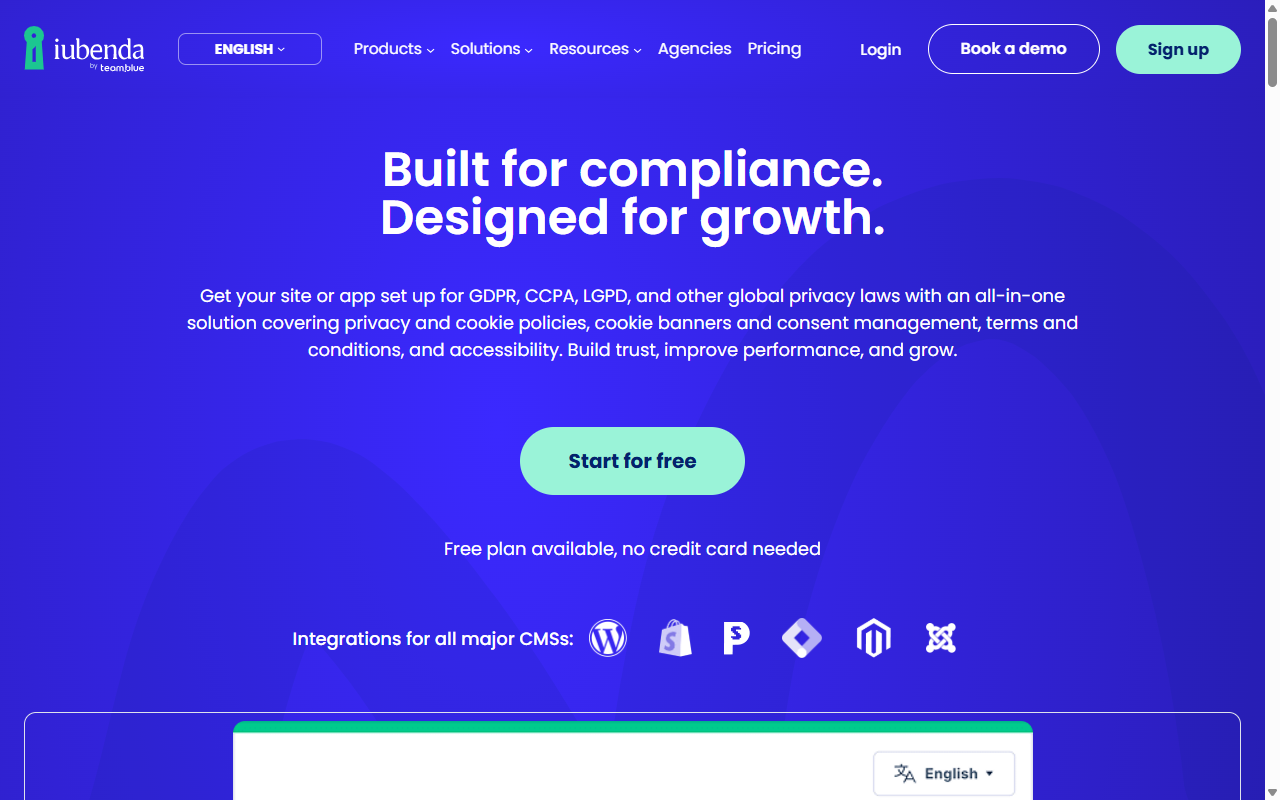
iubenda is a complete compliance suite built for agencies and businesses with complex legal needs, going beyond a simple cookie banner to manage privacy policies, terms, and data processing records. The consent feature adjusts behavior based on where your visitor is browsing from.
Key Features
- Creates legal agreements that auto-update when laws change.
- Saves consent preferences across subdomains and landing pages.
- Integrates with server-side tagging pipelines.
- Keeps detailed processing records for compliance officers.
- Translates your legal agreements into dozens of languages.
- Allows deep customization through an advanced editor.
Check their website for up-to-date pricing.
Pros & Cons
- Pro – A complete solution for sites that need more than a banner.
- Pro – Auto-updating policies protect you when regulations change.
- Con – Modular pricing can add up quickly.
- Con – Takes more time to configure than simpler tools.
Verdict: A strong choice for agencies needing a centralized, lawyer-approved suite.
6. OneTrust
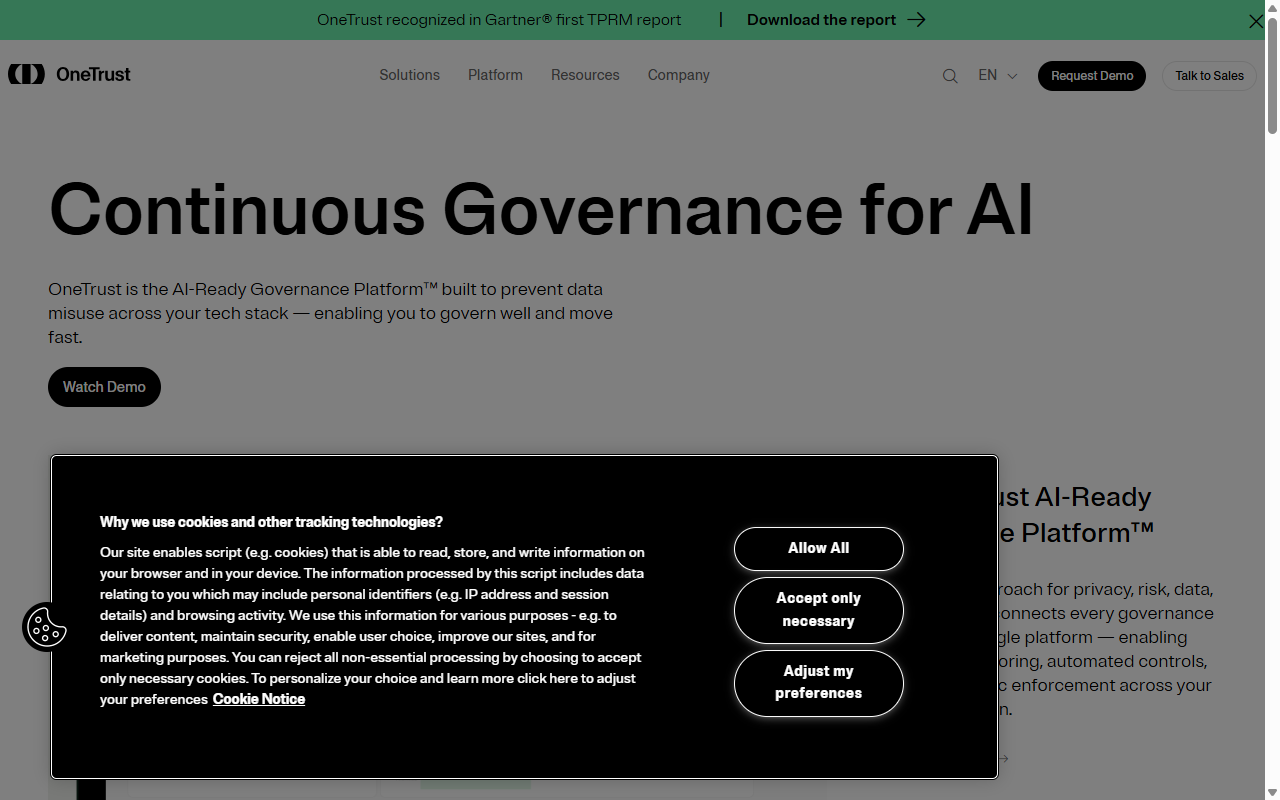
OneTrust is a market leader in enterprise-level privacy and risk management, built for large companies with complex data flows and dedicated compliance teams. It isn’t a WordPress-specific tool, but integrates with any CMS through custom scripts, handling data mapping and server-side consent syncs.
Key Features
- Maps data flows across your whole digital footprint.
- Connects consent records with your CRM and customer profiles.
- Manages vendor risk by tracking active third-party scripts.
- Builds detailed compliance reports for legal reviews.
- Supports localized templates for hundreds of jurisdictions.
- Syncs preference centers so customers control their data.
Interested teams can request a quote on the OneTrust website.
Pros & Cons
- Pro – Enterprise-grade security and compliance features.
- Pro – Detailed reports and data mapping tools.
- Con – Too complex and costly for small-to-medium sites.
- Con – Needs a dedicated administrator or technical team.
Verdict: A go-to option for enterprises needing one platform across systems and regions.
7. Osano

Osano positions itself as an easy, worry-free compliance platform for growing businesses, with a compliance guarantee that helps protect against fines when configured correctly. Its cloud-managed banner loads quickly and blocks unsanctioned scripts before they drop cookies.
Key Features
- Blocks undocumented tracking scripts to keep compliance tight.
- Displays clear privacy scores for popular third-party services.
- Monitors vendor policy changes and alerts you.
- Saves secure consent logs using tamper-resistant structures.
- Loads banners fast from a global delivery network.
- Translates your settings into multiple languages.
Paid tiers are built for growing businesses and enterprises.
Pros & Cons
- Pro – Strong focus on legal accuracy and protection.
- Pro – Fast loading thanks to their cloud network.
- Con – Visual customization is basic on lower-tier plans.
- Con – Settings live outside WordPress on Osano’s own cloud.
Verdict: A reliable, security-focused choice with a reputable cloud partner.
8. Termly
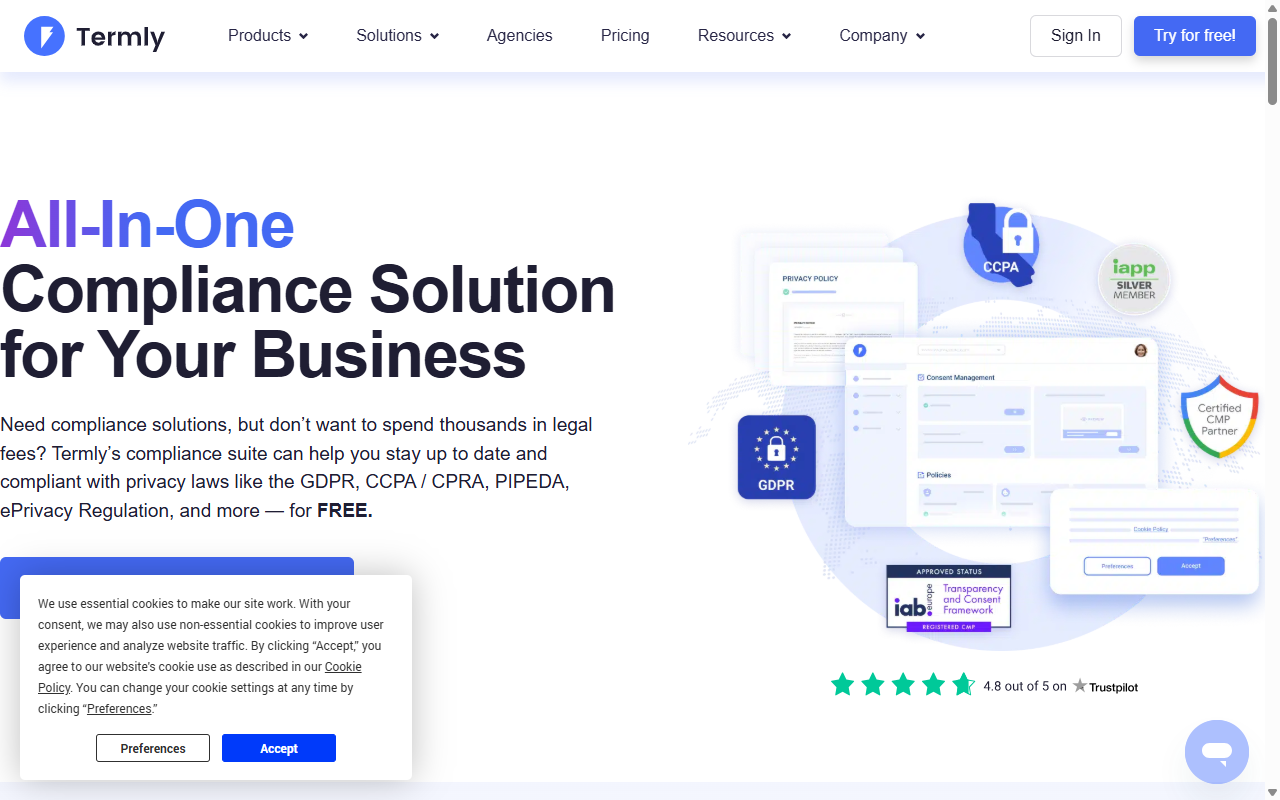
Termly is a popular all-in-one compliance platform for small businesses, startups, and independent creators, making compliance approachable without a law degree or big budget. Build your banner, privacy policy, terms, and shipping policies from one dashboard, with your cookie list updating automatically.
Key Features
- Generates legal policies written by compliance experts.
- Categorizes cookies based on their tracking functions.
- Customizes banner designs for clean, minimalist layouts.
- Supports GDPR, CCPA, and UK guidelines out of the box.
- Updates your public cookie lists when scans complete.
- Ships simple codes that work with any WordPress theme.
Premium subscriptions run monthly or yearly with higher scan limits.
Pros & Cons
- Pro – Great value for small businesses needing banners and legal docs.
- Pro – A simple, intuitive dashboard, zero coding needed.
- Con – The entry-level plan limits monthly consent records.
- Con – Less advanced APIs than dedicated enterprise tools.
Verdict: A great budget-friendly option for startups wanting fast compliance.
9. WP Consent API
WP Consent API isn’t a visual banner tool. It’s a developer-focused framework solving a real WordPress problem: tools not talking to each other about consent. It gives WordPress core, themes, and other tools a standardized way to register consent states, broadcasting a visitor’s opt-out right away.
Key Features
- Standardizes how consent states are read and shared.
- Connects different compliance tools to prevent double-banner conflicts.
- Allows developers to write compliance-aware custom code.
- Integrates with popular consent tools for script loading.
- Keeps your site light using core WordPress functions.
- Prevents layout issues via script loading priority.
It’s free from the official WordPress plugin repository.
Pros & Cons
- Pro – Completely free and open-source, no licensing fees.
- Pro – Improves communication between tools on your site.
- Con – No visual banner; pair it with one.
- Con – Needs development knowledge to configure effectively.
Verdict: A must-have layer for developers coordinating multiple tracking tools.
10. Stape.io (Server-Side GTM)
Stape.io is a specialized cloud hosting service built for server-side Google Tag Manager (GTM), helping you move tracking tags off the browser and onto a private server. It doesn’t offer a visual banner; instead, it enforces cookie policies, checking visitor permission before cleaning data for tools like the Facebook Conversions API.
Key Features
- Hosts server-side Google Tag Manager containers affordably.
- Bypasses ad-blocker restrictions via your own subdomain.
- Cleans sensitive data before sending it to ad networks.
- Extends the lifespan of first-party cookies.
- Reduces the JavaScript your visitor’s browser processes.
- Integrates with popular WordPress server-side dispatchers.
Stape.io has a generous entry-level plan; paid plans scale with server-side requests.
Pros & Cons
- Pro – Makes server-side GTM hosting accessible and affordable.
- Pro – Noticeably improves site speed via cloud-side scripts.
- Con – Needs solid technical know-how for GTM setup.
- Con – No front-end banner; pair it with a visual tool.
Verdict: A go-to choice for developers serious about server-side tracking.
Comparison of Top Cookie Management Tools
Here’s how the top options stack up.
| Tool Name | Dashboard Integration | Consent Mode v2 Support | Data Storage Location | Best For |
|---|---|---|---|---|
| Cookie Consent | WordPress Native | Yes (Built-in) | Local Site Database | Agencies, designers, and site owners using WordPress |
| Cookiebot | External Cloud | Yes (Supported) | External Cloud Servers | Large content sites needing heavy automated scanning |
| CookieYes | External Cloud | Yes (Supported) | External Cloud Servers | Quick setup for small-to-medium business sites |
| Complianz | WordPress Native | Yes (Supported) | Local Site Database | Privacy advocates who want self-hosted databases |
| iubenda | External Cloud | Yes (Supported) | External Cloud Servers | Complex businesses needing complete legal policies |
Implementing Server-Side Cookie Consent: Best Practices
Moving to a server-side setup is smart, but takes care so you don’t break your analytics. These practices keep your data clean and your site compliant.
- Map your data flows first. Write down what scripts run on your site and where they send data, so consent categories are easier to set up.
- Configure fallback behaviors. Make sure your tags know what to do when a visitor ignores your banner. With Consent Mode v2, tags can send anonymous signals instead of going dark.
- Test your configuration regularly. Use developer tools or Google Tag Manager’s preview mode to confirm no tracking fires before a visitor clicks Accept.
Keeping tools updated and checking your setup every few months protects visitor privacy while still giving you the insight you need. The GDPR for WordPress guide goes deeper.
Frequently Asked Questions
What is the difference between client-side and server-side cookie management?
Client-side management runs in the browser via JavaScript. Server-side management routes data through a secure server first, evaluating consent before sharing with outside tools, for a faster, more secure site.
Is Google Consent Mode v2 required for my WordPress site?
If you serve visitors in the EU or UK and use Google Analytics or Ads, yes. It lets Google’s tools adjust behavior based on consent state.
Does using a cookie banner slow down my WordPress website?
It depends on the tool. Some external services load heavy scripts that delay page loading. A WordPress-native capability like Cookie Consent stays lightweight, keeping the impact on your Core Web Vitals scores small.
Can I customize the look of my cookie consent banner?
Yes. Most tools let you adjust colors, fonts, and layout to match your brand. Tools that integrate with your editor let you do this visually, no custom CSS needed.
How do automated cookie scanners work?
Scanners crawl your public pages like a search bot, looking for cookies, pixels, or storage items dropped by your themes, tools, or embeds. The scan sorts everything into categories, necessary, analytics, marketing, so visitors can opt in or out easily.
What is Global Privacy Control (GPC)?
GPC is a browser-level setting that lets people set their privacy preference once instead of clicking a banner on every site. A compliant tool detects that signal and honors the opt-out automatically.
Can I host my consent logs on my own server?
Yes. Many self-hosted tools like Cookie Consent store audit logs right in your local database, keeping compliance records in your control and off third-party clouds.
What happens if I don’t use a cookie consent tool on my site?
If your site gets traffic from regions with active privacy laws, skipping clear opt-in and opt-out choices can lead to warning letters, lost ad accounts, or fines. A proper setup protects your business and builds trust.

