Website compliance can feel like a moving target as privacy laws keep shifting around the world. If the legal jargon has you a little overwhelmed, take a breath, you’re in a good spot. Here’s exactly which rules apply to your visitors, and how to build a consent experience that keeps your site compliant and your audience’s trust intact.
Key Takeaways
- Opt-in is the standard in Europe, the UK, and Brazil, so you can’t run non-essential scripts before getting consent.
- Opt-out models dominate the US, where users need an easy way to say no to data selling or sharing.
- Consent logs matter for proving compliance during regulator audits or legal inquiries.
- Google Consent Mode v2 is required for targeted Google ads or analytics in European territories.
- Built-in tools like the Cookie Consent capability in WordPress let you manage everything without leaving your dashboard.
Understanding Global Privacy Rules in 2026
The privacy landscape has shifted fast. Simple banners have grown into a global system expecting real transparency from site owners. If your site runs analytics, ad scripts, or tracking pixels, you’re almost certainly collecting personal data, and that puts you under privacy regulations somewhere in the world.
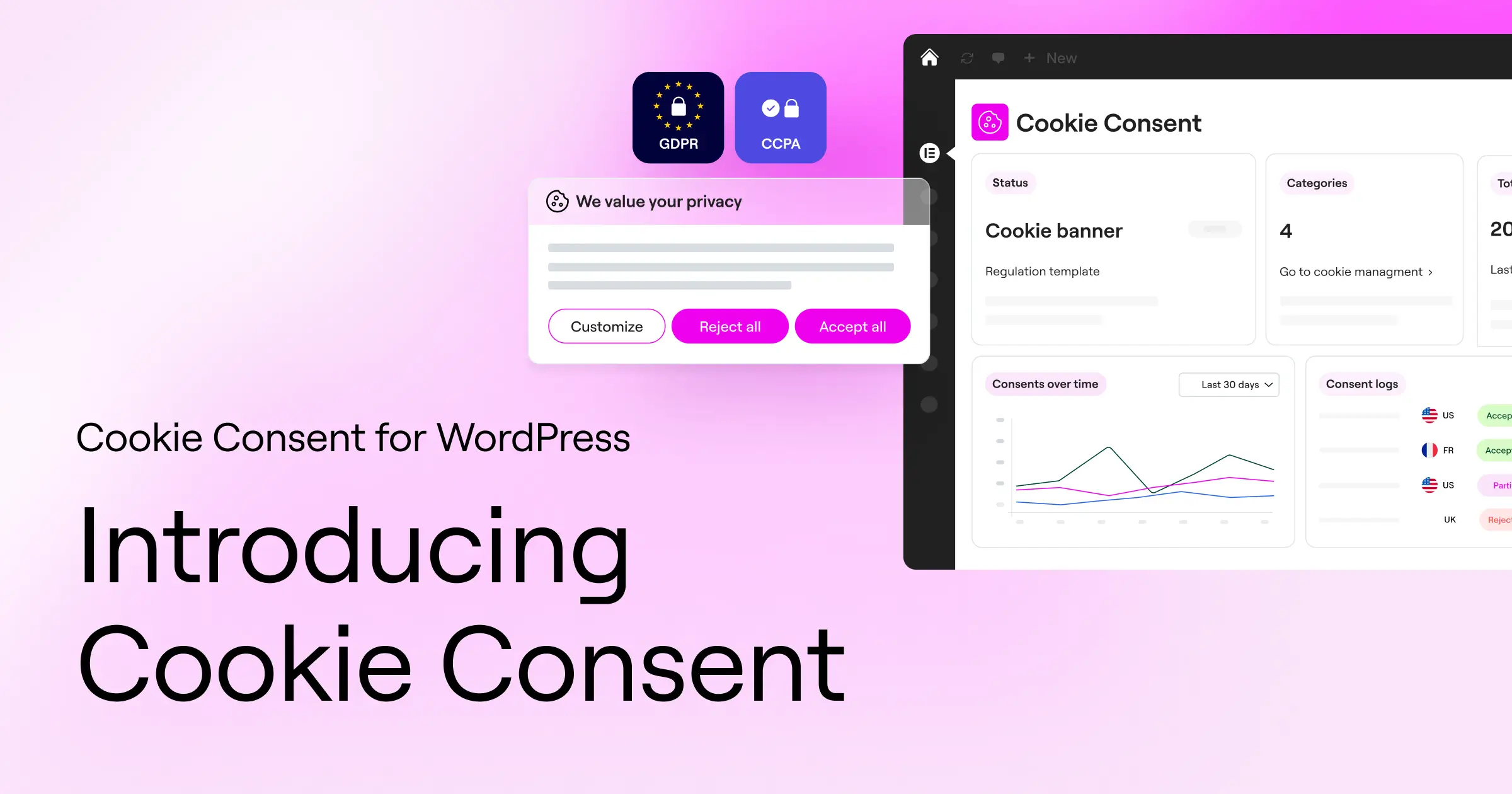
These laws protect the visitor, not the site owner. If someone from Germany browses your US-based store, you need to respect German privacy expectations for that visitor, which means knowing where your traffic comes from. That’s easier with a dedicated capability like Cookie Consent built into your CMS, since it handles geo-targeting and regional rules for you.
If you’re already using Elementor to build your site, keeping compliance controls inside your existing WordPress dashboard means you’re not bouncing between platforms. It keeps your scripts organized and your visitors reassured their data is handled with genuine care.
Cookie Consent Requirements By Country: 10 Key Regions for 2026
To help you navigate this global patchwork, here’s a breakdown of cookie consent rules for ten major countries and regions, so you know what protects your business from regulatory problems.
1. United States (State-by-State Opt-Out Model)
Unlike most of the world, the US has no single federal cookie law. States set their own rules, led by the California Consumer Privacy Act (CCPA) and its update, the CPRA. Virginia, Colorado, Connecticut, Utah, Texas, and Oregon have passed similar laws.
- Consent Style, Mostly opt-out, cookies can load by default, but users need a clear way to stop it.
- Mandatory Links, A footer link reading “Do Not Sell or Share My Personal Information” is required.
- Global Privacy Control, Your site must automatically honor opt-out signals sent by browsers, like GPC.
- Exemptions, Smaller businesses under certain revenue or data thresholds may be exempt, though compliance is still smart.
2. European Union (Strict GDPR and ePrivacy Opt-In)
The EU remains the world’s strictest privacy regulator. Under the General Data Protection Regulation (GDPR) and the ePrivacy Directive, you can’t drop non-essential cookies on a visitor’s browser until they’ve actively clicked “Accept.”
- Consent Style, Explicit opt-in only. Scrolling, continued browsing, or ignoring the banner doesn’t count as consent.
- Equal Button Weights, Your “Reject All” button must be just as visible as “Accept All” (this trips a lot of people up).
- No Pre-Ticked Boxes, Consent checkboxes stay unchecked by default.
- Granular Choice, Visitors can consent to specific categories, like accepting analytics cookies while blocking marketing ones.
3. United Kingdom (UK GDPR & PECR)
After leaving the EU, the UK kept its privacy rules largely intact through the UK GDPR and the Privacy and Electronic Communications Regulations (PECR), enforced by the Information Commissioner’s Office (ICO). Keep tracking scripts paused until a visitor gives affirmative consent, skip manipulative “dark pattern” designs, and make withdrawing consent easy, through a floating widget or footer link.
4. Canada (PIPEDA & Quebec Law 25)
Canada manages privacy federally through PIPEDA (the Personal Information Protection and Electronic Documents Act). Quebec’s Law 25 modernizes that standard and aligns it closely with the European model, so “implied consent” no longer protects you there, sites need clear, active consent before using cookies that track or profile users. Elsewhere in Canada implied consent is still tolerated, though the trend is toward explicit opt-in.
5. Brazil (LGPD Opt-In Standards)
Brazil’s LGPD (General Data Protection Law) was inspired by the GDPR and applies to any business processing data of people in Brazil, regardless of where you’re based. If your site serves South American or Portuguese-speaking visitors, it deserves attention. Like the EU, it requires explicit, informed consent, clear “Accept” and “Reject” options, and secure consent records for audits.
6. Australia (Privacy Act and Evolving Standards)
Australia has run an opt-out model under the Privacy Act 1988, though rules keep evolving toward international standards. Websites must disclose tracking clearly in an easy-to-read privacy policy, and while strict opt-in isn’t fully mandated yet, regulators recommend giving users meaningful control ahead of upcoming legislation.
7. South Korea (Strict PIPA Opt-In Enforcement)
South Korea enforces some of Asia’s strictest privacy rules under PIPA (Personal Information Protection Act), and its regulator, the PIPC, issues real penalties for tracking users without permission. You need separate, explicit consent for each type of data processing, so marketing cookies can’t be bundled with functional ones, each needs plain-language consent covering what’s collected, why, and for how long.
8. Japan (APPI and Personally Referable Information)
Japan’s APPI (Act on the Protection of Personal Information) places real weight on “Personally Referable Information” (PRI), like cookie identifiers and browsing histories that could be linked to identify someone. If you share such data with a third party for that purpose, confirm they hold the user’s explicit consent, with clear notices and an easy opt-out for Japanese visitors.
9. India (DPDP Act Affirmative Consent)
India’s DPDP Act (Digital Personal Data Protection Act) covers digital data processing within India, plus foreign processing tied to offering goods or services there. Consent must be free, specific, informed, and unambiguous, with a clear notice before collecting data. Withdrawing consent must be just as simple as giving it.
10. Switzerland (nFADP Transparency Requirements)
Switzerland’s updated nFADP (Federal Act on Data Protection) mirrors the GDPR closely despite being outside the EU, with a strong focus on transparency and user rights. You must disclose automated collection of personal data, including cookies and tracking scripts, and while a formal opt-in banner isn’t always required, you still need a clear right to object and a plain-language privacy policy.
Core Pillars of a Valid Consent Banner
Whatever countries your visitors come from, a few principles keep you compliant, honesty, real user control, and skipping the tricks that manipulate people into clicking accept.
- Balance Accept and Reject, Don’t make the “Accept” button huge and bright while hiding “Reject” in tiny grey text or a secondary menu.
- Pause Scripts Until Consent, Don’t load tracking scripts, analytics trackers, or social sharing pixels before the user clicks accept.
- Group Cookies Clearly, Sort your cookies into logical buckets, Strictly Necessary, Functional, Analytical, and Marketing.
- Skip Manipulative Copy, Avoid banner text like “Yes, I love cookies” and “No, I hate smooth website experiences.”
- Add a Withdrawal Option, Include a small floating privacy widget or a footer link so users can change their minds anytime.
If you’re running your site on Elementor, you can put these principles into practice with the native cookie consent tools built into the platform, without relying on clunky external add-ons that can slow down your page load times.
“Meeting global privacy standards is no longer just about avoiding a penalty; it’s about establishing a foundation of respect and trust with your users. A transparent consent process improves the user experience while protecting your brand from shifting legal liabilities.”
– Itamar Haim, Web Compliance Specialist
Choosing the Right Consent Tool for Your Website
Picking a consent tool can feel like a lot. Tools that run directly inside your website platform cut down on third-party script overhead and are simpler to maintain.
The table below gives a dry, factual overview of popular consent management options:

| Tool Name | Primary Platform | Dashboard Location | Key Technical Focus |
|---|---|---|---|
| Cookie Consent | WordPress / Elementor | WordPress Native Dashboard | Zero-external-dashboard setup, GPC & Google Consent Mode v2 support |
| Cookiebot | SaaS / Multi-platform | External Cloud Portal | Automated monthly cloud scanning and script blocking |
| CookieYes | SaaS / Multi-platform | External Cloud Portal | Multilingual cookie banners and basic consent logs |
| Complianz | WordPress Only | WordPress Native Dashboard | Conditional wizard-based compliance documents |
| iubenda | SaaS / Multi-platform | External Cloud Portal | Auto-generated legal policies and consent privacy suites |
| OneTrust | Enterprise SaaS | External Enterprise Portal | Large-scale corporate data governance and compliance audits |
As the table shows, a native option like the Cookie Consent tool from Elementor keeps your compliance workflow inside WordPress, where you’re already working, without a separate account or cloud subscription just to keep your banners current.
Step-by-Step Implementation Guide
Setting up your consent banner doesn’t need to take days. With the right tool, your site can be fully configured in under five minutes.
Step 1: Audit Your Current Cookies
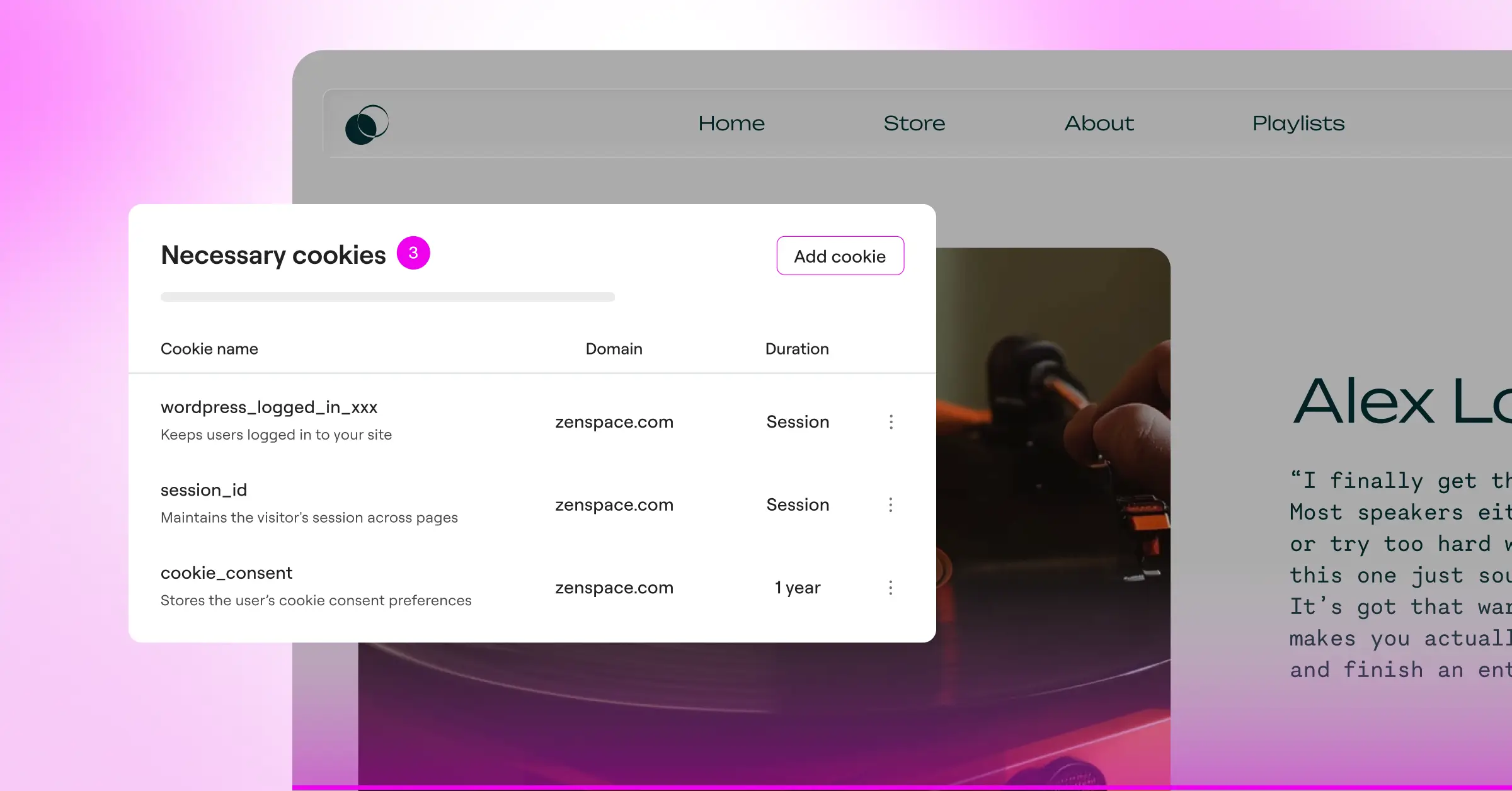
Before you build a banner, know what’s running on your site. Use a free browser tool or scanner to check for hidden tracking scripts, like analytics tags and social pixels, then sort what you find into functional, analytical, and marketing buckets.
Step 2: Install and Turn On Your Consent Tool
If you’re using Elementor’s native cookie consent capability, turn it on from your WordPress dashboard, no code to copy into your theme header, script loading happens automatically.
Step 3: Define Your Regional Rules
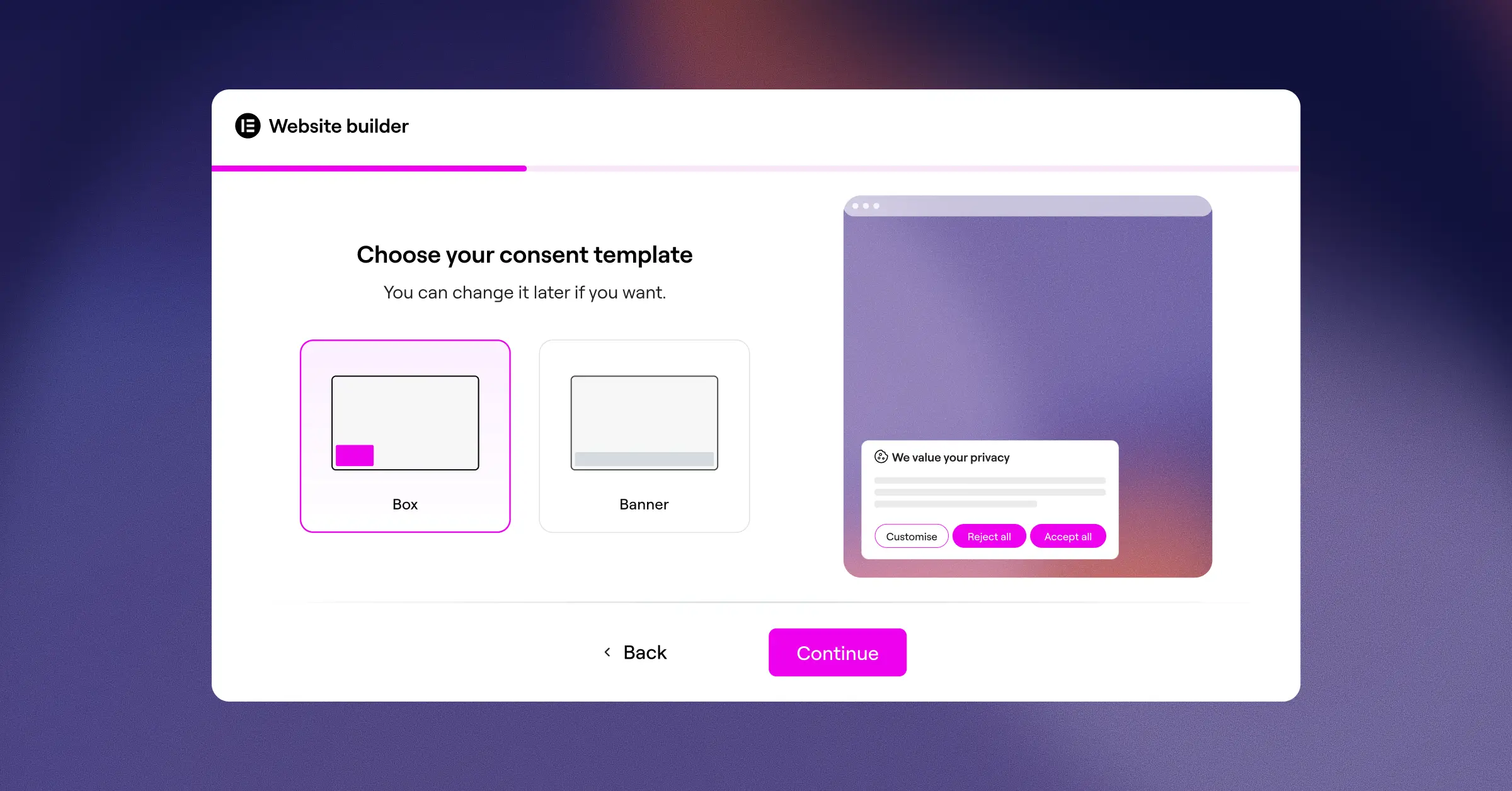
Decide how your banner behaves based on where visitors come from. Set up geo-targeting for a strict opt-in banner to European, British, and Brazilian visitors, and a lighter opt-out notice to US visitors, no manual juggling needed.
Step 4: Design the Banner to Match Your Brand
A compliance banner doesn’t have to feel generic. Customize colors, typography, and button layout to fit your brand, just keep buttons easy to read and accessible, font size and color contrast matter for visitors with visual impairments.
Step 5: Connect Google Consent Mode v2
If you use Google Ads or Analytics, turn on Google Consent Mode v2, which passes your users’ consent choices to Google’s systems. When a visitor declines cookies, Google uses anonymous modeling instead of storing files, so you keep some analytical insight without violating consent.
Step 6: Test Your Settings
Before you call it done, open a private browsing window (or a VPN for a different region) and check that non-essential scripts genuinely don’t fire until you click “Accept.” Catching an issue now beats catching it after a complaint.
Best Practices for Maintaining Audit Readiness
Getting your consent banner set up is just the beginning. Privacy regulations change frequently, and every new marketing tool or analytics script can shift your compliance picture. Staying audit-ready comes down to a few good habits in your regular site maintenance routine:
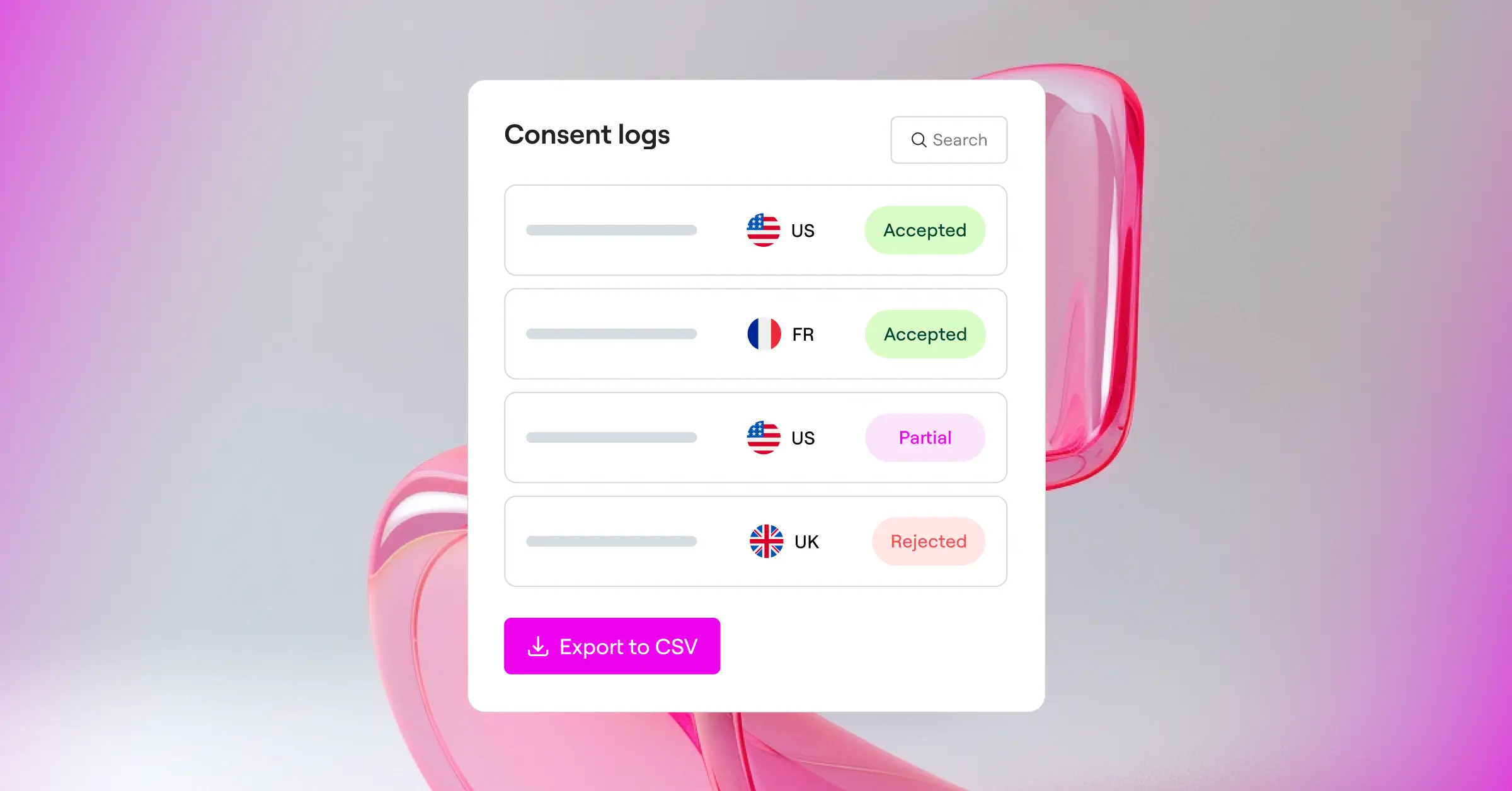
- Keep Clear Consent Logs, Record user consent tokens, dates, and choices in a secure, organized way so you can prove compliance if a regulator ever asks.
- Schedule Monthly Scans, New marketing tools can quietly drop cookies without your knowledge. Regular scanning catches rogue scripts before they cause trouble.
- Sync Your Legal Documents, Keep your consent banner and your privacy policy in step, updating both when you add a new advertising partner.
- Honor Global Privacy Signals, Keep your consent tool listening for browser signals like Global Privacy Control (GPC), so privacy-conscious users can set preferences once.
- Watch Speed and Accessibility, Heavy compliance suites can slow your site down. Lightweight, WordPress-native cookie consent tools keep your page performance where it needs to be.
Stay on top of these habits and global cookie compliance becomes just another part of running a well-maintained site, protecting your brand and your audience’s trust.
Frequently Asked Questions
What happens if my website does not comply with global cookie requirements?
Failing to comply with global privacy rules can mean warning letters, audit requests, and significant financial penalties. EU regulators can fine businesses up to 4% of global annual turnover for serious GDPR violations. Beyond the financial risk, running tracking scripts without consent damages your reputation and erodes visitor trust.
Can I just block users who do not agree to my cookie policy?
No, this is known as a “cookie wall,” and it’s largely prohibited under laws like the GDPR. You can’t deny access to your site’s standard content because a visitor declines marketing or analytics cookies. Access must stay separate from consent, except where a cookie is strictly necessary to deliver a service the user requested.
Is Google Consent Mode v2 mandatory for my website?
If your site serves EU or UK visitors and you use Google Ads, Analytics, or Tag Manager, then yes, Google Consent Mode v2 is required. It verifies consent was properly obtained before recording analytics data. Without it, you’ll lose the ability to measure conversions and optimize ad campaigns in European markets.
What is the difference between a cookie consent banner and a privacy policy?
A cookie consent banner lets visitors choose which tracking scripts to allow while browsing your site. A privacy policy is the full legal document explaining how your company collects, stores, shares, and protects personal data. Think of the banner as the front-line interaction and the policy as the reference document behind it.
Are functional cookies different from marketing cookies?
Yes. Functional cookies remember choices like language preferences, UI settings, or cart items, and improve the experience without tracking behavior across sites. Marketing cookies track users across multiple sites to deliver targeted ads. You’ll almost always need explicit opt-in for marketing cookies, while functional cookies sometimes fall under lighter rules depending on the country.
How do I handle cookie consent in multilingual websites?
If your site is available in multiple languages, your consent banner must match the language your visitor is using. Showing a German visitor an English banner isn’t just unhelpful, it’s a transparency failure under GDPR. A flexible tool with built-in multilingual support, like the Cookie Consent capability in Elementor, makes this easy without maintaining separate setups per language.
Do small blog owners need to worry about global cookie consent?
Yes, any website collecting personal data falls under privacy law, regardless of size. Even a small blog using analytics or social sharing buttons is likely setting tracking cookies. A lightweight consent banner is a simple way to respect your audience and protect your blog from future legal changes.
Will adding a cookie consent banner slow down my website?
Some third-party tools load heavy JavaScript from remote servers, adding real page load time. A native capability like the Cookie Consent tool built for WordPress keeps scripts light and local, so you get full compliance without sacrificing the page speed visitors and search engines expect.






