We’ve all been there. You’re building a beautiful website, and then you remember privacy laws. Suddenly you’re weighing cookies and consent, and it’s easy to feel overwhelmed by the jargon. Don’t worry, though, this is simpler than it sounds.
In 2026, privacy isn’t just a legal checkbox. It’s part of building trust with visitors. A clear cookie preferences button is one of the most respectful things you can offer your audience, and the right tool can have it live in minutes.
Let’s walk through the best tools for adding that button, starting with the easiest option for WordPress owners.
Key Takeaways
- Native integration matters: keeping your consent tool inside WordPress saves resources and eases management.
- Google Consent Mode v2 is essential: if you serve European visitors and use Google Analytics or Ads, your tool needs to support it.
- Design control keeps visitors happy: your cookie button should match your brand, not look like an afterthought.
- Geo-targeting protects conversions: show different banners to European visitors than to those in relaxed-law regions, keeping things clean for everyone.
Why the Cookie Preferences Button Is Crucial in 2026
Privacy regulations have changed how we build websites. Years ago, a banner saying “we use cookies” was enough; today, laws like GDPR and CCPA require real consent, and visitors need to opt in, opt out, and change their minds anytime. That’s where the cookie preferences button comes in, usually tucked in a corner or the footer, letting visitors open their privacy settings and adjust what’s tracking them.
“Giving your users a clear, accessible way to manage their privacy choices is no longer optional. A visible cookie preferences button is the foundation of modern web compliance and visitor trust.”– Itamar Haim, Web Compliance Specialist
Here are the best tools for adding this button, easily and with confidence.
1. Cookie Consent (by Elementor)
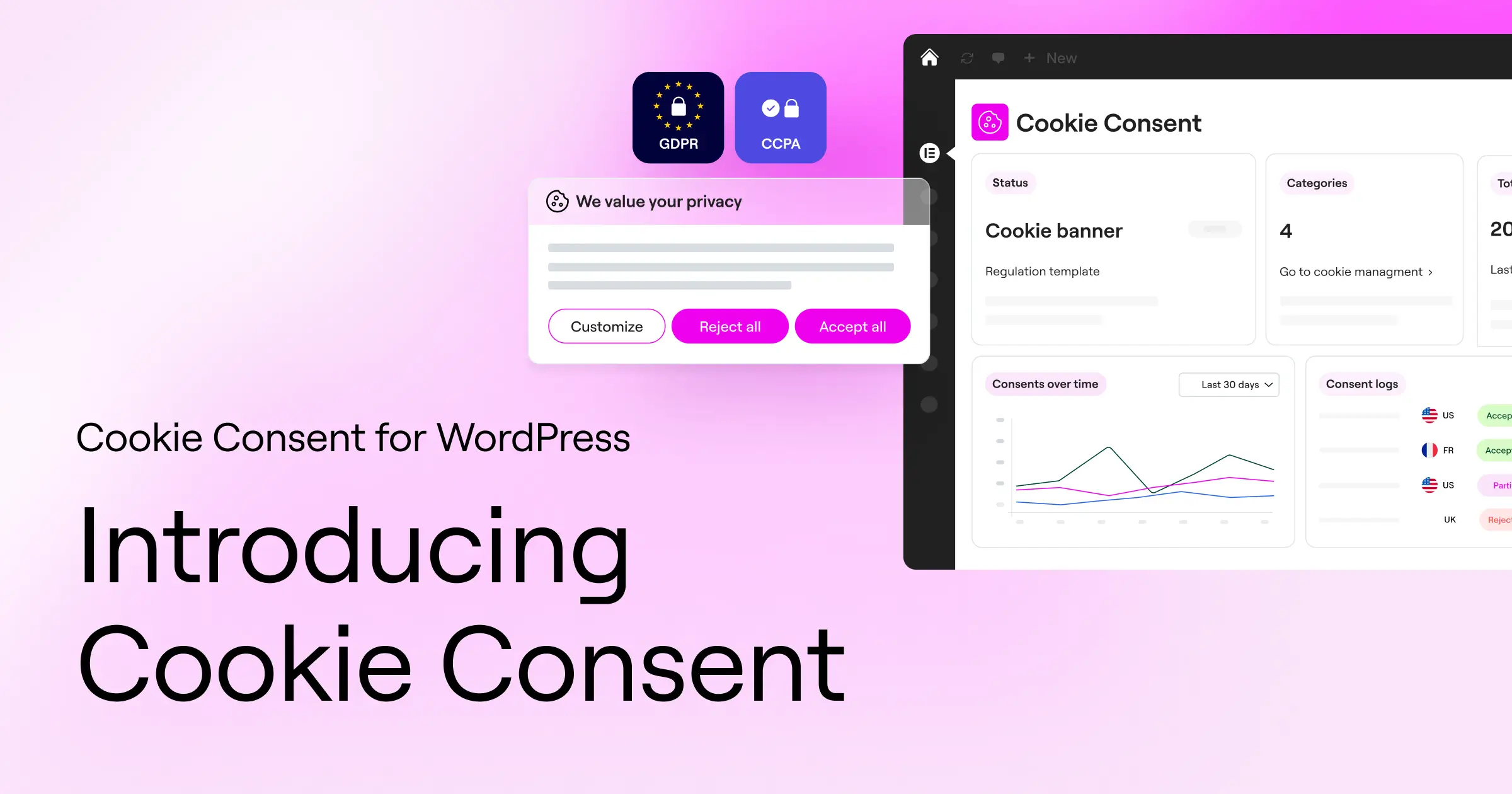
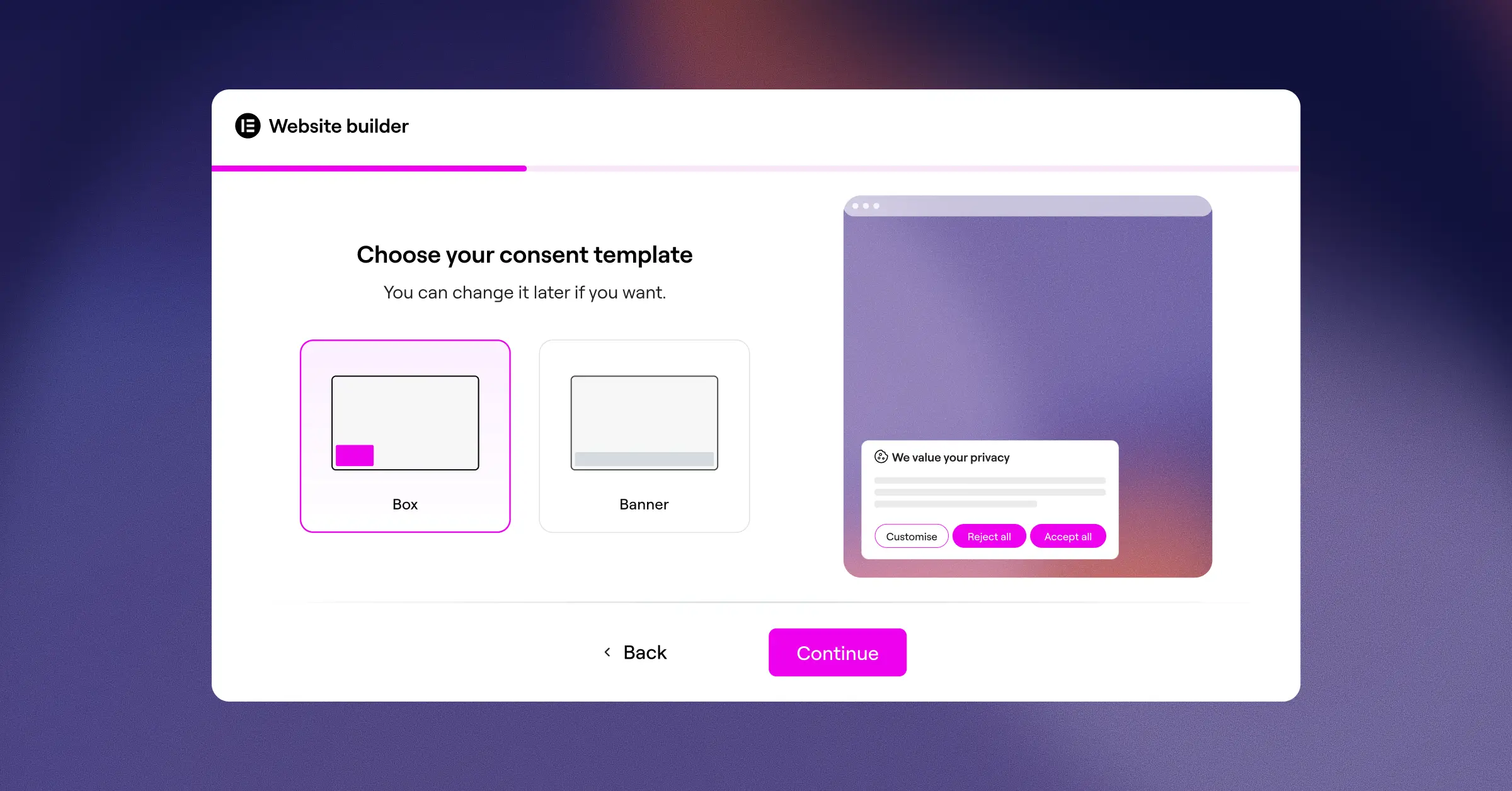
If you want a native way to manage privacy settings without leaving your WordPress dashboard, Cookie Consent is the place to start. Built as an integrated capability within Elementor, it lets you design, deploy, and manage your cookie preferences button without external platforms or third-party code, keeping your site compliant with major privacy laws.
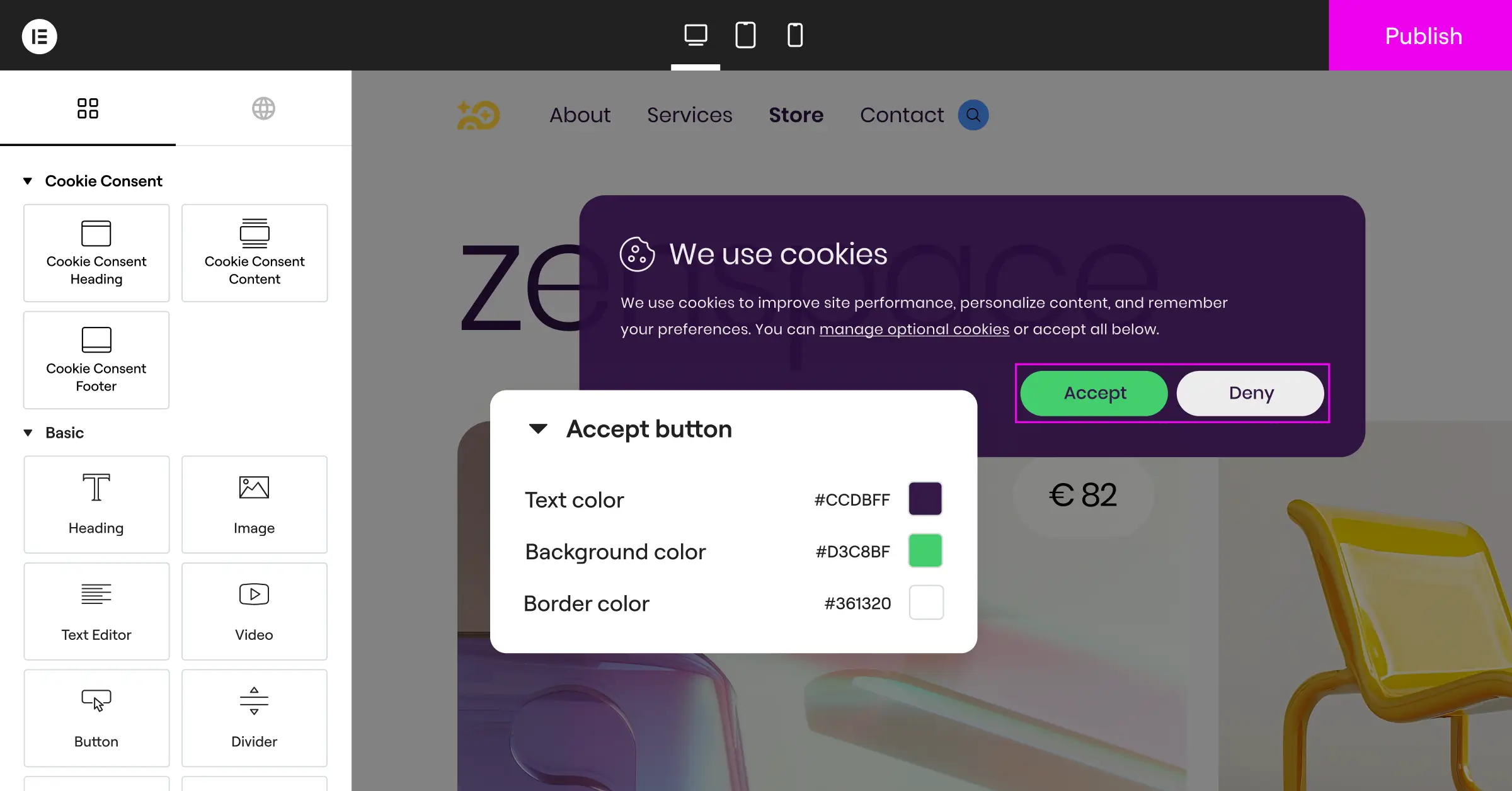
Setup takes under five minutes: choose where the banner and button appear, customize fonts and colors to match your brand, and configure everything inside WordPress. Built into the Elementor ecosystem, it won’t slow your page speed. It’s included in Elementor One, with a free tier to get started.
Key Features
- Builds custom consent banners from your design system and fonts.
- Tracks consent history with built-in logs for audits.
- Connects with Google Consent Mode v2 to keep ads compliant.
- Pulls regional visitor data for geo-targeted banners.
- Scans your site to identify, categorize, and block cookies before consent.
- Generates compliant privacy policies with a built-in generator.
Pros
- Completely native to WordPress.
- Easy five-minute setup.
- Exceptional design control that matches your theme.
- Supports Global Privacy Control (GPC) and Google Consent Mode v2.
- Free tier available, included in Elementor One.
Cons
- Best suited for users in the Elementor ecosystem.
- Advanced layouts take some editor familiarity.
Verdict
For WordPress owners who value speed, design, and simplicity, Cookie Consent is the top choice. Learn more about the full Cookie Consent capability on Elementor.com.
2. Cookiebot
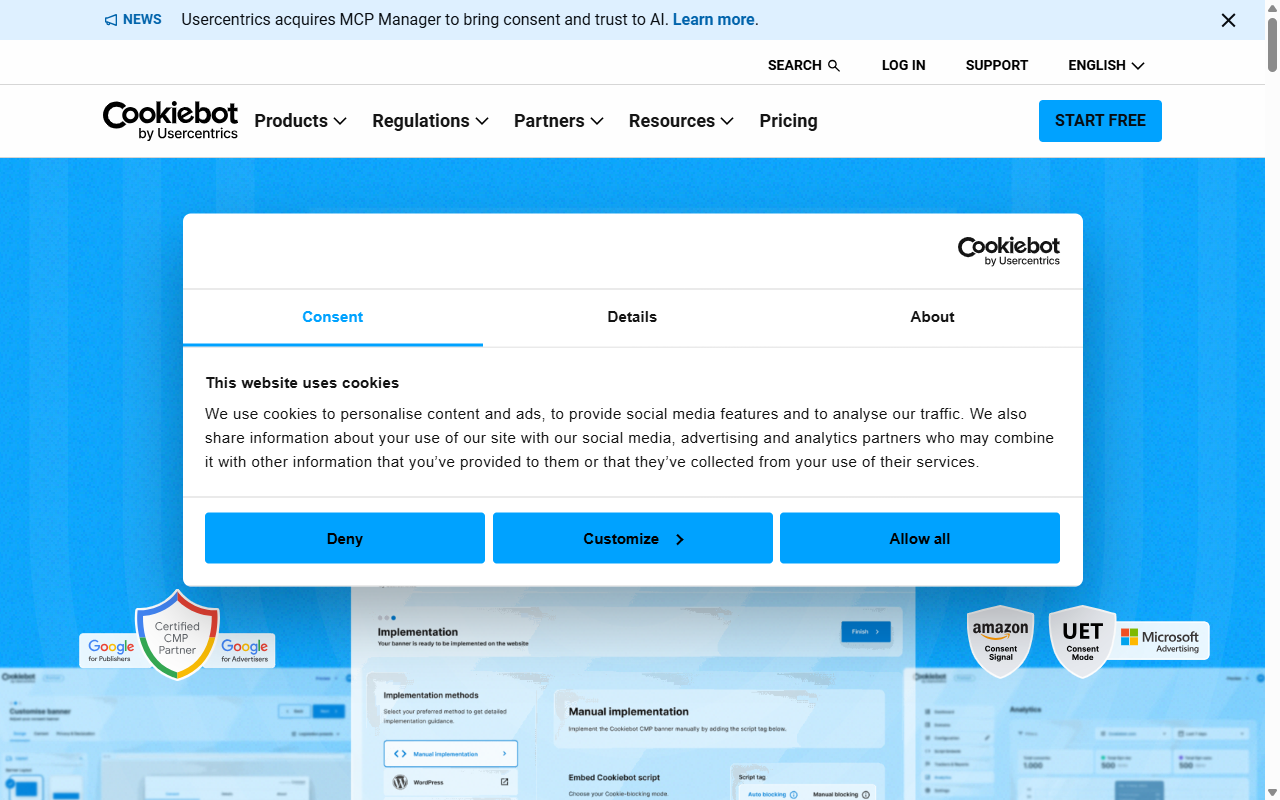
Cookiebot is an established, cloud-based consent platform that works across many web platforms. It scans your site monthly to find cookies being dropped, categorizes them automatically, and updates your cookie declaration page, adding the preferences button through a simple JavaScript snippet.
Key Features
- Scans your site monthly for new cookies and scripts.
- Blocks third-party trackers until the user grants permission.
- Saves consent data securely in the cloud for audits.
- Displays multilingual banners based on browser settings.
Pros
- Highly automated cookie scanning and classification.
- Works on WordPress and other platforms.
- Strong support for international compliance laws.
Cons
- Requires managing settings on an external dashboard.
Verdict
Cookiebot suits a multi-platform site or a hands-off approach to monthly scanning, managed outside WordPress.
3. CookieYes
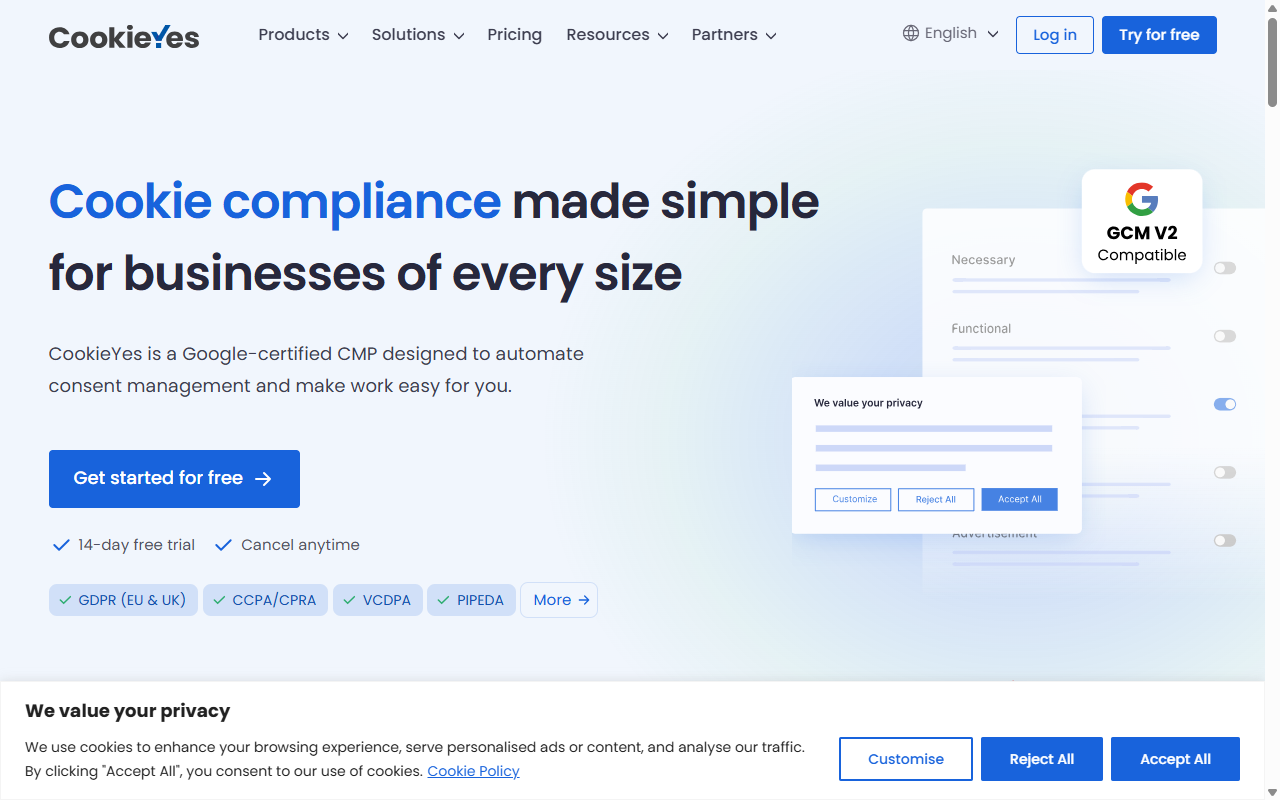
CookieYes is a cloud-based compliance platform focused on simplicity, popular for its clean interface and quick deployment. It handles GDPR and CCPA requirements, shows banners by visitor location, and integrates with most major CMS platforms.
Key Features
- Designs consent widgets that match your site colors and styles.
- Records visitor consents in a central log for audits.
- Handles Google Consent Mode v2 integration.
- Translates banners automatically into dozens of languages.
Pros
- Very user-friendly dashboard.
- Good customization for the consent widget.
- Excellent multi-language support.
Cons
- Requires switching to their external platform.
- Entry-level plan features are somewhat limited.
Verdict
CookieYes suits anyone who wants a simple, cloud-based platform for their cookie button and consent logs.
4. Complianz
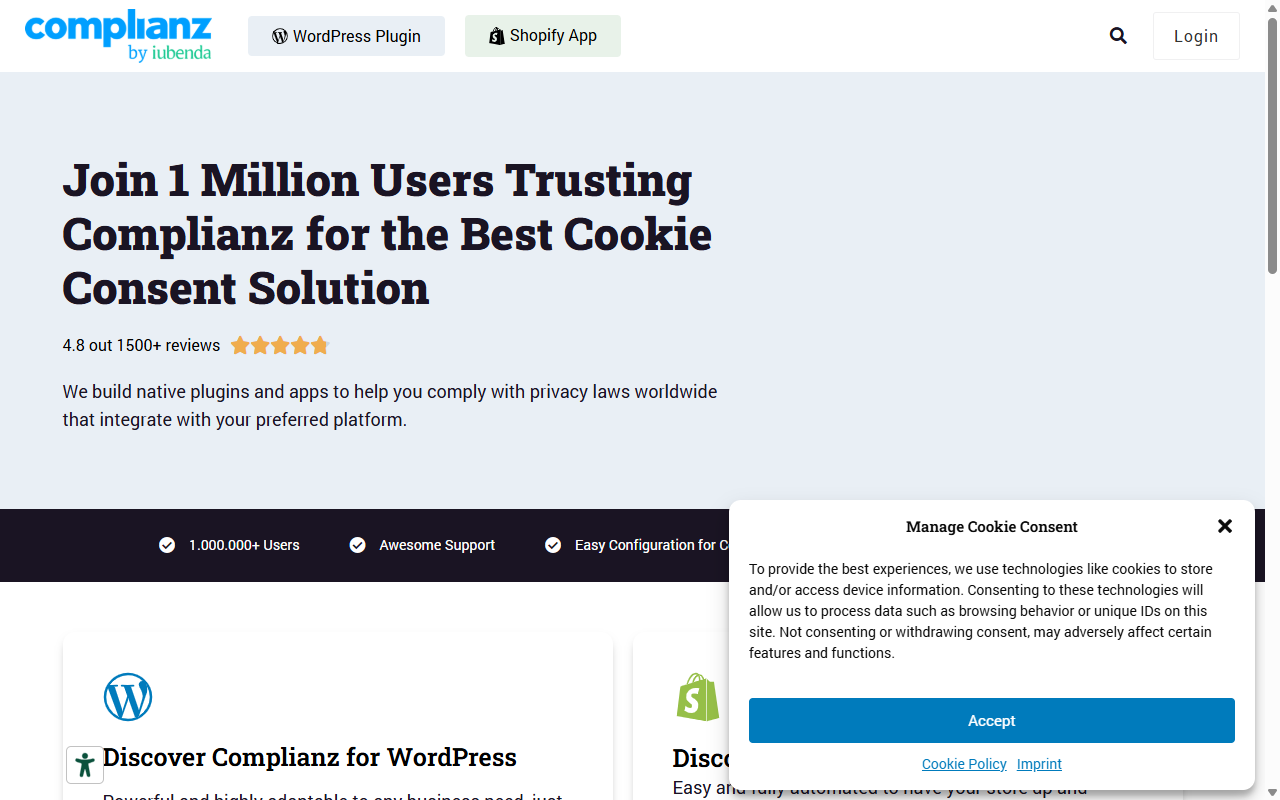
Complianz is a privacy suite built for WordPress that takes a wizard-based approach, asking about your site and data practices before generating your banners and cookie button. (It’s the kind of guided setup that makes you feel like you’ve got an expert beside you.) It also blocks scripts from YouTube, Google Maps, and social tools until users accept.
Key Features
- Configures your privacy setup through a step-by-step wizard.
- Integrates with WordPress tools to block unauthorized cookies.
- Generates legal documents like cookie policies and privacy statements.
- Detects visitor location for regional disclosures.
Pros
- Wizard-based setup is educational and genuinely helpful.
- Strong WordPress-native integration.
- Generates actual legal policy text.
Cons
- The interface can feel overwhelming with many options.
- The wizard takes longer than simpler tools.
Verdict
Complianz suits site owners who want a detailed, wizard-guided setup built inside WordPress.
5. iubenda
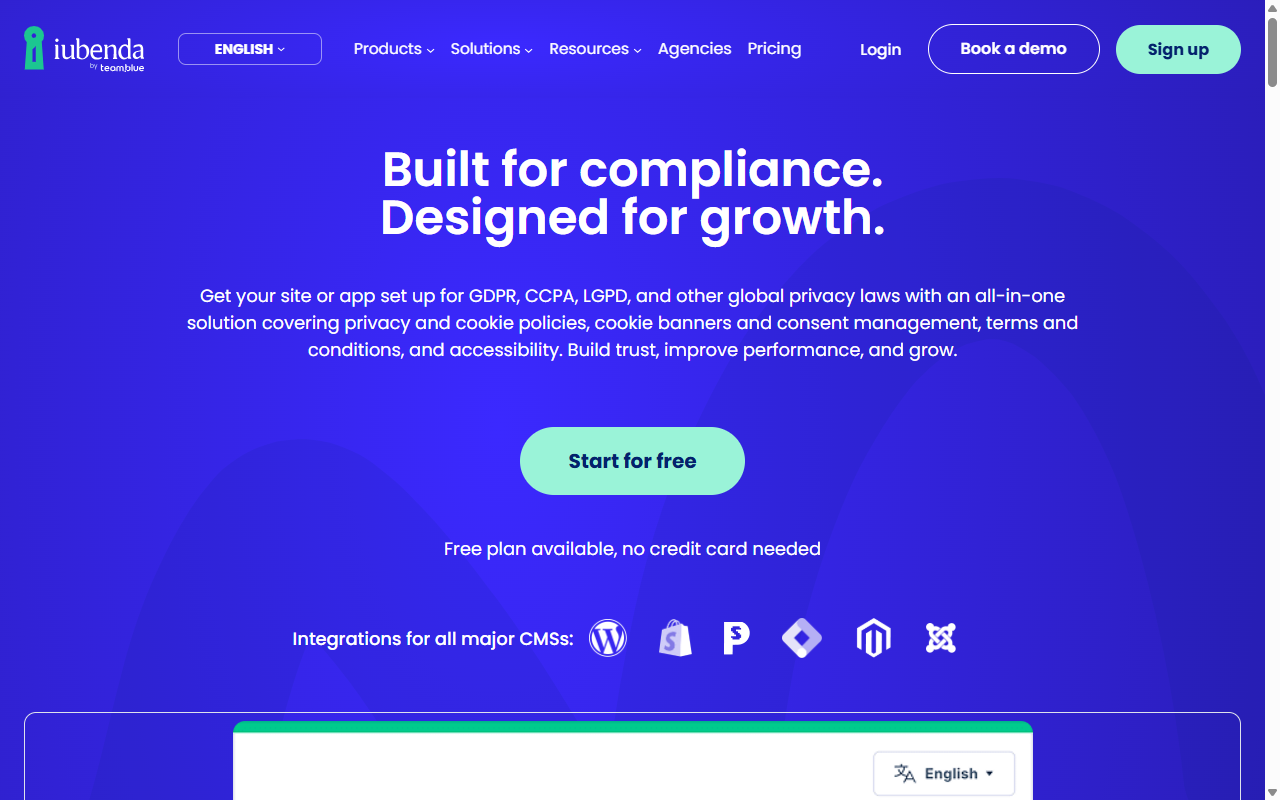
iubenda is a broad compliance platform handling privacy policies, terms, and cookie consent in one place, adapted to international laws, making it common for e-commerce and global businesses. Its customizable preferences widget lets you adjust the positioning, colors, and behavior of your button.
Key Features
- Synchronizes privacy policies and cookie banners automatically as laws change.
- Collects privacy choices across multiple devices.
- Integrates with major tag management systems.
- Records detailed consent data for regulatory audits.
Pros
- Professional coverage well beyond cookie consent.
- Auto-updating policies keep pace with legal changes.
- Very strong for complex, international businesses.
Cons
- Pricing can add up for sites with multiple policies.
- Setup is more technical than standard options.
Verdict
For an all-in-one legal suite covering terms, privacy, and cookie consent, iubenda is a strong contender.
6. OneTrust
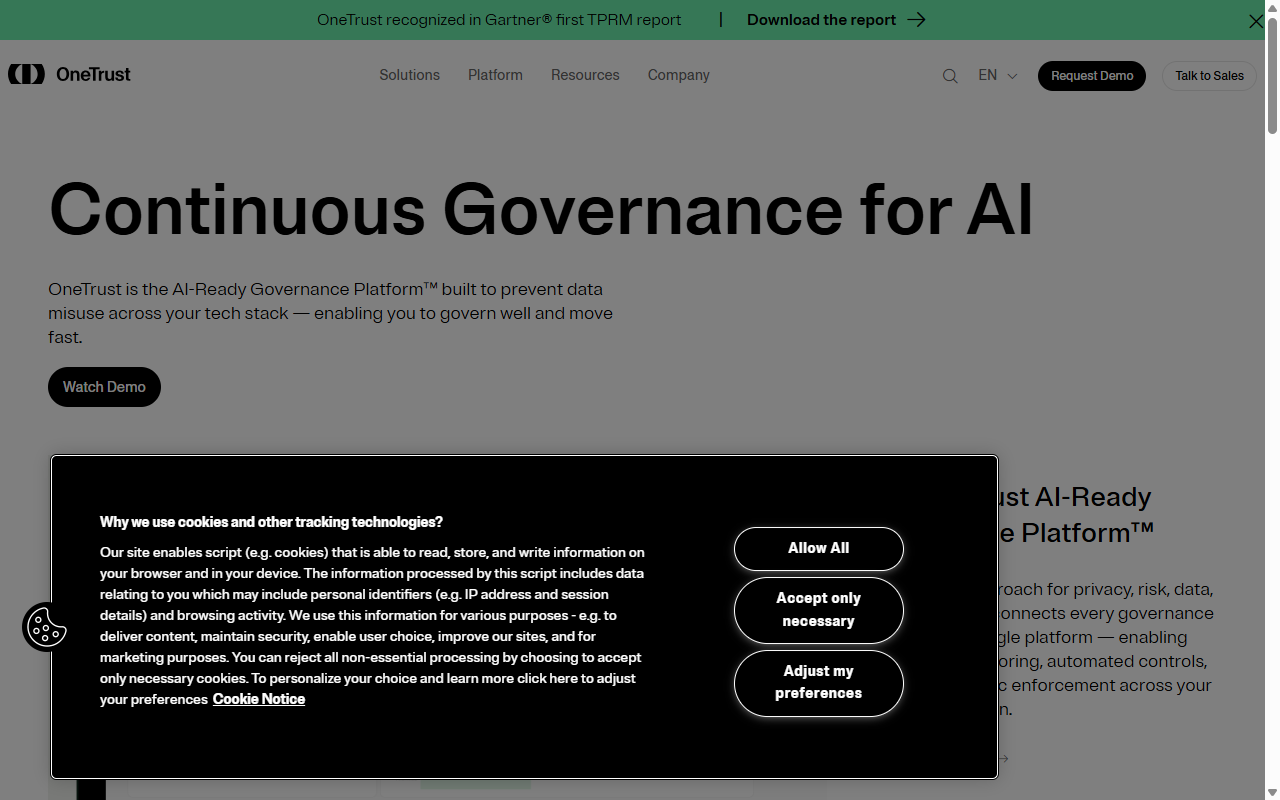
OneTrust is an enterprise-level privacy and data governance platform built for large organizations managing significant user data across regions, with deep integration into internal data systems. Its cookie consent module lets you build custom, accessible preferences buttons connected to complex data mapping systems.
Key Features
- Maps complex organizational data flows to track user information.
- Manages enterprise-scale consent across apps, sites, and offline systems.
- Delivers detailed reporting and analytics on consent trends.
- Supports accessibility compliance (WCAG) for banner widgets.
Pros
- Industry-standard security and compliance for large enterprises.
- Strong reporting and audit-trail capability.
- Highly customizable rules for global jurisdictions.
Cons
- Pricing puts it out of reach for most small businesses.
- A steep learning curve requiring technical expertise.
Verdict
OneTrust suits enterprise platforms needing deep corporate privacy infrastructure and the budget to match.
7. Termly
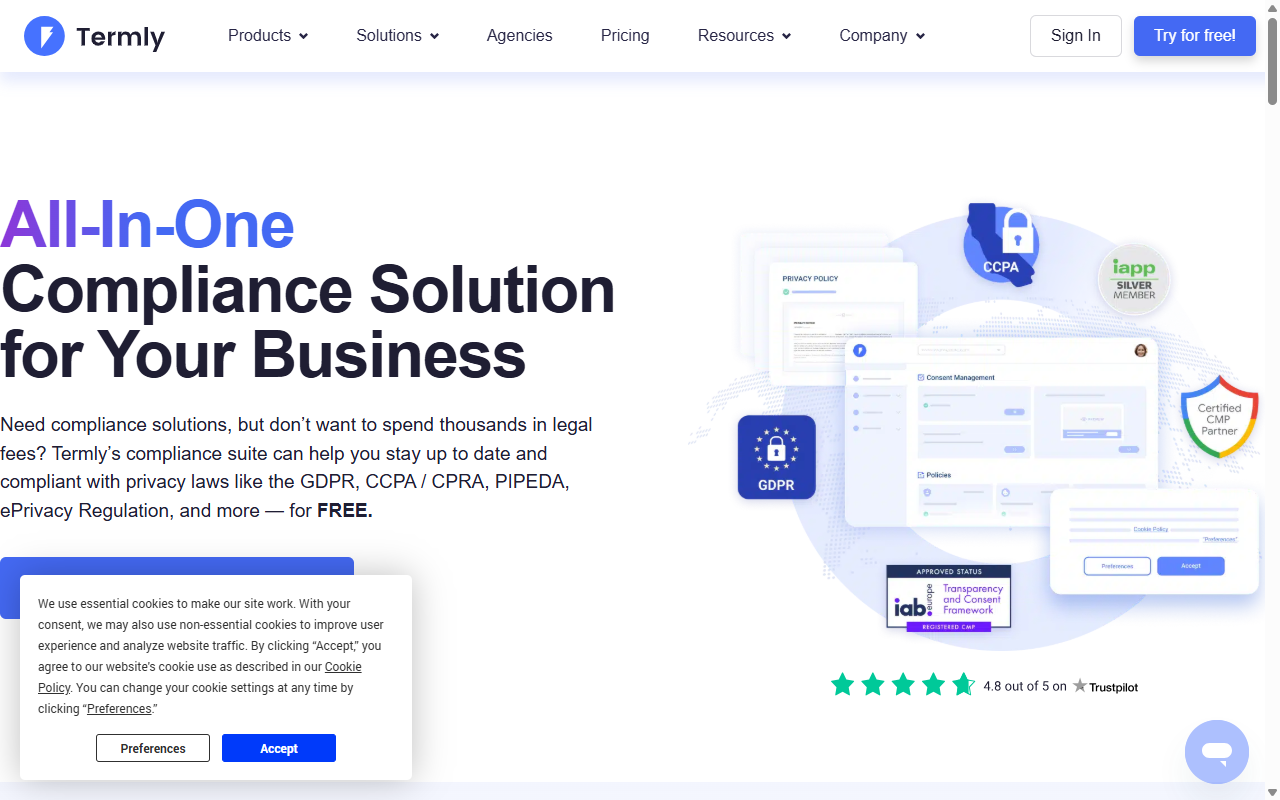
Termly is a compliance suite built for small businesses, offering a straightforward way to generate privacy policies, terms of service, and cookie consent banners without a legal background. Its dashboard lets you customize your preference button, scan your site for trackers, and stay compliant with GDPR and CCPA.
Key Features
- Generates attorney-crafted policies for your specific business activities.
- Categorizes cookies automatically into essential, marketing, and analytical types.
- Saves and exports consent logs whenever you need them.
- Updates your policies automatically as regulations change.
Pros
- Very simple, user-friendly interface.
- Attorney-approved templates reassure non-lawyers.
- Affordable for small business budgets.
Cons
- Customization for the preference button is fairly basic.
- Doesn’t run natively inside WordPress.
Verdict
Termly suits small businesses wanting legal protection and a basic cookie button without complex developer settings.
8. Osano
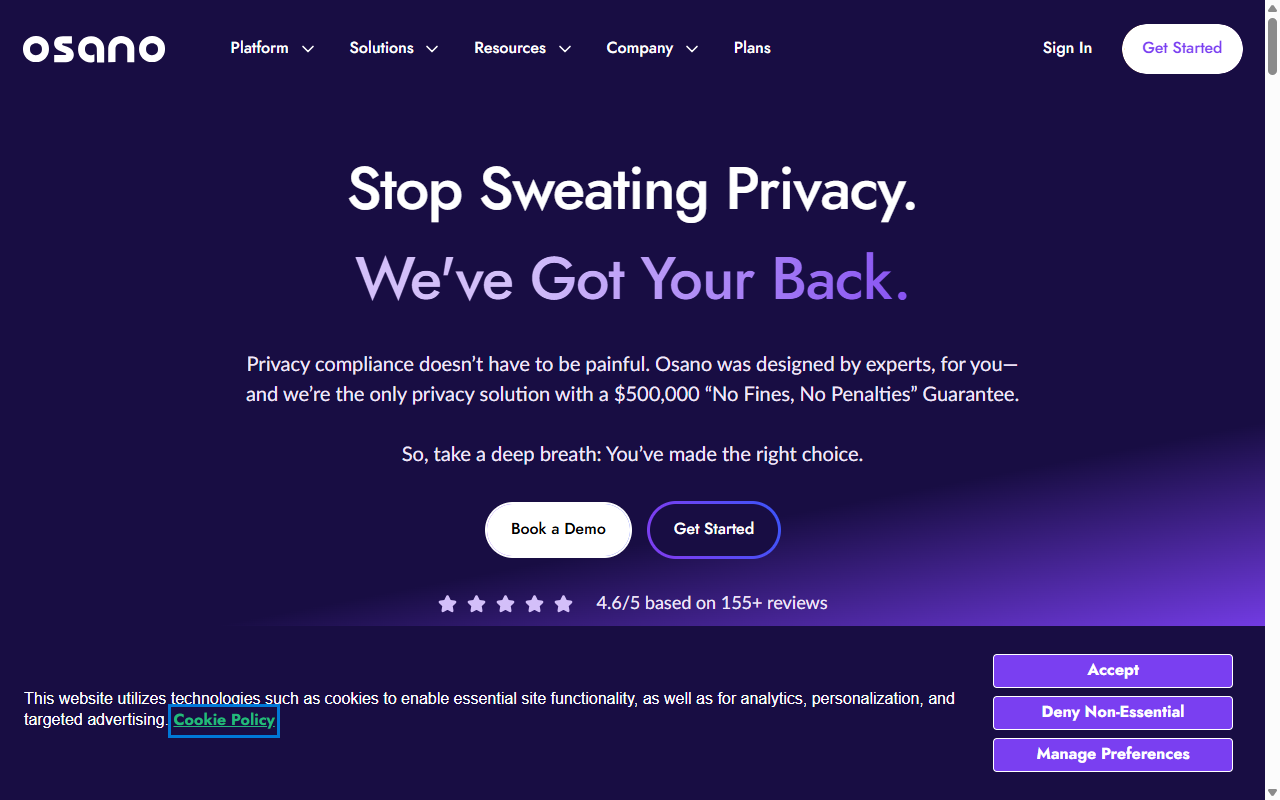
Osano is a B-corp certified privacy platform focused on trust and simplicity, known for its “no-fine pledge” offering financial backing if you use the platform correctly and still face compliance fines. Its consent tool features a fast-loading drawer and preferences button that works well across desktop and mobile.
Key Features
- Evaluates vendor privacy practices to flag risky scripts.
- Blocks unrecognized scripts automatically until consent is confirmed.
- Delivers fast load times through a global content network.
- Covers local laws in over forty countries.
Pros
- The compliance pledge offers rare peace of mind.
- Intuitive interface and analytics dashboard.
- Fast and reliable performance.
Cons
- Premium plans cost more than standard options.
- Requires a third-party dashboard for settings.
Verdict
Osano suits mid-sized businesses wanting reliable compliance protection and good visitor analytics.
9. Usercentrics
Usercentrics is a European-based consent management platform specializing in strict GDPR, CCPA, and DMA requirements, widely used by agencies for its powerful API and script blocking. Its customizable preferences widget integrates into your site’s layout and styling.
Key Features
- Blocks trackers through direct integration with tag management tools.
- Supports a large database of pre-categorized third-party services.
- Optimizes opt-in rates through A/B testing.
- Aligns closely with Google Consent Mode v2.
Pros
- Excellent script management and control.
- A/B testing helps find layouts with better opt-in rates.
- Strong developer documentation and API support.
Cons
- The configuration process is fairly technical.
- Settings require an external cloud platform.
Verdict
For agencies wanting to A/B test consent banners and optimize opt-in rates, Usercentrics is a powerful option.
10. Custom Code (HTML, CSS, & JavaScript)
For developers who want full control over scripts and page weight, writing a custom cookie preferences button is a valid path: build your own banner and trigger button with HTML and CSS, then use JavaScript to manage cookie storage. (It’s simpler than it sounds if you’ve got a basic grasp of coding.) It takes manual work, but your site ends up with zero external dependencies.
Key Features
- Controls every line of code running on your site.
- Saves preferences directly to the visitor’s local storage.
- Triggers consent preference windows with custom JavaScript.
- Eliminates external script overhead for maximum performance.
Pros
- Zero recurring subscription costs.
- The ultimate level of design flexibility.
- No external trackers or slow scripts.
Cons
- Requires manual updates whenever privacy laws change.
- No automatic cookie scanning or compliance logging.
- Requires real development skill to build and maintain safely.
Verdict
The custom code route suits developers wanting pure performance who don’t mind maintaining compliance rules by hand.
Consent Management Tools Comparison Table
Here’s how the top options compare on workflow and budget:
| Tool / Capability | WordPress Native? | Consent Mode v2? | Setup Difficulty | Best Suited For |
|---|---|---|---|---|
| Cookie Consent (by Elementor) | Yes | Yes | Very Easy (Under 5 Mins) | WordPress site owners wanting native ease |
| Cookiebot | No (Plugin integration available) | Yes | Medium | Multi-platform sites wanting automated scans |
| CookieYes | No (Plugin integration available) | Yes | Easy | Small to mid-sized multi-platform sites |
| Complianz | Yes | Yes | Medium | Users wanting wizard-based compliance setup |
| iubenda | No (Plugin integration available) | Yes | Medium | International sites needing full legal suites |
| OneTrust | No | Yes | Hard | Large enterprises with complex data structures |
| Termly | No | Yes | Easy | Small businesses needing quick legal policies |
| Osano | No | Yes | Easy | Growing businesses wanting financial protection |
| Usercentrics | No | Yes | Hard | Agencies looking to A/B test banner styles |
| Custom Code | Yes (Self-coded) | Manual configuration | Very Hard | Developers wanting zero external scripts |
How to Choose the Right Tool for Your Website
With so many options, picking the right tool can feel tricky at first. But it comes down to three practical questions.
1. Where do you want to manage your settings?
If you love having all your tools in one place, a WordPress-native solution is the answer: one dashboard for your banner, cookie logs, and site styles, with no copying header codes between sites. Tools like Elementor’s Cookie Consent or Complianz keep everything local.
2. Do you serve European or UK traffic?
If you serve EU or UK traffic, requirements are stricter. You’ll need a tool that blocks scripts before the user clicks “Accept,” supports Google Consent Mode v2 for Analytics or Ads, and ideally offers geo-targeting so you’re not showing popups to visitors from more relaxed regions.
3. How much design control do you need?
Many external widgets look out of place on a custom-designed site. If your brand matters to you (and it should!), you’ll want a tool that lets you customize typography, colors, and button placement. Native editor support makes that painless, pulling directly from your existing global styles.
Here’s how to configure a cookie banner and preferences button in under five minutes:
- Go to your WordPress dashboard and open your compliance settings.
- Activate the Cookie Consent capability to generate your default banner.
- Run a quick cookie scan to categorize the cookies your site uses.
- Customize the design to match your brand fonts and colors.
- Publish your banner and place the button in your footer or corner menu.

Frequently Asked Questions
What is a cookie preferences button?
A cookie preferences button is a visible widget that lets visitors manage or withdraw consent for cookie types like marketing, analytics, or functional cookies.
Why do I need a cookie preferences button on my site?
GDPR and CCPA require users can withdraw consent as easily as they gave it. A permanent button keeps you compliant by letting visitors change their minds.
What happens if I don’t use a cookie consent tool?
Collecting user data without proper consent can lead to compliance audits and fines from regulators, and it can hurt your audience’s trust in you.
Can a cookie consent tool slow down my website?
Heavy external scripts can add weight and delay page loads. A lightweight option like Cookie Consent keeps script calls to a minimum.
What is Google Consent Mode v2?
Google Consent Mode v2 communicates your users’ consent status directly to Google tools like Analytics and Ads. It’s required for sites serving EEA traffic.
Do I have to display the consent banner to every visitor?
No. With geo-targeting, show the banner only to visitors from regions with strict privacy laws, like the EU or California.
Can I design the cookie button to match my website brand?
Yes, many tools let you customize your button style. A native tool like Cookie Consent gives full design freedom to match your fonts, colors, and brand.
Is a privacy policy the same as cookie consent?
No. A privacy policy explains how you collect, use, and share visitor data. Cookie consent is the process of getting visitors’ permission to drop tracking scripts on their browsers. You’ll need both.