
Managing privacy compliance on your WordPress site can feel like a puzzle that keeps changing shape. For years, creators have leaned on platforms like iubenda for privacy policies and cookie banners, but as laws shift, more people want something built right into the dashboard they already use.
So we rounded up the best privacy tools on the market, whatever your budget or workflow. Whether you run a single blog or a client portfolio, there’s a good fit here. Let’s walk through what makes each one worth a look.
Key Takeaways
- WordPress Integration Matters – A native tool keeps your dashboard clean, no extra logins.
- Google Consent Mode v2 – Any 2026 pick needs to support this for Google Analytics or Ads.
- Speed is Key – Privacy scripts should load fast without hurting performance scores.
- No Single Winner – The right pick depends on your site size, from a blog to a large agency.
Why Consider an Alternative to iubenda in 2026?
iubenda is still a thorough compliance platform, but the market has moved on, and plenty of creators are exploring other options. One factor is workflow: iubenda runs as an external SaaS platform, so you configure banners in a separate dashboard, then paste scripts into your site, which slows you down across several client sites. Newer tools keep everything inside WordPress instead.
Cost matters too. Multiple domains under layered subscriptions add up fast for agencies, so many want flat-rate pricing or a bundled tool. And since site speed affects rankings, heavy external scripts have pushed creators toward lighter, native options.
What to Look For in a Great Privacy Solution
Before the top picks, here’s what actually makes a compliance tool useful:
- Consent Logs for Audit Trails – Proof of when and how a visitor gave consent.
- Automatic Cookie Scanning – Regularly finds, categorizes, and blocks cookies before consent.
- Geo-Targeting Capabilities – Shows banners only to visitors from specific regions.
- Google Consent Mode v2 Support – Non-negotiable if you use Google Ads or Analytics for European traffic.
- Customization Options – Design banners that match your brand without writing custom CSS.
The 10 Best Iubenda Alternatives for WordPress
Here’s a look at the best alternatives, covering what each one does and who it suits.
1. Cookie Consent
If you build with Elementor, Cookie Consent is a genuinely solid native option built right into the WordPress dashboard, handling your whole privacy setup where you already build pages. Setup runs through a 3-step wizard, under five minutes, inside the Elementor ecosystem.
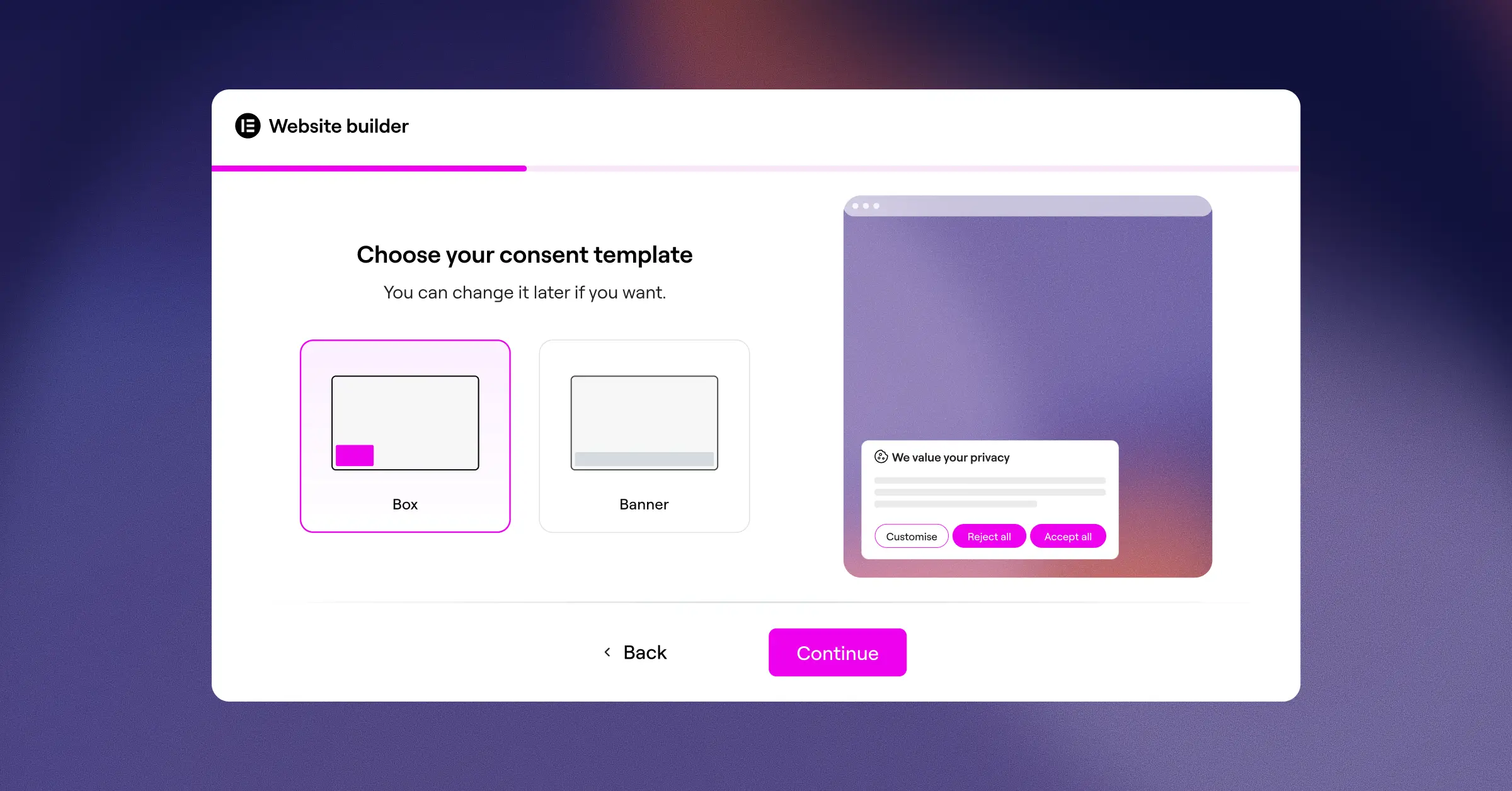
- Scans your website automatically to identify and categorize cookies.
- Builds brand-aligned consent banners with native design controls.
- Connects with Google Consent Mode v2 to keep analytics accurate.
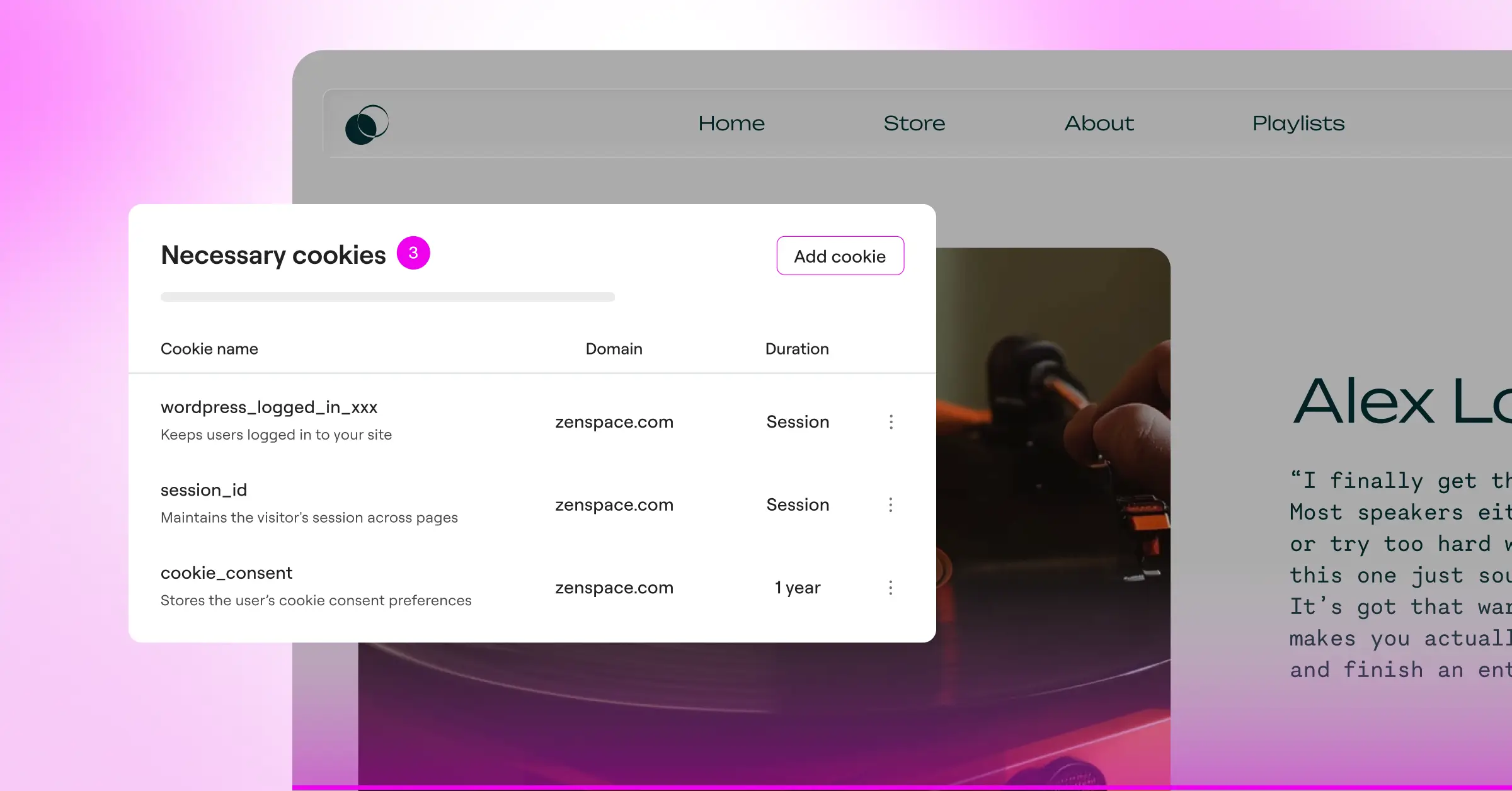
- Pulls detailed consent logs into your dashboard for audit trails.
- Manages scripts based on consent without complex tag managers.
- Adapts language and layout automatically with multilingual settings.
Cookie Consent comes included in Elementor One, alongside Web Accessibility.
Pros and Cons
Pros: Fully native, fast setup, strong design flexibility, GDPR and CCPA support.
Cons: Best suited to creators already in the Elementor ecosystem.
The Verdict
One of the easiest ways to reach full compliance without external SaaS overhead.
2. Cookiebot
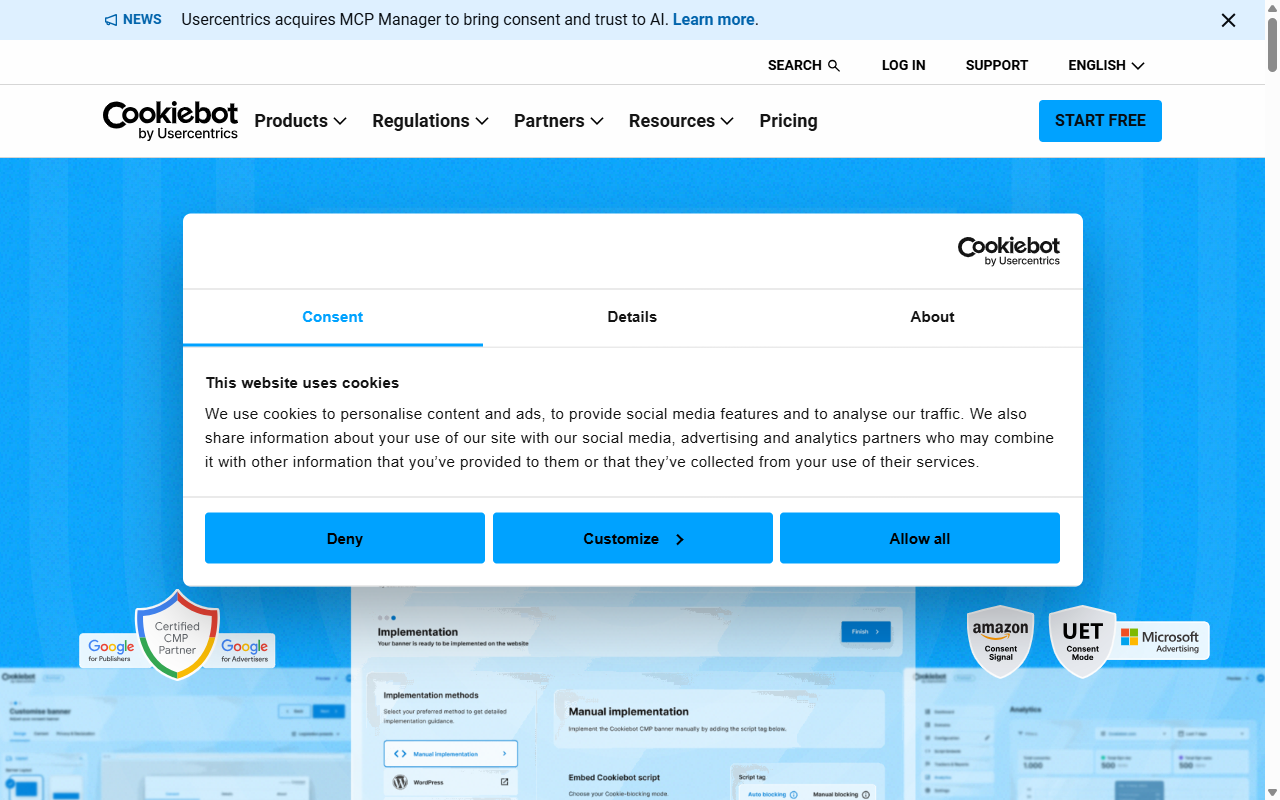
Cookiebot is one of the most established names in the compliance space, a cloud-based service built around automated scanning that deep-scans your site monthly to find and block tracking scripts until the visitor chooses.
- Scans your entire site monthly to find hidden trackers.
- Generates a detailed cookie declaration list on your policy page.
- Controls third-party cookies by blocking them before explicit consent.
- Supports Google Consent Mode v2 out of the box.
- Holds secure consent logs in a cloud repository for audits.
- Tailors banners by geography to match each visitor’s location.
Paid tiers are based on page count and domain numbers, scaling up for larger sites.
Pros and Cons
Pros: Automated scanner, clean declaration tables, reliable cloud logs.
Cons: Pricier for high page-count sites, needs some CSS knowledge.
The Verdict
A solid, set-it-and-forget-it choice for business sites with hundreds of pages.
3. CookieYes
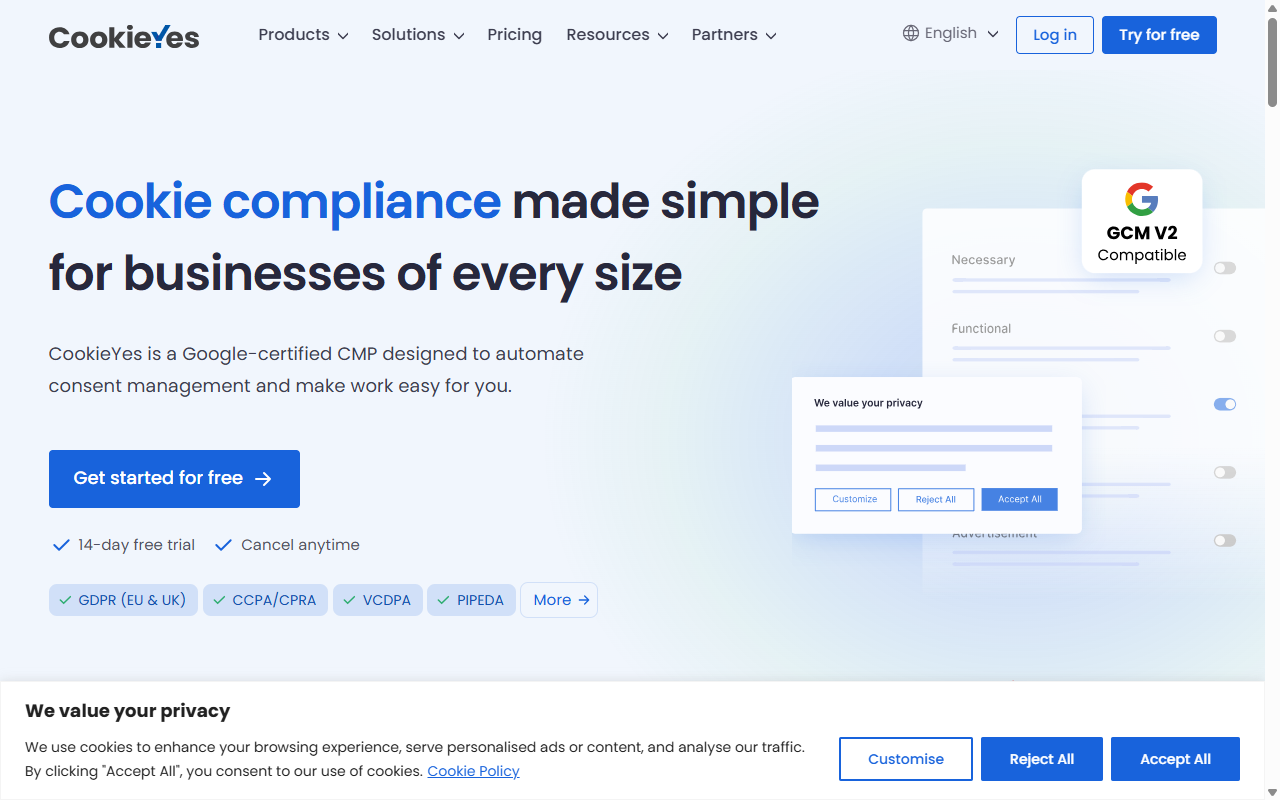
CookieYes has grown into one of the most popular cookie consent options out there, an easy cloud platform with a lightweight WordPress connector. You can manage banners for multiple sites from one dashboard.
- Displays clean, non-intrusive cookie banners that stay clear on mobile layouts.
- Saves encrypted records of user consent choices to help prove compliance.
- Classifies cookies into clear categories like necessary, functional, and analytical.
- Responds to Global Privacy Control signals sent by privacy-focused browsers.
- Blocks custom scripts from loading until the user clicks the accept button.
- Delivers analytical reports on visitor consent rates over time.
Paid plans scale with pageview volume and advanced feature needs, with annual discounts available.
Pros and Cons
Pros: Intuitive interface, solid entry-level limits, reliable support.
Cons: Settings live outside your actual WordPress admin panel.
The Verdict
A dependable, cloud-managed pick with a generous entry-level plan.
4. Complianz
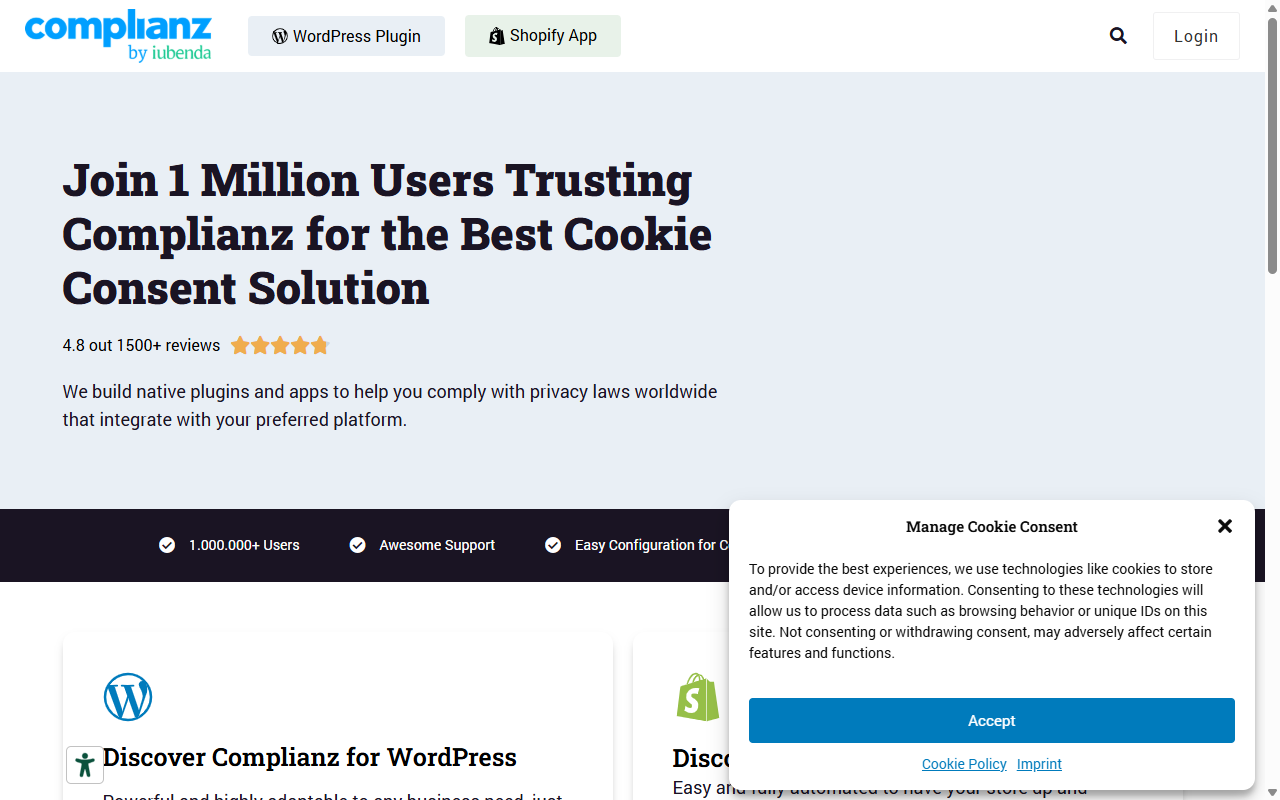
Complianz is a privacy suite built for WordPress, using a wizard-based approach that walks you through questions about your site and tracking practices. As a native tool, your data and consent logs stay on your own server, with configurations for the EU, UK, USA, Canada, and Australia.
- Generates customized legal documents like cookie policies and disclaimer pages.
- Integrates directly with major WordPress block editors and page-building tools.
- Blocks social media embeds and third-party scripts until consent is given.
- Saves local, anonymized records of user consent directly to your database.
- Detects when your plugins change and flags updates to your cookie policy.
- Configures targeted cookie banners depending on regional legal requirements.
Premium plans are sold on a single-site or multi-site license basis, renewing annually.
Pros and Cons
Pros: Wizard-driven setup, local data storage, deep WordPress plugin integration.
Cons: The backend has a lot of settings for beginners.
The Verdict
Suits privacy-focused site owners who want local data control and a structured setup.
5. Termly
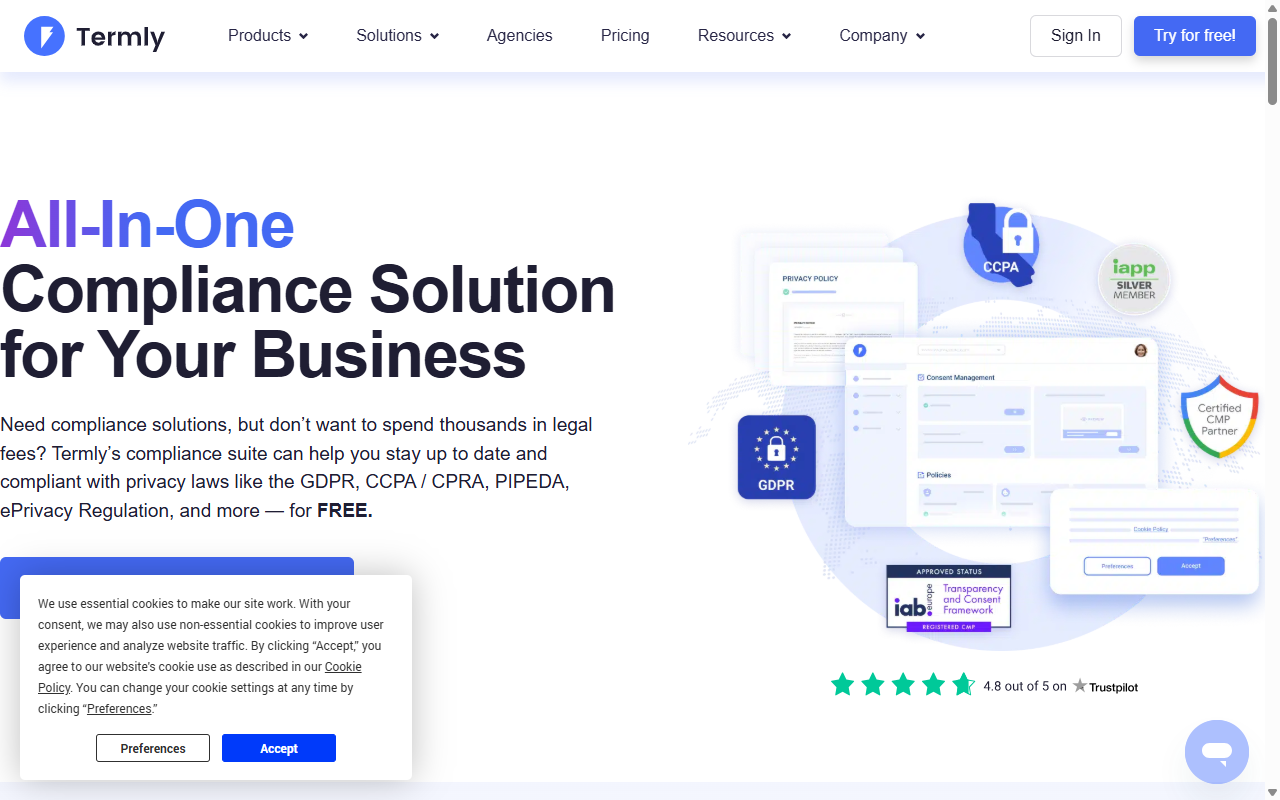
Termly is a legal compliance suite for small businesses and startups, generating full legal policies including terms, privacy policies, and return policies, alongside consent management.
- Creates attorney-approved privacy policies that update automatically as laws change.
- Launches customizable consent banners that support global privacy standards.
- Performs automatic scans of your site to categorize tracking cookies.
- Maps user consent preferences to keep analytics trackers fully compliant.
- Hosts your legal documents securely on their servers to simplify deployment.
- Centralizes compliance management for multiple sites in one dashboard.
Paid plans allow unlimited policy generation and higher traffic volumes under a monthly subscription.
Pros and Cons
Pros: All-in-one for legal text and cookie banners.
Cons: The entry-level plan is restrictive, and banner styling is fairly basic.
The Verdict
Fits new businesses setting up standard legal policies and cookie banners together.
6. Osano
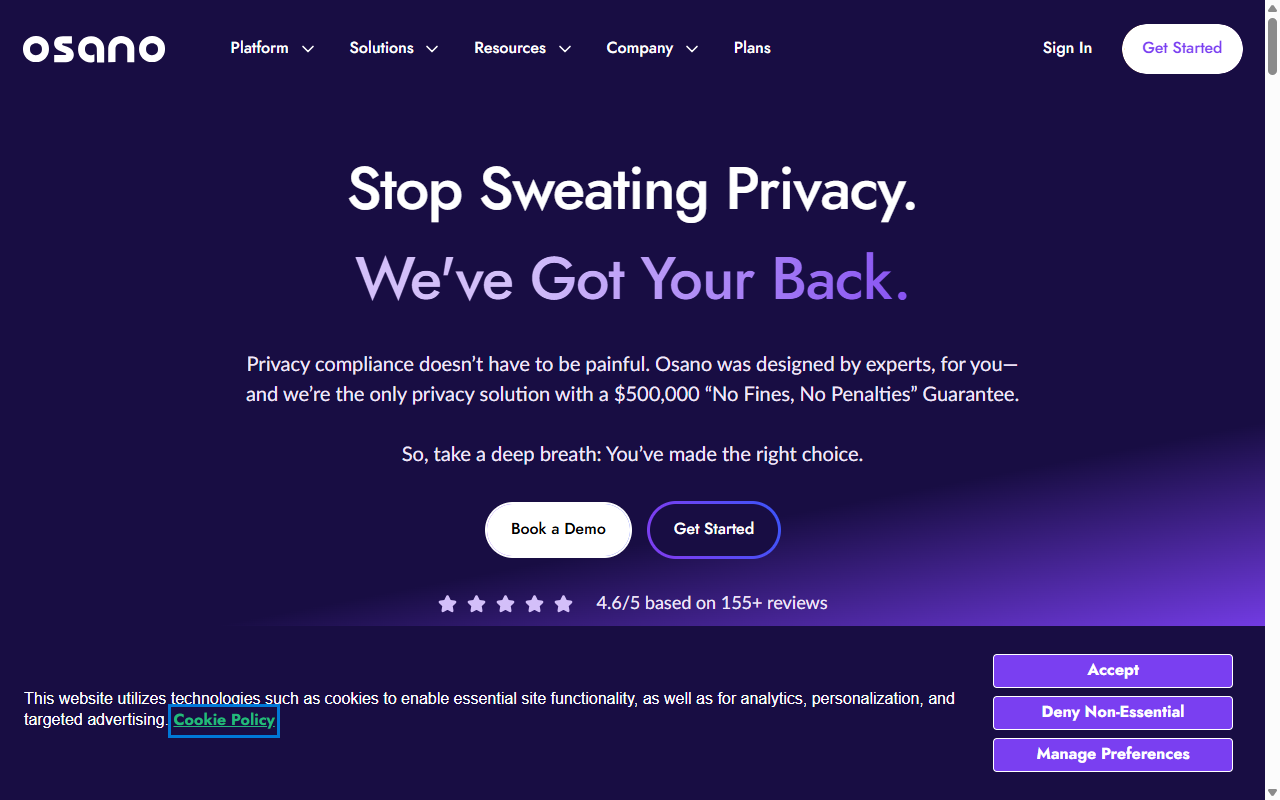
Osano is an enterprise-focused data privacy platform, known for its “no-fine guarantee” backing its platform with financial protection. It works on WordPress but is managed from an enterprise cloud dashboard, with workflows for data requests and vendor assessments.
- Guarantees compliance with global laws to protect your business from regulatory fines.
- Coordinates consent preferences across hundreds of websites from one place.
- Evaluates the privacy practices of your vendors to find compliance risks.
- Manages data subject access requests through structured internal workflows.
- Tracks consent logs across multiple jurisdictions with high enterprise security.
- Loads banners quickly using an enterprise-grade global CDN.
Enterprise tiers are priced on a custom quote basis, reflecting their high-end support and guarantees.
Pros and Cons
Pros: Enterprise-grade security, legally backed guarantee, vendor risk analysis.
Cons: Too costly and complex for typical small sites.
The Verdict
Worth evaluating if data compliance is a top priority for a large organization.
7. OneTrust
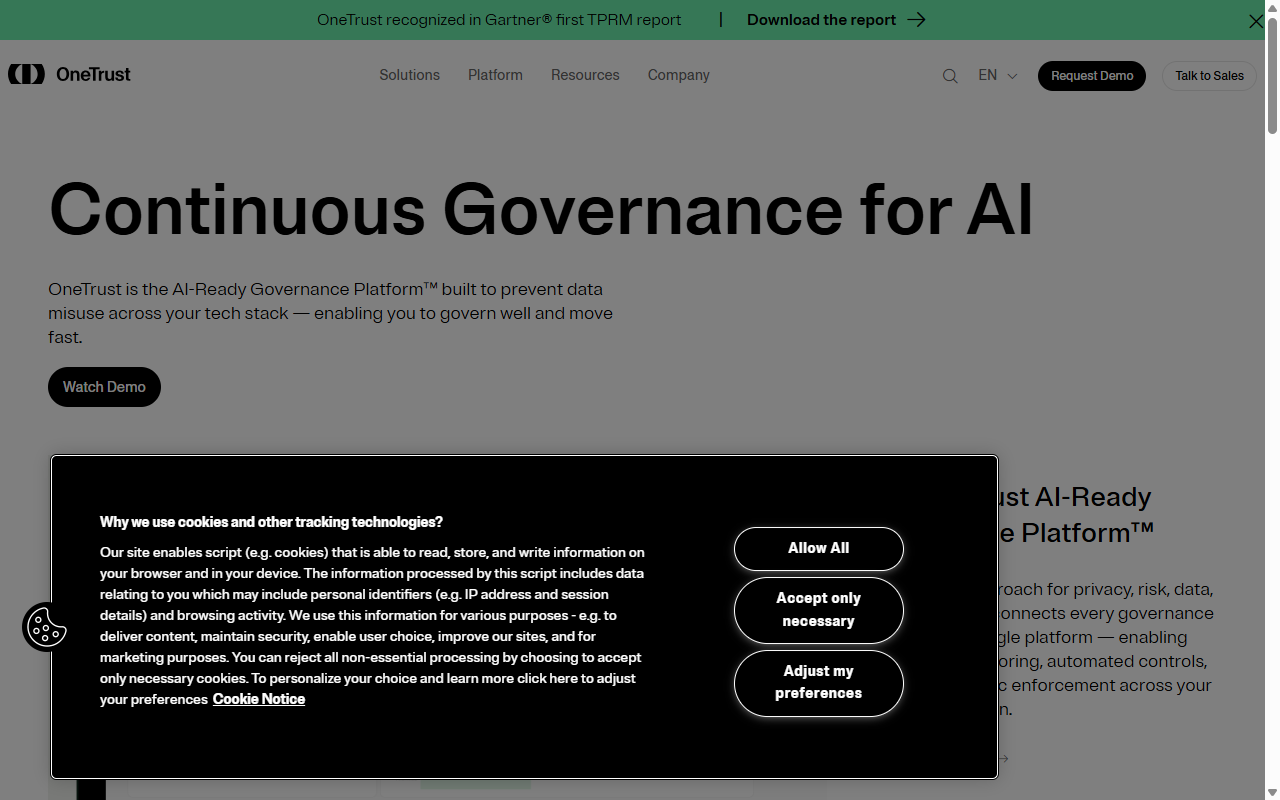
OneTrust is a global leader in trust and privacy management software, covering compliance, risk assessment, ethics, and ESG reporting, with cookie consent as one part of a much larger ecosystem.
- Controls deep data mapping to show exactly where your customer data goes.
- Customizes consent banners down to the pixel to meet strict brand guidelines.
- Integrates with customer relationship managers to sync consent choices across systems.
- Delivers reporting analytics for risk assessment and compliance audits.
- Supports highly localized consent models for every active jurisdiction.
- Automates compliance workflows across large internal corporate networks.
Enterprise pricing is available on a custom quote basis.
Pros and Cons
Pros: One of the most thorough compliance platforms available, with deep integrations.
Cons: Steep learning curve and enterprise-level pricing.
The Verdict
Fits international companies with dedicated legal and compliance teams.
8. Usercentrics
Usercentrics is a popular European consent management platform built for strict GDPR requirements, helping publishers and advertisers manage opt-in rates while staying aligned with Google Consent Mode v2.
- Optimizes banner opt-in rates through advanced design and layout options.
- Supports compliance with European Union privacy regulations and laws.
- Syncs consent data with advertising networks and tag managers.
- Stores detailed compliance logs securely in European cloud data centers.
- Allows deep API access for developers to build custom consent solutions.
- Protects tracking configurations from loading unauthorized scripts.
Custom enterprise options are available for larger operations.
Pros and Cons
Pros: Strong European compliance focus, clean API.
Cons: The interface can be technical for complex rules.
The Verdict
Suits publishers and e-commerce brands whose ad revenue depends on opt-in rates.
9. Consent Manager
Consent Manager is a specialized tool for high-traffic media sites and publishers, focused on maximizing ad consent while aligning with frameworks like the IAB TCF.
- Benchmarks your website consent rates against industry averages in real time.
- Supports the IAB TCF framework for advanced publisher ad tracking.
- Optimizes banner layouts automatically using built-in A/B testing.
- Delivers detailed real-time compliance reporting directly to your inbox.
- Blocks tracking cookies based on strict country rules.
- Integrates with popular tag management systems.
Standard and agency plans scale based on pageviews, active domains, and customization options.
Pros and Cons
Pros: Built-in A/B testing, useful benchmark data.
Cons: The dashboard can feel cluttered for casual users.
The Verdict
Suits media sites and news outlets that rely on ad impressions.
10. Klaro
Klaro is an open-source, lightweight consent manager for developers who want full control over their code, skipping subscription services entirely so it’s free to self-host.
- Runs on an open-source codebase with zero external tracking or phone-home calls.
- Loads quickly because of its minimal script size and optimized code.
- Saves configurations in a simple, easy-to-read JSON configuration file.
- Avoids subscription fees entirely by putting you in control of your hosting.
- Integrates with developer workflows using modern JavaScript frameworks.
- Respects user privacy by keeping all consent data local to the browser.
Paid hosted options are available through their cloud service if you’d rather not manage the code.
Pros and Cons
Pros: Zero cost for self-hosters, lightweight, open-source.
Cons: Needs dev knowledge, no automated scanners included.
The Verdict
The go-to choice for developers and agencies who want clean code and no monthly SaaS fees.
Feature Comparison: Finding Your Perfect Fit
Here’s a quick comparison of core features: ease of use, integration style, and Google Consent Mode v2 support.
| Tool Name | Integration Style | Consent Mode v2? | Setup Difficulty | Best For |
|---|---|---|---|---|
| Cookie Consent | WordPress Native | Yes | Very Low (Under 5 Min) | Elementor Users & Agencies |
| Cookiebot | Cloud Hybrid | Yes | Medium | High Page-Count Businesses |
| CookieYes | Cloud Hybrid | Yes | Low | Standard Blogs & Portfolios |
| Complianz | WordPress Native | Yes | Medium | Privacy Purists & Local Hosters |
| Termly | Cloud Hybrid | Yes | Low | Startups Needing Legal Templates |
| Osano | Cloud External | Yes | High | Enterprise Brands with Legal Teams |
| OneTrust | Cloud External | Yes | Very High | Global Enterprises |
| Usercentrics | Cloud External | Yes | Medium | Publishers focused on Ad ROI |
| Consent Manager | Cloud External | Yes | Medium | High-Traffic Media Sites |
| Klaro | Self-Hosted JS | Yes (Manual) | High | Developers & Open-Source Fans |
“Achieving legal compliance isn’t just about avoiding regulatory fines, it’s about establishing a foundation of trust with your website visitors. A clean, native consent experience shows your audience that you respect their data privacy from the very first moment they land on your page.”
– Itamar Haim, Web Compliance Specialist
How to Choose the Best Alternative for Your Workflow
With so many choices, picking the right tool comes down to your setup, comfort level, and how many sites you manage.
For Elementor-Built Websites
If you’re already building with Elementor, the native Cookie Consent capability is the obvious choice. It keeps your workspace clean, cuts out separate SaaS logins, and makes sure your banners look like they belong on your site.

For Agencies Managing Multiple Clients
Running an agency? Avoid paying for multiple premium subscriptions just for consent banners. Look for flat-rate pricing or native WordPress options you can template across client sites and deploy quickly.
For Non-WordPress or Standalone Projects
Building outside WordPress, or running headless? Cloud-based tools like CookieYes or developer-friendly options like Klaro work well, deploying compliance banners across platforms with simple script tags.
Frequently Asked Questions
Is iubenda still a reliable option in 2026?
Yes, iubenda remains a thorough compliance platform. That said, many users seek alternatives because they prefer a more integrated, WordPress-native workflow, simpler styling options, or flatter pricing structures.
Does using a native WordPress consent tool slow down my site?
Generally, native tools like Cookie Consent load much faster than external platforms. Because they run directly on your server without making multiple external DNS requests, they tend to keep your PageSpeed scores in good shape.
What is Google Consent Mode v2 and do I need it?
Google Consent Mode v2 is a system that communicates your visitors’ privacy choices directly to Google tags. You’ll need it if you serve visitors in the European Economic Area and use Google Analytics, Google Ads, or floodlight tags to track conversions.
Can I make my cookie consent banners look good without writing code?
It depends on the tool. Some SaaS platforms need custom CSS to style banners well. Native tools built into page builders like Elementor let you match your brand’s colors and fonts with visual controls, no code required.
How often should my website be scanned for new cookies?
It’s good practice to scan at least once a month, and after installing a new plugin, embedding a third-party service, or adding marketing scripts, since those often introduce new tracking cookies.
Do I need a separate privacy policy generator if I use a cookie banner?
Yes, they do two different jobs. The banner manages real-time user choices, while the privacy policy is a legally required document explaining your data practices. Some tools offer both in one package.
Can I self-host my cookie consent logs?
Yes, several native WordPress compliance tools let you store consent logs directly in your local WordPress database. This keeps your visitor data private and means you don’t need to rely on third-party cloud servers to maintain your compliance trails.