Managing privacy compliance can feel like a puzzle that keeps changing shape. The good news: the right tool is easier to find than it looks.
We’ll compare two popular options, CookieYes and Termly, then look at the ten best tools available today. Whether you run a simple blog or manage client sites, you’ll find a good fit here.
Key Takeaways
- Native integration matters: a WordPress-native tool keeps your database clean and saves you juggling external dashboards.
- Google Consent Mode v2 is essential: if you serve EU visitors with Google tools, your consent manager needs to support this standard.
- CookieYes scales well: solid cloud-based tracking, but you’ll manage settings outside WordPress.
- Termly is an all-in-one suite: it includes policy generators, but can feel heavier than you need for just a banner.
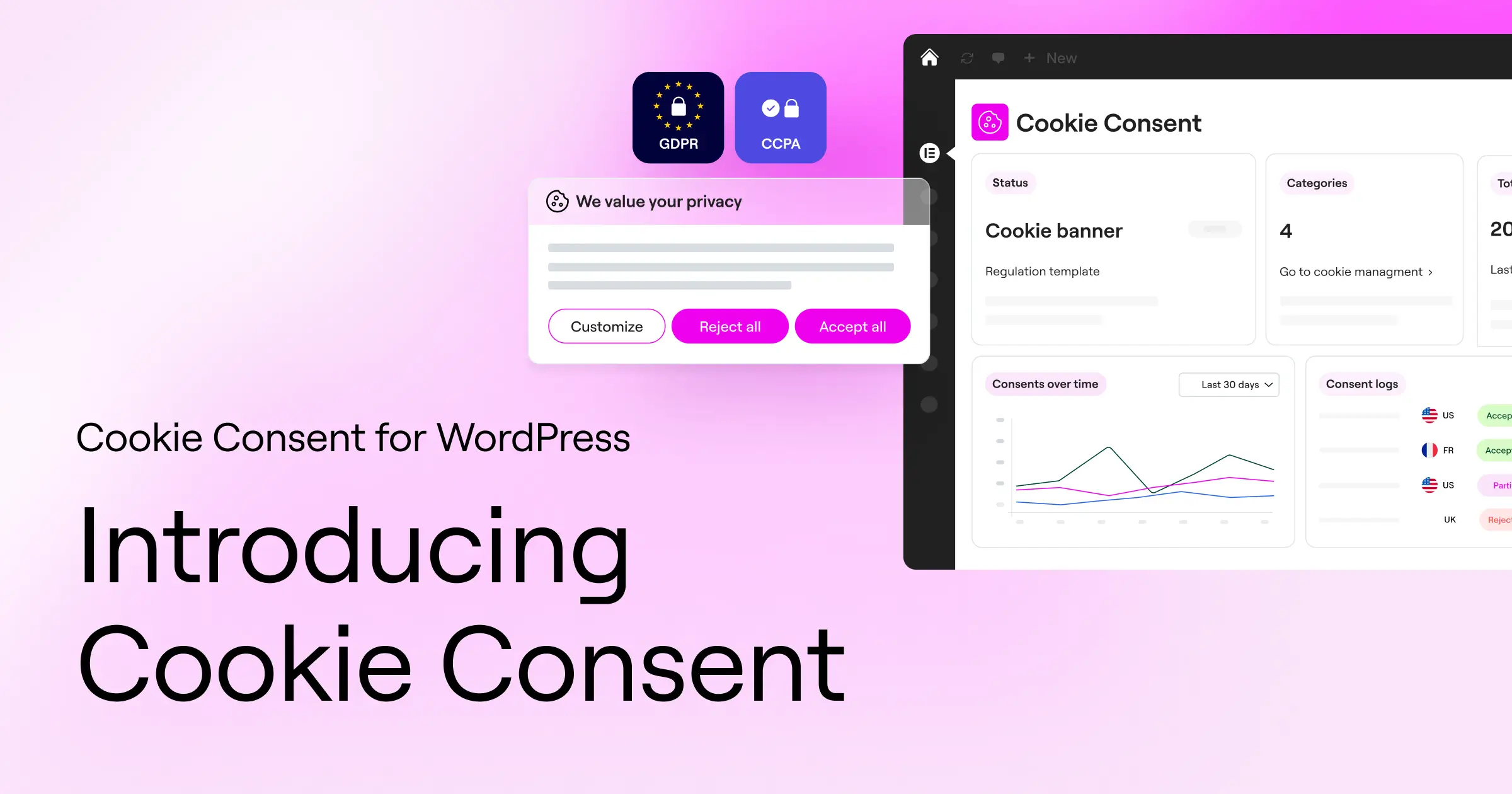
- Modern solutions save time: tools like Cookie Consent from Elementor let you build, style, and manage compliance right inside your site builder.
Understanding Cookie Consent in 2026
Privacy rules aren’t just for big corporations anymore. If your site gets even one visitor from Europe, California, or another regulated area, you need to ask permission before dropping tracking cookies.
Here’s why a proper system matters this year:
- Strict enforcement: authorities keep fining sites that fail to give clear opt-out choices.
- Ad platform rules: Google Consent Mode v2 is now mandatory for Ads or Analytics targeting the European Economic Area.
- Third-party tracking is fading: browsers are phasing it out, making first-party consent data your most valuable asset.
This doesn’t have to be a headache. A good tool scans your scripts, shows a clean banner, and logs choices without slowing your pages down.
CookieYes vs Termly: A Direct Comparison for 2026
These two names come up constantly, though they take different approaches.
CookieYes focuses on consent management: it scans your site, finds cookies, and renders fast-loading banners, though setup mostly happens in their cloud dashboard, not WordPress admin.
Termly takes a broader approach, also providing legal documents: privacy policies, terms of service, return policies. Convenient if you’re starting from scratch, but more than you need if your policies are already written.
| Feature | CookieYes | Termly | Cookie Consent (by Elementor) |
|---|---|---|---|
| WordPress Integration | Via external cloud connector | Via script embed or helper connector | Fully native dashboard integration |
| Google Consent Mode v2 | Supported (Pro plans) | Supported | Supported natively |
| Setup Time | About 15 minutes | About 20 minutes | Under 5 minutes |
| Design Control | Template editor in cloud dashboard | Standard template editor | Full control within the WordPress editor |
| Policy Generator | Basic templates | Complete legal suite | Built-in compliance policy helper |
Both mean external servers, which is why native, all-in-one options have grown popular lately.
10 Best Cookie Consent Tools for 2026
We’ve rounded up the best tools, picked for reliability, easy setup, design flexibility, and compatibility with today’s standards.
1. Cookie Consent
If you already use Elementor, the built-in Cookie Consent capability is a genuinely elegant solution. Built natively for WordPress, it lets you handle GDPR and CCPA compliance right from your dashboard, no external platform, no separate service to pay for.
Native compliance tools are changing how we build websites. Keeping consent logs and script controls inside the WordPress database avoids third-party script lag and keeps full ownership of your data.
Itamar Haim, Web Compliance Specialist
Setup takes less than five minutes, using tools you already know, no custom CSS, no generic templates. It’s included in the Elementor One subscription too, alongside capabilities like Web Accessibility.
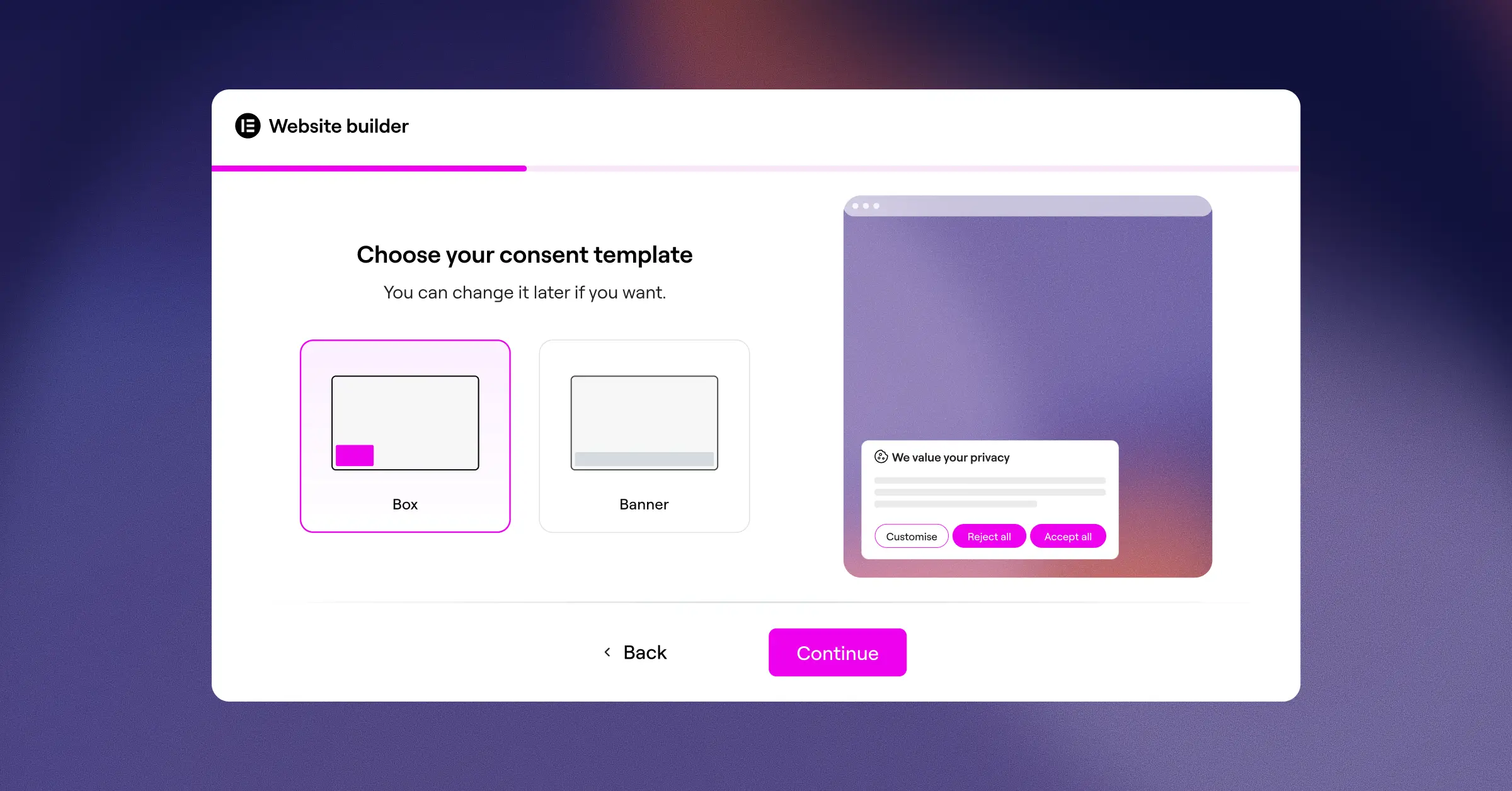
- Builds banners natively: design and edit right inside the WordPress dashboard, no external logins.
- Configures in under five minutes: a three-step wizard guides you from scanning to launch.
- Scans cookies automatically: groups your scripts so nothing runs before consent.
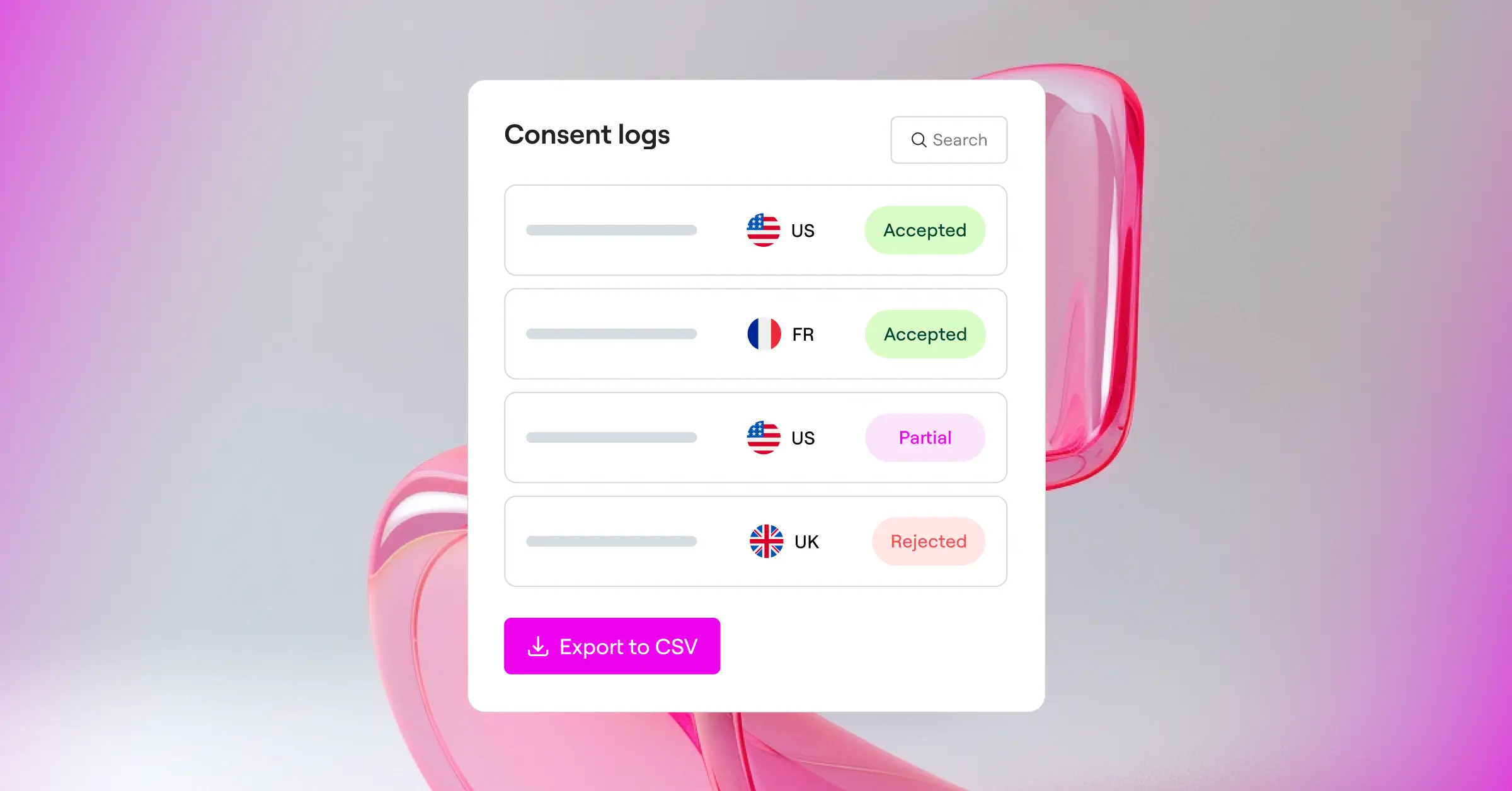
- Saves detailed consent logs: keeps secure audit trails inside WordPress.
- Manages international regulations: supports GDPR and CCPA with geo-targeting.
- Connects to Google Consent Mode: fully supports Consent Mode v2 for reliable ad tracking.
Cookie Consent is also included in the premium Elementor One package for advanced features and multisite management.
Pros: No external dashboards, full design control, fast loading, easy Global Privacy Control (GPC) integration.
Cons: Best suited for sites in the WordPress ecosystem rather than static HTML.
Verdict: The top choice for WordPress owners wanting a clean, native way to manage cookie consent without extra subscriptions.
2. CookieYes
For standalone sites needing a dedicated, cloud-managed solution, CookieYes is reliable. It runs as a cloud platform via a small snippet, letting you manage multiple sites from one account. Its scanner crawls your site and populates banner options on its own.
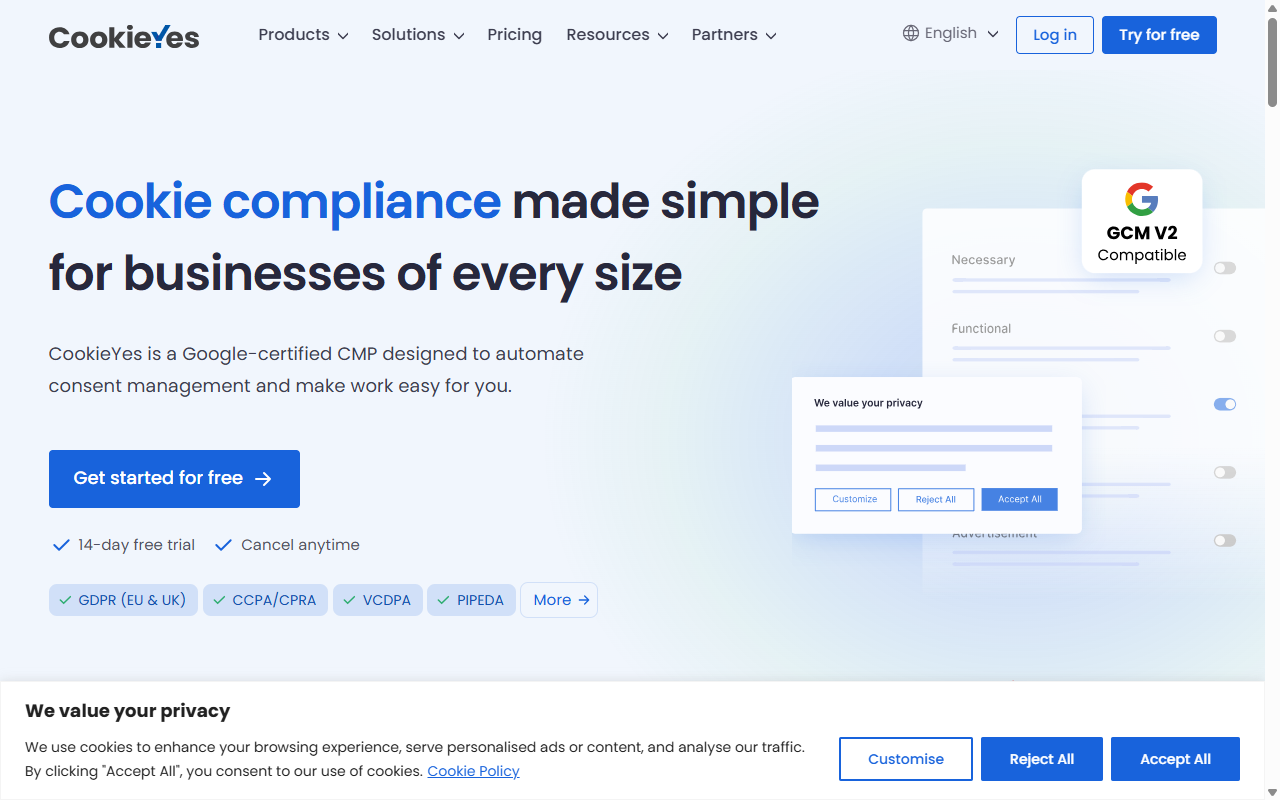
- Scans sites thoroughly: detects hidden trackers and categorizes them with high accuracy.
- Supports multilingual banners: shows the right language based on browser settings.
- Customizes layout templates: choose pre-built layouts you can color-coordinate with your brand.
- Records user choices: maintains a cloud-based consent log for verification.
Paid tiers scale by page views and domains.
Pros: Excellent multi-platform support, a clean cloud interface, reliable scanning.
Cons: Requires managing settings externally, and entry-level caps can be easy to hit on growing blogs.
Verdict: Strong if you manage a mix of WordPress and non-WordPress sites and prefer one dashboard.
3. Termly
If you’re launching a new business with zero legal documents ready, Termly is worth a look: a complete legal suite, not just a cookie manager, with generators for privacy policies, terms, disclaimers, and refund rules.
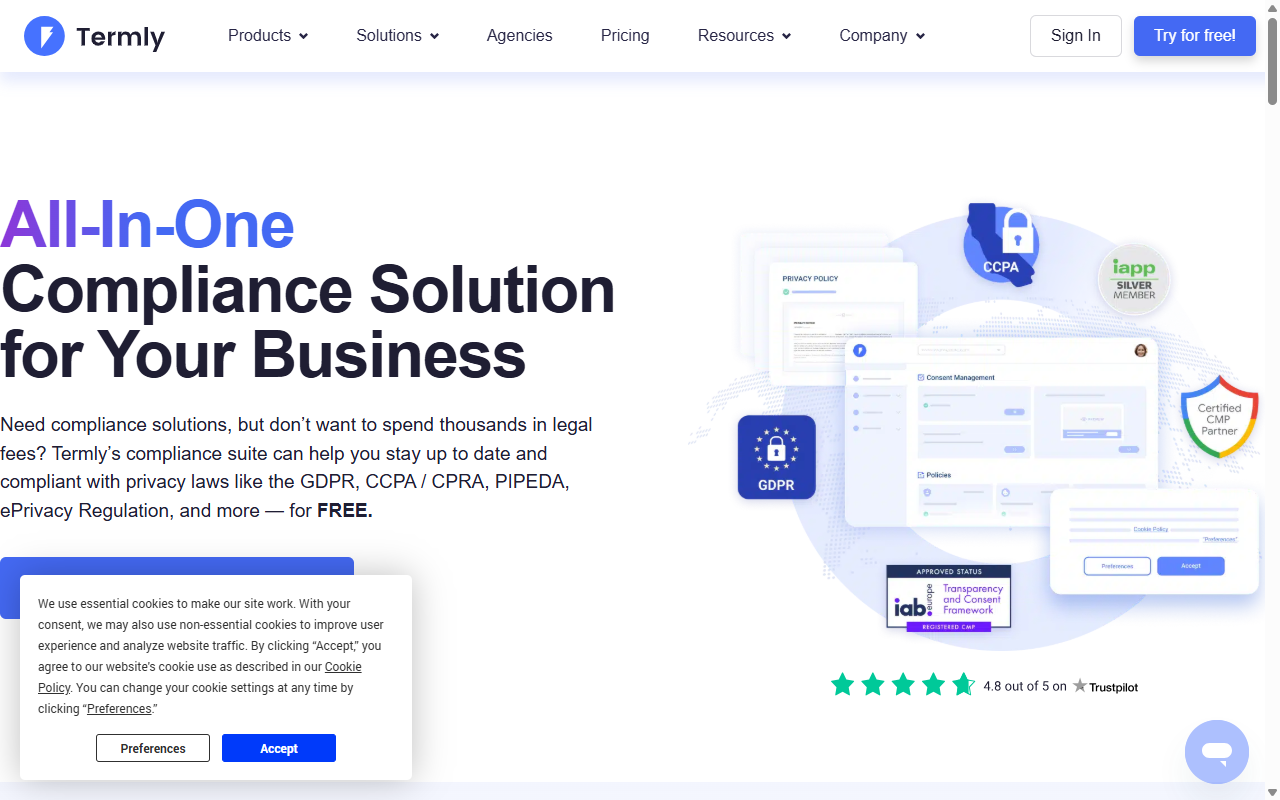
The banner generator injects a script into your header, compliant and easy to set up, though visual changes need their dashboard.
- Generates legal policies: creates customized documents based on your business model.
- Categorizes scripts automatically: groups cookies into essential, analytics, and marketing.
- Handles regional compliance: adjusts settings for GDPR, CCPA, and UK regulations.
- Adds simple styling options: basic color and layout tweaks to blend in.
Premium plans unlock unlimited policy generation and higher page-view limits.
Pros: A solid all-in-one suite with a clear onboarding wizard.
Cons: Pricey if you only need the banner, and customization is fairly limited.
Verdict: Ideal for new startups needing both a banner and custom legal policies in one go.
4. Cookiebot
Cookiebot is an established name in compliance, known for thorough automated scanning. It holds back your site’s scripts until the visitor consents. Enterprises favor its strict adherence to global privacy laws, and it integrates smoothly with Google Tag Manager.
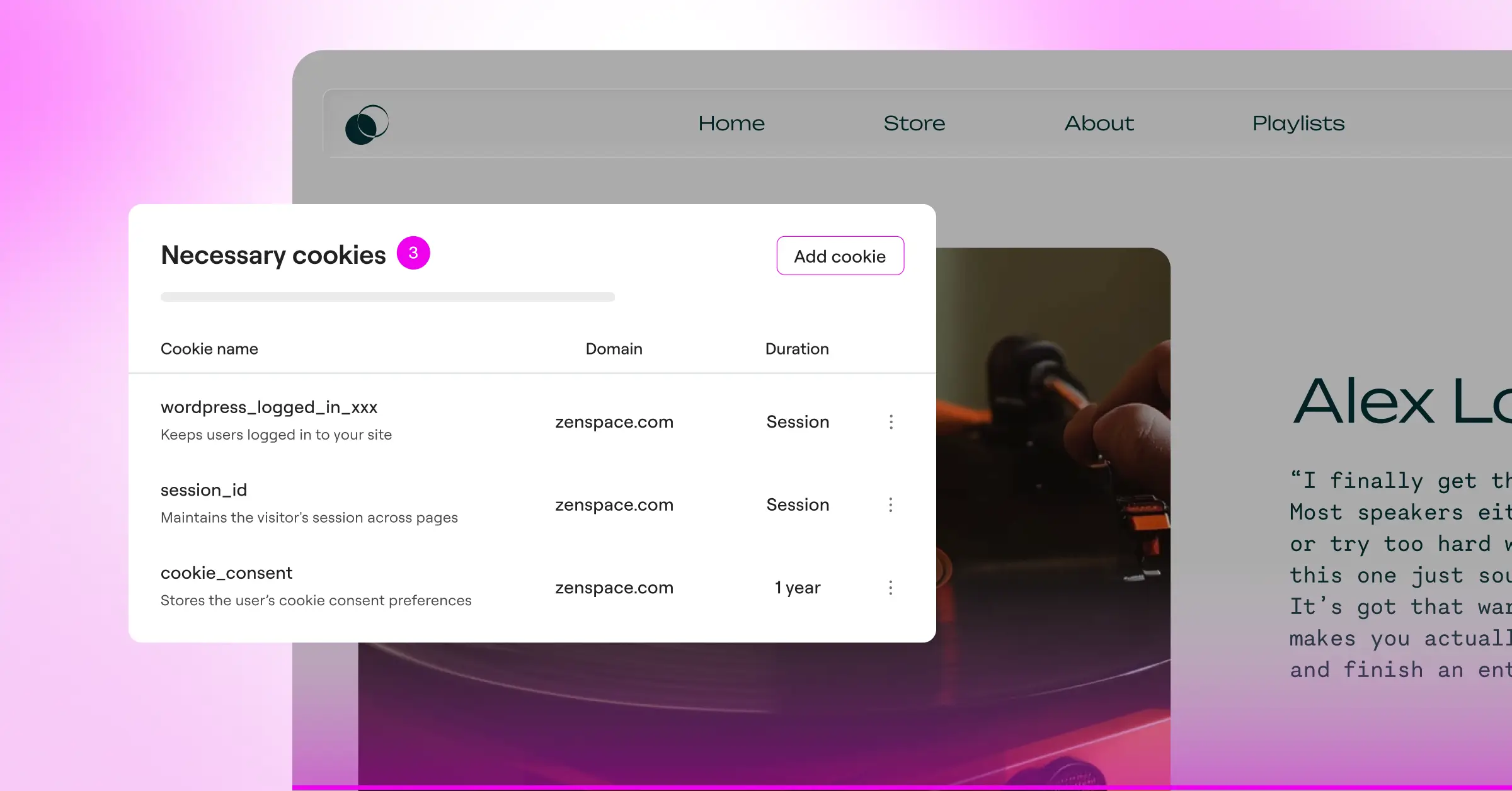
- Blocks scripts automatically: prevents non-essential cookies from loading before approval.
- Generates cookie declarations: creates a dynamic list of active cookies for your privacy page.
- Supports Consent Mode: implements Google Consent Mode v2 to preserve marketing data.
- Holds historical records: stores encrypted consent data for up to twelve months.
Paid tiers are set by your site’s total page count.
Pros: Secure script-blocking, detailed reports, trusted by global brands.
Cons: Pricing scales quickly for large sites, and setup can feel technical for non-developers.
Verdict: A great choice for data-heavy sites and enterprises prioritizing legal security and analytics.
5. Complianz
For those who want to stay inside WordPress without using Elementor, Complianz is a popular alternative. Built as a WordPress tool, it uses a wizard to walk you through regional privacy rules for your location, then configures your site from your answers, generating a dynamic cookie policy page.
- Asks guided questions: a step-by-step wizard determines your exact legal requirements.
- Generates local documents: creates custom cookie policies synced to your site setup.
- Integrates with popular tools: works well with common WordPress caching tools.
- Supports global privacy controls: respects browser-level opt-out requests automatically.
A free version is on WordPress.org, with premium upgrades for styling, geo-targeting, and multisite support.
Pros: Runs entirely inside WordPress, keeps data local, tailors legal guidance to your location.
Cons: Can feel overwhelming given how many legal questions it asks.
Verdict: A reliable, localized option for WordPress users who enjoy step-by-step wizards.
6. iubenda
iubenda offers a customizable compliance solution popular across Europe: a dashboard for generating privacy policies, cookie policies, and consent banners from one cloud portal. It’s modular, so you pay only for the pieces you use, with deep customization for developers who want fine script control.
- Unlocks modular packages: buy only the specific privacy tools you need.
- Configures visually: a visual banner builder with numerous design combinations.
- Detects visitor locations: adjusts compliance rules based on where the visitor is browsing from.
- Generates remote policies: keeps your privacy policy updated whenever laws change.
Pros: Customizable design options, automatic policy updates, excellent multilingual support.
Cons: Modular pricing can get confusing, and costs add up as you enable more tools.
Verdict: Well-suited for European businesses and developers who need customizable banners and dynamic policies.
7. OneTrust
If you manage a massive enterprise site or a large portfolio of corporate domains, OneTrust is the industry standard: a platform handling everything from cookie consent to vendor risk management and data subject access requests (DSAR). It’s a complex suite needing professional setup, not a casual blogger’s tool.
- Monitors complex ecosystems: scans and audits hundreds of domains across servers.
- Manages vendor lists: tracks which third-party scripts run and their compliance status.
- Processes user requests: gives visitors a portal to request data deletion.
- Delivers detailed reporting: generates executive-ready compliance health reports.
Pros: Market leader for enterprise security, unmatched reporting depth, global scalability.
Cons: Far too complex and pricey for standard WordPress sites and small business owners.
Verdict: The go-to platform for enterprises managing global data privacy compliance across thousands of pages.
8. Osano
Osano is a modern, cloud-based platform built for growing businesses. Its standout feature is the “No-Fine Pledge”: if you use their tool correctly and still get fined, they help cover the cost. It’s clean and fast, blocks scripts until the user opts in, and screens vendors known for poor privacy practices.
- Monitors vendor habits: rates the privacy trustworthiness of thousands of vendors.
- Pledges legal protection: a financial pledge against regulatory compliance fines.
- Customizes layouts easily: a clean, modern banner matching current design trends.
- Simplifies data rights: helps you manage and fulfill visitor data requests.
Paid plans bill monthly or annually and scale with traffic.
Pros: Modern interface, proactive vendor screening, a helpful legal safety net.
Cons: Can cost more than simpler tools for smaller sites with modest traffic.
Verdict: A solid choice for fast-growing companies and e-commerce brands wanting modern styling and peace of mind.
9. Usercentrics
Usercentrics is popular among agencies and custom application developers. Built for direct API integration or simple script management, it works with web apps, mobile apps, and websites, giving developers full control over how data is processed with clean documentation.
- Integrates via API: developers build custom user experiences using compliance data.
- Manages app compliance: works on traditional websites and native iOS/Android apps.
- Adapts to regional laws: switches banner behavior based on visitor location.
- Supports agency management: excellent multi-tenant account controls for clients.
Pros: Developer-friendly, strong app compliance support, clean API documentation.
Cons: Needs some technical familiarity to set up correctly on non-standard setups.
Verdict: A great fit for SaaS businesses, app developers, and agencies managing custom applications.
10. ConsentManager
ConsentManager is an analytical privacy tool focused on optimizing opt-in rates, built for marketers who want to understand how design and text affect agreement. Built-in A/B testing compares banner variations to find which keeps consent rates high.
- Runs A/B testing: tests banner copy and color variations to optimize consent rates.
- Tracks detailed analytics: shows real-time metrics on acceptance, rejection, and bounce rates.
- Blocks cookies instantly: prevents unauthorized script loads with an integrated shield system.
- Integrates with analytics: passes consent states to your existing tracking tools.
Paid plans unlock testing, advanced reports, and larger page-view caps.
Pros: Excellent optimization tools for marketers, detailed reports, reliable blocking.
Cons: The interface can feel clinical for casual owners wanting a fast setup.
Verdict: The best option for data-driven marketing teams optimizing consent rates legally.
How to Choose the Right Tool for Your WordPress Site
Selecting your compliance tool doesn’t have to be a guessing game. Focus on your workflow and visitors, and you’ll narrow things down fast:
- Evaluate your platform: on WordPress with tools like Elementor, a native capability like Cookie Consent is a natural fit, no extra subscription.
- Identify your audience: local visitors need only a simple banner; a global audience needs geo-targeting.
- Check your marketing stack: your tool should support Google Consent Mode v2 for ads or analytics in Europe.
- Consider your technical comfort: skip API-driven tools without a developer, and pick a visual wizard instead.
A simple setup saves hours of maintenance, so you can focus on growing your business.
Frequently Asked Questions
Do I really need a cookie consent banner on my WordPress website?
Yes, if your site attracts visitors from regions with active privacy laws, like the EU (GDPR) or California (CCPA). These laws apply regardless of where your business is located. A clear consent mechanism keeps you compliant and builds real trust.
What is Google Consent Mode v2 and do I need it?
It lets your site pass visitors’ privacy choices directly to Google’s advertising and analytics services. If you use Google Analytics or Ads to target the European Economic Area, you need a tool that supports this standard for accurate tracking.
Will adding a cookie banner slow down my WordPress site?
It depends how the banner’s built. External cloud-based systems load scripts from remote servers, which can cause a slight delay. Native capabilities, like Cookie Consent, load from your own server, keeping your site fast and your core web vitals strong.
Can I design my cookie banner to match my website brand?
Yes, most modern tools offer design settings. Cloud-based tools often limit you to basic color swaps unless you write custom CSS. For full control, a native integration like Cookie Consent lets you style every border, button, and font in your existing editor.
What is the difference between GDPR and CCPA compliance?
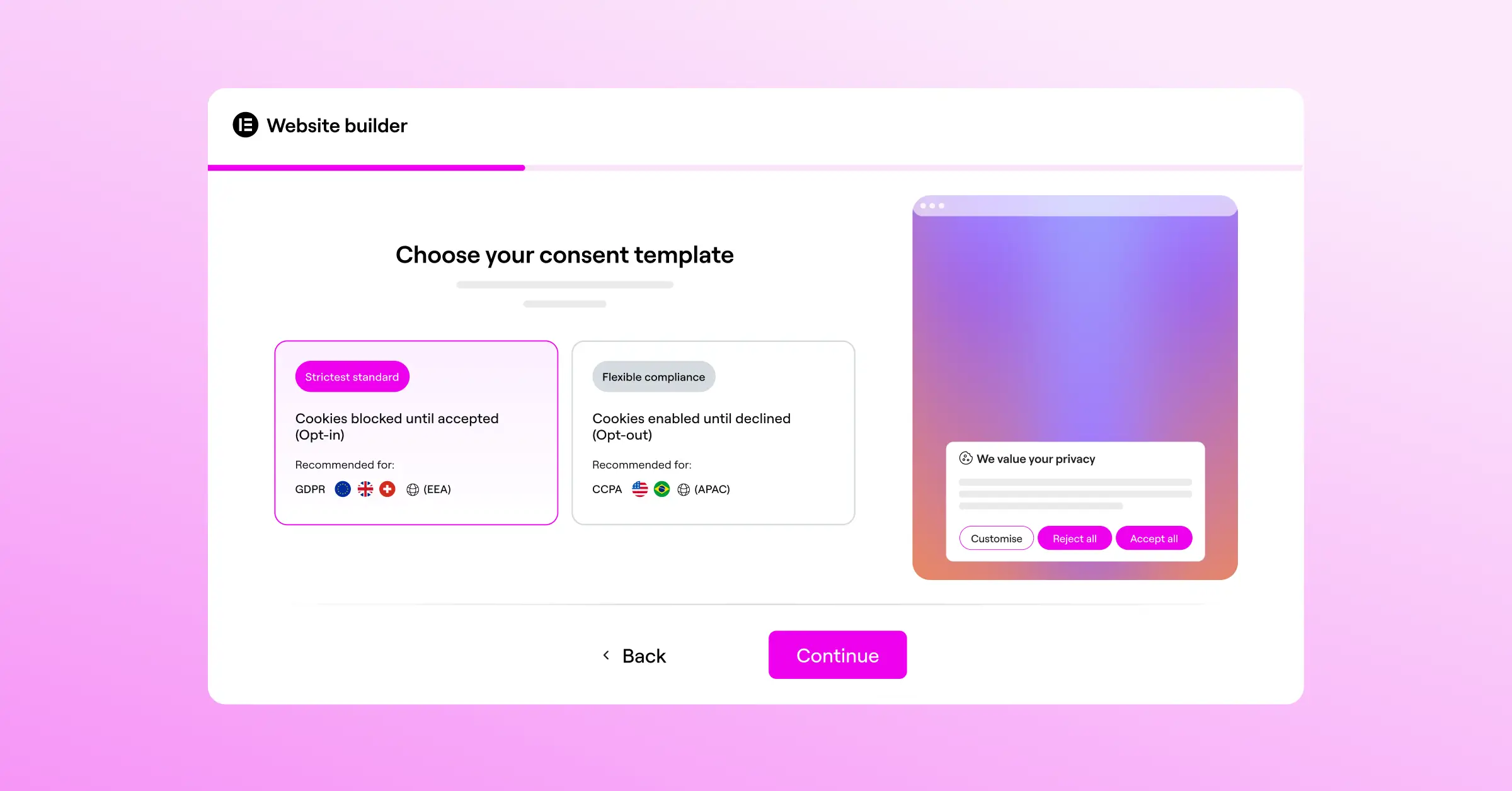
GDPR is an “opt-in” model used in Europe: you must block non-essential cookies until the visitor explicitly gives permission. CCPA is an “opt-out” model used in California: cookies can run automatically, but you must give visitors a clear “Do Not Sell My Personal Info” link to turn tracking off.
Can I use a free cookie consent tool or do I have to pay?
Absolutely. Many options, including the native Cookie Consent capability, offer generous entry-level plans with scanning, clean banners, and script management. Paid plans mostly matter for massive traffic, dozens of client domains, or advanced legal documentation.
How often should my website be scanned for new cookies?
Scan at least once a month. As you update themes, add features, or embed external media like YouTube videos, new cookies can appear. Regular scans keep your cookie list accurate and scripts properly categorized.
What happens if a regulator audits my website for compliance?
Regulators check whether you’re blocking tracking scripts before consent and keeping accurate records of visitor choices. A tool that keeps organized consent logs inside your WordPress database makes it easy to export your history and prove compliance fast.

