Table of Contents
Web design in 2026 isn’t about stitching templates together by hand. AI now plans, builds, and tests structural pieces for you, so you’re not burning hours on CSS while a client waits.
We looked at the tools actually shifting the industry this year, picked for real market adoption, measurable speed gains, and output quality, not flashy gimmicks. These are the tools that’ll keep your agency profitable and your builds fast.
Key Takeaways
- Agentic AI is the standard now. Basic text-generation tools are pretty much done, and AI takes direct action inside your CMS.
- Relying on 15 different plugins is a real liability. Unified platforms cut down failure points.
- With 47% of users bouncing if a site takes more than 2 seconds to load, automated asset optimization isn’t optional anymore.
- Over 400,000 sites now use built-in AI scanners to catch 180+ WCAG issues before you hit publish.
- Generative AI builds complete, working sitemaps in under 20 minutes.
- Designers hand off vector graphics, and AI turns them into production-ready front-end code with no manual entry.
1. Agentic AI Ecosystems Unifying Web Workflows
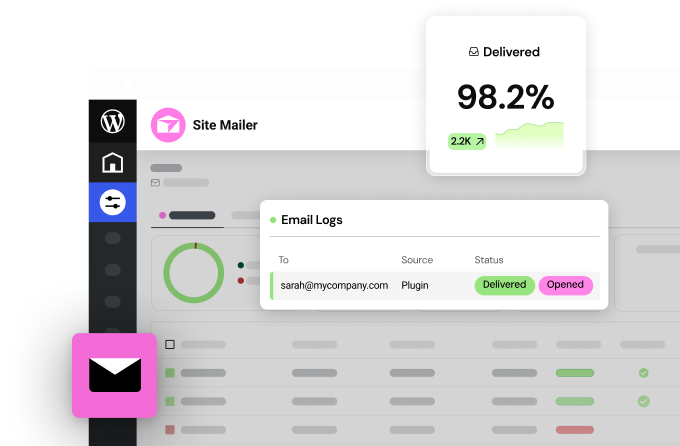
You know the old WordPress routine: bolt a builder, an optimization plugin, and an SMTP mailer together, then hope nothing breaks on the next update. Elementor One replaces that with one unified platform for AI site planning and growth tools.
Elementor now powers over 21 million websites, about 13% of the global internet, and has introduced Angie, an agentic AI on the Model Context Protocol that takes action inside your dashboard to build components, not just hand you code.
The separation between content creation, technical SEO, and development is collapsing. Agentic AI doesn’t just suggest code anymore. It actively executes architectural changes directly within your CMS, fundamentally altering how quickly we deploy high-performing sites.
Itamar Haim, SEO Team Lead at Elementor. A digital strategist merging SEO, AEO/GEO, and web development.
Key Features:
- Builds production-ready WordPress assets from natural language commands (Angie Native AI).
- Introduces Editor V4 (Atomic), a CSS-first foundation with native classes and variables, in beta from February 2026.
- Replaces third-party bloat with native Element Caching and automatic image compression.
- Hits 95% inbox placement for transactional email via Email Deliverability.
Pricing: $168/year for one site, including Elementor Editor Pro, AI capabilities (25,000 credits/month), and priority support; agencies get unlimited sites at $444/year.
Pros and cons: It wipes out plugin overload and pools credits across image optimization and AI tasks, though credits need watching under heavy use, and Editor V4 remains in beta.
Verdict: If you build client sites for a living, this is the biggest operational upgrade you’ll make this year.
2. Component-Level Generative UI Development
Building repetitive UI elements from scratch burns billable hours. With Vercel v0, you describe a component in plain English (“a pricing table with three tiers and a toggle for annual billing”), pick from the generated variations, and grab copy-pasteable React, HTML, or Tailwind code instead of hunting through component libraries.
Key Features:
- Generates clean code for React, Vue, Svelte, or vanilla HTML.
- Refines any part of a component through follow-up prompts.
- Outputs Tailwind utility classes natively.
- Saves every iteration so you can roll back a broken prompt.
Pricing: Free tier for limited daily generations; Pro starts at $20/month for unlimited generations and premium frameworks.
Pros and cons: It speeds up prototyping and produces fairly semantic code, though heavy animations still need manual JavaScript.
Verdict: Close to essential for developers who’d rather focus on logic than boilerplate HTML.
3. AI-Assisted Sitemaps and Architecture
Structuring a 30-page site used to take days of manual flowcharting. The Elementor AI Site Planner, used by over 130,000 active users, takes a basic business description and turns it into a complete sitemap and structural wireframe in under 20 minutes.
Key Features:
- Reads complex business models from plain text.
- Builds deeply nested page hierarchies automatically.
- Pushes the wireframe straight into your builder with one click.
- Applies industry-specific logic for e-commerce versus local service sites.
Pricing: Free for basic use, with advanced planning folded into Elementor One.
Pros and cons: It kills blank-page syndrome and saves 4 to 6 hours during client discovery, though it leans toward safe layouts, so experimental structures still need manual mapping.
Verdict: Let AI generate the structure and spend your time on the actual user experience.
4. Automated Code Translation from Vector Designs
The Handoff Problem
Designers love Figma. Developers dread translating it into CSS. Builder.io attacks that gap directly with AI that reads a design and translates it into production code.
The AI Solution
It doesn’t just export absolutely positioned divs. The AI reads the visual hierarchy and flexbox relationships and writes semantic HTML, knowing what a button is and how a nav bar should collapse on mobile.
Key Features:
- Translates vector groups into responsive flexbox containers.
- Flags repeating patterns and suggests reusable components.
- Writes code that reads like a human wrote it.
- Exports to React, Vue, Qwik, or plain HTML/CSS.
Pricing: Starts at $19/month for individual developers, scaling to custom enterprise pricing.
Pros and cons: It bridges design and development teams and handles responsive breakpoints well, but designs need proper auto-layout for clean results.
Verdict: If your design team actually uses auto-layout, Builder.io cuts front-end dev time in half.
5. Predictive Layout Adjustments Based on Heatmaps
You launch a landing page, it flops, you wait 30 days for data, realize the call-to-action sits too low, and move it. That’s a month of lost revenue. Hotjar AI flips that from reactive to predictive, analyzing interactions in real time and writing plain-English reports on exactly what to fix.
Key Features:
- Categorizes user frustration (rage clicks, u-turns) without manual video review.
- Predicts where users will likely click before launch.
- Condenses thousands of recordings into a 5-bullet summary.
- Pinpoints the exact form field where users abandon a funnel.
Pricing: Basic AI features come with the Plus plan at $39/month; predictive analytics need the Business tier at $99/month.
Pros and cons: It saves hours of video review and catches broken mobile experiences fast, though it needs real traffic volume, and privacy rules restrict recording in some regions.
Verdict: Let the AI tell you where your layout is failing instead of guessing.
6. Automated Accessibility Remediation at Scale
A JavaScript overlay doesn’t make your site legally compliant since it never touches your source code. That’s why Elementor’s Web Accessibility tool matters: built into your editor with over 400,000 installs, it scans your output for 180+ WCAG issues and suggests the fix, not just a flag.
Key Features:
- Scans your DOM in real time for contrast errors and missing alt text as you build.
- Fixes issues directly in the native interface.
- Writes descriptive ARIA tags for complex interactive elements.
- Suggests color shifts to pass AA and AAA contrast ratios.
Pricing: Scans cost 0 credits; applying a fix costs 9 credits under the Elementor One shared credit system.
Pros and cons: It fixes issues at the root code level and cuts legal risk without slowing your front end, though you’ll still want manual testing for keyboard navigation.
Verdict: Built-in structural remediation is the only real way to handle accessibility going forward.
7. Intelligent Asset Optimization and Format Delivery
A 109ms Time to First Byte doesn’t mean much if you’re still serving giant PNGs to mobile users on 3G. Elementor Image Optimization automates your media pipeline, with over 1 million installs and up to a 60% file size reduction without visible quality loss.
Key Features:
- Converts legacy formats into modern WebP and AVIF automatically.
- Compresses thousands of legacy images in the background.
- Serves uniquely sized files based on device viewport.
- Strips heavy EXIF camera metadata from uploads.
Pricing: Available as a standalone Pro tool for $60/year, or bundled into Elementor One.
Pros and cons: It needs no technical setup and boosts Core Web Vitals fast, with quality indistinguishable from the originals, though bulk optimization on huge sites takes a few hours.
Verdict: Manual image optimization wastes time when a tool cuts your payload by 60% on its own.
8. Text-to-3D Asset Generation for WebGL
Standing out in 2026 means moving past flat design, but a dedicated 3D artist gets expensive. Spline AI lets developers generate interactive, web-ready 3D models from text prompts. Type “a floating isometric server rack with glowing neon cables,” and the AI builds the model, materials, and lighting, then hands you a WebGL embed snippet.
Key Features:
- Builds complex geometry purely from descriptive prompts.
- Generates realistic textures (glass, metal, matte plastic).
- Compresses models so they load smoothly in browsers.
- Sets up hover and click interactions with no coding.
Pricing: Basic features are free; the Super plan costs $24/month for high-resolution generation and premium exports.
Pros and cons: It makes 3D design accessible to regular developers and keeps embed codes lightweight. Hyper-realistic faces or organic shapes are still inconsistent, and multiple 3D elements drain mobile battery faster.
Verdict: Spline AI adds premium interactive flair without wrecking your project budget.
9. Algorithmic Typography and Variable Font Pairing
The Designer Persona
Pairing a geometric sans-serif with a humanist serif takes a feel for x-heights and contrast, but doing that by hand for every project doesn’t scale. Fontjoy uses machine learning to pair fonts by their mathematical structure.
The Execution
It maps the vector points of thousands of Google Fonts on a neural network instead of a pre-made list. Lock in a heading font, and it generates body and accent fonts that mathematically match its weight.
Key Features:
- Pairs fonts using deep learning for non-obvious, mathematically sound combinations.
- Lets you dial contrast for how similar the pairing feels.
- Previews fonts directly on realistic wireframe content.
- Outputs the exact Google Fonts import code instantly.
Pricing: Completely free and open-source.
Pros and cons: It removes the guesswork from typography and surfaces fonts you’d never browse into on your own, though it’s limited to the Google Fonts library.
Verdict: A genuinely free tool that gets your typography looking curated in seconds.
10. Dynamic Color System Generation Based on Psychology
Before AI, you’d pick a brand color, hunt a color wheel for a complementary secondary, guess at the gray scales, and end up with a muddy dark mode. Khroma takes a different approach: you pick 50 colors you like, it trains a neural network on your aesthetic, and generates endless accessible palettes tailored to your taste.
Key Features:
- Learns your specific aesthetic instead of generic templates.
- Filters out palettes that fail strict WCAG contrast requirements.
- Blends CSS gradients without muddy transitional zones.
- Copies hex and RGB values straight to your clipboard.
Pricing: Free to use as a web-based tool.
Pros and cons: It generates distinct palettes that stand out and keeps every combination usable for visually impaired users, though setup requires clicking through 50 colors by hand.
Verdict: Khroma bridges raw color preference and strict accessibility math nicely.
11. Context-Aware Marketing Automation
A fast website doesn’t matter much if your lead generation is broken, and third-party marketing platforms often drop megabytes of tracking JavaScript into your header. Elementor Send keeps marketing automation native instead, watching how users interact with forms and popups and timing exactly when an automated email should go out.
Key Features:
- Runs entirely inside your dashboard, no external platform bloat.
- Writes high-converting email sequences directly in the editor.
- Fires emails based on specific on-site actions, not just form submissions.
- Tracks open rates and conversions without a complex Tag Manager setup.
Pricing: Bundled into the broader Elementor ecosystem, depending on your plan tier.
Pros and cons: It keeps your lead pipeline under one roof and cuts the cost of external email platforms, though it’s not built to replace enterprise CRMs like Salesforce.
Verdict: For small to medium business sites, keeping marketing automation native is far more efficient.
12. Feature Comparison and Final Recommendations
Picking the right stack shapes your entire workflow. Here’s the core data on where these tools sit.
| Platform | Primary Function | Best Feature | Starting Price |
|---|---|---|---|
| Elementor One | Unified Web Platform | Agentic AI (Angie) | $168/year |
| Vercel v0 | Component Generation | Tailwind Native Output | $20/month |
| Builder.io | Figma to Code | Clean Visual Logic | $19/month |
| Hotjar AI | Behavior Analytics | Predictive Heatmaps | $39/month |
| Spline AI | 3D Asset Creation | Text-to-WebGL | $24/month |
If you’re juggling multiple client projects, fragmented workflows aren’t something you can afford. Start with Elementor One for the Editor V4 architecture, agentic AI, and managed Elementor Cloud hosting natively, then add tools like Vercel v0 or Spline where you need something specific.
Frequently Asked Questions
Will AI completely replace front-end web developers?
Not at all. AI handles boilerplate and standard layouts, but you’ll still need developers for database work, custom security, and API integrations.
Is agentic AI safe to use on live production sites?
Agentic AI, like Angie, works within defined boundaries, but don’t let it make major structural changes on a live site without staging first.
How does AI accessibility compare to manual audits?
Elementor’s Web Accessibility feature catches most structural issues, scanning over 180 WCAG requirements instantly, but it isn’t a legal shield.
Do AI-generated websites rank well on Google?
Yes, if the AI produces semantic HTML and optimized assets. Search engines penalize slow, broken code, not AI authorship. Elementor AI optimizes for core web vitals.
Why is Elementor moving away from standard plugins?
Plugin conflicts are the top cause of broken WordPress sites. The unified Elementor One ecosystem removes those variables with tools built to work together.
Can AI translate legacy websites into modern code?
Yes, though not perfectly. You can feed older HTML into generative tools to update the syntax, but check responsive behavior manually.
What is the Model Context Protocol (MCP)?
MCP lets AI take action within a system, clicking buttons, changing database values, and building elements inside your CMS.
Does AI image optimization degrade visual quality?
Not noticeably. Modern tools convert PNG and JPEG files into AVIF and WebP, dropping file sizes up to 60% while keeping lines crisp.
Looking for fresh content?
By entering your email, you agree to receive Elementor emails, including marketing emails,
and agree to our Terms & Conditions and Privacy Policy.