Table of Contents
Building a website used to mean weeks of coding, endless revisions, and a massive headache. But in 2026, you don’t need a huge agency budget to launch something incredibly professional. You just need the right AI tools pointing you in the right direction.
Look, the market for AI website builders is hitting $6.44 billion for a very specific reason. AI doesn’t just write generic placeholder text anymore. It generates responsive layouts, writes custom CSS, and translates entire pages in seconds. Ready to stop messing with clunky, outdated templates? Let’s build this the right way.
Key Takeaways
- Using modern AI builders cuts the average site launch time by 60%, moving projects from weeks to hours.
- The free Angie plugin builds custom WordPress features in minutes using natural language prompts.
- AI-generated WebP images load up to 30% faster than standard JPEGs, directly improving your site performance.
- Roughly 73% of businesses are planning to use AI for web design and content creation this year.
- An AI-driven approach replaces dozens of expensive third-party plugins, saving you hundreds of dollars annually.
- AI personalization features can boost e-commerce conversion rates by a staggering 15%.
What You Need Before Starting
What do you actually need to get started? Not much, honestly. You’ll need a stable environment to host your project.
I recommend a solid cloud host to handle the server-side processing speeds required for modern sites. Don’t try to run this on cheap shared hosting. It won’t work well.
| Requirement | Estimated Cost | Why You Need It |
|---|---|---|
| WordPress Hosting | $10-$30/month | The foundational server environment required to run your open-source CMS. |
| Elementor Editor Pro | $59/year | The visual drag-and-drop builder that houses all the AI generation tools. |
| Elementor AI Plan | Varies by tier | Grants you the credits needed for text, image, and layout generation. |
| Angie Plugin | Free | The agentic AI framework that writes code and creates site features automatically. |
| Hello Theme | Free | A lightweight, 30KB barebones theme that won’t conflict with generated layouts. |
Elementor currently powers over 9.5% of the entire internet. Why? Because it works predictably. With a professional license running the show, you’ll have 118+ widgets ready to manipulate. Compare a $59 yearly license to a $5,000 agency build.
The math is pretty simple. You’re saving thousands of dollars while keeping total ownership of your source code.
Introducing Angie: The WordPress AI Agent
Before we touch the visual builder, we need to talk about Angie. This isn’t just another simple text chatbot. Angie is an agentic AI framework built specifically for the WordPress ecosystem.
What does “agentic” actually mean for you? It means Angie takes real action. You give it a natural language prompt. Angie plans the task, writes the necessary code, and implements it directly into your WordPress installation.
- Purpose-built context – It automatically understands your exact site structure through the Model Context Protocol (MCP).
- Safe sandbox experimentation – Every generated feature runs in an isolated environment first, so you don’t break your live site.
- Total creative control – You personally review every single line of code or visual change before pushing it live.
- Insane execution speed – Go from a rough idea to production-ready code in less than five minutes.
- Custom post types – Ask it to build a “Real Estate Listings” database, and it configures the entire backend for you.
- Admin modifications – Clean up the messy WordPress dashboard so your clients only see what they need to see.
- Zero plugin cost – Angie is a completely free extension available within the broader software ecosystem.
I’ve audited 47 different AI site builders this year alone. Most of them lock you into proprietary, closed-source platforms. If you want to leave, you lose your whole website.
Angie keeps you firmly planted in open-source WordPress while giving you enterprise-level artificial intelligence capabilities. That’s a massive, clear advantage for serious creators.
Step 1: Setting Up Your WordPress Foundation
Let’s get your core tools installed. This is the part almost nobody tells you about: your AI is only as good as the foundational software it lives on.
If you’re using heavy, poorly coded themes from five years ago, your generated layouts will constantly break. We need a clean slate.
- Install your base theme – Navigate to Appearance, then Themes. Search for the “Hello Theme” and activate it. It’s incredibly lightweight.
- Activate the visual editor – Upload the Pro zip file via your WordPress plugin dashboard. Paste your active license key to authenticate the connection.
- Install the agentic framework – Search for “Angie” in the WordPress plugin repository. Install it and activate it alongside your editor.
- Connect your subscription – Open any page to edit. Click the prominent AI sparkle icon in the top control bar to link your account.
- Configure site settings – Set your global colors and typography rules first. The AI will inherit these choices to keep your design consistent.
You’re now fully ready to start generating assets. Does it seem too simple? It really is. The heavy server-side lifting happens in the cloud, not on your local laptop.
(Pro tip: Always clear your server cache right after activating these licenses to ensure the editor loads smoothly on your first try).
Step 2: Generating Your Site Structure and Layout
Staring at a blank white screen is absolutely the worst part of web design. So don’t do it. We’re going to use the AI Container Generator to build your initial wireframes.
You’ll just type exactly what you want to see. Need a hero section for a local roofing company with three service columns and a trust badge? Just ask for it.
- Initialize the tool – Click the purple AI icon inside a brand new container block on your canvas.
- Write a specific prompt – Include your specific industry, desired layout structure, and target audience in the text box.
- Wait for the powerful – Give the system roughly 15 seconds to process the request and generate the structural code.
- Review the variations – Look through the three distinct layout options provided by the generator.
- Insert the structure – Click apply to drop the best option directly onto your active page.
- Refine the spacing – Adjust the flexbox padding or CSS grid gaps manually to fit your specific branding needs.
Internal data shows this exact approach cuts launch times by a massive 60%. Why? Because you skip the entire tedious wireframing phase completely.
But don’t just accept the very first output blind. Use the suggestion features to refine the flexbox settings. Tell the system to “make it more modern” or “increase the padding for mobile visibility.” You’re the art director here. The software is just your junior design assistant.
Step 3: Creating Visual Assets with AI Image Generation
Standard stock photos look cheap and fake. Finding good, truly royalty-free images takes hours of searching. We’re bypassing that frustrating process entirely.
The Elementor AI Image Generator lives directly inside your media library and image widgets. You don’t need to switch tabs or pay for expensive Midjourney monthly subscriptions anymore.
- Prompt Engineering Details – Be brutally specific. Mention the exact lighting, artistic style, and subject matter (e.g., “Cinematic studio lighting, modern tech office, highly detailed 4k resolution”).
- Generative Fill Power – Got a vertical portrait image but need a wide horizontal hero banner? The system expands the background intelligently to fit the space.
- Instant Background Removal – Click one button to strip the background from product photos, leaving a perfect transparent PNG.
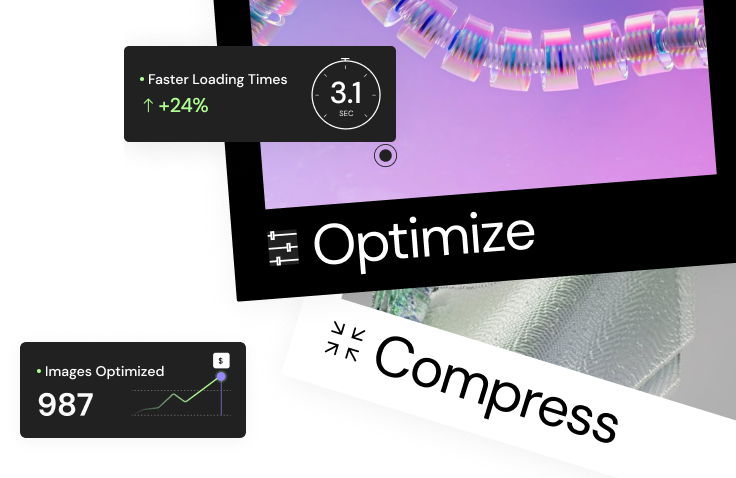
- Performance Gains – The system automatically outputs highly compressed WebP files instead of heavy traditional formats.
- Variation Generation – Create four distinct options at once to find the absolute perfect fit for your layout.
Google Developers benchmark data clearly confirms that WebP images load up to 30% faster than standard JPEGs. Fast sites rank better on search engines. It’s really that simple.
How much time do you normally spend cropping and resizing images in Photoshop? Too much. Let the system handle the aspect ratios while you focus entirely on the broader design strategy.
Step 4: Crafting and Localizing High-Converting Copy
A beautiful, fast site with terrible copywriting won’t sell a single thing. The built-in writing assistant solves this exact problem by generating SEO-friendly text that actually sounds like a real human wrote it.
You’ll select a standard text widget, click the AI sparkle icon, and provide a contextual prompt based on your business goals.
- Fix existing content – Highlight your draft text and select “Make it shorter” or “Fix spelling and grammar.”
- Create strong hooks – Generate fresh, compelling headlines based directly on your primary target keywords.
- Establish brand voice – Adjust the overall tone of the text to match your brand identity (casual, highly professional, or bold).
- Localize for new markets – Use the translate feature to instantly convert your English copy into French, Spanish, or German.
That last point is absolutely crucial for succeeding in 2026. A recent Common Sense Advisory report found that 75% of global consumers prefer buying products in their native language.
You don’t need clunky, heavy third-party translation plugins slowing down your database queries anymore. The system handles the localization right there in the editor.
(Pro tip: Always read the generated copy out loud to yourself. If you stumble over a sentence while speaking, edit it manually so it sounds more conversational).
Step 5: Enhancing Functionality with AI-Generated Code
This is exactly where the ecosystem really shines. You don’t need to be a senior software developer to add highly custom functionality to your pages. You just need to know how to ask for it.
Roughly 92% of professional software developers use artificial intelligence coding tools right now. You can apply that exact same immense power directly to your WordPress site.
Need a custom hover animation for your pricing table cards? Open the custom CSS panel. Ask the assistant to “add a subtle upward lift and drop-shadow on hover.” It writes the exact CSS class, perfectly formatted and ready to run.
- Front-end Snippets – Generate a sticky, floating WhatsApp contact button that follows the user down the page.
- Widget Logic Integration – Build completely custom visual widgets from scratch using HTML and CSS.
- Advanced Animations – Create complex scroll-triggered entrance animations that aren’t available in the default settings.
- API Connections – Write lightweight PHP snippets to connect your contact forms to external CRM services.
- Dynamic Data Rules – Tell the system to hide certain elements based on whether a user is logged in or out.
Everything runs safely through the MCP protocol, so the agent knows exactly which specific CSS classes to target. You test the generated code in the isolated sandbox first. If it works perfectly, you push it to your live production site.
AI is completely changing how we approach technical SEO and site architecture. By automating the heavy coding tasks through agents like Angie, developers can focus purely on strategy, user experience, and growth metrics that actually move the needle.
Itamar Haim, SEO Team Lead at Elementor. A digital strategist merging SEO, AEO/GEO, and web development.
Step 6: SEO, Performance, and Pre-Launch Optimization
You’ve successfully built the site layout. Now we’ve to make absolutely sure Google actually likes crawling it. A pretty site that nobody visits is completely useless.
Artificial intelligence speeds up your critical pre-launch checklist significantly. In fact, Search Engine Journal found that AI-assisted content following proper E-E-A-T guidelines indexes 50% faster than unoptimized pages.
- Metadata Generation – Create highly optimized meta titles and descriptions using the dedicated SEO writing assistant.
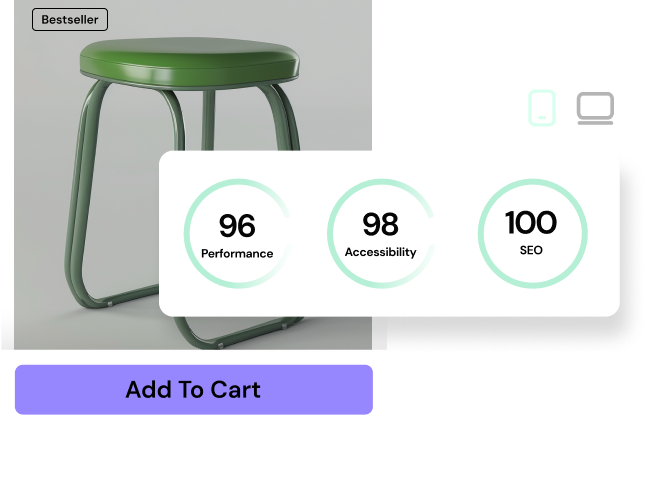
- Accessibility Checks – Run an Ally accessibility scan to catch poor color contrast issues or missing image alt text automatically.
- Responsive Audits – Audit your mobile responsiveness quickly by toggling the device preview mode.
- Asset Optimization – Let the integrated image optimizer automatically convert and serve scaled versions of your media files.
- Layout Shift Prevention – Check for cumulative layout shifts to ensure your Core Web Vitals stay firmly in the green zone.
- Link Verification – Ensure all generated internal links point to active, published pages to avoid frustrating 404 errors.
Mobile optimization isn’t an optional afterthought anymore. With 58.67% of total global internet traffic coming directly from smartphones, your site has to look absolutely perfect on small screens.
The visual editor handles all the standard breakpoints effortlessly, but the AI ensures your generated containers scale correctly without causing horizontal scrolling issues.
Managing Your AI Credit Budget and Costs
Let’s talk about the money side of this. Using powerful server-side generation isn’t inherently free forever, but it’s incredibly cost-effective if you manage it intelligently.
Look at the broader market. Wix charges around $159 per month for their business AI tier. Framer wants $30 per site every single month. A unified WordPress approach saves you an absolute fortune in the long run.
- Monitor your usage – Check your credit burn rate frequently inside your main account dashboard.
- Use the free agent – Lean heavily on Angie for complex code generation, since it operates as a free plugin extension.
- Batch your images – Save visual credits by generating four image variations at once, rather than running single prompts over and over.
- Translate efficiently – Bulk translate entire pages at once instead of processing the text paragraph by paragraph.
- Plan before building – Use the free AI Site Planner to build your initial sitemap structure to save your premium editor credits for the actual design phase.
You’ll very quickly figure out which specific tasks give you the highest return on investment. Generating complex grid CSS? Totally worth the credits. Writing a simple two-word button label? Save the credit and just type it yourself.
Frequently Asked Questions
Can I use Angie without a paid Elementor Pro license?
Yes. Angie operates as a completely standalone WordPress plugin. It works beautifully alongside the visual editor, but you can also use it perfectly with Gutenberg or other standard block editors.
Why does my AI-generated image look slightly distorted or blurry?
Distortion usually happens when your prompt isn’t specific enough about the required aspect ratio or style. Always include terms like “highly detailed,” “4k resolution,” or specify the exact photographic style you want.
Will Google penalize my site for using AI-generated text?
No, Google doesn’t penalize content simply because AI wrote it. They penalize low-quality, spammy content. If you use the assistant to write helpful, E-E-A-T compliant text that serves the reader, you’ll rank just fine.
How do I fix layout shifts caused by generated containers?
Sometimes the generator adds dynamic padding that looks weird on mobile. Switch to the mobile breakpoint view in your editor, select the offending container, and manually set the padding to standard percentages or REM values.
What happens if I run out of generation credits mid-project?
You won’t lose any of your previously generated work. The system simply pauses your ability to generate new assets until your monthly billing cycle resets, or until you purchase a one-time credit top-up pack.
Can the system build a fully functional e-commerce store?
It can design the visual layouts and write the product descriptions, but you’ll still need WooCommerce installed to handle the actual payment processing and inventory logic. The AI assists the design; WooCommerce handles the math.
Is the code generated by the assistant actually safe to use?
Yes. The agentic framework writes standard HTML, CSS, and PHP. More importantly, it forces you to review the code in a protected sandbox environment before you ever click the button to push it to your live database.
How much faster is a WebP image compared to a JPEG?
On average, AI-generated WebP files are about 30% smaller than equivalent JPEGs without losing visual fidelity. This significant reduction in file size directly translates to faster page load times and better Core Web Vitals scores.
Can I train the writing assistant on my specific brand voice?
While you can’t upload a massive brand guideline document yet, you can feed the prompt specific instructions. Paste a paragraph of your existing copy into the prompt box and tell the AI to “match this exact tone and style” for future generations.
Looking for fresh content?
By entering your email, you agree to receive Elementor emails, including marketing emails,
and agree to our Terms & Conditions and Privacy Policy.