Table of Contents
The Shift in AI-Powered Web Design
The automated website builder market is fragmenting fast in 2026. You’ll notice platforms like 10Web promise rapid deployment. Professional developers, however, often hit a hard ceiling regarding design control and plugin compatibility. Generating a site from a text prompt works perfectly for a quick weekend project. Scaling a serious digital business requires something entirely different. You need predictable pricing and deep structural access.
A recent 2026 industry survey revealed that 34% of users seeking 10Web alternatives cited pricing transparency and plugin compatibility as their primary triggers for migrating. They want the speed of artificial intelligence without sacrificing the flexibility of open-source development. Look, the days of relying on a single third-party generator are over. Modern workflows demand native integration right where you work.
Key Takeaways
- WordPress dominates the internet, powering 43.5% of all websites globally, making native integrations crucial for long-term scalability.
- Agentic AI frameworks allow you to prompt custom WordPress assets directly inside your environment, removing external platform dependencies.
- Over 53% of mobile site visits are abandoned if pages take longer than 3 seconds to load.
- The global AI website builder market is growing rapidly, projected to hit $6.3 billion by 2030.
- Platform lock-in remains the biggest technical risk for closed SaaS alternatives like Wix and Squarespace.
- Hostinger currently dominates the budget sector, generating functional sites in exactly 30 seconds for under $3 monthly.
1. Angie by Elementor
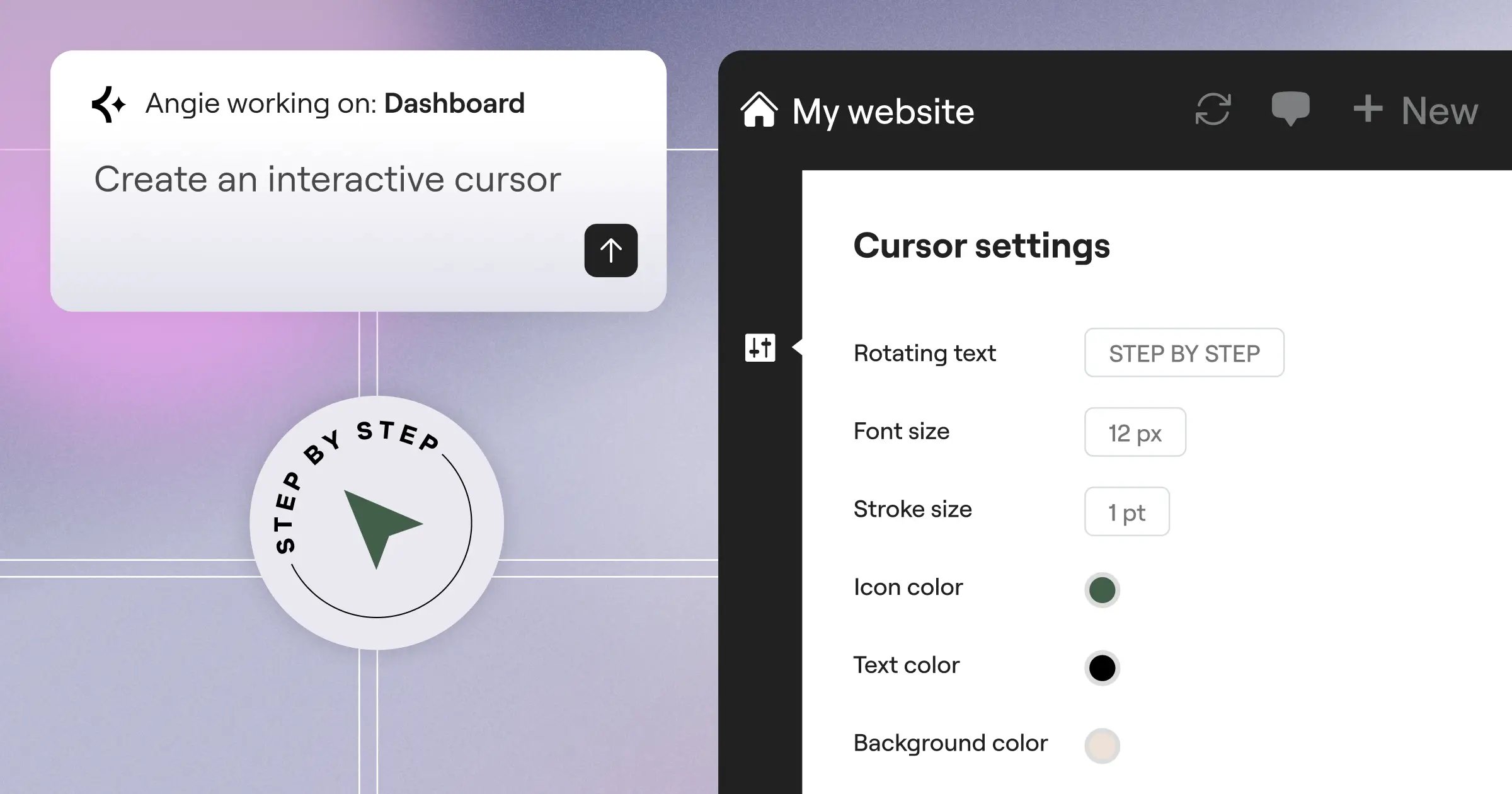
Forget standard text generators. Angie by Elementor represents an entirely different approach to site creation. It’s an agentic AI framework built specifically for WordPress. Instead of spitting out generic HTML layouts on a third-party server, Angie plans and executes complex tasks natively. It acts as an intelligent assistant living directly inside your WordPress dashboard. You simply describe what you need using natural language.
Honestly, this changes everything for agency workflows. Standard AI builders often generate code that conflicts with your existing theme. Angie completely bypasses this issue. It uses the Model Context Protocol (MCP) to automatically inherit your site’s specific context. It reads your active plugins. It checks your theme settings. Then, it writes code that actually works within your unique environment.
You can literally prompt Angie to build a custom real estate listing grid. It will register the required custom post types. It will write the backend logic. It will even generate custom Elementor widgets to display the data on the front end. All of this happens safely.
- Safe Sandbox Environment – Angie executes new code in an isolated sandbox, meaning you can safely experiment without crashing your live site.
- Native WordPress Assets – It outputs real admin snippets, frontend scripts, and custom post types, not just static layouts.
- Total Creative Control – You maintain 100% ownership of the generated code, allowing manual tweaks at any time.
- Zero Cost Barrier – Angie is currently available as a FREE WordPress plugin, democratizing advanced agentic AI for everyone.
- Minutes to Production – You can take a complex interactive web application from a raw idea to a production-ready asset in roughly five minutes.
2. Elementor Editor Pro and Cloud Hosting
When you outgrow automated templates, you need absolute pixel control. Elementor Editor Pro remains the absolute industry standard for visual development. It’s powerful. It’s highly adaptable. And with the upcoming V4 Atomic update, it introduces a strictly CSS-first foundation with native classes and variables. You aren’t just pushing pixels around; you’re writing clean, scalable markup through a visual interface.
I’ve seen agencies struggle with 10Web’s pricing model. Their entry-level plan starts at $10/month, but scaling up to 10 agency sites immediately jumps to $60/month. Elementor takes a different route entirely.
You can purchase the standalone Editor Pro for just $59/year if you bring your own hosting. Alternatively, you can opt for their unified Elementor Hosting ecosystem. This managed cloud solution uses Google Cloud C2 servers and a Cloudflare Enterprise CDN. The result? A blistering 109ms Time to First Byte (TTFB) and consistent 99.9% uptime.
- The Pros –
- Access to 118+ premium widgets covering everything from WooCommerce carts to dynamic data grids.
- Built-in AI Copilot directly inside the editor for rapid container generation and text refinement.
- True visual theme building for custom headers, footers, and archive templates.
- Unified subscription model that eliminates the need for dozens of conflicting third-party plugins.
- The Cons –
- The sheer volume of features presents a steeper learning curve for absolute beginners compared to prompt-based generators.
- Managing dynamic content requires a foundational understanding of WordPress database structures.
3. Hostinger AI Website Builder
Sometimes you don’t need a complex WordPress hosting setup. You just need a brochure site live before your next client meeting. This is where the Hostinger AI Website Builder completely dominates the extreme budget category. It ignores the traditional CMS route entirely. Instead, it relies on a highly restricted, proprietary engine optimized for raw speed.
The onboarding process is startlingly fast. You’ll move from creating an account to viewing a live, published site in literal seconds. The pricing reflects this entry-level focus, starting at an aggressive competitive ratesnth. It’s the perfect stopgap for solopreneurs testing a new business concept.
- Input Brand Details – You provide your company name, industry type, and a brief two-sentence description of your services.
- AI Generation Phase – The system spends exactly 30 seconds generating unique layouts, writing introductory copy, and sourcing relevant royalty-free images.
- Visual Refinement – You use a basic drag-and-drop interface to adjust colors, swap out AI-generated logos, and review built-in AI heatmaps to predict user attention.
- Instant Publishing – One click pushes the site to Hostinger’s global servers with an automatically provisioned SSL certificate.
4. Wix Artificial Design Intelligence
Let’s look at the biggest closed-ecosystem player. Wix reported over 263 million registered users globally by mid-2024. Their ADI (Artificial Design Intelligence) system is the primary reason for this massive footprint. It offers a totally hands-off, managed SaaS experience. You don’t update plugins. You don’t manage server caches. You don’t worry about database migrations.
The Target User: Small business owners with zero technical background who value convenience over data ownership.
The Core Problem: Managing a 10Web WordPress site still requires basic CMS knowledge. If a plugin conflicts with a theme update, the user is responsible for troubleshooting the PHP error.
The Wix Solution: A closed environment where every app, widget, and layout block is strictly vetted by Wix engineers. The AI chat interface guides you through the initial setup, asking questions about your design preferences. It then builds a customized interface. Plans start around $17/month for basic professional use. However, you can’t migrate a Wix site to another host. Once you build on Wix, you’re locked into their infrastructure indefinitely.
5. SiteGround and WordPress Starter
If you demand rock-solid infrastructure without flashy AI gimmicks, SiteGround deserves your attention. They maintain an incredible 99.99% uptime record by distributing their architecture across the Google Cloud network. They aren’t trying to generate your site with a single prompt. They’re trying to give you the most stable foundation possible for a manual build.
Their WordPress Starter plugin bridges the gap between raw hosting and automated setup. It’s a curated wizard. When you first log in, it walks you through selecting a premium theme and installing essential functionality. It’s highly transparent. You’ll pay an introductory rate of roughly competitive ratesnth, which typically renews around $17.99/month. There are no hidden resource fees.
- [x] Speed Optimizer: Pre-configured caching and image compression out of the box.
- [x] Automated Backups: Daily snapshots stored safely off-site to prevent data loss.
- [x] Security Hardening: Free SSL certificates and an active web application firewall blocking malicious traffic.
- [x] Curated Themes: Immediate access to highly optimized, mobile-responsive layout templates.
6. Divi by Elegant Themes
The visual builder space is intensely competitive. Divi by Elegant Themes commands a massive, fiercely loyal community of over 970,000 customers. It effectively replaces the standard WordPress block editor with a deeply complex, feature-rich interface. If you run a high-volume agency, this is a serious contender.
Divi recently integrated their own AI assistant directly into the builder. It generates text content, creates custom imagery, and modifies existing layouts based on your text prompts. It’s a highly capable system. You’ll find over 2,000 pre-made layout packs available immediately upon installation.
But here’s the real advantage: pricing structure. 10Web forces you into a recurring monthly subscription that scales aggressively as you add clients. Divi offers a massive departure from this model. You can pay $89 annually, or you can purchase a true lifetime license for $249. That lifetime deal covers unlimited client websites. For an agency launching five sites a month, that one-time payment represents thousands of dollars in annual savings.
7. ZipWP
Rapid prototyping is entirely changing how agencies pitch clients. ZipWP is the current gold standard for deploying full WordPress environments almost instantly. It doesn’t rely on generic templates. Instead, it uses intelligent algorithms to compile customized site structures on the fly.
You literally enter a description of the business. ZipWP then spends 60 to 90 seconds doing the heavy lifting. It installs WordPress. It configures the database. It writes relevant, industry-specific copy. It sources high-quality, royalty-free images. It applies a cohesive color palette. Finally, it hands you a temporary URL to review the sandbox environment.
- AI-Generated Copywriting – Contextually accurate text that avoids the robotic tone of early AI models.
- Automated Media Sourcing – Pulls fully licensed photography directly relevant to your specific niche.
- One-Click Migration – smoothly transfers the sandbox build to your permanent hosting provider once approved.
- Free Tier Access – Generous limits for testing the platform before committing to a premium professional plan.
8. Bluehost WonderSuite
Hosting companies are finally realizing that an empty WordPress dashboard terrifies new users. Bluehost solved this by creating WonderSuite. It’s deeply integrated into their core onboarding flow, included free with hosting plans starting around competitive ratesnth. It’s designed explicitly for first-time creators.
What exactly is WonderCart?
It’s a simplified eCommerce setup tool. Instead of battling complex WooCommerce settings menus, WonderCart guides you through adding products, setting up shipping zones, and connecting payment gateways using plain English.
How does WonderHelp assist users?
It provides an AI-driven support chat integrated right into the dashboard. If you can’t figure out how to change your navigation menu, you just ask the bot. It gives you exact, step-by-step instructions based on your specific installed theme.
Does it restrict my WordPress access?
No. Unlike closed SaaS builders, WonderSuite sits on top of standard open-source WordPress. You can disable it at any time and retain full access to the traditional backend infrastructure.
9. Duda
Scaling an agency requires tools built specifically for client management. Duda isn’t targeting hobbyists. It targets high-volume web design firms. Currently, over 20,000 agencies and SaaS platforms use Duda to power their client sites. It offers white-labeling features that completely strip away the platform’s branding.
When you manage 50 different clients, you can’t give everyone full admin access. They will inevitably break something. Duda provides granular permission controls that 10Web simply can’t match. Plans start at $19/month per site, but the true value unlocks at their higher agency tiers.
- Establish Brand Guidelines – Use the global design panel to lock in typography and color schemes, preventing clients from uploading off-brand neon fonts.
- Configure Dynamic Pages – Connect internal databases or external APIs to auto-generate hundreds of location-specific service pages instantly.
- Deploy Client Dashboards – Provide a fully white-labeled login portal where clients can view analytics and submit highly restricted content edits.
- Manage Billing – Automate subscription collection directly through the platform’s integrated client billing system.
10. WP Engine Genesis and Local
Enterprise traffic requires enterprise architecture. WP Engine targets large businesses that prioritize raw speed and strict security over automated layout generation. They offer a highly managed WordPress environment starting around $20 to $30 monthly. You aren’t paying for an AI to build your site; you’re paying for infrastructure that guarantees it won’t crash under load.
Their proprietary EverCache technology is notoriously aggressive. It routinely improves WordPress site speed by up to 40% compared to standard shared environments. They manage all core updates. They patch plugin vulnerabilities automatically. They actively block brute-force login attempts before they reach your database.
“The transition from static page builders to agentic AI frameworks represents a massive shift in web development. We aren’t just generating layouts anymore; we’re using AI to program custom logic, optimize for semantic search, and dynamically adjust to user intent directly within the WordPress ecosystem.”
Itamar Haim, SEO Team Lead at Elementor. A digital strategist merging SEO, AEO/GEO, and web development.
For professional developers, their Local application is indispensable. It allows you to build and test complex WordPress environments offline on your personal machine. Once the build is verified, you push it to the live server with a single click. It’s a highly mature, heavily tested deployment workflow.
Decision Matrix: Comparing Your Options
You’ve seen the data. Now you need to align these platforms with your specific operational needs. Cost isn’t the only factor. You must weigh raw performance against the long-term risk of platform lock-in. A cheap monthly rate means nothing if you can’t export your database three years from now.
The table below breaks down the top contenders based on their core target audience and structural flexibility. Notice how the Editor Pro and Angie combination offers the only true middle ground between AI speed and open-source freedom.
| Platform | Best Use Case | Starting Price | Migration Lock-in Risk |
|---|---|---|---|
| Angie + Elementor | Total design freedom with native agentic AI | Free (Angie) / $59/yr (Pro) | Low (Standard WP environment) |
| Hostinger | Extreme budget projects needed in 30 seconds | competitive rates | High (Proprietary site builder) |
| Wix ADI | Hands-off maintenance for small businesses | ~$17/mo | Extreme (Can’t export code) |
| Divi | High-volume agencies wanting lifetime deals | $89/yr or $249 Lifetime | Medium (Shortcode reliance) |
| ZipWP | Rapid client prototyping and concept pitching | Free tier available | Low (Exports to standard WP) |
| SiteGround | Reliable hosting with simple curated setup | ~competitive rates intro | Low (Standard WP environment) |
| Duda | Agencies needing strict white-label controls | $19/mo | High (Proprietary platform) |
| WP Engine | Enterprise sites requiring advanced caching | ~$20-30/mo | Low (Standard WP environment) |
Frequently Asked Questions
Is 10Web still worth using in 2026?
It depends entirely on your budget scale. While 10Web offers fast generation, the steep $60/month agency pricing forces many developers to seek more cost-effective, transparent alternatives for managing multiple client sites.
Can I migrate an existing site from 10Web to Elementor?
Yes. Because 10Web is fundamentally built on WordPress, you can easily export your database and `wp-content` folder. You’ll simply import those files into an Elementor Hosting environment and rebuild any locked proprietary layouts using Editor Pro.
What exactly makes Angie different from generic AI tools?
Generic tools output static HTML text. Angie acts as an agentic framework natively inside WordPress. It automatically reads your site’s specific context and generates actual functional assets, like custom post types and admin snippets, directly into a safe sandbox.
Do I need advanced coding skills to use agentic AI?
No. That’s the primary benefit. You communicate your technical requirements using simple natural language. The AI translates your plain-English instructions into highly optimized PHP, CSS, and JavaScript functions.
Are SaaS builders like Wix faster than WordPress?
Out of the box, SaaS platforms load quickly because their servers are tightly controlled. However, a properly optimized WordPress site running on a premium managed host with a Cloudflare Enterprise CDN will easily match or beat SaaS load times.
How does hosting quality affect mobile bounce rates?
It’s incredibly direct. Data shows 53% of mobile users abandon a site if it takes longer than 3 seconds to load. Cheap shared hosting frequently throttles mobile connections, directly killing your incoming lead generation efforts.
Can ZipWP completely replace a traditional development team?
No. ZipWP is a brilliant tool for rapid prototyping and establishing early client buy-in. You’ll still need human developers to integrate complex third-party APIs, configure custom security rules, and optimize heavy database queries.
What is the absolute most professional alternative on the market?
Hostinger currently offers the lowest entry point at competitive ratesnth. Just remember that you’re trading deep technical flexibility for that lower price point, as you won’t have access to the massive WordPress open-source ecosystem.
Looking for fresh content?
By entering your email, you agree to receive Elementor emails, including marketing emails,
and agree to our Terms & Conditions and Privacy Policy.