Table of Contents
Setting up cookie consent wordpress in 2026 means the old playbook is gone. A basic banner in your footer won’t cut it anymore.
Regulations keep tightening, and your site needs a system that blocks third-party scripts before they fire, matches your design, and keeps you clear of painful fines.
Key Takeaways
- 43.5% of websites run on WordPress, so scalable compliance matters everywhere.
- GDPR fines have topped €4.5 billion total, proof enforcement is active.
- Google Consent Mode v2 is mandatory for running ads in the EEA/UK.
- Poorly optimized cookie scripts can add 200ms to 600ms to your Largest Contentful Paint (LCP).
- Cookie Consent by Elementor gives design-conscious builders the best native integration around.
- Granular privacy settings are legally required, even though “Accept All” buttons still pull 50-60% higher engagement.
- By next year, 75% of the global population will live under modern privacy laws.
Surviving the 2026 Privacy Rules
Data privacy isn’t just a legal checkbox anymore, it’s a core technical requirement. If you run ads, analytics, or third-party scripts, Google Consent Mode v2 affects you directly. Google made it mandatory in March 2024, and without compliance, your remarketing tags simply stop firing.
The legal exposure is real. Total GDPR fines have topped €4.5 billion, with the largest single fine hitting €1.2 billion. Smaller businesses aren’t immune either, since the California Consumer Privacy Act allows fines up to $7,500 per intentional violation.
- Granular control is mandatory: users must accept analytics cookies while rejecting marketing ones.
- Prior consent is absolute: scripts can’t fire before someone clicks accept.
- Design matters: dark patterns get penalized, so “Accept” and “Reject” need equal visual weight.
The technical side shapes rankings too. A heavy banner can wreck your Core Web Vitals.
Consent isn’t just a legal check box anymore. It’s a fundamental part of the technical SEO structure. If your consent banner blocks Google’s rendering path, your rankings will tank before the legal team even reviews the policy.
Itamar Haim, SEO Team Lead at Elementor. A digital strategist merging SEO, AEO/GEO, and web development.
Selection Criteria for Modern Sites
Finding the right cookie consent wordpress plugin means looking past the marketing jargon and checking real performance data. Unoptimized third-party cookie scripts can inflate your LCP by 200ms to 600ms, a hit to your mobile score you honestly can’t afford.
- Performance impact: the script must load asynchronously, and local hosting is a plus.
- Design flexibility: it shouldn’t look bolted on, and needs to match your global brand settings.
- Elementor integration: for the 21 million sites running Elementor, native compatibility with Elementor Editor Pro matters.
- Legal automation: auto-scanning and auto-blocking are essential now, manual shortcode wrapping is done.
- Update frequency: privacy laws shift monthly, so your vendor needs to keep pace.
1. Cookie Consent by Elementor
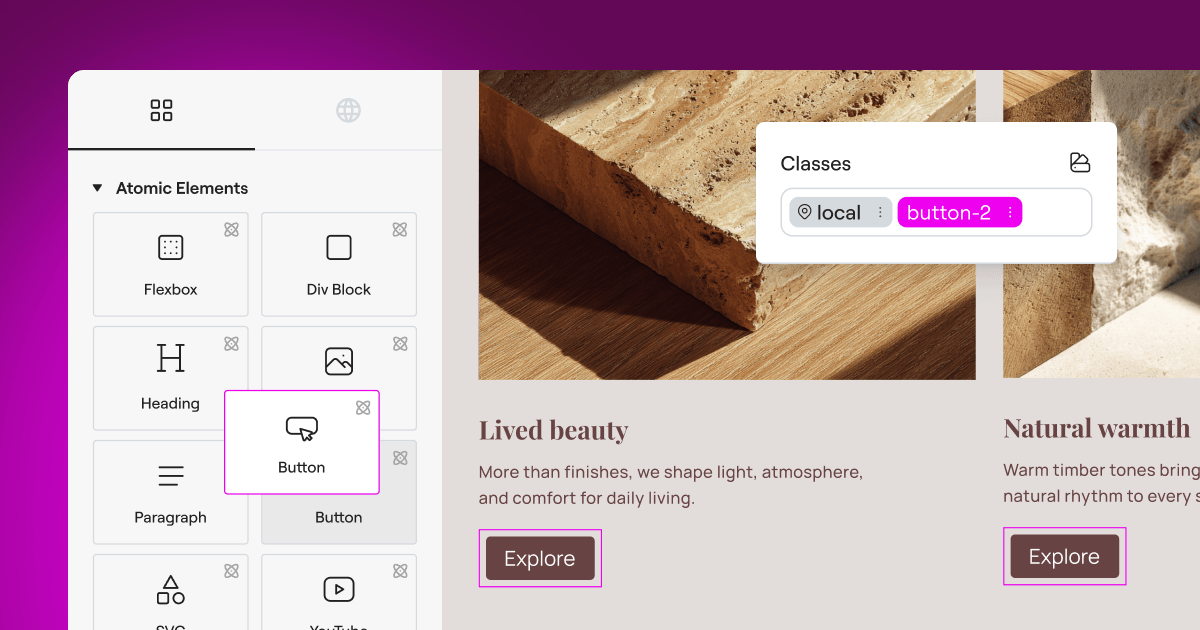
Most consent tools pull you out of your workflow, but Cookie Consent was built for the Elementor ecosystem. Manage everything inside Elementor Editor Pro, no code, no CSS conflicts, and banners inherit your fonts and colors automatically while fully supporting Google Consent Mode v2. For the 21 million sites running Elementor, that’s real design control with no compliance trade-off.
Key Features:
- Styles every banner through the familiar Elementor editor interface.
- Blocks scripts automatically, no manual shortcodes needed.
- Supports Google Consent Mode v2 natively, so your ads keep running.
- Protects your Core Web Vitals with a lightweight, modern CSS build.
- Includes 17 professionally designed, compliant layout templates.
Pricing: Included in specific Elementor One tiers, or available as a standalone add-on for $49/year.
Pros:
- Flawless design synchronization with your existing WordPress theme.
- Zero third-party branding on your live site.
- Fast load times compared to cloud-hosted alternatives.
- Direct integration with managed cloud hosting environments.
Cons:
- Requires Elementor to use the full design capabilities.
- Not ideal for sites running exclusively on older, legacy page builders.
Verdict: The best choice for designers who want compliance without giving up their site’s look.
2. Cookiebot by Usercentrics
Why do enterprise sites love Cookiebot? Manual script audits eat up time, and this cloud-based tool automates discovery, scanning your site monthly and sorting rogue scripts automatically, a real relief on big, embed-heavy sites. There’s one tradeoff: it relies on external servers, so you’ll sometimes notice a slight render delay. Not a dealbreaker, but performance purists will feel it.
Key Features:
- Scans thousands of subpages, detecting and sorting cookies automatically.
- Delivers consent scripts from a global CDN of servers.
- Translates banners into 47 languages instantly.
- Stores user consent data securely for legal audits.
Pricing: Free for sites under 50 pages. The Premium Small plan costs €12/month. The Large plan jumps to €49/month.
Pros:
- Needs almost no manual configuration after setup.
- Trusted by legal departments worldwide.
- Reporting dashboard for compliance tracking.
Cons:
- Monthly costs add up for medium-sized sites.
- Cloud dependency adds a minor DNS lookup delay.
- Customizing the banner needs custom CSS knowledge.
Verdict: The top pick for large, content-heavy sites with budget for full automation.
3. Complianz
Say you’re an agency building for a strict corporate client. You need more than a cookie banner: a Privacy Policy, Terms of Service, and a processing agreement too. Complianz operates as a full legal suite, running you through a wizard that asks about your business and generates the required documents. The interface has plenty of toggles and nested menus, so it takes longer to learn if you just want a quick banner, but for full legal coverage, it’s hard to beat.
Key Features:
- Generates legally binding Privacy Policies and Disclaimers.
- Shows different banners based on the visitor’s region.
- Tests different banner layouts to improve opt-in rates.
- Connects natively with popular forms and map plugins.
Pricing: $49/year for a single-site premium license. Agency plans hit $349/year.
Pros:
- Solves multiple legal requirements from a single dashboard.
- Excellent value for the features included.
- The setup wizard, while long, is educational.
Cons:
- The settings panel is dense, with nested options.
- Generated policies still need review by local counsel.
Verdict: A good fit for owners who need legal documents generated alongside their cookie banner.
4. CookieYes
Speed and simplicity drive adoption, and that’s why CookieYes now powers over 1.4 million websites globally. Connect your site, tweak a few settings, and you’re done, with granular consent letting users toggle script categories on or off. The free version works fine for personal blogs, but removing their branding or customizing colors needs the Pro plan.
Key Features:
- Gives users fine-grained control over analytics and marketing scripts.
- Matches your logo and primary hex codes for custom branding.
- Shares user consent across your main site and subdomains.
- Keeps a clean historical log of who consented and when.
Pricing: Free basic tier available. The Pro plan costs $10/month per domain.
Pros:
- Fast and intuitive initial setup.
- Clean, modern interface that clients easily understand.
- Strong integration with Google Tag Manager.
Cons:
- Strict page limits on the lower pricing tiers.
- The free version displays a prominent “Powered by CookieYes” badge.
Verdict: A reliable, simple fix for small and medium sites needing quick compliance.
5. Borlabs Cookie
If you operate in Germany, Austria, or Switzerland, the legal environment is tough, and Borlabs Cookie is built for this high-risk market. It installs locally, so no external connections happen, and you set up two-click solutions for YouTube, Google Maps, and social feeds, then assign scripts to defined opt-in groups. It blocks everything until explicit consent is given. The interface is basic, but the technical execution is solid.
Key Features:
- Hosts everything locally, with zero external calls to protect visitor IPs.
- Replaces embedded videos with a compliant two-click placeholder.
- Sticks to strict opt-in rules under EU privacy court rulings.
- Moves configurations easily between staging and production sites.
Pricing: €49/year for a single-site license.
Pros:
- Strong legal protection for the strictest EU jurisdictions.
- Excellent performance since everything runs locally.
- Strong community support among European developers.
Cons:
- There’s no free version available for testing.
- The interface is technical, a steep learning curve for beginners.
Verdict: A top choice for websites operating under strict German privacy laws.
6. GDPR Cookie Consent by WebToffee
Developers love control: shortcodes, hooks, audit tables, and WebToffee delivers exactly that. It’s one of the most downloaded consent plugins in the official repository, with over 1 million active installs, skipping cloud servers for a raw settings panel where you define exactly how cookies behave. The interface uses an older visual style, but the codebase holds up well through WordPress core updates.
Key Features:
- Generates a compliant cookie audit table automatically for your policy page.
- Wraps specific content blocks to hide them from non-consenting users.
- Targets visitors by geography, showing the banner only in regulated countries.
- Exports consent records as CSV files for local storage.
Pricing: Free basic version. Pro version runs $69/year.
Pros:
- Great flexibility for custom PHP implementations.
- Generous free tier for small sites.
- Responsive and helpful customer support team.
Cons:
- The backend interface uses an older visual style.
- Manual categorization takes real time on large sites.
Verdict: A dependable workhorse for developers who prefer manual control over cloud automation.
7. Iubenda
What happens when you mix an international law firm with a software team? You get Iubenda, a SaaS product run by actual lawyers, not just a plugin. When privacy laws shift in Brazil or California, Iubenda’s legal team updates remote clauses that push straight to your WordPress site. You configure almost everything on their external website, then paste an integration code into WordPress. Effective, though it happens outside your dashboard.
Key Features:
- Draws on thousands of lawyer-crafted, legally vetted policy segments.
- Updates policies automatically when the underlying laws change.
- Uses the same consent logic across your website and mobile apps.
- Integrates with POS systems for offline consent at physical stores.
Pricing: Starts at competitive monthly rates for the Pro plan.
Pros:
- The highest legal accuracy outside a dedicated law firm.
- Covers complex global jurisdictions well.
- Beautiful, professional frontend document rendering.
Cons:
- Pricing gets complicated as you add features and traffic.
- Configuration happens outside WordPress, not in your dashboard.
Verdict: The safest choice for businesses with high legal exposure across multiple countries.
8. Usercentrics Enterprise
If you’re managing a global media conglomerate, a basic $49 tool won’t cut it. Usercentrics (Cookiebot’s parent company) offers a large enterprise platform, handling the IAB TCF 2.2 framework, cross-domain consent across hundreds of sub-brands, and analytics tying consent to revenue. You won’t need this for a local plumbing site, it’s overkill at that scale, but for high-traffic environments, it’s the gold standard.
Key Features:
- Supports advanced TCF 2.2 needs, crucial for programmatic ad networks.
- Tracks opt-in metrics on a deep analytics dashboard to optimize banners.
- Connects to custom mobile apps and smart TV platforms via an API-first build.
- Integrates with enterprise tag managers through server-side tagging.
Pricing: Custom pricing models. The entry-level Business tier starts at €50/month.
Pros:
- Unmatched scalability for massive network sites.
- Enterprise-grade SLAs and dedicated account managers.
- Testing tools to maximize opt-in conversion rates.
Cons:
- Out of reach pricing for small and medium businesses.
- Implementation usually needs a dedicated developer.
Verdict: The go-to choice for global corporations and enterprise ad networks.
9. Termly
Startups grow fast, collect user data aggressively, and rarely have an in-house lawyer. Termly targets this exact gap, going beyond simple cookie blocking with built-in Data Subject Access Request (DSAR) forms, so when someone demands their data under the CCPA, Termly gives you a secure portal to handle it. The main drawback is strict traffic limits: the free tier caps at 10,000 monthly visitors, so a viral campaign forces a fast upgrade.
Key Features:
- Handles user data deletion and retrieval requests securely.
- Generates Return Policies, Shipping Policies, and Privacy Policies.
- Scans for and blocks unknown scripts automatically.
- Matches the consent banner to your startup’s brand look.
Pricing: Free up to 10k visits. Pro plans start at $15/month.
Pros:
- A solid all-in-one compliance hub for new businesses.
- The DSAR feature is rare at this price point.
- User-friendly dashboard for non-technical founders.
Cons:
- Traffic-based pricing means fast-growing sites upgrade sooner.
- Customer support can be slow during peak hours.
Verdict: A strong fit for fast-moving startups that need to handle user data requests.
10. Quantcast Choice
Here’s a hard truth about programmatic advertising: if you rely on it, you must comply with the IAB TCF framework. Quantcast Choice is the most widely adopted free solution, built for publishers, displaying the vendor lists European law requires, and keeping ad slots running, at zero cost. But remember the golden rule of free software: if the product is free, you’re the product. Quantcast is an ad-tech company gathering anonymized consent data to fuel its own network.
Key Features:
- Meets full TCF 2.2 compliance, required by Google AdSense and other major networks.
- Lets users block specific ad providers through detailed vendor lists.
- Loads ad slots quickly with high-speed delivery.
- Shares basic demographic data based on consent.
Pricing: Completely free (ad-supported data model).
Pros:
- Saves publishers real money on monthly SaaS fees.
- Industry-standard compatibility with programmatic ad exchanges.
- Strong uptime and reliability.
Cons:
- You’re feeding user behavior data back into Quantcast’s ecosystem.
- The setup process involves plenty of ad-tech terminology.
Verdict: Best for high-traffic bloggers who rely on display ads and need a free TCF solution.
Feature Comparison Matrix
Choosing the right cookie consent wordpress tool comes down to budget and features.
| Platform | Pricing (Starting) | GCM v2 Ready | Native Elementor Support | Best For |
|---|---|---|---|---|
| Cookie Consent | $49/year | Yes | Yes (Flawless) | Designers & Elementor Users |
| Cookiebot | €12/month | Yes | No (Shortcode) | Large Automated Sites |
| Complianz | $49/year | Yes | Basic | Full Legal Suites |
| CookieYes | $10/month | Yes | Basic | Quick SaaS Setup |
| Borlabs | €49/year | Yes | Basic | Strict German Compliance |
| WebToffee | $69/year | Yes | No (Shortcode) | Custom PHP Developers |
| Iubenda | Competitive rates | Yes | Basic | Lawyer-backed Accuracy |
| Usercentrics | €50/month | Yes | No | Global Enterprise Networks |
| Termly | $15/month | Yes | Basic | Startups needing DSAR |
| Quantcast | Free | Yes | No | Ad-heavy Publishers |
Frequently Asked Questions
Do I need a cookie plugin if I only use basic Google Analytics?
Yes. Google Analytics sets tracking cookies. Under GDPR and CCPA, you can’t load them until the user clicks “Accept,” so you need a tool to block the script first.
What exactly is Google Consent Mode v2?
It’s an API protocol that tells Google’s tags a user’s consent status. If someone rejects cookies, GCM v2 sends “cookieless” pings instead, so you can still track basic conversions legally.
Will a consent banner hurt my SEO rankings?
It can. Heavy external JavaScript in your banner delays rendering. Prioritize optimizing WordPress speed with a lightweight, natively integrated tool like Cookie Consent.
Can I design my own banner inside Elementor?
Yes, with the right tools. Cookie Consent integrates directly with Elementor Editor Pro, so you build your banner using the same drag-and-drop interface you use everywhere else.
Is a “cookie wall” legally compliant in 2026?
No. Forcing users to accept cookies before viewing your content is explicitly illegal under GDPR. Users need a genuine choice to reject non-essential scripts.
What happens if I ignore these privacy laws?
Automated legal bots crawl the web constantly. Non-compliant scripts risk demand letters, steep fines (up to €20M under GDPR), and Google suspending your ad accounts.
How frequently should I update my privacy policy?
Review it quarterly. Privacy laws evolve fast, so a tool that auto-updates legal clauses based on court rulings is a smart pick.
Looking for fresh content?
By entering your email, you agree to receive Elementor emails, including marketing emails,
and agree to our Terms & Conditions and Privacy Policy.






