Table of Contents
This technical barrier created a distinct divide. On one side were the developers, the architects of the digital world. On the other were the business owners, writers, artists, and entrepreneurs who had ideas to share but lacked the tools to build them. There was no middle ground. You either hired a developer, often at great cost, or you remained offline.
The introduction of the website builder fundamentally dismantled this barrier. By abstracting complex code behind a intuitive visual interface, these tools democratized web creation. They allowed anyone to manipulate the digital canvas directly, placing pixels and content with the same ease as arranging a slide deck. However, the term “website builder” has become somewhat of a misnomer in recent years. What started as simple tools for hobbyists to create basic layouts have matured into sophisticated, enterprise-grade platforms. Today, a robust website builder is not just a design tool; it is a comprehensive ecosystem that integrates hosting, marketing, eCommerce, and artificial intelligence into a single, cohesive workflow.
This guide explores exactly what a website builder is, the deep technical mechanics of how it functions under the hood, and how modern platforms like Elementor have bridged the gap between the simplicity of a SaaS tool and the limitless flexibility of open-source software.
Key Takeaways
- The Democratization of the Web: Website builders have shifted power from code-literate developers to creative professionals and business owners, allowing for pixel-perfect creation without syntax knowledge.
- The “Best of Both Worlds” Architecture: The industry has moved beyond the binary choice of “Easy but Limited” (SaaS) vs. “Powerful but Complex” (Open Source). Hybrid platforms now offer managed infrastructure with open-source freedom.
- Technical Abstraction: Modern builders act as real-time compilers, translating visual drag-and-drop actions into clean, semantic HTML, CSS, and JavaScript that browsers can render efficiently.
- The Ecosystem Approach: A builder is no longer a standalone tool. It is the center of a stack that includes Elementor Hosting, transactional email services, image optimization, and marketing automation.
- Agentic AI vs. Generative AI: The future of web creation lies in “Agentic AI” (like Angie), which doesn’t just write text but actively plans, builds, and manages site tasks autonomously.
- Performance as a Feature: Speed is not an afterthought. Leading platforms integrate enterprise-grade technologies like Google Cloud Platform and Cloudflare Enterprise directly into the hosting environment to ensure optimal Core Web Vitals.
Part 1: Defining the Website Builder
At its most fundamental level, a website builder is a software application that allows users to construct and manage a website without manual code editing. It functions as a visual abstraction layer. When you interact with the software, dragging an image widget to a specific column or changing a headline’s font to Helvetica, the builder intercepts these actions and translates them into the machine-readable code (HTML, CSS, PHP, JS) that a web browser requires to display the page.
The Historical Evolution: From Hand-Coding to Platforms
To appreciate the sophistication of modern tools, we must understand the trajectory of web development tools.
1. The Text Editor Era (1990s – Early 2000s) In the early web, a “builder” was a text editor like Notepad. Every page was a standalone HTML file. If you had a 50-page website and wanted to change the footer copyright date, you had to manually open, edit, and upload 50 separate files via FTP. This was the era of “static” sites. It was tedious, prone to human error, and strictly inaccessible to non-technical users.
2. The CMS Era (Mid-2000s) The advent of Content Management Systems (CMS) like WordPress revolutionized data management. A CMS separated content from design. You could type an article into a database, and the system would dynamically inject it into a template. This solved the “50-file problem,” but design was still rigid. You were locked into the layout of your chosen theme. Changing a sidebar from left to right still required rewriting PHP and CSS code.
3. The Visual Era (2010s) The first generation of visual builders appeared as plugins or standalone SaaS tools. They offered basic drag-and-drop functionality but largely failed on performance. They often produced “bloated” code, wrapping a simple text block in ten layers of unnecessary <div> tags, resulting in slow, clunky websites that search engines penalized. They were widely regarded as tools for amateurs.
4. The Platform Era (Present Day) We are now in the Platform Era. Tools like the Elementor Website Builder generate clean, semantic code that rivals hand-coded sites. They have expanded beyond simple layout editing to include full-site design (headers, footers, archives), dynamic data integration, and marketing logic. They are professional-grade development environments wrapped in a visual interface.
How It Works: The Technical Mechanics
When you build a site visually, you are not just drawing a picture. You are interacting with a complex logic engine that manipulates the Document Object Model (DOM).
The DOM is the browser’s internal map of a web page, a hierarchical tree structure of every element (headings, paragraphs, images, links) on the screen.
- The Visual Interface: You engage with the builder’s UI. You select a “Call to Action” widget from the Elementor Library and drag it onto the canvas.
- The JavaScript Engine: The builder’s client-side engine (usually written in React or similar libraries) detects the “drop” event. It calculates the precise coordinates and context: Did you drop it inside a Flexbox container? Is it nested within a Grid?
- Real-Time DOM Injection: The engine dynamically injects a new node into the DOM tree. It wraps your widget in the necessary HTML structure. For example, a button isn’t just an <a> tag; it needs a wrapper for positioning and specific classes for styling.
- Dynamic CSS Generation: This is where modern builders shine. As you adjust the “Border Radius” slider from 0px to 50px, the builder writes a CSS rule (border-radius: 50px;) and applies it to a unique class ID assigned to that button. This happens in milliseconds, providing the “What You See Is What You Get” (WYSIWYG) experience.
- Serialization and Storage: When you click “Update,” the builder doesn’t save a static HTML file. It serializes the entire layout state, every widget, setting, and position, into a structured data format (often JSON) and stores it in the database. When a visitor requests your page, the server retrieves this data, renders the HTML, and serves it.
Part 2: The Landscape of Website Builders
The market for website creation tools is vast, but it generally categorizes into three distinct architectural philosophies. Understanding these distinctions is critical for choosing the right tool for your long-term growth.
1. Offline Website Builders
Software like Adobe Dreamweaver or older tools like Microsoft FrontPage fall into this category. You install the software on your desktop, build the site locally, and then upload the compiled files to a web server.
- The Reality: While they offer total code control, they are disconnected from the modern content ecosystem. Updating content requires access to the specific computer where the file lives. They lack dynamic features like user logins or eCommerce databases.
2. Closed SaaS Platforms (The “Walled Garden”)
Platforms like Wix or Squarespace represent the “Software as a Service” model. You pay a monthly subscription for an all-in-one package: the builder, the hosting, and the support.
- The Architecture: These are closed ecosystems. The platform controls the server, the code, and the feature set.
- The Limitation: While user-friendly, the trade-off is ownership and flexibility. You cannot move your site to a different hosting provider because the builder creates proprietary code that only runs on their servers. If you need a specific feature that they don’t offer, you cannot simply install a third-party plugin; you are stuck.
3. Open-Source CMS (WordPress)
WordPress is the operating system of the open web. It is free software that you can install on any server in the world.
- The Architecture: It is modular. You have the core software, and then you add a Theme (for design) and Plugins (for functionality).
- The Limitation: Historically, this modularity caused fragmentation. You had to buy a domain from one vendor, hosting from another, a theme from a third, and plugins from a fourth. If the site broke, every vendor would point the finger at the others.
The Hybrid Solution: The Elementor Ecosystem
Elementor has pioneered a fourth category that combines the benefits of SaaS and Open Source. By pairing the Elementor Website Builder with Elementor Hosting, they provide a managed environment that feels like a SaaS platform but retains the power of WordPress.
- Managed Infrastructure: You get a single dashboard, a pre-installed environment, and one support team for everything from the server to the editor.
- Open Freedom: Unlike a walled garden, you are not locked in. You have full access to the WordPress database. You can install any of the 60,000+ plugins in the repository. You can modify the code. And if you ever decide to leave, you can take your entire website and data with you.
Part 3: Core Components of a Professional Platform
A true “Website Builder Platform” is distinguished by the depth of its components. It is not enough to just move text around a page. You need a suite of tools that handle design systems, performance, and infrastructure.
1. The Visual Logic Engine (The Editor)
The core editor must balance ease of use with professional control.
- Layout Systems: Modern web design relies on CSS Flexbox and CSS Grid. These are powerful layout models that allow for complex, responsive alignments. Elementor’s Container widgets expose these CSS capabilities visually. You can define row direction, justification, and wrap settings without writing code, ensuring your site adapts perfectly to mobile devices.
- Global Design Systems: Consistency is key to professional design. Instead of setting a font for every single heading, you define a Global Design System. You set your “Primary Color” and “Secondary Font” once. These global variables then propagate across the entire site. If you rebrand, you update the global setting, and every button and headline updates instantly.
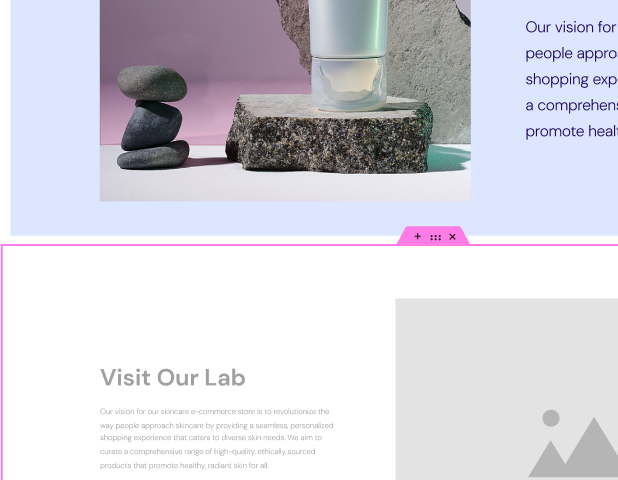
- Dynamic Content Injection: This is a critical feature for businesses. You can design a “Single Post Template” using the builder, but instead of typing a headline, you use a Dynamic Tag to pull the “Post Title” from the WordPress database. This allows you to design one template that controls the look of thousands of blog posts or products.
2. The Infrastructure Layer (Hosting)
A builder is only as good as the server it runs on. Many users make the mistake of pairing a powerful builder with cheap, shared hosting, resulting in poor performance. Elementor Hosting solves this by integrating an enterprise-grade stack directly into the platform:
- Google Cloud Platform (GCP): The hosting runs on Google’s C2 (Compute-Optimized) Virtual Machines. These servers offer significantly higher clock speeds than standard web hosting, which is crucial for processing the PHP logic that powers WordPress.
- Cloudflare Enterprise CDN: Speed is geographic. A Content Delivery Network (CDN) copies your site’s static assets (images, CSS, JS) to hundreds of servers worldwide. When a user in Tokyo visits your site, they download the heavy files from a Tokyo server, not your main server in New York.
- NVMe Storage: The infrastructure uses Non-Volatile Memory Express drives, which are vastly faster than traditional SSDs, reducing database query times.
3. Thematic Frameworks
Every WordPress site needs a theme, but in the era of visual builders, the role of the theme has changed.
- The “Blank Canvas” Framework: For professional designers, the Hello Theme is the industry standard. It is a lightweight, stripped-down theme that provides zero styling opinion. It loads in milliseconds and acts as a neutral foundation, allowing the builder to control 100% of the design.
- The “Starter” Framework: For DIY users or small business owners, the Hello Biz theme offers a middle ground. It includes pre-configured settings and “starter kits” that provide a polished look out of the box, helping users overcome “blank page syndrome.”
Part 4: The Step-by-Step Build Process
Building a website is a workflow that moves from abstract strategy to concrete execution. Modern platforms have developed tools to assist with every phase of this lifecycle.
Phase 1: Strategy and Architecture
Before a single pixel is placed, the site structure must be planned. This is often the most difficult step for non-professionals. The AI Site Planner has revolutionized this phase.
- Intent Analysis: You input your business type and goals (e.g., “A boutique law firm specializing in intellectual property”).
- Sitemap Generation: The AI suggests a logical page structure (Home, About, Practice Areas, Case Studies, Contact).
- Wireframing: It doesn’t just list the pages; it generates low-fidelity wireframes for each, suggesting the layout of sections and the type of content needed. This allows you to visualize the user journey before committing to a design.
Phase 2: Design and Construction
Once the blueprint is set, you enter the Elementor Website Builder.
- Atomic Design: You build using modular components. You might design a “Call to Action” section, save it as a Global Template, and reuse it across multiple pages. If you update the template, it updates everywhere.
- Responsive Editing: You switch views between Desktop, Tablet, and Mobile. You can hide specific elements on mobile, change font sizes for tablets, or reverse column orders to ensure the best user experience on every device.
- AI Asset Creation: If you lack custom photography, Elementor AI can generate royalty-free images based on your prompts directly within the editor. It can also expand images (outpainting) or remove backgrounds, eliminating the need for external tools like Photoshop.
Phase 3: Logic and Commerce
For many, a website is a store. Integrating eCommerce functionality has traditionally been complex. The WooCommerce Builder allows you to visually design every aspect of your online store.
- Product Templates: You can design a custom layout for your products, placing the “Add to Cart” button exactly where you want it.
- Checkout Optimization: You can redesign the cart and checkout pages to reduce friction and cart abandonment, replacing the standard, generic WooCommerce checkout flow with a branded, streamlined experience.
- Performance: For high-volume stores, Elementor eCommerce Hosting provides optimized database configurations to handle simultaneous transactions without slowing down.
Phase 4: Optimization and Compliance
A launched site is not a finished site. It must be optimized for search engines and accessibility standards.
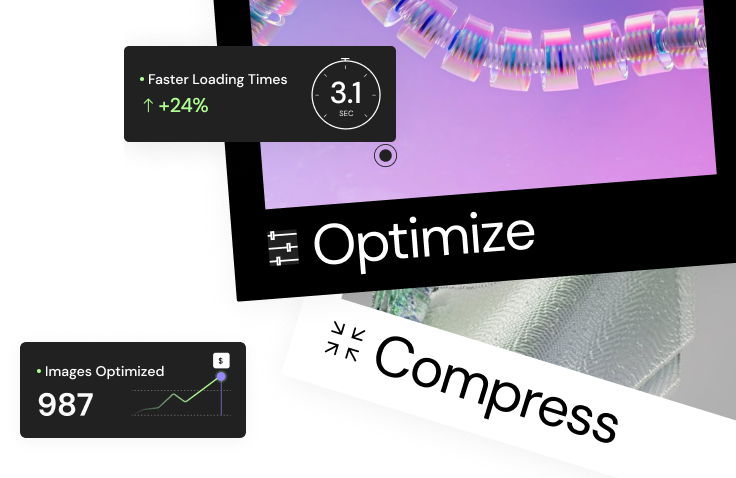
- Image Optimization: Large images are the #1 cause of slow sites. The Image Optimization plugin runs in the background, automatically compressing every uploaded image and converting it to Next-Gen formats like WebP or AVIF. This significantly reduces page weight.
- Web Accessibility: Legal requirements (like the ADA in the US or EAA in Europe) mandate that websites be accessible to people with disabilities. Ally by Elementor scans your site for violations, such as low contrast text or missing ARIA labels, and provides automated fixes to help ensure compliance.
Part 5: Advanced Ecosystems and Integrations
A robust website builder platform extends its capabilities through a tightly integrated ecosystem of plugins and services. This “stack” approach ensures that all tools communicate effectively with one another.
The Marketing Automation Engine
A website exists to capture interest. But capturing a lead is only the first step; nurturing that lead is where business growth happens.
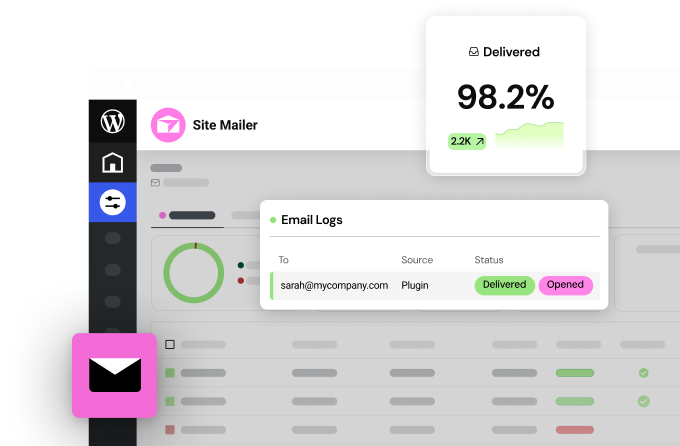
- The Problem: Standard WordPress installs rely on PHP’s wp_mail function to send emails. This is notoriously unreliable and often results in emails (like password resets or contact form notifications) landing in spam folders.
- The Infrastructure Solution: Email Deliverability replaces this default function with a robust, API-based email delivery service. It acts as a bridge, ensuring that transactional emails are authenticated and delivered to the inbox, not the junk folder.
The AI Revolution: From Generative to Agentic
We are currently witnessing a seismic shift in how AI is applied to web creation.
- Generative AI: This is the current standard. You ask the AI to “write a paragraph about coffee” or “generate an image of a mug.” It creates content.
- Agentic AI: This is the future, represented by tools like “Angie”. An AI agent has agency, it can perform multi-step actions. You might tell Angie, “Create a landing page for my Black Friday sale, link it to my ‘Electronics’ category in WooCommerce, and add a popup that triggers after 10 seconds.” The agent understands the context of your site, knows how to use the builder tools, and executes this complex workflow autonomously. This moves the user from being a “builder” to being a “director.”
Professional Customization
For developers, the platform must remain open. Elementor Pro includes features specifically for the “coder”:
- Custom CSS: You can apply custom CSS directly to any widget, with the changes reflecting in real-time in the editor.
- Custom Code Manager: You can inject tracking pixels (like Google Analytics or Facebook Pixel) or custom JavaScript snippets into the header or footer without editing theme files.
- Notes: This collaboration feature allows teams and clients to pin comments directly onto elements in the live editor (e.g., “Make this logo bigger”), streamlining the feedback loop.
Part 6: Who is a Website Builder For?
The versatility of a platform like Elementor means it serves distinct user personas, each utilizing the toolset in different ways.
1. The DIY Business Owner
The Goal: Launch a professional presence quickly with minimal overhead. The Workflow: This user relies on the AI Site Planner to generate the initial structure. They choose a “Kit” from the library that matches their industry. They use the visual editor to swap text and images. They rely on the managed security of Elementor Hosting so they never have to worry about firewalls or backups.
2. The Marketing Professional
The Goal: Build high-converting landing pages and funnels. The Workflow: This user leverages the Popup Builder to create exit-intent offers. They integrate their forms with Send to automate lead nurturing. They use A/B testing (via third-party integrations) to optimize button colors and headlines. Speed is critical for their ad quality scores, so they rely on the Cloudflare CDN integration.
3. The Web Designer / Freelancer
The Goal: Create unique, bespoke websites for clients. The Workflow: This user starts with the Hello Theme as a blank canvas. They use the Theme Builder to design custom headers and footers that break the mold of standard templates. They use Elementor AI to generate custom CSS for unique hover effects. They hand off the site to the client with a simplified “Editor” role, ensuring the client can change text but not break the layout.
4. The Digital Agency
The Goal: Scale production and manage hundreds of sites efficiently. The Workflow: Agencies use the platform to standardize their tech stack. By using one builder and one host for all clients, they streamline their support and training. They use the “Export Kit” feature to save their own custom templates (e.g., “Our Agency’s Real Estate Layout”) and deploy them instantly to new client sites.
Part 7: The Future of Web Creation
The definition of a website builder will continues to expand. We are moving toward a “Unified Web Creation Operating System.”
- Performance Standards: With Google’s Core Web Vitals becoming a ranking factor, builders are prioritizing code efficiency. Features like “Lazy Loading” and “Asset Optimization” are becoming standard.
- Accessibility First: Accessibility is shifting from a “nice-to-have” to a legal necessity. Tools like Ally will likely become integrated defaults, ensuring the web is inclusive by design.
- AI as a Collaborator: We will see a move away from simple prompt-based generation toward conversational collaboration. You will build with your AI agent, discussing design choices and strategy in real-time.
As platforms like Elementor continue to evolve, they offer a compelling proposition: the power of a custom-coded website with the speed and efficiency of a visual builder. For anyone looking to establish a robust digital presence, leveraging these modern platforms is no longer a shortcut, it is a strategic advantage.
Frequently Asked Questions
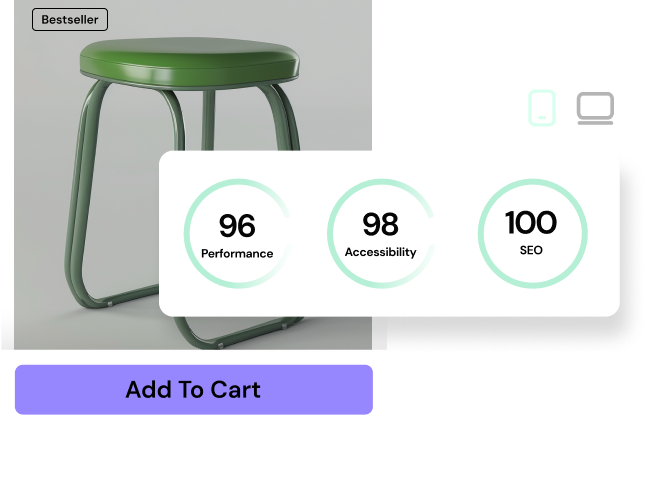
1. Is a website builder bad for SEO compared to hand-coding? No. This is a myth from the early days of visual builders. Modern platforms like Elementor generate semantic HTML5 code. When combined with a high-performance hosting environment (like Google Cloud Platform) and optimization tools (like the Image Optimization), sites built with builders can achieve perfect 100/100 scores on Google PageSpeed Insights and Core Web Vitals, ranking just as well as, if not better than, hand-coded sites.
2. Can I move my website if I decide to leave the platform? This depends entirely on the type of builder. With Closed SaaS platforms (Wix, Squarespace), the answer is generally no; you cannot export your site’s code, and you would have to rebuild from scratch. With Elementor, because it is based on open-source WordPress, you have full data ownership. You can export your entire site, database, and content and move it to any hosting provider in the world.
3. Do professional web agencies really use website builders? Yes. A significant portion of the web is built by agencies using Elementor. It allows them to build faster, reduce development costs, and focus their budget on strategy and design rather than repetitive coding tasks. It also allows them to hand over a site that their clients can easily edit, which reduces post-launch support requests.
4. What is the difference between a “Page Builder” and a “Website Builder”? A “Page Builder” allows you to edit the content area of a single page (e.g., the text and images of a blog post). A “Website Builder” (specifically Elementor Pro’s Theme Builder) allows you to design the structural framework of the site, the Header, Footer, 404 Error Page, Search Results Page, and Archive templates. It gives you control over the entire website, not just the content.
5. How much does it cost to build a website with Elementor? Elementor offers a Free Download of the core plugin, which is incredibly powerful for basic sites. For professional features (Theme Builder, Popup Builder, WooCommerce Builder), you need the Pro version. The most cost-effective route is often a bundled Elementor Hosting plan, which includes the Pro builder, managed hosting, and support for a single annual price.
6. Do I need to know how to code to use Elementor? No. The entire platform is designed to be code-free. You can build complex, dynamic, and beautiful websites using only the visual interface. However, if you do know how to code, Elementor allows you to add custom CSS, HTML, and JavaScript, giving you “The Best of Both Worlds.”
7. Can I build a large online store with a website builder? Absolutely. By integrating with WooCommerce, the world’s most popular eCommerce software, you can build enterprise-level stores. The WooCommerce Builder gives you visual control over the design, while Elementor’s robust hosting infrastructure handles the database transactions.
8. Is my website secure with a builder? Security depends on your hosting. Elementor Hosting includes enterprise-grade security layers, including a hardware firewall, DDoS protection, automated daily backups, and a free SSL certificate. This managed security is often superior to what a user could configure on a cheap shared hosting plan.
9. What happens if I stop paying for the builder subscription? With Elementor, your website does not disappear. Since it is based on open-source WordPress, your site remains live and visible to visitors. However, you will lose access to the Pro editing features, support, and updates until you renew. This is a significant advantage over SaaS platforms, where your site is taken offline immediately if you stop paying.
10. How does AI help in building a website? AI is integrated throughout the workflow.
- Planning: The AI Site Planner generates sitemaps and wireframes.
- Content: It generates text copy and custom images inside the editor.
- Code: It can write custom CSS snippets for advanced styling.
- Automation: Agentic AI tools can perform maintenance tasks or bulk updates across the site.
Looking for fresh content?
By entering your email, you agree to receive Elementor emails, including marketing emails,
and agree to our Terms & Conditions and Privacy Policy.