Table of Contents
The stakes have never been higher. In 2025, a website is no longer just a digital brochure; it is the operating system of your business. It is where marketing meets sales, where brand meets customer, and where strategy meets execution. A poor choice in the early stages can lead to “technical debt”—a situation where you are forced to spend thousands of dollars and months of time migrating away from a restrictive platform just as your business is hitting its stride.
This guide cuts through the noise to provide a strategic framework for finding the perfect match for your vision. We will move beyond surface-level feature comparisons and dive into the structural, economic, and technical realities of the modern web.
Key Takeaways
- Define Your “Digital DNA”: Your choice must be dictated by your specific goals—whether that’s a simple portfolio, a high-traffic blog, or a complex eCommerce store—rather than a generic feature list. Buying for who you are today is a mistake; buy for who you will be in 12 months.
- Understand the “SaaS vs. Open Source” Trade-off: Every platform sits on a spectrum. On one end are “Walled Gardens” (SaaS) that offer convenience but restrict ownership. On the other are Open Ecosystems that offer limitless freedom but require a more robust foundation.
- Total Cost of Ownership (TCO) Matters: Look beyond the monthly sticker price. Factor in hidden costs like transaction fees (which can eat 2-3% of revenue), premium app subscriptions needed for basic features, and the prohibitive cost of migration if you outgrow the platform.
- Performance is SEO: In 2025, your builder’s underlying infrastructure (hosting, CDN, code quality) is a direct ranking factor. Google’s Core Web Vitals do not care how good your site looks; they care how fast it loads. Speed is not a luxury; it’s a prerequisite.
- The Ecosystem is Critical: No website is an island. You need a platform that integrates seamlessly with marketing, accessibility, and automation tools rather than forcing you to piece together disparate solutions that may not “talk” to each other.
- Ownership is Leverage: Prioritize platforms that allow you to own your content and data. “Walled gardens” can hold your business hostage if their terms or pricing change. True ownership means you can pick up your site and move it anywhere.
- AI Should Be Strategic: Look for “Agentic AI” that automates workflows, planning, and management tasks, rather than simple generative tools that just write generic copy.
Chapter 1: The Evolution of Web Creation
To make a smart decision today, it helps to understand how we got here. The history of web creation is a history of abstraction—moving further away from raw code while trying to retain its power.
Phase 1: The Code Era (1990s – 2000s)
In the beginning, if you wanted a website, you hired a developer. They wrote HTML, CSS, and eventually PHP or JavaScript by hand. The cost was high, the timeline was long, and making a simple text change required a phone call to your “web guy.” This era offered total control but zero accessibility for the average business owner.
Phase 2: The CMS Era (2003 – 2010)
Platforms like WordPress emerged to solve the content problem. They separated the content (database) from the design (theme). This democratized publishing, allowing non-technical users to write blogs and manage pages. However, design customization was still rigid. If you wanted to change the layout of your header, you still needed a developer to edit the theme files.
Phase 3: The SaaS “Walled Garden” Era (2010 – 2018)
Companies like Wix and Squarespace introduced the true “drag-and-drop” experience. They bundled hosting, software, and support into a single monthly fee. This was a revolution for convenience. However, it introduced a new problem: “Lock-in.” Users realized that while they could build easily, they couldn’t leave. Their data was trapped inside proprietary systems, and they were limited to the features the platform chose to release.
Phase 4: The Platform Ecosystem Era (Present)
Today, we have entered a new phase. The market has matured into sophisticated Website Builder Platforms. The best solutions now aim to combine the ease of Phase 3 with the power and ownership of Phase 2.
Modern builders are no longer just layout tools; they are comprehensive ecosystems. They handle managed hosting, enterprise-grade security, marketing automation, and even artificial intelligence, all while preserving the open nature of the web. This is where the smart money is moving: towards platforms that offer a “SaaS-like” experience on top of open-source foundations.
Chapter 2: Defining Your “Digital DNA”
Before you compare features, you must look inward. Most users choose the wrong platform because they buy for their current state, ignoring their trajectory. A freelancer needs a different toolkit than an agency; a local bakery needs a different foundation than a global fashion brand.
Ask yourself these four strategic questions to define your “Digital DNA.”
1. What is the Primary Function of the Site?
Be specific. A “business site” is too vague.
- The Brochure Site: You need a digital business card to validate your existence. Your priority is speed of setup and visual aesthetics. You need a platform that offers high-quality templates and “set it and forget it” maintenance.
- The Content Publisher: You plan to blog heavily, release white papers, and drive traffic via organic search (SEO). Your priority is a robust Content Management System (CMS), schema markup capabilities, and lightning-fast loading speeds for mobile readers.
- The eCommerce Store: You sell physical or digital goods. Your priority is inventory management, checkout optimization, and payment gateway integrations. You need a system that can handle complex shipping rules and tax calculations.
- The Portfolio: You are a visual creative (photographer, designer, architect). Your priority is high-fidelity image rendering, animation capabilities, and layout freedom. You need a canvas, not a grid.
2. What is Your Technical Appetite?
Be honest about your skills and your willingness to learn.
- The “No-Touch” User: You want to drag, drop, and publish. You have zero interest in DNS records, CSS, or plugins. You are willing to pay a premium for someone else to handle the “plumbing.”
- The “Low-Code” User: You are willing to learn the basics to get exactly what you want. You don’t want to write code from scratch, but you aren’t afraid of installing a plugin or configuring a setting to unlock a powerful feature.
- The Developer: You want full access to the HTML/CSS/JS to tweak every pixel. You view the builder as a way to speed up your workflow, not replace your skills.
3. What is Your Growth Trajectory?
Are you building a lemonade stand or a franchise?
- Steady State: This site is for a local business that won’t change much. You traffic will be consistent, and your content updates will be minimal.
- High Growth: You plan to scale from 1,000 to 100,000 visitors. You need a platform that won’t crash under success. You need database scalability and a Content Delivery Network (CDN) that can serve users globally.
4. What is Your Budget Structure?
- CapEx (Upfront): You have money to spend now on design/development but want low ongoing costs. Open-source solutions often fit this model well.
- OpEx (Monthly): You prefer a low starting cost but are okay with higher monthly subscription fees as you grow. SaaS platforms typically follow this model, often becoming expensive as you add features.
Chapter 3: The 7 Critical Evaluation Pillars
Once you understand your needs, evaluate every potential platform against these seven non-negotiable pillars.
Pillar 1: Ease of Use vs. Creative Freedom
The “ease of use” trap is the most common pitfall for beginners. Many platforms achieve simplicity by removing choice. They force you into a grid, limit your font options, and restrict your layout to “safe” pre-made blocks. This feels great for the first hour, but it becomes infuriating by month three when you want to move a button five pixels to the left and realize the software won’t let you.
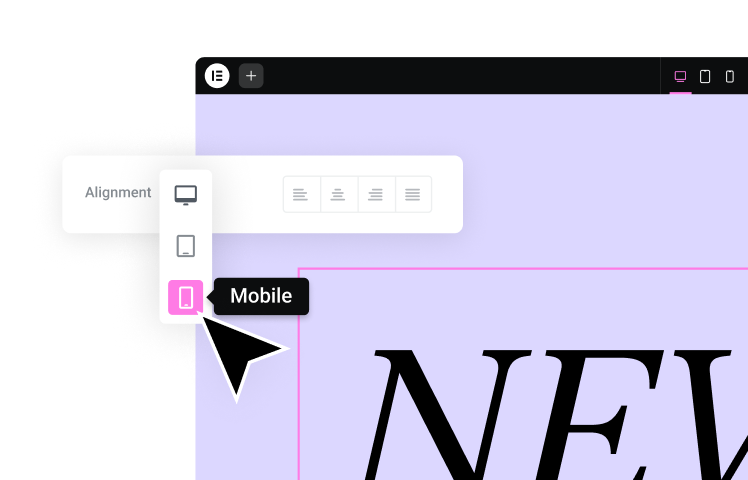
The Gold Standard: Look for a “WYSIWYG” (What You See Is What You Get) visual editor that offers pixel-perfect control. You should be able to drag an element anywhere on the canvas, adjust its responsiveness for mobile devices specifically, and use global design systems to manage fonts and colors across the entire site instantly.
For example, Elementor allows for absolute design freedom. You can use Flexbox containers and CSS Grid to create complex, magazine-style layouts that are impossible on restrictive block-based builders. You aren’t just filling in a form; you are designing a unique experience.
Pillar 2: Performance and Core Web Vitals
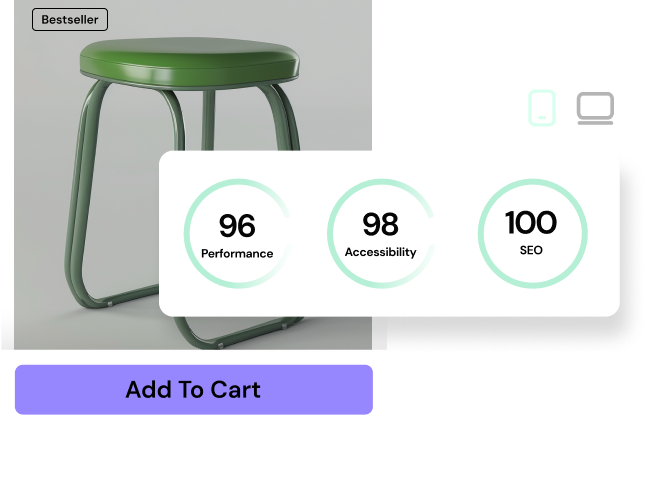
In 2025, performance is not just about user experience; it is a core SEO ranking factor. Google’s “Core Web Vitals” metrics measure three specific things:
- Largest Contentful Paint (LCP): How fast the main content loads.
- Interaction to Next Paint (INP): How quickly the page responds when a user clicks.
- Cumulative Layout Shift (CLS): How stable the layout is (does things jump around?).
Many builders rely on “bloated” code. They load massive JavaScript libraries on every page, even if you aren’t using them. This results in sluggish sites that frustrate mobile users and get penalized by Google.
What to look for:
- Clean Code Output: Does the builder generate concise HTML/CSS? The “DOM size” (the number of elements on a page) matters.
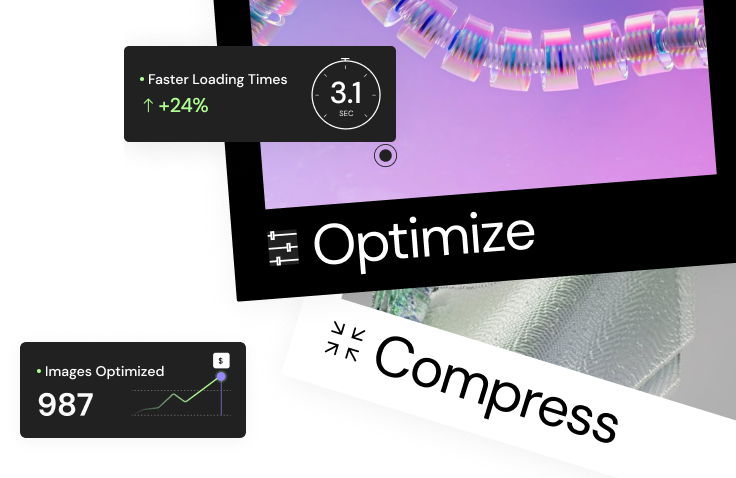
- Integrated Optimization: Does the platform include built-in tools like Image Optimizer to automatically compress media and convert it to modern formats like WebP or AVIF?
- Infrastructure: Is the hosting powered by premium tier networks like Google Cloud Platform?
- CDN: Does it use a Content Delivery Network (like Cloudflare) to serve your site from servers closest to your visitors?
Pillar 3: The Ecosystem and Extensibility
You will eventually need your website to do something you didn’t anticipate today. You might need to add a booking calendar, a wholesale login area, a complex shipping calculator, or a learning management system (LMS).
If you choose a closed platform, you are limited to their proprietary “App Store.” If the feature doesn’t exist there, or if the available apps are poor quality, you are stuck.
In an open ecosystem, particularly one based on WordPress, you have access to over 60,000 free and premium plugins. This is the “Legos” principle. You can snap on any functionality you can dream of.
The Strategy: Choose a platform that serves as a “hub.” It should connect seamlessly with your email marketing tools, your CRM, and your analytics software. Avoid “all-in-one” traps where the built-in email marketing or SEO tools are inferior versions of industry standards.
Pillar 4: Total Cost of Ownership (TCO)
Do not look at the advertised monthly price. The $16/month plan is rarely what you end up paying. You must calculate the Total Cost of Ownership (TCO).
Hidden Costs to Watch For:
- Transaction Fees: Some builders charge a 2% or 3% fee on every sale on top of standard credit card processing fees. On $10,000 of sales, that’s $300 a month gone.
- App Subscriptions: To get basic functionality (like product reviews, upsells, or advanced forms) on some SaaS platforms, you often need 5-6 paid third-party apps. These can easily add $100+ to your monthly bill.
- Migration Costs: If you leave a proprietary platform, you cannot export your code. You have to rebuild the site from scratch. This “lock-in” is a hidden cost of thousands of dollars in future labor.
- Premium Templates: While the builder might be cheap, professional-grade templates often cost extra.
Pillar 5: Support and Community
When your site breaks at 11:00 PM on a Friday before a major launch, who do you call?
- Direct Support: Does the platform offer 24/7 live chat with actual humans, or just a chatbot loop that points you to help articles?
- Community Knowledge: Is there a vibrant community of users? Platforms with millions of users have vast libraries of YouTube tutorials, forums, and third-party Facebook groups. If you have a problem, chances are someone else has already solved it.
- Unified Responsibility: In a fragmented stack (cheap hosting + random theme + random builder), support teams blame each other. “That’s a hosting issue,” says the theme developer. “That’s a theme issue,” says the host. Look for solutions like Elementor Hosting that own the entire stack to eliminate the blame game.
Pillar 6: AI Integration (The Workflow Multiplier)
Artificial Intelligence in web design has moved beyond gimmicky text generators. In 2025, the best builders use Agentic AI.
- Generative vs. Agentic: Generative AI writes a paragraph of text. Agentic AI understands your intent. It can plan a sitemap, wireframe a structure based on best practices, and even execute complex tasks like “update all my product descriptions to be more punchy” or “translate this page to Spanish.”
- Context Awareness: The AI should live inside the editor. It should know that you are working on a “Hero Section” and suggest headlines that fit that specific context, rather than generic text.
Tools like the AI Site Planner allow you to generate a comprehensive website brief and wireframe in minutes, solving the “blank page syndrome” that stalls so many projects.
Pillar 7: Data Ownership and Portability
“Rent vs. Buy” applies to digital real estate just as it does to physical housing.
- Renting (Closed SaaS): You own the content (text/images), but you do not own the design, the code, or the underlying database structure. If you stop paying, your site vanishes. If they raise prices, you have no leverage.
- Buying (Open Source): You own everything. The code, the database, the design files. You can pick up your site and move it to any hosting provider in the world. This is the ultimate insurance policy for your business.
Chapter 4: Analyzing the Market Players
To make an informed choice, we must look at the major players in the market. We will analyze these neutrally, focusing on their functional strengths and architectural trade-offs.
1. Wix
The Model: Closed SaaS.
Overview: Wix is a widely recognized platform known for its unstructured editor, which allows users to drag elements anywhere on the screen without a grid constraint. It relies on a subscription model that bundles hosting and software into a single package.
Limitations:
- Migration: It is difficult to move a site away from Wix; content often must be copy-pasted manually page by page.
- Flexibility: Once you choose a specific template, you typically cannot switch to a different template family without losing content layout.
- Code Access: Users have limited access to the backend code and server configuration, restricting advanced customizations and optimizations.
2. Squarespace
The Model: Closed SaaS.
Overview: Squarespace focuses heavily on aesthetics and design-forward templates. It is often the default choice for creatives, photographers, and podcasters who want a visually striking site with minimal configuration.
Limitations:
- Editor Rigidity: The “Fluid Engine” editor, while improved, is grid-based and can feel restrictive compared to true free-form builders.
- Extensions: The extension ecosystem is significantly smaller than open-source alternatives.
- Page Speed: Historically, the heavy emphasis on high-resolution imagery and complex animations can impact load times if not managed carefully by the user.
3. Webflow
The Model: SaaS for Designers.
Overview: Webflow targets professional designers and developers. It provides a visual interface for writing HTML/CSS code. It is not a drag-and-drop tool in the traditional sense; it is a visual coding tool that translates design choices into clean code.
Limitations:
- Learning Curve: It has a steep learning curve. If you do not understand the difference between padding and margin, or absolute vs. relative positioning, you will struggle.
- Cost: It can become expensive, especially for teams or sites requiring CMS and eCommerce features.
- E-commerce: The e-commerce features are less robust and flexible than dedicated platforms like Shopify or WooCommerce.
4. Shopify
The Model: Dedicated eCommerce SaaS.
Overview: Shopify is the dominant force in the hosted e-commerce space. It is purpose-built for selling and handles inventory, shipping, and payments natively.
Limitations:
- Blogging/CMS: The content management features (blogging, page building) are basic compared to WordPress, making it difficult to build rich content experiences.
- Transaction Fees: Charges additional fees if you do not use Shopify Payments.
- Customization: Deep design customization often requires editing “Liquid” code, which is a specialized language.
5. WordPress (The Open Source Standard)
The Model: Open Source CMS.
Overview: WordPress powers over 40% of the web. It is free software that you install on a host. It is the gold standard for flexibility, ownership, and extensibility.
Limitations:
- Fragmentation: You traditionally have to buy hosting, a theme, and plugins separately, which can lead to compatibility issues and “plugin bloat.”
- Maintenance: You are responsible for updates, security, and backups unless you use a managed hosting provider.
Chapter 5: The Strategic Solution: The Elementor Ecosystem
For years, users faced a binary choice: the ease of SaaS (Wix/Squarespace) or the power of WordPress. This forced a compromise—either sacrifice ownership for convenience, or sacrifice convenience for power.
Elementor has evolved to eliminate this compromise.
Elementor is no longer just a “page builder” plugin. It has matured into a comprehensive Website Builder Platform. By integrating a world-class visual editor with managed hosting, AI workflows, and marketing tools, Elementor occupies a unique strategic position: it offers the “SaaS experience” of a unified platform while retaining the open-source freedom of WordPress.
The Best of Both Worlds
The Elementor ecosystem bridges the gap. You get the unified support and optimized infrastructure of a proprietary platform, but you build on open-source software (WordPress). You own your data. You can move your site. You can use any WordPress plugin. But you don’t have to manage the technical “plumbing” yourself.
1. The Creative Engine: Pixel-Perfect Control
At its core is the Elementor Website Builder. It allows you to design every part of your website—headers, footers, archives, and product pages—using an intuitive visual interface.
- Design Freedom: Use advanced design features like CSS Grid containers, entrance animations, and shape dividers without writing code. This creates a canvas that feels like a design tool (like Figma) rather than a form filler.
- Responsive Control: Unlike competitors that just “squish” your desktop site to mobile, Elementor gives you granular control over how every element appears on Mobile, Tablet, and Desktop. You can hide sections, change font sizes, or reverse column ordering specifically for mobile users.
- Theme Builder: You aren’t stuck with a template’s layout. You can visually design your own dynamic templates for blog posts or WooCommerce products, ensuring your brand identity is consistent across every pixel.
Elementor Pro takes this further with professional features like a Form Builder, Popup Builder, and dynamic content capabilities that allow you to build complex web applications.
2. The Optimized Foundation: Managed Hosting
Elementor Hosting solves the “fragmentation” problem inherent in traditional WordPress. It provides a hosting environment that is specifically engineered for the builder.
- Google Cloud Platform: Your site runs on Google’s premium C2 servers, ensuring enterprise-grade speed and reliability.
- Cloudflare Enterprise CDN: Content is delivered globally with minimal latency, ensuring that a user in Tokyo loads your site as fast as a user in New York.
- Unified Support: If you have an issue, there is one button to click. No more “blame game” between your host and your plugin provider. The support team understands the entire stack.
With Elementor Hosting, you also get enterprise-grade security, including a Web Application Firewall (WAF) and DDoS protection, built-in.
3. The AI-Powered Workflow
Elementor does not just bolt on AI; it integrates it into the creative workflow to act as a force multiplier.
- AI Site Planner: Before you drag a single widget, the AI Site Planner can generate a strategic wireframe and sitemap based on your business description. It turns the “blank page problem” into a structured plan in minutes.
- Elementor AI: Inside the editor, you can generate text, create images, and even write custom CSS or HTML code snippets to achieve specific design effects. This context-aware AI understands the widget you are editing, providing relevant suggestions.
- Angie (Agentic AI): Looking forward, tools like Angie represent the next leap—AI agents that can navigate your site and perform multi-step tasks to automate management, further reducing the technical burden on the user.
4. The Growth Suite: Marketing & Performance
A website is useless if it doesn’t drive business. The ecosystem includes specialized tools to drive growth and optimize conversion.
- Image Optimizer: Large images are the #1 killer of website speed. The Image Optimizer automatically compresses and converts images to WebP/AVIF formats to ensure lightning-fast load times without quality loss.
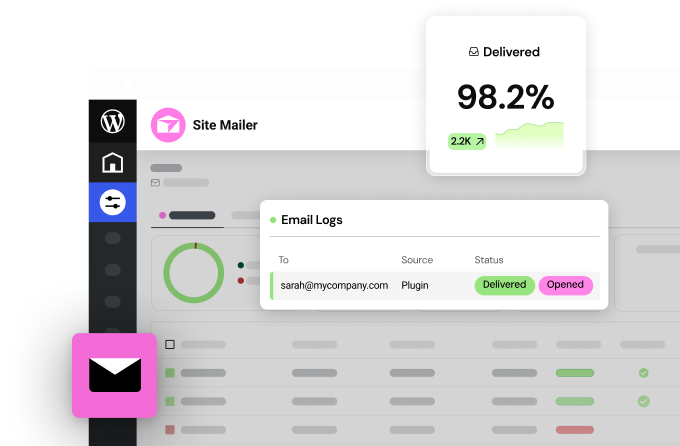
- Site Mailer: Fixes the notoriously unreliable WordPress email delivery issue. Often, contact form submissions get lost in spam folders because standard servers aren’t optimized for email. Site Mailer ensures your transactional emails (receipts, password resets, leads) actually reach the inbox.
- Send by Elementor: A native email marketing solution that allows you to collect leads and send campaigns directly from your website dashboard. This eliminates the need for expensive third-party tools and ensures your marketing data is unified with your website data.
5. Accessibility and Compliance
In an era of increasing digital regulation (such as the ADA and EAA), accessibility is non-negotiable. Ally by Elementor integrates accessibility scanning and remediation directly into the platform. It helps you identify contrast errors, missing alt tags, and navigation issues, helping you meet WCAG standards and ensuring your site is usable by everyone, regardless of ability.
Chapter 6: The Actionable Selection Framework
How do you take all this information and make a final decision? Follow this step-by-step framework to audit your needs and select the right partner.
Step 1: Define the “Must-Haves” vs. “Nice-to-Haves”
Create a simple spreadsheet.
- Column A (Must Have): Functionality that is critical to your business model. (e.g., Apple Pay integration, multilingual support, client login area, booking system).
- Column B (Nice to Have): Features you want but can live without. (e.g., dark mode toggle, animated cursor, specific 3D effects). Discard any platform that fails a single “Must Have” criteria, no matter how good their marketing is.
Step 2: Test the “Saturday Night” Support Scenario
Imagine your site goes down on a Saturday night during a sale. Go to the support pages of your top three candidates.
- Can you find a chat button easily?
- Is there an active forum with recent posts?
- If the answer is “send an email and wait 48 hours,” cross them off the list. Your business cannot afford that latency.
Step 3: The “Future-Proof” Test
Look at the roadmap. Is the platform innovating? Are they adding features like AI planning, native performance tools, and accessibility checkers? Or have they not released a major update in two years? A stagnant platform is a dying platform. You want a partner that is investing in the future of the web.
Step 4: Calculate the 3-Year Cost
Don’t look at the monthly price. Calculate the Total Cost of Ownership (TCO) over 36 months.
- Formula: (Monthly Fee x 36) + (Transaction Fees on projected sales) + (Cost of 5 necessary plugins/apps) + (Premium Template Cost) = 3-Year TCO. Often, a “cheaper” platform becomes the most expensive once you add the necessary apps to make it functional.
Step 5: Start with the End in Mind
If your goal is to build a professional, scalable asset that you truly own, the strategic weight shifts heavily toward an open ecosystem like WordPress, powered by a unified platform like Elementor. It offers the safety of a managed service with the infinite horizon of open software. It is the choice for those who want to build a business, not just a page.
Conclusion
Picking a website builder is not just a technical choice; it is a business strategy decision. You are choosing the terrain upon which you will fight for attention, customers, and revenue.
While closed SaaS platforms offer a tempting “quick fix,” they often impose a ceiling on your growth and a tax on your revenue. They are excellent for prototypes and simple projects, but they can become restrictive as your ambitions scale.
For those who view their website as a long-term asset, the smart money is on the “best of both worlds” approach: the power, ownership, and flexibility of WordPress, tamed and supercharged by the comprehensive Elementor Ecosystem.
By choosing a platform that prioritizes performance, ownership, and an integrated workflow, you aren’t just building a website. You are building a future-proof foundation for your digital success.
Frequently Asked Questions (FAQ)
1. Is it better to use a free website builder or a paid one? Free builders are excellent for hobbyists or testing a concept, but they are generally unsuitable for businesses. They typically prevent you from using a custom domain (yourname.com), display third-party ads on your site, and offer restricted server performance. For a professional entity, a paid plan is a necessary operational cost to establish trust, brand authority, and ensure reliable uptime.
2. Can I switch website builders later if I change my mind? It depends heavily on the platform you choose. If you use a closed SaaS platform (like Wix or Squarespace), switching is difficult because you cannot export your site’s underlying code or design templates. You essentially have to rebuild the site from scratch on the new platform. If you use an open-source platform like WordPress with Elementor, migration is much easier because you retain full ownership of the data and content, allowing you to move it to any hosting provider.
3. How important is hosting when choosing a builder? Hosting is the engine of your car. A beautiful car with a weak engine won’t win races. Poor hosting leads to slow load times, which hurts your Google rankings and frustrates users. Modern platforms like Elementor Hosting bundle enterprise-grade cloud hosting (Google Cloud) with the builder, ensuring that the infrastructure is optimized specifically for the software’s requirements.
4. Do I need to know how to code to build a professional website in 2025? No. Modern visual builders like Elementor allow you to create “pixel-perfect” designs using drag-and-drop interfaces. You can control layout, typography, and motion effects visually. However, the best platforms allow you to add custom code (CSS/HTML) if you want to, giving you the flexibility to push boundaries without forcing you to be a developer.
5. What is “Agentic AI” and why should I care? Agentic AI differs from standard AI text generators. Instead of just writing copy, Agentic AI acts as an assistant that can perform tasks and execute workflows. For example, Elementor’s AI Site Planner can architect an entire website structure for you, while tools like Angie can execute multi-step management tasks. It transforms AI from a “writer” into a “co-pilot,” saving you significant time on operations.
6. Which website builder is best for SEO? While most builders allow basic SEO (meta tags, slugs), the best platforms for SEO are those that prioritize clean code and fast hosting. WordPress is widely considered the gold standard for SEO because of its semantic structure and the availability of powerful SEO plugins (like Yoast or RankMath) that integrate perfectly with builders like Elementor. Additionally, performance tools like Image Optimizer directly improve Core Web Vitals, a key ranking factor.
7. How do I choose between Shopify and WooCommerce (Elementor)? If you are building a pure, high-volume retail store with thousands of SKUs and no need for complex content, Shopify is a strong contender. However, if you want a content-rich site that also sells products, or if you want to avoid transaction fees and retain full control over the checkout design, the WooCommerce Builder in Elementor is often the more flexible and cost-effective choice.
8. What are “Core Web Vitals” and do builders affect them? Core Web Vitals are Google’s metrics for user experience: Loading (LCP), Interactivity (INP), and Visual Stability (CLS). Your website builder has a massive impact on these. Some builders load excessive code that slows down these metrics. Elementor has introduced significant performance updates (like container layouts and optimized asset loading) to help creators pass these vital scores.
9. Is it worth paying for an “all-in-one” ecosystem? Yes, because fragmentation is costly. If you buy cheap hosting, a separate builder, a security plugin, and an email tool from different vendors, you end up paying more in total and dealing with “compatibility hell” where tools break each other. An integrated ecosystem like Elementor offers Hosting, Building, Optimization, and Marketing tools that are designed to work together, saving you money and technical headaches.
10. How long does it take to learn a professional website builder? The learning curve varies by platform. Simple “grid-locked” builders can be learned in an afternoon but limit your creativity. Professional visual builders like Elementor have a slightly steeper initial curve (perhaps a few days to master) but offer a much higher ceiling for what you can create. Tools like Hello Theme and the new Hello Biz theme make starting easier by providing a simplified foundation that grows with your skills.
Looking for fresh content?
By entering your email, you agree to receive Elementor emails, including marketing emails,
and agree to our Terms & Conditions and Privacy Policy.