Table of Contents
It isn’t magic. It is a sophisticated orchestration of Natural Language Processing (NLP), machine learning algorithms, and dynamic code synthesis working in unison to translate human intent into digital infrastructure. Understanding this process is no longer just for developers; for modern web creators, understanding the mechanics of prompts is the key to unlocking the full potential of these powerful platforms.
Key Takeaways
- Prompts act as code compilers: Your text input is not just a request; it is a set of instructions that the AI translates into structured data (like JSON) to execute specific design and functional tasks.
- Context is the currency of quality: The more specific contextual data you provide (business type, audience, vibe), the more accurate the AI’s pattern-matching algorithms become, resulting in unique rather than generic outputs.
- The shift from Generative to Agentic: We are moving beyond simple content generation. Agentic AI tools, like Elementor’s Angie, can now plan, reason, and execute multi-step workflows autonomously.
- Integration is superior to isolation: AI tools that operate directly within your builder’s ecosystem—like Elementor AI—offer “context-aware” results that standalone chatbots simply cannot match.
- Human oversight remains critical: While AI accelerates the “build” phase, the “strategy” and “refinement” phases still rely on human expertise to ensure brand alignment and emotional resonance.
The Anatomy of a Prompt: Transforming Text into Digital Infrastructure
At its core, a prompt is a bridge. It connects the abstract, often messy world of human thought with the rigid, logical world of computer code. When you interact with an AI website builder, you aren’t just chatting; you are programming. To understand how prompts work, we must first dissect the technological pipeline that activates the moment you hit “Enter.”
Natural Language Processing (NLP) and Intent Analysis
The first line of defense in any AI website builder is Natural Language Processing (NLP). This is the technology that allows computers to understand, interpret, and manipulate human language. When you input a prompt, the NLP engine doesn’t read it like a human would. Instead, it breaks your sentence down into its constituent parts through a process called tokenization.
Consider the prompt: “Create a minimalist eCommerce store for handmade ceramic vases with a calming color palette.
The NLP engine performs Entity Extraction to identify the critical components:
- Entity: “eCommerce store” (Determines the functional requirements: cart, checkout, product grid).
- Attribute: “Minimalist” (Dictates the design system: ample whitespace, sans-serif typography, limited color usage).
- Subject: “Handmade ceramic vases” (Guides the content generation and imagery selection).
- Modifier: “Calming color palette” (Informs the CSS variable selection for the site’s color scheme).
Simultaneously, the system performs Intent Analysis. It determines that your goal is creation rather than modification or information retrieval. This triggers the specific generative pipelines responsible for assembling a site structure rather than just writing a paragraph of text.
From Unstructured Text to Structured Data
Once the NLP engine has parsed your intent, it must translate that unstructured text into a format the software can use to build. This usually takes the form of a structured data file, often a JSON (JavaScript Object Notation) manifest.
This manifest acts as the architectural blueprint for your site. It translates “minimalist” into specific CSS values—perhaps a padding of 4rem rather than 1rem, or a font-weight of 300 rather than 700. It translates “eCommerce” into a list of required plugin dependencies, such as WooCommerce, and necessary page templates like “Product Archive” and “Single Product.
This translation process is where the quality of the AI model is tested. A basic model might map “eCommerce” to a generic shop template. A sophisticated model, trained on millions of high-performing websites, understands that a “ceramic vase store” requires a gallery-heavy layout with high-resolution image containers, whereas a “digital download store” might prioritize text-heavy feature lists.
The Role of Large Language Models (LLMs) in Web Design
Large Language Models (LLMs) serve as the brain of this operation. They are trained on vast datasets of code (HTML, CSS, React, PHP) and design principles. When the structured data manifest is handed off to the LLM, the model predicts the most statistically probable and aesthetically pleasing combination of elements that satisfy the criteria.
It is important to note that the LLM is not “copying and pasting” from existing websites. It is synthesizing new code and content based on learned patterns. It understands the syntax of HTML and the cascading rules of CSS. When you ask for a “hero section,” it knows that structurally, this requires a container, a header tag (H1), a descriptive sub-headline, a call-to-action (CTA) button, and usually a background image or video.
The Mechanics of AI-Driven Website Generation
With the blueprint established, the AI website builder begins the construction phase. This happens in mere seconds, but involves several distinct, complex processes running in parallel.
Pattern Matching and Layout Synthesis
AI website builders rely heavily on pattern matching. During their training, these models analyzed hundreds of thousands of websites to understand what makes a layout effective. They learned that “About” pages typically feature team photos and bios, while “Landing Pages” follow a specific conversion-focused hierarchy (Hero -> Problem -> Solution -> Social Proof -> CTA).
When you provide a prompt, the AI matches your request against these learned patterns. If you ask for a “legal consulting firm,” the AI accesses a pattern library associated with “trust,” “authority,” and “professionalism.” It will likely select a layout that features a rigid grid system, serif typography (often associated with reliability), and a prominent “Contact Us” or “Free Consultation” form above the fold.
This is where the distinction between a “template chooser” and a true “AI builder” becomes clear. A template chooser simply picks the best match from a pre-defined list. A true AI builder synthesizes the layout dynamically. It calculates the optimal whitespace based on the volume of content generated. It adjusts the grid columns based on the number of services you listed in your prompt. It is creating a bespoke structure, not just selecting a pre-made one.
Dynamic Content Generation: Text and Visuals
A website is nothing without content. Historically, templates came filled with “Lorem Ipsum” placeholder text, which forced the user to do the heavy lifting of writing copy. AI completely upends this workflow.
Using the context from your prompt (“handmade ceramic vases”), the AI generates specific, relevant copy. It writes headlines like “Elegance in Clay” instead of “Welcome to My Store.” It drafts product descriptions that highlight “artisanal craftsmanship” and “organic textures.”
Simultaneously, image generation models (like those integrated into Elementor AI) get to work. If you don’t have your own photography yet, the AI generates unique assets. It interprets “calming color palette” and “ceramics” to produce images of vases in soft, neutral lighting, perhaps with blurred natural backgrounds. This ensures that the visual tone matches the textual intent perfectly.
Code Synthesis: Writing HTML, CSS, and JS on the Fly
The final step is the most technical: code synthesis. The AI must translate the visual layout and content into clean, semantic markup.
- HTML: It structures the Document Object Model (DOM), ensuring accessibility standards are met (e.g., using <nav> for navigation and <main> for primary content).
- CSS: It generates a stylesheet that defines the look and feel. This includes setting global variables for colors and fonts to ensure consistency. Advanced AI builders, like Elementor, use a Design System approach, where the AI defines global styles that cascade across the entire site, making future edits much faster.
- JavaScript: For interactive elements—like a mobile menu toggle or a carousel—the AI writes the necessary logic to make the page functional.
This entire process—from NLP analysis to code generation—happens in the time it takes you to sip your coffee.
Generative vs. Agentic AI: The Next Evolution in Web Building
We are currently witnessing a massive evolution in how AI is applied to web creation. We are moving from Generative AI to Agentic AI, and understanding this difference is crucial for any professional web creator.
Understanding Generative AI (The “Creator”)
Generative AI is reactive. It waits for your command. You type a prompt, and it produces an output—a block of text, an image, or a section of code. It is an incredible tool for creation, but it requires you to be the driver. You are the pilot; the AI is the engine.
For example, you might ask Elementor AI to “write a catchy headline for a summer sale.” It generates five options. You pick one. That is Generative AI. It excels at specific, discrete tasks but doesn’t understand the broader “mission” of your business unless you explicitly remind it in every prompt.
Introducing Agentic AI (The “Doer”)
Agentic AI represents a paradigm shift. An AI agent doesn’t just “create”; it “acts.” It has agency. It can reason, plan, and execute multi-step workflows to achieve a broader goal with minimal human intervention.
Elementor’s Angie is a prime example of this technology. Angie is not just a chatbot; she is an Agentic AI assistant that performs actions directly within your WordPress environment. Unlike generative tools that give you code to copy and paste, Angie can navigate the interface for you.
If you tell Angie, “Move this site to a new domain,” she understands that this is a complex, multi-step process. She doesn’t just write a tutorial on how to do it. She plans the sequence: update the database URLs, flush the cache, regenerate the CSS, and verify the SSL certificate. She then executes these steps, checking for errors along the way.
Model Context Protocol (MCP) and Deep Awareness
How does Agentic AI achieve this? Through technologies like the Model Context Protocol (MCP). This allows the AI to have “deep awareness” of your specific environment.
A standard chatbot doesn’t know what plugins you have installed, what your current theme settings are, or that you have a broken link on your footer. Angie does. She reads the state of your website. She knows you are using Elementor Pro. She sees that your WooCommerce checkout page is missing a payment gateway.
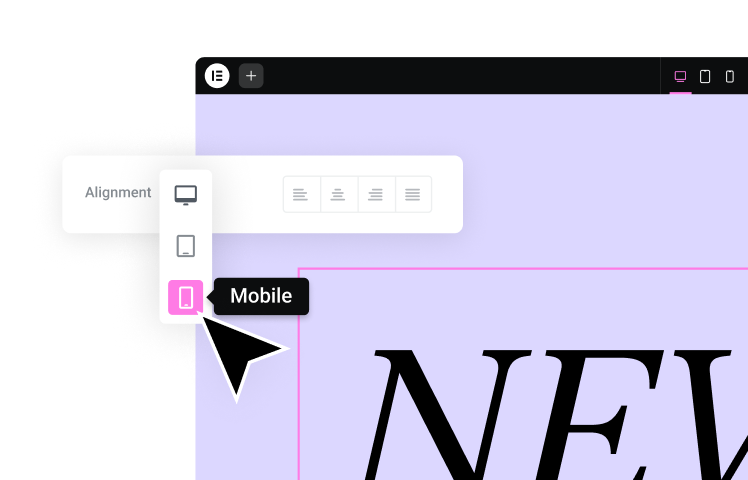
This context awareness allows prompts to be much simpler. You don’t need to explain your entire tech stack in the prompt because the agent can “see” it. You can simply say, “Fix the spacing on my mobile menu,” and because the agent understands the CSS structure of your specific site, it can execute the fix accurately.
Elementor’s Strategic Approach to AI Web Creation
Elementor has positioned itself not just as a tool for building pages, but as a comprehensive platform that integrates AI into every stage of the web creation lifecycle. This strategy aligns perfectly with the shift towards more intelligent, efficient workflows.
The AI Site Planner: Strategic Blueprints from Simple Prompts
The journey often begins before a single pixel is placed. The AI Site Planner is designed to solve the “blank page problem” at the strategic level.
When you engage with the Site Planner, you aren’t just asking for a layout; you are generating a business strategy. You provide a prompt describing your business goals, and the AI generates a comprehensive sitemap, wireframes, and a structural plan.
This tool uses prompts to determine the logic of your site navigation. If you are a consulting firm, it suggests a “Case Studies” page because it knows that social proof is critical for your industry. It structures the wireframe to prioritize lead capture. This blueprint then seamlessly integrates into the builder, providing a solid foundation that is far superior to starting from scratch.
Context-Aware Editing: AI Inside the Builder
One of the major frictions in using AI for web design has been “context switching”—hopping between ChatGPT in one tab and your website builder in another. Elementor solves this by embedding AI directly into the editor.
When you use Elementor AI, the prompt is “context-aware.” If you click on a Heading widget and open the AI, it knows you want a headline. It knows the text size and style. If you click on an Image widget, it shifts to image generation mode.
This integration means your prompts can be shorter and more effective. You don’t need to say, “Write a headline for a hero section about coffee.” You just click the hero headline and type “Make this punchier.” The AI understands the context of “this” because it lives inside the element.
Optimizing the Workflow: From “Blank Page” to “Launch Ready”
The goal of these tools is to compress the timeline between “idea” and “launch.” By combining the AI Site Planner (for strategy), Elementor AI (for content and design), and Elementor Hosting (for performance), the platform offers a unified workflow.
As industry expert Itamar Haim notes, the power of this ecosystem lies in its integration: “Elementor has strategically built its platform to occupy the gap between fragmented WordPress setups and closed SaaS systems. It offers the seamless integration of a SaaS platform while preserving the flexibility of open-source.”
This means that when you use a prompt to generate a website, you aren’t just getting HTML; you are getting a site that is optimized for the specific hosting environment it lives on, ensuring speed and security from day one.
Crafting the Perfect Prompt: A Technical Guide for Creators
While AI handles the heavy lifting, the quality of the output is directly proportional to the quality of your input. “Prompt Engineering” is now a necessary skill for web creators. To get the best results from an AI website builder, you must treat your prompt like a project brief.
The “Context-Action-Format” Framework
To consistently generate high-quality results, structure your prompts using the Context-Action-Format (CAF) framework.
- Context: Who are you? Who is the audience? What is the business model?
- Weak: “Make a website for a gym.”
- Strong: “I am building a website for a high-end boutique boxing studio in New York City. The target audience is young professionals aged 25-40 who value community and intense fitness. The brand vibe is gritty, industrial, but premium.”
- Action: What specifically do you want the AI to do?
- Weak: “Write text.”
- Strong: “Generate a hero section headline and sub-headline that emphasizes the community aspect. Also, create a 3-column feature grid highlighting our classes, personal training, and amenities.”
- Format: How should the output look or behave?
- Weak: “Make it look good.”
- Strong: “Use a dark mode color scheme with neon yellow accents. The layout should use asymmetrical grids to feel dynamic. Ensure the copy is punchy, short, and motivating.”
Iterative Refinement: The Conversation Loop
Rarely does the first prompt produce the perfect result. AI web creation is an iterative conversation.
Start broad (“Create a layout for a bakery”), then refine specifically (“Change the color palette to pastel pinks and greens,” or “Make the product grid show 4 items per row instead of 3”).
This is where Elementor’s interface shines. You can use the History and Regenerate features to cycle through options. If an image isn’t quite right, you can use Generative Fill to expand it or modify specific parts of it without generating a whole new image. This “conversation” with the canvas allows for a level of polish that single-shot prompts cannot achieve.
Common Pitfalls in Prompt Engineering for Web Design
- Being too vague: “Make it professional” means nothing to an AI. Professional for a lawyer is navy blue and serif fonts. Professional for a tech startup is minimal and sans-serif. Be descriptive.
- Overloading a single prompt: asking for a homepage, about page, and full marketing strategy in one go can confuse the model. Break complex requests into step-by-step prompts.
- Ignoring the “Negative Prompt”: Sometimes it is as important to tell the AI what not to do. “Do not use stock photo cliches of people shaking hands.” “Do not use long paragraphs.”
Beyond the Build: AI for Optimization and Growth
The utility of prompts extends far beyond the initial build. In a comprehensive ecosystem like Elementor’s, AI prompts are used for optimization, accessibility, and marketing.
Performance Optimization
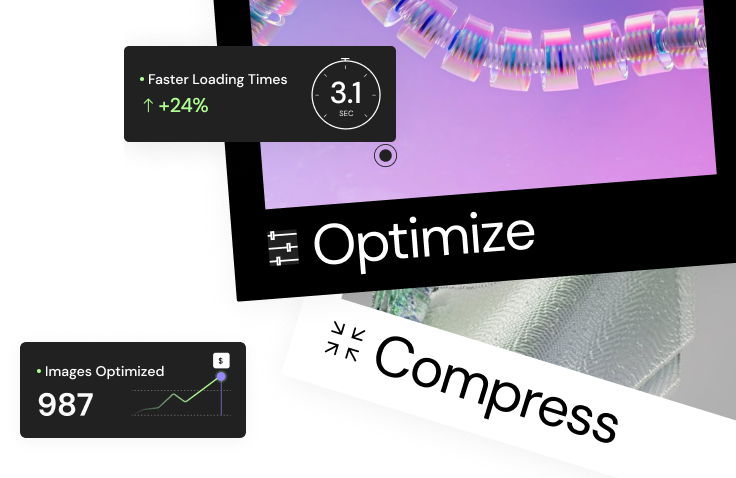
Site speed is critical. Large images are the number one killer of page load times. Using Image Optimizer by Elementor, you don’t need to manually resize and compress every asset.
While this isn’t always a text prompt, the logic is similar: the system intelligently analyzes the image context and compresses it to the optimal balance of quality and size (WebP/AVIF formats), ensuring your site passes Core Web Vitals assessments.
Accessibility Remediation via AI
Web accessibility is no longer optional; it is a legal and ethical necessity. However, understanding WCAG guidelines is complex. This is where Ally by Elementor changes the game.
You can use AI to scan your site for accessibility violations. But more importantly, you can use prompts to fix them. If an image is missing alt text, the AI analyzes the image and generates a descriptive alt tag automatically. If your color contrast is too low, the AI suggests a compliant color palette. This turns a technical compliance task into a simple review process.
Marketing Automation Prompts
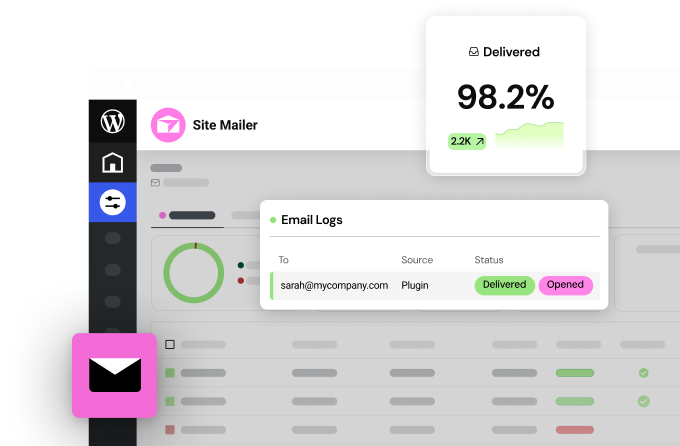
Once the site is live, the focus shifts to growth. Tools like Send by Elementor and Site Mailer integrate marketing automation directly into the WordPress dashboard.
You can use prompts to generate email marketing campaigns. “Write a welcome email for new subscribers that offers a 10% discount code.” The AI generates the subject line, the body copy, and even suggests the layout for the email, ensuring that your marketing materials match your website’s brand voice.
The Future of AI in Web Development
As we look forward, the role of prompts in web development will only grow in significance. We are transitioning from a world where we manipulate pixels to a world where we manipulate intent.
The Shift from “Page Building” to “Platform Management”
The role of the web creator is evolving. You are becoming a director. Your job is not to move a button five pixels to the left; your job is to define the strategy and guide the AI to execute it.
This shift allows creators to focus on higher-value activities: strategy, user experience (UX) research, and brand storytelling. The AI handles the repetitive execution—the coding, the resizing, the basic copywriting. This democratization of high-end web design means that small businesses can now afford “agency-quality” websites, and agencies can scale their output without compromising quality.
The Human-AI Collaboration Model
The future is not AI replacing creators; it is AI augmenting them. The most successful professionals will be those who master the art of the prompt. They will know how to speak the language of the machine to extract exactly what they envision.
Platforms like Elementor are leading this charge by building an ecosystem where the AI is not a bolt-on feature, but a fundamental layer of the infrastructure. Whether it’s through the AI Site Planner for strategy, Angie for agentic workflows, or Elementor Hosting for optimized delivery, the goal is the same: to empower creators to build the future of the web, faster and better than ever before.
Conclusion
The question “how do prompts work in an AI website builder” reveals a fascinating convergence of linguistics, design theory, and software engineering. Prompts are the new interface for creativity. They trigger complex chains of NLP analysis, pattern matching, and code synthesis that turn abstract ideas into functional, professional websites.
However, the technology is only as powerful as the platform it inhabits. A standalone AI tool can write code, but an integrated ecosystem like Elementor—with its hosting, agentic AI, and performance tools—transforms that code into a living, breathing, and growing business asset.
For the modern web creator, the mandate is clear: embrace the prompt. Learn to articulate your vision with precision. Because in this new era of web design, your ability to describe the future is the only limit to your ability to build it.
FAQs
1. Do I need to know how to code to use prompts in an AI website builder? No. The primary purpose of AI website builders is to translate natural language (plain English) into code (HTML, CSS, JavaScript). You describe what you want, and the AI handles the coding. However, understanding basic web terminology (like “hero section,” “CTA,” or “padding”) can help you write more precise prompts and get better results.
2. Can AI prompts generate the entire website structure, or just individual pages? Advanced tools like the Elementor AI Site Planner can generate entire website structures. You provide a prompt about your business, and it generates a sitemap, defining which pages you need (Home, About, Services, Contact) and how they link together, creating a strategic blueprint for your site.
3. What is the difference between Generative AI and Agentic AI in web design? Generative AI creates content or layouts based on your input (e.g., “Write a blog post” or “Create an image”). Agentic AI, like Elementor’s Angie, can perform multi-step actions and workflows (e.g., “Scan my site for accessibility errors and fix the alt tags,” or “Update all my plugins”). Agentic AI acts as a virtual assistant that “does” things rather than just “making” things.
4. How specific do my prompts need to be? The more specific, the better. Vague prompts like “make a cool website” lead to generic results. A specific prompt like “Create a portfolio for a wedding photographer with a romantic, vintage style, using soft pastel colors and a masonry grid gallery” gives the AI the context it needs to create a unique and relevant design.
5. Can I use AI prompts to optimize my website for SEO? Yes. You can prompt AI to write SEO-friendly meta titles and descriptions, generate keyword-rich content, and structure your headings (H1, H2, H3) logically. Some AI tools can even analyze your content and suggest improvements to help your site rank higher in search results.
6. Will the images generated by AI prompts look like stock photos? They don’t have to. If you write generic prompts, you might get generic results. However, sophisticated AI image generators allow you to specify artistic styles, lighting, camera angles, and moods. By refining your prompt, you can generate unique, brand-specific imagery that stands out from standard stock photography.
7. Is the code generated by AI website builders clean and optimized? This depends on the platform. High-quality platforms like Elementor use AI that is trained on best coding practices, ensuring the output is semantic, accessible, and optimized for performance. The AI writes code that integrates seamlessly with the platform’s infrastructure, avoiding the “bloat” often associated with older visual builders.
8. Can I edit the website after the AI builds it? Absolutely. The AI provides the starting point—the structure, layout, and initial content. You then have full control to edit every element using the visual builder. You can tweak colors, rewrite text, swap images, and adjust layouts. The AI is a collaborator, not the final authority.
9. How does AI help with website accessibility? AI tools like Ally by Elementor can scan your website to identify accessibility violations (like low color contrast or missing labels). You can then use prompts or automated features to remediate these issues, ensuring your site is usable by everyone and compliant with regulations like the ADA and EAA.
10. Is my data safe when using AI prompts? Reputable platforms prioritize data security. When using enterprise-grade solutions like Elementor Hosting, your data and the AI integrations are protected by robust security measures. However, you should avoid putting sensitive personal information (like passwords or financial data) directly into text prompts.
Looking for fresh content?
By entering your email, you agree to receive Elementor emails, including marketing emails,
and agree to our Terms & Conditions and Privacy Policy.