Table of Contents
This comprehensive guide analyzes the top resume builder platforms available today, dissects their capabilities, and explores why seasoned professionals are moving beyond static PDFs toward dynamic, self-hosted portfolio solutions.
Key Takeaways
- ATS Compliance is Critical: The most beautiful resume fails if an Applicant Tracking System cannot parse it. Functionality must precede aesthetics for standard applications.
- Static vs. Dynamic: While standard resume builders generate static documents, a personal website acts as a dynamic hub for your professional brand.
- Data Ownership: Many free resume builders lock your data behind paywalls or subscriptions. Owning your platform (via a personal website) mitigates this risk.
- Holistic Branding: The best strategy combines a tailored PDF resume for the ATS with a robust digital portfolio built on a platform like Elementor for the human recruiter.
- AI Integration: Artificial Intelligence has shifted from a novelty to a necessity in drafting summaries, optimizing keywords, and tailoring content for specific roles.
Understanding the Landscape of Resume Builders
Before evaluating specific tools, you must understand the mechanics of modern recruitment. The “resume builder” market is saturated with platforms that promise instant results, but they generally fall into three distinct categories, each serving a different purpose in the hiring funnel.
The Template Engines
These platforms focus heavily on aesthetics. They provide drag-and-drop interfaces and visually striking layouts. They work best for creative roles where design skills are a prerequisite. However, they often generate heavy code or export files as images, which can confuse ATS software.
The Data Processors
These tools prioritize content and structure over design. They guide you through entering your work history, education, and skills, often providing pre-written bullet points. They excel at producing clean, machine-readable text files or standard PDFs that sail through screening software but may lack visual impact.
The AI-Enhanced Platforms
The newest wave of builders integrates generative AI. These tools analyze job descriptions and suggest specific keywords or rewrite your bullet points to match the required skills. They attempt to bridge the gap between human readability and machine optimization.
The Strategic Value of “The Portfolio”
Beyond these three categories lies the comprehensive professional website. This is not merely a digital version of a paper resume; it is a scalable platform that houses case studies, video introductions, and extensive work samples. For the expert web creator or digital professional, this is the most powerful differentiator.
“In a market where everyone has a resume, the professional who has a platform wins. Your website is the only piece of real estate on the internet that you fully control.” — Itamar Haim
Top Resume Builder Websites: A Market Analysis
We have analyzed the leading platforms based on feature sets, usability, and output quality. This analysis presents the options neutrally, allowing you to determine which tool fits your immediate application needs.
1. Zety
Zety operates as a highly structured resume builder that guides users through a step-by-step creation process. It offers a variety of professional templates and a color-coded interface that simplifies section management.
- Core Function: It focuses on speed and structure, utilizing a wizard-style editor that prevents formatting errors.
- Feature Set: The platform includes a spell checker and a “tips” feature that offers suggestions for improving specific sections. It allows for the creation of matching cover letters.
- Considerations: While the builder allows for free creation, downloading the final document often requires a subscription. The templates are generally ATS-friendly but offer limited customization compared to free-form design tools.
2. Canva
Canva is primarily a graphic design platform that includes a vast library of resume templates. It is widely used by designers and creative professionals who want full control over the visual presentation of their CV.
- Core Function: Visual design and layout flexibility. Users can drag and drop elements freely, change fonts, and use custom graphics.
- Feature Set: It provides thousands of free and premium templates. Users can export in multiple formats, including PDF, JPG, and PNG.
- Considerations: The freedom of design is a double-edged sword. Many Canva templates use elements like columns, graphics, and text boxes that traditional ATS software may fail to parse correctly. It is often better suited for emailing directly to a human contact rather than uploading to a portal.
3. Resume Genius
Resume Genius positions itself as an automated assistant for resume creation. It uses a “fill-in-the-blanks” approach populated by a large database of pre-written job descriptions.
- Core Function: Rapid content generation. The tool asks for your job title and suggests relevant bullet points for your experience section.
- Feature Set: It includes an “Ask the Expert” service and a cover letter builder. The platform emphasizes formatting standards that are widely accepted by recruiters.
- Considerations: The pre-written content can sometimes sound generic. Users need to customize the auto-generated points to ensure they reflect their actual achievements. The pricing model typically involves a subscription.
4. Novoresume
Novoresume focuses on the one-page resume format (and two-page for seniors), emphasizing content optimization and layout efficiency. It targets users who want a clean, modern look without excessive design flair.
- Core Function: Content optimization within a constrained layout.
- Feature Set: It offers a content optimizer that analyzes the resume for missing sections or potential improvements. The interface provides a live preview of the document as you edit.
- Considerations: The rigid layout structure ensures readability but limits how much information you can include. It is less flexible for professionals with extensive or non-linear career paths.
5. Kickresume
Kickresume combines standard resume building with AI features and an integrated website builder. It aims to serve as a hub for both the document and the online presence.
- Core Function: AI-driven content generation and design.
- Feature Set: The “AI Writer” creates resume summaries and bullet points based on job titles. It also allows users to turn their resume data into a simple personal website.
- Considerations: While the website feature exists, it is template-based and lacks the deep customization capabilities of a dedicated web creation platform. The AI features are helpful but require human review to ensure accuracy.
6. Indeed
Indeed offers a free resume builder integrated directly into its job search platform. It is designed to create a profile that allows users to apply for jobs on Indeed with a single click.
- Core Function: Utility and integration with the Indeed job board.
- Feature Set: It is completely free to use. Users can upload an existing resume to be parsed or build one from scratch. The resume is automatically formatted to be compatible with Indeed’s internal systems.
- Considerations: The design options are extremely limited. The resulting resume is functional and ATS-compliant but lacks distinct visual branding. It is strictly a utilitarian document.
7. Enhancv
Enhancv targets professionals looking for a modern, performance-driven resume. It emphasizes the “human” aspect of the resume, encouraging sections like “My Time” or “Books” to show personality.
- Core Function: Highlight performance and personality.
- Feature Set: It offers a content analyzer that scores the resume based on impact. The templates are clean and modern, designed to be readable by both humans and machines.
- Considerations: The free plan has branding watermarks. The unique sections can be a differentiator for some company cultures but might be considered extraneous for highly traditional corporate roles.
8. Teal
Teal is a career growth platform that includes a resume builder as part of a larger suite of tools, including a job application tracker.
- Core Function: Managing the entire job search lifecycle.
- Feature Set: The resume builder integrates with the job tracker. It allows users to save specific keywords from job descriptions and highlights whether they appear in the resume. It supports multiple versions of a resume for different applications.
- Considerations: It is more of a management tool than a design tool. The focus is on keyword matching and organization rather than advanced visual layout.
9. MyPerfectResume
This platform focuses on providing a vast array of templates and industry-specific examples to help users get started quickly.
- Core Function: Template-driven creation with industry guidance.
- Feature Set: It offers thousands of resume samples tailored to specific job titles. The builder suggests skills and keywords based on the selected industry.
- Considerations: Like others in this category, it operates on a subscription model for downloads. The designs are standard and functional, prioritizing safety and convention over innovation.
10. CakeResume
CakeResume uses a drag-and-drop editor that sits between a document editor and a website builder. It allows for modular resume construction.
- Core Function: Modular layout design.
- Feature Set: Users can drag different “snippets” (e.g., image + text, video, timeline) onto the canvas. It allows for more creative layouts than standard form-fillers.
- Considerations: The flexibility can lead to formatting issues if the user is not careful with alignment. It is popular in the tech and startup sectors but may require adjustment for traditional industries.
11. VisualCV
VisualCV caters to professionals who need to manage multiple versions of their resume for different career paths.
- Core Function: Version control and analytics.
- Feature Set: It allows users to track when their resume is viewed and downloaded. Users can import from LinkedIn and manage multiple tailored versions of their CV under one account.
- Considerations: The analytics feature requires sending a link rather than a file, which not all employers accept.
12. Jobscan
Jobscan is less of a “builder” and more of an “optimizer.” It focuses entirely on the ATS match rate.
- Core Function: Keyword optimization and ATS simulation.
- Feature Set: You upload your resume and the job description; the tool scans both and gives a match percentage score, suggesting missing keywords and skills.
- Considerations: It is a diagnostic tool. You often need another tool to actually build and design the resume before running it through Jobscan for optimization.
The Strategic Shift: Why a PDF Resume Is Not Enough
For decades, the PDF resume was the gold standard. It was portable, uneditable, and consistent. However, in 2025, relying solely on a static document limits your professional narrative. A PDF captures your history, but it fails to capture your potential.
The Limitations of Static Documents
A standard resume is linear and finite. It forces you to compress years of complex problem-solving into three bullet points. It cannot show the video of the marketing campaign you led, the interactive code you wrote, or the high-resolution photography you produced. Furthermore, a PDF is a dead end. Once a recruiter finishes reading it, the interaction ends unless they actively choose to call you.
The Rise of Personal Branding
Professionals are now brands. Just as a business would not rely solely on a flyer to drive sales, a professional should not rely solely on a text document to drive career growth. A personal website acts as the headquarters of your professional identity. It allows for SEO (Search Engine Optimization), meaning you can rank for your own name or industry keywords. It allows for analytics, so you know who is looking at your work and what they are interested in.
The “Home Base” Strategy
The most effective strategy today is a hybrid approach. You use a standard resume builder (like those listed above) to create a compliant, tailored PDF for the initial application. However, every contact point on that PDF—your header, your footer, your portfolio link—directs the hiring manager to your personal website. This is where you convert interest into an interview.
Building a Digital Resume Portfolio with Elementor
When you decide to own your professional narrative, you need a platform that offers the power of a website builder with the ease of a resume tool. Elementor serves this function by bridging the gap between a simple page builder and a comprehensive content management system. It allows you to build a resume that is not just a document, but a destination.
https://elementor.com https://elementor.com/hosting
Not Just a Resume, A Platform
Elementor allows you to create a “Living Resume.” Unlike a PDF which is frozen in time, an Elementor-built site can evolve. You can add a new certification the moment you earn it. You can publish a blog post about a recent industry trend, demonstrating your expertise in real-time. This dynamic nature signals to employers that you are active, engaged, and technologically proficient.
The Foundation: Elementor Hosting
Speed is a feature. If a recruiter clicks the link on your resume and your portfolio takes ten seconds to load, they are gone. Elementor Hosting provides a managed WordPress hosting environment that is specifically tuned for Elementor sites. It ensures that your high-resolution portfolio images and videos load instantly, providing a seamless user experience. https://elementor.com/hosting
The Creative Engine: Hello Theme
For a resume website, you want your content to shine, not the theme’s decorative elements. The Hello Theme is a lightweight, blank canvas. It loads incredibly fast and allows you to build your personal brand identity—your colors, your typography, your layout—without fighting against pre-existing theme styles. It is the professional’s choice for a custom look. https://elementor.com/themes
Leveraging Elementor AI
Writing about oneself is notoriously difficult. This is where Elementor AI integrates directly into the workflow.
- Bio Generation: You can input your rough career history and ask Elementor AI to “Write a professional summary for a Senior Project Manager with 10 years of experience in Fintech.”
- Tone Adjustment: If your draft sounds too passive, you can use the AI to “Make this text more authoritative and active.”
- Custom Code: If you want a specific interactive element, like a timeline of your career that animates as the user scrolls, Elementor AI can generate the Custom CSS or HTML snippets to make that happen, even if you are not a developer. https://elementor.com/products/ai
The Portfolio Widget
The standard resume lists responsibilities: “Managed website redesign.” The Elementor Portfolio Widget shows results: It displays a grid of your projects. When a user hovers, they see the project title; when they click, they are taken to a dedicated case study page detailing the challenge, the solution, and the metrics. This creates a “Show, Don’t Just Tell” experience that static resumes cannot match.
Step-by-Step: Building a Digital Resume with Elementor
Creating a digital resume might seem like a large project, but with the right tools, it is a streamlined process. Here is a strategic framework for building a high-conversion personal website.
Phase 1: Planning with AI Site Planner
Before you drag a single widget, you need a plan. The Elementor AI Site Planner can generate a sitemap for a personal portfolio. It will suggest necessary pages (e.g., “Home,” “About Me,” “Resume/CV,” “Portfolio,” “Contact”) and help you structure the content hierarchy. This ensures you don’t miss critical sections that recruiters expect. https://elementor.com/ai-site-planner
Phase 2: Structuring the Content
Your digital resume should follow a logical flow:
- The Hero Section: A high-quality photo of you, a clear headline (e.g., “Digital Marketer & Content Strategist”), and a primary Call to Action (CTA) like “Download Resume” or “View Work.”
- The “About” Section: A brief, personable bio that establishes your unique value proposition.
- Experience Timeline: Use Elementor’s layout tools to create a vertical or horizontal timeline of your career. This is far more engaging than a bulleted list.
- Skills Bar: Visual progress bars or icon grids can represent your proficiency in software and soft skills.
- The Portfolio Grid: The centerpiece of the site, showcasing your actual work.
Phase 3: Ensuring Accessibility with Ally
Recruiters and companies prioritize Diversity, Equity, and Inclusion (DE&I). Your portfolio must be accessible to all users. Ally by Elementor scans your site for accessibility issues, such as missing alt text on images or poor color contrast. It also provides a widget that allows visitors to adjust text size and contrast. Having an accessible portfolio demonstrates your attention to detail and knowledge of modern web standards. https://elementor.com/products/ally-web-accessibility
Phase 4: Securing the Connection with Site Mailer
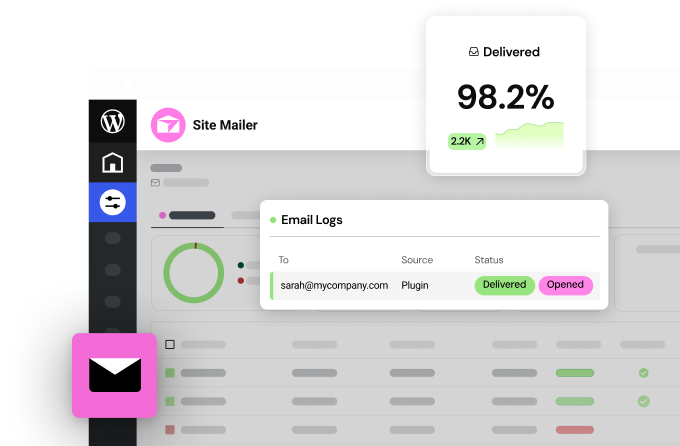
The “Contact” page is the most critical conversion point. If a recruiter uses your contact form, that email must arrive. WordPress default email functions can be unreliable. Site Mailer by Elementor ensures reliable email delivery without complex SMTP setups. It logs every email sent, so you can verify that a recruiter’s inquiry didn’t get lost in the ether. https://elementor.com/products/site-mailer
Phase 5: Optimization with Image Optimizer
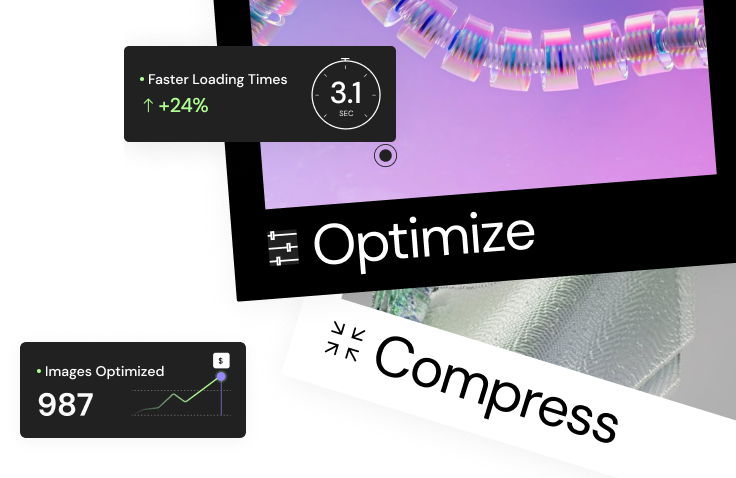
Portfolios are heavy on visuals. Large images slow down sites. Image Optimizer by Elementor automatically compresses and resizes your images and converts them to next-gen formats like WebP. This keeps your site ranking high on Google and loading fast on mobile devices, which is where many recruiters will view your link. https://elementor.com/products/image-optimizer
Advanced Strategies for Your Digital Resume
Once the foundation is built, you can employ advanced tactics to outperform the competition.
Video Introductions
Video is the highest-bandwidth communication channel. Embed a 60-second video on your homepage using the Video Widget. Introduce yourself, state your career goals, and thank the visitor for stopping by. This creates an immediate emotional connection and proves your communication skills. https://www.youtube.com/watch?v=QKd7d6LueH4
Dynamic Content for Tailored Applications
With Elementor Pro, you can use Dynamic Content to personalize your site. Imagine sending a link to a recruiter at “Acme Corp” and the headline on your landing page reads, “Hello Acme Team, Here is Why I’m Your Next Designer.” You can achieve this by using URL parameters to dynamically change headings on the page. This level of personalization is incredibly persuasive. https://elementor.com/pro
Search Engine Optimization (SEO)
When a recruiter Googles your name, what comes up? Ideally, your personal website should be the first result, above your LinkedIn profile. By using Elementor’s SEO-friendly structure and writing relevant content (blogs, case studies), you can control the search results for your own name, ensuring that the first impression is the one you curated.
Comparison: Standard Resume Builders vs. Elementor Portfolio
To visualize the value difference, compare the attributes of a standard resume builder against a custom Elementor portfolio.
| Feature | Standard Resume Builder | Elementor Portfolio Website |
| Data Ownership | Low. Platform owns the data; you rent access. | High. You own the content, the domain, and the design. |
| Format | Static (PDF/DOCX). | Dynamic (Web, Interactive, Video). |
| Updates | Requires re-exporting and re-sending. | Instant. Updates are live immediately. |
| SEO Visibility | None. Documents are not indexed. | High. Can rank for your name and skills. |
| Analytics | Minimal or Non-existent. | Full Insight. Track visitors, time on page, and clicks. |
| Credibility | Standard. Expected baseline. | Premium. Signals technical competence and effort. |
| Cost | Monthly subscription for premium features. | Hosting fee (often comparable), but offers far more value. |
Expert Tips for Resume Content
Whether you are building a PDF in a resume builder or a webpage in Elementor, the principles of strong content remain constant.
1. Use Active Voice and Action Verbs Passive language kills interest. Instead of saying “Responsible for managing a team,” say “Directed a team of 10 marketers.” Active voice implies ownership and results.
2. Quantify Your Impact Numbers speak louder than adjectives. “Increased sales” is vague. “Increased Q3 sales revenue by 24% through targeted email automation” is compelling. Every bullet point should ideally contain a metric.
3. Tailor for the Audience Generic resumes get generic results. Analyze the job description. If they use the term “Client Success,” do not use “Customer Service” in your resume. Mirror the language of the employer to show alignment.
4. Keep the Design Clean On your Elementor site, use whitespace generously. Large blocks of text are intimidating. Use headers, accordions, and tabs to organize information so it is scannable. https://elementor.com/library
5. Proofread relentlessly A typo in a resume suggests a lack of attention to detail. Use AI tools to proofread, but always do a final human pass. Read it backward to catch spelling errors your brain might skip over.
Frequently Asked Questions
1. Is it better to use a free resume builder or a paid one? Free builders are excellent for students or entry-level positions, but they often lack ATS optimization or include branding watermarks. Paid builders or a personal website are better for mid-level and senior professionals who need a polished, unbranded presentation.
2. Can I use Elementor if I don’t know how to code? Absolutely. Elementor is a no-code platform. You drag and drop widgets to build your site. If you can use a slide presentation tool, you can build a website with Elementor.
3. Do recruiters actually look at personal websites? Yes, especially for roles in marketing, design, development, and communications. Even for other roles, a website provides social proof and differentiates you from candidates who only provided a PDF.
4. How do I make my resume ATS compliant? Use standard headings (e.g., “Experience,” not “Professional Journey”). Avoid placing text in images or complex tables. Use a standard font. If building a website, ensure you also provide a downloadable, simple PDF version for the initial upload.
5. Should I put my picture on my resume? In the US and UK, generally no, to avoid bias. However, on your personal website, a professional photo is highly recommended as it helps build a personal connection and brand identity.
6. How long should my resume be? For the PDF, one page is standard for less than 10 years of experience; two pages for more. For your Elementor website, there is no length limit—you can include as much detail as is relevant, organized into easy-to-navigate sections.
7. Can I use AI to write my resume? Yes, but edit the output. AI is great for structure and keywords, but it often lacks your unique voice. Use Elementor AI to generate drafts, then refine them to sound like you.
8. What is the best resume builder for creative professionals? For the document, Canva is popular. However, a portfolio website built on Elementor is superior because it allows you to display high-resolution images, videos, and interactive elements that a PDF cannot support.
9. How much does it cost to build a resume website? With Elementor Hosting, you can get started for a monthly fee comparable to a few cups of coffee. This includes hosting, the builder, and security. Considering the potential salary increase of a better job, the ROI is significant.
10. Can I import my LinkedIn profile to these builders? Many builders, like VisualCV and Kickresume, allow LinkedIn imports. With Elementor, you can copy your LinkedIn content to populate your “Experience” section, ensuring consistency across platforms.
Conclusion
The quest for the “best” resume builder website ultimately leads to a choice between convenience and control. Tools like Zety, Resume Genius, and Canva offer convenience—they help you produce a standard document quickly. They are useful utilities in the job seeker’s toolkit.
However, for the professional who views their career as a business, convenience is not enough. You need differentiation. Building a personal portfolio website with Elementor transforms you from a stack of paper into a multi-dimensional professional. It demonstrates technical aptitude, allows for deep storytelling, and gives you a platform you own entirely.
In 2025, the best resume is not just a document you send; it is a destination you share. By combining a compliant PDF for the machines with a compelling Elementor portfolio for the humans, you create a holistic personal brand that commands attention and drives career growth.
To explore how you can start building your professional presence today, visit the Elementor showcase and see what is possible. https://elementor.com/wordpress
Looking for fresh content?
By entering your email, you agree to receive Elementor emails, including marketing emails,
and agree to our Terms & Conditions and Privacy Policy.