Table of Contents
Key Takeaways
- Speed Over Scalability: GoDaddy Airo excels at generating a “good enough” website in under five minutes, making it highly attractive for users who need a digital business card immediately. However, this speed often comes at the cost of deep customization and long-term scalability.
- The “Walled Garden” Limitation: Unlike open platforms that allow for endless integrations, GoDaddy operates as a closed ecosystem. If a feature isn’t built-in, you generally cannot add it, which frustrates growing businesses.
- Design Rigidity: Users often perceive the designs as “generic” or “corporate.” The section-based editor restricts creative freedom, preventing the pixel-perfect control available in professional page builders.
- AI as a Starter, Not a Finisher: While the AI efficiently generates initial copy and layouts, the output is often seen as surface-level. It serves as a helpful placeholder but rarely replaces the need for human refinement and strategy.
- Ownership Concerns: A critical perception issue is data ownership. Moving a site away from GoDaddy’s proprietary builder is notoriously difficult, unlike open-source platforms like WordPress where you own your data and design.
The Evolution of GoDaddy: From Registrar to AI Builder
For decades, GoDaddy was synonymous with domain registration. It was the place you went to buy a name, not necessarily to build a brand. Over the last few years, however, the company has aggressively repositioned itself as a one-stop-shop for small businesses, culminating in the launch of GoDaddy Airo.
This shift mirrors a broader trend in the industry where hosting companies are attempting to become comprehensive software-as-a-service (SaaS) platforms. The perception of this pivot is mixed. On one hand, it simplifies the technical barrier for non-tech-savvy users. A business owner can buy a domain and immediately have a “Coming Soon” page, a logo, and a basic site structure generated by AI.
However, industry experts often view this consolidation with skepticism. The argument is that while GoDaddy creates a wide breadth of tools—email marketing, social media scheduling, logo design—they rarely offer the depth found in specialized, standalone solutions. As noted by web expert Itamar Haim, “The convenience of an all-in-one platform often disguises the technical debt you accrue. You gain speed today, but you lose the flexibility to adapt tomorrow.”
The “Fast but Fixed” Paradox: Ease of Use vs. Control
The primary selling point of GoDaddy’s AI builder is friction reduction. The onboarding process is designed to be as effortless as possible. You answer a few questions about your industry and business name, and the “Artificial Design Intelligence” (ADI) assembles a site for you.
The Perception of Speed
For a local plumber, a freelance consultant, or a small brick-and-mortar shop, this speed is a game-changer. The perception among this demographic is largely positive because the tool solves their immediate problem: “I need a website now.” The interface is clean, the dashboard is intuitive, and the learning curve is practically non-existent.
The Frustration of Control
Conversely, for users who have a specific vision, the perception quickly sours. The editor is section-based, meaning you stack pre-designed blocks on top of each other. You cannot drag an image to a specific coordinate or overlap elements for a dynamic look.
This rigidity is where comparisons to professional platforms arise. In a flexible environment, such as the Elementor Website Builder, users are accustomed to “pixel-perfect” control. They can manipulate every aspect of the layout, from margins and padding to motion effects and responsive behavior. In contrast, GoDaddy’s AI builder is often perceived as a “fill-in-the-blanks” exercise rather than a true design process.
Design Capabilities: The Generic Trap
One of the most persistent criticisms of AI website builders, including GoDaddy’s, is the “sameness” of the output. Because the AI selects from a finite library of layouts and stock assets, sites created on the platform tend to share a distinct, somewhat generic aesthetic.
The “Cookie-Cutter” Effect
Reviewers and users frequently describe GoDaddy sites as looking “corporate” or “safe.” While they are clean and mobile-responsive, they rarely stand out. For a business trying to establish a unique brand identity, this is a significant drawback. The AI might generate a logo, but it is often a simple icon-plus-text combination that lacks the nuance of a professionally designed brand mark.
Mobile Responsiveness
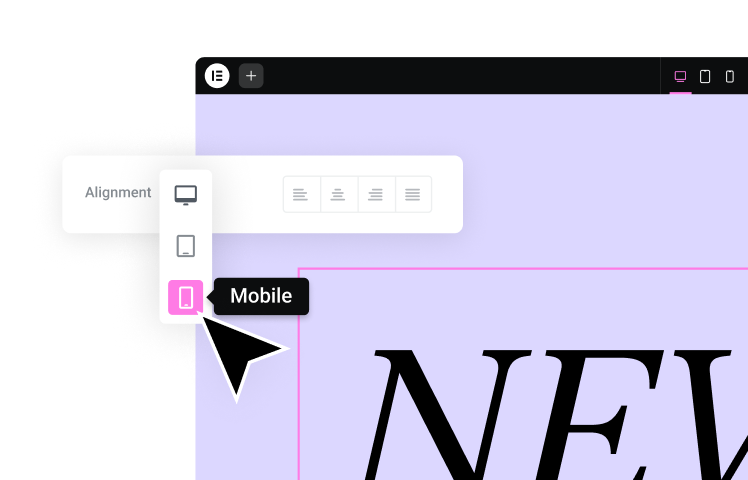
One area where GoDaddy receives credit is automated responsiveness. Because the design rails are so tight, it is almost impossible to break the mobile view. The system automatically stacks content for smaller screens. However, this is a double-edged sword. Unlike platforms that allow you to customize the mobile experience specifically—hiding certain elements or changing layout orders for mobile users—GoDaddy forces a standard reflow.
For creators who prioritize unique visual storytelling, this limitation is often a dealbreaker. They tend to gravitate towards platforms that offer a blank canvas, such as the Hello Theme, which provides a lightweight foundation for building completely custom designs without the constraints of a rigid template system.
The “Walled Garden” Effect: Ecosystem Limitations
Perhaps the most critical distinction in how GoDaddy is perceived versus its competitors lies in the concept of the “ecosystem.”
The Closed Ecosystem
GoDaddy operates as a “walled garden.” Every feature on your site—from the contact form to the appointment scheduler to the payment gateway—must be built by GoDaddy. There is no third-party app market in the traditional sense.
Pros:
- Unified Support: If something breaks, there is only one number to call.
- Security: GoDaddy manages all updates and security patches.
Cons:
- Feature Lock-in: If you need a specific feature that GoDaddy doesn’t offer (e.g., a complex table reservation system or a specific shipping integration), you are stuck. You cannot install a plugin to add that functionality.
- Migration Difficulty: If you decide to leave GoDaddy, you cannot simply export your site. You have to rebuild it from scratch on a new platform.
The Open Ecosystem Alternative
This contrasts sharply with the perception of WordPress-based solutions. When building with a platform like Elementor, users tap into the open-source power of WordPress. This allows for the integration of tens of thousands of plugins.
If a business needs to add a sophisticated learning management system (LMS) or a complex wholesale pricing structure, the open ecosystem enables it. This creates a perception of “limitless scalability” for WordPress users, whereas GoDaddy users often report feeling like they have hit a “ceiling” as their business grows.
SEO and Marketing: Automated Basics vs. Expert Control
GoDaddy places a heavy emphasis on its “built-in marketing suite.” This includes an SEO wizard, email marketing tools, and a social media content creator (GoDaddy Studio).
The Perception of AI SEO
The “SEO Wizard” is designed for beginners. It scans the site and suggests keywords and page titles. For a novice, this is helpful guidance. It demystifies the basic mechanical actions of SEO.
However, among SEO professionals, the tool is viewed as rudimentary. It covers the basics—meta tags, alt text—but lacks the granular control needed for competitive ranking. Users cannot easily edit the robots.txt file, manage complex schema markup, or execute advanced technical SEO strategies.
Furthermore, the code structure of drag-and-drop builders can sometimes be bloated, which may impact Core Web Vitals compared to a highly optimized, lightweight setup. Platforms that allow for performance optimization at the code level, or those offering specialized hosting solutions engineered for speed, are generally preferred by those for whom organic search traffic is a primary revenue driver.
Marketing Automation
The integrated email marketing and social tools are convenient. Being able to post to Instagram or send a newsletter from the same dashboard where you manage your domain is a strong selling point for time-poor entrepreneurs.
The AI features here—generating social captions or email subject lines—are perceived as useful time-savers. Yet, similar to the website design, they are often described as “functional” rather than “creative.” They get the job done, but they don’t replace a dedicated marketing strategy.
E-commerce Functionality: Starting vs. Scaling
GoDaddy’s pivot to e-commerce has been aggressive, with their “Commerce” plans offering features like inventory management, appointment bookings, and payments.
The Starter Store
For a shop selling a few dozen items, GoDaddy is perceived as a solid option. The setup is incredibly fast. You can upload products, set prices, and start taking payments in an afternoon. The fees are competitive, and the integration with the website builder is seamless.
The Scaling Challenge
The perception shifts when a business begins to scale. As inventory grows to hundreds or thousands of SKUs, or as shipping and tax requirements become complex, the platform’s limitations become apparent.
- Customization: You cannot fully customize the checkout experience or the product page layout to optimize for conversions.
- Integrations: Connecting to third-party logistics (3PL) providers or ERP systems can be difficult or impossible if a native integration doesn’t exist.
This is where dedicated WooCommerce Builders often take the lead. They allow merchants to design custom product templates, cart pages, and my-account areas, providing a branded experience that standard templates cannot match. For serious e-commerce, the flexibility to modify the buyer’s journey is often considered non-negotiable.
Pricing and Value: The Hidden Costs of Convenience
On the surface, GoDaddy’s pricing is competitive. They often offer deep discounts for the first year, making the entry point very low. This aligns with their perception as a budget-friendly starter option.
However, the “renewal shock” is a common complaint found in user reviews. The price for the website builder, domain, and email can jump significantly after the initial term. Additionally, because the ecosystem is closed, users are often upsold on various add-ons and premium features that might be free or cheaper in an open-source environment.
Users also note that while the monthly fee includes hosting and SSL, you are essentially “renting” your website. If you stop paying, your site disappears. This differs from the ownership model of open-source software, where you own the files and the data.
Who is GoDaddy Airo For? (And Who It Isn’t)
Based on market sentiment and feature analysis, we can clearly define the ideal user profile for GoDaddy’s AI builder.
The Ideal User
- The “Side Hustler”: Someone validating a business idea who needs a landing page instantly.
- The Local Service Provider: A dog walker, handyman, or consultant who needs a digital brochure with a contact form and basic booking capabilities.
- The Non-Technical DIYer: Someone who is intimidated by technology and wants a “hold-my-hand” experience.
Who Should Look Elsewhere
- The Design Agency: Professionals who sell websites to clients need tools that offer complete creative freedom.
- The Scaling E-commerce Brand: Stores that plan to grow rapidly need a robust backend like WooCommerce or Shopify.
- The Content Publisher: Serious bloggers need the advanced CMS capabilities of WordPress for categorization, tagging, and author management.
The Professional Alternative: Why Experts Choose Open Platforms
When you ask web professionals how they perceive GoDaddy, the conversation almost always steers toward the benefits of open platforms. The consensus is that while proprietary builders are getting better, they cannot compete with the collective innovation of an open-source community.
The Power of “No Ceiling”
Platforms like WordPress, when paired with a powerful builder, offer a “no ceiling” environment. You might start simple, using a tool like the AI Site Planner to generate a structure and wireframe. But as your needs grow, you are never told “you can’t do that.”
- Need a complex membership system? Install a plugin.
- Want to redesign the header completely? Use a Theme Builder.
- Need to optimize images for Core Web Vitals? Use a specialized Image Optimizer.
This modularity allows a website to evolve with the business. It transforms the website from a static brochure into a dynamic business asset.
AI as a Partner, Not a replacement
In the professional view, AI is best used as a productivity multiplier, not a replacement for human decision-making. Tools that integrate AI directly into the workflow—allowing for the generation of code, images, and text within a flexible editor—are generally favored over tools that simply generate a finished, unchangeable product.
For example, using AI to generate custom CSS or to translate content directly inside the editor maintains the user’s control while speeding up the process. It blends the efficiency of automation with the precision of professional design.
Technical Analysis: GoDaddy Airo vs. The Field
To truly understand GoDaddy’s position, we must look at the technical specifications that drive these perceptions.
1. The Editor Experience
GoDaddy’s editor is linear. It is a stack of horizontal slices. You can toggle elements on and off within those slices, but you cannot break the grid. This ensures consistency but kills creativity.
- Contrast: A free-form editor allows for absolute positioning, overlapping layers, and z-index control.
2. Code Quality and Performance
Because GoDaddy sites are hosted on their proprietary infrastructure, they are generally fast. The code is streamlined because it is rigid.
- Contrast: Open-source sites can be bloated if not managed correctly, but with Managed Hosting solutions, they can achieve enterprise-grade speeds using CDNs and server-side caching, often outperforming proprietary builders in complex scenarios.
3. Data Portability
This is a major technical pain point. There is no “Export to WordPress” button on a GoDaddy site. The content is stored in their proprietary database structure.
- Contrast: WordPress content is stored in a standardized MySQL database. It can be exported, backed up, and moved to any host in the world.
Conclusion
How is GoDaddy perceived as an AI website builder in 2025? It is viewed as a highly effective “on-ramp” to the internet. For the millions of users who need to get online today without learning a single line of code or understanding design theory, GoDaddy Airo is a marvel of convenience. It removes the friction of starting a business.
However, among those who view their website as a primary engine of growth—marketers, designers, and scaling entrepreneurs—it is perceived as a stepping stone that will eventually be outgrown. The lack of deep customization, the closed ecosystem, and the generic nature of the AI output limit its long-term viability for ambitious projects.
For those seeking a platform that offers the ease of AI with the limitless potential of an open ecosystem, the market increasingly points toward solutions that combine managed hosting, professional design tools, and the flexibility of WordPress. This approach ensures that while you might start small, you will never be held back by your platform.
FAQs
1. Is GoDaddy’s AI website builder good for SEO? GoDaddy provides basic SEO tools that help you set up meta titles, descriptions, and alt text. It is sufficient for local businesses with low competition. However, it lacks advanced technical SEO capabilities like full schema control or intricate sitemap management found in open-source platforms.
2. Can I move my GoDaddy AI website to WordPress later? Direct migration is not possible. Because GoDaddy uses a proprietary builder, you cannot export your design or content code-for-code. You would need to rebuild your website from scratch on WordPress, copying your text and images manually.
3. Does GoDaddy Airo write the content for me? Yes, the AI will generate text for your headlines, “About Us” sections, and even product descriptions based on the information you provide. While helpful as a draft, the content is often generic and usually requires human editing to sound authentic to your brand.
4. Can I add an online store to a GoDaddy AI site? Yes, GoDaddy offers e-commerce plans that allow you to sell products. It supports inventory management, payments, and shipping. It is suitable for small to medium stores but may lack the advanced features needed for high-volume or complex retail operations.
5. How much customization does GoDaddy Airo allow? Customization is limited to the options provided in the right-hand sidebar of the editor. You can change colors, fonts, and choose from pre-set layout variations for each section. You cannot drag and drop elements freely or add custom CSS code to individual elements.
6. Is GoDaddy’s hosting included with the AI builder? Yes, the GoDaddy Website Builder is a SaaS (Software as a Service) product, meaning hosting is included in the monthly subscription fee. You do not need to purchase a separate hosting plan.
7. How does GoDaddy’s AI compare to Elementor AI? GoDaddy’s AI builds the entire site structure for you at once but offers limited editing afterward. Elementor AI works within the editor to help you generate and refine specific content, images, and code snippets, offering a “co-pilot” experience that supports professional design rather than replacing it.
8. Can I use my own domain name with GoDaddy Airo? Yes, you can connect a custom domain name. GoDaddy often includes a free domain for the first year with an annual plan, though renewal rates for domains apply after the first year.
9. Is GoDaddy Airo mobile-friendly? Yes, all websites generated by GoDaddy Airo are automatically mobile-responsive. The layout adjusts to fit smartphones and tablets. However, you have very little control over how specific elements behave on mobile compared to professional builders.
10. What happens if I stop paying for GoDaddy? Since it is a proprietary subscription service, if you stop paying, your website is taken offline. You do not own the website files in a way that allows you to host them elsewhere, unlike with a self-hosted WordPress site.
Citation: Industry insights and analysis on the limitations of all-in-one platforms versus open ecosystems referenced from the expertise of Itamar Haim.
https://www.youtube.com/watch?v=QKd7d6LueH4 https://www.youtube.com/watch?v=-2ig5D348vo https://www.youtube.com/watch?v=gvuy5vSKJMg
Looking for fresh content?
By entering your email, you agree to receive Elementor emails, including marketing emails,
and agree to our Terms & Conditions and Privacy Policy.