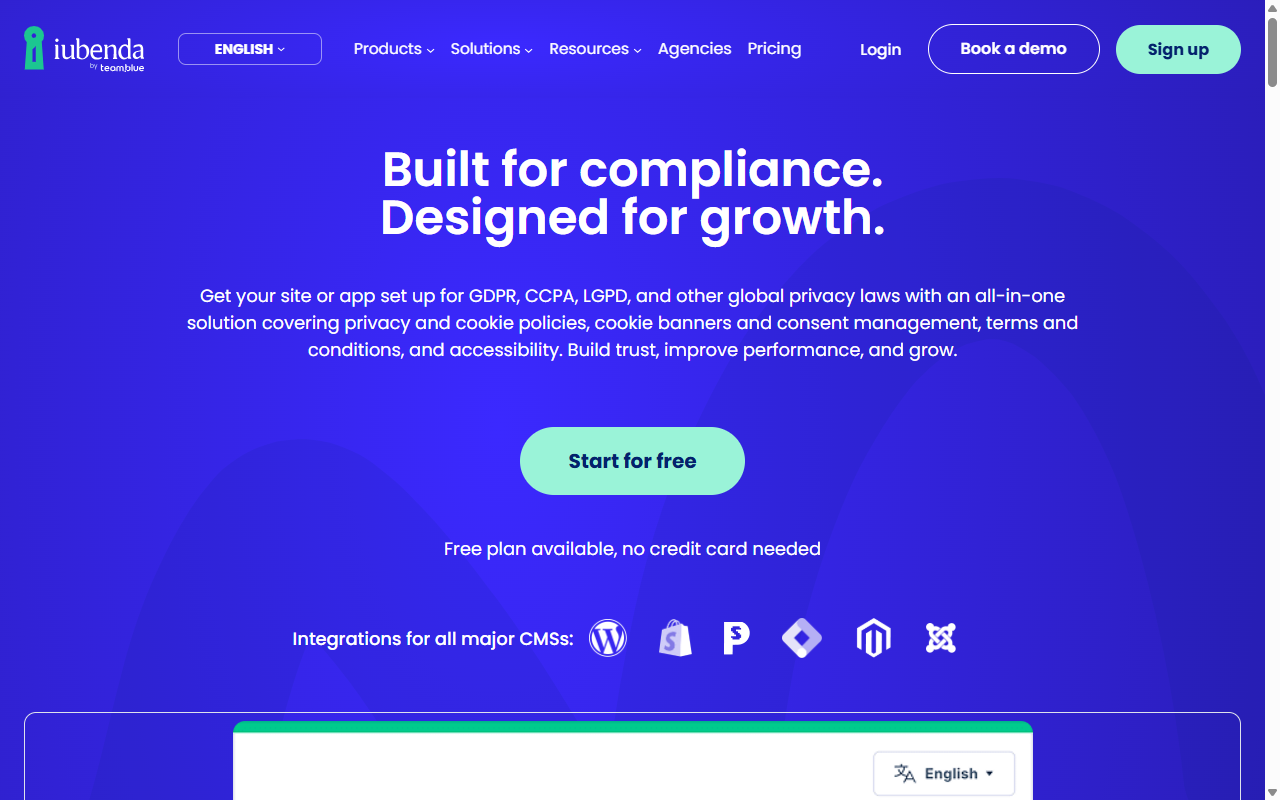
Privacy compliance on a website can feel like a puzzle whose pieces keep changing shape, especially on WordPress, where the rules never sit still. Many site owners start out with Iubenda, then look for something simpler and more built-in for handling user consent. The good news: you don’t have to live with heavy scripts, a confusing dashboard, or a subscription fee that keeps climbing. Plenty of solid options can keep you compliant while your site stays fast and looks good.
Key Takeaways
- Native tools save time – A WordPress-native option keeps your backend organized instead of juggling separate dashboards.
- Google Consent Mode v2 is essential – Your alternative needs to support this framework to keep ad and analytics data flowing legally in the EU.
- Speed matters – Heavy external scripts can slow your site, so a lightweight tool is easier on visitors.
- Geotargeting avoids friction – Showing banners only to visitors from regions with strict privacy laws keeps things clean for everyone else.
Why Site Owners Look for Iubenda Alternatives in 2026
When you first launch a site, an external service feels like the fastest way to check the compliance box, and for a while it works. But as your site grows, jumping between your WordPress editor and a separate control panel just to tweak a banner color gets old. You’d rather your privacy tools felt like part of your website, not one more login to remember.
External scripts also cost you speed, since visitors wait on a third-party server before your content shows up, and running several sites means those monthly per-domain fees add up fast. And with Google Consent Mode v2, GDPR, and the California Consumer Privacy Act (CCPA) all evolving, you want a tool that keeps pace automatically instead of breaking your layout.
Quick Comparison of the Top Iubenda Alternatives in 2026
Here’s a quick look at how the top options stack up: some built for WordPress, others cloud platforms for bigger enterprises.
| Solution | WordPress Native Integration | Approximate Setup Time | Google Consent Mode v2 | Dashboard Location |
|---|---|---|---|---|
| Cookie Consent (Elementor) | Yes, Built-in | Under 5 Minutes | Yes, Supported | WordPress Dashboard |
| Cookiebot | No, External Cloud | 15 to 20 Minutes | Yes, Supported | External Cloud Platform |
| CookieYes | No, External Cloud | 10 to 15 Minutes | Yes, Supported | External Cloud Platform |
| Complianz | Yes, Dedicated Tool | 15 to 20 Minutes | Yes, Supported | WordPress Dashboard |
| OneTrust | No, External Enterprise | Over 1 Hour | Yes, Supported | External Cloud Platform |
10 Best Iubenda Alternatives in 2026
Let’s walk through the top choices, starting with the most integrated option for WordPress, then the rest worth knowing.
1. Cookie Consent
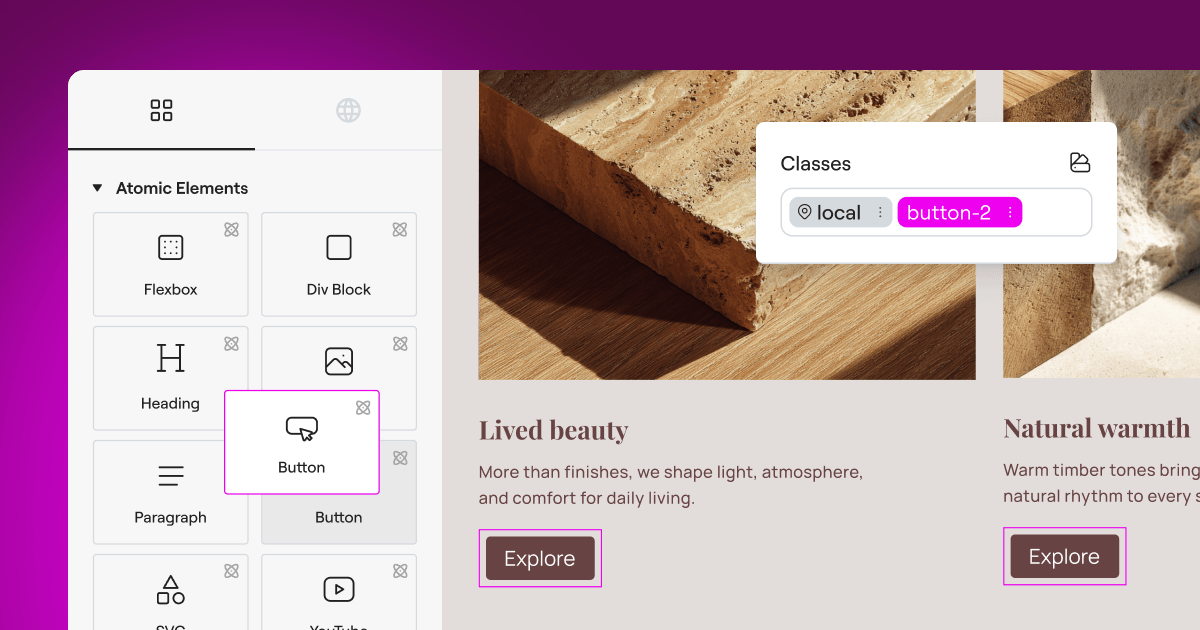
If you build your WordPress site with Elementor, Cookie Consent is the natural pick. It’s Elementor’s own cookie consent capability, built natively for WordPress, handling GDPR and CCPA compliance right from your dashboard, no external platform required. Set up banners, scan and categorize cookies, manage scripts, and keep consent logs, all in one place. Your banner can be live in under five minutes.

Because it’s built into the ecosystem you already use, it fits your site design naturally. Customize style, typography, and colors to match your brand. It’s included in Elementor One, with an entry-level plan too, and it pairs with Web Accessibility for fuller coverage.

- Tracks all consent decisions with secure audit logs in your database.
- Builds fully customizable banners that match your site design.
- Connects to Google Consent Mode v2 automatically.
- Pulls localized privacy rules from a built-in policy generator.
- Scans your site to find and categorize every cookie.
- Controls banner visibility with smart geo-targeting.
Pros:
- No external dashboards to manage.
- Setup takes under five minutes.
- Editable templates right in WordPress.
- Automatic scanning and consent logs included.
Cons:
- Requires WordPress to run.
Verdict: The best pick for WordPress owners who want something simple, good-looking, and fully compliant, without extra script weight.
2. Cookiebot
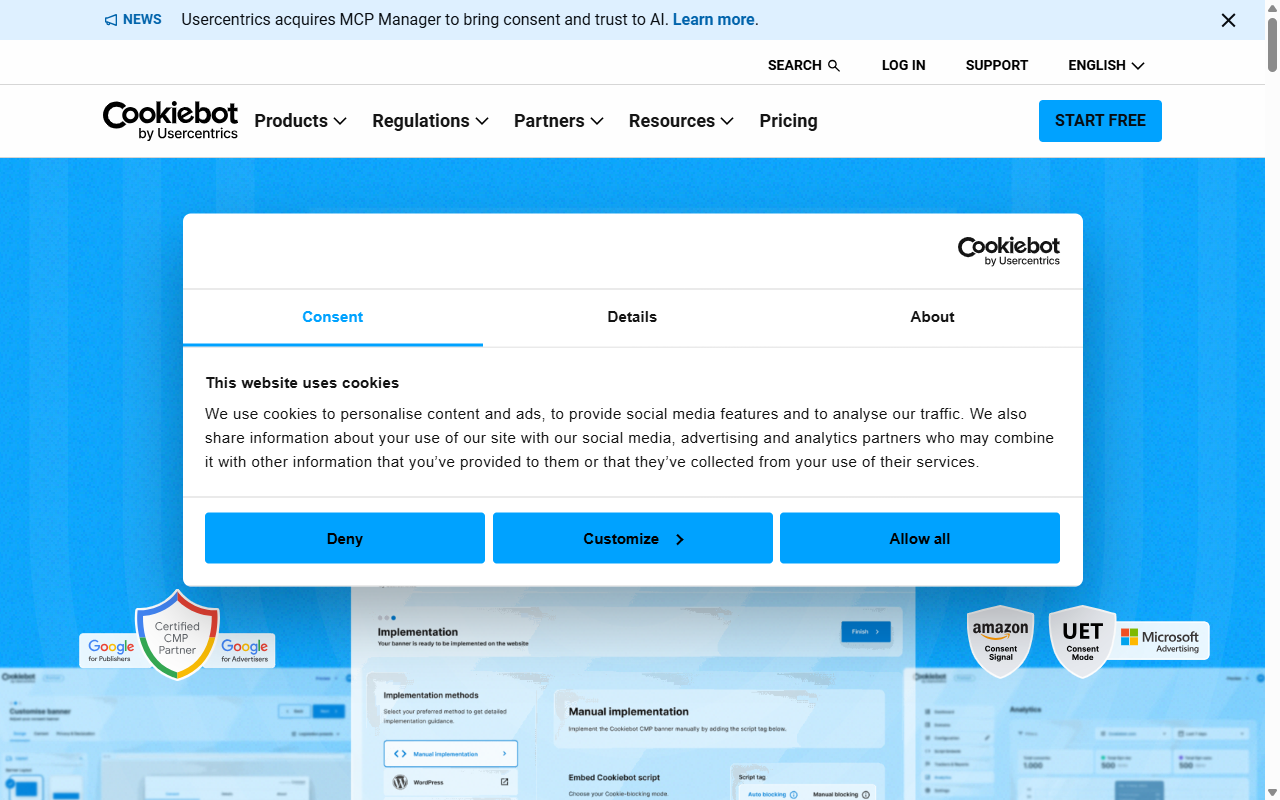
Cookiebot is a well-known cloud-based consent platform working across many content management systems. An automated scanner finds and blocks third-party cookies until visitors give explicit consent. As a cloud service, you manage banners and settings from an external dashboard, then paste a script into your site.
- Blocks unrecognized scripts before consent.
- Generates monthly cookie audit reports by email.
- Supports Google Consent Mode v2 for ad tracking.
- Displays clear cookie declarations for each script.
Pros:
- Strong automatic cookie blocking.
- Good multi-language support.
- Reliable cloud infrastructure.
Cons:
- External dashboard feels disconnected from WordPress.
- Banner design is tricky without CSS knowledge.
Verdict: A reliable, hands-off choice if you don’t mind an external platform and want deep cookie blocking.
3. CookieYes
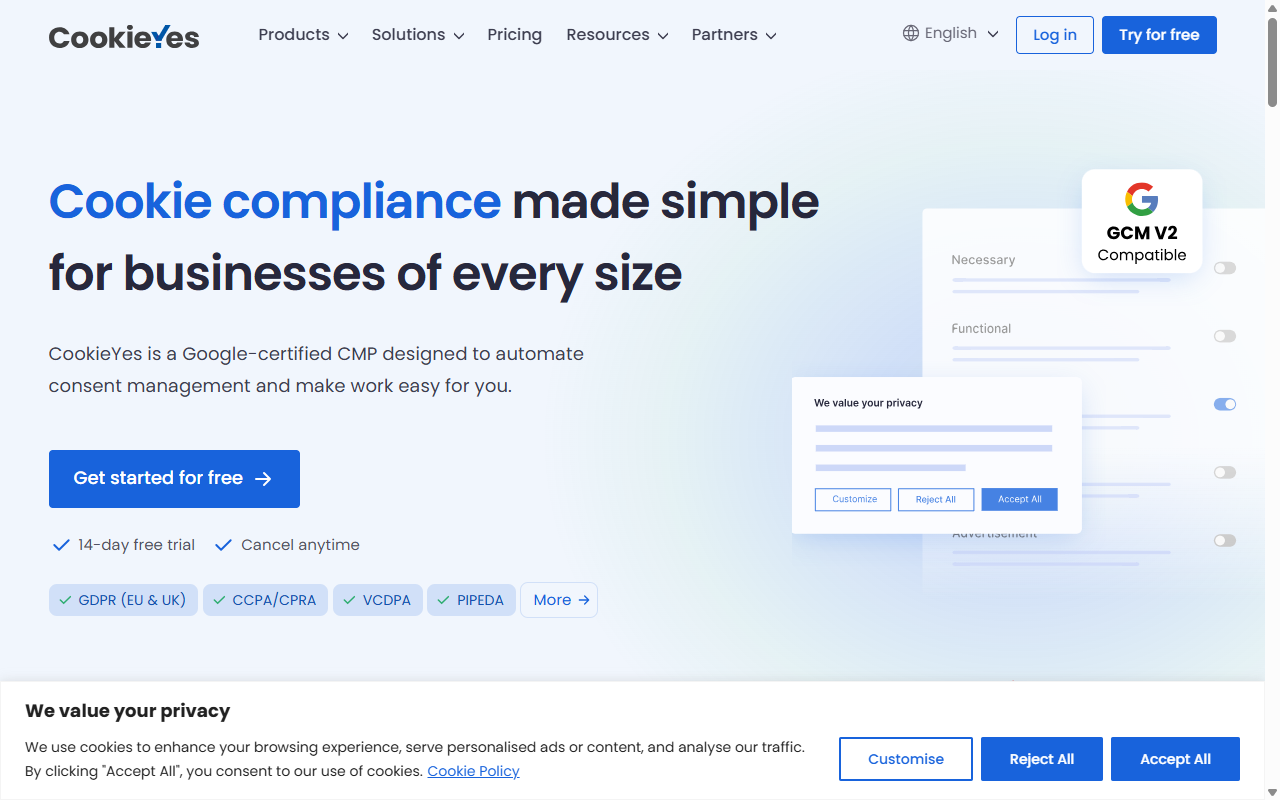
CookieYes is another widely used web-based consent tool, with a clean interface and support for major privacy laws worldwide. It runs on an external dashboard, though a WordPress helper simplifies connecting your site, and it’s lightweight and quick to set up.
- Scans your site for cookies in one click.
- Customizes banners with pre-built color themes.
- Logs historical consent for audit purposes.
- Integrates with major tag managers and analytics.
Pros:
- Easy interface for beginners.
- Good selection of layout styles.
- Quick implementation.
Cons:
- Leave WordPress to change settings or view logs.
- Entry-level plan limits hit fast on growing blogs.
- Script can conflict with other optimization tools.
Verdict: A solid, user-friendly cloud tool if you want quick setup and don’t mind a monthly fee as traffic grows.
4. Complianz
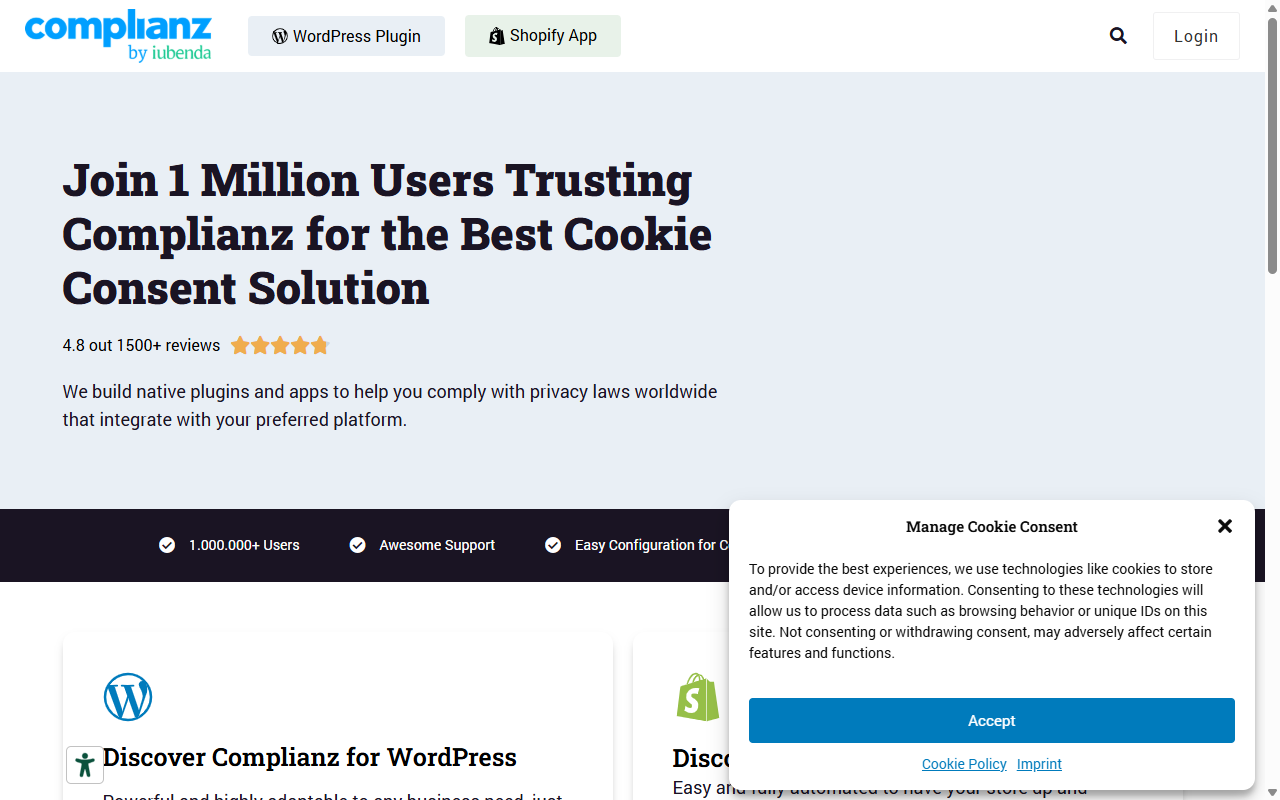
Complianz is a dedicated privacy suite built for WordPress. A step-by-step wizard asks about your site, audience, and services, then generates custom cookie banners and legal documents from your answers.
- Guides users through a full legal wizard.
- Generates dynamic policy documents that update automatically.
- Detects local regulations by visitor IP address.
- Works smoothly with form builders and caching systems.
Pros:
- Built into WordPress, data stays on your server.
- Wizard explains legal concepts simply.
- Integrates with many popular tools.
Cons:
- Wizard is long and can feel like a lot.
- Interface is utilitarian, less visual than modern editors.
- Premium features get pricey across many client sites.
Verdict: A strong pick for a wizard-style setup, right inside WordPress.
5. OneTrust
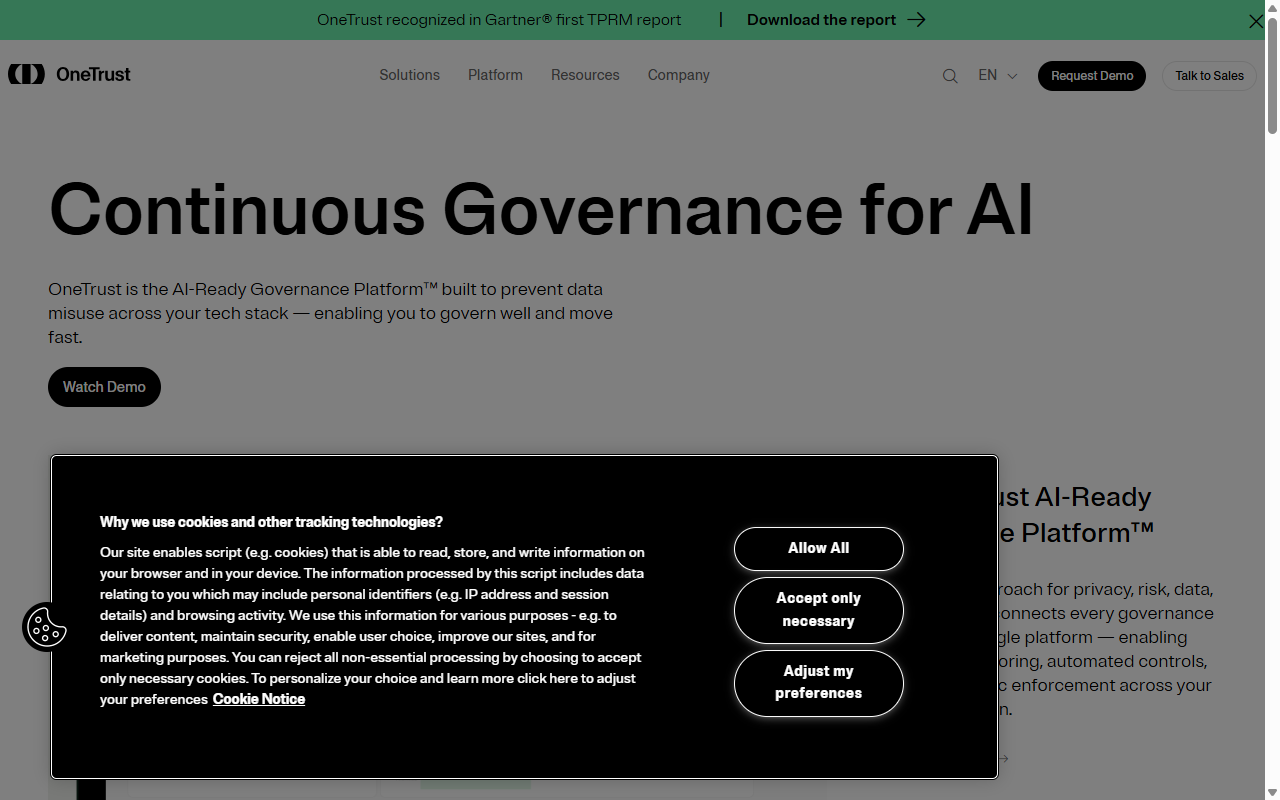
If you run a large business or manage compliance across a corporate portfolio, OneTrust is the market’s enterprise option, a full privacy, security, and governance platform covering vendor risk management, data mapping, and compliance assessments.
- Manages enterprise data privacy across multiple platforms.
- Audits website trackers with detailed technical reports.
- Adapts to specific jurisdictions with an advanced geo-targeting engine.
- Consolidates consent across web, mobile, and offline touchpoints.
Pros:
- Detailed features for corporate legal teams.
- Reliable and scalable for millions of users.
- Deep integration with internal business tools.
Cons:
- Far more than a standard WordPress site needs.
- Setup is lengthy, often needs professional help.
- Higher cost than standard consent tools.
Verdict: Best suited to enterprises with dedicated compliance teams managing data across business units.
6. Termly
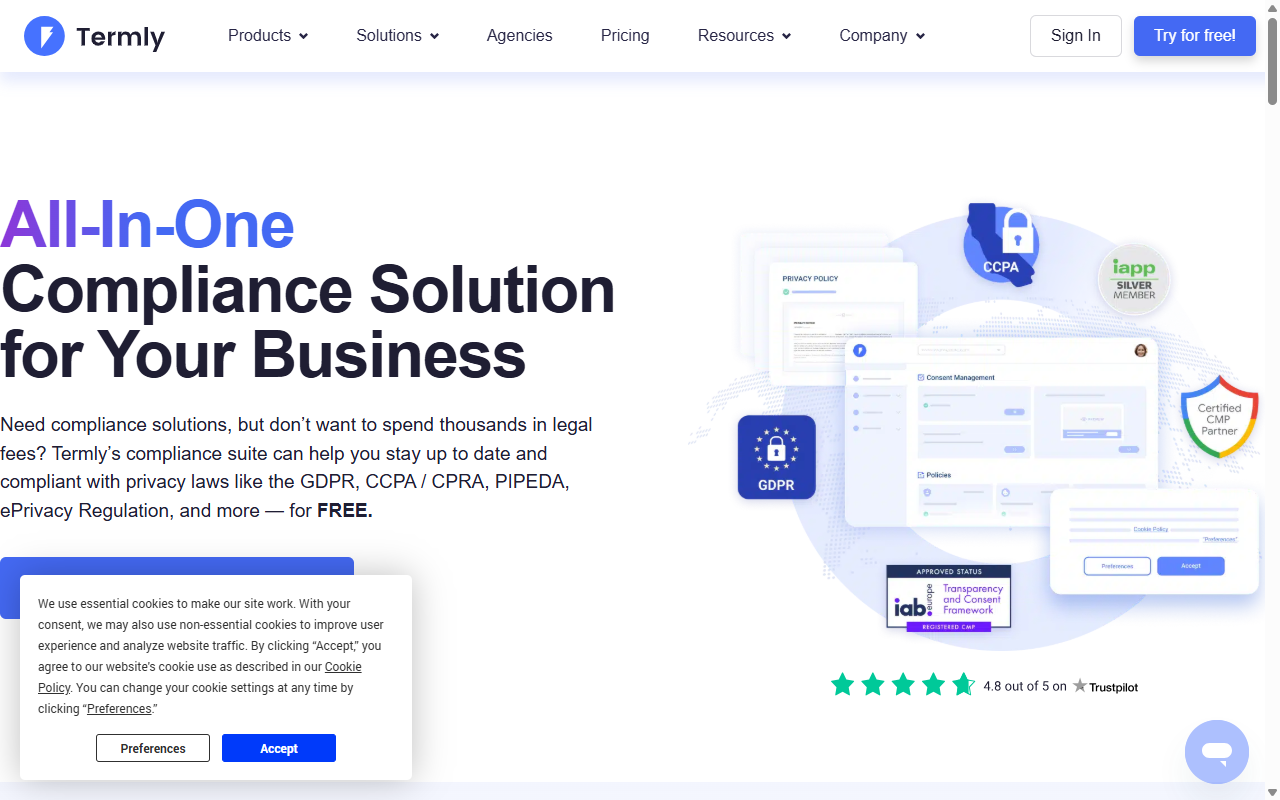
Termly is a legal compliance suite for small businesses, focused on generating privacy policies, terms of service, and shipping policies, plus a standard cookie banner, all from their external cloud dashboard.
- Generates lawyer-reviewed policy documents for your business model.
- Updates your legal agreements automatically as laws change.
- Scans your domains regularly to keep cookie lists current.
- Delivers clean, simple cookie banner templates.
Pros:
- One spot for all your legal page generators.
- Straightforward, friendly interface.
- Reasonable pricing for small sites.
Cons:
- Banner customization is fairly limited.
- Requires pasting code into your site header.
- Not fully native to the WordPress dashboard.
Verdict: A good choice for legal documents alongside a standard cookie banner.
7. Osano
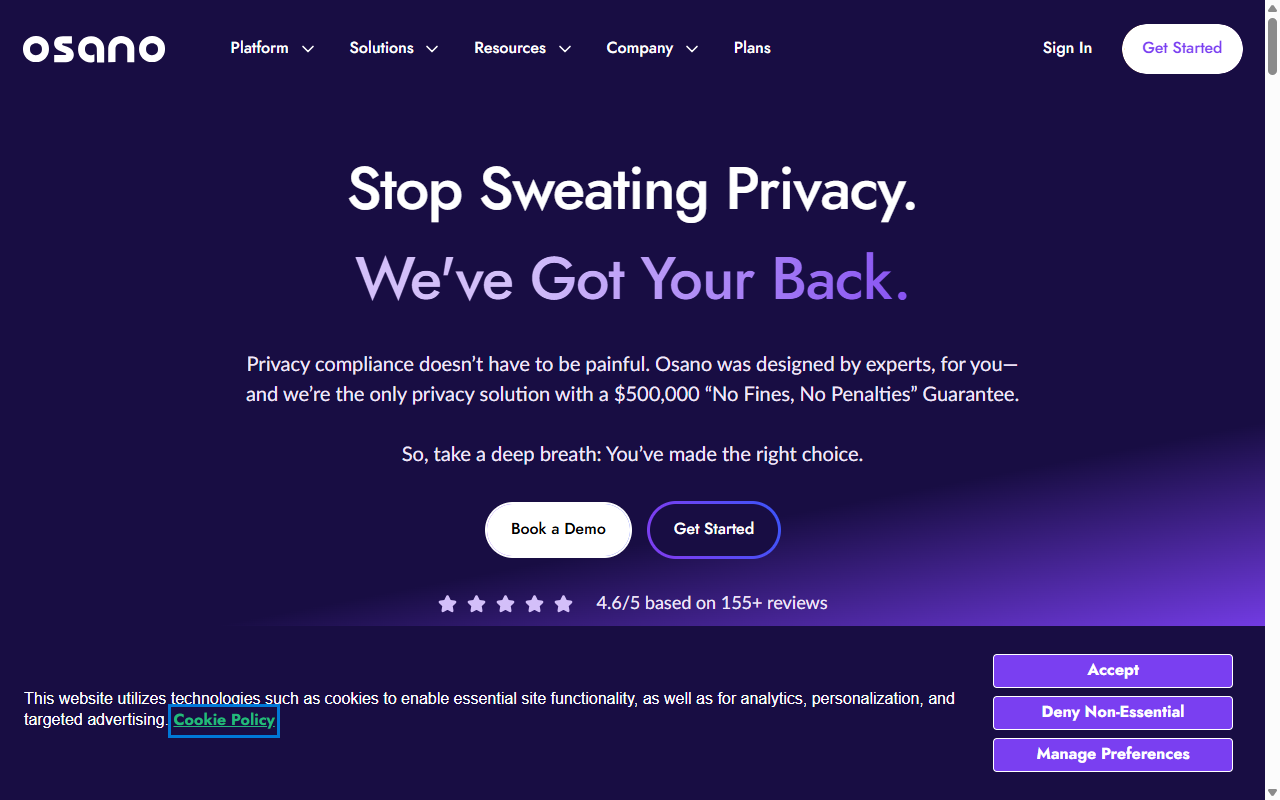
Osano is a modern data privacy platform focused on simplicity and reducing risk. It’s known for its “No-Fine Pledge,” covering fines if the tool is configured correctly and regulators still penalize you. It runs on a cloud dashboard with a strong focus on data mapping.
- Monitors your vendors and how they handle user data.
- Guarantees compliance up to set financial limits under defined conditions.
- Loads quickly thanks to a global CDN.
- Simplifies subject access requests (DSAR) for data deletion.
Pros:
- Guarantee pledge offers extra peace of mind.
- Clean, lightweight script, no performance drag.
- Responsive customer support.
Cons:
- Advanced features locked behind higher-tier plans.
- More than you need for a standard banner.
- Requires a separate dashboard for configuration.
Verdict: A premium, security-focused option for mid-sized businesses minimizing legal risk with a modern cloud service.
8. Usercentrics
Based in Europe, Usercentrics is a consent platform built around strict GDPR requirements. Developers like its flexible API and SDK options, letting you build custom consent experiences across websites, mobile apps, and even smart TVs.
- Adapts to custom application architectures with developer-friendly APIs.
- Integrates with major advertising networks and tracking technologies.
- Presents detailed analytics on opt-in interactions.
- Keeps data on European servers per GDPR storage rules.
Pros:
- Extremely flexible for custom development projects.
- Deep reporting to optimize opt-in rates.
- Strong focus on European legal standards.
Cons:
- Needs technical know-how to configure properly.
- Not built specifically for casual WordPress users.
- Can feel complicated for a simple, ready-to-go setup.
Verdict: An excellent developer-first platform for custom web apps needing advanced tracking control.
9. Didomi
Didomi is a high-end consent and preference platform built to help publishers and brands earn visitor trust. Users customize communication preferences alongside standard cookie opt-ins, and it handles millions of transactions across web and mobile.
- Collects customer preferences for newsletters, SMS, and direct mail.
- Syncs consent choices across multiple devices and tools.
- Delivers analytical reports on opt-in rates by region.
- Aligns with the IAB Transparency and Consent Framework.
Pros:
- Preference management beyond standard cookie consent.
- Highly secure and enterprise-tested.
- Good multi-device consent sync.
Cons:
- Too heavy and costly for a self-hosted WordPress site.
- Longer onboarding than native tools.
- No simple entry-level plan for small blogs.
Verdict: A solid option for publishers managing consent and marketing preferences in one system.
10. Consent Manager
Consent Manager is a specialized privacy tool based in Sweden, focused on speed, data minimization, and European regulatory compliance. It offers detailed diagnostic reports showing which scripts load on your site and where your data goes.
- Measures your banner performance with real-time conversion rates.
- Hosts all user data on secure servers within the EU.
- Supports more than 30 languages for global compliance.
- Performs deep scans to identify hidden tracking scripts.
Pros:
- Fast script delivery.
- Good dashboard reports on script behavior.
- Privacy-first data hosting standards.
Cons:
- Dashboard design feels dated and technical.
- Setup requires a bit of code pasting.
Verdict: A reliable, security-focused tool for European businesses wanting solid compliance reports and fast loading.
Key Factors to Consider When Choosing a Privacy Solution
When you’re ready to replace your consent tool, don’t rush it. Think about what will actually make your day-to-day easier as a site owner.
- Workflow Integration – If you’re already in WordPress daily, you can manage privacy settings from that same dashboard, with no second login for a banner tweak or log check.
- Design Control – Your cookie banner is often the first thing a new visitor sees, so a mismatched look can undercut your site’s design. Look for fonts, colors, and position you can adjust without custom CSS.
- Performance Cost – Every external script you add affects load times, which is why a native capability like Cookie Consent keeps your site lightweight instead of letting an external server delay your page.
- Legal Features – Make sure your choice supports standards like Google Consent Mode v2 and Global Privacy Control, covering your legal bases without losing your marketing analytics data.

“When choosing a compliance tool, native solutions are always preferable for WordPress users. They minimize external script dependency, prevent latency issues, and keep your critical compliance logs stored securely on your own server where you have full control.”
– Itamar Haim, Web Compliance Specialist
How to Set Up Your Privacy Banner for Success
To get the most from your tool, follow a logical setup path. It keeps things clean and helps you avoid broken scripts later.
- Run a complete site scan – Let your tool scan the whole site first. This finds every cookie loaded by your tools, forms, and analytics scripts. (Skipping this step is what trips most people up.)
- Categorize your cookies – Sort them into groups like “Necessary,” “Functional,” “Analytical,” and “Marketing,” so visitors can easily choose what to allow.
- Match your styling – Copy your brand colors and typography into your banner settings. It’s a small step that makes your banner look far more professional.
- Turn on geo-targeting – Show strict banners only to visitors from regions that require them, like the EU or California, and keep things clean for everyone else.
- Review your consent logs – Check your backend now and then to confirm logs are recording properly, so you’re audit-ready if a regulator asks.

Frequently Asked Questions
Is Google Consent Mode v2 required for all websites in 2026?
If your site serves EU or EEA visitors and uses Google services like Analytics or Ads, then yes. Google requires Consent Mode v2 to keep sending marketing data from those regions, or your measurement tools won’t work correctly for EU traffic.
Do native WordPress privacy tools slow down websites?
Native tools like Cookie Consent are generally much lighter than external cloud scripts. Loading from your own server and working directly with your layout, they skip the external requests that cause layout shifts and delays.
Can I use a free cookie consent tool for commercial sites?
Yes. Many tools have entry-level plans that work well for small commercial sites, though you may want to upgrade later for automatic script blocking, unlimited scans, and integrated logs.
What happens if I don’t use a cookie consent banner?
Skipping a proper consent mechanism can expose your business to compliance risk. Regulators can issue substantial fines for GDPR or CCPA violations, and ad networks may disable your tracking if they catch unconsented data collection.
How often should I scan my website for new cookies?
Aim for at least once a month. Tools and services update automatically and can introduce new scripts without you noticing, so regular scanning keeps your cookie policy accurate.
What is the difference between GDPR and CCPA consent rules?
GDPR uses an “opt-in” model, so you must block non-essential cookies until a visitor gives explicit permission. CCPA uses an “opt-out” model instead, letting cookies load immediately but requiring an easy opt-out link like “Do Not Sell My Info.”
Do I need to store consent logs on my own database?
Some services store logs on their own cloud servers, but keeping them in your native WordPress database helps you maintain ownership of your data and simplifies audit reports.

