
Setting up a website is exciting, but privacy law requirements can stall that momentum fast. Between GDPR, CCPA, and a growing list of rules worldwide, staying compliant can feel like a lot. The good news: you don’t have to figure it out alone. If you build with Elementor, here are the best cookie banner solutions for protecting your visitors without sacrificing your design.
Key Takeaways
- Native Integration: Managing consent inside WordPress skips extra dashboards and accounts.
- Google Consent Mode v2 Matters: your tool needs this to keep tracking accurate.
- Geo-Targeting Saves Design: Show banners only where required, keeping your site clean elsewhere.
- Audit Readiness Counts: Secure consent logs prove compliance if regulators ask.
Why Privacy Compliance Matters for Your WordPress Site in 2026
Privacy isn’t just a technical detail for legal teams anymore. It’s part of building trust with your audience, and regulators are watching closely. A static privacy policy isn’t enough; you need a system that respects visitor choices in real time.
Scripts and trackers start loading the moment someone visits your site, helping you analyze traffic and deliver ads. But under laws like GDPR, you need consent before those tools run. Skipping that step can create compliance issues and chip away at visitor trust, though it doesn’t have to be painful with the right tool.
Here’s a quick list of mistakes worth knowing before you start.
- Assuming small sites are exempt: privacy laws protect users by where they live, not your business location.
- Blocking essential scripts by accident: a tool that can’t tell functional files from tracking cookies can break your layout.
- Forgetting to save consent records: regulators may ask for proof, so keep secure, dated logs.
A proper banner protects your site and keeps your analytics accurate. Here are the best options for your Elementor site this year.
1. Cookie Consent (Elementor’s Native Tool)
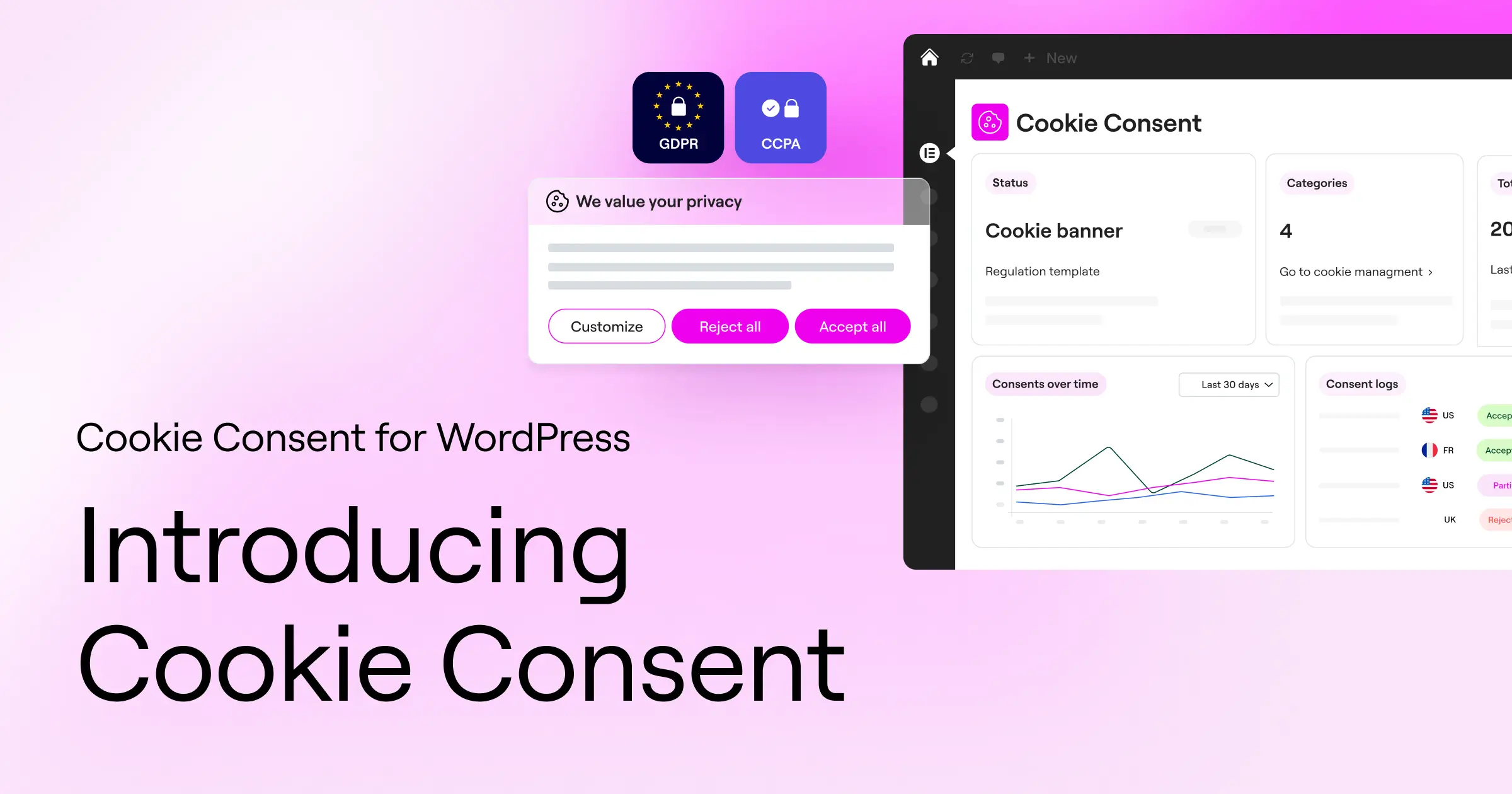
First up is Cookie Consent, Elementor’s native tool for WordPress, built right into the Elementor platform with no external dashboards or accounts. Setup takes under five minutes: a three-step wizard scans your site, designs your banner, and publishes, no code required.
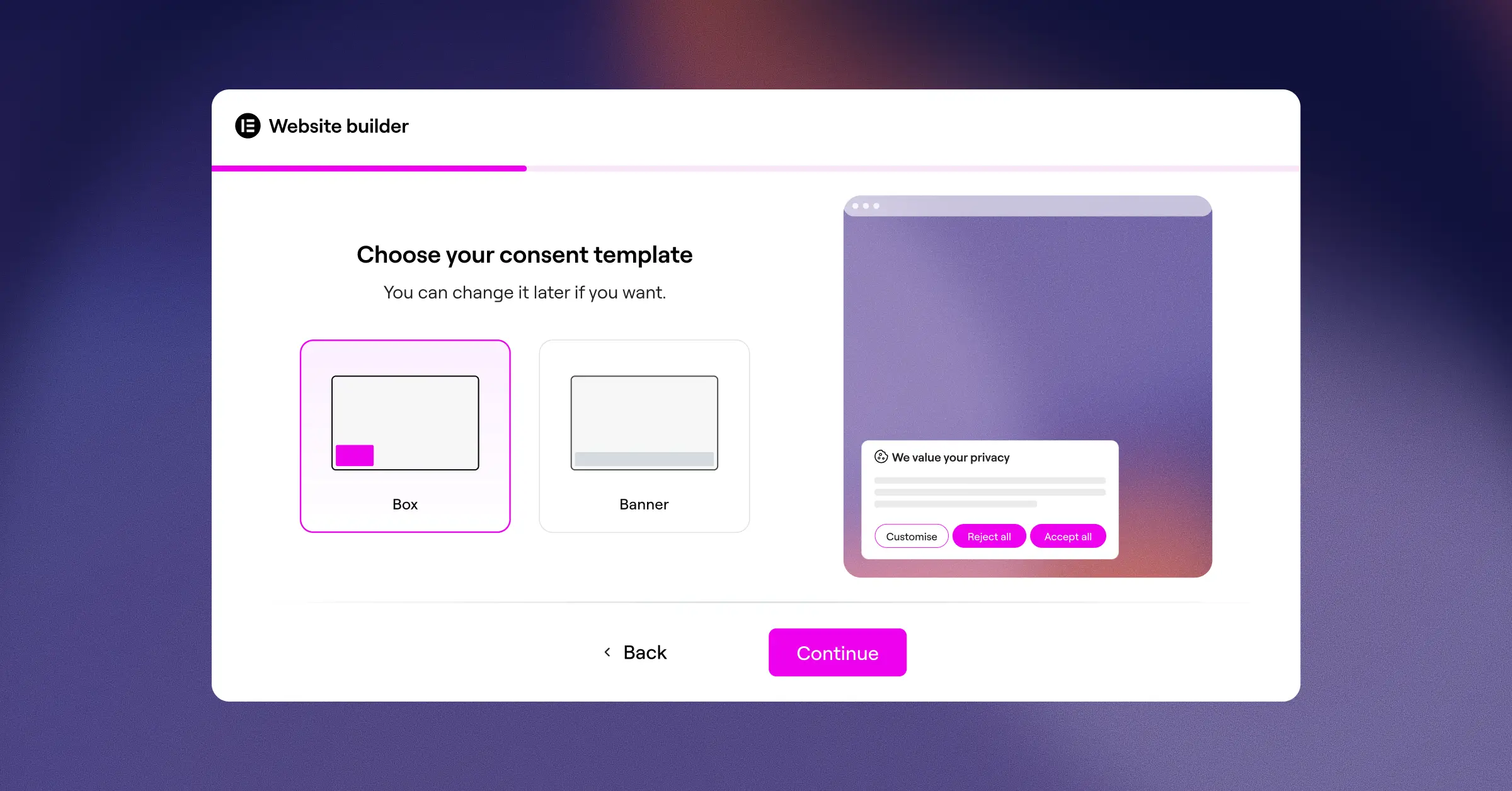
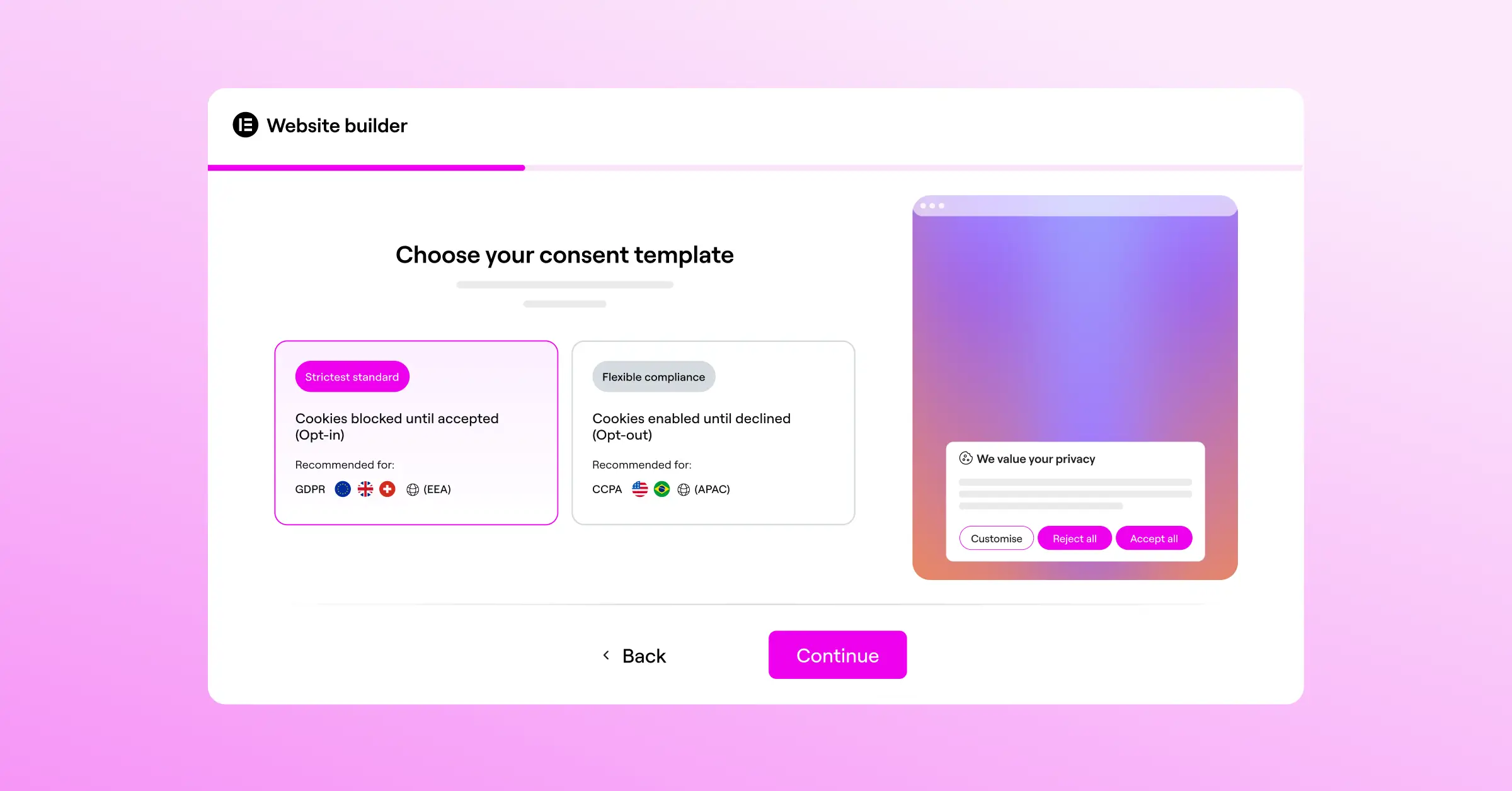
You can customize the banner to match your branding, with cloud-based templates so you’re not starting from scratch. It supports Google Consent Mode v2 and Global Privacy Control (GPC), and for teams managing multiple sites, it’s included in Elementor One, starting at an entry-level plan.
Key Features
- Runs natively inside WordPress, no external accounts.
- Builds custom banners matching your brand colors and fonts.
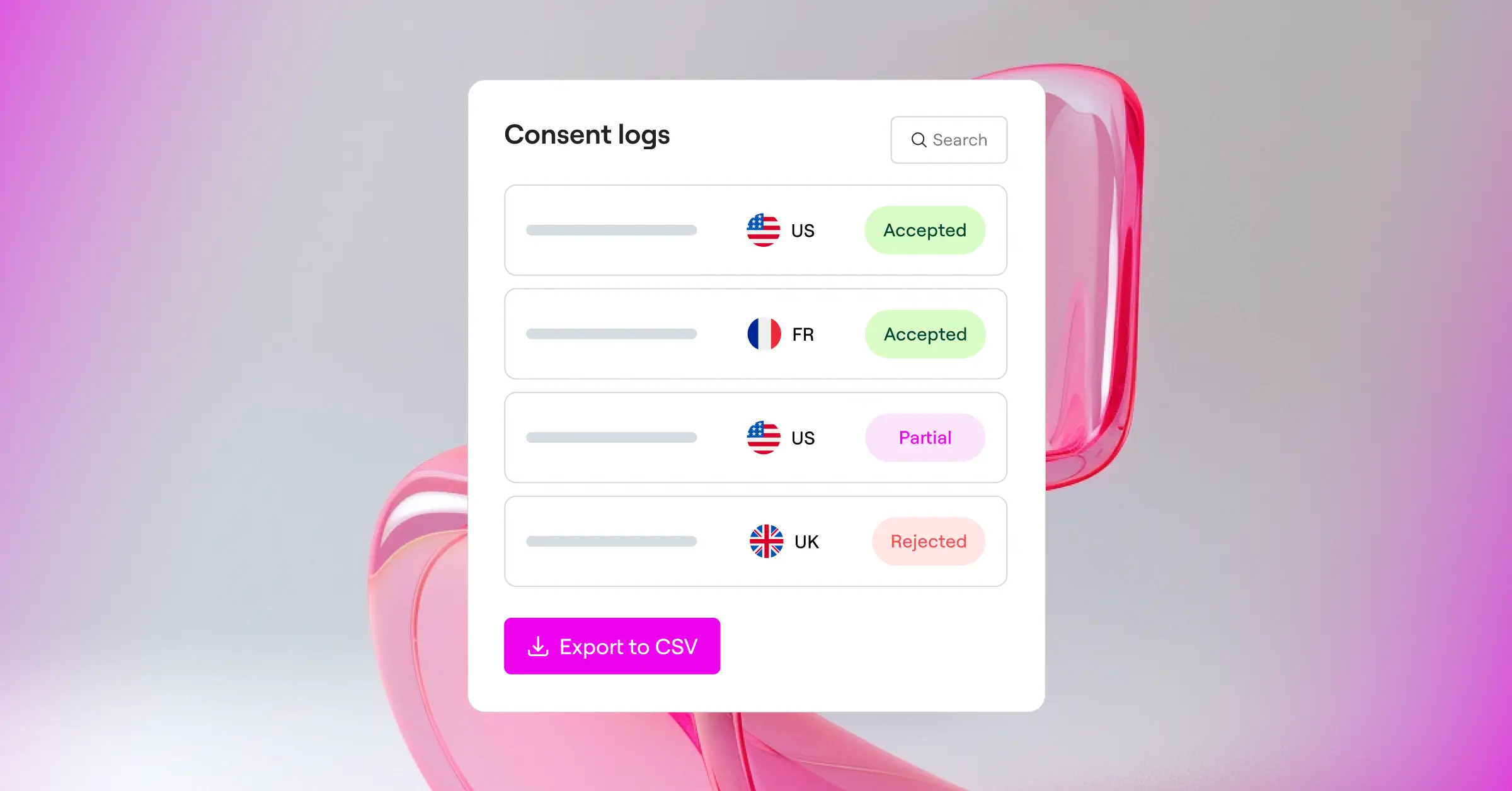
- Tracks compliance with secure consent logs for audits.
- Launches geo-targeted banners for specific regions.
- Scans your site for tracking cookies.
- Connects with Google Consent Mode v2 for accuracy.
Advanced features and white-label options come bundled into Elementor One too.
Pros & Cons
Pros: No external dashboards; fast setup; full Consent Mode v2 support.
Cons: Built for WordPress only, so it won’t work elsewhere.
Verdict
The top pick for anyone building with Elementor. It keeps your workflow inside WordPress, where it belongs.
“Implementing a solid cookie consent banner isn’t just about avoiding regulatory fines, it’s about establishing a transparent relationship with your audience right from their very first click.”
– Itamar Haim, Web Compliance Specialist
2. Cookiebot
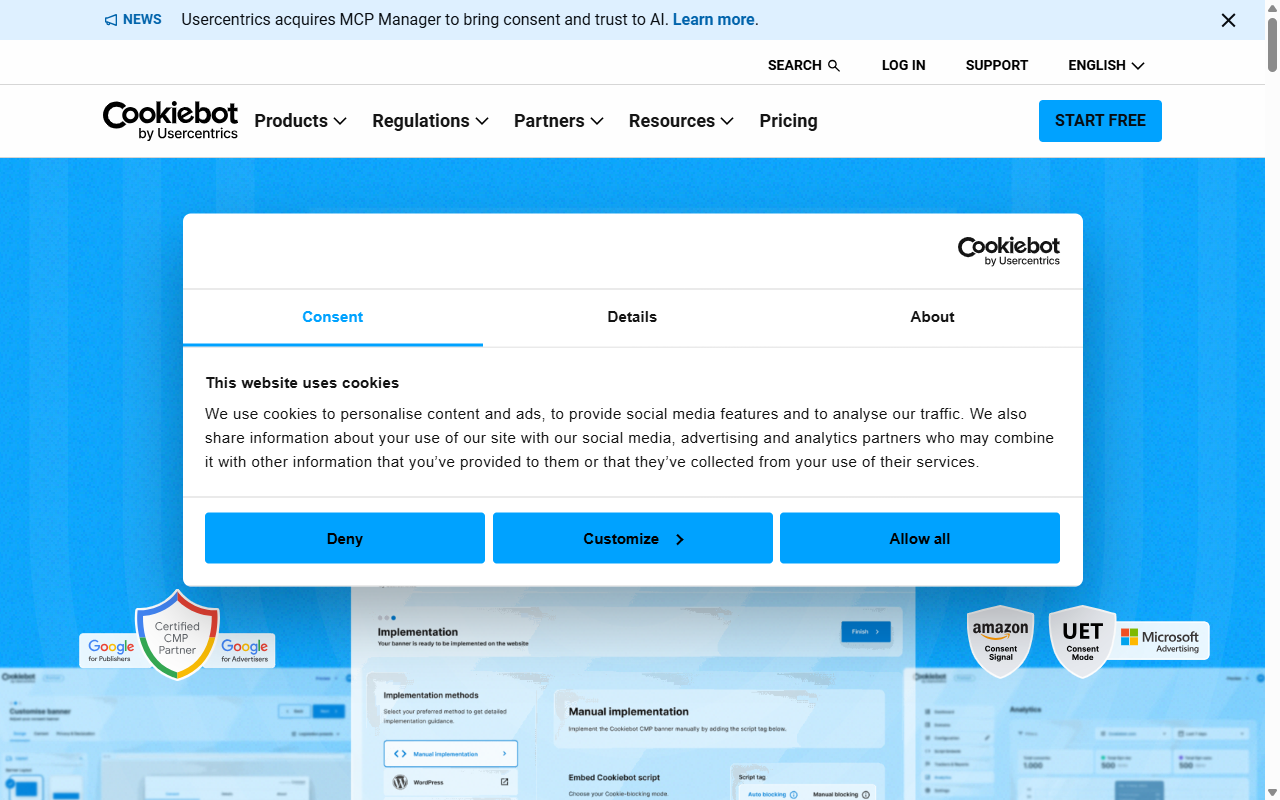
Cookiebot scans your site monthly via a cloud-hosted service, finding every tracking cookie and script and sorting them into categories like marketing and statistics. You manage settings through an external dashboard, and the banner works well with Elementor.
Key Features
- Scans your site monthly for new tracking cookies.
- Categorizes trackers automatically into compliant consent groups.
- Displays clear cookie declarations for your privacy policy.
- Blocks tracking codes dynamically until visitors click accept.
- Stores consent data securely in cloud-based storage.
- Supports multi-language setups for global visitors.
Pros & Cons
Pros: Reliable automated monthly scanning; automatic script blocking.
Cons: Settings live externally; larger sites pay a monthly fee.
Verdict
A solid, hands-off pick for sites that add new marketing scripts often and want them cataloged.
3. CookieYes
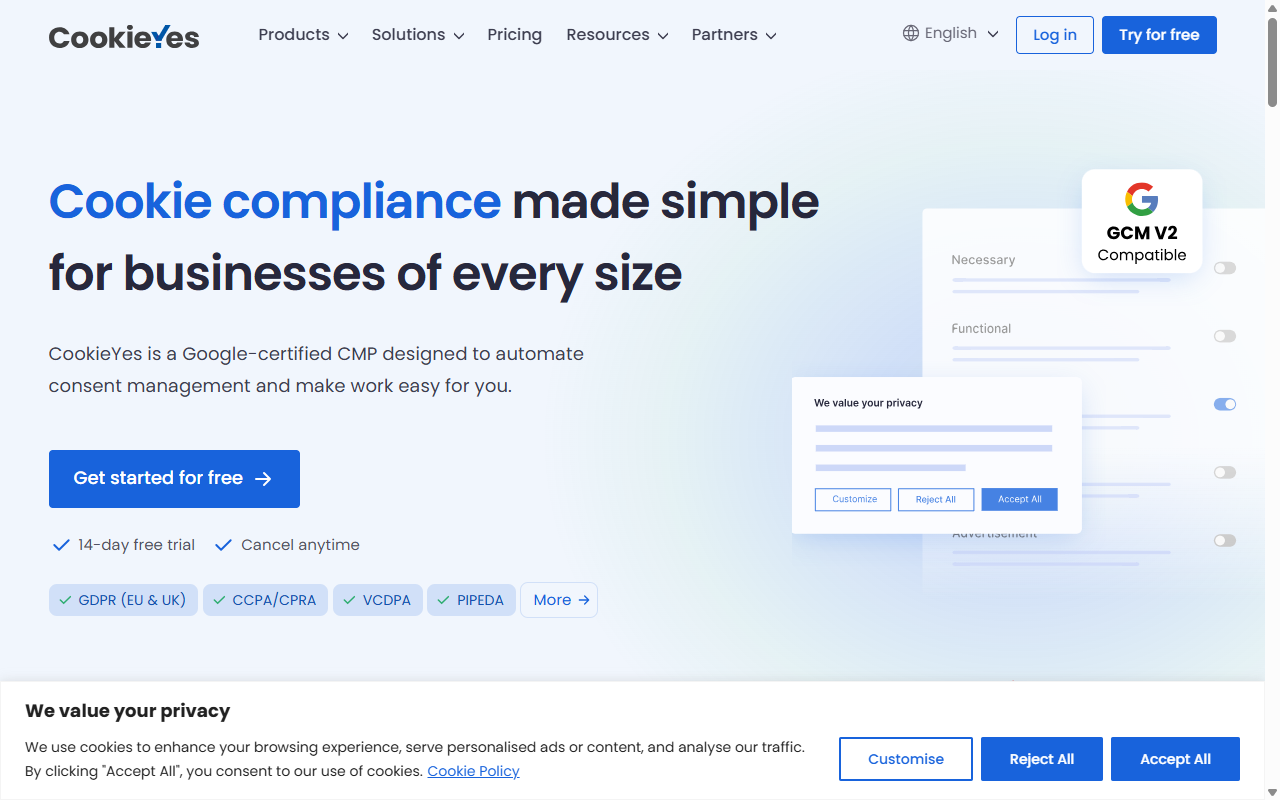
CookieYes runs as a web app connecting to WordPress, with a visual setup helper for customization. It’s clean across multiple domains, with a flexible design builder, tag manager integration, and consent-rate analytics.
Key Features
- Manages cookie consent across domains from a single account.
- Builds custom banner layouts with a visual customizer.
- Blocks standard tracking cookies before user confirmation.
- Tracks consent acceptance rates with clean visual graphs.
- Supports Google Consent Mode v2 for your analytics.
- Generates easy-to-read compliance logs as consent proof.
Pros & Cons
Pros: Clean dashboard; easy visual customization.
Cons: Changes happen in the CookieYes portal, not WordPress; premium tiers bill by traffic.
Verdict
A solid cloud-based option for managing multiple sites from one control center.
4. Complianz
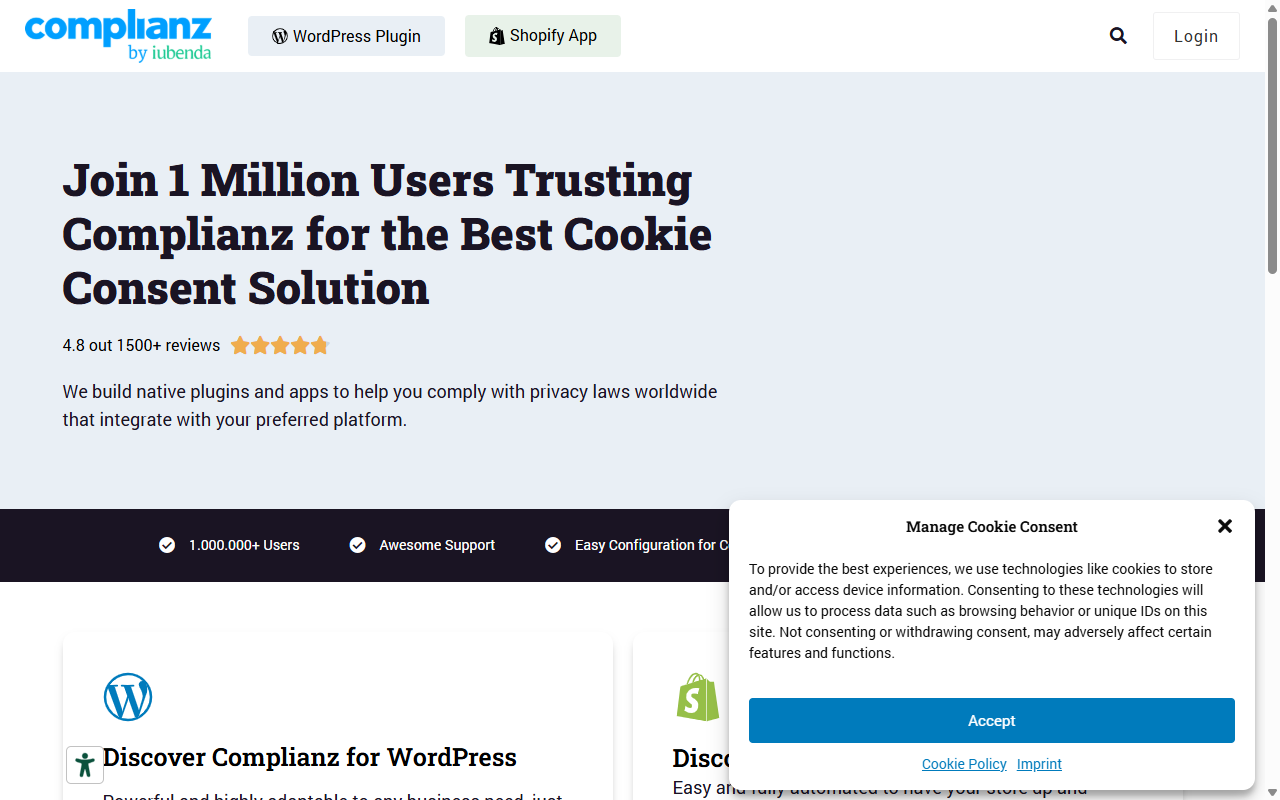
Complianz runs on your own server instead of a cloud app. An interactive wizard asks about your business to build a personalized banner and legal documents matching applicable regulations, and it integrates with the Elementor platform for easy theme styling.
Key Features
- Configures your banner with an interactive wizard.
- Saves configuration files locally on your server.
- Generates legal documents, like cookie policies, automatically.
- Blocks specific scripts, like social embeds, until consent.
- Supports Global Privacy Control signals from modern browsers.
- Launches distinct banner styles based on the visitor’s region.
Pros & Cons
Pros: Runs on your own server; a free version is on WordPress.org.
Cons: Many settings can overwhelm beginners; local blocking needs troubleshooting.
Verdict
A strong option if you prefer local control and want help writing your legal policies.
5. iubenda
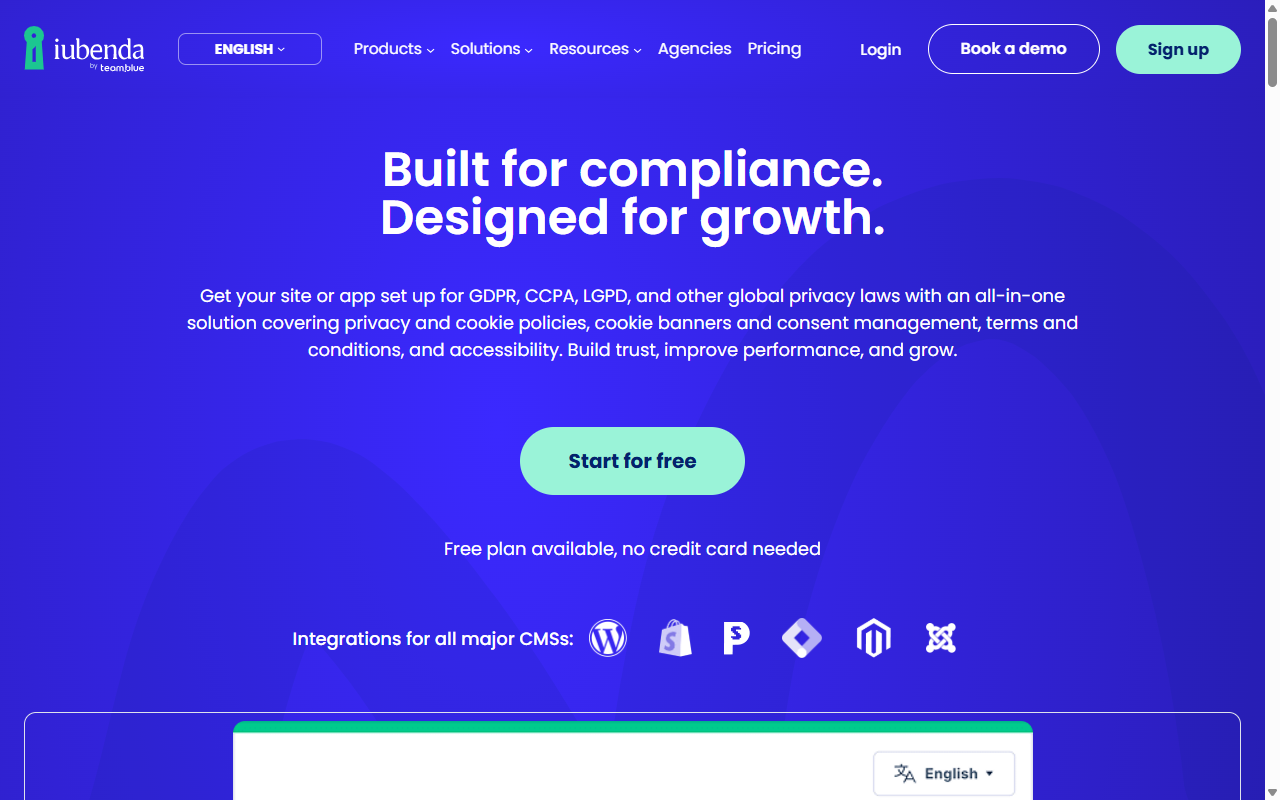
iubenda is a full legal compliance suite for agencies, going beyond cookie banners with automated privacy policies, terms generators, and consent registers. It’s cloud-based, with documents monitored by lawyers and updated automatically, and the banner integrates into Elementor themes via code snippets.
Key Features
- Syncs site policies with regulatory changes from legal experts.
- Builds professional terms and conditions documents alongside your banner.
- Stores detailed consent preferences for global audit requirements.
- Blocks scripts dynamically using a cloud-based console.
- Supports a large library of languages internationally.
- Customizes banner look and feel for consistent branding.
Pros & Cons
Pros: Backed by real legal monitoring; useful client account dashboard.
Cons: Credit-based pricing can be harder to predict for budgeting.
Verdict
Best for agencies needing complete legal documentation alongside cookie banners for client handoffs.
6. Termly
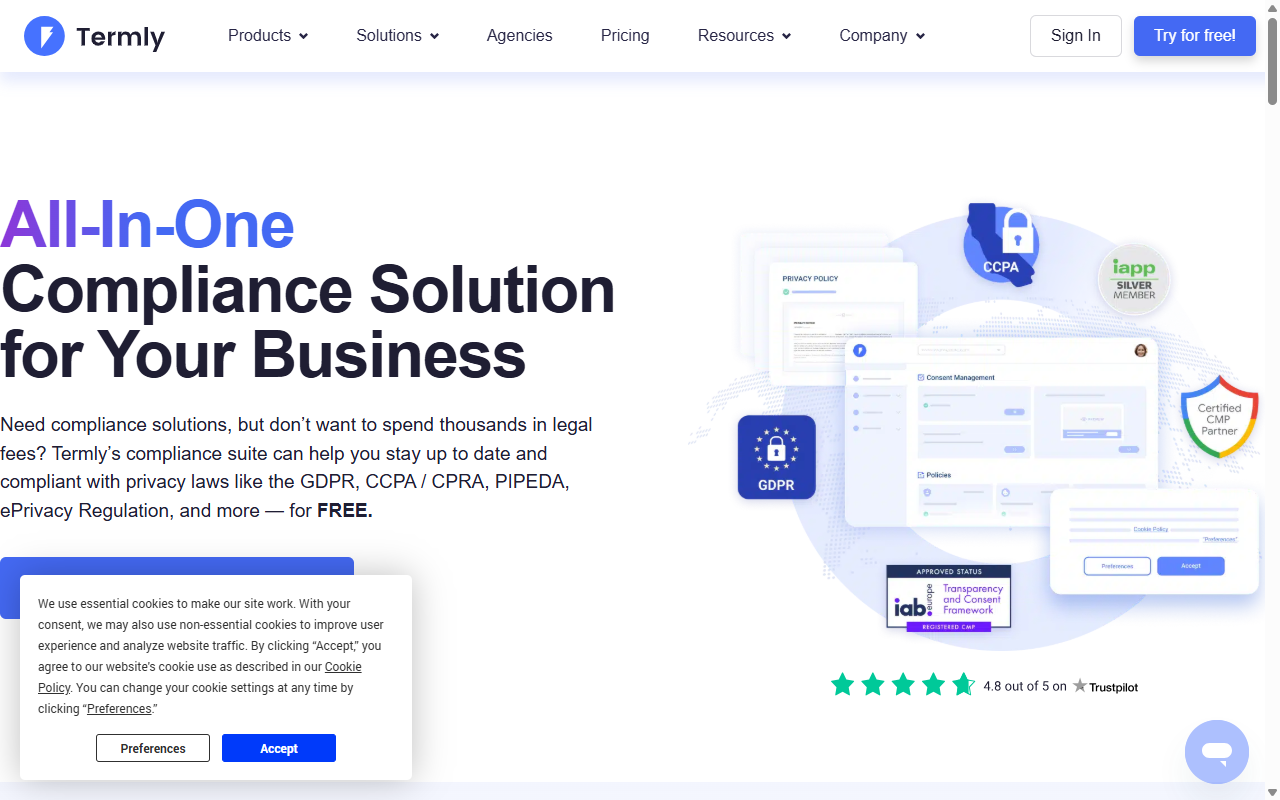
Termly targets small businesses and independent creators, bundling cookie banners, privacy policies, and terms templates into one cloud-hosted platform. Its visual editor makes it easy to change colors, fonts, and position, and it scans your site for active cookies, sorting them into a policy you can publish right away.
Key Features
- Generates legal agreements using guided questionnaire forms.
- Scans your site code regularly for tracking cookies.
- Blocks cookies from loading until visitors make their choice.
- Displays clean, modern banner designs for any screen size.
- Tracks user preferences to keep cookie blocking consistent.
- Supports major compliance standards like GDPR and CCPA.
Pros & Cons
Pros: Simple dashboard; very little technical skill required.
Cons: Entry-level plan shows a prominent Termly logo; limited flexibility for custom development.
Verdict
An approachable pick for small business owners who want an all-in-one setup without deep steps.
7. OneTrust
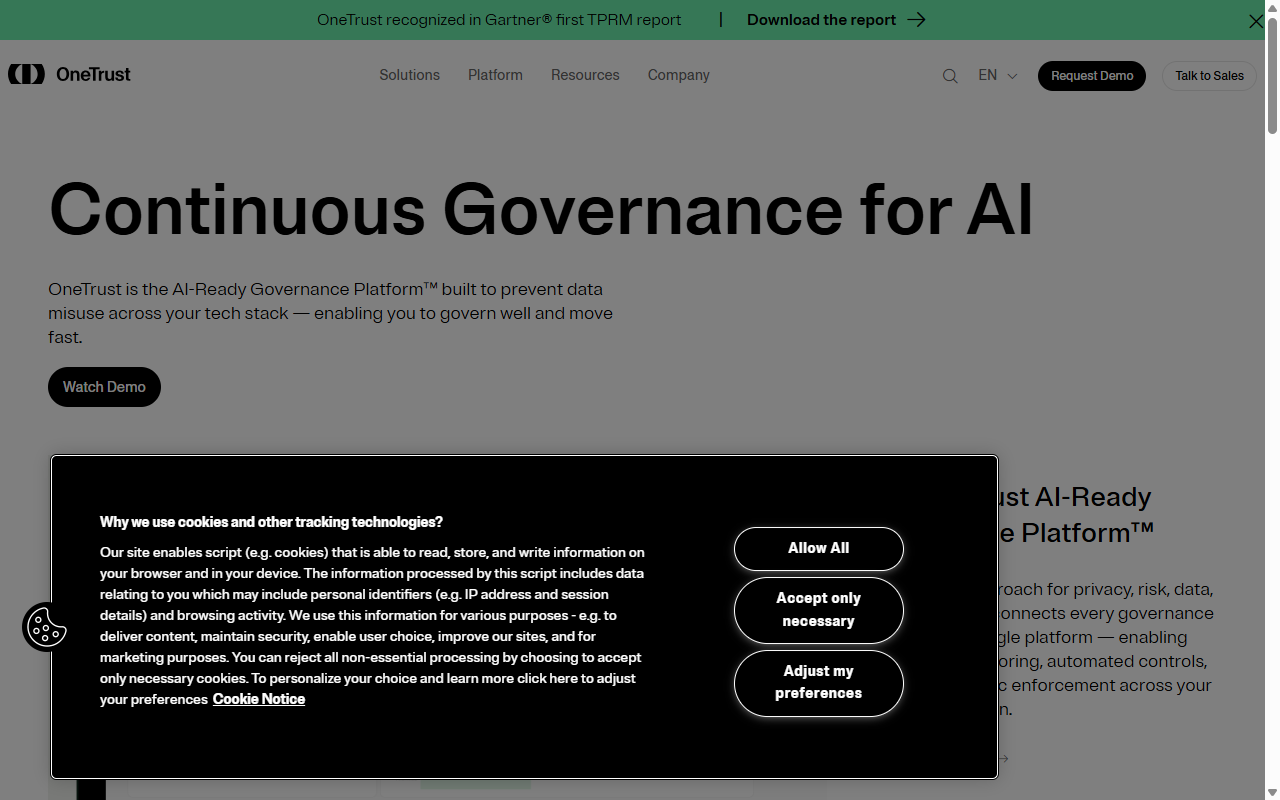
OneTrust is an enterprise-level trust and privacy platform built for complex compliance across departments and regions. It may be more than a small blog needs, but it works with Elementor through tag managers, standing out for reporting, audit trails, and granular consent settings.
Key Features
- Manages large networks of sites and apps securely.
- Tracks visitor consent with advanced logging and analysis.
- Launches targeted banners based on the visitor’s exact location.
- Blocks specific cookie categories using advanced rule engines.
- Generates visual compliance reports for internal stakeholders.
- Customizes layouts to match strict corporate brand guidelines.
Pros & Cons
Pros: Capable platform built for large corporate structures; detailed analytical tracking.
Cons: Complex to configure; cost sits beyond small business budgets.
Verdict
The go-to solution for enterprise WordPress sites needing to satisfy a large compliance team.
8. Osano
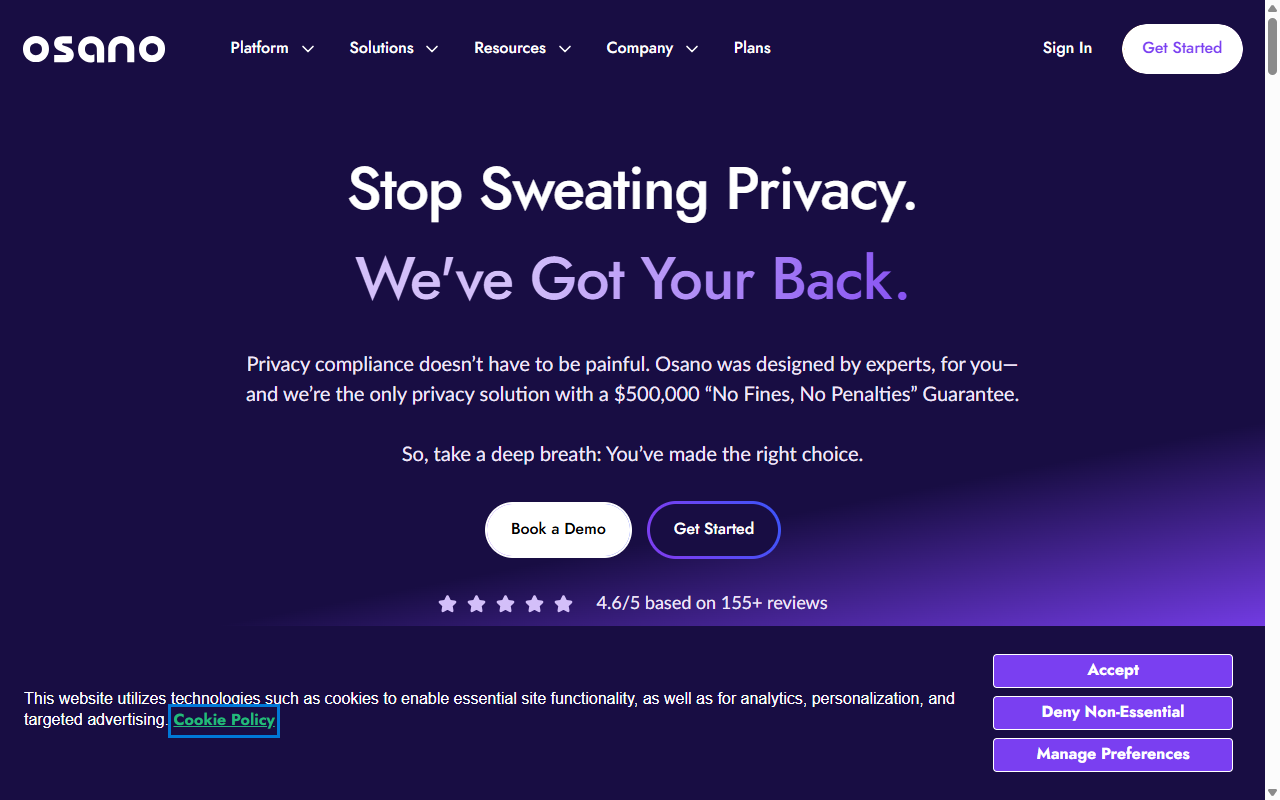
Osano is an easy-to-use, secure data privacy platform with a legal compliance guarantee that protects you from fines if it fails to keep you compliant. It works on WordPress through a simple script integration, blocking trackers before consent and categorizing cookies from thousands of known scripts.
Key Features
- Blocks newly discovered tracking scripts before they load.
- Manages data subject access requests alongside cookie consent.
- Launches banners that meet international regulations by default.
- Tracks compliance changes to keep your site current.
- Supports automated translations for dozens of local languages.
- Builds simple styling rules that work with Elementor layouts.
Pros & Cons
Pros: Legal compliance guarantee adds peace of mind; quick installation.
Cons: Custom styling is limited on basic plans; cost can rise across multiple sites.
Verdict
A good fit if you want strong legal security and don’t mind paying for a managed solution.
9. WP GDPR Compliance
WP GDPR Compliance is a community-favorite free tool that helps site owners meet privacy requirements locally, skipping cloud services entirely. Rather than just showing a banner, it adds consent checkboxes to your WordPress tools, working with contact forms, comments, and checkouts to confirm permission before saving data.
Key Features
- Integrates with popular contact forms to add consent checkboxes.
- Tracks consent records locally on your own WordPress database.
- Blocks custom integration scripts until users agree to your terms.
- Generates automated data request pages for stored info.
- Customizes notice text to fit your brand voice.
- Saves all visitor decisions locally without sending data externally.
Pros & Cons
Pros: Entirely free; covers multiple GDPR needs beyond banners.
Cons: Needs more manual setup than cloud tools; banner design is basic.
Verdict
An excellent free local tool for developers wanting full control without subscription fees.
10. GDPR Cookie Consent (by WebToffee)
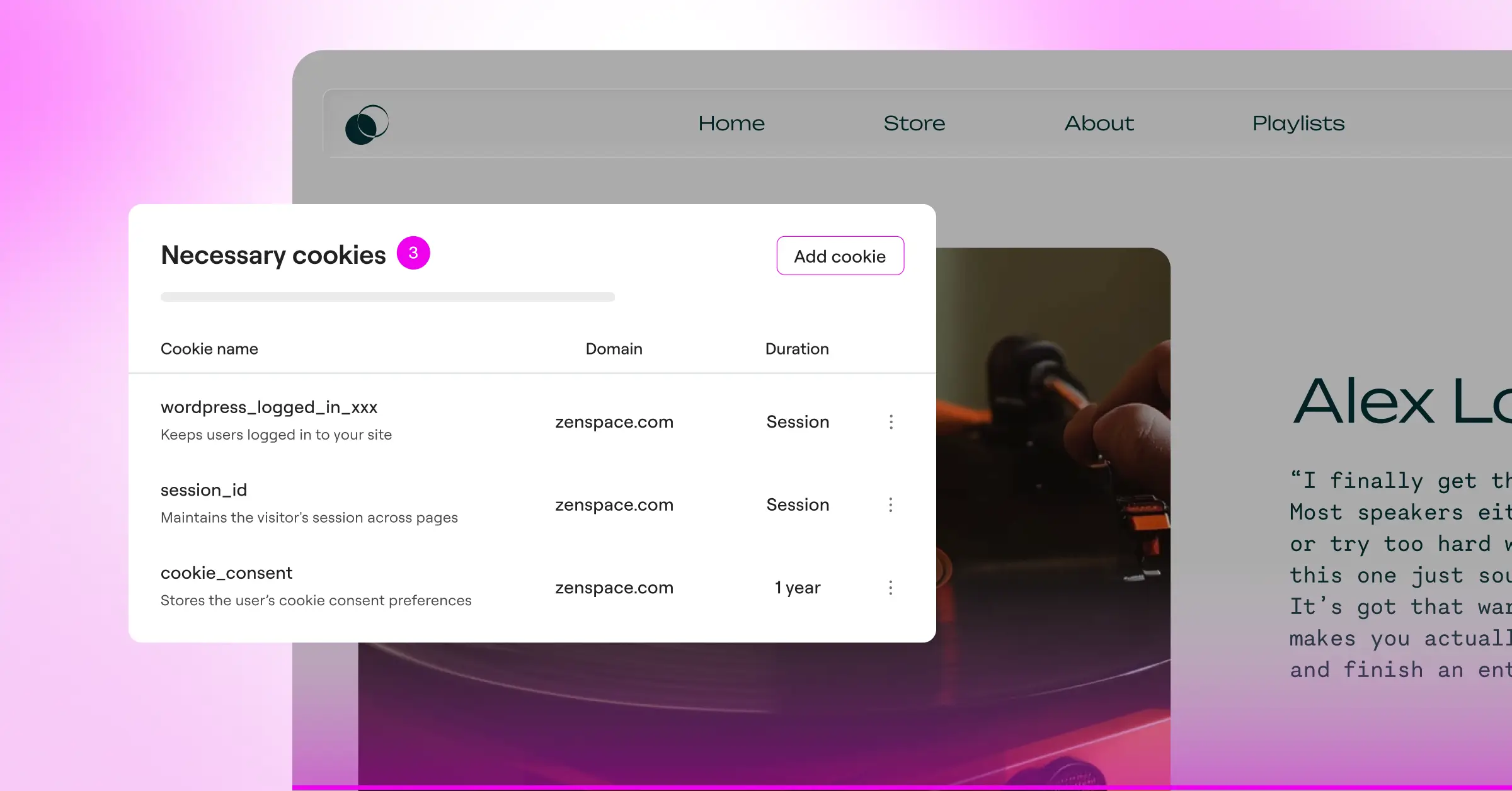
GDPR Cookie Consent by WebToffee combines a local database with a visual editor, so you build and style banners inside your admin panel. It groups your cookies into buckets and displays a clean modal for visitor choices, integrating with Elementor to match your theme.
Key Features
- Scans your site pages for active cookie tracking files.
- Categorizes individual tracking scripts into clear choice buckets.
- Displays cookie banner notifications that align with your site colors.
- Saves consent choices inside your local WordPress database.
- Blocks script execution before receiving visitor approval.
- Supports shortcodes to place consent buttons anywhere on your site.
Pros & Cons
Pros: Easy local setup; a free version is on WordPress.org.
Cons: Automated scanning requires the pro version; complex setups need manual configuration.
Verdict
A reliable, localized option balancing visual ease with solid categorization.
At-a-Glance: Comparing the Best Cookie Banner Solutions
Here’s a quick comparison to spot which tool fits your project.
| Compliance Tool | Dashboard Location | Google Consent Mode v2 | Geo-Targeting | Setup Speed | Ideal Match For |
|---|---|---|---|---|---|
| Cookie Consent (Elementor Native) | Inside WordPress | Full Support | Yes (Built-In) | Under 5 Minutes | Elementor users wanting simple, local control |
| Cookiebot | External Portal | Full Support | Yes | 10-15 Minutes | Sites needing automated monthly scans |
| CookieYes | External Portal | Full Support | Yes | 10-15 Minutes | Multi-domain owners using one dashboard |
| Complianz | Inside WordPress | Full Support | Yes | 20-30 Minutes | Creators wanting wizard-guided legal policies |
| iubenda | External Portal | Full Support | Yes | 20-30 Minutes | Agencies needing lawyer-backed legal documents |
| Termly | External Portal | Basic Support | Yes | 10-15 Minutes | Small businesses wanting simple, all-in-one templates |
| OneTrust | External Portal | Full Support | Yes (Advanced) | 1+ Hour | Large enterprise teams with in-house legal divisions |
| Osano | External Portal | Full Support | Yes | 10-15 Minutes | Companies wanting a legal fine-reimbursement guarantee |
| WP GDPR Compliance | Inside WordPress | Manual Config | No | 15-20 Minutes | Privacy purists wanting a free, local tool |
| GDPR Cookie Consent | Inside WordPress | Pro Version Only | Pro Version Only | 15-20 Minutes | WordPress users wanting simple, local categorizing |
How to Select the Right Consent Tool for Your Workflow
Every web designer works differently, and the right tool depends on your goals. Here’s a quick process to save time.
- Check your hosting setup: for local control, choose a WordPress-native option like Cookie Consent; to offload databases, a cloud-based option may suit you better.
- Review your tracking setup: if you rely on Google Analytics or Ads, prioritize tools supporting Google Consent Mode v2 natively.
- Check your budget: start with entry-level plans or features already in your subscriptions, like the native Cookie Consent tool in Elementor One.
Once you’ve picked a tool, setup should feel manageable, no lawyer or developer required.
Testing Your Cookie Banner Configuration
Once your banner is live, a few minutes of testing gives you real peace of mind. Cookies staying blocked until a visitor clicks “Accept” is what compliance looks like.
- Use an incognito window: open your site in a fresh private window to see what a new visitor experiences.
- Inspect active cookies before accepting: right-click your page, select “Inspect,” open developer tools, go to “Application” or “Storage,” and check “Cookies.” You shouldn’t see analytical or marketing cookies yet.
- Accept the terms and verify loading: click “Accept” and confirm your Google Analytics or marketing scripts load right after consent is granted.
If everything loads in order, your site is compliant.
Frequently Asked Questions
Do I really need a cookie banner if my site is small?
Yes. Privacy laws like GDPR protect users by where they live, not your business location. A consent banner keeps you covered, regardless of size.
What happens if I don’t use a compliant cookie banner?
Skipping privacy laws can bring warning letters or fines from regulators, and cost you clean tracking data, since Google now requires proof of consent for ads.
Will a cookie banner slow down my Elementor site speed?
It depends on the tool, but modern compliance tools are generally lightweight. Elementor’s Cookie Consent capability is built into the platform, skipping heavy external scripts.
Can I customize my cookie banner to match my website colors?
Absolutely. Elementor’s native cookie consent capability lets you customize typography, colors, borders, and position, so your banner feels like part of your brand.
What is Google Consent Mode v2 and do I need it?
It lets your site communicate visitors’ privacy choices to Google’s tracking platforms. If you run Google Analytics or Ads and get traffic from Europe, this standard is essential.
Can I show my cookie banner only to visitors from specific countries?
Yes, that’s what geo-targeting is for. It shows your banner to visitors in regions with strict privacy laws, like the EU or California, while keeping your site banner-free elsewhere.
What is the difference between a standalone tool and a native capability?
A standalone tool is separate software you install and manage. A native capability, like Elementor’s Cookie Consent, is built into your platform, generally more stable and faster.

