Table of Contents
10 Best WordPress Marketing Automation Tools in 2026
You need tools that actually work. WordPress powers 43.1% of all websites in 2026. But connecting your forms, emails, and databases still feels like duct-taping a sinking ship.
Most external platforms slow down your server. They cost too much. You’re constantly managing a tangled mess of API keys. There’s a better way to handle your traffic.
Key Takeaways
- $5.44 return on investment – For every dollar spent on marketing automation, companies see massive returns.
- 80% lead increase – Automation users report significantly higher lead volume and 77% higher conversion rates.
- 6.4 hours saved – Native plugins eliminate manual data entry and email scheduling each week.
- 10-15% revenue recovery – Automated abandoned cart workflows consistently rescue lost sales.
- Self-hosted scaling – Tools like FluentCRM handle 100,000+ contacts without the massive subscription fees of SaaS products.
- Agentic AI integration – 2026 marks the shift toward AI that executes actions, not just text generation.
The global marketing automation market will hit $13.71 billion by 2030. You don’t need to spend thousands on external software to get a piece of that pie. The WordPress ecosystem now offers native, self-hosted solutions that rival enterprise platforms.
Moving your automation inside WordPress gives you complete ownership of your data. You aren’t paying a “subscriber tax” every time your email list grows. You’re keeping your database centralized.
We evaluate these tools based on a strict set of technical criteria. You’ll notice we prioritize performance over flashy interfaces.
- Database impact – Does the plugin create heavy custom tables or use optimized queries?
- Trigger flexibility – Can it fire actions based on custom post types and user meta changes?
- Cost-to-value ratio – How does the yearly license compare to a monthly SaaS subscription?
- Interoperability – Does it play nice with page builders and caching systems?
1. Elementor Pro (Editor + Form Automation)
You probably think of Elementor Pro purely as a design tool. That’s a mistake. It acts as the absolute front-end engine for your entire marketing funnel.
Every automation sequence starts with a trigger. Usually, that trigger is a form submission or a button click. Elementor’s Form Builder captures that data natively, without requiring a separate plugin.
If you don’t want to build these assets manually, you’ll love Angie. This agentic AI for WordPress creates production-ready assets from simple conversation. You type a prompt asking for a lead-gen popup. Angie understands the context and builds it directly into your Elementor ecosystem. It takes action, saving hours of manual layout work.
Key Features
- Native Form Builder – Connects directly to 20+ marketing platforms via API.
- Advanced Popup Builder – Triggers based on exit-intent, time on page, or scroll depth.
- Dynamic Tags – Pulls user data into the page for highly personalized experiences.
- Action After Submit – Chains multiple automated steps (e.g., send email, redirect page, add to CRM) from a single form.
Pricing
The Essential plan costs $60/year for a single site. Agencies can grab the One Agency plan for $444/year to manage unlimited sites.
Pros
- Eliminates the need for separate form and popup plugins.
- Pixel-perfect design control over every conversion element.
- Connects smoothly with Elementor’s broader AI Site Planner tools.
- Deep WooCommerce integration for custom checkout flows.
Cons
- Requires a premium license for automation features.
- Not a standalone CRM (requires sending data elsewhere).
Verdict
Elementor Pro is mandatory for designers who want total control over the user interface while smoothly capturing lead data. It’s the starting line for your automation stack.
2. FunnelKit (The Funnel Builder)
E-commerce automation requires specific tools. FunnelKit replaces heavy external platforms like ClickFunnels by operating entirely within your WordPress dashboard.
Automated cart recovery emails generate an average recovery rate of 10-15%. If your store makes $10,000 a month and loses $3,000 to abandoned carts, FunnelKit essentially pays for itself in a few days.
You can build one-click upsells directly into the native checkout flow. Customers don’t have to re-enter their credit card details. That simple friction removal dramatically increases Average Order Value.
Key Features
- One-Click Upsells – Offer complementary products post-purchase automatically.
- Order Bumps – Add impulse buys directly to the checkout form.
- A/B Testing – Automatically split-test headlines and pricing structures.
- Automated Workflows – Send highly targeted email sequences based on purchase history.
Pricing
Professional plans start at $99.50/year for a single site. The full automation suite scales to $399/year.
Pros
- Deep, flawless integration with WooCommerce databases.
- Extremely intuitive visual canvas for mapping out funnels.
- Keeps all transaction data safely on your own server.
- Pre-built templates designed for high conversion rates.
Cons
- The interface feels slightly overwhelming for basic brochure sites.
- Requires a reliable WordPress hosting setup to handle traffic spikes.
Verdict
If you run a WooCommerce store, FunnelKit isn’t optional. It’s the most effective way to squeeze every possible dollar out of your existing traffic.
3. FluentCRM (Self-Hosted Email Marketing)
Stop paying Mailchimp for contacts who never open your emails. FluentCRM brings enterprise email marketing directly into your WordPress dashboard.
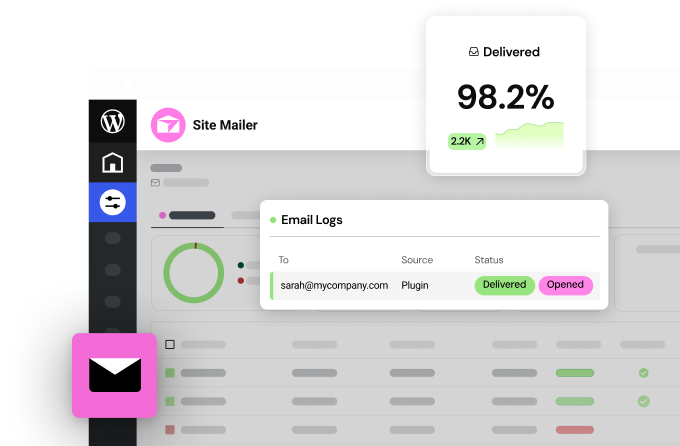
Because it’s self-hosted, FluentCRM easily manages 100,000+ contacts. You won’t face arbitrary pricing tiers based on your list size. You just pay for the transactional email service (like Amazon SES or Elementor Site Mailer) to actually send the messages.
The database architecture is brilliant. It uses custom tables to ensure your `wp_options` and `wp_posts` tables don’t bloat. Your site stays incredibly fast, even during massive email blasts.
Key Features
- Dynamic Segmentation – Tag users automatically based on page visits or purchases.
- Visual Automation Builder – Create complex “if/then” email sequences.
- Granular Reporting – Track open rates, click-throughs, and revenue per email.
- User Sync – Automatically imports WordPress users into the CRM.
Pricing
A single site license costs $129/year. This is a flat fee, regardless of list size.
Pros
- Massive cost savings compared to traditional SaaS email platforms.
- Lightning-fast database queries won’t slow down your front-end.
- Keeps user data perfectly synchronized without API delays.
- No arbitrary limits on campaigns or automated sequences.
Cons
- You must configure a reliable SMTP provider manually.
- Deliverability depends entirely on your domain reputation.
Verdict
FluentCRM represents the gold standard for self-hosted email. It’s built specifically for content creators who refuse to be penalized financially for growing a massive audience.
4. Uncanny Automator (The Connector)
Sometimes you need plugins to talk to each other. Uncanny Automator connects over 150 WordPress plugins and 1,000+ external apps via webhooks.
Think of it as Zapier, but built entirely for WordPress. It uses a simple “recipe” system. You don’t need any coding knowledge to build incredibly complex background processes.
Here’s a standard recipe you can build in two minutes:
- Trigger – User completes a LearnDash course.
- Action 1 – Generate a custom PDF certificate.
- Action 2 – Apply a specific tag in FluentCRM.
- Action 3 – Send a congratulatory email with a 20% discount code.
Key Features
- Anonymous Recipes – Trigger automations for logged-out users via cookies.
- Delayed Actions – Schedule actions to fire days or weeks after a trigger.
- Button Triggers – Launch massive workflows from a single click.
- Webhook Support – Connect to virtually any external software API.
Pricing
The core plugin is free. Pro plans start at $149/year for access to delayed actions and premium integrations.
Pros
- Drastically reduces the need for expensive Zapier or Make tasks.
- Incredibly easy interface that makes logic mapping simple.
- Eliminates the need for dozens of specific “bridge” plugins.
- Executes PHP functions rapidly without bogging down the server.
Cons
- Complex recipes can become difficult to troubleshoot.
- It introduces a single point of failure if the plugin deactivates.
Verdict
If you run an e-learning platform, membership site, or complex community forum, Uncanny Automator is the glue holding your stack together.
5. HubSpot WordPress Plugin (The Ecosystem)
B2B companies require serious data tracking. The HubSpot WordPress plugin brings enterprise-grade marketing analytics directly into your dashboard.
Over 1 million websites use this plugin. It automatically syncs any form submission on your site directly into the HubSpot CRM. You don’t have to configure complex field mapping. It just works.
You can also use Angie here. Ask the AI to generate a highly optimized landing page layout. Once Angie builds the structure, you simply drop in the HubSpot form block. The agentic AI handles the structural heavy lifting, while HubSpot manages the data flow.
Data fragmentation kills conversion rates. When your CRM and your WordPress front-end speak the exact same language natively, you eliminate the friction that causes leads to drop out of the funnel.
Itamar Haim, SEO Team Lead at Elementor. A digital strategist merging SEO, AEO/GEO, and web development.
Key Features
- Live Chat Integration – Deploy bots to answer questions automatically.
- Automatic Sync – Captures data from non-HubSpot forms instantly.
- List Segmentation – Build active lists based on specific page views.
- Analytics Dashboard – View entire customer lifecycles inside WordPress.
Pricing
The plugin is free. However, HubSpot’s Professional marketing plans start around $800+/month.
Pros
- Provides a unified view of every single touchpoint.
- World-class live chat and ticketing system built in.
- Incredibly reliable infrastructure that rarely experiences downtime.
- Connects sales teams directly to marketing efforts.
Cons
- The pricing scales aggressively as your contact list grows.
- Can load heavy external scripts that impact Core Web Vitals.
Verdict
HubSpot remains the ultimate choice for B2B organizations with dedicated sales teams. It’s expensive, but the sheer depth of behavioral data justifies the cost.
6. AutomateWoo (WooCommerce Native)
Automattic actually owns AutomateWoo. That detail matters immensely. When a tool is developed by the same corporate entity that maintains WooCommerce, you guarantee long-term stability.
Store owners lose thousands because they don’t follow up. This tool handles the tedious “set-and-forget” tasks that keep a store profitable. It automatically emails customers when their credit card is about to expire. That alone saves recurring revenue.
You can dynamically generate personalized coupons. 80% of consumers are more likely to buy when they receive a personalized experience. AutomateWoo delivers that without requiring manual coupon creation.
Key Features
- Win-Back Campaigns – Target inactive customers with aggressive discounts.
- Review Rewards – Automate points or coupons in exchange for product reviews.
- Refer-a-Friend – Native affiliate system to drive word-of-mouth sales.
- SMS Notifications – Send text messages for shipping updates.
Pricing
Available directly through the WooCommerce marketplace for $119/year.
Pros
- Bulletproof compatibility with WooCommerce core updates.
- Extremely lightweight code won’t bog down your checkout.
- Includes SMS capabilities without needing a third-party plugin.
- Simplifies the management of subscription-based products.
Cons
- Strictly limited to WooCommerce-specific actions.
- Lacks the visual drag-and-drop canvas of newer tools.
Verdict
Every serious WooCommerce store needs AutomateWoo. It handles the administrative burden of customer retention perfectly.
7. WP Fusion (The Data Sync)
Membership sites often struggle with access control. WP Fusion solves this by turning your external CRM (like ActiveCampaign or Drip) into the central brain for your WordPress site.
It acts as a bidirectional sync. If a user buys a course, WP Fusion applies a tag in your CRM. The CRM then runs an automation. If a user cancels their subscription, the CRM removes the tag. WP Fusion reads that missing tag and instantly revokes WordPress access.
This completely removes the need for complex WordPress membership plugins. Your CRM handles the logic. WordPress just displays the content.
Key Features
- Tag-Based Access – Restrict any page, post, or widget based on CRM tags.
- LMS Integration – Sync course progress directly to contact records.
- Auto-Login Links – Send emails with links that log users in automatically.
- E-commerce Tracking – Send detailed order data back to your email provider.
Pricing
The Professional tier (which includes enhanced e-commerce tracking) costs $347/year.
Pros
- The absolute best bidirectional sync tool on the market.
- Offloads complex membership logic to external servers.
- Protects content cleanly without database bloat.
- Supports virtually every major CRM available today.
Cons
- The initial setup requires a deep understanding of tagging architecture.
- The Professional tier carries a relatively high price point.
Verdict
WP Fusion is an absolute necessity if you run a high-traffic membership or LMS site and rely on an external CRM for your marketing logic.
8. Groundhogg (The All-in-One)
Agencies face a unique problem. They want to provide marketing automation to clients, but SaaS platforms eat into their profit margins. Groundhogg solves this brilliantly.
It’s a self-hosted CRM built specifically for sales pipelines. You can visually track leads as they move from “Prospect” to “Qualified” to “Closed.” You don’t have to bounce between WordPress and Salesforce anymore.
Honestly, this interface frustrates some beginners. It packs an incredible amount of data onto the screen. But once you understand the logic, you’ll never go back to paying per-contact fees.
Key Features
- Sales Pipeline Management – Drag-and-drop kanban boards for lead tracking.
- Advanced Funnel Reporting – See exactly where users drop off in your sequence.
- White-Labeling – Agencies can rebrand the interface for their clients.
- Booking Calendar – Native appointment scheduling linked to contact records.
Pricing
The Pro plan runs $480/year (effectively $40/month billed annually) and includes 40+ advanced extensions.
Pros
- Completely eliminates contact limits and arbitrary data caps.
- Provides agency owners with a highly profitable white-label solution.
- Includes appointment booking without needing extra plugins.
- Deep integrations with massive WordPress ecosystems.
Cons
- The learning curve is significantly steeper than FluentCRM.
- Requires dedicated managed cloud hosting for optimal database performance.
Verdict
Groundhogg is the undisputed champion for agencies and service-based businesses that need strict pipeline management without recurring software fees.
9. GamiPress (Engagement Automation)
Marketing isn’t just about sending emails. It’s about keeping users engaged. GamiPress automates user loyalty through a highly configurable gamification engine.
You define the rules. If a user comments on three posts, they earn a “Contributor” badge. If they purchase a product, they earn 500 points. They can then spend those points to unlock hidden content or receive real discounts.
This strategy directly impacts retention. You’re creating a psychological loop that brings users back repeatedly. It automates the community-building process entirely.
Key Features
- Points Systems – Create multiple digital currencies (coins, gems, credits).
- Achievements – Award badges for completing specific step-by-step tasks.
- Rank Requirements – Promote users automatically based on their activity.
- Time-Based Limits – Restrict how often points can be earned to prevent spam.
Pricing
The core plugin is free. Premium add-ons range from $49 to $199 each.
Pros
- Offers a completely unique angle on marketing automation.
- Highly extensible with hundreds of free snippets available.
- Dramatically increases time-on-site and user interaction.
- Works flawlessly with standard WordPress user roles.
Cons
- Can severely bloat your database if log tracking isn’t managed.
- Requires careful planning to avoid confusing point economies.
Verdict
GamiPress is essential for online schools, massive forums, and community-driven brands that want to automate user loyalty.
10. Thrive Automator (The Ecosystem Alternative)
The Thrive Suite offers a tightly integrated ecosystem. Thrive Automator serves as the lightweight engine connecting their various tools.
It uses very simple “If This, Then That” logic. You won’t find the overwhelming complexity of Uncanny Automator here. It focuses heavily on conversion events. If someone fails a quiz in Thrive Quiz Builder, you can automatically add them to a specific retargeting course in Thrive Apprentice.
Be aware of ecosystem lock-in. While Elementor’s AI tools (like Angie) work across different environments via standard protocols, Thrive relies heavily on you using their proprietary block structures for maximum benefit.
Key Features
- Incoming Webhooks – Trigger actions from external software events.
- Native LMS Connection – Deep ties to Thrive Apprentice logic.
- Math Functions – Calculate variables dynamically inside workflows.
- Filter Logic – Only run automations if specific user conditions are met.
Pricing
It’s included completely within the Thrive Suite, which costs $299/year.
Pros
- Incredibly intuitive interface designed for non-developers.
- Unbeatable integration if you already use Thrive Themes.
- Handles incoming data from third-party apps gracefully.
- Included at no extra cost if you’ve the agency bundle.
Cons
- Not available as a standalone purchase.
- Lacks the sheer volume of external integrations found elsewhere.
Verdict
Thrive Automator is an excellent, lightweight trigger system for users already fully committed to the Thrive digital architecture.
Comparison Summary: 2026 Marketing Automation Tools
Choosing the right tool depends entirely on your database strategy. We’ve compiled the critical metrics below so you can compare the landscape at a glance.
| Tool Name | Best Use Case | Starting Price | Key Integration |
|---|---|---|---|
| Elementor Pro | Front-end lead capture | $60/year | Visual UI & Forms |
| FunnelKit | Sales funnel creation | $99.50/year | WooCommerce |
| FluentCRM | Self-hosted newsletters | $129/year | WordPress Users |
| Uncanny Automator | Connecting plugins | Free / $149/yr | Zapier & Webhooks |
| HubSpot | Enterprise B2B tracking | Free / $800+/mo | Enterprise Sales |
| AutomateWoo | Store administration | $119/year | WooCommerce Core |
| WP Fusion | Membership sync | $347/year | ActiveCampaign |
| Groundhogg | Agency CRM pipelines | $480/year | Sales Boards |
| GamiPress | User loyalty programs | Free / Add-ons | LMS & Forums |
| Thrive Automator | Suite-based conversions | $299/year (Suite) | Thrive Apprentice |
Final Recommendation: Which Tool Should You Choose?
You can’t install all ten tools. Your server will crash. You must segment your choices based on your actual business model.
Native plugins save an average of 6.4 hours per week. But only if you build the right stack. Here’s the exact blueprint we recommend for different business types.
- For E-commerce Stores – Combine Elementor Pro for your custom checkout designs with FunnelKit for order bumps. Add AutomateWoo to handle your abandoned cart recovery automatically.
- For Content Creators – Use FluentCRM. You simply can’t beat the cost savings of self-hosting your list once you pass 10,000 subscribers. Connect it to your opt-in forms using native integrations.
- For Agencies – Install Groundhogg. The pipeline management gives your clients incredible visibility into their sales process, and you don’t lose your margin to monthly SaaS fees.
- For Complex Stacks – If you run an LMS alongside a forum and an e-commerce store, buy Uncanny Automator immediately. It safely bridges the gap between disparate databases.
Frequently Asked Questions
Does marketing automation slow down my WordPress site?
It depends entirely on the plugin’s database architecture. Tools like FluentCRM use optimized custom tables that don’t impact front-end load times. Poorly coded plugins that bloat the wp_options table will destroy your Core Web Vitals.
Can I use Elementor Pro as my only automation tool?
You can use it as your primary lead capture engine. The Form Builder handles basic automations like sending emails and redirecting pages. However, you’ll still need a dedicated CRM to store and segment those contacts long-term.
What is the difference between Uncanny Automator and Zapier?
Uncanny Automator runs entirely on your WordPress server. It doesn’t charge you per “task” or API call. Zapier operates externally and charges based on data volume. Uncanny is drastically cheaper for WordPress-specific actions.
Why are self-hosted CRMs becoming so popular in 2026?
Data privacy laws and rising SaaS costs have driven the shift. Self-hosting keeps customer data on your own servers, ensuring compliance while eliminating arbitrary monthly fees based on subscriber counts.
Does WP Fusion replace my membership plugin?
Yes, in most cases. It uses tags from your external CRM to protect WordPress content. You won’t need clunky membership plugins handling complex subscription logic on your local server.
How does Angie differ from standard automation tools?
Standard automation reacts to triggers with predefined logic. Angie uses agentic AI via the Model Context Protocol to actively generate and deploy production-ready assets based on natural language commands.
Is HubSpot too heavy for a standard WordPress blog?
Yes. HubSpot requires loading external tracking scripts that impact performance. You shouldn’t install it unless you actively use its advanced B2B sales pipeline and live chat features.
Do I need specialized hosting for these tools?
Absolutely. Marketing automation relies heavily on background PHP processing and database writing. Shared hosting plans will crash. You need a strong managed cloud environment to handle the background cron jobs.
Looking for fresh content?
By entering your email, you agree to receive Elementor emails, including marketing emails,
and agree to our Terms & Conditions and Privacy Policy.