Table of Contents
However, as the market floods with tools claiming to be the “fastest,” “smartest,” or “easiest,” the definition of ease has become muddied. Is “easy” simply about speed? Is a tool easy if it generates a website in thirty seconds but requires ten hours of frustration to change a font size? For the serious creator—whether a small business owner, a freelancer, or a marketing manager—the question is not just “Can AI build this?” but “Can I live with what AI builds?”
This guide offers a comprehensive analysis of the AI website builder landscape in 2026. We move beyond surface-level marketing claims to examine the underlying architectures of these platforms. We explore the critical difference between closed ecosystems and open platforms, and we detail how Elementor has strategically positioned itself to offer the stability of the former with the boundless freedom of the latter.
Key Takeaways
- Ease is a Long-Term Metric: The speed of initial generation is less important than the ease of long-term management. A platform that limits customization creates “technical debt” that becomes difficult to manage as your business scales.
- The “Walled Garden” Limitation: Proprietary SaaS platforms (like Wix or Squarespace) offer a streamlined entry point but restrict data ownership and feature extensibility, often locking users into a single ecosystem.
- AI as a Strategic Partner, Not Just a Generator: The most effective tools use AI for structural planning and workflow automation (Agentic AI), rather than just generating generic placeholder text and stock images.
- The Hybrid Advantage: Elementor provides a unique value proposition by combining managed, high-performance hosting with an open-source WordPress foundation, eliminating the trade-off between simplicity and power.
- Strategic Architecture: Tools like the AI Site Planner demonstrate that the easiest way to build is to plan effectively first, using AI to generate comprehensive wireframes before design begins.
Part 1: The Evolution of Web Creation
To truly evaluate which tool is the easiest to use, we must understand the trajectory of web creation technologies. We are currently navigating a significant shift, moving from the era of manual assembly to the era of intelligent assistance.
The Code Era (The Specialist’s Domain)
In the nascent stages of the web, “ease of use” was a concept reserved for developers. It meant cleaner code editors or better documentation for HTML and CSS. The barrier to entry was absolute; if you did not speak the language of the browser, you did not build. This era prioritized control but sacrificed accessibility entirely.
The Visual Era (The Drag-and-Drop Revolution)
The rise of visual builders introduced the concept of “What You See Is What You Get” (WYSIWYG). This democratized the layout process. Users could drag a button to a specific spot on the canvas, and the software would write the underlying code. However, this era still required the user to be the architect. The tool could move the wall, but it couldn’t tell you where the wall should go, nor could it paint the mural upon it. The “blank canvas paralysis” remained a significant hurdle for non-designers.
The AI Era (The Age of Intent)
We have now entered the AI Era. The fundamental shift here is from instruction to intent. Instead of dragging a box to create a header, the user expresses the intent: “I need a header for a law firm.” The AI interprets this intent and executes the task.
However, the implementation of AI varies drastically across platforms.
- Generative AI: This handles the creation of assets. It writes the “About Us” page, generates a photo of a handshake, or creates a color palette.
- Structural AI: This acts as an architect. It determines that a law firm needs a “Case Results” page and a “Consultation” form, and builds the sitemap accordingly.
- Agentic AI: This is the newest and most powerful frontier. Agentic AI performs multi-step maintenance and optimization tasks. It doesn’t just write text; it logs into your system, scans for accessibility errors, and fixes them autonomously.
The “easiest” builder in 2026 is not the one that hides the complexity, but the one that uses these three layers of AI to manage the complexity for you.
Part 2: Defining “Ease of Use” in 2026
When we evaluate software, we often conflate “simple” with “easy.” A tricycle is simple, but it is not easy to ride across the country. Similarly, a basic AI generator is simple, but it is not easy to use for building a scalable business. We judge “ease” based on five distinct pillars of user experience.
1. The Onboarding Friction
This measures the time and cognitive load required to move from a concept to a functional draft. Does the platform require you to configure servers and install databases (high friction), or does it spin up a fully managed environment based on a few prompts (low friction)? The quality of the AI interview process—the questions the system asks to understand your needs—is critical here.
2. The Customization Ceiling
This is the most common trap for beginners. Many tools achieve speed by removing options. They force you into a grid or restrict you to a specific set of fonts. This feels easy initially because you cannot “break” the design. However, as soon as your brand requires a specific layout that defies the template, the tool becomes an obstacle. True ease of use implies the ability to say “yes” to any design requirement without fighting the software.
3. The Integrated Content Workflow
A website is fundamentally a container for content. The easiest builders recognize that design and content are inseparable. They do not force you to write your copy in a separate document and paste it in. They integrate generative text and image tools directly into the editing interface, allowing you to iterate on the narrative and the visual presentation simultaneously.
4. Technical Autonomy
Ease of use extends to the maintenance phase. Who handles the SSL certificates? Who ensures the site loads quickly on mobile networks in Asia? Who manages the backups? A platform that requires you to become a sysadmin is not easy. The ideal solution abstracts this infrastructure layer completely.
5. Data Sovereignty and Portability
Is it easy to leave? This is a counter-intuitive but vital metric. If a platform locks your content into a proprietary format that cannot be exported, you do not own your website; you are renting it. True ease of use provides the security of knowing that you can move your digital assets if your business needs change.
Part 3: The Market Landscape (A Neutral Overview)
Before detailing the specific architecture of the Elementor platform, it is necessary to survey the broader market. The current ecosystem is bifurcated into closed SaaS (Software as a Service) providers and open-source solutions.
Wix
Wix operates as a closed, all-in-one SaaS platform. Its primary editor utilizes an unstructured canvas, allowing users to position elements using absolute coordinates rather than a responsive grid. Its AI onboarding process, often termed Artificial Design Intelligence (ADI), constructs a site based on a questionnaire.
- Technical Profile: The platform handles all hosting and security internally. Users cannot access the underlying server or database. The code generated is proprietary to Wix.
- Functional Note: The unstructured editor provides high visual freedom but can require manual adjustments for mobile responsiveness, as elements do not naturally reflow like they do in grid-based systems.
Squarespace
Squarespace functions as a curated SaaS platform with a focus on template-driven design. Its architecture is built on a structured grid system. Users place components (images, text blocks) into pre-defined slots within this grid, ensuring alignment and consistency.
- Technical Profile: Like Wix, it is a closed ecosystem. The “Blueprint” AI features assist in assembling these pre-defined sections. It does not allow for deep CSS customization or the installation of external plugins.
- Functional Note: The rigidity of the grid ensures visual consistency but limits the ability to create complex, overlapping, or non-standard layouts.
Hostinger
Hostinger offers a proprietary AI builder focused on rapid deployment and low cost. The tool generates simple, lightweight websites based on user prompts.
- Technical Profile: The builder is distinct from their traditional hosting products and does not run on a standard CMS like WordPress. It is a standalone application.
- Functional Note: The feature set is limited to standard brochure-style elements. It lacks a third-party app marketplace, meaning functionality cannot be extended beyond what the platform natively provides.
Divi
Divi is a WordPress theme and plugin that incorporates a visual builder. It operates within the self-hosted WordPress environment. Its AI implementation allows for content generation within its specific modules.
- Technical Profile: Divi relies heavily on “shortcodes”—proprietary tags used to render content. This means the content is wrapped in Divi-specific logic.
- Functional Note: While it offers visual editing, the reliance on shortcodes can make data migration difficult, as disabling the theme leaves behind raw code tags rather than clean HTML.
Framer
Framer began as a prototyping tool for interface designers and evolved into a web publishing platform. Its interface resembles professional design software like Figma.
- Technical Profile: It generates React-based websites. It is designed for visual designers who understand concepts like flexbox, stacks, and absolute positioning.
- Functional Note: It lacks a traditional database-driven CMS for complex content management, making it less suitable for heavy blogging or large-scale e-commerce compared to WordPress-based solutions.
Part 4: The Elementor Solution – A Comprehensive Platform
In answering the question of which builder is the “easiest,” we must look for a solution that bridges the gap between the simplicity of the SaaS models and the power of the open web. Elementor has evolved from a simple page builder into a comprehensive Website Builder Platform that solves this specific dichotomy.
The “Best of Both Worlds” Architecture
The historical friction in web design has been the choice between “easy and limited” (SaaS) or “powerful and difficult” (Open Source). Elementor eliminates this trade-off by offering a managed infrastructure that powers an open-source foundation.
- Managed Infrastructure: Through Elementor Hosting, the platform provides the “walled garden” benefits—enterprise-grade security, managed updates, and unified support. The user does not need to configure PHP versions or install caching plugins; the environment is pre-tuned for performance.
- Open Freedom: Because the core software is built on WordPress, the user retains full data ownership. There is no vendor lock-in. The site can be moved, and functionality can be extended with over 60,000 available WordPress plugins.
1. Strategic Planning: The AI Site Planner
The most common failure point in web design is not the visual execution but the structural planning. Most users dive directly into picking colors without a clear sitemap. Elementor addresses this with the AI Site Planner.
This tool functions as a digital strategist. It does not merely ask for a business name; it analyzes the business model to propose a comprehensive site architecture.
- The Workflow: A user inputs their business type (e.g., “Digital Marketing Agency”). The AI determines the necessary pages (Home, Services, Case Studies, Contact).
- The Output: It generates a high-fidelity wireframe. This blueprint allows the creator to visualize the user journey and approve the layout logic before a single pixel is styled. This separates the “UX” (User Experience) phase from the “UI” (User Interface) phase, a best practice usually reserved for professional agencies.
2. The Creative Engine: Elementor AI
Once the structural foundation is laid, the Elementor AI suite accelerates the creative execution. Crucially, this AI is context-aware and natively integrated into the editor. It is not a sidebar chat bot; it is embedded in the widgets themselves.
- Contextual Text Generation: When editing a specific widget, such as a “Call to Action,” the AI understands the context. It suggests short, punchy, action-oriented copy rather than long paragraphs. It can translate text into multiple languages instantly or adjust the tone from “Formal” to “Friendly” to match the brand voice.
- Integrated Image Creation: Sourcing high-quality, relevant imagery is often a bottleneck. Elementor AI allows users to generate royalty-free assets directly on the canvas. Beyond generation, it offers advanced editing capabilities. Users can utilize “Generative Fill” to expand an image’s background or remove distracting elements, ensuring the visual fits the layout perfectly without needing external tools like Photoshop.
- The Code Assistant: This feature effectively removes the “low-code” barrier. If a user desires a specific animation or visual effect that is not available in the standard controls, they can describe the effect in plain English. The AI generates the necessary CSS or HTML snippet and inserts it into the Custom Code field. This allows non-developers to achieve bespoke results.
3. The Performance Foundation
A website’s “ease of use” extends to the experience of the end-user visiting the site. If the site is slow, it fails. Elementor Hosting relies on the Google Cloud Platform C2 machines, known for their high computation speeds.
Furthermore, it integrates Cloudflare Enterprise CDN (Content Delivery Network). This distributes the website’s content across a global network of servers, ensuring that a visitor in London and a visitor in Tokyo experience the same rapid load times. By handling image compression and code minification at the server level, Elementor ensures the site achieves high scores on Core Web Vitals without manual optimization from the user.
4. Accessibility and Inclusivity with “Ally”
A truly professional website must be accessible to all users, regardless of ability. Historically, achieving WCAG (Web Content Accessibility Guidelines) compliance was a complex, technical task.
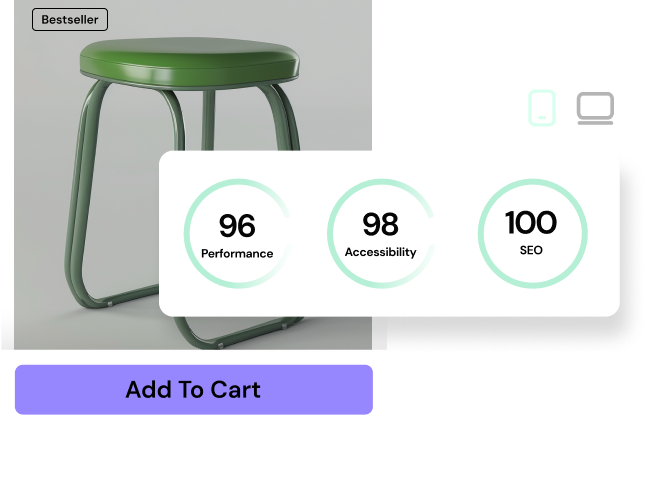
Ally by Elementor changes this dynamic. It acts as an automated auditor. It scans the website for accessibility violations—such as missing alt text, poor color contrast, or improper heading structures—and provides an actionable checklist to resolve them. This ensures that building an inclusive website is not an afterthought but an integrated part of the workflow.
Part 5: The Agentic AI Future – “Angie”
We are currently witnessing the transition from Generative AI to Agentic AI. While Generative AI creates content, Agentic AI performs tasks. Elementor is pioneering this shift with concepts like Angie, an AI assistant designed to navigate the complexities of the WordPress ecosystem.
Imagine a scenario where a site owner needs to optimize their site for a specific marketing campaign. In a traditional workflow, they would need to manually research plugins, configure settings, and test compatibility.
With an Agentic workflow, the user directs the intent: “Prepare my site for a Black Friday sale.” The AI then executes a series of autonomous steps:
- Audit: It checks the server resources to ensure they can handle increased traffic.
- Creation: It generates a promotional landing page using the Elementor Library.
- Optimization: It configures the caching settings for maximum speed.
- Verification: It runs a test to ensure the checkout flow is operational.
This capability fundamentally redefines “ease of use.” It transforms the user from a builder, who must understand the tools, into a director, who simply commands the outcome.
Part 6: Use Case Scenarios
To demonstrate the practical application of these tools, we must look at specific user personas. “Easy” means different things to different people.
Scenario A: The Local Business Owner (Speed and Simplicity)
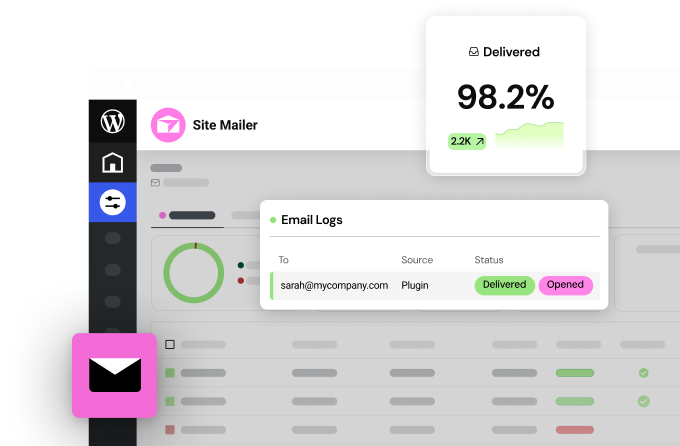
The Persona: A bakery owner who needs a professional presence but has zero coding skills and limited time. The Challenge: They cannot afford a custom agency design, but they need something that looks distinct and functions perfectly on mobile devices. The Solution: The Hello Biz theme. Unlike the standard Hello theme, which is a blank canvas for designers, Hello Biz offers a structured starting point. The owner uses the AI Site Planner to generate the structure. They then use Elementor AI to write descriptions of their pastries based on uploaded photos. To manage customer inquiries, they utilize Site Mailer, which ensures that contact form submissions are reliably delivered to their inbox without complex SMTP configuration. The result is a professional site launched in hours, not weeks.
Scenario B: The Marketing Manager (Autonomy and Conversion)
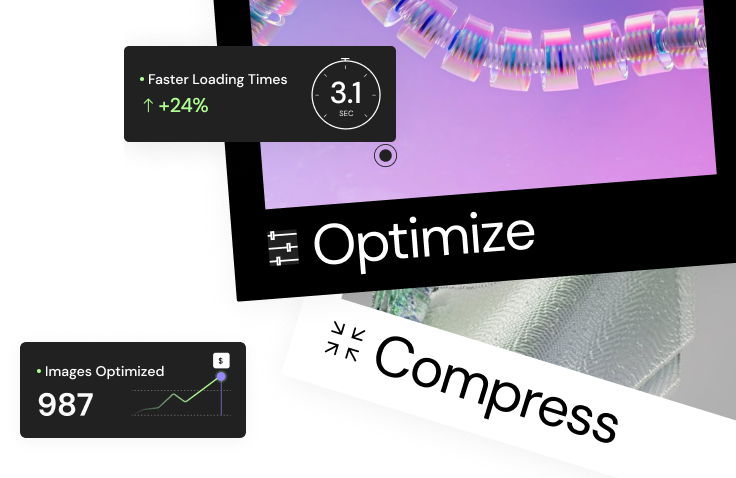
The Persona: A marketing lead at a mid-sized tech company. The Challenge: The engineering team is backed up, but the marketing team needs to launch landing pages for paid ad campaigns immediately. The Solution: Elementor Pro with Image Optimizer. The marketer has total visual freedom to design high-converting landing pages without touching the codebase. They can drag-and-drop forms, integrate them with their CRM, and run A/B tests. The Image Optimizer ensures that the high-resolution product shots are automatically compressed to WebP format, keeping the page load speed lightning fast—a critical factor for Google Ads Quality Score. This grants the marketing team total autonomy.
Scenario C: The Agency (Scalability and Workflow)
The Persona: A web design agency building 50+ sites a year. The Challenge: Maintaining profitability while delivering bespoke designs. The Solution: The Design System and Collaboration Tools. The agency uses Elementor to create a “Master Blueprint”—a set of global fonts, colors, and layout templates. They use the Notes feature to collaborate with clients directly on the live site, eliminating endless email chains. By using Elementor Pro, they can build dynamic templates for blog posts and portfolios, ensuring that the client can easily add content later without breaking the design.
Part 7: Step-by-Step – Building Your First AI Site
Let’s examine the granular process of using Elementor as an AI website builder. This walkthrough illustrates how the “platform” approach creates a frictionless yet powerful experience.
Step 1: The Foundation Setup
The process begins at https://elementor.com/wordpress. By selecting a managed hosting plan, the user bypasses the traditional technical hurdles. The system automatically provisions a Google Cloud server, installs the latest version of WordPress, and activates Elementor Pro. This “One-Click” deployment removes the initial barrier to entry.
Step 2: Strategic Blueprinting
The user launches the AI Site Planner. They input their business details: “I am a freelance graphic designer specializing in minimalist branding.” The AI analyzes this profile and generates a wireframe that includes a visually heavy Portfolio section, a Services list, and a sleek Contact form. The user reviews this structural blueprint, ensuring the flow makes sense before committing to design.
Step 3: Visual Design and Asset Generation
Inside the editor, the user begins to populate the wireframe.
- Visuals: For the hero section, they need a background image that conveys “creativity.” They use the Elementor AI image generator with the prompt: “Abstract geometric shapes, minimalist style, soft pastel colors.” The AI generates four variations. The user selects one and uses the “Expand” feature to ensure it fits the wide aspect ratio of the header.
- Typography: The user selects the global font settings. They choose a pairing that matches their brand, and the Design System automatically updates every heading and paragraph across the site to match.
Step 4: Content Refinement
The user clicks on the “Services” section. They type a rough bulleted list of their offerings. They then use the AI writing assistant to “Expand to a professional description.” The AI rewrites the bullets into compelling, benefit-driven paragraphs.
Step 5: Optimization and Launch
Before publishing, the user activates Ally. The tool flags that the pastel text on the white background has insufficient contrast. The user adjusts the global color slightly to meet the standard. They then check the Image Optimizer settings to ensure all assets are compressed. Finally, they connect their custom domain—which they can claim via https://elementor.com/free-domain-name—and hit “Publish.”
Part 8: The Hidden Complexity of “Simple” Builders
It is crucial to address the “Valley of Despair” that users often encounter with simpler AI builders. Many platforms offer an impressive “Day One” experience. You answer three questions, and a site appears. It looks complete. The friction is zero.
However, the “Day 100” experience is often radically different.
- The Feature Wall: You decide you want to add a specific booking system that integrates with your Google Calendar. The closed platform doesn’t support it. You are stuck.
- The SEO Ceiling: You hire an SEO consultant who recommends changing the URL structure of your blog posts. The closed platform doesn’t allow access to the .htaccess file or permalink settings. You are stuck.
- The Design Trap: You want to overlap two images to create a collage effect. The platform’s grid prevents elements from touching. You are stuck.
On Elementor, these walls do not exist. Because it is built on open standards, if a feature is not native, there is a plugin for it. If there isn’t a plugin, the AI Code Assistant can write the snippet to make it happen. True ease of use is the absence of dead ends.
Part 9: Advanced E-Commerce Capabilities
For many creators, the goal is not just to display information but to sell. E-commerce introduces a layer of complexity—inventory, payments, shipping, and security—that breaks many simple builders.
Elementor’s WooCommerce Builder provides a visual interface for the world’s most popular e-commerce engine.
- Visual Product Design: Users are not restricted to the standard e-commerce layout. They can design the Single Product template visually, placing the “Add to Cart” button, price, and gallery exactly where they maximize conversion.
Part 10: Conclusion
The question “Which AI website builder is the easiest to use?” has two answers.
If your definition of “easy” is short-term speed—if you need a site for a school project or a temporary event—then the closed SaaS generators like Hostinger or the basic Wix editor are sufficient. They are fast, disposable, and require no thought.
However, if you are building a business, a portfolio, or a brand, your definition of “easy” must include longevity, scalability, and ownership. In this context, Elementor stands alone.
It is the only platform that successfully merges the AI-driven speed of the modern web with the deep, professional power of WordPress. It allows you to start with an AI blueprint, build with AI-generated assets, and scale with an open ecosystem. It respects your time by automating the technical details, but it respects your intelligence by leaving the creative strategy in your hands.
In 2026, the easiest tool is not the one that does everything for you; it is the one that ensures you never have to do the same work twice. By choosing a platform that grows with you, you are making the only choice that is truly easy in the long run.
Frequently Asked Questions
1. Is Elementor AI a separate subscription? Elementor AI is integrated directly into the platform. While the core plugin is free, the advanced AI features—including text generation, image creation, and code assistance—operate on a credit system included with Elementor Pro and Hosting plans. This ensures sustainable access to premium generative models.
2. Can I export my code if I leave Elementor? Yes. This is a fundamental advantage of the platform. Because it operates on WordPress, you own your content and data. You can export your entire database and media library and move to any other WordPress host. You are never held hostage by the platform.
3. Do I need to be a designer to use the AI Site Planner? No. The Site Planner is specifically designed to bridge the gap for non-designers. It relies on your description of your business to generate the layout structure (wireframe). You do not need to know where to place the navigation or the hero section; the AI applies web design best practices for you.
4. How does Elementor Hosting improve site speed? Elementor Hosting utilizes a stack specifically tuned for the builder. It uses Google Cloud C2 instances, Nginx servers, and connects via Cloudflare Enterprise CDN. This setup optimizes the delivery of the heavy assets often associated with visual builders, ensuring that Elementor sites load significantly faster than those on generic shared hosting.
5. Can Elementor AI write code for me? Yes. The AI Code Assistant is a powerful feature for overcoming limitations. You can use natural language to ask for specific CSS effects (like “make this button pulse on hover”) or HTML snippets. The AI writes the clean code and inserts it into the Custom Code area, validating it to ensure it doesn’t break the site.
6. Is the Hello Theme necessary for using Elementor? It is highly recommended. The Hello Theme is a lightweight “blank canvas” theme developed by Elementor. It strips away the bloat found in many other themes, minimizing code conflicts and maximizing page speed. For beginners, the Hello Biz child theme offers a more structured starting point.
7. How secure is the platform? Elementor Hosting includes enterprise-grade security measures at the server level. This includes a Web Application Firewall (WAF) to block malicious traffic, DDoS protection to prevent attacks, and automated daily backups. This managed security approach removes the burden from the user.
8. Does Elementor support multi-language sites? Yes. Elementor integrates seamlessly with top translation plugins like WPML and Polylang. Furthermore, Elementor AI can instantly translate text within the editor, allowing you to build localized versions of your pages for different regions efficiently.
9. Can I use Elementor for dropshipping or retail? Absolutely. With the WooCommerce Builder, Elementor is a robust solution for e-commerce. You can customize the entire shopping experience, from the product catalog to the checkout page. It supports all major payment gateways and shipping integrations.
10. What is Agentic AI in the context of Elementor? Agentic AI, represented by tools like “Angie,” refers to AI that performs autonomous tasks rather than just generating content. Instead of just writing a paragraph, Agentic AI can audit your site’s performance, suggest plugin updates, or fix accessibility errors, acting as a virtual assistant for site management.
Looking for fresh content?
By entering your email, you agree to receive Elementor emails, including marketing emails,
and agree to our Terms & Conditions and Privacy Policy.