Table of Contents
For the seasoned web creator, the agency owner, or the ambitious business, the question is not “Which tool uses AI?” but rather “What AI website builder includes CMS integration?”
This distinction is paramount. A true CMS integration means the AI doesn’t just paint a picture; it understands the database. It can architect complex content relationships, generate dynamic templates, and automate the management of thousands of pages. It is the difference between an artist who paints a house and an architect who pours the foundation. The convergence of Agentic AI with the structural robustness of a platform like WordPress represents the future of the open web, where we move from being “pixel pushers” to “system architects.”
Key Takeaways
- The Difference is Data: True AI-CMS integration allows for the creation of dynamic, scalable systems where content is separated from design, unlike static page generators which create unmanageable “brochure” sites.
- Agentic AI is the Revolution: We are moving beyond simple “prompt-and-get” generative AI to “command-and-control” agentic AI. Tools like Angie within the Elementor ecosystem can perform complex maintenance, configuration, and build tasks directly within the WordPress environment.
- Platform Power: The most effective solution is not a single tool but a comprehensive platform. Integrating hosting, performance tools like the Image Optimizer, and infrastructure reliability like Site Mailer into one workflow eliminates tech stack fragmentation.
- Ownership is Critical: Leveraging an open-source CMS foundation ensures you own your data and architecture. This protects your business from the “lock-in” risks inherent in proprietary SaaS tools, allowing for true data sovereignty.
- Dynamic Content Scaling: AI tools integrated with a CMS can populate and manage dynamic templates (e.g., for products or real estate listings). This enables massive scalability, allowing you to manage thousands of pages with the effort usually required for ten.
Expert Insight by Itamar Haim
Part 1: The Great Convergence – Understanding the AI-CMS Hybrid
To understand why finding an AI website builder with CMS integration is the “Holy Grail” of modern web development, we must first deconstruct the components. The term “website builder” has become dangerously ambiguous. It is used to describe everything from a simple link-in-bio tool to enterprise-grade development platforms. To cut through this noise, we need to understand the relationship between the interface (the AI) and the engine (the CMS).
The CMS: The Central Nervous System
A Content Management System (CMS) is essentially a database wrapped in a user interface. It is the engine that stores your data—headlines, prices, images, author bios, meta tags, inventory counts—in structured fields. This separation of content from design is the fundamental principle of professional web development.
Why does this matter? Imagine you are building a website for a law firm with 50 attorneys. In a static builder without a CMS, you would have to manually design 50 separate pages. If the firm decides to change their phone number or the font size of the attorney’s name, you have to edit 50 pages manually. This is manageable for a micro-site, but impossible for a growing business.
In a CMS environment, you create one “Attorney” content type. You design one “Single Attorney Template.” The CMS then dynamically populates that template with the data for each of the 50 lawyers. If you change the design, it updates everywhere instantly. This is the power of dynamic data, and it is the baseline requirement for any scalable website.
The Role of AI: From Creator to Architect
In a truly integrated environment, Artificial Intelligence serves two distinct and powerful roles that go far beyond simple copywriting.
1. Generative AI (The Creator) This is the form of AI most creators are familiar with. It writes text, generates images, and writes code. In a standard builder, you might use this to write a paragraph for a homepage. In a CMS-integrated builder, however, the AI understands the context of the data. You can ask it to “Write a product description based on these attributes: Blue, Cotton, Slim Fit.” The AI doesn’t just write text; it populates a specific field in the database that will be dynamically pulled into your product template.
2. Agentic AI (The Operator) This is the next frontier and the most significant differentiator in the current market. Agentic AI doesn’t just create assets; it performs actions. It navigates the backend of the CMS. It understands that a “Product” is different from a “Post.” It can install plugins, configure settings, map data fields, and run maintenance tasks. An agentic AI acts as a virtual developer, executing complex workflows that would otherwise require hours of manual clicking and configuration.
When you combine these technologies—a robust relational database (CMS) with an intelligent agent (AI)—you unlock a workflow where you are no longer just “designing a page,” but “architecting a system.” You define the rules, and the AI builds the structure.
Part 2: Why Professional Web Creators Cannot Rely on “Page Generators” Alone
The allure of instant website generation is strong. Who wouldn’t want to type a prompt and see a finished website appear in seconds? It feels like magic. But for professional applications—whether you are an agency, a freelancer, or a growing business—these “Page Generators” are often a trap. They offer speed at the cost of scalability, SEO, and functionality.
The Scalability Trap
Scalability is rarely about how much traffic a site can handle; it is about how much content complexity it can manage. Consider an eCommerce brand with 2,000 products. In a static AI builder, creating these product pages would require generating 2,000 separate layouts. Even if the AI generates them for you, managing them is a nightmare.
In a CMS-integrated builder like Elementor, you leverage Dynamic Content. You design a single “Single Product Template.” You tell the builder: “Put the Product Title here, the Price there, and the Gallery here.” The CMS then dynamically populates that design for every product in the database.
When AI enters this workflow, it acts as a force multiplier. You can use AI to generate the template structure itself. You can ask the AI Site Planner to “Create a product template that highlights customer reviews and cross-sells related items.” The AI builds the layout and maps the dynamic widgets to the correct CMS fields (e.g., WooCommerce Related Products). This capability transforms a days-long development task into a minutes-long review process.
The SEO Black Hole
Search engines do not just read text; they read structure. They look for logical hierarchies, clean code, and organized data (Schema Markup). A robust CMS generates XML sitemaps, manages canonical URLs, and handles 301 redirects automatically.
Standalone AI builders often produce “div soup”—messy, unstructured code that hinders indexability. An integrated platform ensures that the AI respects the SEO hierarchy. When you use Elementor AI to write a blog post, it doesn’t just spit out text; it structures it with correct H1, H2, and H3 tags that map to the HTML document outline. It can generate meta descriptions that are automatically inserted into your SEO plugin’s fields. This seamless handshake between content generation and technical optimization is only possible when the AI is native to the CMS.
Data Ownership and Sovereignty
This is perhaps the most strategic consideration for any business owner. When you build on a proprietary AI platform, your content, design, and customer data are locked into their ecosystem. If their pricing changes, or their business direction shifts, you are vulnerable. You are renting your digital home.
By choosing an open-source CMS foundation (like WordPress) supercharged by a professional builder, you retain Data Sovereignty. Your database is yours. Your media library is yours. The AI helps you build and manage it, but it does not hold it hostage. You can export your data at any time. This distinction is critical for agencies building assets for clients who require long-term stability and security.
Part 3: The Landscape of AI Website Builders
The market is segmented into three distinct categories. Understanding where each fits helps clarify why an open platform often wins for professional use cases. While many tools exist, they generally fall into Closed SaaS, Visual Code Editors, or Open Platforms.
Category A: Closed SaaS Ecosystems
Platforms in this category include tools like Wix Studio and Squarespace.
Wix Studio is a proprietary SaaS platform designed for agencies. It combines a closed-source CMS with visual design tools and AI features used for responsive layout adaptation and text generation. The system unifies hosting, site management, and the builder within a single environment. Because the database and infrastructure are proprietary, users are restricted to the native ecosystem and specific marketplace applications for functionality, with no access to the underlying server architecture.
Squarespace operates as a template-driven SaaS website builder. Its AI capabilities are primarily text-based, assisting with drafting copy for email campaigns and website pages. The CMS offers a rigid, structured environment designed to maintain specific design boundaries. While the platform provides a curated set of features, the closed nature of the system limits deep database customization, and users cannot export their site structure or database logic to external hosting providers.
Category B: Visual Code Editors and Design Tools
Webflow provides a visual interface that abstracts HTML and CSS coding properties. It utilizes a relational database CMS that supports custom data fields and collections. The platform hosts sites directly on its servers and includes AI features focused on localization and productivity within the editor. While it allows for visual manipulation of code concepts, the ecosystem is closed, preventing the export of CMS logic or database relationships to external hosting environments or different server configurations.
Framer functions as a design tool that publishes directly to the web. Its interface mimics freeform design canvases, and its AI features assist in generating initial layouts and remixing sections based on prompts. The built-in CMS is lightweight, designed primarily for basic content structures such as blogs, portfolios, or simple team directories. It operates as a “canvas-first” tool, prioritizing visual layout over complex backend architecture, extensive database logic, or heavy content management needs.
Category C: The Integrated Open Platform (WordPress + Elementor)
This category represents the fusion of the world’s most popular open-source CMS (WordPress) with the comprehensive Elementor platform.
Elementor stands out as the superior solution by offering a holistic ecosystem that integrates directly with the WordPress database. Unlike closed competitors, it combines the AI Site Planner for strategic blueprints, Agentic AI (Angie) for automated maintenance, and Elementor AI for native content and code generation. It enables true dynamic content management through its Theme Builder, allowing for the creation of complex, data-driven templates. By coupling this with Elementor Hosting, users gain the performance and reliability of a managed platform while retaining full data sovereignty and access to over 60,000 WordPress plugins for unlimited extensibility.
Part 4: Elementor – The Complete AI Website Builder Platform
To illustrate the full potential of AI-CMS integration, we must look at Elementor not merely as a plugin, but as a holistic platform. It has effectively built a “cloud-like” experience on top of WordPress, smoothing out the rough edges of open source while retaining its raw power. It is an ecosystem that handles every phase of the lifecycle: Strategy, Creation, Management, Infrastructure, and Reliability.
The Core Engine: WordPress Meets Visual Design
Elementor replaces the standard WordPress editor with a live, visual interface. However, unlike other builders that mask or hide the CMS, Elementor embraces it. Its Elementor Pro Theme Builder is the bridge between design and data. It allows you to design the structural parts of the site—headers, footers, single posts, archive pages, and search results—using the visual editor.
This is where the “CMS Integration” shines. You can drag a “Post Title” widget onto the canvas, and it dynamically pulls the title of the current post from the database. You can drop a “Featured Image” widget, and it pulls the correct image. This allows for the creation of intricate, data-driven layouts that update automatically as you add content to the CMS. You design the logic once, and the CMS applies it everywhere.
Phase 1: Strategy with the AI Site Planner
The web creation process begins long before the build. It starts with strategy. The AI Site Planner addresses this critical phase. Instead of starting with a blank screen and blinking cursor, you engage in a dialogue with the AI about your business goals, target audience, and aesthetic preferences.
The AI then generates a comprehensive Sitemap and Wireframes. This is not just a text suggestion; it creates a structural blueprint that can be imported directly into the Elementor environment. It sets up the pages, defines the navigation hierarchy, and places placeholder widgets where they belong. This ensures that the site’s architecture is sound from day one, leveraging best practices for user experience (UX) and conversion flow. It bridges the gap between “idea” and “execution” instantly, solving the “blank page syndrome” that paralyzes many projects.
Phase 2: Creation with Generative AI
Once the structure is in place, Elementor AI acts as the creative engine. Integrated directly into the editor, it creates a seamless workflow that prevents “tab switching” fatigue (moving between ChatGPT, Midjourney, and your website).
Content Generation: It can write headers, paragraphs, and micro-copy. Crucially, it can adjust the Tone of Voice to ensure consistency across the brand. You can highlight existing text and ask the AI to “Make this more professional” or “Shorten this for mobile,” and it executes the change in place.
Image Generation: You can create unique, royalty-free assets directly on the canvas. If an image doesn’t fit a specific container—perhaps you need a wide banner but only have a square photo—the Generative Fill feature can expand the background or modify elements within the image to ensure a perfect layout fit. This keeps the design process fluid and fast.
Code Generation: This is a superpower for “no-code” creators who need “low-code” solutions. If you need a specific CSS animation or a custom HTML snippet that isn’t available as a native widget, you can describe it to the AI (“Make this button pulse on hover with a purple shadow”), and it will write the functional code for you and insert it into the Custom CSS field.
Phase 3: Management with Angie (Agentic AI)
The most significant leap forward in this ecosystem is Angie. While generative AI creates assets, Agentic AI does work. Angie is designed to navigate the WordPress ecosystem intelligently. It serves as a virtual team member capable of executing multi-step tasks that traditionally required human intervention.
Imagine needing to update the pricing on twenty different landing pages or needing to install and configure a specific set of plugins for a new client site. Instead of manually clicking through menus, searching for settings, and performing repetitive data entry, you can instruct Angie to perform these tasks. It interacts with the CMS backend, understanding the context of your request and executing it with precision.
This agentic capability fundamentally changes the economics of web development. It offloads the repetitive, administrative maintenance tasks to the AI, freeing up the human professional to focus on high-value strategy, creative direction, and client relationships. It is like having a junior developer available 24/7.
Phase 4: Infrastructure with Elementor Hosting
A CMS-integrated AI builder is resource-intensive. Dynamic database queries, AI processing, and complex visual rendering require a robust server environment. Elementor Hosting provides a managed infrastructure specifically tuned for this stack.
Built on the Google Cloud Platform with Cloudflare Enterprise CDN integration, it ensures that the backend performance matches the frontend design. It solves the fragmentation issue of piecing together a host, an SSL provider, a caching plugin, and a database optimizer. By unifying the hosting with the builder, Elementor ensures that the environment is optimized for the dynamic requests that a CMS-heavy site generates, delivering high speeds even for complex sites. It removes the “finger-pointing” that often happens between hosting providers and plugin developers when a site breaks.
Phase 5: Reliability with Integrated Tools
A website is a living organism. The “Build” phase is just the beginning. A comprehensive platform provides the tools to manage the site’s stability and performance.
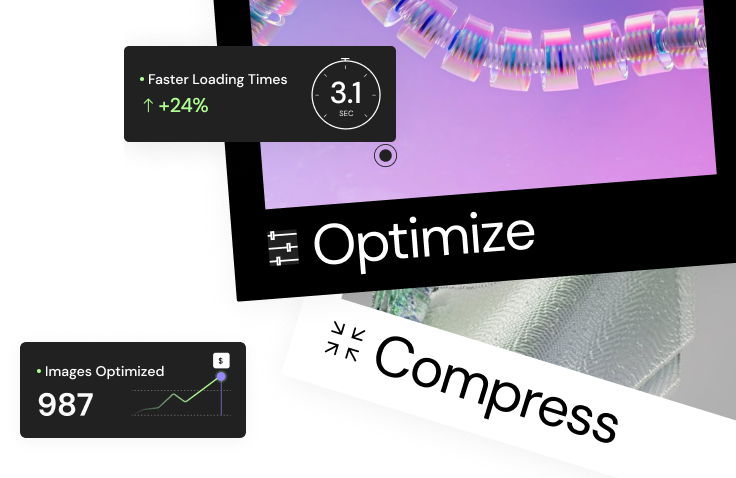
- Image Optimizer: Speed is a ranking factor. This tool sits between the CMS media library and the frontend. When a user uploads a high-res image, the optimizer intercepts it, resizes it, compresses it, and converts it to WebP format automatically. This prevents large media files from slowing down the dynamic rendering of the CMS.
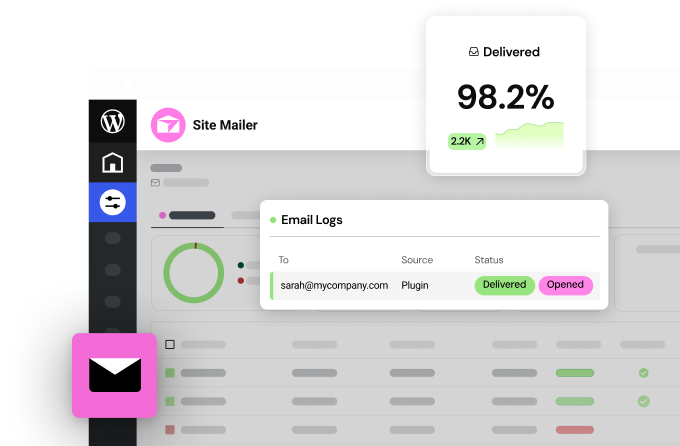
- Site Mailer: A common pain point for WordPress users is the unreliability of the default email function. Site Mailer solves this by providing a robust, zero-configuration infrastructure for transactional emails. It ensures that password resets, form submissions, and order confirmations are delivered instantly and don’t end up in spam folders, which is critical for maintaining trust in a business system.
- Ally by Elementor: With legal regulations like the ADA becoming stricter, accessibility is mandatory. Ally scans the CMS for violations and uses AI to suggest fixes, reducing legal risk.
Part 5: Real-World Scenarios: How Professionals Use This
To truly appreciate the power of this integration, let’s move away from theory and examine three real-world scenarios where an AI-integrated CMS is indispensable. These workflows demonstrate how the toolset transforms daily operations.
Scenario A: The Dynamic E-Commerce Brand
The Challenge: A fashion brand needs to launch a store with 500 SKUs, categorized by season and collection. They need high-converting product pages that display specific size guides based on the product category (e.g., shirts need a chest measurement, pants need a waist measurement).
The Workflow:
- Plan: Use the AI Site Planner to map out the category structure (Men, Women, Accessories) and the necessary pages (Home, Shop, About, Contact). The AI generates the wireframes for the core shop pages.
- Structure: Use the WooCommerce Builder to create a “Single Product Template.” This template dictates how every product will look.
- Dynamic Logic: Use AI to write a conditional logic snippet (or use Elementor’s native display conditions) to show the “Apparel Size Guide” section only on clothing products and the “Ring Size Guide” on jewelry products. This ensures the right data appears for the right product automatically.
- Content: Use Elementor AI to bulk-generate initial product descriptions based on the SKU attributes (e.g., “Blue,” “Cotton,” “Slim Fit”), ensuring SEO-friendly text for hundreds of items in minutes rather than days.
- Reliability: Activate Site Mailer to guarantee that every “Order Confirmed” and “Shipping Update” email reaches the customer immediately, protecting the brand’s reputation for service.
Scenario B: The Agile Agency
The Challenge: An agency manages 50 client websites. Maintenance, updates, and accessibility compliance are draining their profit margins. They need a way to ensure quality without hiring more junior developers.
The Workflow:
- Automation: Use Angie (Agentic AI) to perform routine plugin updates and health checks across the portfolio. Instead of logging into 50 sites, the agent assists in maintaining the fleet.
- Compliance: Deploy Ally by Elementor on all client sites. The tool scans the CMS for accessibility violations (like missing alt tags or poor contrast). It uses AI to suggest remediation fixes, allowing the agency to offer a value-add service (compliance protection) to clients with minimal manual effort.
- Client Handoff: Use the AI Site Planner during the sales process. While on a call with a prospect, generating wireframes instantly helps visualize the project, significantly increasing win rates by showing a “proof of concept” in the first meeting.
Scenario C: The Content Publisher
The Challenge: A digital publisher releases five articles a day. They need a consistent layout but want “Featured” articles to look distinct from standard news. They also need to manage a team of contributors and ensure site speed doesn’t suffer from high image volume.
The Workflow:
- Templates: Create a “Standard Post” template and a “Feature Post” template using the Elementor Theme Builder. Use display conditions to apply the “Feature” template automatically whenever a post is tagged “Featured.”
- Creation: Contributors write in the WordPress editor. They use Elementor AI to generate concise excerpts and SEO meta descriptions for their articles, ensuring every post is optimized for search engines before publication.
- Optimization: As images are uploaded, the Image Optimizer automatically intercepts them. It compresses the files and converts them to next-gen WebP format, ensuring the heavy content load doesn’t slow down the site for readers.
- Communication Reliability: Use Site Mailer to ensure that critical system notifications—such as “New Account Created” for contributors or “Post Pending Review” for editors—are delivered instantly, ensuring the editorial workflow is never blocked by a missing email.
Part 6: The Strategic Business Case
When choosing an AI website builder, the decision often comes down to philosophy: Open Source or Proprietary? This choice has profound implications for the long-term viability of your digital presence.
Cost Efficiency at Scale
SaaS platforms often punish success. As your contact list grows, or your CMS items increase, the monthly fee jumps significantly. You often pay per “database row” or per “API call.” The WordPress ecosystem is generally more flat-structured. You pay for the infrastructure (Hosting) and the tools (Elementor Pro), but you do not pay a “tax” on every new blog post or product you add. For content-heavy sites or large directories, this economic difference can be massive over a five-year horizon.
Data Sovereignty
Proprietary systems offer a “walled garden.” They are safe, curated, and easy to start. However, they impose limits. You cannot access the server root. You cannot install a plugin that isn’t in their approved marketplace. You are renting your digital home. By bundling the Elementor Hosting with the open-source software, you get the best of both worlds: the managed convenience of SaaS with the ownership rights of open source. You can always pick up your database and leave.
Part 7: The Future of Web Creation
We are witnessing a fundamental shift in the role of the web creator. We are moving from “Pixel Pushers”—designers who manually place every element—to “Digital Conductors.”
In this new era, the creator defines the intent: “I want a portfolio site that feels modern and highlights my photography.” The AI Site Planner drafts the blueprint. Elementor AI generates the initial copy and assets. The Theme Builder applies the dynamic logic. Angie handles the configuration and updates.
The human role elevates to strategy, curation, and refinement. The CMS becomes less of a filing cabinet and more of an intelligent engine. The integration of AI into this engine is not just a feature; it is the architecture of the modern web. The future belongs to those who can wield these platforms to build systems that are as intelligent as they are beautiful.
Conclusion
The search for an AI website builder with CMS integration leads inevitably to a choice between convenience and capability. While closed ecosystems offer a polished, unified experience, they often lack the depth required for true scalability and data ownership.
The combination of WordPress and Elementor stands as the premier solution for professionals. It bridges the gap, offering the ease of visual AI tools with the limitless potential of the world’s most powerful CMS. It empowers creators to build not just websites, but comprehensive digital platforms that grow, adapt, and scale with their businesses.
For those serious about web creation, the question is not “Can AI build this page?” but “Can AI help me manage this system?” With Elementor’s integrated ecosystem, the answer is a resounding yes.
Frequently Asked Questions
1. What defines a “true” CMS integration in an AI website builder? A true integration means the AI interacts directly with the website’s database. It doesn’t just generate static text or images; it can populate dynamic fields, understand post types (like Products or Events), and respect the site’s data structure. This allows for scalable management of content where design is separated from data.
2. Why is Elementor considered a platform rather than just a page builder? Elementor has evolved beyond a plugin. It now offers a comprehensive suite including Managed Hosting, AI creation tools, Image Optimization, and Email Reliability. This ecosystem approach provides an end-to-end solution for building, managing, and maintaining websites, mirroring the capabilities of a full SaaS platform while retaining WordPress flexibility.
3. How does Agentic AI differ from Generative AI in web development? Generative AI creates content—it writes a blog post or designs an image based on a prompt. Agentic AI (like Elementor’s Angie) performs actions. It can navigate the WordPress dashboard, install plugins, update settings, or run maintenance tasks. It acts as a virtual assistant that executes workflows rather than just creating assets.
4. Can I use Elementor’s AI tools with my existing WordPress theme? Yes. Elementor works with almost any WordPress theme. However, it pairs best with the Hello Theme, which is a lightweight canvas designed specifically for Elementor. This combination ensures that the AI-generated designs and code snippets function perfectly without theme conflicts.
5. Does using an AI website builder affect my site’s data ownership? It depends on the platform. If you use a closed SaaS builder, you often cannot export your site’s code or database to another provider. With Elementor on WordPress, you retain full ownership. You can export your entire database (XML/SQL) and media library at any time, ensuring you are never locked into a single provider.
6. How does the AI Site Planner help with client projects? The AI Site Planner streamlines the initial discovery phase. It allows you to generate professional wireframes and a sitemap based on a client’s brief in minutes. This visual aid helps align expectations early, speeds up the approval process, and provides a structured foundation for the build.
7. Is Elementor Hosting necessary to use the AI features? No, you can use Elementor and its AI features on any WordPress host. However, Elementor Hosting is optimized for the platform. It creates a unified environment where the server specs are tuned for Elementor’s performance, and it simplifies support by having one point of contact for both the software and the server.
8. Can AI help with the technical maintenance of a WordPress site? Yes, this is the role of Agentic AI. Tools like Angie can handle routine tasks such as plugin updates or site health checks. Additionally, integrated tools like Ally use AI to scan for accessibility issues, automating the often complex process of compliance maintenance.
9. How does dynamic content impact eCommerce scalability? Dynamic content allows you to design one template (e.g., a Product Page) that applies to thousands of products. If you want to change the layout, you edit the template once, and it updates everywhere. AI enhances this by helping you design the template and even generating the unique descriptions for each of the 1,000 products in the database.
10. What is the benefit of using Site Mailer over a standard SMTP plugin? Site Mailer is designed to be “zero-configuration.” It eliminates the technical complexity of setting up API keys and SMTP servers. It ensures high deliverability for transactional emails (like password resets or order confirmations) and provides integrated logging to track email performance directly from the dashboard.
Looking for fresh content?
By entering your email, you agree to receive Elementor emails, including marketing emails,
and agree to our Terms & Conditions and Privacy Policy.