
Keeping your WordPress site compliant with privacy laws like GDPR and CCPA can feel like a lot, especially with rules tightening every year. A quick “we use cookies” note doesn’t cut it anymore. If your site gets visitors from Europe, the UK, or California, you need a clear consent banner. Good news: it’s easier than it sounds, and we’ve rounded up the best tools to help.
Whether you’re brand new to WordPress or you’ve built sites for years, you’ll find something here that fits your setup. Let’s look at the best options and get one running fast.
Key Takeaways
- Compliance matters if your site gets visitors from the European Union, United Kingdom, or California.
- WordPress-native tools keep things simple, letting you manage compliance without leaving your dashboard.
- Google Consent Mode v2 support matters for sites using Google Analytics or Google Ads in 2026.
- Geo-targeting keeps your site clean, showing banners only to visitors who need them.
Why You Need a Reliable Cookie Consent Tool in 2026
The rules of the web have changed. A simple “we use cookies” banner isn’t enough anymore. Regulators now require active consent, so visitors choose which cookies to allow before they load. Run Google Analytics, Facebook Pixel, or embedded videos, and your site already uses cookies covered by these rules.
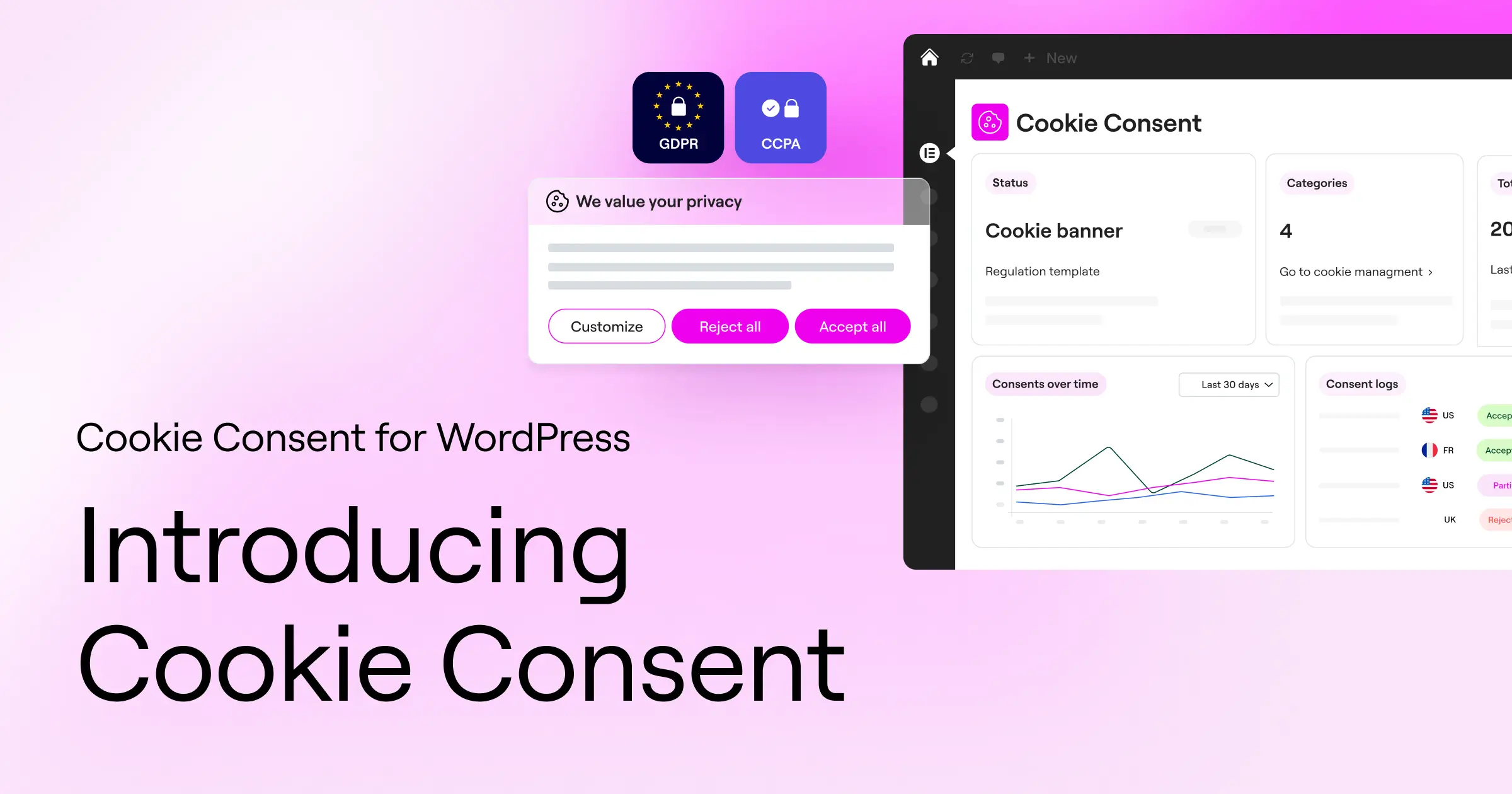
A dedicated cookie consent tool makes your site respect those choices automatically, blocking scripts until consent is given, keeping a record for audit trails, and showing it all in a clean banner. You don’t need a law degree to stay compliant.
10 Best Cookie Consent Tools for WordPress in 2026
1. Cookie Consent
If you build with Elementor, the native Cookie Consent capability runs entirely from your dashboard, right inside the Elementor editor, no external account needed.
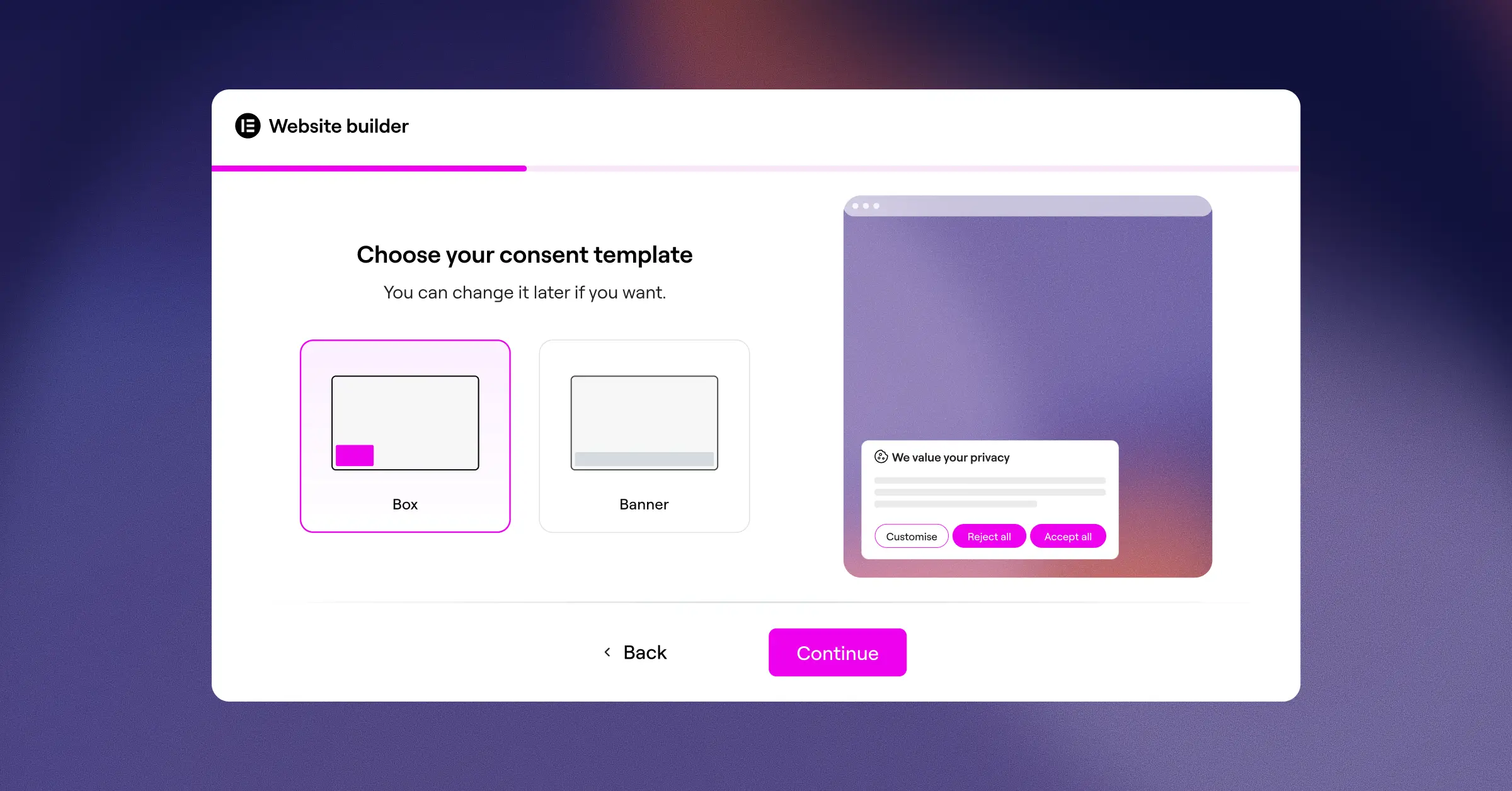
- Builds custom banners with the Elementor editor.
- Scans your site to categorize cookies and scripts.
- Supports Google Consent Mode v2 for smooth analytics.
- Saves consent logs in your WordPress database.
- Translates banners into multiple languages.
- Restricts banner visibility by country with geo-targeting.
Pros:
- Needs zero external platform logins.
- Matches your site design with native controls.
- Includes a built-in policy generator.
Cons:
- Works best inside the Elementor ecosystem.
Verdict: The top pick for Elementor users wanting a clean, integrated tool without extra subscriptions.
2. Cookiebot
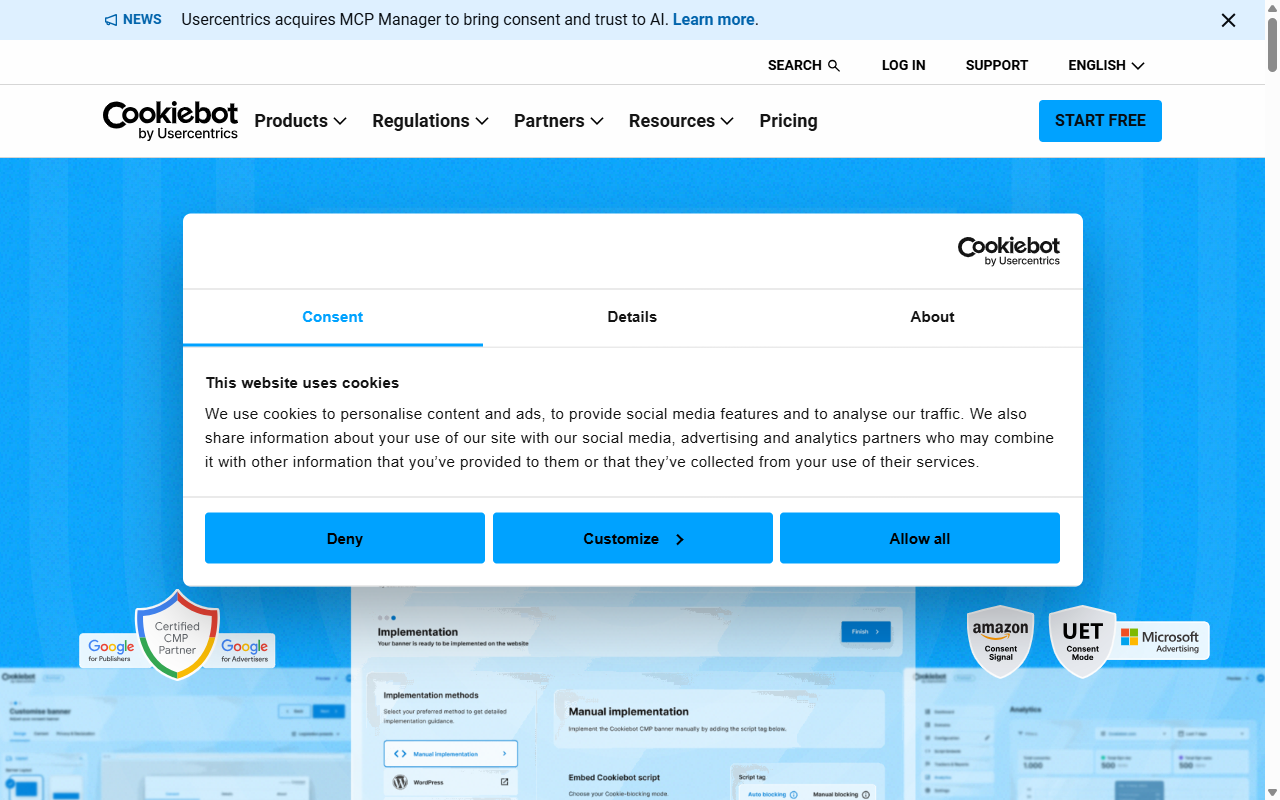
Cookiebot is an established privacy tool known for deep scanning. It’s cloud-based, connecting to WordPress through a helper plugin that crawls your site for new cookies. Settings live on Cookiebot’s dashboard, not WordPress, but the integration is trusted.
- Finds hidden cookies with a monthly full-site scan.
- Categorizes trackers into necessary, preference, statistics, and marketing groups.
- Renders clean banners that adapt to visitor location.
- Stores consent data in a secure, cloud-hosted database.
- Works with Google Consent Mode v2 out of the box.
- Generates a cookie policy page that updates after every scan.
Pros:
- Highly accurate automated scanner.
- Solid compliance reporting for audits.
- Translates banners into dozens of languages.
Cons:
- Settings live on an external site.
- Pricing can climb for larger sites.
Verdict: A solid pick for growing businesses wanting automated, hands-off scanning.
3. CookieYes
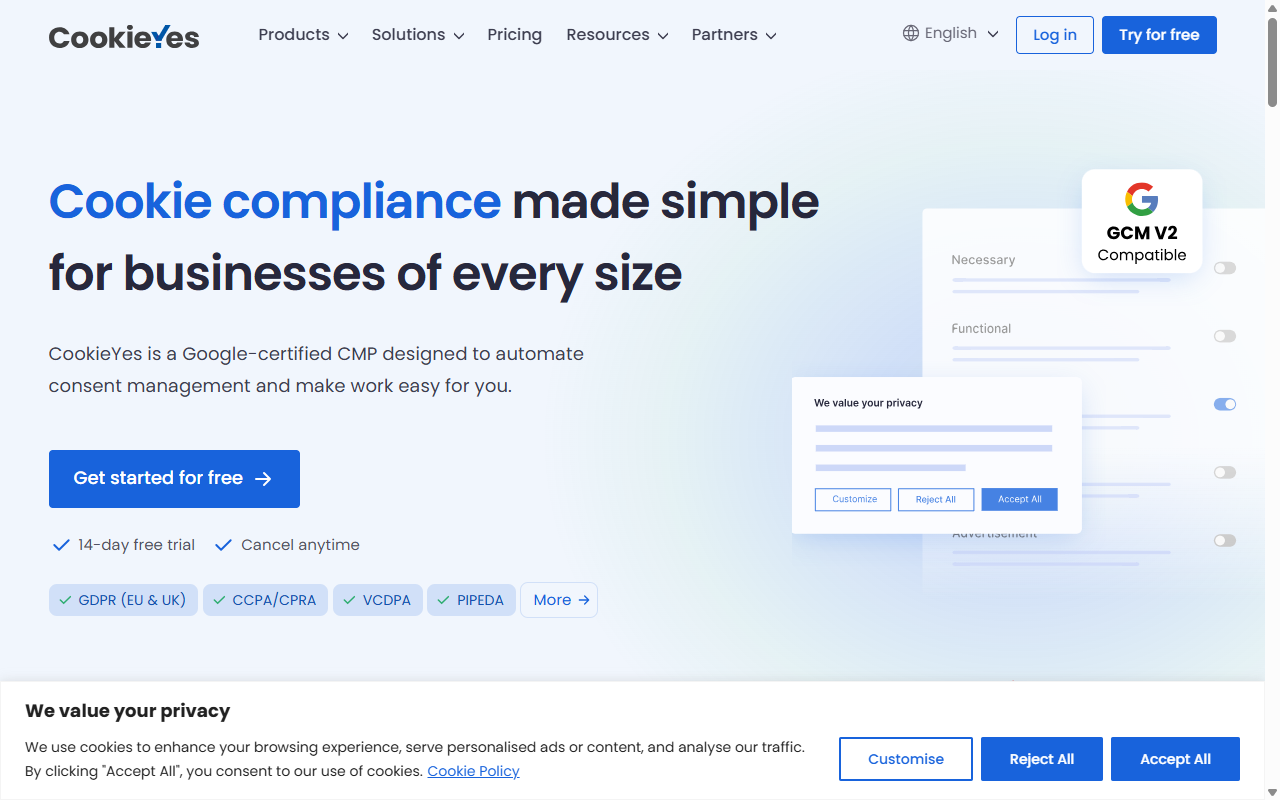
CookieYes balances cloud management with a friendly interface, serving millions of sites through a dedicated WordPress plugin. It covers GDPR and CCPA, with banner styles that adjust by visitor location.
- Displays clean banners at the footer, header, or as a popup.
- Blocks third-party cookies until the visitor accepts.
- Records consent choices to help prove compliance during audits.
- Integrates with popular tag managers and analytics tools.
- Respects Global Privacy Control signals from modern browsers.
- Handles language switching based on browser settings.
Pros:
- Clean, simple interface.
- Supports geo-targeting on premium plans.
- Fast setup.
Cons:
- Entry-level plan limits page views per month.
- Needs a connection to an external cloud account.
Verdict: A reliable pick for blogs and small sites wanting an attractive, easy banner.
4. Complianz
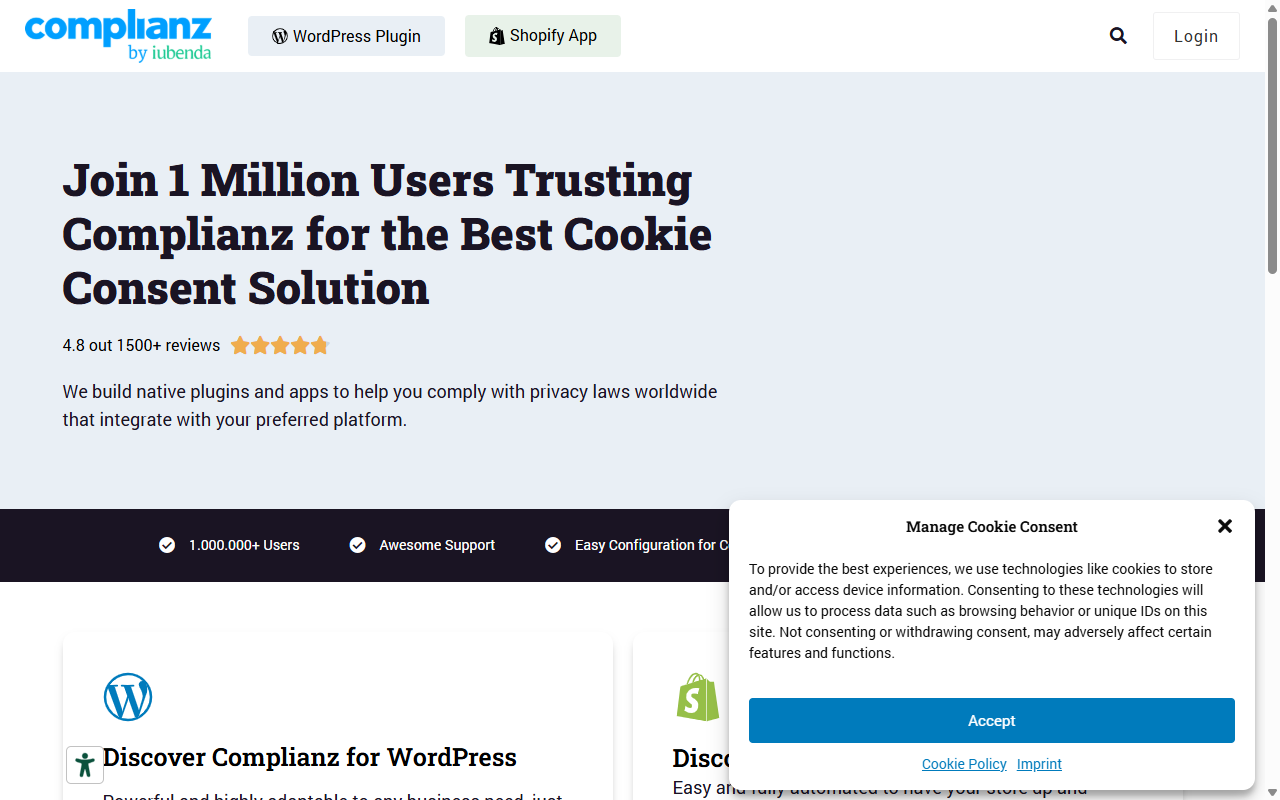
Complianz is built for the WordPress ecosystem, configuring your cookie policies through a step-by-step wizard that walks you through your region’s legal requirements. It’s highly configurable and skips external platforms.
- Guides you through a full privacy wizard to map your legal obligations.
- Generates legally reviewed documents for your cookie policy and disclaimer pages.
- Integrates directly with the WordPress translation system.
- Detects third-party embeds like Google Maps and YouTube automatically.
- Supports multiple privacy frameworks, including GDPR, CCPA, and COPPA.
- Maintains localized settings for different regions.
Pros:
- Runs entirely on your own server.
- Setup wizard is thorough.
- Generates actual legal pages for your site.
Cons:
- Dashboard can feel busy with options.
- Can slow the admin on lower-spec hosting.
Verdict: A great fit for self-hosted users wanting their data on their own servers.
5. iubenda
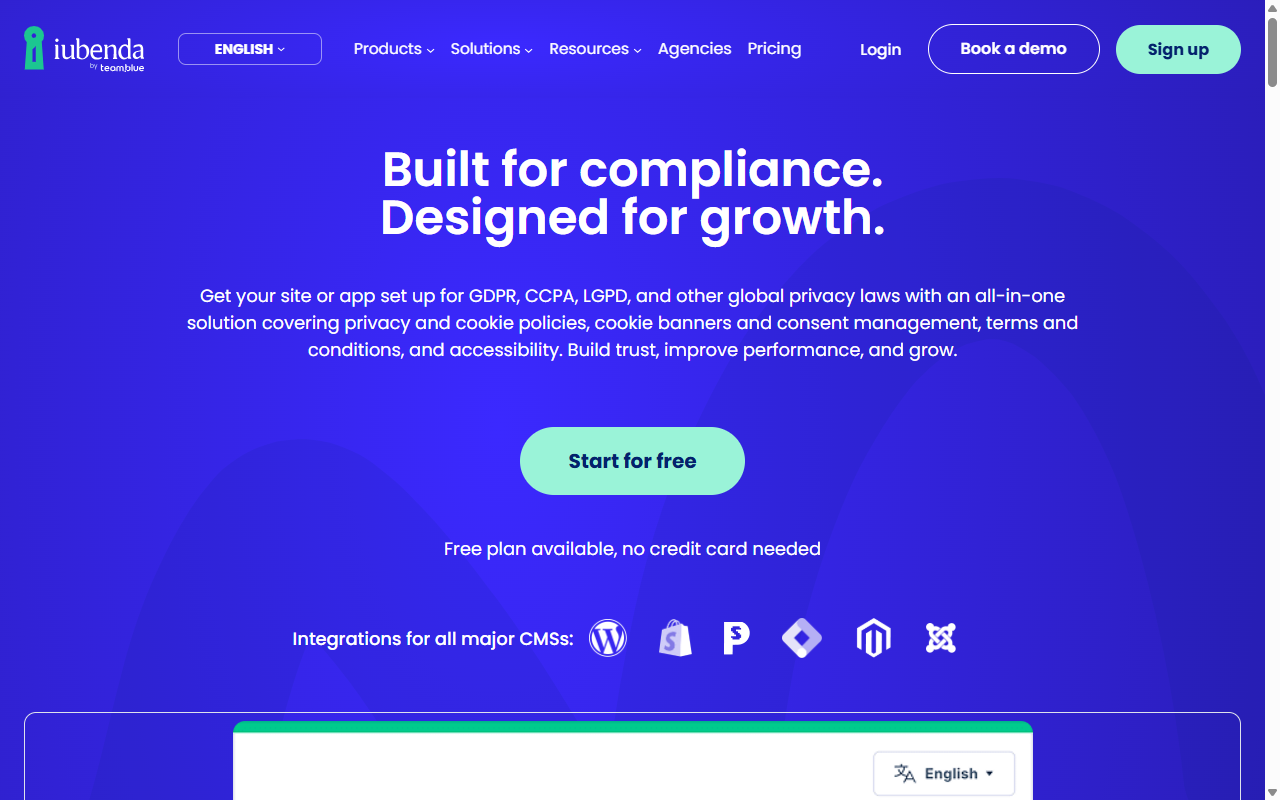
iubenda is a full compliance suite covering privacy policies, terms, and consent preferences through a cloud-connected WordPress integration. Juggling several compliance needs at once? It keeps everything in one place.
- Generates auto-updating privacy and cookie policies drafted by lawyers.
- Collects consent details and stores them in a secure cloud dashboard.
- Customizes banner designs to blend with your site layout.
- Supports the latest IAB Transparency and Consent Framework.
- Tracks consent settings for both web forms and cookie banners.
- Handles detailed customization for complex compliance needs.
Pros:
- Professional, lawyer-reviewed policy text.
- Handles multi-page privacy agreements and terms.
- Well-suited for multi-national corporate sites.
Cons:
- Setup can feel complicated for beginners.
Verdict: A strong pick for businesses needing a full legal suite with automated updates.
6. OneTrust
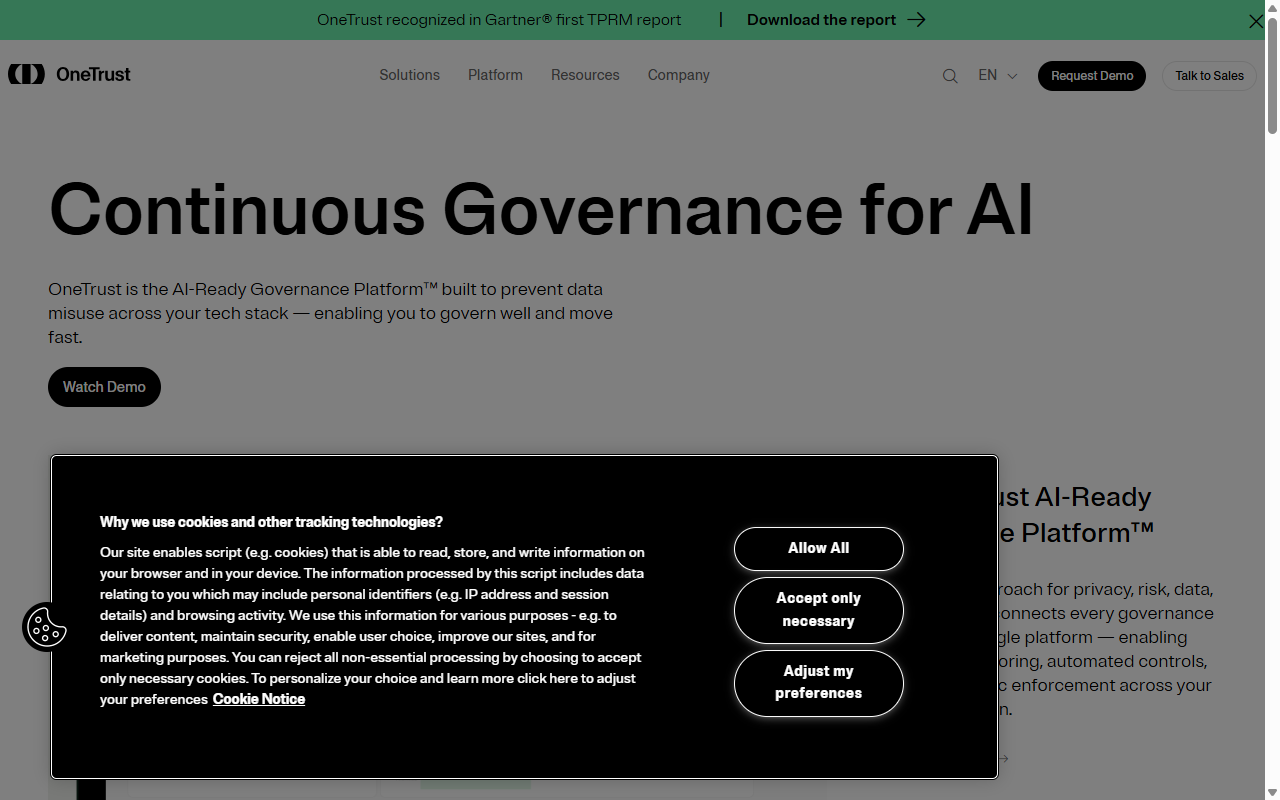
OneTrust is a heavy-duty, enterprise-level privacy platform built for large companies and compliance departments, bringing WordPress integration tools plus deep reporting that helps large teams stay audit-ready.
- Manages global compliance standards from a central dashboard.
- Scans large sites with thousands of pages efficiently.
- Tracks consent across multiple devices and domains.
- Delivers detailed compliance reports for internal legal teams.
- Integrates with major enterprise marketing platforms.
- Applies localized consent rules based on visitor location.
Pros:
- Thorough compliance tools.
- Trusted by many large enterprises.
- Strong developer APIs and documentation.
Cons:
- Built for enterprise scale, more than a basic site needs.
- Steeper learning curve to configure.
Verdict: The go-to for large enterprises needing rigorous internal audits.
7. Termly
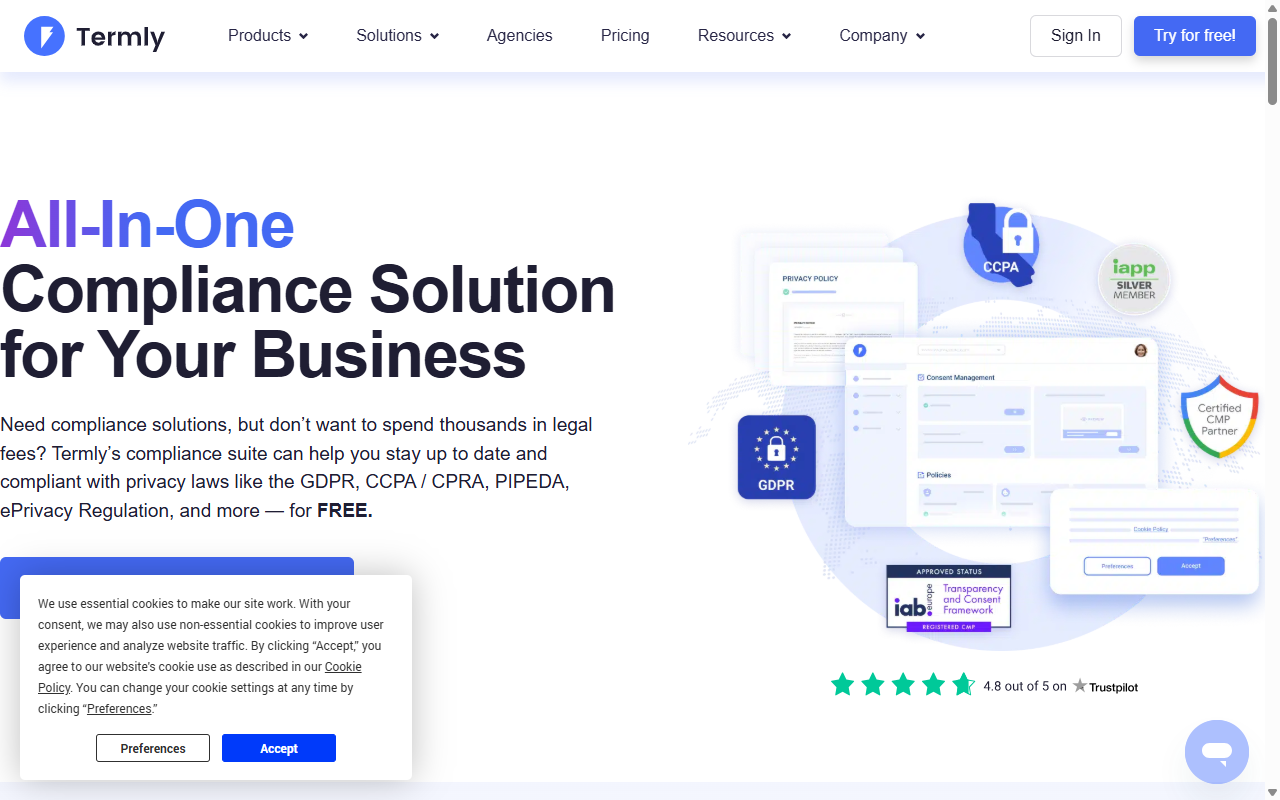
Termly is a friendly, approachable compliance builder for startups and small business owners. It gives you a simple interface for building cookie banners, terms of service, and shipping policies, handy if you don’t have a developer on your team.
- Creates custom cookie banners through a simple visual editor.
- Generates clear privacy policies and terms of service documents.
- Runs weekly scans to check for new cookies.
- Categorizes tracking scripts automatically based on purpose.
- Matches your site colors and typography easily.
- Keeps your documents updated as regulations change.
Pros:
- Simple, friendly interface.
- Good visual customizer for matching your brand.
- Accessible for small startups.
Cons:
- Entry-level plan shows Termly branding on your banners.
- Limited developer-level script control.
Verdict: A practical option for startups wanting to check off legal requirements fast.
8. Osano
Osano bills itself as a straightforward compliance tool, with a unique “no-fine pledge” on certain plans. It’s a cloud-first platform focused on data privacy and vendor risk, spotting third-party scripts handling data without your knowledge.
- Monitors third-party scripts for potential privacy issues.
- Loads lightweight banners that won’t slow your site down.
- Translates banners on the fly into over 40 languages.
- Saves consent logs securely for regulatory proof.
- Simplifies CCPA and GDPR workflows through a clean cloud UI.
- Blocks unapproved trackers instantly.
Pros:
- Fast load times for banners.
- Strong focus on legal compliance security.
- Thorough developer documentation.
Cons:
- Settings live entirely outside your WordPress dashboard.
- Premium features may be pricey for casual bloggers.
Verdict: A fast, cloud-based pick for businesses wanting speed and solid compliance.
9. WP Consent API
WP Consent API isn’t a typical banner plugin. It’s a community-built framework standardizing how plugins register and handle cookie consent in WordPress. Handy for developers building custom setups.
- Standardizes cookie consent communication across WordPress extensions.
- Integrates with core privacy features built into WordPress.
- Lets developers write cleaner, more efficient script-blocking code.
- Reduces conflicts between different compliance tools on the same site.
- Runs entirely on your server with no third-party assets required.
- Supports a modular approach to building privacy banners.
Pros:
- Clean, lightweight code.
- Highly compatible with developer standards.
- Free from external tracking.
Cons:
- Doesn’t include a visual banner editor out of the box.
- Needs technical knowledge to use well.
Verdict: A solid foundation for developers building custom-coded compliance solutions.
10. GDPR Cookie Consent (by WebToffee)
WebToffee’s GDPR Cookie Consent is one of the most downloaded consent plugins in the official WordPress directory, building and displaying banners directly from your admin dashboard with a balance of simplicity and control.
- Builds header and footer style banners with custom styling.
- Scans your site for active cookies directly from your server.
- Renders clean list views of active cookies for visitors.
- Blocks scripts like Google Analytics automatically until consent is confirmed.
- Adds shortcodes to display the banner or settings anywhere.
- Keeps local logs of user choices for auditing.
Pros:
- Runs entirely within your WordPress dashboard.
- Very popular with a large, active community.
- Simple to customize visually.
Cons:
- Scanning can add load on budget hosting.
- Advanced geo-targeting needs a premium upgrade.
Verdict: A time-tested pick for standard sites wanting a self-contained, classic setup.
Comparison of the Best Cookie Consent Tools in 2026
Here’s a quick comparison: dashboard integration, log storage, and use case.
| Tool Name | WordPress Native Dashboard? | Stores Consent Logs? | Google Consent Mode v2 Support? | Primary Target User |
|---|---|---|---|---|
| Cookie Consent | Yes (Full Native) | Yes (Local DB) | Yes | Elementor Users & Agencies |
| Cookiebot | No (Cloud Managed) | Yes (Cloud) | Yes | Mid-to-Large Businesses |
| CookieYes | No (Cloud Managed) | Yes (Cloud) | Yes | Bloggers & Small Sites |
| Complianz | Yes (Local Admin) | Yes (Local DB) | Yes | Self-Hosted Purists |
| iubenda | No (Cloud Managed) | Yes (Cloud) | Yes | Multi-national Brands |
| Termly | No (Cloud Managed) | Yes (Cloud) | Yes | Startups & Small Teams |
How to Install a Cookie Banner on WordPress (Step-by-Step)
Setting up a cookie consent banner isn’t hard. The steps are similar whether you use a native tool or a third-party option, and you can have your banner live in under five minutes.
Step 1: Choose Your Tool and Install It
First, add your chosen compliance capability:
- Open your WordPress dashboard and head to the Plugins section, then click Add New.
- Search for your preferred tool, such as your cloud service’s helper plugin or your native workspace settings.
- Click Install Now and then Activate to load the files onto your site.
Step 2: Run an Initial Cookie Scan
Before your banner can block trackers, it needs to know what’s active on your site:
- Open the configuration menu for your chosen capability inside WordPress.
- Look for the Scan Website option and start your first automated scan.
- Wait for it to finish grouping your scripts into categories like Necessary, Analytical, and Marketing.
Step 3: Customize the Banner Design to Match Your Brand
An out-of-place banner can hurt the user experience, so it’s worth making your privacy prompt feel like a natural part of your site, not a jarring popup:
- Go to the design or banner styling section of your chosen tool.
- Adjust the colors to match your branding, buttons, and text styling.
- Pick a visible but not obstructive placement, like a clean bottom banner bar.
- Check that the font matches your site’s typography.
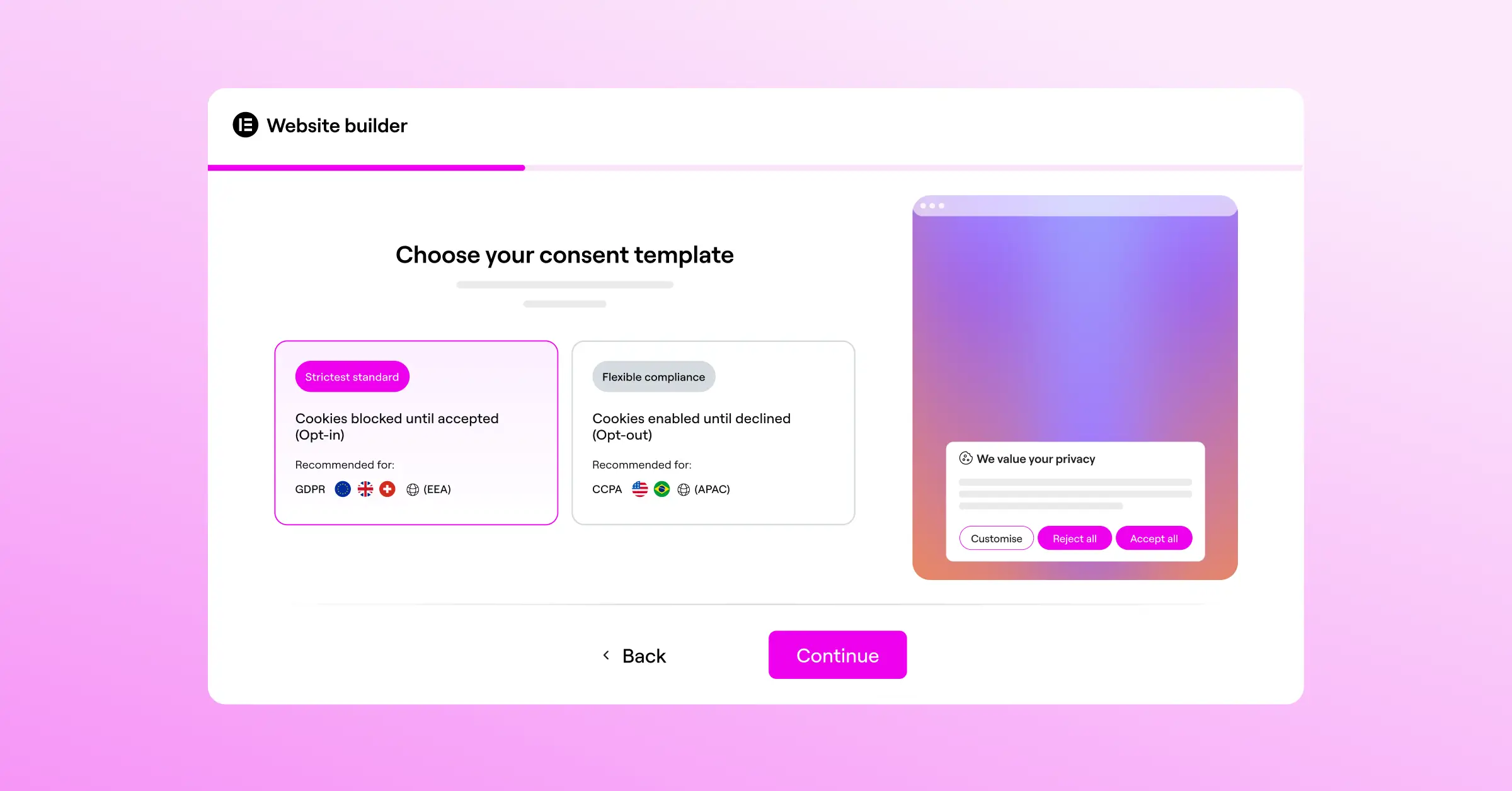
Step 4: Enable Consent Logging and Save Your Settings
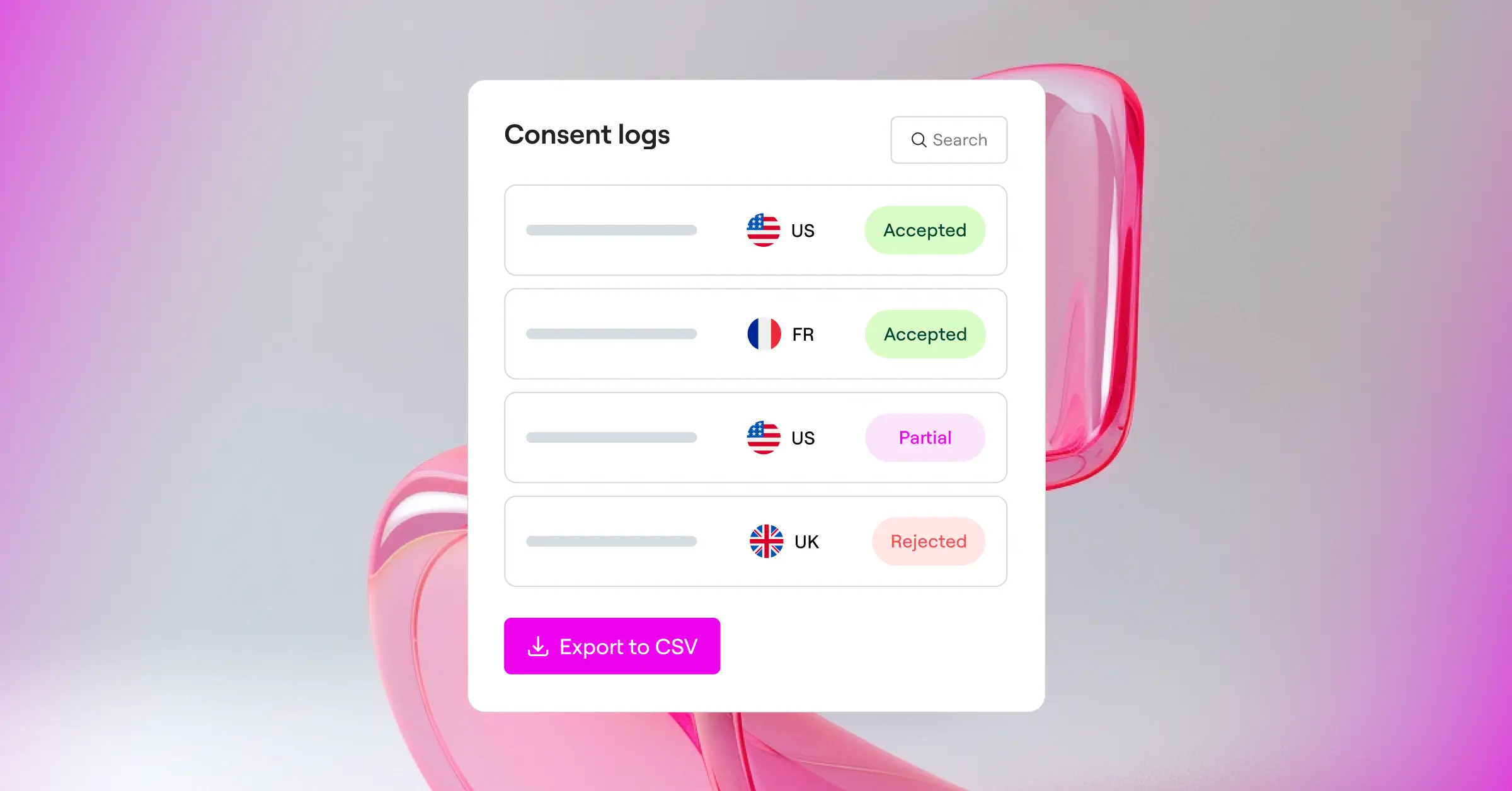
You’ll want proof of consent if a regulator ever asks. That’s where consent logs come in:
- Locate the Consent Logging setting in your dashboard menu.
- Toggle consent storage to “On” to record responses safely.
- Save your settings and clear your site cache to push the new banner live.
“Compliance isn’t just about showing a banner on your homepage. It’s about understanding what data your website gathers and ensuring your visitors have total control over their own digital footprints.”
– Itamar Haim, Web Compliance Specialist
How to Test Your WordPress Cookie Banner
Once your banner is live, make sure it’s working. A common mistake is assuming a visible banner means it’s blocking cookies properly. Testing takes a minute.
Open your site in a fresh Incognito window so your logged-in session doesn’t skew the results. Right-click the page, select Inspect, then check the Application or Storage tab under Cookies.
Before you click “Accept,” check the cookie list. You should only see essential session cookies. Spot Google Analytics or ad tracker cookies loading before consent? Turn on automatic script-blocking in your tool’s settings.
Frequently Asked Questions
Do I really need a cookie banner on my WordPress site?
Yes, if your site gets visitors from the European Union (GDPR), the United Kingdom, or California (CCPA). Since the internet is global, nearly every site qualifies, so a compliance tool matters for avoiding fines and building trust.
What is Google Consent Mode v2 and why is it important in 2026?
It’s a Google system passing visitor consent choices to services like Google Analytics and Google Ads. Running ads or tracking conversions in Europe? Consent Mode v2 support keeps your tracking data uninterrupted.
Will a cookie banner slow down my WordPress website?
It depends on the tool. Third-party cloud scripts can cause a slight delay, but a native tool like Elementor‘s Cookie Consent capability keeps your code lightweight, so your site stays fast.
Can I make my cookie banner display only to visitors from the EU?
Yes, that’s called geo-targeting. Quality compliance tools let you set geo-location rules so your banner only shows to visitors in countries with strict privacy laws.
What is the difference between a cloud-managed tool and a WordPress-native tool?
Cloud-managed tools (like Cookiebot or CookieYes) need an external account, a pasted tracking script, and settings managed from their portal. WordPress-native tools (like Cookie Consent from Elementor) let you handle everything, layout and logs included, from your existing admin interface.
Do free cookie consent tools work well enough?
Yes, many free options handle a basic banner and simple script blocking well for smaller sites. Need geo-targeting, automated scans, or custom designs? A paid plan is usually worth it.
How do I handle cookie policies in multiple languages?
If your site is multilingual, your cookie banner should be too. Most compliance tools integrate with popular translation tools, so your banner automatically switches languages to match your visitor.
Choosing the Right Tool for Your Website
Staying compliant doesn’t have to feel like a bolt-on experience. If you’re already on Elementor, the built-in Cookie Consent capability is a natural fit, skipping third-party platforms while keeping full control over your banner.
For sites built with other editors, self-contained choices like Complianz or cloud services like CookieYes keep your site covered. Take a few minutes to set things up, and move on knowing your visitors’ privacy is respected.

