Table of Contents
However, the question “How do I create a website builder like Wix?” usually leads down two very different paths. One is the path of software engineering: building a proprietary SaaS application from scratch using React, Node.js, and complex cloud infrastructure. The other, often smarter path, is the “Platform” approach: leveraging an existing, powerful ecosystem to create a specialized “Website as a Service” (WaaS).
In 2026, the challenge is not just about dragging and dropping elements on a canvas; it is about delivering a complete ecosystem that includes managed hosting, AI integration, marketing automation, and performance optimization. Users today demand a frictionless experience where design, functionality, and business growth tools coexist seamlessly. This guide will walk you through the architectural realities of building a builder from the ground up, and then demonstrate why building on top of a proven framework—specifically the Elementor ecosystem—is the superior strategy for launching a modern web creation platform.
Key Takeaways
- Platform over Product: A modern website builder is not just an editor; it is a complete ecosystem requiring enterprise-grade hosting, security, and integrated marketing tools.
- The “Build vs. Assemble” Dilemma: Building a drag-and-drop engine from scratch is resource-intensive and fraught with technical debt. Leveraging an existing framework like Elementor accelerates time-to-market significantly.
- Architecture Matters: A true builder separates the “Editor” (UI) from the “Renderer” (Live Site), connected by a standardized JSON schema.
- Infrastructure is Key: Success relies on enterprise-grade speed and security, such as Google Cloud Platform and Cloudflare, not just good code.
- AI is the New Standard: Modern builders must integrate AI for content, design, and code generation to remain competitive.
- The WaaS Opportunity: Agencies can create “client-proof” builders by restricting the Elementor interface, effectively offering a proprietary experience without the proprietary cost.
Phase 1: Decoding the Market & Architecture
Before writing a single line of code, you must understand what you are actually building. The market for website builders is dominated by two distinct models: the “Closed SaaS” and the “Open Source” ecosystem. Understanding the mechanics of these models is crucial for defining your own platform’s architecture and long-term viability.
The Closed SaaS Model (The “Walled Garden”)
Platforms like Wix, Squarespace, and Duda operate as closed ecosystems. They provide a unified experience where the builder, hosting, domain, and support are all bundled together. From a user perspective, this offers simplicity. From an engineering perspective, it represents a massive monolith of proprietary technology.
The Architecture: These platforms typically run on a highly customized tech stack. The frontend is a complex Single Page Application (SPA), often built with React or a custom proprietary framework, which communicates with a backend API (Node.js, Java, or Scala) to store the website’s structure as a JSON object. Every feature—from the image gallery to the checkout flow—must be built, maintained, and secured by the platform’s internal engineering team.
The Challenge: Building this requires recreating every single utility from scratch. You are not just building a visual editor; you are building an Internet Service Provider (ISP), a billing system, a domain registrar, and a graphic design tool simultaneously. The technical debt accumulates rapidly, often slowing down feature velocity. When you look at these platforms, observe their functional descriptions neutrally: they offer curated, template-driven experiences that prioritize ease of use over deep customization.
The Open Source Model (WordPress)
On the other end of the spectrum is WordPress. It powers over 43% of the web because it solves the backend content management problem perfectly. It offers a robust database structure, user management, and infinite extensibility through plugins. However, the default WordPress experience lacks the visual, drag-and-drop immediacy that modern users expect from a “builder.” It separates the “writing” (backend) from the “viewing” (frontend), which can feel disjointed to a user accustomed to visual design tools. This gap is where the opportunity lies.
The Hybrid Opportunity: The “Platform” Approach
The most effective way to combine SaaS benefits with creative freedom is to build your proprietary visual editor on top of a massive, extensible, open-source CMS. This is the strategy leveraged by Elementor. By functioning as a comprehensive Website Builder Platform, it provides the visual “front end” that users love—the “Wix-like” experience—while utilizing the robust, secure, and infinitely scalable WordPress “back end.”
For anyone looking to “build a builder,” the hybrid model offers the highest ROI. You get the stability of an established CMS and the visual power of a modern drag-and-drop engine without needing a team of 500 engineers to maintain server infrastructure. You are essentially white-labeling the power of the open web, packaging it into a refined, user-friendly product.
Phase 2: The “Build from Scratch” Approach (The Hard Way)
If you are determined to engineer a proprietary website builder from the ground up, be prepared for a massive undertaking. This section outlines the technical stack and architectural hurdles you will face. This is the “Hard Way,” and while it offers total control, it comes with significant risk and operational overhead.
The Tech Stack
If you were to engineer a website builder from scratch today, your technology stack would likely involve a component-based JavaScript framework for the frontend, a scalable database for storing the JSON structures, and a complex cloud infrastructure to serve the generated sites.
- Frontend (The Editor): You would need React.js, Vue.js, or Svelte. These libraries are essential for managing the complex “state” of the drag-and-drop interface. You cannot simply use jQuery; the DOM manipulation required to move complex elements in real-time without lag requires a Virtual DOM or effective reactivity system. You will need to manage “Global State” (using Redux, Zustand, or Context API) to track every change for “Undo/Redo” functionality.
- Backend (The API): Node.js is the standard for handling the high volume of JSON requests required by a builder. Alternatively, Go or Python (Django/FastAPI) can be used for robust data processing. The API acts as the bridge, saving the user’s design choices into the database.
- Database: A relational database like PostgreSQL is often used for user data and billing, while a NoSQL database like MongoDB is preferred for storing the “page schema”—the nested JSON object that represents the layout of a user’s website.
The Core Challenge: The Drag-and-Drop Engine
The heart of a website builder is the visual editor. Building this requires solving three complex problems that go beyond standard web development:
- DOM Manipulation & Physics: You must create a system where a user can drag an HTML element (like a button) and drop it into a container (like a column) while the browser recalculates the layout in milliseconds. This involves complex math to calculate coordinates (getBoundingClientRect) and collision detection to know where the element should land.
- The JSON Schema: The visual representation must be saved as a structured data object. For example, a “Header” isn’t saved as HTML; it’s saved as { type: ‘section’, width: ‘full’, children: [{ type: ‘heading’, content: ‘Welcome’ }] }. Your renderer must then read this JSON and generate clean, semantic HTML for the live site. Writing a renderer that is performant and SEO-friendly is a project in itself.
- Responsiveness: You must build a logic engine that allows users to edit a mobile view without breaking the desktop view. This involves handling CSS media queries dynamically within the JavaScript state. You effectively have to rebuild the logic of CSS inside your JavaScript application.
Infrastructure is the Silent Killer
A website builder is only as good as the server it runs on. If the backend is slow, the editor will lag, and the published site will fail Core Web Vitals. When engineering your own builder, you would need to:
- Set up AWS S3 buckets for storing user-uploaded assets.
- Configure a CDN like Cloudflare to serve those assets globally.
- Manage SSL termination for thousands of custom domains (a notoriously difficult DevOps task).
- Handle database scaling and backups.
This “DevOps tax” is often what kills proprietary builder startups. They spend 80% of their time managing servers and only 20% improving the product.
Phase 3: The “Platform” Approach (The Smart Way)
Now, let’s look at the smarter alternative. Instead of reinventing the wheel, you can create a “Website as a Service” (WaaS) by leveraging the Elementor ecosystem. This approach allows you to offer your clients or users a visual, drag-and-drop builder with hosting and support included—but you are building it on top of a platform that already powers 18 million websites. You shift from being a “Software Engineer” to a “Platform Architect.”
Why Elementor is the Foundation
Elementor has evolved from a simple plugin into a comprehensive Website Builder Platform. It provides the rendering engine, the editor interface, and the state management logic out of the box, while allowing you to inject your own code, designs, and logic. By choosing a platform approach, you shift your resources from “fixing the undo button” to “building high-value assets for your client.”
1. The Creative Engine: Elementor Website Builder
Instead of coding a React-based editor, you utilize the Elementor Website Builder. It already solves the drag-and-drop physics, the responsive design logic (desktop/tablet/mobile), and the JSON-to-HTML rendering.
- Pixel-Perfect Control: It offers granular control over layout, typography, and spacing, which would take years to replicate in a custom tool. Features like Flexbox Containers and CSS Grid are already implemented, giving you modern layout capabilities without writing code.
- Extensibility: Because it is open source, you can extend it. If your “builder” needs a specific widget for Real Estate or Restaurants, you can code just that widget and plug it into the existing engine. You are adding value on top of the stack, not rebuilding the foundation.
2. The Infrastructure: Elementor Hosting
The biggest headache in the “Build from Scratch” model is infrastructure. In the Platform approach, you solve this immediately with Elementor Hosting.
- Managed & Optimized: This is not generic shared hosting. It is built on the premium Google Cloud Platform (C2 instances) and integrated with Cloudflare Enterprise CDN. This ensures that every site you or your users build is instantly fast and secure.
- Unified Support: A major issue with WaaS businesses is support. When a site breaks, is it the server or the code? With Elementor Hosting, the builder and the host are supported by the same team, eliminating the “blame game.”
- Scalability: The infrastructure handles traffic spikes automatically. You don’t need to wake up at 3 AM to provision more servers because a client’s site went viral.
3. The Blueprint: Hello Theme
Every builder needs a blank canvas. The Hello Theme serves this purpose. It is a lightweight framework that loads zero redundant styles. It strips away the “WordPress” look and lets the Elementor engine dictate 100% of the design. For a WaaS business, this means your “templates” are pure Elementor designs, not constrained by a heavy theme structure. It ensures the fastest possible load times and provides a consistent base for every site you deploy.
Phase 4: Essential Features You Need (and How Elementor Provides Them)
If you are marketing your platform against competitors, you need feature parity. Modern users expect more than just a page editor; they expect AI, marketing tools, performance optimization, and accessibility compliance. Here is how the Elementor ecosystem fills those gaps natively, allowing you to offer a complete “Enterprise” feature set from day one.
1. Artificial Intelligence (The Intelligence Layer)
A modern website builder must be “AI-native.” Users expect to generate text and images on the fly. Building an LLM (Large Language Model) integration from scratch is expensive and complex.
- The Solution: Elementor AI is deeply integrated into the editor. It allows your users to generate copy, create custom CSS, and even generate royalty-free images without leaving the interface.
- Strategic Planning: The AI Site Planner allows users to generate a full sitemap and wireframe from a simple prompt. This is a massive value-add for a WaaS, as it solves the “blank page syndrome” for your users. Instead of staring at a white screen, they get a structured starting point in seconds.
2. Performance Optimization
Users judge a builder by the speed of the sites it produces. A slow site equals high churn. In a custom build, you would need to write image compression scripts and configure server-side caching.
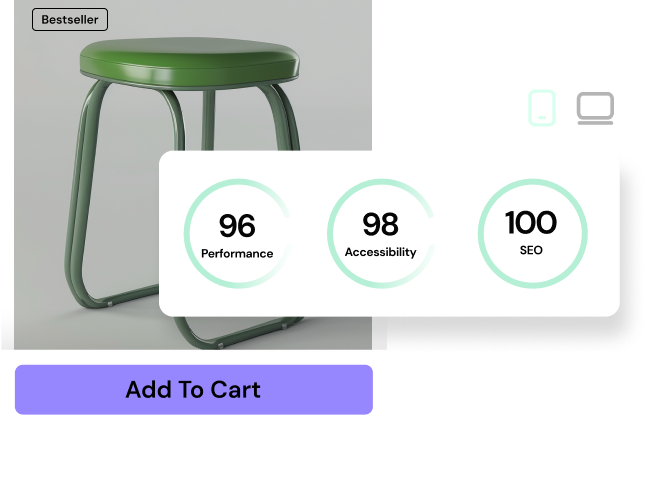
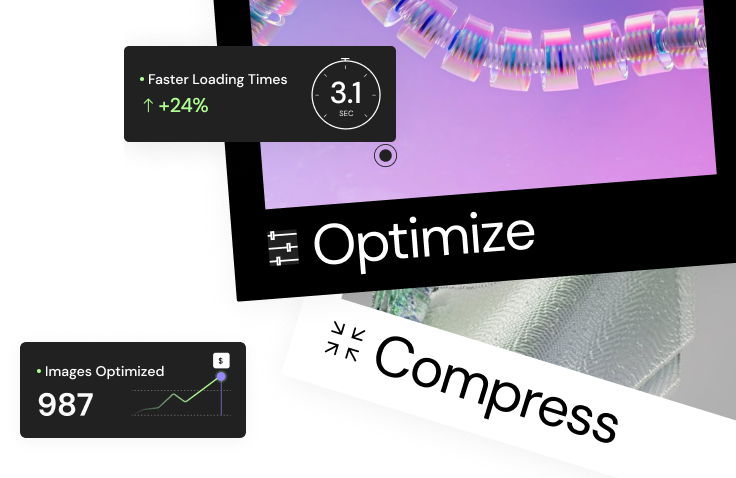
- The Solution: The Image Optimizer plugin automatically compresses media and converts it to next-gen formats like WebP and AVIF. Combined with the CDN from Elementor Hosting, this ensures high Core Web Vitals scores automatically.
- Why It Matters: Speed is a ranking factor for Google. By offering a platform that handles this automatically, you provide a distinct SEO advantage to your users.
3. Marketing Automation
A website is a marketing tool. Your builder needs to send emails and capture leads. Integrating third-party tools like Mailchimp can be clunky and expensive for your users.
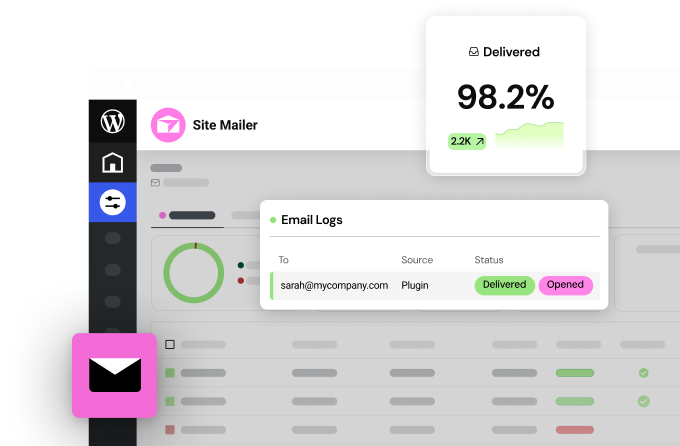
- Reliability: One of the biggest technical challenges in WordPress is email deliverability. Site Mailer solves this by ensuring transactional emails (password resets, form fills) actually hit the inbox, solving a notorious pain point without needing complex SMTP configuration.
4. Accessibility & Compliance
In 2026, web accessibility is a legal requirement in many regions (EAA, ADA). A robust builder must help users comply with these standards. Building an automated accessibility scanner is a massive engineering task.
- The Solution: Ally by Elementor provides automated scanning and remediation tools. Offering “Accessibility Ready” websites is a powerful differentiator for your platform, especially if you target regulated industries like healthcare or finance.
5. eCommerce Capabilities
If you want to compete with platforms like Shopify, you need robust eCommerce tools.
- The Solution: The WooCommerce Builder allows you to visually design every part of an online store, from product pages to the checkout flow. You can offer a fully custom shopping experience that rivals proprietary eCommerce platforms, but with the lower transaction fees and flexibility of WooCommerce.
Phase 5: Step-by-Step Guide to Building Your WaaS with Elementor
This is the actionable blueprint. If you want to launch a “Website Builder Business” targeting a specific niche (e.g., “Websites for Dentists” or “Portfolio Builder for Artists”), here is how you assemble it using the Elementor platform.
Step 1: Establish the Infrastructure
Do not waste time configuring Nginx servers or dealing with cPanel. Start by provisioning Elementor Hosting accounts for your clients. This gives you a standardized, secure, and fast environment. You can manage multiple client sites from a single Elementor dashboard, mimicking the “SaaS Admin” experience. This centralization is critical for maintenance; when you need to update plugins or themes, you have a unified view.
Step 2: Install the Core Stack
On every instance, your standard stack should be consistent to ensure maintainability.
- WordPress: The operating system.
- Elementor Pro: The interface and creative engine. Elementor Pro unlocks the Theme Builder and dynamic content features essential for a platform experience.
- Hello Theme: The blank canvas that ensures speed.
- Ally: For instant accessibility compliance.
- Site Mailer: For reliable communication infrastructure.
Step 3: Create Your “Master Templates” (Kits)
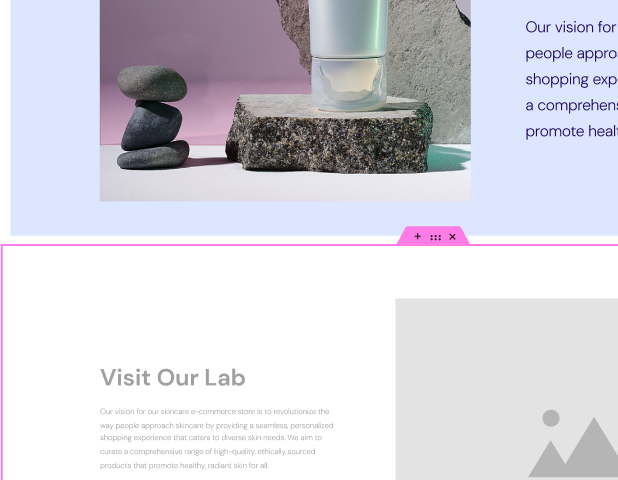
Instead of letting users build from zero, you will offer them “Kits.” Use the Elementor Library feature to create full website kits (Home, About, Services, Contact).
- The Strategy: If you are building “https://www.google.com/search?q=DentistSiteBuilder.com,” create 5 premium dental templates. Use Elementor’s “Export Kit” feature to package these. When a new user signs up, you simply import the relevant kit. This reduces the “Time to Value” for your customer from weeks to minutes.
Step 4: Configure the “Client Experience” (Role Manager)
This is the secret sauce. You don’t want your non-technical clients breaking the site layout you meticulously designed.
- The Action: Use Elementor’s Role Manager. You can set the user’s role to “Editor” and restrict their access. You can allow them to change content (text and images) but lock the design (drag and drop, layout, fonts).
- Result: This gives the client the feeling of a proprietary SaaS editor—easy text changes, no risk of breaking the code—without the risk. It creates a “Client-Proof” builder experience.
Step 5: Integrate eCommerce (Optional)
If your builder targets online stores, leverage the WooCommerce Builder. You can design custom product pages, cart pages, and checkout flows visually. This allows you to offer a “Shopify-like” experience but with lower transaction fees for your clients. You can free download the core version to test, but the Pro features are essential for a custom checkout experience.
Phase 6: Scaling and Growth
Once your “platform” is built, you need to grow it. The beauty of the Elementor ecosystem is that it supports your business growth, not just your technical needs.
Marketing Your Platform
You are selling a solution, not a plugin. Positioning is key.
- Sell the Outcome: Don’t sell “WordPress + Elementor.” Sell “The All-in-One Digital Growth Platform for [Your Niche].”
- Leverage Content: Use Elementor AI to generate blog posts and SEO content for your own marketing site to attract traffic.
- Trust Signals: Highlight that your platform is built on Google Cloud and includes enterprise-grade security.
The Pricing Model
Because you are using Elementor Hosting, your costs are predictable. You can bundle the hosting cost into your monthly subscription.
- Example Model: You pay Elementor for the hosting/license. You charge your client $99/month for the “Website Package.” Your margin is the service, the template, and the support you provide.
- Recurring Revenue: This model shifts your agency from “Project-based” (one-time fees) to “Product-based” (recurring monthly revenue), which significantly increases the valuation of your business.
Future-Proofing
The web moves fast. By building on Elementor, you get regular updates. When Elementor releases a new AI feature or a performance boost, your “platform” gets that feature automatically. You don’t have to hire developers to build it. You are essentially “white-labeling” the R&D of a massive tech company. This allows you to stay competitive with billion-dollar SaaS companies without the billion-dollar budget.
Conclusion
Creating a website builder like Wix is a formidable ambition. The engineering path is fraught with complexity, hidden costs, and massive infrastructure overhead. It requires you to be a hosting company, a security firm, and a software developer all at once.
The smart money is on the Platform Approach. By utilizing the Elementor ecosystem, you bypass the years of development required to build a visual engine and a hosting cloud. You get a market-leading builder, enterprise-grade hosting, integrated AI, and marketing tools—all ready to be packaged into your own unique offering.
In this model, Elementor acts as your engine room. It provides the Pro features, the Hosting reliability, and the Designer tools, allowing you to focus on what matters most: acquiring customers and helping them succeed online. You aren’t just building a website; you are building a scalable business on a foundation that is designed to grow with you.
Frequently Asked Questions (FAQ)
1. Can I really build a SaaS business using Elementor? Yes. The “Website as a Service” (WaaS) model is very popular. By combining Elementor Pro’s Role Manager with Elementor Hosting, you can provide a curated, subscription-based website solution that feels like a proprietary SaaS to your clients.
2. Is Elementor Hosting fast enough for a scalable platform? Absolutely. Elementor Hosting uses Google Cloud Platform’s premium tier (C2 instances) and Cloudflare Enterprise CDN. This is the same infrastructure used by major tech companies, ensuring scalability for traffic spikes.
3. How do I prevent clients from breaking their websites? Elementor includes a “Role Manager” feature. You can restrict access for certain user roles (like your clients), allowing them to edit content (text/images) but preventing them from dragging, dropping, or deleting structural elements.
4. Do I need to know how to code to build this platform? No. The entire value proposition of Elementor is that it is a no-code platform. You can build complex, dynamic websites and template kits visually. However, knowing CSS or HTML can help with advanced customizations.
5. How does Elementor AI help me build faster? Elementor AI helps you generate the initial structure with the Site Planner, write copy for client sites, create custom images, and even generate custom CSS snippets to solve specific design challenges instantly.
6. Can I build an eCommerce platform with this? Yes. By integrating the WooCommerce Builder, you can create fully custom online stores. You can control the design of the product page, cart, and checkout, offering a tailored eCommerce solution that rivals dedicated platforms.
7. Is this solution white-label friendly? Elementor offers extensive customization. While it is a WordPress plugin, the “Hello Theme” is neutral, and you can customize the dashboard experience. Many agencies use third-party tools to further white-label the WordPress admin interface to match their brand.
8. What is the advantage of using Hello Theme? The Hello Theme is a “blank canvas.” It is incredibly lightweight and fast because it doesn’t include the bloat of standard themes. It lets Elementor control every pixel, ensuring your designs look exactly how you intended.
9. How do I handle email deliverability for my clients? This is often a pain point in WordPress, but Site Mailer solves it. It ensures transactional emails (like order confirmations) are delivered reliably without needing complex SMTP setups.
10. Why is this better than building a Wix clone from scratch? Building a clone requires millions of dollars in R&D for the editor, hosting infrastructure, and security. Using Elementor gives you that infrastructure immediately for a low monthly cost, allowing you to launch in weeks, not years.
Looking for fresh content?
By entering your email, you agree to receive Elementor emails, including marketing emails,
and agree to our Terms & Conditions and Privacy Policy.