
Keeping a WordPress site compliant with today’s privacy laws can feel like a full-time job, especially with regulations shifting and browsers phasing out third-party cookies. We’re comparing two well-known options here: Cookie Consent, built right into the Elementor ecosystem, and CookieYes, a popular cloud-based service. Don’t worry, picking the right fit is easier than it looks.
Key Takeaways
- Native integration makes Cookie Consent convenient for WordPress users who want to manage privacy from their dashboard.
- Cloud-managed platforms like CookieYes fit well if you run multiple sites across different content management systems.
- Google Consent Mode v2 support is fully available in both tools, which matters for ad campaigns in the EU.
- Setup speed is fast with Elementor’s Cookie Consent, getting a compliant banner live in under five minutes.
- Audit readiness is simplified by both platforms through detailed consent logging.
The Modern State of Web Privacy in 2026
The privacy landscape in 2026 asks for more than a pop-up box. Regulators worldwide keep tightening how sites collect and share user data, from the EU’s GDPR to the California Consumer Privacy Act (CCPA). Your site needs to show visitors actually agreed to being tracked, or you risk real penalties and lost ad access.
Browsers are also dropping third-party tracking, so first-party data matters more than ever, and support for Google Consent Mode v2 keeps tracking accurate while respecting user choice. It really comes down to your workflow, but you’ve got this: prefer to stay in your admin and keep things simple, a native tool helps; manage several sites on different platforms, an external dashboard might serve you better.
Cookie Consent vs CookieYes: Head-to-Head Comparison
Here’s a direct, feature-by-feature look at how these two tools compare. Both are genuinely capable, they just approach compliance from different angles.
| Feature or Capability | Cookie Consent (Elementor) | CookieYes |
|---|---|---|
| Dashboard Location | WordPress dashboard (fully native) | External cloud platform |
| Setup Time | Under 5 minutes | About 10 to 15 minutes |
| Google Consent Mode v2 | Fully supported | Fully supported |
| Design Editing | Native design tools and templates | Visual cloud editor |
| Geo-Targeting Banners | Yes (shows banners by region) | Yes (shows banners by region) |
| Consent Logging | Saved locally in your database | Saved in cloud database |
| Policy Generator | Built-in | Available via cloud portal |
Deep Dive: Cookie Consent by Elementor
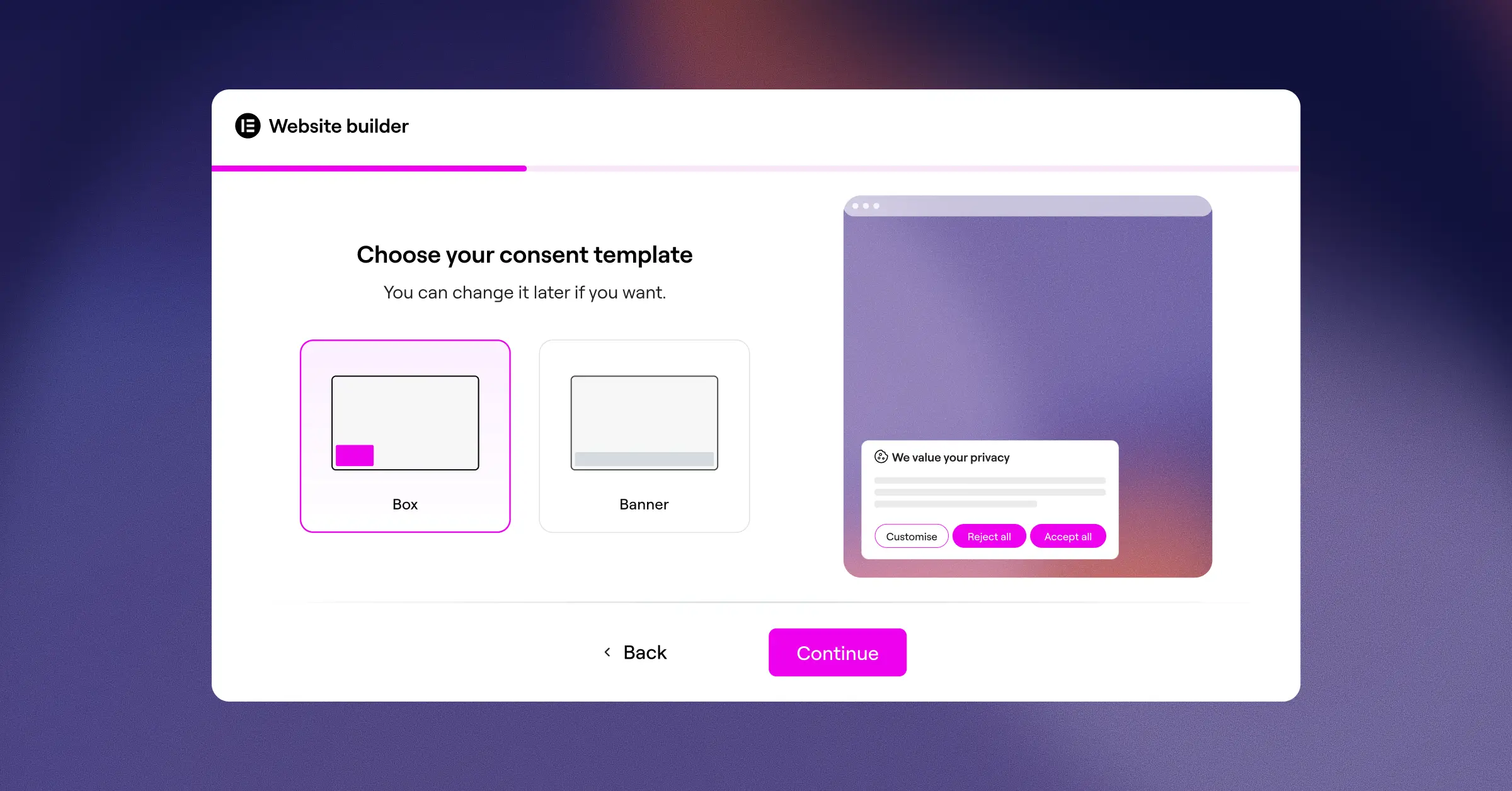
Cookie Consent lives directly inside the Elementor ecosystem, so you manage everything without ever leaving your WordPress dashboard, keeping your backend clean and free of template conflicts. Getting your banner up and running is quick, too: the setup walks you through three clear steps most people finish in under five minutes, no development background required.
Here’s how you get started:
- Open the compliance settings right inside your WordPress dashboard.
- Run the automatic cookie scanner to find and sort your active tracking scripts.
- Customize the banner design to match your brand using the built-in editor.
Once that’s done, your banner is live and managing user choices, complete with a policy generator for accurate legal text. It also works alongside tools like Elementor Web Accessibility to help your site welcome everyone.
Here are the key capabilities that make this native tool a strong choice for WordPress owners:
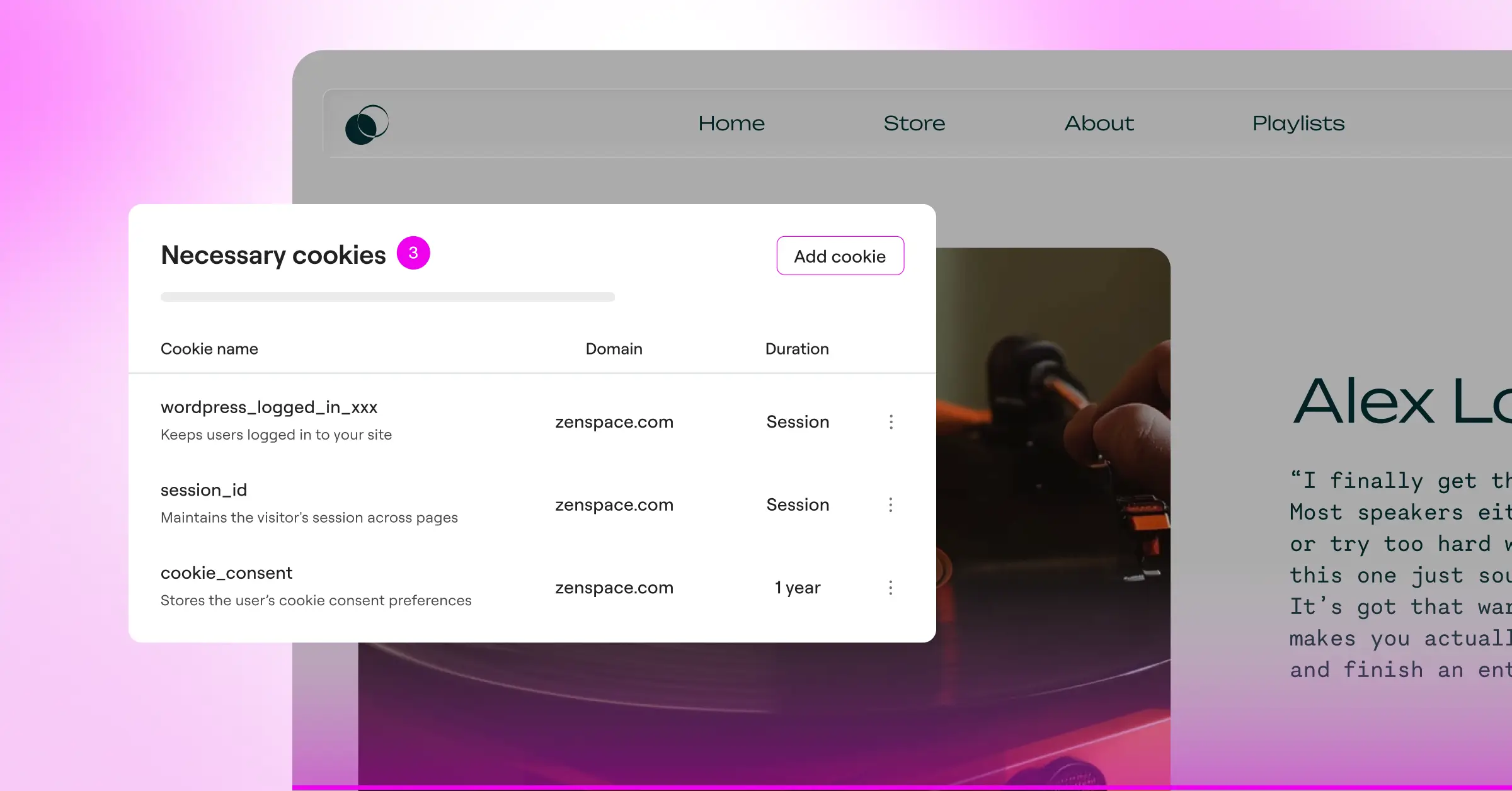
- Scans website scripts to sort cookies into functional, analytical, and marketing groups.
- Builds custom banners with a built-in policy generator.
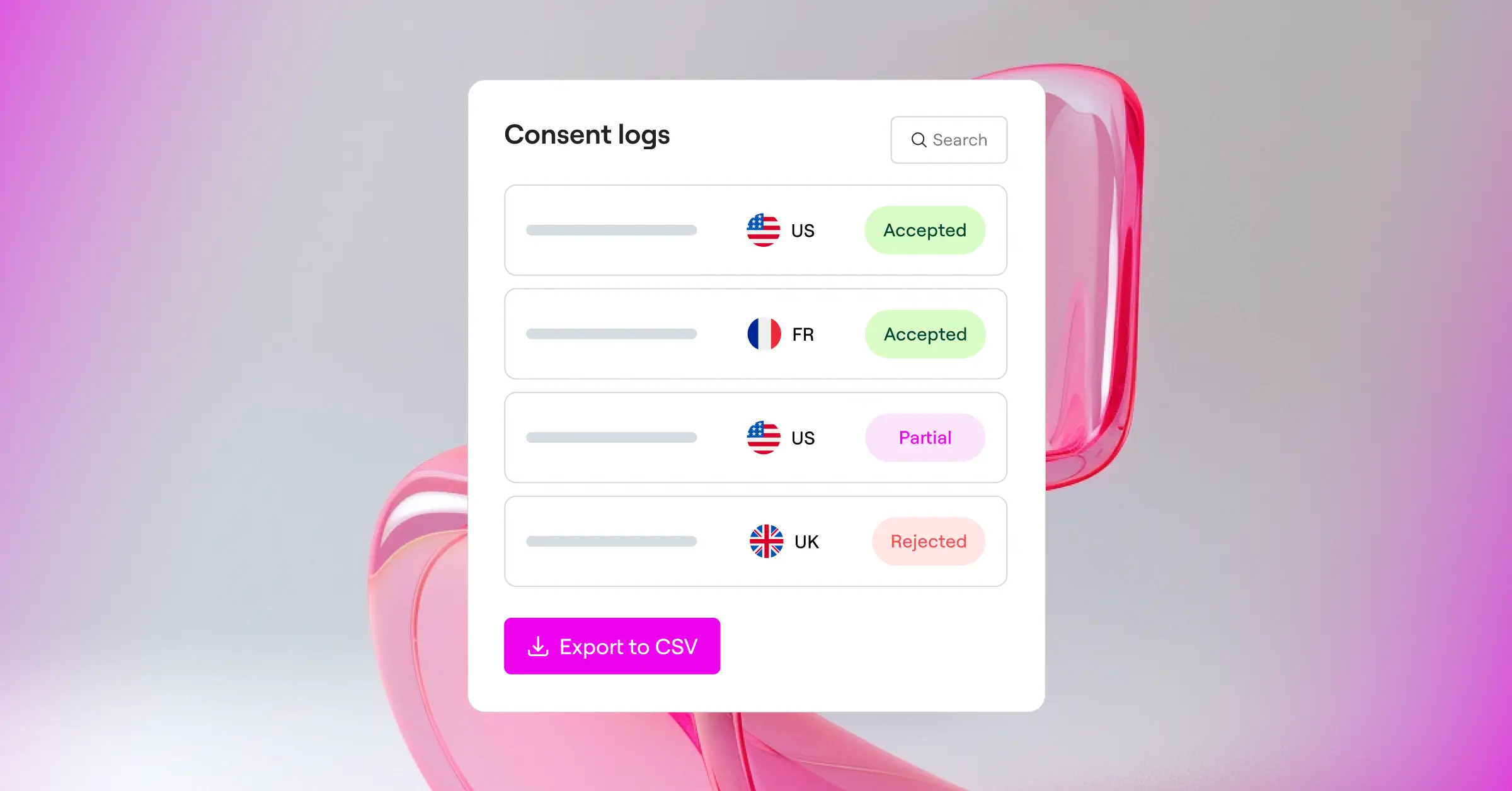
- Saves compliance logs inside WordPress for clear audit trails.
- Supports Global Privacy Control (GPC) signals natively.
- Translates banner text into multiple languages.
- Adapts banner visibility by visitor location.
Deep Dive: CookieYes
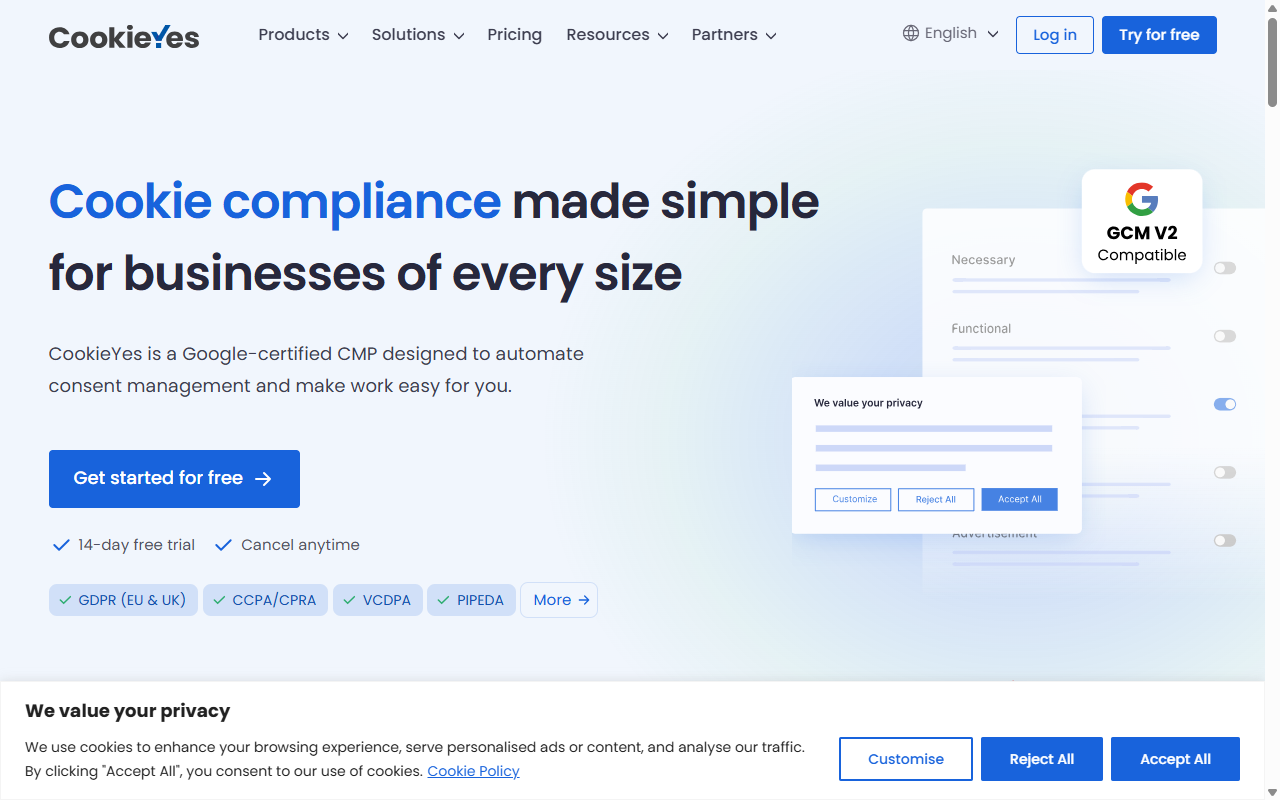
CookieYes is an established, cloud-based consent platform that works across multiple content management systems, letting you manage every banner from one external tab if you run a custom-coded app alongside WordPress. It handles a large volume of consent requests daily for sites worldwide.
Setup means registering for an account, configuring your banner in their portal, and pasting an integration code into your header, standard for cloud tools, with one more login to track.
The platform covers the main compliance bases for global privacy laws. Here’s what CookieYes offers:
- Connects to a dedicated cloud dashboard for multi-site privacy management across platforms.
- Categorizes cookies through an automated scanning tool that runs on scheduled intervals.
- Displays customizable consent banners to global visitors based on their physical location.
- Generates cookie policy pages automatically to keep legal disclaimers current.
- Supports major privacy frameworks including GDPR, CCPA, and Switzerland’s revised Data Protection Act.
- Logs consent preferences in a secure off-site database for easy audit reporting.
Category-by-Category Showdown in 2026
Picking the right tool gets easier when you compare how each handles daily management tasks. Let’s walk through configuration, design, and integration.
Where do you manage your settings?
This is one of the biggest practical differences here. Cookie Consent keeps everything inside your WordPress dashboard, right where you write posts and build pages. CookieYes relies on an external dashboard instead, a good fit for agencies managing many sites across Shopify, Webflow, and WordPress, though WordPress-only users take an extra login step for quick fixes.
How easy is the banner customization?
Your cookie banner is often the first thing a visitor notices, so if it looks out of place, it can hurt your brand’s credibility. Cookie Consent uses the same native editor tools you already use across your site, no custom CSS needed. CookieYes offers a visual editor inside its cloud platform, with pre-built layouts and a color picker, though bigger changes may call for custom code, and fine-tuning happens through the portal rather than an on-page preview.
Are you ready for Google Consent Mode v2?
If you use Google Analytics or run Google Ads, this one isn’t optional. Google now requires EEA sites to run Consent Mode v2, telling Google’s tags how to behave based on each visitor’s choice. Reject cookies, and tags switch to a limited, cookieless state so you still gather basic data. Both tools support Consent Mode v2 out of the box, and your Tag Manager settings update the instant a visitor chooses.
Exploring the 10 Best Cookie Consent Solutions for WordPress in 2026
For the full picture of what’s out there, here are the top ten consent solutions available today. We recommend Cookie Consent if you’re already using Elementor One, but there are plenty of capable tools on the market suited to different needs.
1. Cookie Consent (by Elementor)
Our top pick for WordPress users who want a simple, integrated approach to compliance. It keeps your site lightweight, with no external APIs to manage.
- Keeps all compliance controls inside your dashboard.
- Simplifies setup with a three-step wizard.
- Applies changes instantly, no external API keys.
- Integrates with other tools like Web Accessibility.
2. CookieYes
This cloud-based service is reliable and popular for multi-site setups, connecting through a simple code snippet that handles processing on its own servers.
- Manages multiple websites from one cloud portal.
- Blocks scripts automatically before consent is given.
- Records consent logs in a secure off-site database.
3. Cookiebot
Cookiebot is a well-known enterprise solution built around automated scanning and deep script detection, popular for corporate sites with complex tracking.
- Automates monthly cookie scans to keep declarations current.
- Generates detailed reports on tracking technologies detected.
- Shares consent state across subdomains.
4. Complianz
Complianz uses a wizard-based approach, walking you through questions about your business to generate custom legal banners by region.
- Configures settings based on a compliance questionnaire.
- Generates legal documents that update as laws change.
- Detects regional requirements to show the right variation.
5. iubenda
iubenda goes beyond cookie consent, managing privacy policies, terms of service, and cookie preferences from one dashboard, a thorough legal package.
- Generates professional privacy policies alongside consent banners.
- Updates auto-generated documents as laws change.
- Stores consent records in a remote database.
6. Termly
Termly targets small businesses and startups, covering cookie banners, terms templates, and privacy policy creation through one dashboard.
- Creates compliance policies for websites and apps.
- Scans sites weekly for new tracking scripts.
- Matches banner styling with a visual theme editor.
7. OneTrust
OneTrust is an enterprise-grade privacy platform for large organizations needing deep compliance tracking across departments and jurisdictions.
- Scales to meet complex corporate compliance requirements.
- Tracks user consent histories across devices and apps.
- Delivers detailed risk-assessment reports for compliance officers.
8. Osano
Osano focuses on simplicity and legal safety, offering a guarantee that protects businesses from fines if it fails to keep them compliant.
- Monitors third-party vendors to keep visitor data safe.
- Guarantees compliance with a built-in legal shield.
- Blocks non-compliant trackers automatically.
9. WP Cookie Consent
This straightforward tool does one thing well: display a simple, clear cookie notice, lightweight enough for small blogs without complex tracking needs.
- Displays simple banners for basic cookie practices.
- Supports basic style settings through the WordPress customizer.
- Integrates with translation tools for multi-language sites.
10. GDPR Cookie Consent (by WebToffee)
WebToffee offers a popular, dedicated tool focused on ease of use, helping you build a standard banner and sort scripts manually or via its scanner.
- Manages cookieless tracking via customizable local scripts.
- Allows manual import and export of cookie databases.
- Lets you choose between footer bars, headers, and pop-ups.
Expert Perspective on Website Compliance
For a clearer picture of how professionals handle privacy settings, we talked with an industry specialist, who stressed keeping your backend simple to avoid configuration mistakes.
“Managing cookie consent shouldn’t feel like building a second website. When compliance is handled directly within your site editor, you remove a major layer of friction and drastically lower your risk of configuration errors.”
Itamar Haim, Web Compliance Specialist
That’s a trap worth knowing about: plenty of site owners install overly complex tools and misconfigure them, leaving their sites open to compliance gaps. Keeping things simple and integrated is often the safest path.
Decision Matrix: Which Tool Should You Choose?
To help you make your final choice, here are two clear scenarios for your daily workflow.
To set up regional targeting and show the right banners worldwide, follow these quick steps:
- Access the geo-targeting settings tab inside your tool dashboard.
- Select the countries or regions, like the EU or California, that need strict banners.
- Save your settings and test using a VPN connection to verify the correct banner shows up.
Going native pays off in speed too: skipping third-party servers for banner designs keeps layout shifts to a minimum, good for your core web vitals and rankings.
Before launching to your full audience, take a few minutes to check everything’s configured right:
- Open an incognito browser window to clear any existing cookies and session storage.
- Visit your homepage and verify that the banner loads before any other scripts run.
- Reject the tracking cookies and check your browser’s developer console to confirm marketing scripts remain blocked.
If you’re already using Elementor to design your pages, choosing Cookie Consent is a natural next step, keeping your compliance workflow aligned with your design tools so your site looks great and stays compliant.
Frequently Asked Questions
Is a cookie consent tool required for all WordPress websites?
If your site draws visitors from the EU, the UK, or states like California, you need to give them a way to opt out of tracking. A dedicated consent tool is essential for almost any public-facing site.
What makes a native cookie consent tool different from a cloud-based service?
A native tool runs entirely inside WordPress, saving settings and consent logs to your local database. A cloud-based service hosts everything externally, so you’ll paste in integration code and manage banners through a separate dashboard.
How does Google Consent Mode v2 impact my site tracking?
Google Consent Mode v2 adjusts how Google’s tags behave based on the visitor’s choice. Reject cookies, and tags run in a cookieless state, so you still gather basic conversion data. Both tools support this.
Can I customize the look of my consent banner to match my brand?
Yes, both tools let you customize colors, layouts, and fonts. Cookie Consent makes it easy since you’re using controls you already know.
Does cookie consent slow down my WordPress site loading speed?
Any script adds a small load-speed cost. Native tools tend to run efficiently inside WordPress. Cloud services are fast too, though they depend on an external server responding quickly.
Is there a free tier for Elementor’s Cookie Consent tool?
Yes, there’s a free tier for basic consent banners. Advanced features like geo-targeting, deep scanning, and log exports come with an upgrade or the full Elementor One toolkit.
What is Global Privacy Control (GPC) support?
Global Privacy Control is a browser setting that lets visitors set privacy preferences once and have sites respect them automatically. Cookie Consent picks up that signal and blocks tracking scripts without needing banner interaction.
How often should I scan my website for new cookies?
Scanning at least once a month is good practice. New features, pixels, or tool updates often add new cookies, so regular scans keep your declaration accurate.
Can I show different banners to visitors from different countries?
Yes, both tools support geo-targeting. Show a strict GDPR-compliant banner to visitors from Europe, a different notice to Californians, and a simpler message, or none, elsewhere.

