
If you run a website, you’ve probably stared down privacy laws like GDPR and CCPA and wondered where to start. Good news: a cookie banner is simpler to set up than it looks. We’ve tested the top approaches, whether you want a native setup inside WordPress or an external tool with deeper scanning.
Key Takeaways
- Native integration keeps your WordPress dashboard clean, no external accounts needed.
- Google Consent Mode v2 support matters if you serve visitors in Europe with ad tracking.
- Customization lets your banner match your brand for a cohesive experience.
- Geo-targeting keeps banners hidden for visitors who don’t need legal disclosures.
Understanding Your Privacy Compliance Needs in 2026
Privacy laws keep shifting, and what worked a couple of years ago might not protect your site today. Reaching readers worldwide means following the General Data Protection Regulation (GDPR) in Europe and the California Consumer Privacy Act (CCPA) in the US, not just to dodge fines, but to build real trust.
Here’s what your chosen tool should handle:
- Consent Logging, keep clear records of when and how visitors consented, your audit trail if needed.
- Prior Blocking, your site shouldn’t load analytics or ad cookies before a visitor gives permission.
- Granular Choice, visitors need to accept some cookies (like analytics) while rejecting others (like targeted ads).
- Easy Revocation, people should be able to change their minds anytime via a small toggle.
One more thing: Google Consent Mode v2. If your site serves traffic in the European Economic Area and uses Google Analytics or Ads, this configuration is mandatory, it passes consent status to Google and adjusts tag behavior, skip it and ad measurement breaks down.
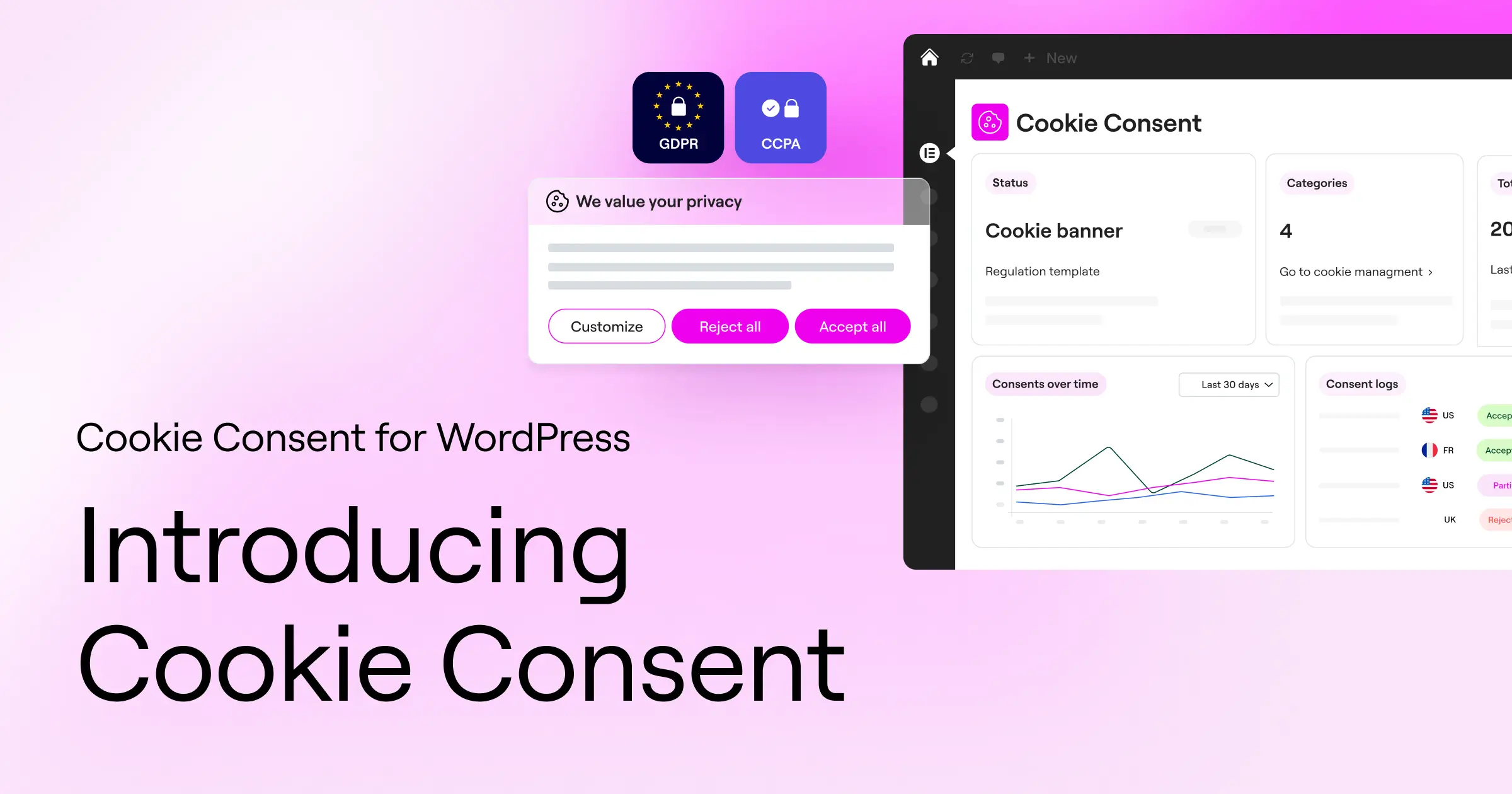
The 10 Best Ways to Add a Cookie Banner to Your Elementor Website
1. Cookie Consent (The Native Elementor Feature)
If you’d rather manage your whole site from inside WordPress, Cookie Consent is the natural starting point, the native cookie consent capability built for WordPress. Everything lives in your dashboard, no external accounts, no copied snippets. A three-step wizard scans your site and builds compliance logs in minutes. As part of the Elementor ecosystem, you get full design control, pairing with capabilities like Web Accessibility.
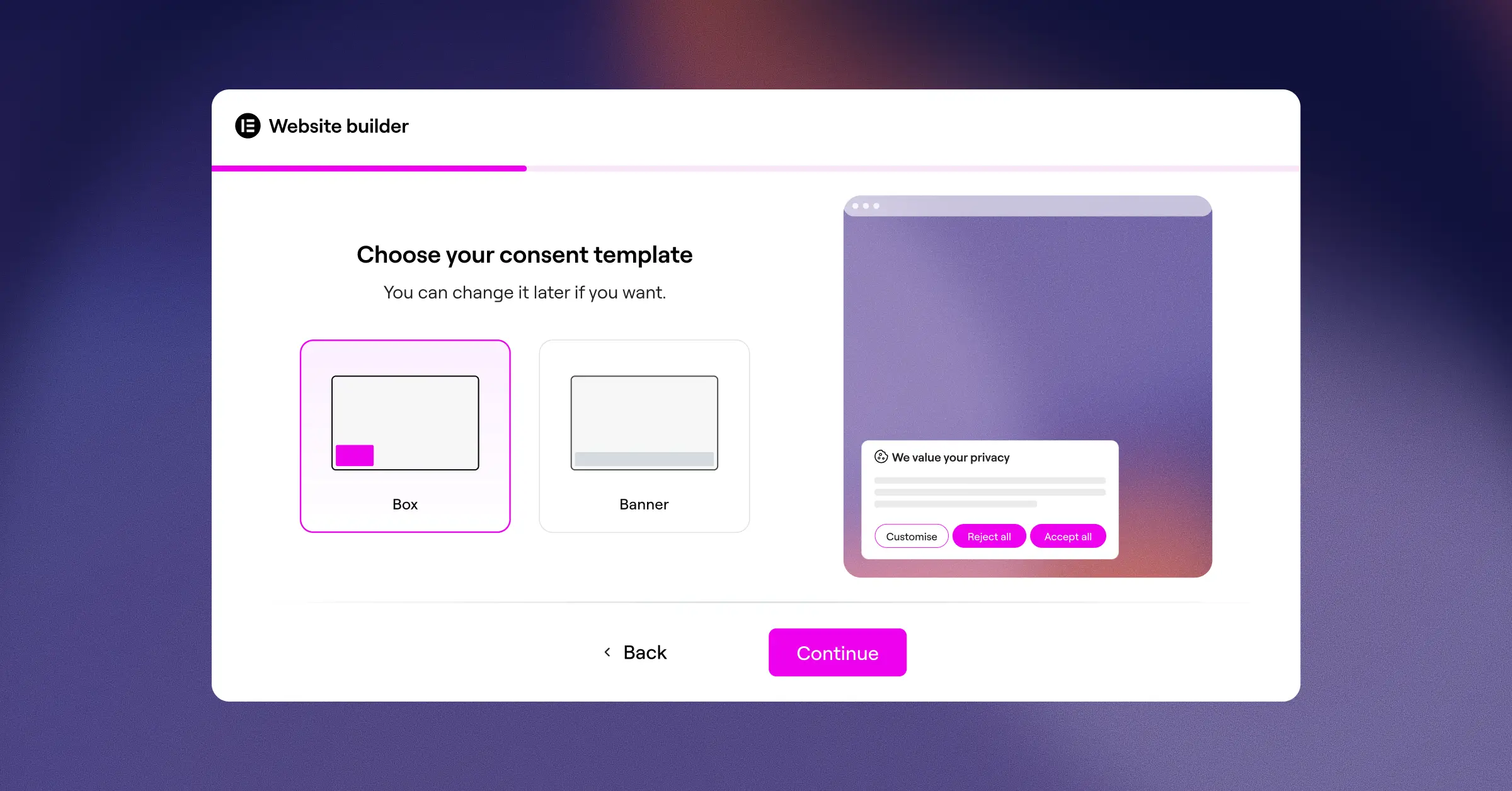
- Manages GDPR and CCPA compliance from your WordPress dashboard.
- Scans your site to detect and categorize tracking cookies.
- Supports Google Consent Mode v2 natively for ad tracking and analytics.
- Logs visitor consent actions securely for a reliable audit trail.
- Targets banners to specific countries with built-in geo-targeting.
- Generates customized privacy and cookie policy pages automatically.
Pros:
- Runs inside WordPress, no external dashboard to manage.
- Fast setup, approachable for beginners and comfortable for pros.
- Full design control so your banner matches your branding.
- Available on an entry-level plan and included with Elementor One.
Cons:
- Focused specifically on WordPress sites, not an option elsewhere.
Verdict: The best way to manage compliance on your Elementor site, fast and clean.
2. Cookiebot
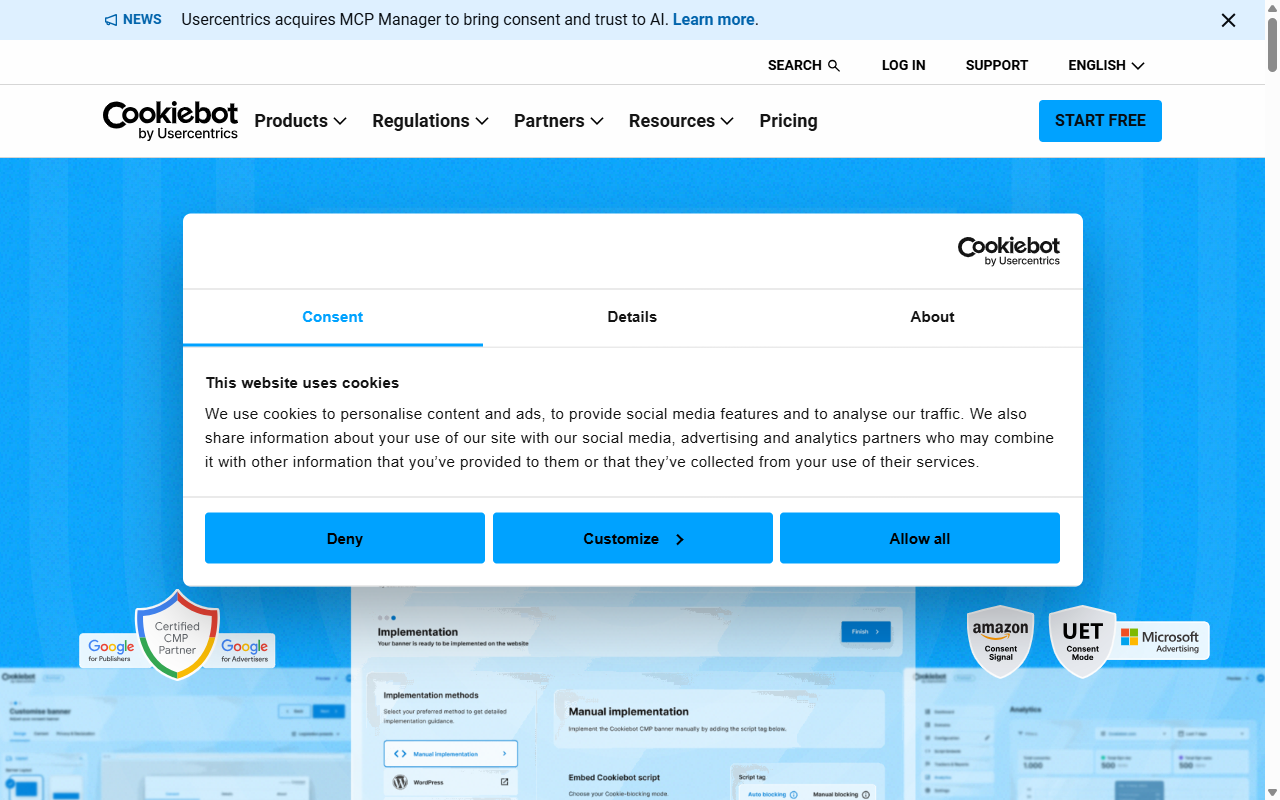
Cookiebot is an established cookie consent tool used worldwide. It’s cloud-based, you manage settings from their external app, then add the banner via script. Its strength is deep scanning, automated monthly scans that find new trackers.
- Scans your site automatically every month to find new tracking technologies.
- Categorizes cookies into four groups: necessary, preference, statistics, marketing.
- Prevents scripts from loading before a user makes their explicit choice.
- Holds legal consent records in a secure cloud database for reporting.
Pros:
- Highly accurate automated cookie detection scanning.
- Solid documentation and global compliance standards.
- Clean user consent widgets that are easy to understand.
Cons:
- Requires managing everything from an external cloud account.
- Can get expensive quickly if your website has many pages.
Verdict: Dependable for detailed scanning across a large site, if you don’t mind an external dashboard.
3. CookieYes
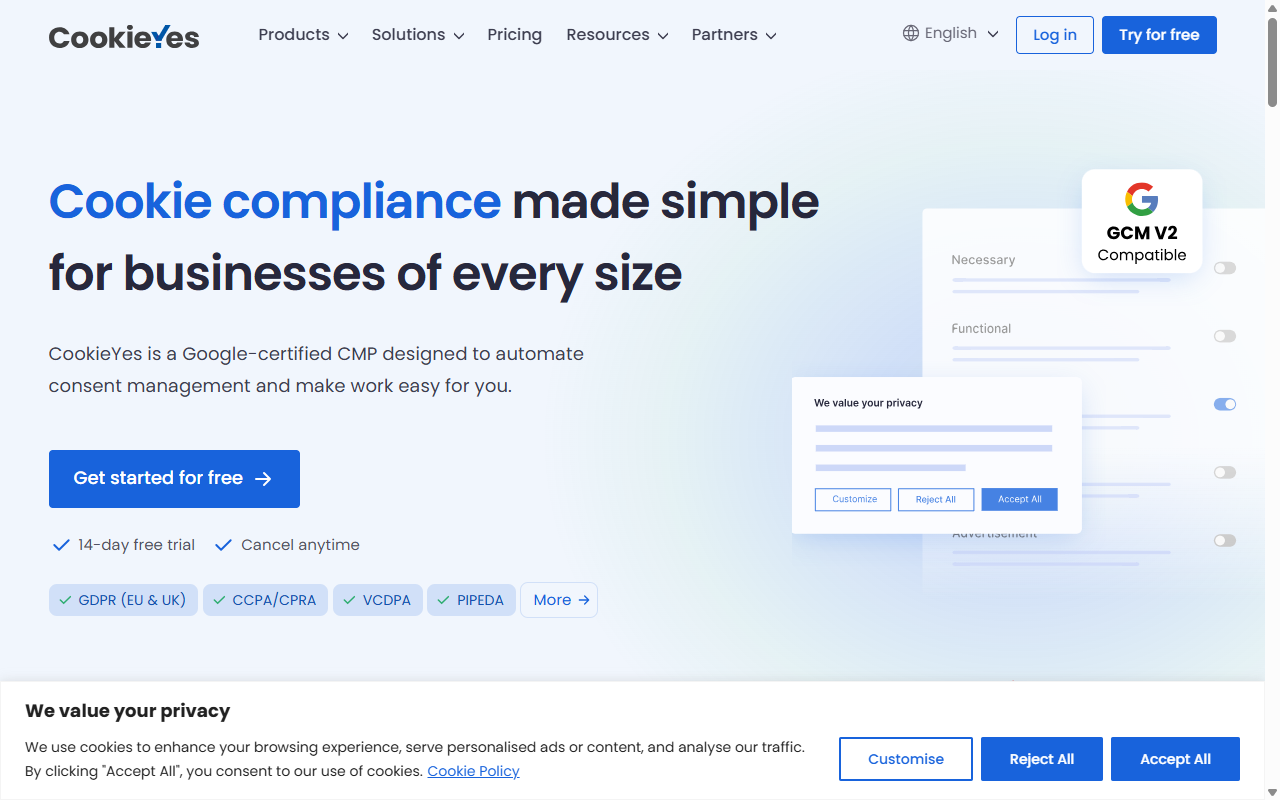
CookieYes is a widely used cloud-based consent platform that works smoothly with WordPress. Setup is straightforward, and your banner can go live in minutes.
- Integrates with your site using a single, lightweight tracking code snippet.
- Collects consent records in real time and displays them on visual charts.
- Adapts your banner language automatically to the visitor’s browser settings.
- Respects Global Privacy Control signals sent by modern browsers.
Pros:
- Clean interface that’s simple to navigate.
- Supports Global Privacy Control and Google Consent Mode v2.
- Helpful analytics on how your visitors interact with the banner.
Cons:
- Entry-level plan limits are based on monthly page views.
- Customizing the banner design can feel restricted on lower tiers.
Verdict: A reliable choice for owners who want detailed reporting and analytics on consent trends.
4. Complianz
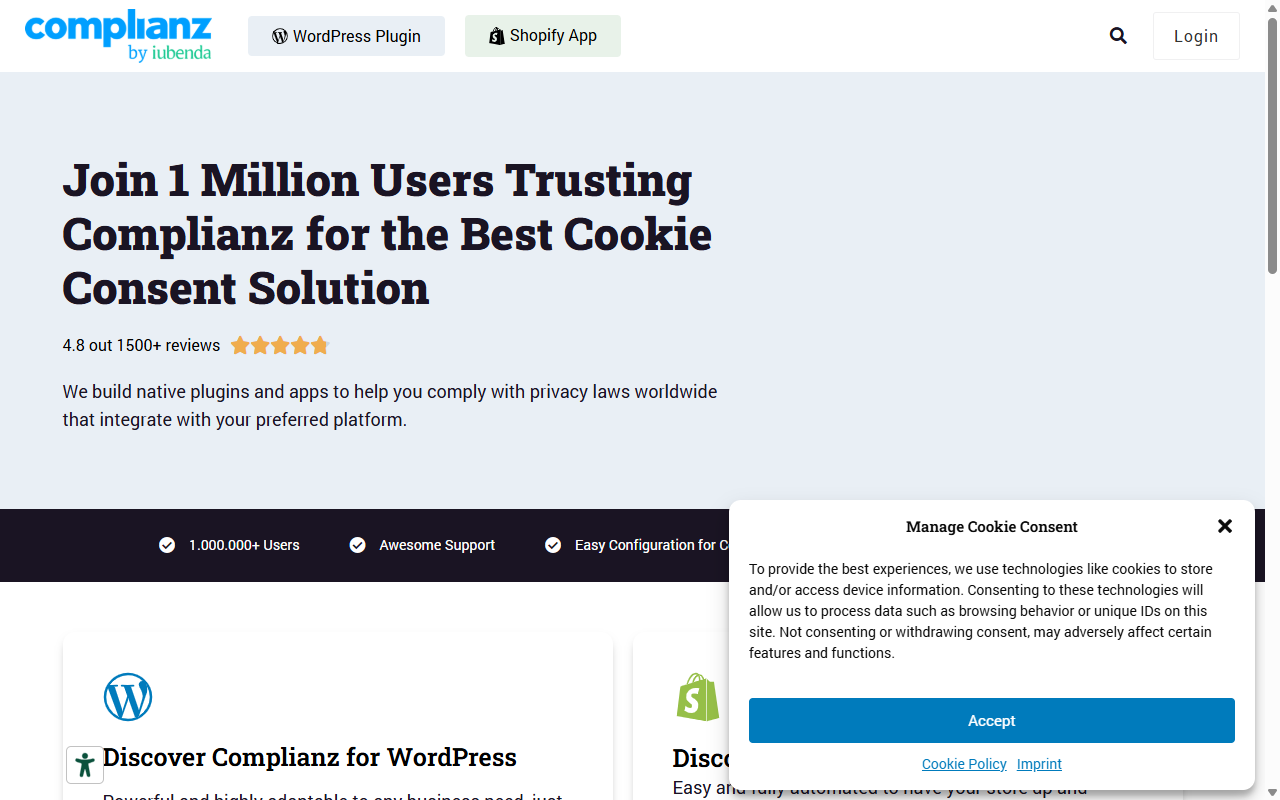
Complianz is a dedicated privacy suite for WordPress that runs on your hosting server, unlike cloud-first tools. A structured wizard asks about your business and tracking practices to figure out what you need. It adapts to GDPR, COPPA, or PIPEDA automatically.
- Guides you through compliance steps with a detailed, conditional questionnaire.
- Generates documents like cookie policies and privacy statements.
- Syncs with popular analytics tools to manage prior consent blocking automatically.
- Controls banner styling options directly from your WordPress admin settings.
Pros:
- Keeps your data on your server rather than sending it to third-party clouds.
- Built-in policy generation wizard included in the setup process.
- Adapts privacy notices dynamically for different regional laws.
Cons:
- The setup wizard is detailed and can feel overwhelming if you want speed.
- The configuration interface can add some clutter to your WordPress dashboard.
Verdict: A good fit for a thorough, wizard-driven system that keeps data on your own server.
5. iubenda
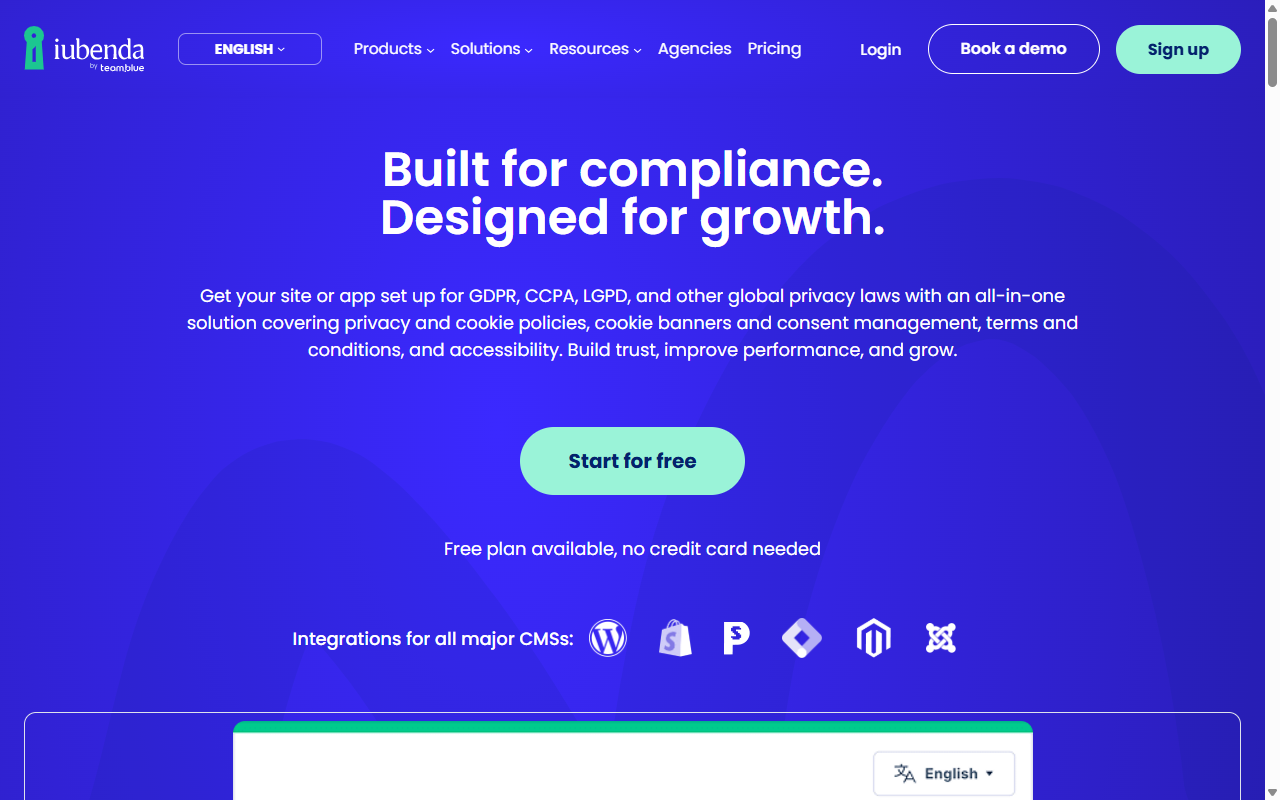
iubenda packages cookie banners with legal document generation, privacy policies, terms, and a consent banner in one subscription, scaling from small blogs to large agencies. Documents update automatically as global laws change.
- Generates legal policies automatically maintained and updated by legal experts.
- Saves detailed consent preferences to satisfy GDPR audit requirements.
- Connects with popular ad networks to communicate user tracking permissions.
- Configures custom banner designs through a modular online dashboard builder.
Pros:
- A complete legal solution handling banners, policies, and terms of service.
- Automatic document updates when international regulations shift.
- Professional legal language reviewed by privacy lawyers.
Cons:
- The interface has a learning curve for beginners.
Verdict: If you need a complete privacy and legal solution and don’t mind paying more, iubenda is a strong contender.
6. OneTrust
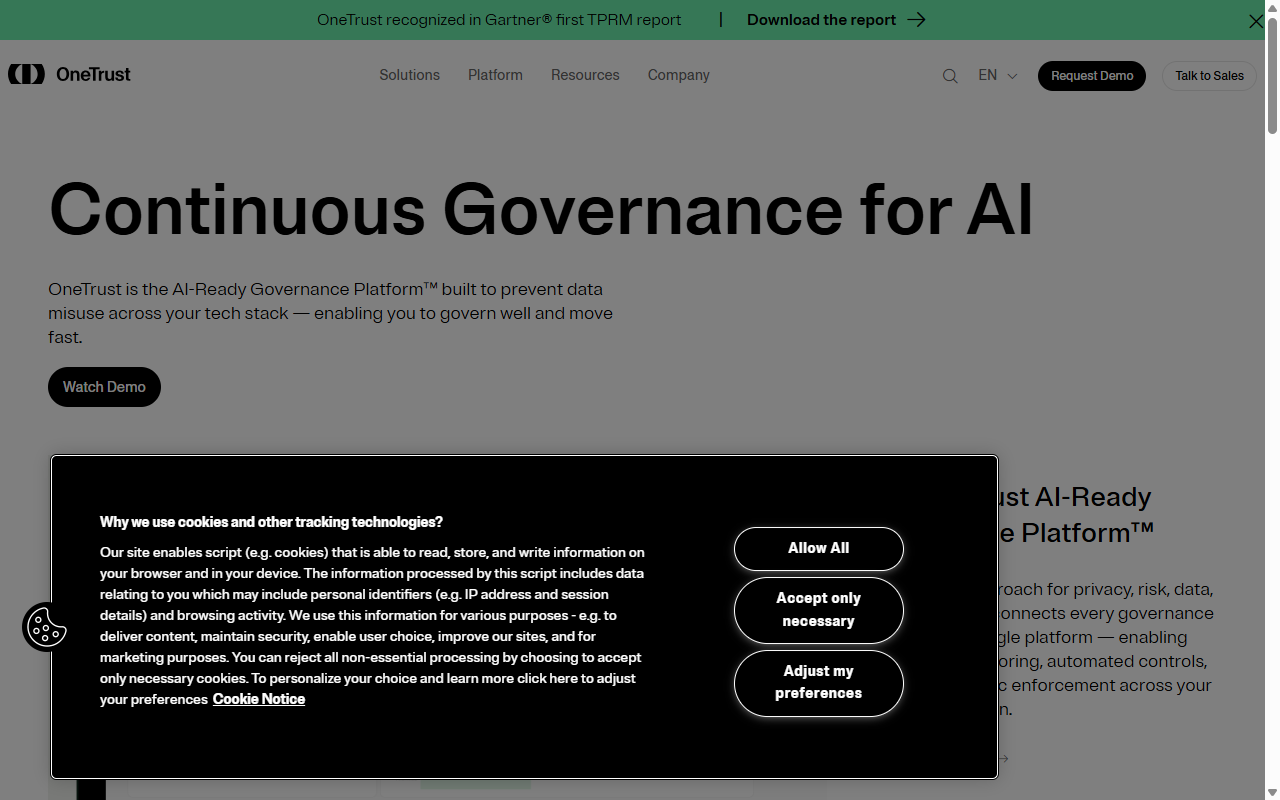
OneTrust is an enterprise-grade privacy platform for large corporations running serious compliance projects, more than most small sites need, but highly capable for enterprise WordPress setups. It goes beyond banners with data mapping and vendor risk assessments.
- Maps data flows across complex organizational websites and applications.
- Builds a highly detailed preference center for granular customer choices.
- Maintains deep audit logs designed to satisfy strict regulatory investigations.
- Integrates with enterprise tag management systems and database networks.
Pros:
- Deep features built for the highest compliance standards.
- Strong control over user preference management and data mapping.
- Secure infrastructure with solid corporate support options.
Cons:
- Complex setup that often requires dedicated development teams.
Verdict: The go-to for enterprise compliance, though smaller businesses will find it more than they need.
7. Termly
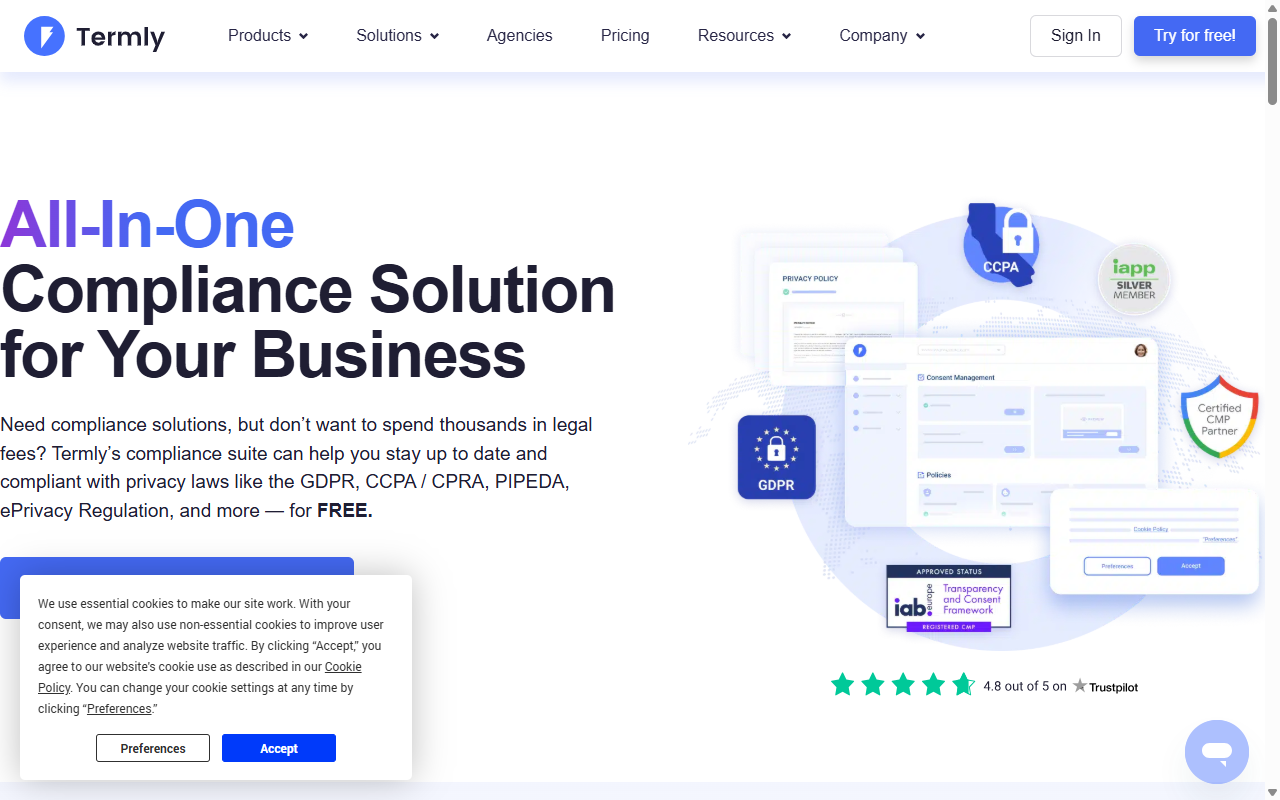
Termly is a friendly, all-in-one compliance platform for small businesses and freelancers, offering generator tools for privacy policies, terms, and cookie banners in one portal. Setup means running their scanner, adjusting visuals, and copying a snippet into your header.
- Scans your website to classify and categorize tracking scripts automatically.
- Builds professional legal policies using plain-language questionnaires.
- Displays cookie consent banners that adjust based on user location.
- Hosts your legal policies on secure servers so they stay current.
Pros:
- User-friendly dashboard that doesn’t require any legal background.
- Combines banner creation with easy document generators.
- Affordable pricing tiers for small teams.
Cons:
- Requires adding scripts via external dashboards.
- Entry-level plan has limits on monthly page views and banner customization.
Verdict: A great, approachable option for freelancers needing legal documents and a banner in one place.
8. Osano
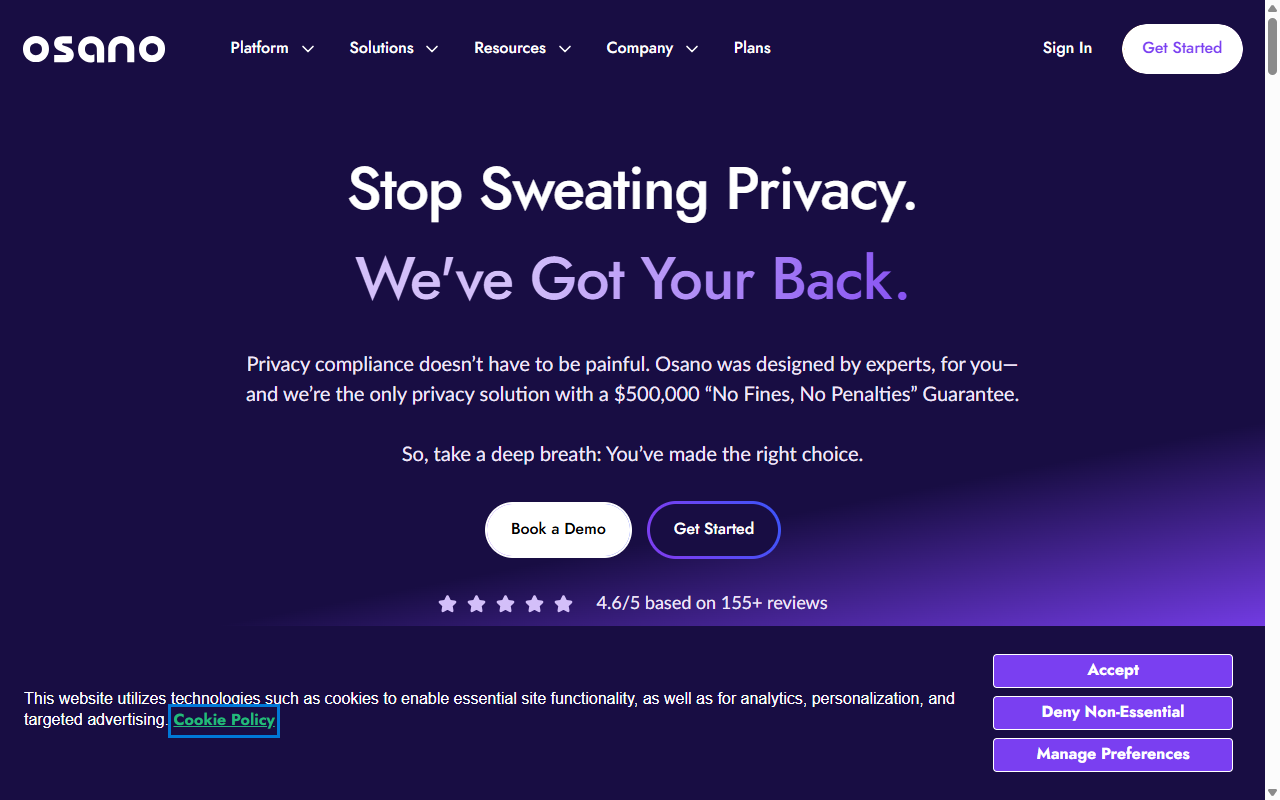
Osano is a data privacy platform built around simplicity, with a standout compliance guarantee, they monitor changing laws and manage your banner settings for you. It loads fast through a global cloud network.
- Delivers banners through an optimized global content delivery network.
- Blocks unapproved tracking scripts automatically before user consent is given.
- Adapts banners to support dozens of localized languages automatically.
- Tracks vendor compliance records to flag risky third-party scripts.
Pros:
- Strong infrastructure with a clear focus on page speed.
- Multi-language and localization options built in from the start.
- Peace of mind backed by professional privacy tracking teams.
Cons:
- The platform interface is geared toward mid-market and enterprise businesses.
Verdict: A solid, premium option for growing businesses that prioritize page speed and automated compliance.
9. Elementor Custom Code Integration
If you’d rather write your own script behavior, the Custom Code features in Elementor connect your site directly to any external consent system, a custom script or JavaScript library, without extra visual builders. You inject the script via the native manager, keeping full control over load order.
- Injects your custom privacy scripts directly into your website header code.
- Saves server resources by avoiding extra visual tools on your site.
- Lets you control the exact script loading order for site performance.
- Works with any standard custom JavaScript or third-party consent API.
Pros:
- Full developer control over how and when scripts load.
- No design bloat since you’re not loading extra interfaces.
- Free to use if you already write your own scripts.
Cons:
- Requires coding skills and testing to make sure everything works.
- No built-in scanning or visual design customizer for non-technical users.
Verdict: The ideal route for developers who want full programmatic control without extra visual tools.
10. Google Tag Manager Configuration
If your website runs heavy marketing tracking and ad pixels, setting up consent via Google Tag Manager (GTM) is a smart move. GTM fires your marketing tags only when consent conditions are met, accept and Analytics fires, reject and those pixels stay blocked.
- Controls all tracking script triggers from one central online interface.
- Communicates consent preferences directly to your analytics and advertising pixels.
- Supports advanced Consent Mode configurations without manual coding.
- Reduces the code on your site by running tags through a cloud container.
Pros:
- Outstanding control over complex marketing pixels and tracking tags.
- Strong integration with Google Consent Mode v2.
- Makes it easy for marketing teams to update tags without touching code.
Cons:
- Has a learning curve to set up GTM variables and triggers.
- Requires managing your tags outside the WordPress environment.
Verdict: A powerful setup for marketers running numerous tracking tags who want to manage everything through GTM.
Direct Comparison of Cookie Banner Capabilities
Here’s how these options stack up on ease of use, native integration, and Consent Mode v2 support.
| Solution Name | Native WordPress Dashboard | Consent Mode v2 Support | Geo-Targeting Features | Best For |
|---|---|---|---|---|
| Cookie Consent | Yes (Fully Native) | Yes (Built-in) | Yes (Included) | Elementor site owners who want a simple, native setup. |
| Cookiebot | No (Cloud Application) | Yes | Yes | Sites that want deep, automated monthly cookie scanning. |
| CookieYes | No (Cloud Application) | Yes | Yes | Site owners looking for visual analytics on consent rates. |
| Complianz | Yes (Local Server) | Yes | Yes | Users who want step-by-step legal wizards running on their server. |
| iubenda | No (Cloud Application) | Yes | Yes | Teams that need dynamic, auto-updating legal document generation. |
| OneTrust | No (Cloud Application) | Yes | Yes | Large enterprises requiring advanced data mapping systems. |
| Termly | No (Cloud Application) | Yes | Yes | Small businesses looking for friendly, simple setup flows. |
| Osano | No (Cloud Application) | Yes | Yes | Growing companies focused on speed and global compliance. |
| Custom Code | No (Manual Scripting) | Yes (Manual) | No (Manual) | Developers who want to write and control their own scripts. |
| Google Tag Manager | No (Cloud Application) | Yes (Native) | Yes (Manual) | Marketing teams managing complex ad pixels across multiple channels. |
How to Choose the Right Banner for Your Website
With so many options on the table, picking the right setup can feel tricky. A few honest questions about your workflow will narrow it down fast:
- Assess your management preferences, If jumping between accounts sounds like a hassle, native tools like Cookie Consent keep everything in your dashboard.
- Check your tracking requirements, If you use Google Ads, Facebook pixels, or Analytics, choose a tool that supports Google Consent Mode v2 natively.
- Review your design standards, your banner is often the first thing visitors see, so pick a solution that lets you customize layout, typography, and colors.

“A cookie banner is no longer just a legal checkbox. It’s an extension of your customer service. When you build a banner that’s transparent, beautifully styled, and easy to use, you show your visitors that you respect their privacy and care about their digital experience on your site.”
– Itamar Haim, Web Compliance Specialist
Focus on these criteria, and you’ll find a tool that keeps your site legal and every visitor happy.
Frequently Asked Questions
Do I really need a cookie banner on my WordPress website?
Yes. If your site collects personal data through tracking cookies, marketing pixels, or analytics tools, and gets visitors from Europe or California, you need a compliant consent banner.
What happens if I don’t use a compliant cookie banner?
Operating without proper consent mechanisms can expose you to serious legal risk, including significant fines, and it can hurt your brand’s reputation and erode visitor trust over time.
How does Google Consent Mode v2 affect my website analytics?
Google Consent Mode v2 adjusts how your Google tags behave based on the visitor’s choice. If a user rejects cookies, your site sends anonymous signals to Google, keeping you legally safe while modeling conversion data.
Will adding a cookie consent banner slow down my site speed?
It depends on the tool. Some heavy cloud tools load complex third-party scripts that can slow your page load times. A native option like Cookie Consent stays lightweight since it runs directly on your site.
Can I customize the design of my cookie banner to match my brand?
Yes, most quality consent tools let you adjust the design to fit your site. Native options like Cookie Consent give you deep styling controls, button colors, typography, and positioning.
What is the difference between GDPR and CCPA compliance?
The GDPR applies to visitors in Europe and requires prior opt-in consent, blocking tracking scripts until the user agrees. The CCPA applies to California residents and works on an opt-out model, requiring a clear way to stop the sale of personal information.
Do free cookie banners provide full legal compliance?
Many free tools offer solid basic compliance, including script blocking and design customizers. Some limit page views or lock features like geo-targeting behind paid tiers, so check as your traffic grows.
What is a consent log and why do I need one?
A consent log is a secure digital record tracking when and how visitors updated their preferences. It’s your audit trail, showing a regulator you’ve respected consent the right way.

