
Keeping a WordPress site compliant with global privacy laws can feel like a full-time job. Regulations keep shifting, so you need a reliable way to manage cookie preferences without hurting your design or site speed. If you’re weighing your options for 2026, you’ve probably run into two well-known contenders: Cookie Consent and CookieYes. Both keep you on the right side of the law, but in very different ways. Below, we’ll compare them, look at some solid alternatives, and help you pick the best fit for your site.
Key Takeaways
- Cookie Consent is native to WordPress, so you manage everything from your existing dashboard without external platforms.
- CookieYes uses an external SaaS dashboard, which works well for multi-platform brands but means logging into a separate site to manage settings.
- Both tools support critical 2026 compliance standards, including Google Consent Mode v2 and Global Privacy Control.
- Elementor offers Cookie Consent as a built-in capability, making it highly cost-effective for designers already using their ecosystem.
Why Privacy Compliance Matters More Than Ever in 2026
Privacy regulators aren’t just handing out warning letters anymore, they’re issuing real fines to sites that skip clear, active consent before tracking users. Serving visitors in Europe, the UK, or California means following strict frameworks like GDPR and CCPA. (It’s simpler once you’ve got the right setup.)
A banner that just says “we use cookies” isn’t enough anymore. Modern standards require granular control over which tracking scripts run in a visitor’s browser. Google Consent Mode v2 is now mandatory for sites using Google Analytics or ads to target European traffic, and skipping it turns your tracking data inaccurate.
At the same time, browsers are phasing out third-party cookies, which makes first-party data collection vital. Your compliance tool needs to work smoothly with your tag managers and CMS without technical conflicts.
Head-to-Head Comparison: Cookie Consent vs CookieYes
Before we get into specifics, here’s a quick side-by-side look at how these two approaches stack up in everyday use.
| Feature / Capability | Cookie Consent | CookieYes |
|---|---|---|
| Dashboard Location | WordPress-native (no external login) | External SaaS dashboard |
| Setup Time | Under 5 minutes (3-step wizard) | About 10-15 minutes (script installation) |
| Google Consent Mode v2 | Fully supported natively | Supported via integration |
| Customization Engine | Native WordPress editor integration | External cloud-style editor |
| Consent Logging | Stored directly on your server | Stored on cloud-hosted databases |
A Closer Look: Cookie Consent (WordPress-Native)
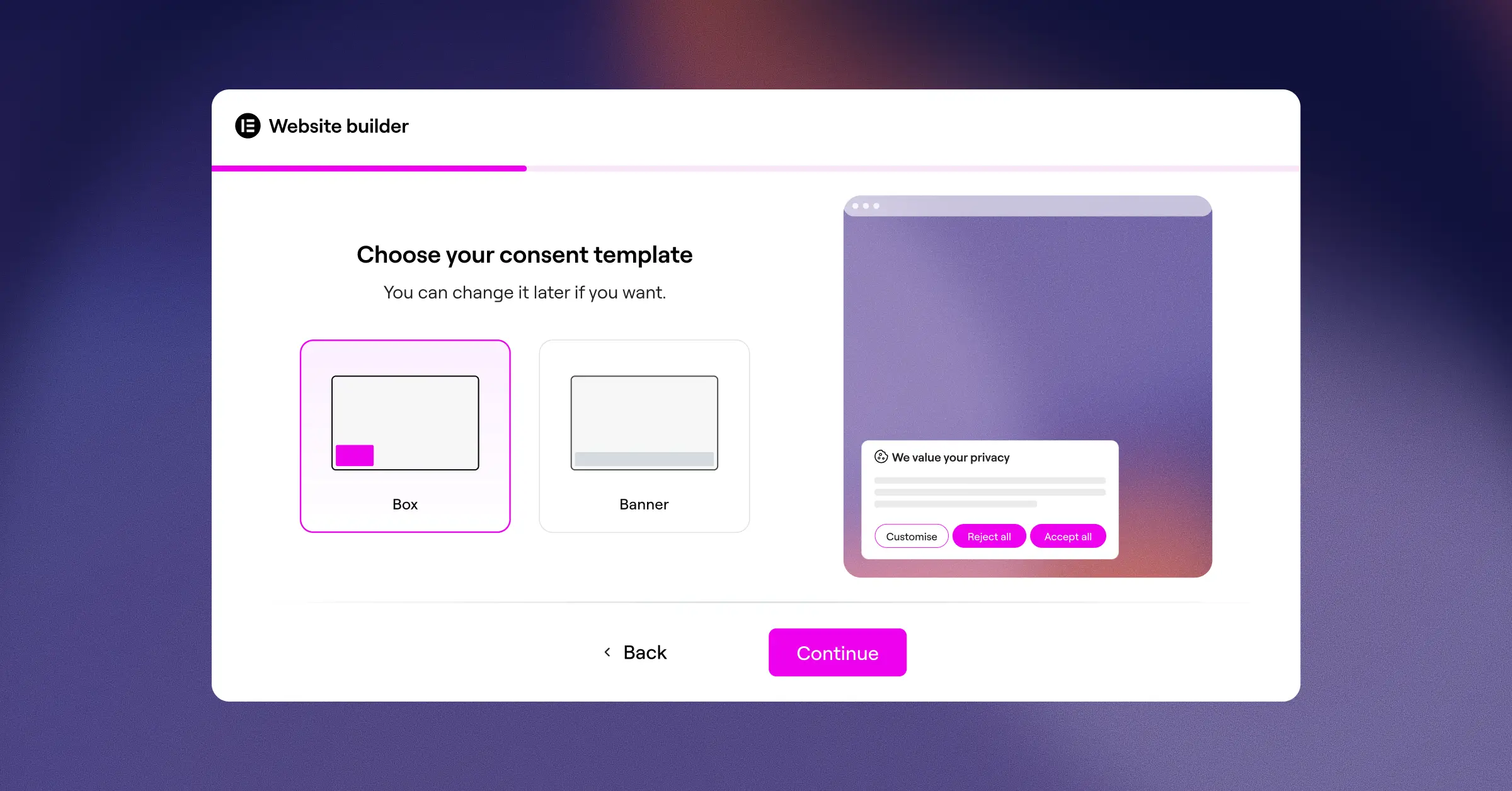
Cookie Consent is a compliance capability built by Elementor that lives directly inside your WordPress dashboard. No third-party servers, no separate SaaS subscription, just a simple banner your dashboard already handles.
Setup is genuinely straightforward: a 3-step wizard gets you fully operational in under five minutes. It skips the heavy external scripts that could slow your page loads, using local assets and cloud-based templates instead.
Core Features of Cookie Consent
- Scans and categorizes cookies automatically from your WordPress dashboard.
- Builds fully customized banners using cloud-based templates to match your brand.
- Keeps complete consent logs to satisfy audit requirements.
- Supports Google Consent Mode v2 and Global Privacy Control out of the box.
- Guides you through setup with a friendly three-step process taking under five minutes.
- Restricts script execution based on user choices before cookies load.
What Makes Cookie Consent Stand Out?
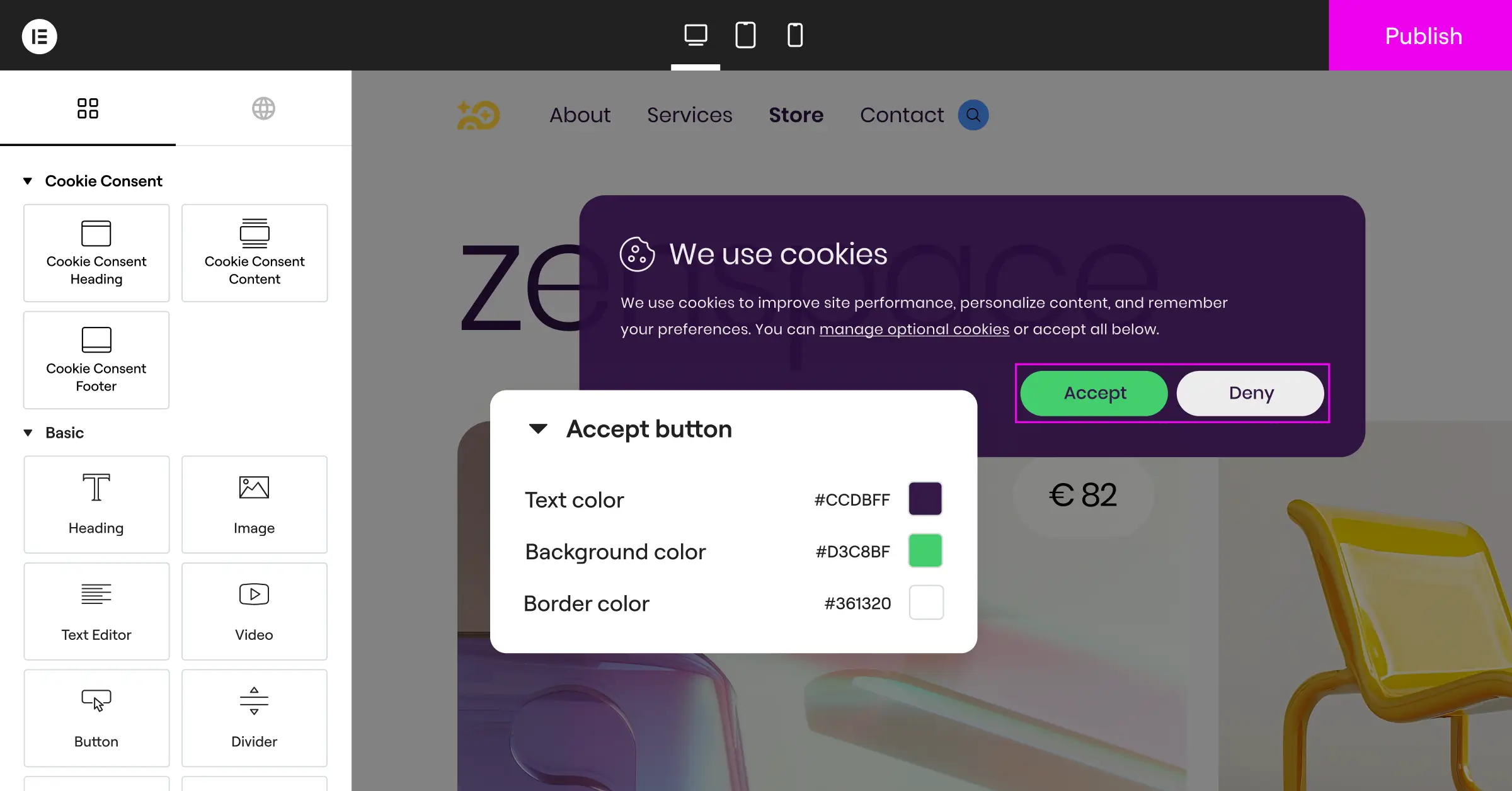
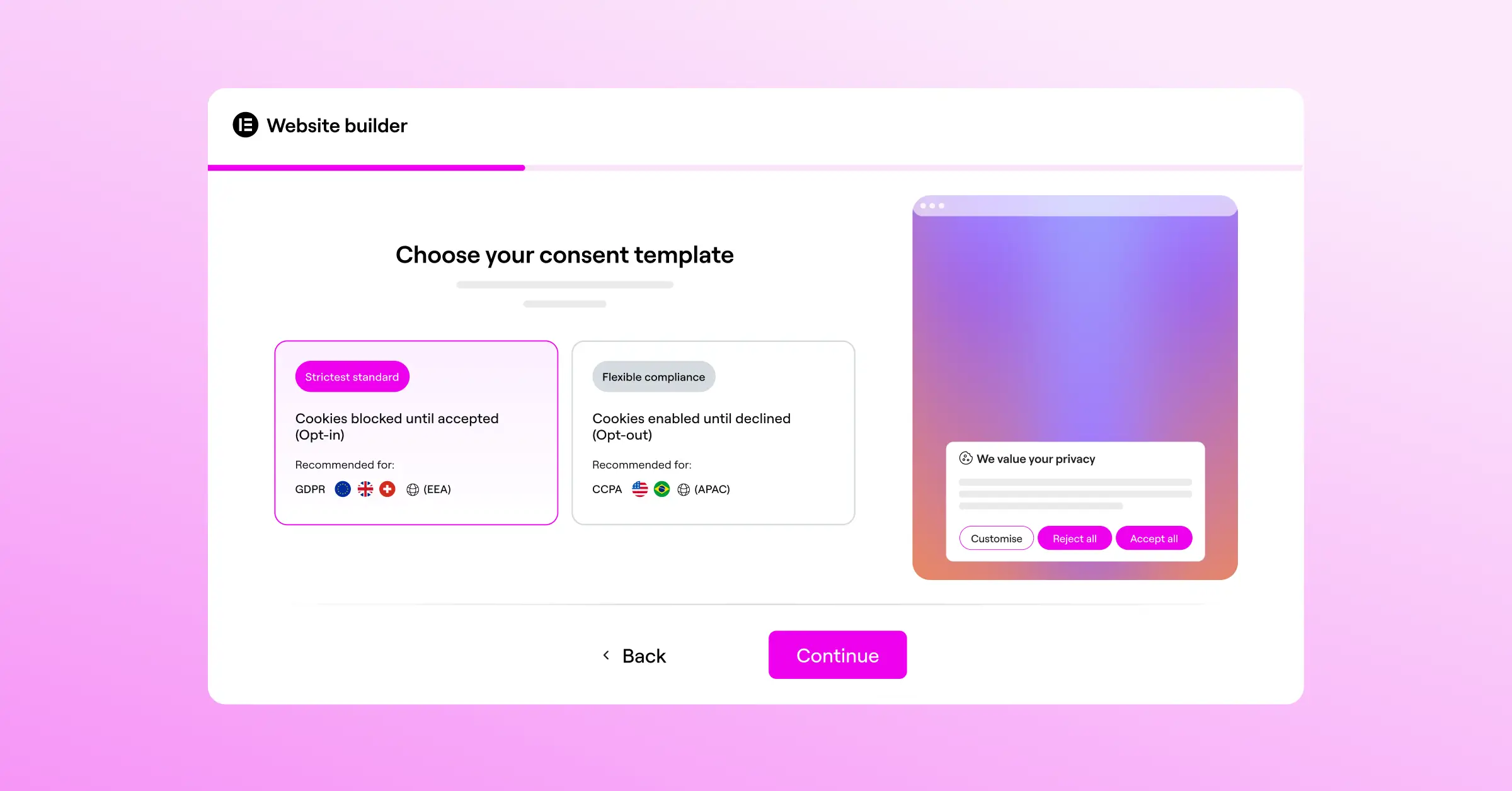
The main advantage is native integration: no separate account, no extra password, no pasting JavaScript into your header. (That trips people up more than you’d think.) Everything happens from the same place you already write posts, and built-in geo-targeting shows the right banner by region while keeping you compliant everywhere.
Where Cookie Consent Has Limits
Because it’s built specifically for WordPress, it can’t run on other platforms like Shopify or custom-coded HTML sites. If you manage a mix of content management systems, you’ll need a separate solution for the rest.
A Closer Look: CookieYes (Cloud-Based SaaS)
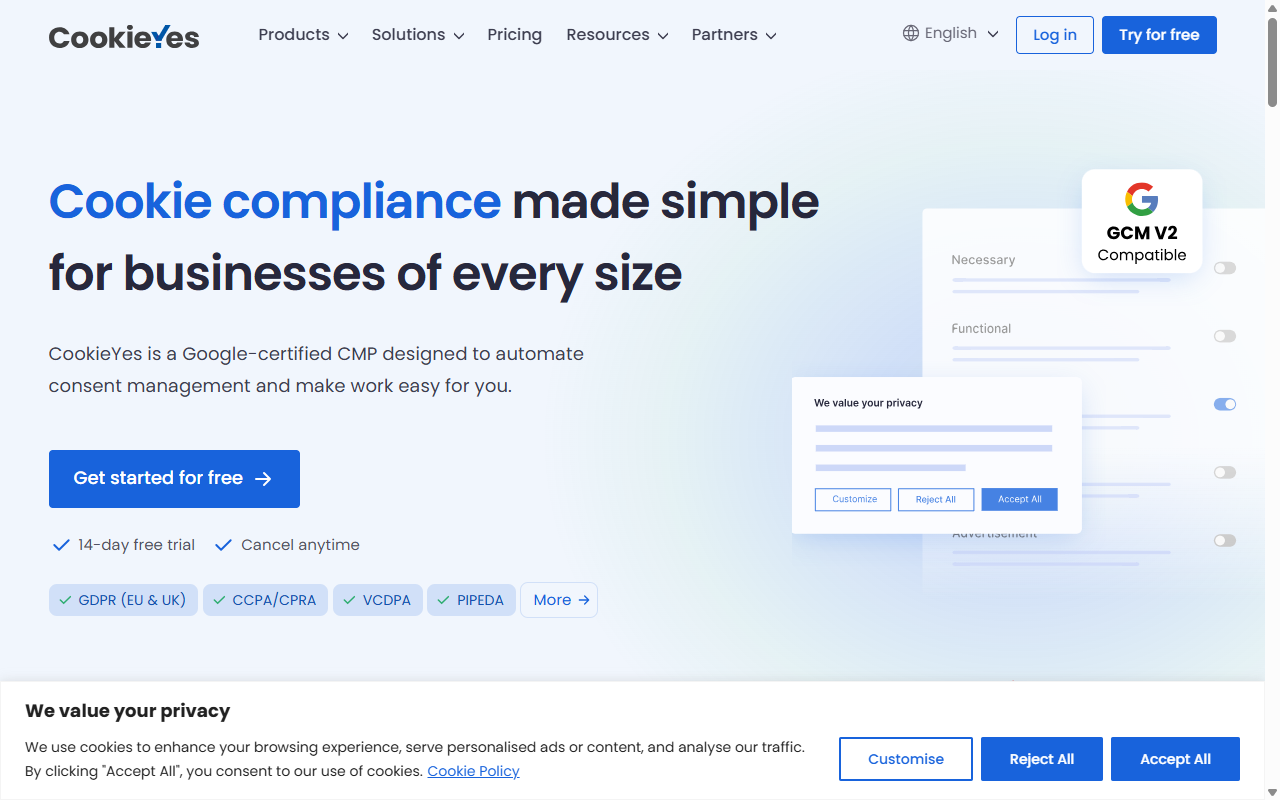
CookieYes is a popular cloud-based SaaS compliance platform that works across almost any web platform, including WordPress, Shopify, Wix, and static sites. Instead of managing settings inside WordPress, you log into an external dashboard to control banners and review logs.
To use CookieYes on WordPress, you typically install a lightweight connector or paste their script into your theme. Once connected, the cloud app scans your site for trackers and serves the banner dynamically.
Core Features of CookieYes
- Manages cookie consent across multiple web platforms from a single web app.
- Automates regular website scans to find and categorize tracking scripts.
- Displays geo-targeted banners to visitors based on their physical location.
- Provides detailed consent registries for regulatory proof of compliance.
- Connects with major content management systems via custom scripts.
- Translates banner text into dozens of languages automatically.
What CookieYes Does Well
If you run an agency building sites across multiple platforms, CookieYes lets you view all your client compliance states from one central dashboard. It has strong auto-translation for multilingual audiences and supports major frameworks like CCPA and GDPR with pre-configured templates.
Things to Keep in Mind with CookieYes
Managing your site in one place and your cookie settings in another can feel disjointed. If their servers hit latency, your banner might load slowly, causing layout shifts, and the entry-level plan has monthly pageview limits, so busy sites may need to upgrade to keep banners active.
Category-by-Category Showdown: How They Match Up
1. Setup Workflow and Ease of Use
The setup experience is where you’ll notice the biggest difference. Here’s what getting started looks like for each approach.
Setting Up Cookie Consent (Native)
- Navigate to the compliance section in your WordPress sidebar and activate the tool.
- Run the automatic cookie scan to identify what cookies your active features are setting.
- Choose a design style from the cloud templates, toggle Google Consent Mode v2 on, and publish.
Setting Up CookieYes (External SaaS)
- Create an account on the external CookieYes website and log into their app.
- Add your website URL to generate the unique tracking code snippet.
- Install their connector on WordPress or manually paste the JavaScript code into your header, then configure your settings in the SaaS dashboard.
Since Cookie Consent skips account creation and code copying, it’s much faster to get up and running.
2. Design Flexibility and Brand Matching
Your cookie banner is one of the first things a visitor sees, so a generic-looking popup can chip away at trust. The native editor integration in Elementor lets you style every banner detail, fonts, colors, border radiuses, button sizes, matched to your theme.
CookieYes also offers extensive customization, but through an external panel without access to your site’s global styles, which makes exact brand matching a bit more time-consuming.
3. Data Privacy and Consent Logging
When an auditor wants proof of compliance, you need a record of when and how users consented. Cookie Consent saves logs directly on your own WordPress database, so visitor data never leaves your server.
CookieYes stores consent logs on its own cloud servers. That meets legal standards, though some privacy-conscious owners prefer keeping data within their own self-hosted environment.
“With privacy laws tightening globally, site owners can no longer afford to treat consent as an afterthought. A native dashboard approach helps reduce the friction of maintaining compliance logs while keeping your site’s performance intact.”
– Itamar Haim, Web Compliance Specialist
Best Alternatives to Consider in 2026
Cookie Consent and CookieYes aren’t the only compliance tools out there. Depending on your setup and scale, one of these might fit better. Here’s a neutral look at the field.
3. Cookiebot
Cookiebot is a widely used cloud platform known for thorough automated cookie scanning, focused heavily on legal compliance across international regions.
- Detects hidden trackers and scripts through deep monthly website crawls.
- Controls cookie execution automatically using a highly technical script-blocking engine.
- Adapts your cookie banner dynamically depending on where your visitor is located.
- Generates detailed cookie declaration reports you can embed directly on your policy pages.
4. Complianz
Complianz is a dedicated WordPress compliance tool that guides you through legal documents and consent banners with a step-by-step wizard.
- Configures custom cookie banners specifically designed for your target jurisdictions.
- Integrates cleanly with popular WordPress security and optimization features.
- Generates legally binding cookie policy documents based on your scan results.
- Blocks third-party scripts like Google Maps and YouTube until consent is granted.
5. iubenda
iubenda goes beyond cookie consent, offering auto-updating privacy policies, terms of service, and consent management databases.
- Generates customized privacy policy pages that update automatically when laws change.
- Updates cookie consent banners dynamically using cloud-based compliance rules.
- Monitors your data collection points to confirm you’re following local guidelines.
- Saves consent preferences securely to comply with international regulatory audits.
6. OneTrust
OneTrust is an enterprise-level trust and privacy platform built for large corporations and high-traffic sites needing advanced privacy workflows.
- Tracks consent settings across thousands of global web domains from one corporate dashboard.
- Scales compliance operations to handle complex regulatory audits in multiple countries.
- Scans enterprise networks to uncover hidden tracking scripts and unauthorized databases.
- Matches user preferences across mobile applications, web portals, and connected devices.
7. Osano
Osano is a B-corp compliance platform focused on simplicity and data privacy advocacy.
- Delivers global banner compliance by managing consent rules across several countries.
- Evaluates vendor privacy practices to alert you to risky third-party scripts.
- Maintains a highly accurate consent record for legal peace of mind.
- Prevents accidental tracking by blocking unclassified scripts automatically.
8. Termly
Termly targets small businesses and startups with a friendly, budget-conscious suite of compliance builders for policies and cookie consent.
- Builds clear, readable privacy policies that fit standard business models.
- Automates monthly cookie scans to keep your tracking registry up to date.
- Displays simple, customizable banners that load quickly on mobile devices.
- Helps you meet regional rules without needing a dedicated legal team.
9. Usercentrics
Usercentrics is a leading European consent management platform giving developers powerful tools to manage consent across websites and mobile apps.
- Optimizes opt-in rates through advanced A/B testing of different banner layouts.
- Connects consent data directly to popular advertising platforms and analytics servers.
- Arms developers with highly flexible API integration options.
- Secures user choices using encrypted, audit-ready data structures.
10. Securiti
Securiti provides AI-driven data privacy and compliance solutions for complex IT infrastructures that need to govern data across cloud platforms.
- Discovers data storage points and tracking scripts automatically using machine learning.
- Governs consent preferences across diverse cloud databases and consumer portals.
- Reduces manual admin work by automating subject access requests (DSAR).
- Protects cloud assets by keeping compliance current with evolving global standards.
Which Compliance Tool is Best for Your WordPress Site?
Choosing the right tool comes down to how you like to manage your site. If you value simplicity, speed, and clean design, managing compliance inside WordPress with Cookie Consent is hard to beat. Built into the Elementor ecosystem, it keeps your server footprint light and your banner feeling like a natural part of your design.
That said, if you manage sites across multiple platforms (WordPress, Shopify, static HTML) and want one central dashboard, CookieYes might fit better. Just keep an eye on your pageview limits as traffic grows.
And if you’d rather skip juggling separate subscriptions, Cookie Consent is included in Elementor One, alongside Web Accessibility and the full site-building experience. One dashboard, one subscription, everything you need to stay compliant and well-designed.

Frequently Asked Questions
Is Google Consent Mode v2 required for my WordPress site?
If your site serves visitors in the EEA and uses Google services like Analytics or Ads, yes. Google requires Consent Mode v2 for tracking data and personalized ads, or your data quality and ad performance both drop.
What makes a native cookie tool different from an external SaaS tool?
A native tool like Cookie Consent runs directly on your WordPress server. No external accounts, no third-party scripts, no worrying about outside downtime, and your consent logs stay private in your own database.
Do I have to display a cookie banner to US visitors?
It depends on the state. California (CCPA/CPRA), Colorado, and Virginia give residents the right to opt out of tracking. A geo-targeted banner keeps you safe everywhere without annoying visitors elsewhere.
Does Cookie Consent slow down my website load speed?
No. Built natively for WordPress, it loads local scripts and fast cloud-based templates instead of heavy external scripts, so your layout stays stable and you avoid page-loading issues.
What is Global Privacy Control (GPC)?
It’s a browser setting that lets users signal their privacy preferences automatically. Modern cookie tools recognize the signal and opt users out of non-essential cookies without needing a click on your banner.
Can I customize my banner to match my theme without custom CSS?
Yes. Cookie Consent inside Elementor gives you built-in design controls for every visual element: fonts, colors, border styles, and layouts, all from your editor, so the banner fits your branding perfectly.
Where are consent logs stored, and why do they matter?
Consent logs prove when a specific user consented to your cookie settings. Cookie Consent stores these directly in your secure WordPress database, which matters if a regulator ever audits your site.
Can I use a free cookie consent tool on business sites?
Yes, both offer entry-level plans that work well for standard sites. If you need geo-targeting or automated translation, consider a premium tier or an all-inclusive toolkit like Elementor One.

