Table of Contents
10 Best Cookie Consent Workflow For Web Design Agencies in 2026
Total GDPR fines surpassed €4.5 billion by the end of 2026. And a massive 22% of those new enforcement actions targeted small-to-medium enterprises directly. You’re building websites, not fighting lawsuits.
But pasting a generic, ugly banner onto a custom layout destroys your client’s brand experience. You need a privacy-first workflow that protects your agency from liability while keeping your designs entirely intact. So let’s break down the exact tools that get this right.
Key Takeaways
- 72% of agencies say privacy compliance is now mandatory in client RFPs.
- Poorly optimized cookie banners increase LCP by up to 450ms.
- Cookiez is the top choice for pure Elementor workflows due to native styling.
- Continuous Scanning features reduce manual agency audit time by 85%.
- Customized “Privacy by Design” banners achieve a 64% opt-in rate.
- CookieBot scales best for massive e-commerce platforms with thousands of pages.
The Agency Responsibility in the Privacy-First Era
Look, manual cookie lists are dead. You can’t rely on static spreadsheets to track what third-party scripts your clients install after launch. By 2026, 75% of the world’s population has their personal data covered under modern privacy regulations. If you build it, you’re responsible for how it tracks.
Clients don’t understand the technical difference between a necessary session cookie and a Facebook tracking pixel. They just know they want analytics. And when they get a warning letter from a data protection authority, they point the finger at their web agency. 94% of consumers state they’re more likely to be loyal to a brand offering complete transparency regarding data usage. You’ve to build that transparency into the foundation.
Agencies face three distinct shifts in 2026:
- Automated enforcement – Regulatory bots actively scrape websites for non-compliant data transfers.
- Client demands – 72% of web design agencies report privacy compliance is mandatory in 90% of RFPs.
- Performance penalties – Heavy consent management platforms (CMPs) wreck your Core Web Vitals.
Cookiez: The Ultimate Elementor-Native Consent Solution
Elementor currently powers 13% of all websites globally. If your agency standardizes on Elementor Editor Pro, adding external SaaS platforms often breaks your workflow. Cookiez solves this by operating directly inside your existing environment.
Most consent banners inject heavy JavaScript that causes severe layout shifts. Cookiez doesn’t do that. It integrates directly with the Elementor framework (using native widgets) so your styling remains incredibly consistent. You aren’t writing custom CSS overrides just to change a button color.
- Full Editor Integration – Drag and drop consent elements directly on your canvas.
- Auto-Scanning – Detects new cookies dynamically without third-party API calls.
- Geo-Targeting – Shows GDPR banners in Europe and CCPA banners in California automatically.
- Zero-Code Styling – Inherits global typography and colors instantly.
Pricing starts at $49/year for a single site license. It’s aggressively priced for smaller agencies.
- Pro – Zero Cumulative Layout Shift (CLS) impact.
- Pro – Clients can manage consent text via the WordPress dashboard they already know.
- Pro – Syncs perfectly with Elementor’s global design system.
- Con – Limited strictly to the WordPress ecosystem.
- Con – Lacks enterprise-level legal support teams.
This is the gold standard for agencies building exclusively on Elementor.
CookieBot by Usercentrics
Imagine handing a massive e-commerce site over to a client. A week later, their marketing team installs seven new tracking plugins. CookieBot handles this chaos brilliantly. It’s a cloud-based platform famous for its relentless automated scanning.
The Consent Management Platform market will reach $3.1 billion by 2030, growing at a 14.2% CAGR. CookieBot is a massive reason why. It acts as an external monitor, scanning your site monthly and automatically blocking unknown scripts before they fire. You don’t have to manually classify anything.
Features include deep IAB TCF v2.2 support, multi-language detection, and incredibly detailed monthly reports that agencies can white-label for clients. The 2026 pricing model offers a free tier for sites under 50 pages. Premium Small starts at €12/month (~$13) for up to 350 pages.
It isn’t perfect, though. The external script injection can be heavy. If you’re chasing perfect performance scores, you’ll need to optimize how CookieBot loads. But for massive scale, nothing beats its automation.
Best for agencies managing large-scale enterprise websites with thousands of dynamic pages.
Complianz: The Privacy Suite for WordPress
Here’s the thing: a banner doesn’t make you compliant if you don’t have the legal documentation backing it up. Complianz bridges the gap between technical blocking and legal paperwork. It generates custom Privacy Policies, Cookie Policies, and Disclaimers based on a detailed wizard.
Priced at $59/year for a single site, the Premium version is practically a “legal-in-a-box” service. Agencies use it to add a compliance upsell to their maintenance packages.
The typical agency workflow with Complianz involves four distinct phases:
- The Audit – Run the built-in wizard to answer 15 targeted questions about the client’s data collection habits.
- The Scan – Let the plugin map existing cookies and link them to the Cookiedatabase.org directory for automatic descriptions.
- The Generation – Publish the automatically drafted legal documents to designated WordPress pages.
- The Sync – Keep documents updated automatically when the site adds new plugins (like WooCommerce or HubSpot).
It’s incredibly thorough. Best for agencies that want to provide actual legal document generation without hiring an attorney.
Borlabs Cookie 3.0
If you’ve clients in Germany, Austria, or Switzerland, you already know the pain of DSGVO compliance. The rules there are notoriously strict. Borlabs Cookie 3.0 is a German-engineered plugin specifically built to survive EU regulatory audits.
How strict is it? It prevents any data transfer before explicit consent. Period. It physically blocks iframes, YouTube videos, Google Maps, and external fonts until the user clicks “Accept.” Instead of a broken page, it displays a highly customizable fallback image with a local opt-in button. Priced at €39/year (~$42), it’s a specialized tool for a specialized market.
Why choose Borlabs over cloud solutions? Because European privacy activists actively scan for external CMP connections. Borlabs hosts all assets locally. No external server requests happen when the banner loads. This satisfies even the most aggressive privacy watchdogs.
The learning curve is brutal. The interface is highly technical and unforgiving if you don’t understand script loading orders. Essential for agencies with a heavy client base in the DACH region.
CookieYes
Sometimes you just need to get a site launched by Friday. CookieYes is a lightweight, cloud-synced solution serving over 1.2 million websites. It’s famous for rapid deployment. You paste a single script tag into the header, configure the banner on their web app, and you’re done.
Speed of implementation is the major selling point. You don’t mess with complex WordPress configurations. You manage 50 different client sites from one central CookieYes dashboard.
- Opt-in Optimization – Banners built with their “Privacy by Design” templates see an average opt-in rate of 64% (compared to 38% for generic banners).
- Historical Logging – Maintains a strict record-of-consent log to prove compliance during an audit.
- Affordable Scale – The Pro plan runs just $10/month per site.
- Universal Compatibility – Works on WordPress, Shopify, Webflow, and custom HTML builds.
The major downside is design flexibility. You’re limited to their predefined templates, which can clash with custom dynamic content layouts. Best for agencies needing a fast, reliable solution for small business clients.
Usercentrics Enterprise Edition
When you’re dealing with global Fortune 500 brands, a simple WordPress plugin won’t cut it. Usercentrics Enterprise Edition handles insanely complex legal frameworks. We’re talking cross-domain consent across 40 subdomains, deep analytics integration, and granular user preference centers.
Agencies servicing large corporations rely on Usercentrics because it shifts the legal liability. The platform provides A/B testing for banner variations to maximize opt-in rates legally. It also offers direct integration with enterprise marketing stacks like Adobe Analytics and Salesforce.
Pricing is entirely custom. However, modular pricing for agencies managing multi-site enterprise clients often starts at $500/month. It’s a massive investment. You wouldn’t put this on a local plumber’s website.
The configuration process requires dedicated technical staff. You’ll spend weeks mapping data flows and configuring Google Consent Mode v2. But for global brands facing millions in potential fines, this level of control is absolutely non-negotiable.
Termly
Startups pivot fast. They change analytics tools weekly. They add new marketing trackers every other day. Termly handles this chaotic environment by combining consent banners with auto-updating legal policies in one SaaS subscription.
For $15/month per site, Termly provides a centralized dashboard for non-technical users. It covers CCPA, GDPR, and UK PIPEDA compliance simultaneously.
- Pro – Beautiful, intuitive client-facing dashboard.
- Pro – Handles both cookie consent and Terms of Service documents.
- Pro – Automated weekly scans catch new marketing trackers instantly.
- Con – The embed script can occasionally impact Largest Contentful Paint.
- Con – Policy language is somewhat rigid and hard to customize manually.
Termly is perfect for agencies working with fast-moving startups that require an all-in-one legal safety net without hiring expensive corporate counsel.
Iubenda
If your agency builds complex web applications alongside traditional marketing sites, you need extreme modularity. Iubenda breaks compliance down into tiny, configurable pieces. You don’t just get a banner; you get access to a library of over 1,600 legal clauses drafted by an international legal team.
Recent data shows that Continuous Scanning features detect new cookies within 24 hours of a plugin update. This aggressive monitoring reduces agency manual audit time by 85%. Iubenda excels at this continuous monitoring.
- Assess the app – Map your custom-coded features to their specific legal clauses.
- Configure the generator – Select exactly which third-party APIs your application touches.
- Deploy the script – Embed the highly compressed JavaScript payload into your build process.
Starting at $29/year, it’s highly affordable. But the interface is notoriously overwhelming. You’ll spend hours checking boxes and reading legal definitions. Best for agencies building highly custom web apps that defy standard plugin structures.
Comparison of Top Cookie Consent Tools for 2026
Choosing the right platform requires balancing performance against legal safety. We’ve mapped the top options based on their most critical agency features.
| Platform | Starting Price | Elementor Integration | Best Use Case |
|---|---|---|---|
| Cookiez | $49/year | Native widgets & styles | Pure WordPress/Elementor builds |
| CookieBot | €12/month | External script | Massive E-commerce platforms |
| Complianz | $59/year | Shortcode/Blocks | Legal document generation |
| Borlabs 3.0 | €39/year | Shortcode/Blocks | DACH region specific clients |
| CookieYes | $10/month | External script | Rapid deployment across platforms |
Buyer’s Guide: What Agencies Should Look for in a CMP
Don’t just pick the cheapest option. A bad CMP installation destroys your SEO metrics and frustrates your clients. You’ve to evaluate the technical footprint before you deploy.
Performance & Core Web Vitals
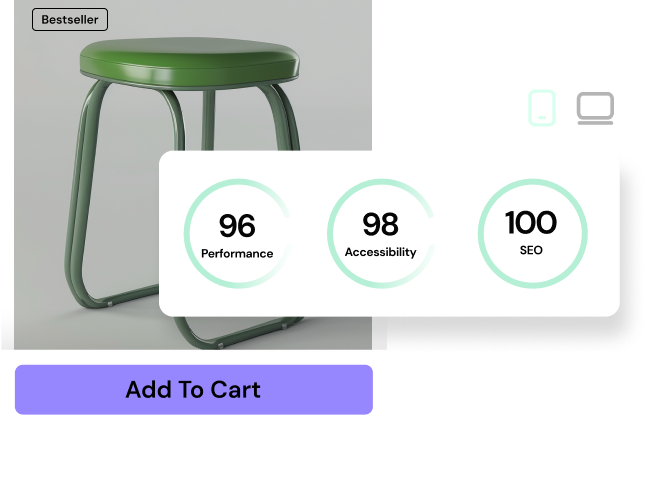
Every script you add to the head of your document slows down the page. Google Lighthouse performance benchmarks show that poorly optimized cookie banners can increase Largest Contentful Paint (LCP) by up to 450ms. That’s enough to drop your site from “Good” to “Needs Improvement” in Search Console.
If your consent banner blocks the main thread during initial load, you’ve already lost the SEO battle. The best tools defer their heavy processing until after the visible page renders, keeping Core Web Vitals strictly in the green.
Itamar Haim, SEO Team Lead at Elementor. A digital strategist merging SEO, AEO/GEO, and web development.
Client Handoff & Maintenance
Your clients will break things. That’s a given. If your CMP requires manual tagging every time a client adds a new tracking pixel, you’re setting yourself up for unbillable support hours. You need tools featuring Continuous Scanning. You also want a platform that restricts client access. Give them a simple dashboard to read reports, but lock down the actual script-blocking logic.
Final Recommendation: The Agency Choice
If you build with Elementor managed hosting or Editor Pro, Cookiez is the clear winner. It resspects your design choices, avoids heavy external scripts, and keeps your layout entirely stable. For agencies managing massive, multi-platform enterprise clients, Usercentrics provides the necessary legal armor.
Summary Checklist for Agency Selection
- Does it integrate with Google Consent Mode v2 natively?
- Can it scan and categorize cookies automatically on a weekly basis?
- Does the banner load asynchronously to protect Core Web Vitals?
- Does it support granular geo-targeting based on user IP?
- Can you style the UI without writing 50 lines of custom CSS?
Frequently Asked Questions
Do I really need a cookie banner for a basic portfolio site?
Yes. Even if you don’t run ads, embedded YouTube videos, Google Analytics, or basic security scripts often set cookies. If you serve visitors in regulated regions like California or the EU, you’re legally required to disclose this tracking.
Will a cookie banner destroy my conversion rates?
It depends entirely on the design. Data shows that customized, well-designed banners achieve a 64% opt-in rate. Obtrusive, terrifying legal warnings drop that rate significantly. Design matters.
How does Google Consent Mode v2 affect agencies?
By 2026, Google requires Consent Mode v2 for all personalized advertising. If your client’s banner doesn’t support this specific protocol, their Google Ads campaigns will literally stop functioning. It’s no longer optional.
Can Elementor inherently block cookies without a plugin?
No. Elementor is a website creation platform, not a legal compliance engine. While you can build popups with Elementor, you need a dedicated system like Cookiez to actually intercept and block third-party JavaScript before it executes.
What is the penalty for ignoring these regulations?
Fines scale wildly. While massive corporations face percentage-based revenue fines, smaller businesses typically see initial penalties ranging from $2,500 to $7,500 per violation under laws like the CCPA. The legal fees to defend against a claim often cost more than the fine.
Should I charge clients extra for compliance setup?
Absolutely. Most agencies package consent management as an upfront setup fee (often $300-$800) combined with an ongoing monthly maintenance charge to cover regular audits and subscription costs.
Are free cookie plugins safe to use?
Usually, no. Free plugins rarely offer automated background scanning. They require you to manually input every single cookie your site uses. If you miss one, the client isn’t compliant. The liability risk simply isn’t worth saving $40 a year.
Looking for fresh content?
By entering your email, you agree to receive Elementor emails, including marketing emails,
and agree to our Terms & Conditions and Privacy Policy.