Setting up your website to respect visitor privacy can feel like studying for a law degree in your spare time (no actual degree required, promise). Regulations keep shifting and browsers keep dropping third-party trackers, so keeping your WordPress site compliant matters more than ever.
The good news: you don’t have to build anything from scratch. We’ve tested the top privacy tools, from simple banners to deeper compliance systems, so your site stays safe and professional.
Key Takeaways
- Native tools cut complexity by managing compliance right inside your WordPress dashboard.
- Google Consent Mode v2 support matters in 2026 for any site running Google Ads or Analytics.
- Automatic cookie scanning keeps your consent categories current as you add new marketing scripts.
- Geo-targeting protects the user experience by showing banners only where they’re legally required.
Why Cookie Consent Matters More Than Ever in 2026
Privacy laws aren’t just a European concern anymore. New rules keep launching across North America, and strict frameworks exist worldwide, so nearly every site has some exposure. If you get traffic from California, the UK, or the EU, you’re legally required to give visitors a real choice about tracking.
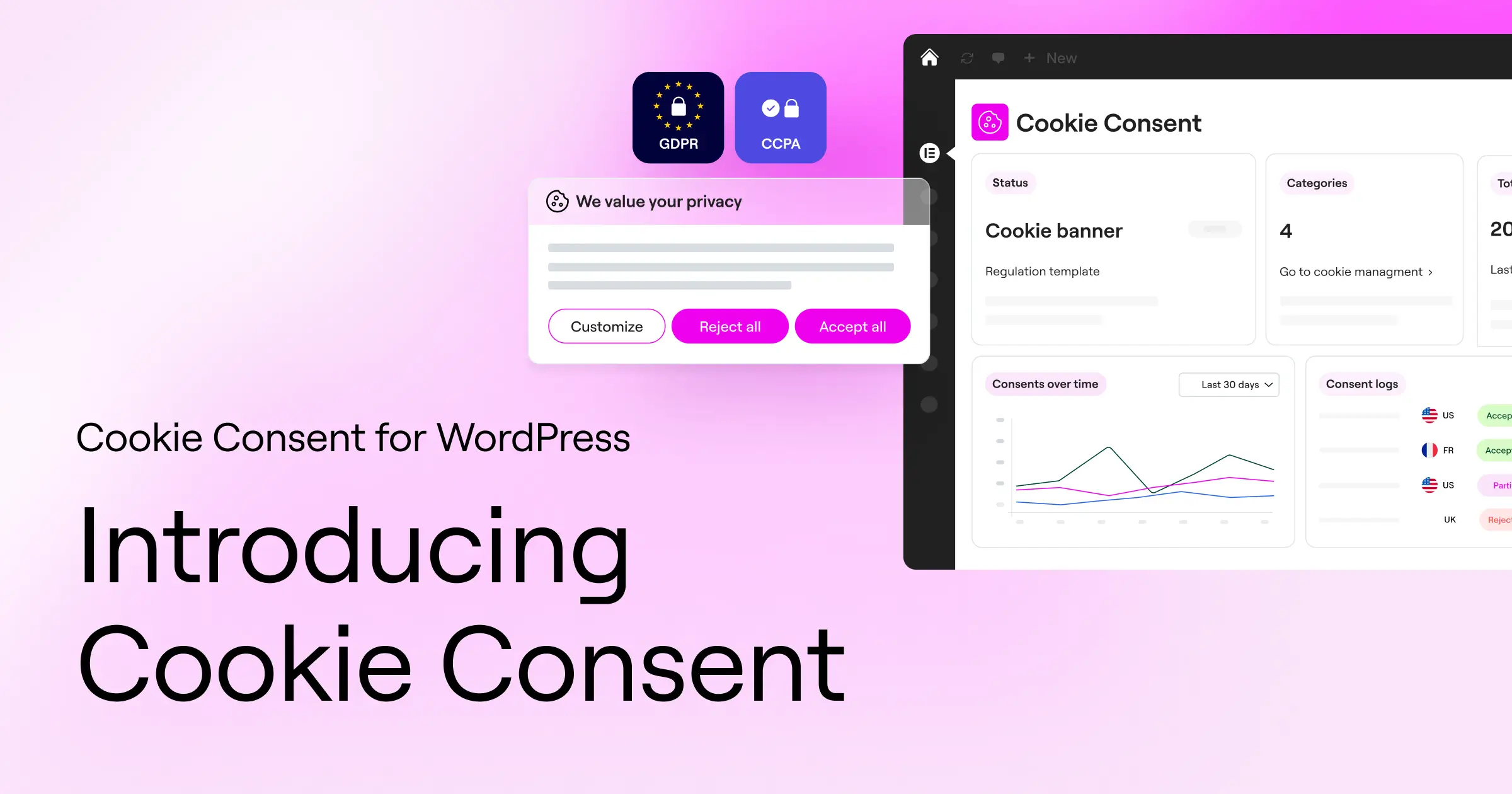
Regulators are watching closely. The days of a simple “we use cookies” notice are gone: your banner needs a genuine choice, clear tracker categories, and an audit log of consent. Skip these steps and you risk quiet drops in search visibility, or a formal compliance notice.
Luckily, modern consent tools do the heavy lifting: they scan your site and show the right choices based on where each visitor lives.
The Top Cookie Consent Solutions Compared
Here’s a quick comparison of core features, setup time, and best fit.
| Solution | Primary Focus | Dashboard Type | Consent Mode v2 Support | Setup Speed |
|---|---|---|---|---|
| Cookie Consent (by Elementor) | Native WordPress Compliance | WordPress Native | Yes | Under 5 minutes |
| Cookiebot | Cloud-managed Privacy | External Dashboard | Yes | Moderate |
| CookieYes | SaaS-style Management | Hybrid Dashboard | Yes | Fast |
| Complianz | Legal Wizard Setup | WordPress Native | Yes | Moderate |
| iubenda | Complete Legal Coverage | External Dashboard | Yes | Slow |
Now let’s look at the details for each one.
1. Cookie Consent (by Elementor)
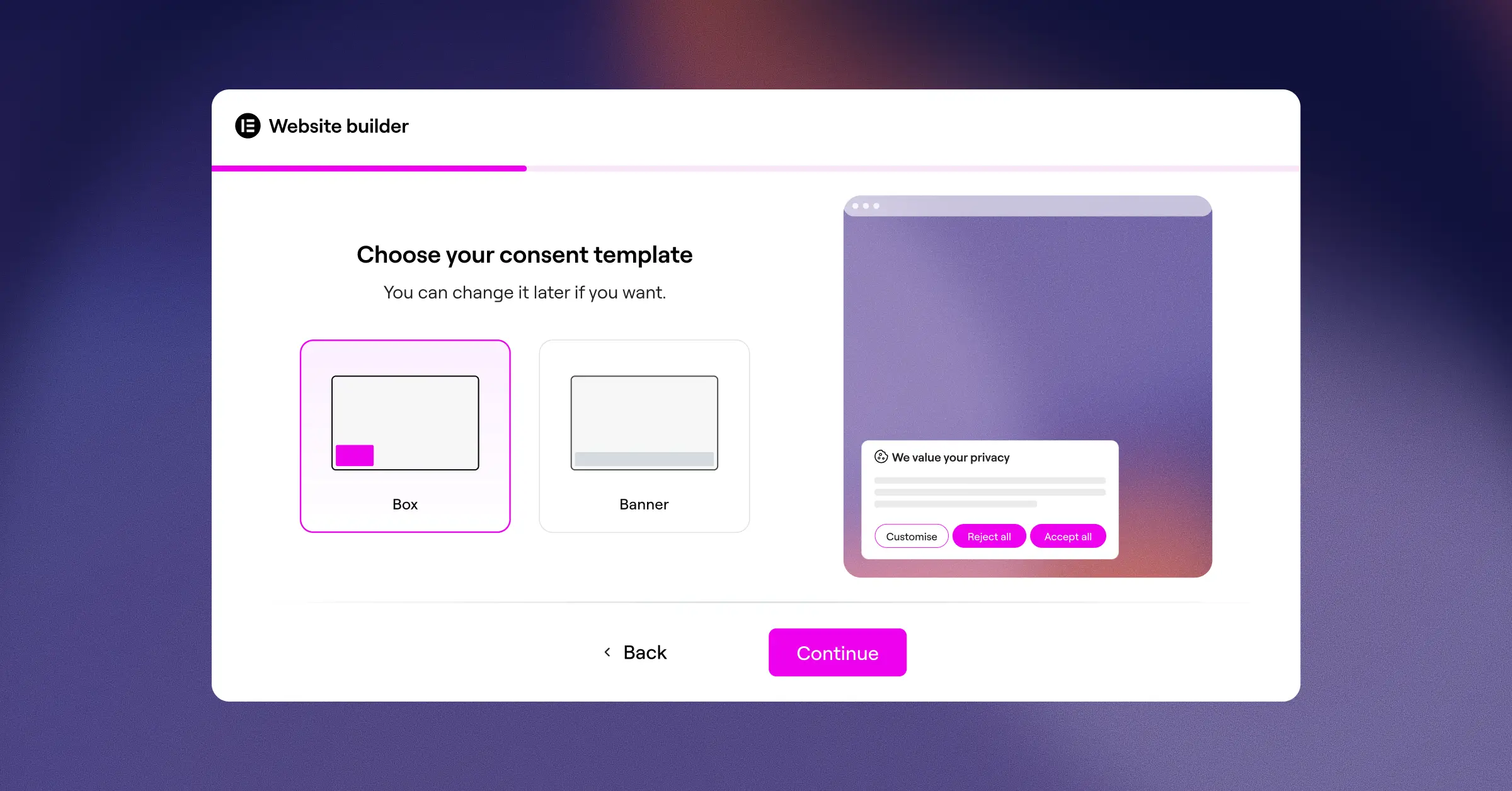
If you’d rather manage your whole site from one place, Elementor‘s built-in Cookie Consent capability works entirely inside your WordPress dashboard, keeping you compliant under GDPR and CCPA. Because it’s part of the Elementor ecosystem, you won’t hit design conflicts, and you can style your banner right alongside Web Accessibility in the same suite.
Integrated compliance is the future of web design. Managing consent banners from the same interface where you design your pages avoids conflicts and keeps privacy rules respected site-wide.
– Itamar Haim, Web Compliance Specialist
Key Capabilities
- Scans cookies and sorts them into categories.
- Builds banners from pre-designed cloud templates.
- Controls scripts by opt-in or opt-out category.
- Maintains secure logs for compliance audits.
- Supports Google Consent Mode v2.
- Adapts display with geo-targeting.
- Generates a built-in privacy policy.
Cookie Consent ships with Elementor One and a free tier, a cost-effective pick for existing users.
Pros and Cons
- Pro – No external dashboard needed.
- Pro – Banner matches your site exactly.
- Pro – Built-in privacy policy generator included.
- Con – Best for sites built in the Elementor framework.
Our Verdict
A fast, clean setup for WordPress creators, ready in under five minutes without the cost of external SaaS tools.
2. Cookiebot
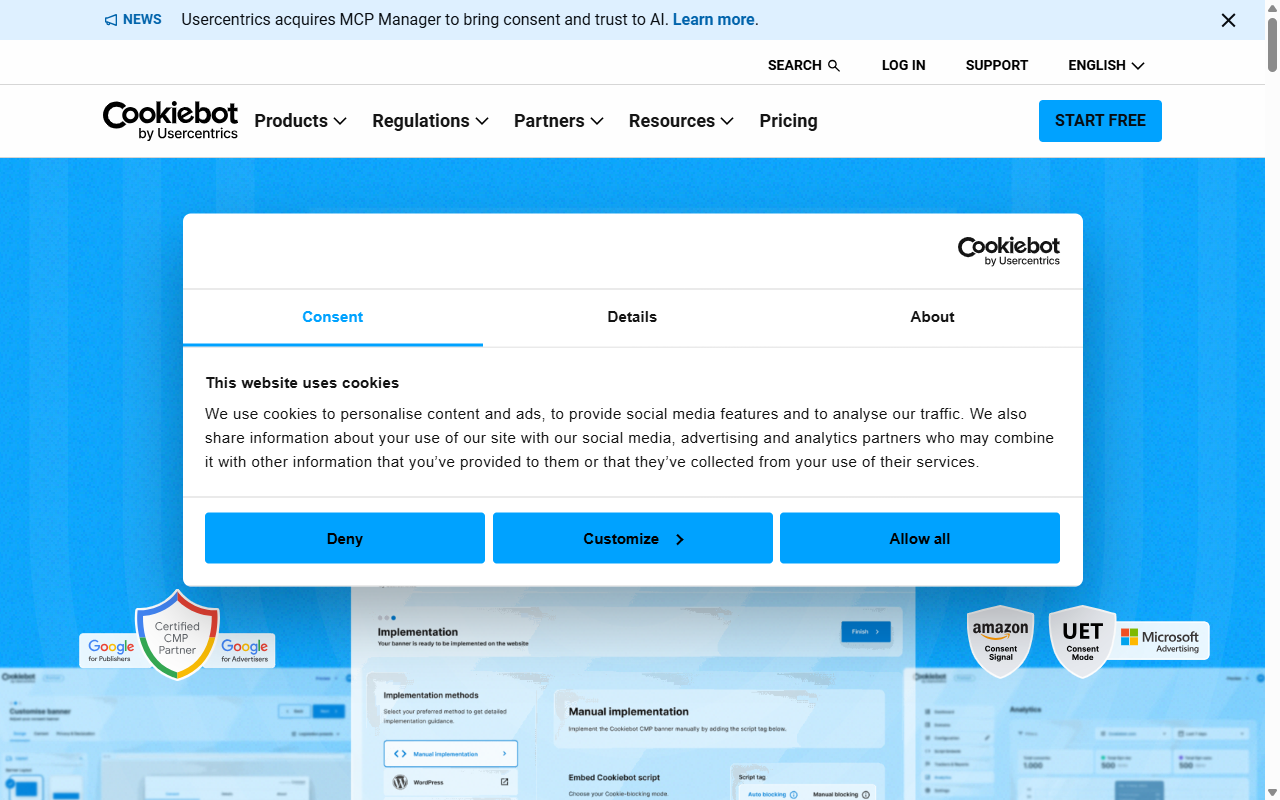
Cookiebot is a well-known name in privacy tools, built around automated scanning. It runs as a cloud-based service, so compliance data processes on its own servers instead of your WordPress host. A connector links it to WordPress, though most configuration happens inside the Cookiebot cloud portal.
Key Capabilities
- Schedules monthly scans for new trackers.
- Generates an interactive cookie table.
- Enforces script blocking before consent.
- Logs consent securely on cloud servers.
- Works with major tag managers.
A basic plan covers small sites; larger blogs and shops need a paid monthly plan as they grow.
Pros and Cons
- Pro – Strong automatic tracker detection.
- Pro – Reliable through frequent site updates.
- Con – Costly for large sites with many pages.
- Con – Settings live in an external dashboard.
Our Verdict
Cookiebot suits teams with budget for monthly compliance who want a hands-off scanning engine.
3. CookieYes
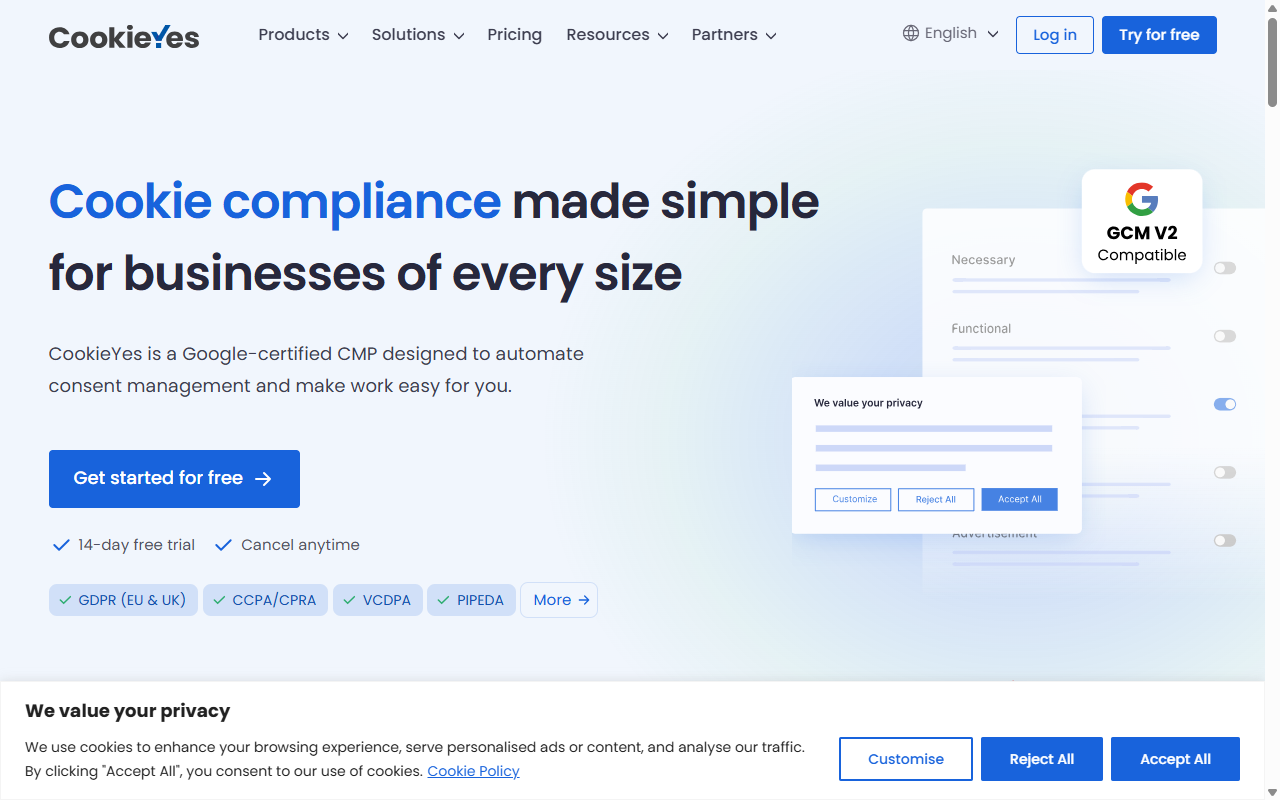
CookieYes has grown fast thanks to its intuitive setup, pairing a web-based portal with a lightweight connector. Banner designs look modern out of the box, and the platform keeps up with standards like Global Privacy Control (GPC).
Key Capabilities
- Translates your banner into dozens of languages.
- Displays clean, minimal layouts.
- Categorizes scripts into functional, analytical, marketing.
- Saves consent records for local reporting.
- Adds custom CSS beyond the presets.
If your traffic scales up, you’ll need a premium tier to keep the banner active.
Pros and Cons
- Pro – Clean, approachable interface.
- Pro – Strong multi-language detection.
- Con – Free limits run out fast during traffic spikes.
- Con – Scripts managed via their online portal.
Our Verdict
CookieYes suits mid-sized sites wanting a good-looking banner without configuration hassle.
4. Complianz
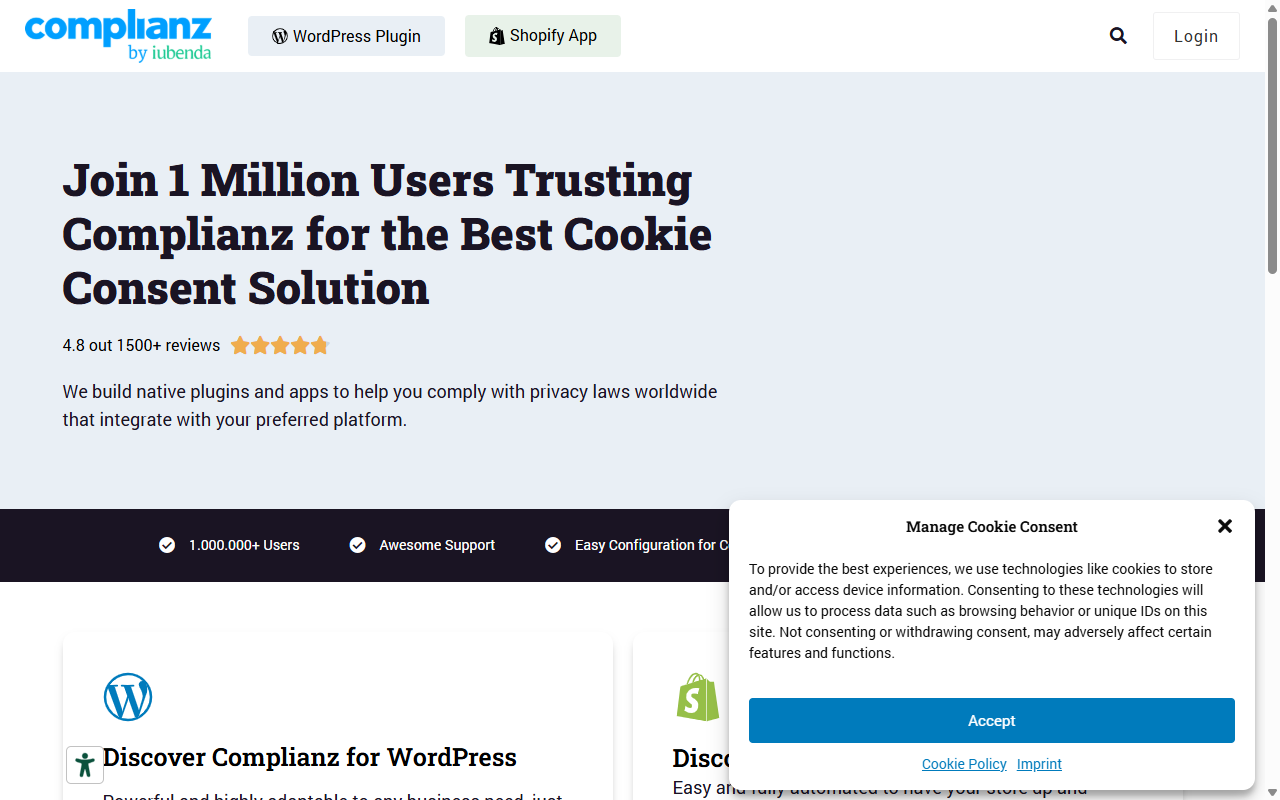
Complianz is built for the WordPress ecosystem, running as a legal wizard inside your admin panel that guides you through a questionnaire about your business to configure the settings you need.
Key Capabilities
- Guides you through a legal questionnaire.
- Blocks social embeds and maps until accepted.
- Generates privacy policies and cookie statements.
- Supports major WordPress cache tools.
- Detects legal requirements for EU or US markets.
An entry-level plan is free; premium tiers add regional targeting, document generation, and direct support.
Pros and Cons
- Pro – No external accounts needed.
- Pro – Wizard prevents missing compliance details.
- Con – Setup feels long with many questions.
- Con – Interface is more technical than visual editors.
Our Verdict
Complianz suits anyone who wants to understand the legal mechanics behind their compliance, with data kept on their own hosting.
5. iubenda
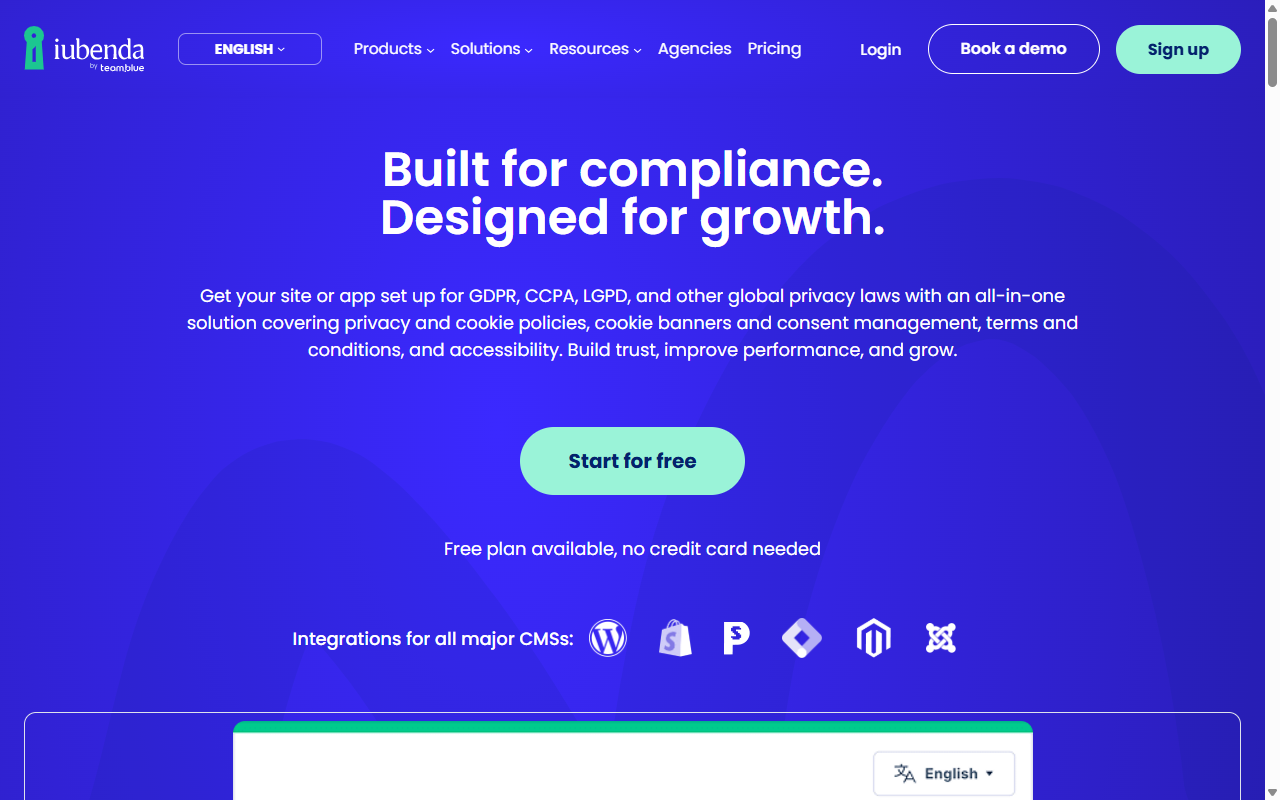
iubenda is a compliance suite covering cookie banners, privacy policies, and terms of service, built as a platform favored by agencies managing complex compliance across industries. Its cookie tools connect to its legal document generator, so updating your cookies updates your privacy policy too.
Key Capabilities
- Coordinates banners with live-updating legal documents.
- Delivers legal templates drafted by professionals.
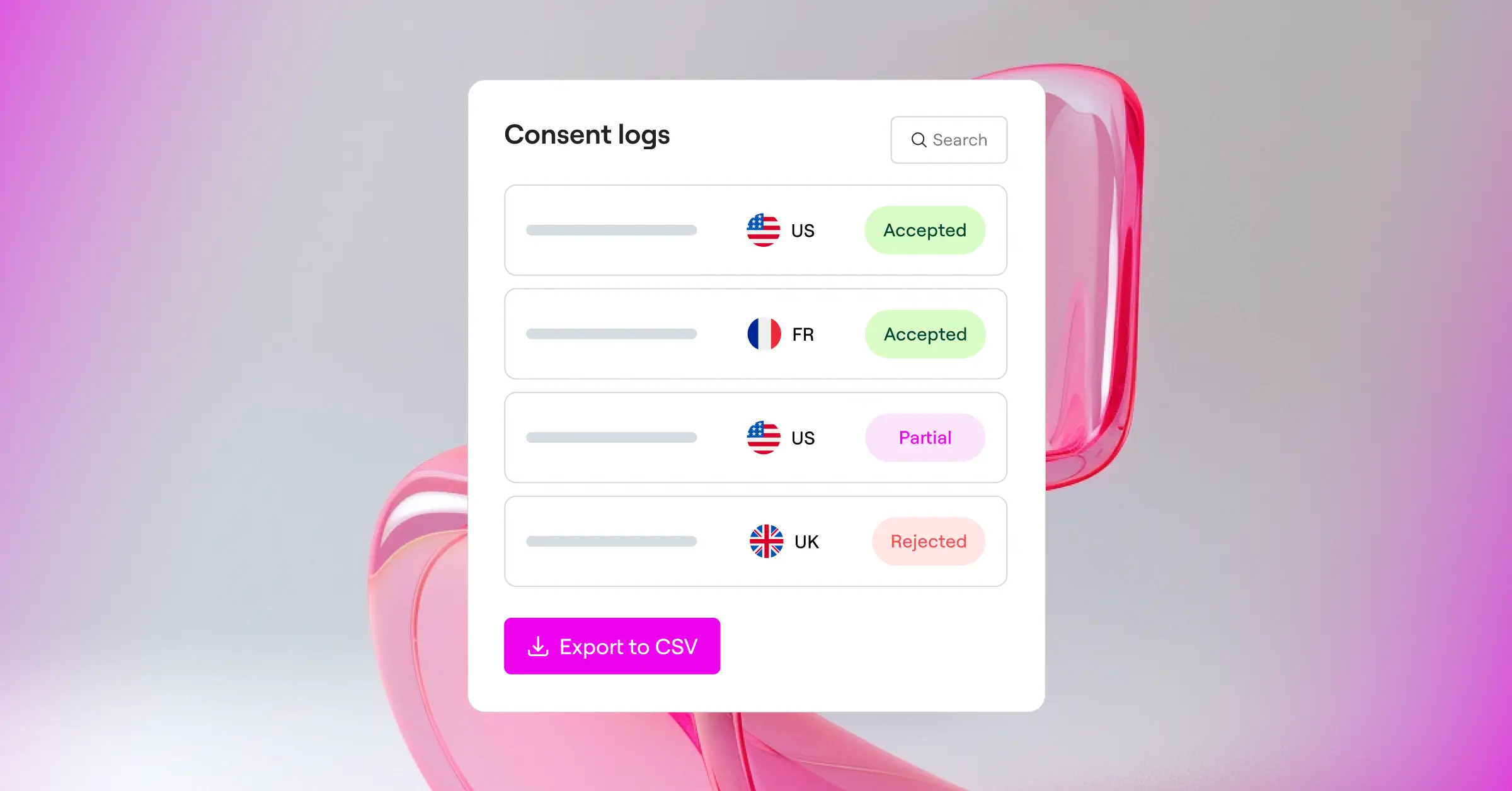
- Saves preferences in an audit-ready database.
- Integrates with advanced tag systems.
- Adds deep branding customization.
You pay a monthly or annual fee depending on which features you activate, flexible but tricky to estimate upfront.
Pros and Cons
- Pro – One-stop option for policies, terms, and consent.
- Pro – Policies maintained by legal experts.
- Con – Dashboard has a learning curve with many panels.
- Con – Can get costly with multiple policies and features.
Our Verdict
iubenda suits agencies or larger businesses handing off their whole compliance burden, policies and banners included, to a specialist team.
6. OneTrust
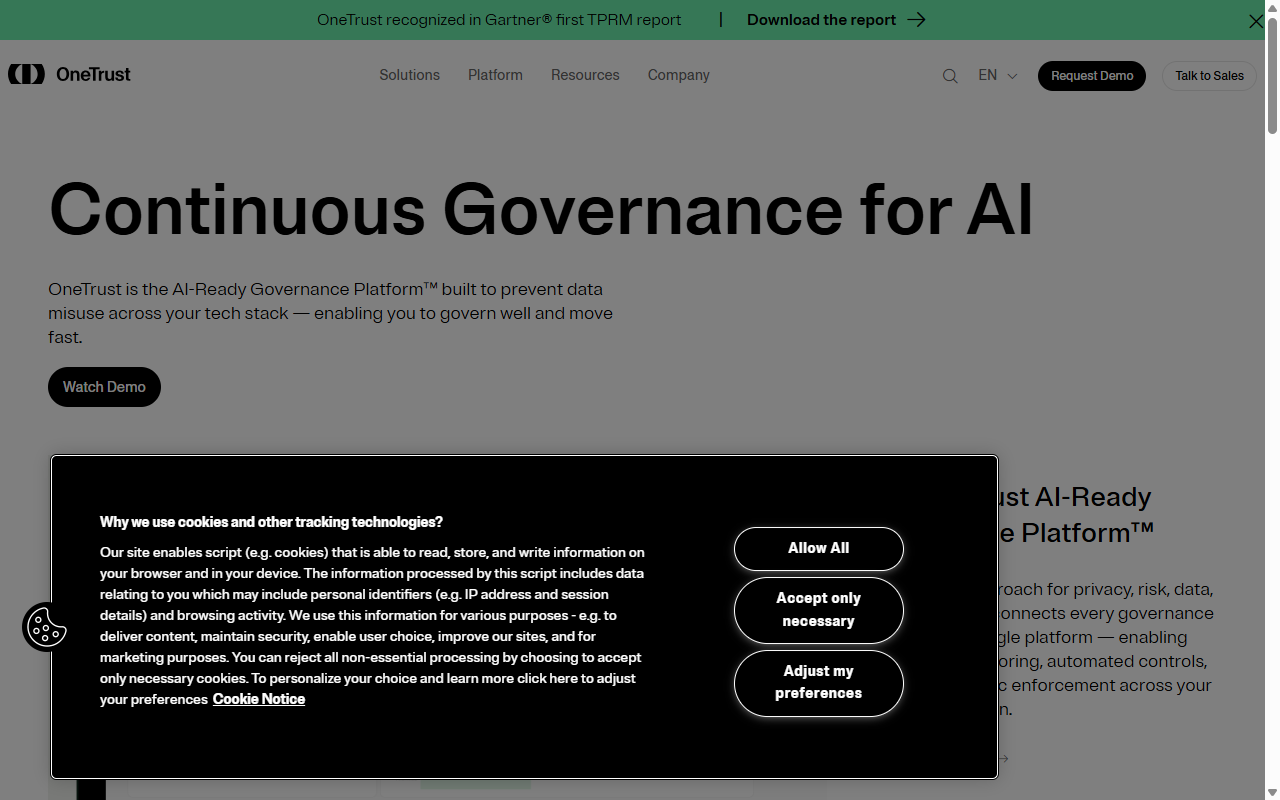
OneTrust is a well-known name in enterprise privacy management, built for large corporations and global networks needing strict compliance workflows and legal audits. For a standard WordPress blog it’s usually overkill, but for a high-traffic enterprise portal, its depth is a strong fit.
Key Capabilities
- Runs deep compliance audits with corporate reporting.
- Optimizes opt-in rates via built-in A/B testing.
- Connects consent data into CRM databases.
- Manages vendor risk profiles alongside cookie preferences.
- Deploys global consent configurations across subdomains.
You’ll typically need to contact sales for a quote based on your scale and needs.
Pros and Cons
- Pro – Enterprise-level security and legal backing.
- Pro – Deep customization for optimization.
- Con – Complex interface needs dedicated training.
- Con – Pricing geared toward enterprise budgets.
Our Verdict
Choose OneTrust if you’re at a large corporation with a legal team managing multi-site compliance.
7. Osano
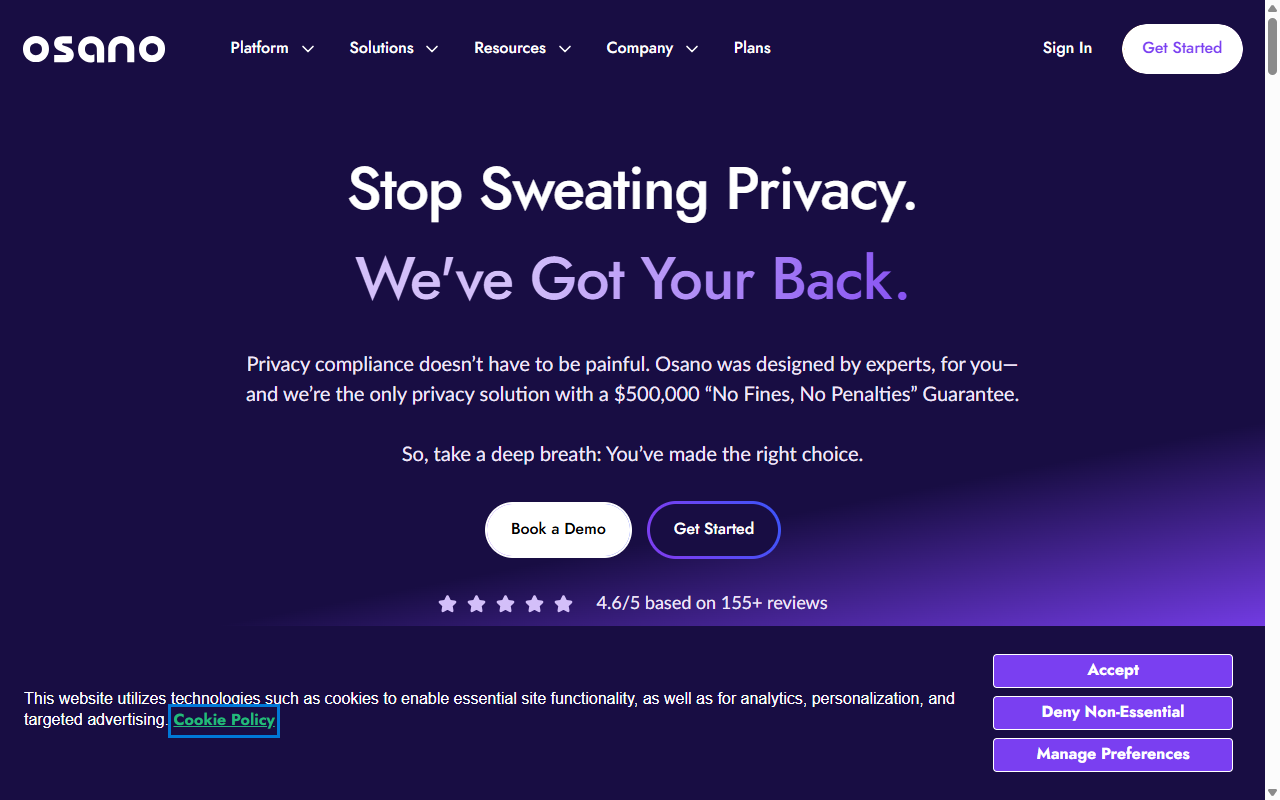
Osano positions itself as a straightforward compliance platform, known for a legal review process where attorneys evaluate the privacy practices of script vendors. It’s cloud-hosted and runs on a single snippet you paste into WordPress.
Key Capabilities
- Blocks tracking scripts based on legal reviews.
- Guarantees compliance with a financial pledge for enterprise users.
- Tracks consent across domains for unified tracking.
- Saves precise history for compliance auditing.
- Translates banners for international audiences.
Paid plans scale with visitor volume, target markets, and cross-domain tracking.
Pros and Cons
- Pro – Legal data feed protects against problematic trackers.
- Pro – Minimal daily maintenance once configured.
- Con – Paid tiers step up monthly costs significantly.
- Con – Visual styling is limited on basic plans.
Our Verdict
Osano suits businesses that want expert-backed script blocking without doing the research themselves.
8. Termly
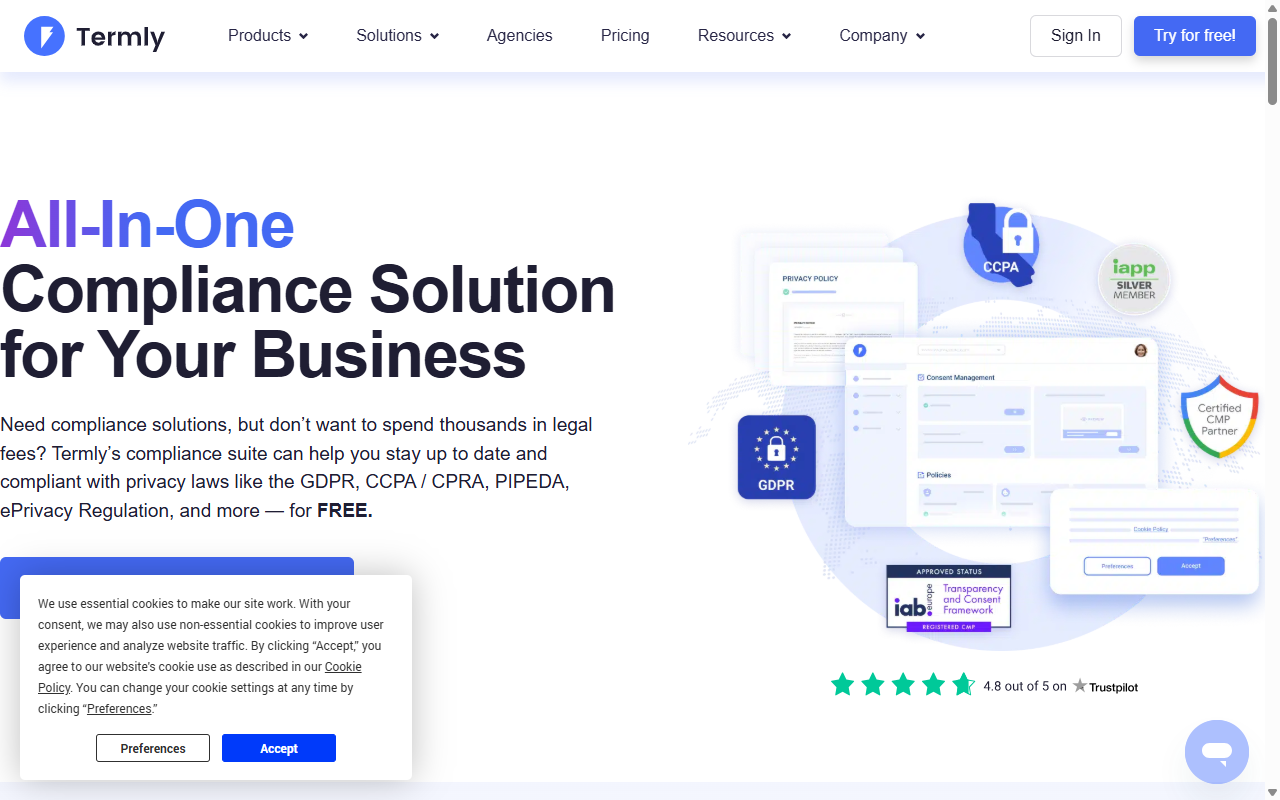
Termly is built mainly for small businesses and self-employed creators, with an all-in-one suite covering a privacy policy builder, a terms generator, and a consent banner. The interface is clean and friendly.
Key Capabilities
- Scans your site weekly to keep the cookie list accurate.
- Builds banners that fit the top or bottom of your site.
- Generates compliance documents linked to your banner settings.
- Supports both GDPR and CCPA layouts.
- Installs via simple copy-paste into your WordPress header.
Paid plans unlock unlimited policy generation, weekly scans, and custom branding, billed per site.
Pros and Cons
- Pro – Very friendly, beginner-focused interface.
- Pro – Affordable small-business compliance bundles.
- Con – Entry-level plan shows Termly branding on banners.
- Con – Less flexible for complex developer integrations.
Our Verdict
Termly is a great starter tool for a quick, attractive banner and simple legal policies without complicated tech jargon.
9. GDPR Cookie Consent (by WebToffee)
This plugin is one of the most popular dedicated tools in the official WordPress repository, a local compliance solution stored inside your native database with granular controls that appeal to technical site builders. The interface favors function over visual design.
Key Capabilities
- Manages cookie lists inside your WordPress database.
- Creates cookie lists shown in a tabbed modal.
- Triggers blocking for categories like Facebook Pixel or Analytics.
- Logs consent locally, no external cloud endpoints.
- Delivers layout options like bars, boxes, and widgets.
A premium upgrade adds features like automatic scanning, geo-location, and advanced script control.
Pros and Cons
- Pro – Fast local execution, no external accounts.
- Pro – Affordable pro upgrade for single-site creators.
- Con – Design controls are basic, may need custom CSS.
- Con – No document generation on basic plans.
Our Verdict
For a traditional WordPress setup where you want full database control, this plugin is a reliable workhorse.
10. Real Cookie Banner
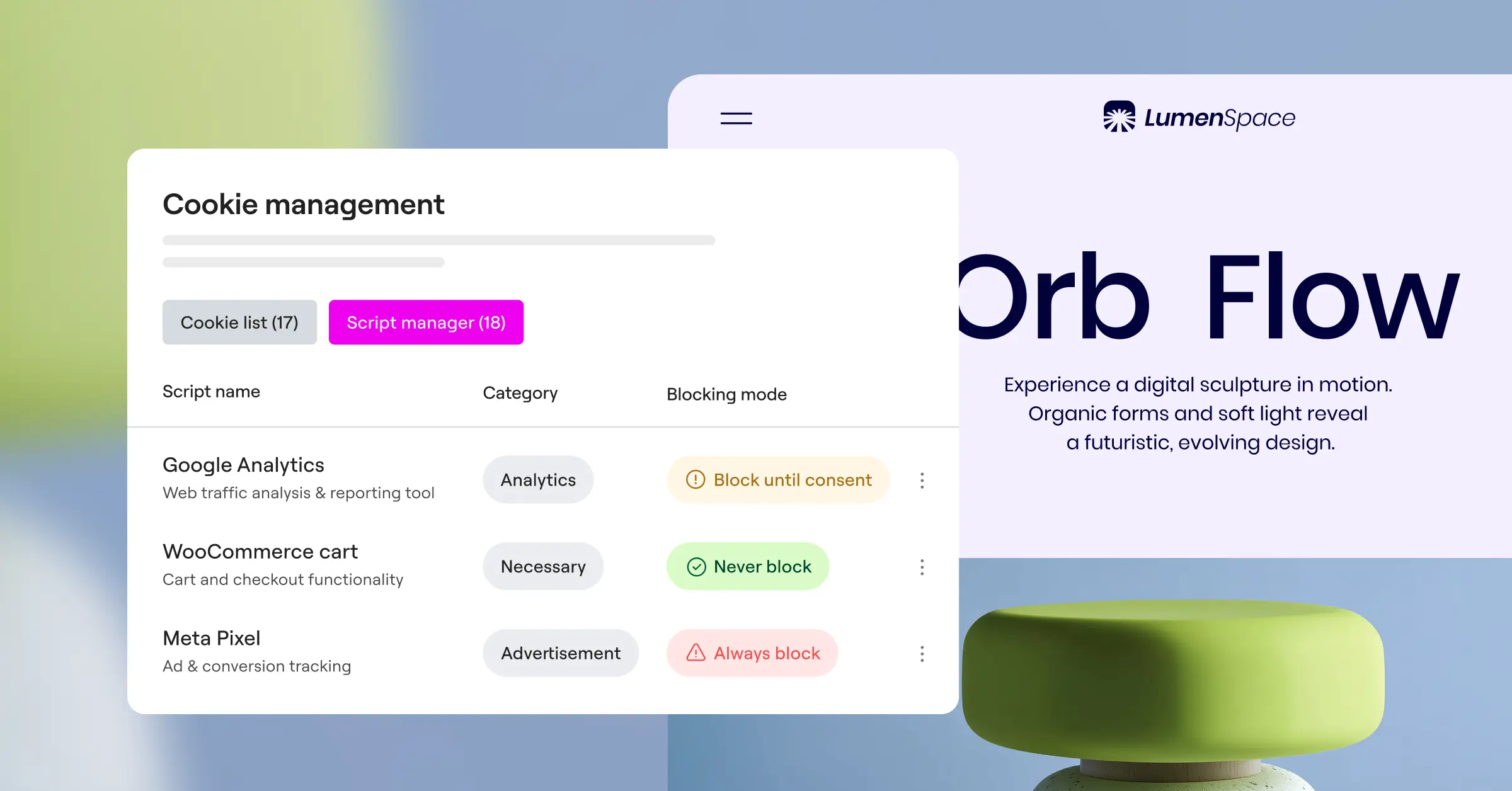
Real Cookie Banner is a WordPress compliance tool known for its visual interface. It holds back analytics and embeds until visitors click “Accept,” and includes over a hundred pre-configured service templates.
Key Capabilities
- Blocks embeds and shows placeholder cards until activated.
- Contains built-in templates for hundreds of services.
- Tracks consent statistics inside your WordPress dashboard.
- Checks your setup for compliance mistakes with a checklist.
- Adapts styling for mobile and desktop screens.
A limited free plan is available in the WordPress directory; paid licenses unlock the most useful automation.
Pros and Cons
- Pro – Visual interface with real-time setup guides.
- Pro – Excellent at blocking embeds like maps and YouTube clips.
- Con – Setup feels lengthy given the detailed templates.
- Con – Paid licenses unlock the most useful automation.
Our Verdict
If your site leans on interactive media embeds, Real Cookie Banner blocks them cleanly with placeholder graphics.
Step-by-Step Guide: How to Set Up Your Cookie Consent Capability
Setting up your compliance tools doesn’t have to be painful. This simple three-step routine works for almost any option here.
Step 1: Run Your Initial Scan
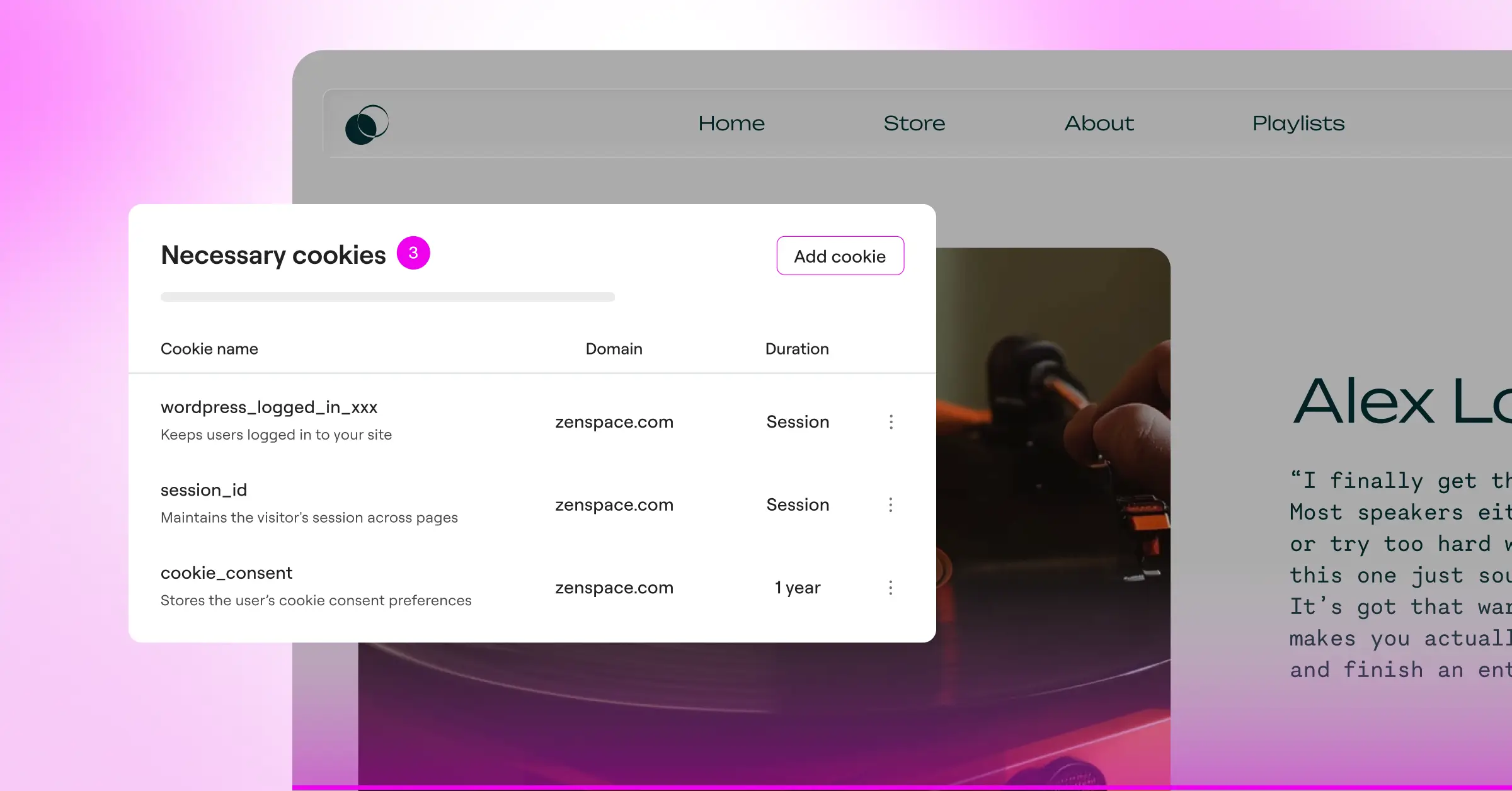
Before designing your banner, you need to know what you’re tracking. Most tools include a scanner that shows what’s active on your site.
- Go to your tool’s scanner settings panel.
- Enter your primary domain URL and click Start Scan.
- Wait a few minutes while the system crawls your pages.
- Review the categorized list (Necessary, Analytics, Marketing) and reclassify any unrecognized cookies.
Step 2: Design the Banner to Match Your Brand
Your banner is one of the first things visitors see, so make it match your site.
- Choose a layout that fits your brand (a subtle bottom bar works well).
- Match the primary button colors to your site’s call-to-action buttons.
- Keep the “Reject” button as easy to find as “Accept” to stay compliant.
Step 3: Activate Google Consent Mode v2
If you use Google tools for marketing, keep Consent Mode active so Google adjusts tags based on visitor choices, and you still gather data when people opt out.
- Go to your consent tool’s integration settings.
- Toggle the switch for Google Consent Mode v2.
- Save your changes and test with a tracking checker.
Best Practices for Maintaining Compliance
Setting up your banner is a great start, but privacy compliance is an ongoing process. Keep these habits in mind to stay protected year-round:
- Test your site in an incognito window monthly to confirm scripts don’t load before you click accept.
- Keep your privacy policy updated whenever you add a new marketing tool or analytics system.
- Enable geo-targeting so you skip pop-ups in countries where they’re not legally required.
- Back up your consent logs regularly, in case you need to prove compliance to a regulator.
- Avoid dark patterns like tiny close buttons or confusing colors that trick visitors into accepting tracking.
Frequently Asked Questions
Do I really need a cookie banner on my WordPress site?
If you get visitors from regions with active privacy laws (the EU, UK, or California) and use tracking cookies like Google Analytics or Facebook Pixel, yes. You need consent before those scripts load.
Will a cookie consent tool slow down my website load times?
It depends. Native tools like Elementor’s Cookie Consent run from your server with optimized code and stay fast. External SaaS options can add a small delay loading assets.
What happens if I do not use a cookie consent banner?
Skipping compliance can mean legal penalties, regulatory fines, or suspension from ad programs like Google AdSense. It can also damage visitor trust.
How does Google Consent Mode v2 work?
It sends consent choices to Google tags directly. If a visitor declines tracking, Google runs in a privacy-safe, cookieless state, so you still gather basic, anonymous data.
Can I customize the visual look of my consent banner?
Yes, almost all modern tools let you customize layouts, colors, and text. Options built for WordPress, like Elementor’s Cookie Consent capability from Elementor, give full design integration.
What are “necessary” cookies?
Necessary cookies are trackers your site needs to function, like keeping a user logged in or holding cart items. They don’t need consent to run, but list them in your cookie policy anyway.
Do I need to keep logs of user consent?
Yes, under frameworks like the GDPR, you must prove a user gave consent if asked. A tool that automatically saves secure consent logs is the easiest way to stay audit-ready.

