Table of Contents
Search Engine Optimization (SEO) has evolved. We have moved past the era of simple keyword stuffing and into a sophisticated landscape defined by Technical SEO, Core Web Vitals, and E-E-A-T (Experience, Expertise, Authoritativeness, and Trustworthiness). Now, with the rise of Artificial Intelligence, we are entering the age of Generative Engine Optimization (GEO). The tools you choose to build your web presence must do more than just generate text; they must generate clean code, semantic structure, and high-performance infrastructure.
When evaluating which AI website builder is best for SEO, we have to look below the surface. We have to examine the DOM structure, the hosting environment, the flexibility of the schema markup, and the ownership of the data. This guide analyzes the top players in the market and details why a comprehensive platform approach often outperforms a closed “instant” builder.
Key Takeaways
- Structure is Strategy: The best AI builders don’t just design pages; they help you plan a semantic site architecture (sitemap) before you build, which is critical for crawlability.
- Performance is a Ranking Factor: AI tools that automatically optimize images and code are essential, but they must be backed by enterprise-grade infrastructure to pass Core Web Vitals.
- Context Matters: Generic AI text generators often fail to capture brand voice. Integrated AI tools that understand the context of your specific page and widgets produce better on-page SEO signals.
- The Platform Advantage: Closed SaaS builders (Wix, Squarespace) offer simplicity but limit technical SEO control. Open platforms like Elementor combine the ease of AI with the limitless extensibility of WordPress.
- Accessibility is SEO: Tools that automate accessibility compliance (like Ally by Elementor) directly improve user experience signals, which Google uses as a ranking factor.
- Ownership Wins: Long-term SEO success relies on content ownership. Platforms that lock you into proprietary systems pose a risk to your digital asset’s longevity.
The New SEO Landscape: Generative Engine Optimization (GEO)
To understand which tool is superior, we must first understand the environment we are competing in. The rules of engagement have changed. Google’s search algorithms are no longer just matching keywords; they are seeking to understand intent, user experience, and the depth of information provided.
The Shift from Keywords to Context
In the past, a website builder only needed to allow you to edit a Title Tag and an H1 header to be considered “SEO-friendly.” Today, that is the bare minimum. Search engines now analyze the semantic relationship between elements on a page. They look at how your content is structured, how accessible it is to users with disabilities, and how quickly the server responds to a request.
This shift has given rise to Generative Engine Optimization (GEO). GEO is the practice of optimizing content not just for traditional search engines, but for the AI-driven answer engines (like Google’s AI Overviews) that summarize information. To win in this environment, your website needs high-fidelity data. It needs clear, structured code that machines can parse easily.
The Trap of “Instant” Builders
Many AI website builders on the market prioritize the visual “wow” factor over this structural integrity. They might generate a stunning layout in seconds, but if you look at the underlying code, it is often a “div soup”—a messy, nested structure of generic containers that confuses search crawlers. When a crawler encounters 15 layers of divs just to reach a headline, it wastes “crawl budget” and dilutes the semantic importance of the text.
Furthermore, many of these “instant” tools lock you into shared hosting environments. These servers are often overcrowded, leading to inconsistent Time to First Byte (TTFB) metrics. Since Google considers page speed a direct ranking factor, choosing a builder with subpar infrastructure is a strategic error that no amount of keyword optimization can fix.
Defining the Criteria: What Makes a Builder “SEO-Ready” in 2025?
Before we analyze specific tools, we must establish the technical benchmarks. A professional evaluating a platform for a serious business project should judge it against these four critical pillars.
1. Code Quality and Semantic HTML
Search engines are robots. They read code, not pixels. A “good” builder generates semantic HTML. This means it uses the correct HTML5 tags to define the parts of a page: <header> for the top, <nav> for navigation, <main> for the primary content, <article> for blog posts, and <footer> for the bottom.
When a crawler encounters semantic tags, it immediately understands the hierarchy and importance of the content. Many drag-and-drop builders fail here, wrapping everything in generic <div> tags. This forces the search engine to guess what the content is, which can lead to indexing issues. The best platforms generate this semantic code automatically or give you the controls to define it yourself (e.g., changing a container tag from div to section).
2. Core Web Vitals and Infrastructure
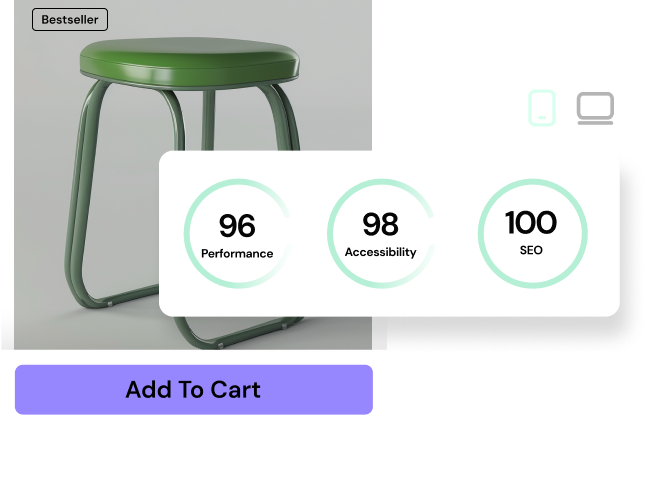
Google explicitly uses page experience signals—known as Core Web Vitals—as ranking factors.
- Largest Contentful Paint (LCP): How fast does the main content load?
- Interaction to Next Paint (INP): How quickly does the page respond when a user clicks something?
- Cumulative Layout Shift (CLS): Does the page jump around while loading?
The builder you choose is inextricably linked to these metrics. If the builder outputs heavy JavaScript bundles that block the main thread, your INP scores will suffer. If the hosting infrastructure is slow, your LCP will fail. This is why the underlying hosting—often hidden in SaaS builders—is actually a critical SEO component.
3. Integrated On-Page SEO Tools
You should not have to fight your builder to add a meta description. The best tools have AI integrated directly into the workflow, allowing you to generate optimized title tags, meta descriptions, and alt text without leaving the editor. This integration ensures that SEO is not an afterthought but a part of the creation process. For example, Elementor AI helps you draft these elements contextually as you build.
4. Schema and Structured Data
To win “rich snippets”—the stars, recipes, event details, and FAQs you see directly on the search results page—your site needs Schema Markup (JSON-LD). A superior AI builder allows you to inject custom code or use AI to generate this schema without needing a developer. Closed platforms often limit you to basic schema types, restricting your ability to compete for these high-visibility search features.
The Contenders: A Functional Market Analysis
We will analyze the leading players in the market. We will look at them strictly through the lens of a professional who prioritizes long-term search visibility, technical control, and data ownership.
Wix
Wix is a closed, proprietary SaaS (Software as a Service) platform.
- Structure: It uses a drag-and-drop interface where elements are positioned absolutely.
- SEO Context: Users can modify standard SEO fields like URL slugs and meta tags. The platform offers a basic checklist tool for setup.
- Limitations: The rendering engine is proprietary, meaning the code structure is determined by the platform and cannot be exported. Users are restricted to the native hosting environment provided by the service.
Squarespace
Squarespace is a template-based SaaS platform known for its specific visual style.
- Structure: The builder relies on a grid system within pre-defined templates.
- SEO Context: The rigid structure prevents users from breaking mobile responsiveness. It includes standard fields for SEO descriptions.
- Limitations: The ecosystem is closed. Users cannot inject custom server-side code or easily modify the underlying site architecture for advanced technical SEO strategies. High-resolution image handling can impact load times without manual intervention.
Framer
Framer is a prototyping tool that exports to React-based websites.
- Structure: It uses a free-form canvas similar to design software.
- SEO Context: Sites are built as Single Page Applications (SPAs) or utilize React hydration.
- Limitations: While Google can crawl JavaScript, React-heavy sites often require more crawl budget. The CMS functionality is limited compared to database-driven systems, making it less suitable for large-scale programmatic SEO.
Hostinger
Hostinger offers an entry-level AI builder bundled with shared hosting services.
- Structure: It generates simple layouts based on user prompts.
- SEO Context: It provides basic fields for meta titles and descriptions.
- Limitations: As a budget-oriented solution, resources are often shared on the server, which can lead to variance in Time to First Byte (TTFB) during high-traffic periods. The feature set is limited regarding advanced schema or technical integrations.
The WordPress Advantage: Open Source Power
The vast majority of the web runs on WordPress. It is the dominant operating system of the internet for a reason: it is open-source. This means you own your data, and the software is infinitely extensible.
However, “WordPress” by itself is just a core software framework. To transform it into a modern “AI Website Builder,” you need a platform that sits on top of it—one that provides the visual interface, the hosting infrastructure, and the generative intelligence.
This is where the distinction between a simple “page builder” and a “website builder platform” becomes critical. A page builder just handles layout. A platform handles the entire lifecycle: hosting, performance, content generation, and site architecture.
Elementor: The Comprehensive Website Builder Platform
Elementor has evolved from a popular plugin into a complete ecosystem. It bridges the gap between the ease of SaaS and the power of WordPress. For the SEO-focused professional, this combination offers a strategic advantage: you get the proprietary AI tools and managed hosting of a SaaS, but the code outputs and data ownership of WordPress.
Let’s dissect why this specific configuration ranks as the premier choice for SEO, breaking it down by the five phases of the web creation lifecycle.
Phase 1: Strategic Architecture with AI
SEO begins before a single pixel is placed on the canvas. It begins with the Sitemap. Most AI builders skip this step entirely, jumping straight to generating a layout. This often results in a “flat” site structure that is disorganized and hard for Google to crawl effectively.
The AI Site Planner functions differently. It acts as a strategic architect. You engage in a conversation with the AI, describing your business goals, your target audience, and your niche. The tool then generates a structured Sitemap and wireframe.
Why this matters for SEO: The planner enforces a logical hierarchy (e.g., Home > Services > Web Design > Enterprise Packages). This semantic structure helps search engines understand the relationship between parent and child pages. It effectively distributes “link juice” (authority) throughout the domain. A well-planned hierarchy allows crawlers to index your site more deeply and understand which pages are the most important.
The Output: Crucially, the AI Site Planner generates a container-based wireframe inside the builder, not just a static image. This means the underlying HTML structure is clean, containerized, and ready for content, rather than being a bloated design file that needs to be converted.
Phase 2: The Infrastructure Foundation
You cannot install a high-performance engine in a rusted chassis and expect to win a race. Similarly, you cannot build a high-ranking site on poor hosting.
Elementor Hosting provides a managed environment specifically engineered for the builder. Unlike generic shared hosting where your site competes for resources with thousands of others, this stack is built on the Google Cloud Platform (C2 Machines).
Google Cloud C2 Instances: These are “Compute-Optimized” virtual machines. They offer incredibly high clock speeds, which drastically reduce the “Time to First Byte” (TTFB). TTFB is a foundational metric; it measures the time between the browser requesting a page and the server sending the first byte of data. If the server is slow to respond, the page will be slow to load, regardless of how well you optimized the design.
Cloudflare Enterprise CDN: Included natively in the platform, this Content Delivery Network caches your content in over 285 locations worldwide. This ensures that a user in Tokyo loads your site as fast as a user in New York. For global SEO, this is critical. It reduces latency and improves the user experience signals that Google tracks.
The SEO Impact: Google has confirmed that site speed is a ranking factor. By utilizing Google’s own infrastructure, you are aligning your technical foundation with the standards of the search engine itself. This integrated approach ensures that your high-performance themes are served instantly to users and crawlers alike.
Phase 3: The Content Engine and On-Page Optimization
Once the structure and hosting are secure, the focus shifts to content. “Content is King” remains true, but in 2025, “Context is Queen.”
Elementor AI is integrated directly into the editing interface. This is a crucial distinction from using an external tool like ChatGPT or Claude. When you use an external tool, you have to copy and paste text, often losing formatting or context.
Context-Aware Generation: When you ask the AI to write a headline, it knows it is writing for a H1 tag. When you ask it to write a product description, it understands it is inside a WooCommerce Builder container. It adjusts the length, tone, and formatting of the output to match the specific widget it is populating.
- Meta Tags & Titles: You can generate optimized title tags and meta descriptions for every page instantly. The AI can analyze the page content and suggest a description that includes your primary keywords while staying within character limits.
- Alt Text Automation: Accessibility is an SEO signal. The AI can analyze an image and generate descriptive Alt Text. This helps Google Image Search understand your visuals and improves the experience for screen reader users.
- Multilingual SEO: The AI can translate content directly within the layout. This allows you to target international keywords without needing complex translation plugins that often bloat the database.
Phase 4: Technical Performance and Media Optimization
Images are the heaviest part of the modern web. Unoptimized images are the leading cause of failed Core Web Vitals scores—specifically the “Largest Contentful Paint” (LCP) metric. If your hero image takes 3 seconds to load, your rankings will suffer.
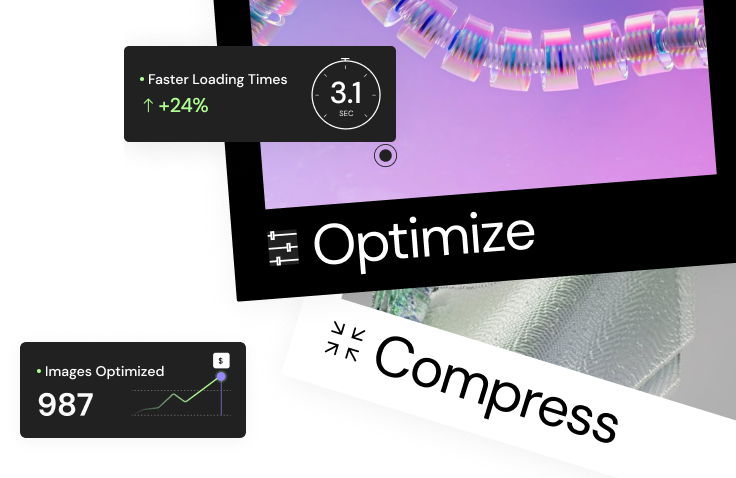
The Image Optimizer by Elementor handles this automatically. It is a “set it and forget it” tool that operates at the server level.
Format Conversion: It automatically converts JPEGs and PNGs into WebP or AVIF. These next-generation formats are significantly smaller (often by 50-80%) while maintaining visual fidelity.
Lazy Loading: Native controls allow for “Lazy Loading,” meaning images below the fold are not loaded until the user scrolls to them. This drastically improves the initial load time.
The Result: You get the visual impact of high-resolution media without the SEO penalty of slow load times. This balance is difficult to achieve with manual optimization alone.
Phase 5: Accessibility and Usability Signals
Google’s algorithms are increasingly favoring sites that provide a superior User Experience (UX). A site that is accessible to users with disabilities is, by definition, a more usable site.
Ally by Elementor is a native plugin designed to address this often-overlooked aspect of SEO.
Automated Scanning: Ally scans your site for violations of WCAG (Web Content Accessibility Guidelines). It identifies issues like low-contrast text, missing ARIA labels, or confusing navigation structures.
AI Remediation: It uses AI to suggest fixes for these violations. For example, if your text color is too similar to your background color (making it hard to read), Ally will flag it and suggest a higher-contrast alternative that matches your design system.
The SEO Connection: An accessible site typically has lower bounce rates and higher engagement times. These are positive user signals that search engines reward. Furthermore, the semantic code required for accessibility (like proper ARIA labels and Alt text) helps search engine bots understand your content with greater precision.
Phase 6: Reliability and Communication
While often overlooked in SEO discussions, transactional reliability impacts user trust and repeat traffic—signals that search engines monitor. If a user tries to reset a password or receive a receipt and the email fails, they leave the site and likely won’t return.
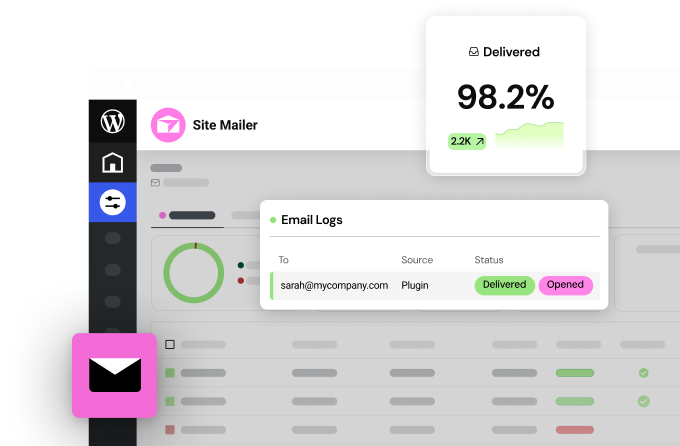
Site Mailer by Elementor ensures that these critical transactional emails (from contact forms or WooCommerce purchases) are delivered reliably without needing complex SMTP configurations. By keeping users engaged and ensuring smooth communication, you protect the behavioral metrics that contribute to your site’s authority.
Advanced SEO Workflows: Going Beyond the Basics
For the true expert, SEO is about scalability and precision. This is where the open nature of the Elementor Pro platform separates it from closed competitors. While closed systems hit a ceiling of capability, Elementor allows for advanced technical maneuvers.
Custom Code and Schema Injection
Sometimes, you need to go custom. Perhaps you run a local business and need a specific JSON-LD schema for a “LocalBusiness” entity, or you are running a recipe blog and need “Recipe” schema.
The AI’s Code Assistant allows you to generate HTML, CSS, and JS snippets directly within the editor. You can ask the AI: “Write a JSON-LD schema for a LocalBusiness located in Chicago with a 5-star rating.” The AI will generate the code, which you can then insert into a Custom Code widget.
This level of granular control is rarely available in closed AI builders, which often force you to rely on their pre-baked schema implementations.
Programmatic SEO with Dynamic Content
One of the most powerful strategies in modern SEO is “Programmatic SEO”—creating hundreds or thousands of pages targeting long-tail keywords (e.g., “Web Design in Austin,” “Web Design in Dallas,” “Web Design in Houston”).
The Theme Builder and Dynamic Content features in the Pro version allow you to execute this strategy. You can build a single “Service Page” template and connect it to a dataset (using WordPress Custom Post Types and Advanced Custom Fields). The system then dynamically populates this single template with data for hundreds of different locations.
This allows you to scale your SEO footprint massively without having to manually design hundreds of pages. You can even access the Library to find pre-designed blocks to speed up the template creation process.
The Future: Agentic AI
We are currently moving from Generative AI (creating text) to Agentic AI (performing tasks). Angie, the vision for the future of the AI Website Builder, represents a workflow where you can command the AI to perform complex site maintenance tasks.
Imagine telling your AI agent: “Audit all my internal links and fix any broken ones,” or “Update the copyright date on all footers.” While this technology is still evolving, the integration of AI into the workflow points toward a future where technical SEO maintenance is automated, freeing you to focus on strategy.
Comparison Matrix: AI Builders Ranked by SEO Criteria
The following table provides a direct comparison of the leading AI builders based on the criteria most critical to an SEO professional.
| Feature | Elementor Platform | Wix | Squarespace | Framer |
| Site Architecture | Excellent: AI Site Planner generates semantic sitemaps. | Good: Structured but rigid. | Good: Very rigid structure. | Fair: Manual setup required. |
| Hosting Performance | Enterprise: Google Cloud C2 + Cloudflare Enterprise. | Good: Proprietary AWS/Google mix. | Good: Reliable, standard speeds. | Fair: Fast, but React hydration can slow LCP. |
| Code Control | High: Semantic HTML + Custom Code injection. | Low: Proprietary code, difficult to export. | Low: Locked template code. | Medium: React-based, code overrides possible. |
| Schema Markup | High: Custom AI-generated JSON-LD possible. | Medium: Built-in fields, hard to customize. | Low: Limited to basic types. | Low: Manual code required. |
| Image Optimization | Automated: WebP/AVIF conversion on upload. | Automated: WebP conversion. | Automated: Creates multiple sizes. | Manual: Requires pre-optimization. |
| Data Ownership | Full: Open Source WordPress. | None: Locked to platform. | None: Locked to platform. | None: Locked to platform. |
The Expert Verdict
The choice of a website builder is often a trade-off between convenience and control. However, the maturation of the Elementor ecosystem suggests that you no longer have to choose.
“In my experience analyzing hundreds of site builds, the ‘instant’ website builders often hit a ceiling. They are great for Day 1, but by Day 100, when you need to optimize for a competitive keyword or improve your Time to Interactive by 200ms, you hit a wall.
SEO is not a feature you toggle on; it is a discipline that requires a solid foundation. Elementor allows you to build that foundation on Google Cloud, structure it with WordPress, and optimize it with AI, without ever taking away your ability to look under the hood and tweak the engine. That combination of power and ownership is why it remains the superior choice for serious SEO.”
— Itamar Haim, Digital Strategy Expert
Conclusion
The question “Which AI website builder is best for SEO?” has two answers, depending on your ambition.
If your goal is to have a site up in 10 minutes and you are targeting very low-competition keywords (perhaps for a personal portfolio or a temporary event), a closed tool like Wix or Hostinger is sufficient. They are capable tools that provide a basic presence.
However, if your goal is to build a digital asset that competes for high-value traffic, creates long-term brand equity, and withstands the volatility of algorithm updates, you need a Platform.
Elementor is currently the only solution that effectively merges the three pillars required for Generative Engine Optimization:
- The Intelligence of AI: For planning, content, and code generation.
- The Stability of SaaS: Through managed hosting and enterprise-grade performance tools.
- The Freedom of Open Source: For unlimited extensibility and complete data ownership.
In the high-stakes race for search visibility, you don’t just want a builder that helps you start; you want a platform that helps you finish first. Start your journey with a Free Download or claim your Free Domain Name when you sign up for hosting.
Frequently Asked Questions (FAQ)
1. Does using an AI website builder negatively impact my SEO rankings? No, using AI does not inherently hurt SEO. Google has explicitly stated that they reward high-quality content and good user experience, regardless of how it was created. However, the misuse of AI can hurt you. If you rely solely on AI to generate generic, repetitive content without human editing, or if the builder produces bloated, messy code, that can harm your rankings. The key is to use AI as a tool for structure, drafting, and optimization, not as a complete replacement for human strategy and oversight.
2. Can Elementor AI generate Schema Markup for rich snippets? Yes. While the platform handles standard SEO tags (like titles and descriptions) natively, you can use the AI Code Assistant to generate specific JSON-LD schema markup for unique content types. For example, you can generate schema for Events, Recipes, Reviews, or Job Postings. You can then insert this code into your pages using the HTML widget or the Custom Code feature. This gives you significantly more flexibility than platforms that only offer rigid, pre-set schema options.
3. Why is Elementor Hosting considered better for SEO than cheap shared hosting? Cheap shared hosting often places thousands of websites on a single server. If one of those sites gets a spike in traffic, your site slows down. This inconsistency hurts your “Time to First Byte” (TTFB) and “Largest Contentful Paint” (LCP) scores. Elementor Hosting uses Google Cloud Platform’s C2 instances, which are isolated and compute-optimized. This ensures consistently fast load times, which is a direct ranking factor for Google’s Core Web Vitals.
4. How does the AI Site Planner improve site architecture? Most users build websites page-by-page without a plan. This leads to a “flat” structure where every page is just one click away from the home page, which confuses search engines about which pages are most important. The AI Site Planner prompts you to define your business goals first, then generates a hierarchical sitemap before you start building. This ensures your site has logical parent-child relationships (e.g., Services > Specific Service), which helps search engine crawlers understand the topical authority of your site.
5. Do I need an external plugin like Yoast SEO if I use Elementor? The platform integrates seamlessly with popular SEO plugins like Yoast SEO and Rank Math. You can edit your meta titles, descriptions, and social sharing settings directly within the editing interface. The combination of Elementor (for structure, design, and performance) and a dedicated SEO plugin (for metadata management) is widely considered the industry standard for WordPress SEO. The builder provides the fast “container,” and the plugin provides the “labels.”
6. Does the Elementor Image Optimizer really help with rankings? Yes. Large images are the most common reason for a slow “Largest Contentful Paint” (LCP) score. Since LCP is a Core Web Vital, fixing it directly influences your ranking potential. The Image Optimizer automatically compresses files and converts them to WebP or AVIF formats. These formats are smaller than JPEGs but look just as good. This tool also implements “Lazy Loading,” which further speeds up the initial page view.
7. Is the code generated by Elementor “clean” enough for Google? Yes. In recent years, the engineering team has significantly optimized the DOM output. It introduced features like Flexbox Containers and Grid layouts, which reduce the number of div wrappers needed to create complex layouts. This results in cleaner, semantic HTML that is easier for search bots to parse compared to older legacy builders or the “div soup” produced by some instant AI generators.
8. Can I use AI to translate my website for international SEO? Elementor AI includes translation capabilities directly in the editor. You can translate text elements into multiple languages instantly. For a robust international SEO strategy, this feature works best when paired with a multilingual plugin (like WPML or Polylang). This ensures you have proper hreflang tag implementation, which tells Google which version of the site to show to users in different countries.
9. How does accessibility affect my SEO score? Search engines use engagement metrics (like time on site and bounce rate) as quality signals. If your site is inaccessible to users with disabilities (who make up a significant portion of the population), your engagement metrics will suffer. Furthermore, accessibility requires semantic code—like descriptive Alt text for images and proper ARIA labels for buttons. Tools like Ally help automate this compliance, creating a virtuous cycle where better accessibility leads to better SEO.
10. What happens to my SEO if I move my site away from Elementor? Because the platform is built on WordPress, you have full data ownership. If you ever decide to move to a different host or even a different builder on WordPress, your core content (blog posts, pages, media) remains safely in your database. This is a massive advantage over closed platforms like Wix or Squarespace, where migrating data is often a difficult, manual process that results in broken URLs and lost SEO equity. You are building an asset you truly own.
Looking for fresh content?
By entering your email, you agree to receive Elementor emails, including marketing emails,
and agree to our Terms & Conditions and Privacy Policy.