Table of Contents
However, the world of “free” website builders is nuanced. Some offer a genuine launchpad for growth, while others provide a restricted “sandbox” that can stifle your business just as it starts to gain traction. The challenge lies in distinguishing between a tool that helps you start for free and one that traps you in a limited ecosystem. This guide explores the landscape of free website builders, analyzing the top contenders objectively and offering a strategic framework to help you choose the platform that supports not just your launch, but your long-term success.
Key Takeaways
- Ownership Matters: Most “free forever” plans on SaaS platforms (like Wix or Squarespace) retain ownership of your site data and structure, making it difficult to migrate later. Open-source solutions like WordPress with Elementor offer full data ownership.
- The “Free” Trade-off: Free plans typically come with trade-offs such as platform branding (ads), subdomain usage (e.g., yourname.wixsite.com), and limited bandwidth. These can impact brand credibility.
- Scalability is Critical: A builder might be free today, but if it cannot handle e-commerce, marketing automation, or advanced SEO as you grow, the migration costs later will far exceed initial savings.
- The Platform Advantage: Modern website creation has evolved from simple page builders to comprehensive platforms. Tools like Elementor now integrate hosting, AI, marketing, and accessibility, streamlining the technical stack for small business owners.
- Design Freedom: Template-based builders offer speed but often lack flexibility. Visual builders that allow granular control (pixel-perfect design) enable businesses to create unique brand identities without coding.
The “Free” Illusion vs. Strategic Investment: Understanding the Models
When embarking on the journey of building a small business website, it is imperative to understand the underlying business models of the tools available. The term “free” is often used as a marketing hook, but the reality of what is provided varies drastically between the two primary categories of website builders: the Freemium SaaS model and the Open Source model. Your choice between these two will dictate your site’s future flexibility, cost, and capabilities.
The Freemium SaaS Model (Closed Ecosystems)
The most common “free” website builders operate on a Software-as-a-Service (SaaS) model. These are closed ecosystems where the provider controls the hosting, the software, and the data. Examples include platforms like Wix, Weebly, and GoDaddy. The “free” tier in this model is designed primarily as a lead generation tool for their paid subscriptions.
The Functional Limitations: In a SaaS environment, the free plan is a restricted version of the full product. The provider typically places advertisements on your website—often a banner at the top or bottom stating “Built with [Platform Name].” For a professional small business, this third-party branding can dilute trust and signal a lack of established authority. Furthermore, these platforms rarely allow the connection of a custom domain name (e.g., www.yourbusiness.com) on the free tier, forcing you to use a subdomain (e.g., yourbusiness.platform.com).
Data Lock-in: Perhaps the most significant drawback is data ownership. Because the site is built on proprietary software, you cannot simply “export” your website and move it to another host if you become dissatisfied with the service or pricing. Leaving the platform often means rebuilding your website from scratch.
The Open Source Model (Freedom and Flexibility)
The alternative approach is the Open Source model, predominantly represented by WordPress. In this model, the core software is free to download, use, and modify. It is community-driven and not owned by a single corporation looking to upsell you on every feature.
True Ownership: When you build on an open-source foundation, you own your website. You own the content, the design files, and the database. This grants you the freedom to host your site anywhere, ensuring you are never locked into a single provider’s infrastructure.
The Role of Elementor: This is where the Elementor Website Builder fits into the equation. Elementor operates on top of WordPress, providing a professional visual interface that rivals—and often exceeds—the ease of use of SaaS builders, without the restrictive lock-in. While the software is free, this route typically requires a small investment in hosting to make the site live. However, this structure provides a professional-grade foundation from day one, avoiding the branding and domain restrictions of “free” SaaS plans.
Strategic Criteria for Small Business Websites in 2026
Before evaluating specific tools, it is crucial to establish a set of criteria based on the current demands of the digital marketplace. In 2026, a website must be more than just a digital brochure; it must be a high-performance asset.
1. Design Flexibility and Brand Identity
Your website is the digital face of your brand. In a crowded market, differentiation is key. Many free builders force users into rigid templates that are difficult to customize beyond basic color and text changes. If your website looks identical to thousands of others, it fails to communicate your unique value proposition.
The standard for 2026 is “pixel-perfect” design control. You need the ability to adjust margins, padding, fonts, and layout structures precisely to match your brand guidelines. A builder should empower you to design like a professional, creating a visual identity that resonates with your specific target audience, rather than forcing your content to fit into a pre-determined box.
2. Mobile Responsiveness and Mobile-First Indexing
With global mobile traffic consistently surpassing desktop traffic, mobile responsiveness is non-negotiable. Google operates on a “mobile-first indexing” basis, meaning it predominantly uses the mobile version of the content for indexing and ranking.
A robust website builder must go beyond simply stacking desktop content into a single column for mobile screens. It should offer specific mobile editing capabilities, allowing you to:
- Reverse column ordering for better user flow.
- Adjust font sizes specifically for smaller screens.
- Hide non-essential elements that clutter the mobile view.
- Optimize touch targets (buttons and links) for finger tapping.
3. SEO Infrastructure and Clean Code
A beautiful website is ineffective if it cannot be found. Search Engine Optimization (SEO) depends heavily on the underlying code structure of your website. Some drag-and-drop builders generate “bloated” code—excessive lines of script and styling that slow down page load times and confuse search engine crawlers.
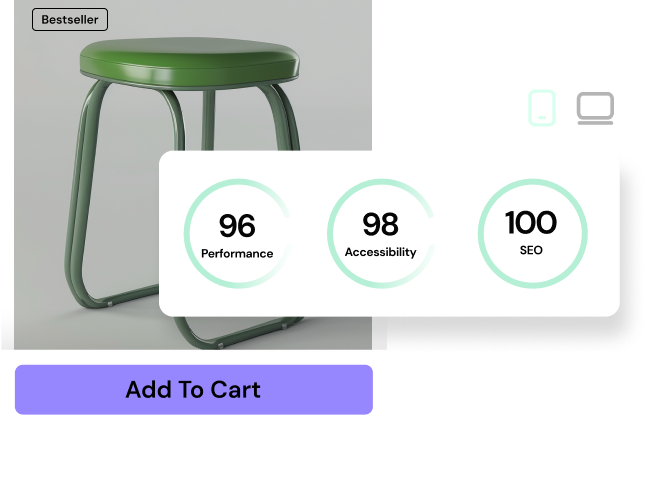
The best builders generate semantic HTML (proper use of H1, H2, and H3 tags) and integrate seamlessly with SEO tools. They should allow you to customize meta titles, descriptions, and alt text for images without requiring a paid upgrade. Speed is also a ranking factor; thus, the builder’s efficiency directly impacts your visibility.
4. Scalability and Ecosystem Integration
Small businesses evolve. You might start as a consultant, then add a booking system, and eventually launch an online course or physical product line. A “free” builder that cannot grow with you becomes a liability.
Scalability means the platform can handle increased traffic and complex functionality. Does the builder integrate with email marketing services? Can it connect to a CRM? Can you add a full e-commerce store without migrating platforms? A robust ecosystem of plugins and integrations is vital for future-proofing your business.
5. Security and Data Protection
In an era of increasing cyber threats, security cannot be an afterthought. While SaaS platforms manage security for you, they also become single points of failure. In the open-source world, security is a shared responsibility, but modern managed hosting solutions have automated much of this, providing enterprise-grade firewalls and backups even for small business sites.
Functional Analysis of Top Free Website Builders
This section provides a functional analysis of the most prominent free website builders available today. The objective is to describe their capabilities and technical limitations neutrally, allowing you to assess their suitability for your specific business needs.
Wix
Wix is a cloud-based web development platform. It operates on a Software-as-a-Service model, providing hosting and tools in a single package.
Core Functionality: Wix utilizes a drag-and-drop editor that allows users to place elements anywhere on the canvas (absolute positioning). It provides a vast library of pre-designed templates categorized by industry. The platform includes a basic App Market for adding features like booking forms or event calendars.
Technical Limitations: The free tier of Wix includes significant restrictions. Prominent banner advertisements are displayed at the top and bottom of the published site, which cannot be removed without a subscription. Users are restricted to a Wix-branded subdomain, preventing the connection of a custom professional domain. Bandwidth and storage are capped at 500MB, which may be insufficient for media-heavy sites. Additionally, once a template is selected and the site is built, it cannot be swapped for a different template without rebuilding the content from scratch.
WordPress.com
WordPress.com is a hosted service version of the open-source WordPress software. It differs from self-hosted WordPress (WordPress.org) in that it manages the backend infrastructure for the user.
Core Functionality: The platform uses the Gutenberg block editor for content creation, which allows users to stack content blocks (paragraphs, images, galleries) to form pages. It handles security updates, backups, and hosting maintenance automatically.
Technical Limitations: The free plan on WordPress.com is restrictive regarding customization. Users cannot upload custom themes or plugins, which effectively cuts off access to the vast ecosystem of third-party tools that define the WordPress experience. The platform places advertisements on free sites and does not offer monetization features. Design customization is limited to the options provided by the specific theme selected, lacking the granular visual control of a dedicated page builder.
Webflow
Webflow markets itself as a visual web design tool for designers and developers. It translates visual design decisions into clean HTML, CSS, and JavaScript code.
Core Functionality: Webflow offers a high degree of design precision. The interface mirrors the properties of CSS (margins, padding, flexbox, grid) in a visual panel. It is capable of producing high-performance, custom animations and interactions.
Technical Limitations: The platform has a steep learning curve, requiring users to have a foundational understanding of web design principles and the “box model.” The free “Starter” plan is designed primarily for prototyping. It limits users to two static pages and 50 CMS (Content Management System) items. To connect a custom domain or scale beyond these limits, a user must upgrade to a paid site plan. It does not offer a true “free forever” hosting solution for a complete business website.
Square Online (formerly Weebly)
Square Online focuses on e-commerce functionality, leveraging the Square payment processing ecosystem.
Core Functionality: The platform allows for the rapid deployment of an online store. It integrates inventory management between online sales and physical Point of Sale (POS) systems. The editor is structured and grid-based, prioritizing speed of setup over design freedom.
Technical Limitations: Design flexibility is limited compared to free-form visual builders. Users must work within rigid layout structures, making it difficult to achieve a highly custom look. The free plan displays Square branding in the footer and does not support custom domain connection. Customization of the checkout experience is restricted, and transaction fees apply to sales.
GoDaddy Website Builder
GoDaddy provides a website building tool focused on speed and simplicity, often utilizing Artificial Intelligence (ADI) to generate initial layouts based on user inputs.
Core Functionality: Users answer a series of questions about their business, and the platform generates a site structure with placeholder content. It includes basic built-in marketing tools for social media and email.
Technical Limitations: The design options are constrained. Users cannot move elements freely on the page but must stack pre-designed “sections.” The customization options are generally limited to changing colors, fonts, and images within these sections. The free plan is often positioned as a trial or a highly limited version that encourages upgrades to unlock essential features like domain connection and SEO tools.
The Strategic Solution: The Elementor Ecosystem
For small business owners who require professional capability, absolute design freedom, and long-term cost-effectiveness, the combination of WordPress with the Elementor Website Builder represents a superior strategic choice.
Unlike closed SaaS platforms that create a dependency on a single provider, this approach leverages the open-source power of WordPress while providing a top-tier visual design experience. Elementor has evolved from a simple page builder into a comprehensive Website Builder Platform. It empowers creators to build, manage, and grow their online presence within a single, unified environment.
The Best of Both Worlds: Platform Power + Open Source Freedom
The Elementor ecosystem offers a unique proposition: it provides the intuitive, integrated experience of a SaaS builder (like Wix) while retaining the data ownership and flexibility of open-source WordPress.
Ownership and Control: By using Elementor, you are building on your own property. You are not renting space that can be taken away or restricted by a platform’s changing terms of service. You have full access to your database and files.
Elementor Hosting: To bridge the gap between “technical” WordPress hosting and “easy” SaaS builders, Elementor Hosting provides a managed environment specifically optimized for the platform. Powered by Google Cloud Platform, it ensures enterprise-grade speed, security, and scalability. This eliminates the technical hurdles often associated with self-hosted WordPress, providing a streamlined setup where WordPress and Elementor are pre-installed and ready to go.
The Creative Engine: Visual Building
At the core of the ecosystem is the editor, which democratizes high-end web design. Elementor replaces the need for coding with a visual, intuitive interface that operates in real-time.
Drag-and-Drop Workflow: You build your website by dragging intelligent “widgets” onto the canvas. There is no disconnect between the backend and the frontend; you edit the page exactly as your visitors will see it. This “What You See Is What You Get” (WYSIWYG) experience reduces development time and allows for rapid iteration.
Comprehensive Free Widget Library: The Elementor Library and the free version of the plugin include over 40 essential widgets that cover the needs of almost any small business website:
- Structure: Inner Section, Heading, Text Editor.
- Media: Image, Video, Image Box, Icon Box, Image Carousel, Basic Gallery.
- Action: Button, Icon List, Star Rating.
- Utility: Google Maps, HTML, Shortcode, Menu Anchor.
This robust toolset ensures that “free” does not mean “bare bones.” You can construct complex, feature-rich layouts without upgrading to Elementor Pro, although the upgrade path is available when you need advanced marketing features.
Accelerating Strategy with AI
Efficiency is a critical competitive advantage. Elementor has integrated Artificial Intelligence directly into the web creation workflow, acting as a force multiplier for small teams with limited resources.
Strategic Planning with AI Site Planner: The blank page is often the biggest obstacle. The Elementor AI Site Planner solves this by generating a comprehensive website strategy in minutes. By inputting your business type and goals, the AI generates a sitemap, wireframes, and even a structure for your content. It transforms a vague concept into a concrete, actionable blueprint instantly, saving hours of planning time.
Content and Asset Creation: Small businesses often struggle with copywriting and high-quality visuals. Elementor AI lives inside the editor, assisting in writing compelling headlines, translating text for local markets, and generating or editing images. This ensures your site is not just a structural shell, but a content-rich asset that engages and converts visitors.
Explore the AI Website Builder Solution
The Foundation: Hello Theme and Hello Biz
A common mistake in the WordPress world is selecting a “bloated” theme that slows down the site with unnecessary scripts and rigid styling. The Hello Theme is designed specifically by Elementor to be the perfect companion to the builder.
It is a lightweight framework that loads incredibly fast—often under 1 second—and acts as a blank canvas. It strips away the styling decisions usually forced by themes, giving you complete control over your design via the Elementor editor.
For those who need a running start, Hello Biz offers a beginner-friendly variation. It includes guided setups and pre-configured settings, allowing you to launch a polished business site quickly without starting from absolute zero.
Step-by-Step: Building Your Professional Site with Elementor
Creating a professional website does not have to be an overwhelming technical challenge. By following a structured workflow, you can move from concept to launch efficiently, ensuring every step adds value to your business.
Phase 1: Planning and Strategy
Before opening the editor, use the AI Site Planner to map out your digital footprint.
- Define Your Audience: Who are you trying to reach?
- Determine Your Goal: Is it lead generation, brand awareness, or direct sales?
- Map Your Structure: Standard pages include Home, About, Services, and Contact.
Phase 2: Setup and Installation
The foundation must be solid.
- Secure Hosting: Choose a reliable host. If you select Elementor Hosting, the technical configuration is handled for you.
- Install WordPress: If not pre-installed, run the famous 5-minute install.
- Install the Hello Theme: Navigate to Appearance > Themes and search for “Hello Elementor.”
- Install Elementor: Go to Plugins > Add New, search for “Elementor Website Builder,” and activate it.
Phase 3: Design and Build
This is where your brand comes to life.
- Use the Library: If you are not a designer, use the Elementor Library to browse pre-designed templates. You can import full “Page Kits” that provide a cohesive look for your entire site.
- Customize the Hero Section: This is the top section of your homepage. It needs a high-quality background image, a compelling headline, and a clear Call-to-Action (CTA) button.
- Build Service Pages: Use the “Icon Box” widget to list your services clearly with accompanying visuals.
Phase 4: Optimization and Performance
A slow site drives customers away. Optimization should be part of the build process, not an afterthought.
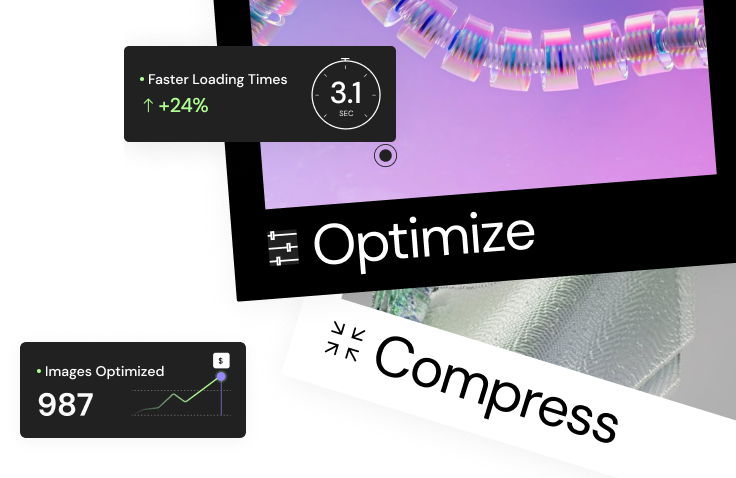
- Optimize Images: Large image files are the primary cause of slow loading. Use Image Optimizer by Elementor to compress your media and convert it to modern formats like WebP or AVIF automatically. This ensures high visual quality with a minimal file size footprint.
Phase 5: Mobile Responsiveness
Never launch without a mobile audit.
- Responsive Mode: In Elementor, switch to “Responsive Mode” at the bottom of the panel.
- Adjust Layouts: Check that your columns stack correctly.
- Mobile Fonts: Ensure your headlines don’t take up the entire phone screen. Adjust the typography settings specifically for the “Mobile” view.
Phase 6: Accessibility and Compliance
Inclusivity is both a moral imperative and a legal necessity, especially with regulations like the ADA and EAA.
- Install Ally: Ally by Elementor is a tool that helps you identify and fix accessibility issues, such as low contrast text or missing alt tags.
- Enable the Widget: Ally provides a frontend accessibility widget that allows visitors to adjust the site’s readability (font size, contrast modes) to their specific needs.
Beyond the Build: Growth, Marketing, and Future-Proofing
A website is never truly “finished.” It is a living engine for your business growth. Once your site is live, your focus shifts from construction to traffic, conversion, and scaling. The Elementor ecosystem supports this growth phase with integrated tools designed to work seamlessly with your site.
Ensuring Reliability with Site Mailer
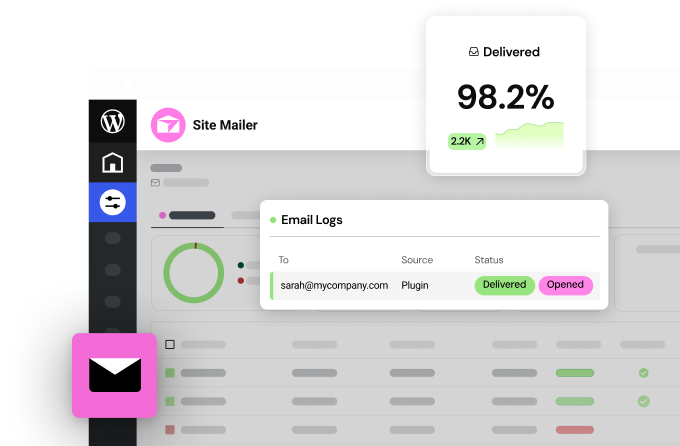
A common and frustrating technical hurdle for WordPress users is unreliable email delivery. Often, contact form notifications end up in spam folders, meaning lost leads. Site Mailer by Elementor resolves this by configuring your email sending protocols. It ensures that when a customer fills out your “Get a Quote” form, the lead actually lands in your inbox. Reliability here is directly tied to revenue.
Scaling to E-Commerce
If you decide to sell products in the future, your platform is ready. Elementor integrates deeply with WooCommerce, the world’s most popular open-source e-commerce solution. The WooCommerce Builder (available in Elementor Pro) allows you to design custom product layouts, cart pages, and checkout flows visually. You are not stuck with a generic shop template; you can create a shopping experience that perfectly matches your brand identity.
The Power of Community
One often-underestimated value of the open-source ecosystem is the community. With millions of active installs, the Elementor community is a vast resource of knowledge. Whether you are facing a design challenge or need advice on the best plugins for a specific feature, there are thousands of tutorials, forums, Facebook groups, and local meetups available. You are never building alone.
Frequently Asked Questions
1. Is Elementor really free to use for a business? Yes, the Elementor Website Builder plugin is completely free to download and use. It includes over 40 widgets and a drag-and-drop editor. You will need a WordPress installation (which is also free software), but you typically pay a small fee for web hosting to keep your site online.
2. Can I use my own domain name with the free version? Yes. Unlike SaaS builders that force a branded subdomain (like wixsite.com) on free plans, using Elementor on self-hosted WordPress allows you to use any custom domain you have purchased (e.g., yourbusiness.com). This is crucial for professional branding. Get a free domain name information here.
3. Do I need to know how to code to use Elementor? No. Elementor is designed as a no-code solution. You build your site visually using drag-and-drop elements. However, if you are a developer or want to add custom CSS later, Elementor allows for that flexibility as well.
4. How does Elementor compare to Wix for a small business? Wix is an all-in-one hosted solution which is easier to start but can be more expensive and limiting as you scale. Elementor provides greater design freedom and ownership of your data. With Elementor, you are not locked into a single platform’s ecosystem forever.
5. Is the free version of Elementor good for SEO? Yes. Elementor generates clean code that Google can crawl easily. Additionally, because it runs on WordPress, you can use industry-leading SEO plugins to further optimize your site, giving you an advantage over many closed website builders.
6. Can I add an online store later? Absolutely. Elementor integrates deeply with WooCommerce. You can start with a simple brochure site and add store functionality whenever you are ready to sell products.
7. What happens if I want to upgrade to Elementor Pro later? Upgrading is seamless. You simply install the Pro plugin, and it unlocks advanced widgets, the Theme Builder, and more templates. You do not lose any of the work you built with the free version; it simply adds more power to your existing site. Learn more about Elementor Pro.
8. Is Elementor mobile-friendly? Yes. Elementor has a built-in Responsive Mode that allows you to preview and edit your site for Mobile and Tablet devices. You can change font sizes, padding, and layout specifically for mobile users without affecting the desktop version.
9. How secure is a website built with Elementor? Elementor is built with strict security standards. However, website security also depends on your hosting provider. Using a managed hosting solution like Elementor Hosting significantly enhances security with built-in firewalls and SSL certificates.
10. Can I create a blog with Elementor? Yes. Blogging is native to WordPress, and Elementor allows you to design beautiful custom layouts for your blog posts. You can use the “Posts” widget to display your articles anywhere on your site. Learn more about WordPress building.
Conclusion
Choosing a website builder is about more than just saving money in the short term; it’s about investing in a platform that won’t limit your future. While many “free” website builders offer a quick fix, they often come with hidden costs in the form of branding, advertisements, and data lock-in.
For the small business owner who values professionalism, ownership, and unlimited creative potential, the combination of WordPress and Elementor stands out as the superior choice. It offers the low barrier to entry of a free plugin with the robust, scalable power of a world-class platform. By leveraging tools like the AI Site Planner, Hello Theme, and Elementor Hosting, you aren’t just building a website—you are building a digital asset that will grow alongside your business.
The best free website builder isn’t just the one that costs zero dollars today. It’s the one that empowers you to make millions tomorrow.
Looking for fresh content?
By entering your email, you agree to receive Elementor emails, including marketing emails,
and agree to our Terms & Conditions and Privacy Policy.