
Running a website today means thinking about privacy law, whether you like it or not. Between GDPR, CCPA, and Google Consent Mode v2, staying compliant can feel like a full-time job, but you don’t have to handle it alone. CookieYes and Complianz are two of the most popular WordPress consent tools, and both handle banners, script blocking, and consent logs, just in very different ways. Which one fits you best comes down to your workflow and how you’d rather manage your site’s data.
Key Takeaways
- CookieYes uses a hybrid cloud model that works across multiple platforms, though settings are managed through an external web app.
- Complianz is a WordPress-focused solution that runs almost entirely inside your local database, a favorite among privacy-conscious site owners.
- Both platforms support Google Consent Mode v2, which matters if you run Google Ads or analytics for European audiences.
- If you already build sites with Elementor, the built-in Cookie Consent capability lets you manage compliance natively, without installing a separate tool.
- Your decision comes down to whether you’d rather work from an external cloud dashboard or a local, wizard-driven WordPress setup.
The Core Differences Between CookieYes and Complianz
Before getting into individual features, it helps to understand the thinking behind these tools. They take very different approaches to where your consent data lives and where you go to update your banner, and that’s usually what trips people up when switching between them.
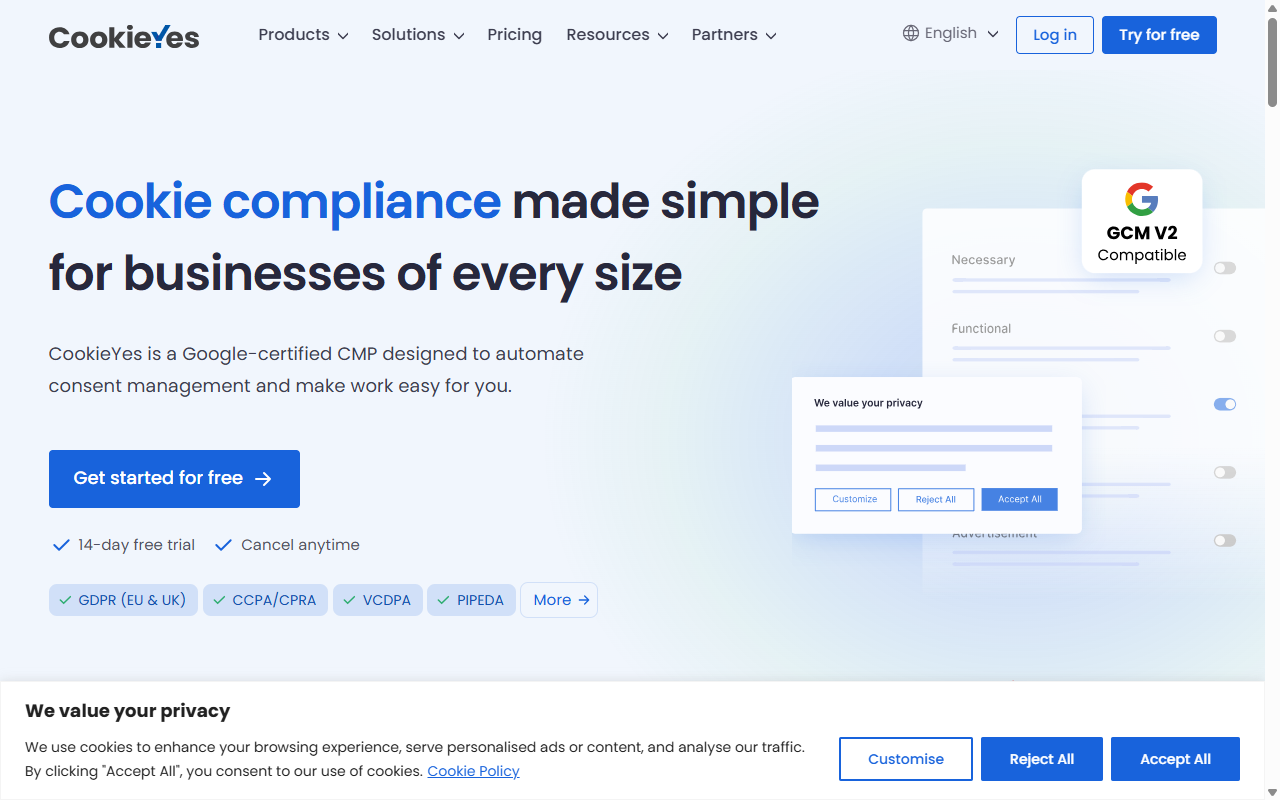
CookieYes is a cloud-first SaaS platform. It has a WordPress connector, but your cookie scans, consent logs, and design settings all live on CookieYes servers. That keeps the heavy processing off your own server, which helps site speed, though it also means logging into an external dashboard for any major change.
Complianz takes a local-first approach instead. Almost everything, the configuration wizard, the CSS styling, the cookie database, lives directly inside your WordPress dashboard, with no external portal to log into. For developers who want full control over their hosting and don’t want consent data processed on third-party servers, that difference matters a lot.
Quick Comparison Table
Here’s a quick look at how these two solutions stack up across key compliance features in 2026.
| Feature | CookieYes | Complianz | Cookie Consent (Elementor Native) |
|---|---|---|---|
| Primary Dashboard | External cloud app | WordPress dashboard | WordPress dashboard |
| Setup Time | Quick (about 5-10 minutes) | Longer wizard (15-20 minutes) | Ultra-fast (under 5 minutes) |
| Google Consent Mode v2 | Supported (Free and Paid) | Supported (Premium) | Supported (Built-in) |
| Database Impact | Very low (Cloud-based) | Moderate (Local storage) | Very low (Native integration) |
| Multi-site Management | Excellent (Central cloud hub) | Decent (Individual configurations) | Excellent (Multi-site ready) |
A Closer Look at CookieYes: Features and Workflow
CookieYes has grown quickly because it makes multi-site management genuinely convenient. If you run five client sites, you don’t want to log into five separate WordPress dashboards just to update a privacy policy link. Its centralized cloud portal handles everything from one screen, a real time-saver as your client list grows.
How the CookieYes Scanning Engine Works
Once you install the connector, the platform kicks off an automatic scan for common trackers from Google, Meta, and other ad networks. Here’s what that workflow looks like:
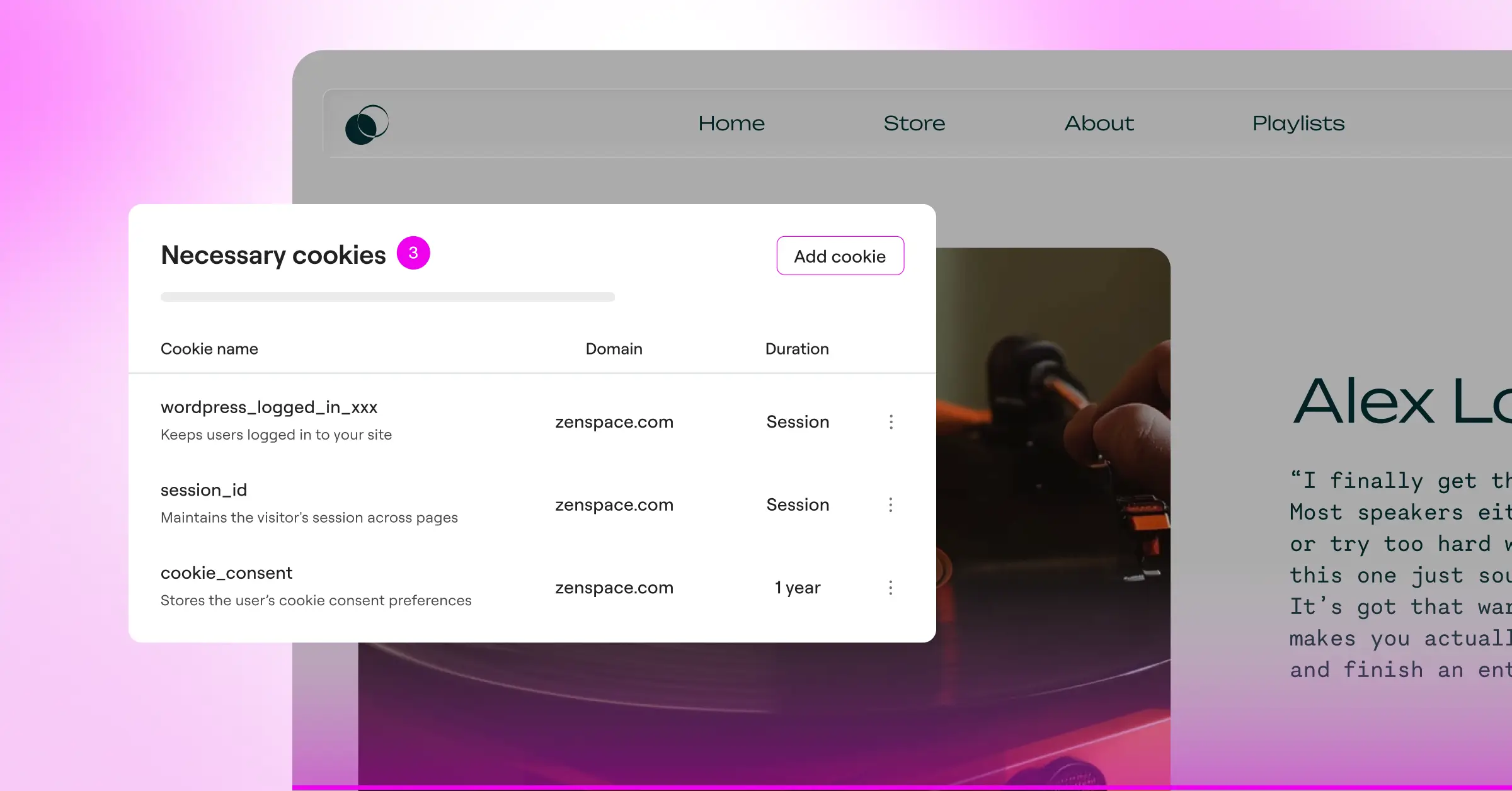
- Scans your site automatically to detect active cookies and tracking scripts.
- Categorizes trackers into functional, necessary, analytical, and advertisement groups.
- Generates a dynamic cookie policy table you can embed directly on your privacy page.
- Blocks third-party scripts before the user has given consent.
- Updates the scan monthly to catch new tracking pixels your marketing team might have quietly added.
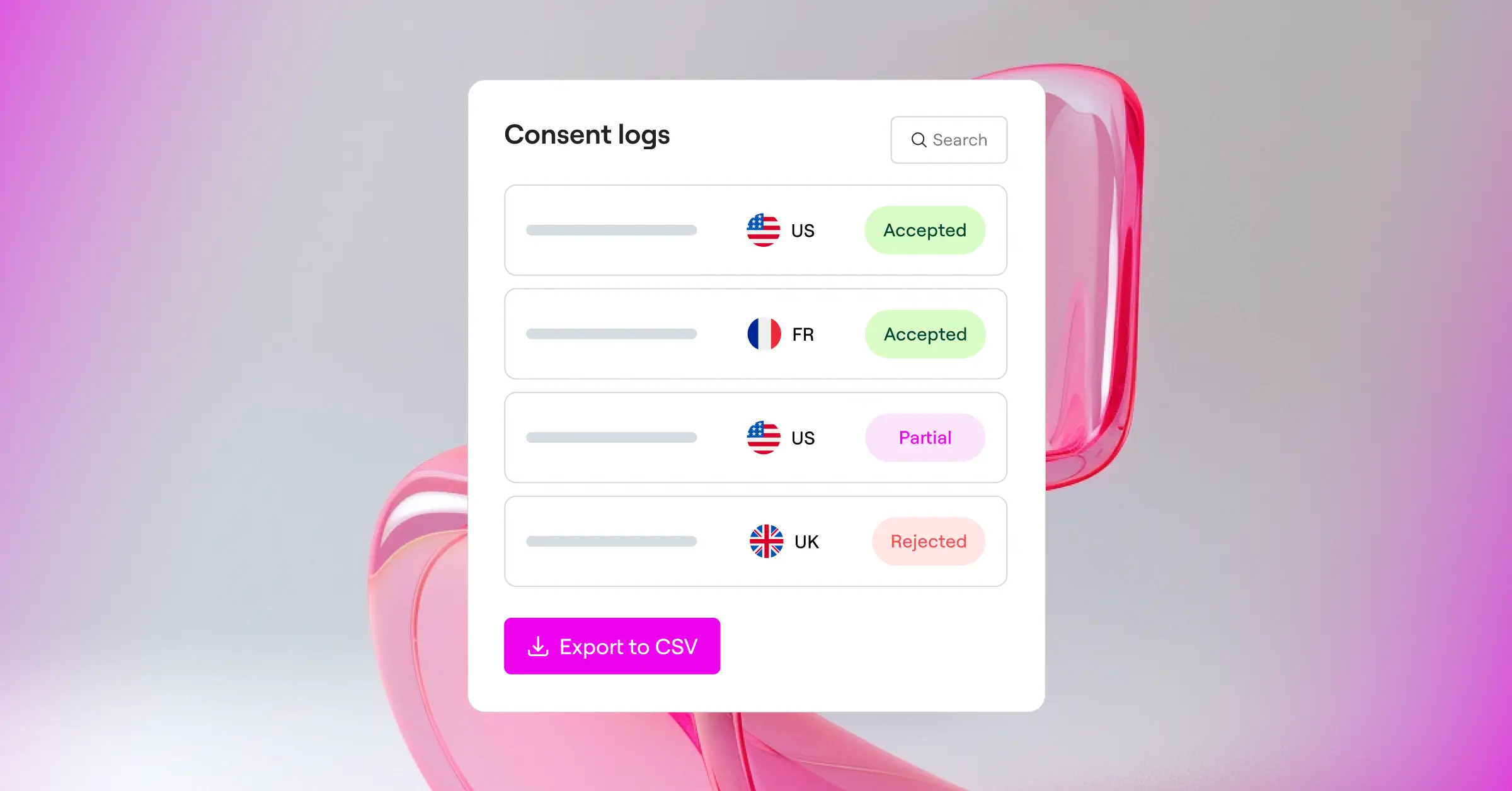
- Saves consent logs securely in the cloud to help you demonstrate compliance during audits.
The automated blocking works reliably for most setups, though custom scripts may need a couple of manual HTML attributes to cooperate. Mostly, the cloud scanner handles the heavy lifting so you don’t have to dig through JavaScript files yourself.
The design editor inside the cloud dashboard is intuitive. You can change colors, switch the layout from banner to box, and toggle consent rules by visitor location, and it’s simpler than it sounds.
A Closer Look at Complianz: Features and Workflow
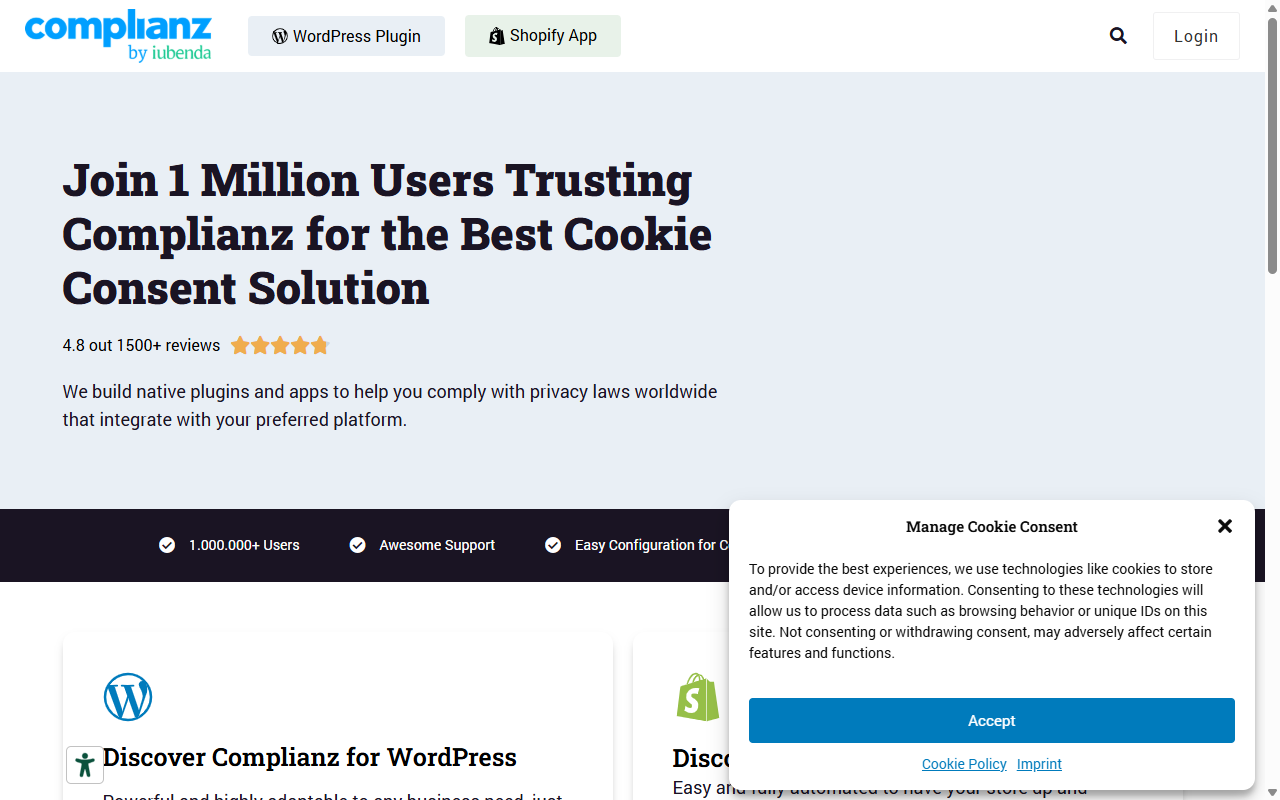
Complianz is well known for its legal-first approach. Rather than jumping straight to banner styling, it walks you through a full legal questionnaire, figuring out which privacy laws apply based on where you’re located and where your audience lives, a thoughtful touch given how different GDPR, CCPA, and similar frameworks can be.
The Complianz Legal Wizard
Setting up Complianz feels like sitting down with a thorough compliance officer. The step-by-step wizard asks about your data collection, analytics use, and whether you sell personal data. Here’s how it unfolds:
- Configure your region and identify which privacy laws (GDPR, CCPA, DSGVO) apply to your site.
- Integrate directly with your WordPress setup to detect existing tools that place cookies.
- Generate complete policy documents, Cookie Policy, Privacy Policy, Terms of Service, directly inside WordPress.
- Block specific scripts (like YouTube embeds or Google Maps) until the visitor gives explicit permission.
- Apply localized consent settings so a visitor from Germany sees a strict opt-in banner, while a visitor from Texas sees a different notice.
“True digital compliance isn’t just about showing a banner; it’s about respecting user choice at every layer of the technical stack, from script loading to server logs.”– Itamar Haim, Web Compliance Specialist
That localized delivery keeps things simple for visitors under looser privacy rules, while still keeping you covered where enforcement is tougher. And since the whole configuration sits in your local database, you own your compliance history outright, nothing goes to a third-party cloud.
Cookie Consent: A Native WordPress Alternative
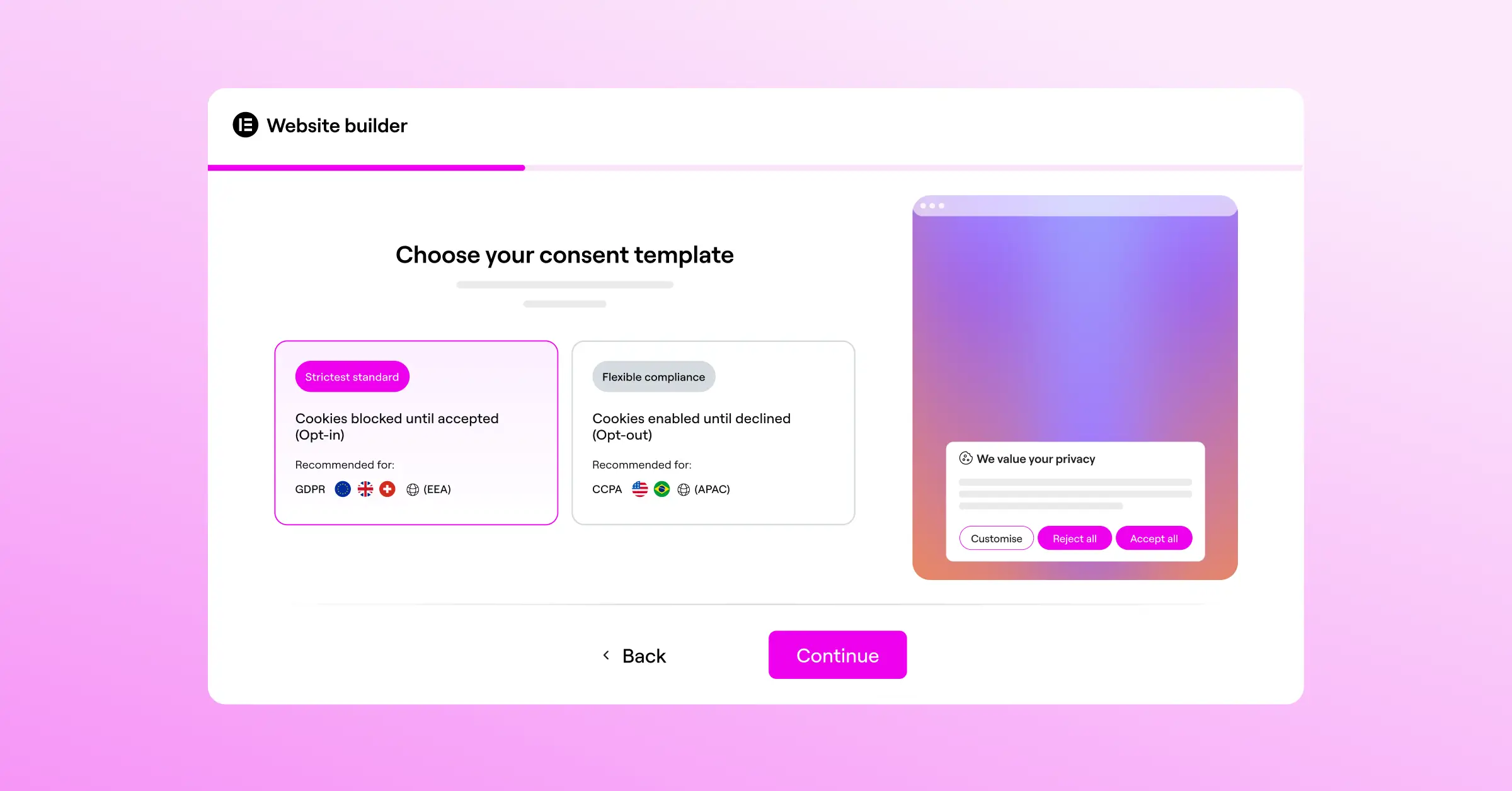
If wizards and yet another external dashboard aren’t your thing, there’s a third path worth knowing about. Many Elementor users don’t realize they already have access to a clean, built-in compliance solution: the native Cookie Consent capability, built for WordPress sites that want compliance without leaving the dashboard.
Instead of managing an external account or working through a lengthy wizard, Cookie Consent lets you set up banners, run cookie scans, categorize scripts, and keep consent logs right inside your WordPress backend, no separate tool to buy, configure, or maintain.
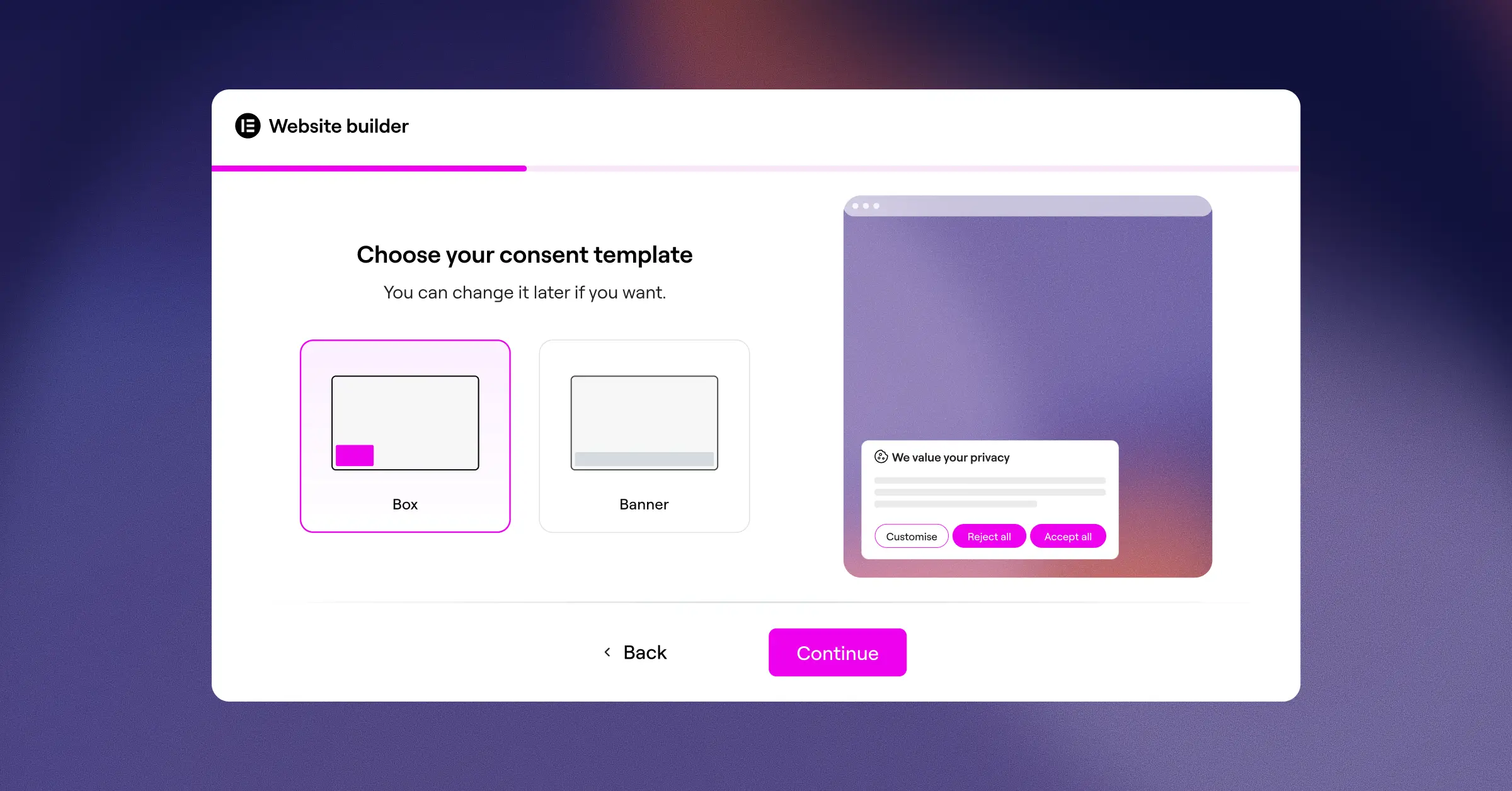
- Builds beautifully branded banners directly inside the editor you already use every day.
- Saves setup time with a fast 3-step configuration that takes under five minutes.
- Keeps consent logs locally inside your dashboard for straightforward audit trails.
- Supports Google Consent Mode v2 automatically to keep your ad tracking compliant.
- Includes built-in geo-targeting to show the right banner to the right audience.
- Pulls from pre-built cloud templates to jumpstart your banner design.
Going native means fewer code conflicts, a lighter script load, and a design language that stays unified across every page. It’s a genuinely good fit for teams that want to build visitor trust without running a large standalone compliance suite. You can see the full feature details on the Elementor Cookie Consent page.
Direct Comparison: Head-to-Head
To help you decide between CookieYes and Complianz, here’s how they perform across four real-world scenarios you’ll actually care about.
1. Ease of Setup and Configuration
If you want to get up and running fast, CookieYes has the edge. Install the lightweight connector, link your cloud account, run a scan, and you’re pretty much done. The default banner looks professional right out of the box, no fussing required.
Complianz asks for more patience. You can’t skip the legal wizard, since the tool uses your answers to configure its script-blocking engine. That’s genuinely reassuring for developers setting up client sites, but it can feel like overkill for a simple banner on a small blog.
2. Design Customization
CookieYes lets you customize your banner through its cloud interface, adjusting colors, borders, and fonts, with changes applying almost instantly when you save. You’re limited, though, to its structural layouts.
Complianz offers deeper styling control inside WordPress. Since the banner outputs as local HTML and CSS, you can write custom styles to match your brand precisely, though page builder users may still wrestle with some elements. This is where a native tool like Elementor’s cookie consent capability shines, letting you design your banner with the same drag-and-drop tools you already use on the rest of your site.
3. Google Consent Mode v2 Support
Google Consent Mode v2 is mandatory if you serve ads to users in the European Economic Area. It tells Google’s tag services how to behave based on whether a visitor accepted or declined cookies.
CookieYes handles this well, even on its entry-level plan. Flip a single switch in your cloud settings, and it takes care of the Google Tag Manager communication. Complianz supports Consent Mode v2 too, but setup takes careful wizard configuration, and some advanced tracking integrations are reserved for the premium version.
4. Performance and Database Impact
Because CookieYes hosts its data and runs scans on external cloud servers, its impact on your local WordPress database is basically zero. Your site just loads a small, optimized JavaScript file to show the banner and record the choice.
Complianz does more work locally, running scans, saving logs, and updating legal documents on your hosting server. It’s well-optimized, but busy sites with thousands of daily visitors might notice database tables growing as logs pile up. If server resources are tight, the cloud, or a lightweight native tool, is often the smarter path.
Choosing the Right Tool for Your Website
There’s no single winner here. The right tool depends on your technical preferences and how your team actually works day to day.
When to Choose CookieYes
CookieYes is a strong fit if you manage multiple websites and want a single, centralized control center. It works especially well when you:
- Manage compliance for several client sites from one cloud account without logging into each WordPress dashboard separately.
- Prefer an automated scanning process that updates without manual intervention.
- Require straightforward, one-click implementation of Google Consent Mode v2.
- Want to keep local database usage minimal to preserve server performance.
When to Choose Complianz
Complianz is the better option if you want a self-hosted, legally detailed compliance companion. It’s worth considering when you:
- Demand that all user data and settings stay on your own servers.
- Need auto-generated, legally grounded privacy pages tailored to your specific industry.
- Appreciate a structured wizard that explains the legal reasoning behind every setting.
- Want deep integration with localized WordPress security and translation tools.
When to Choose a Native Capability
If you’re already running Elementor, you might not need either of these tools. The native Cookie Consent capability keeps your site clean and efficient, and it’s worth considering when you want to:
- Trim the number of active tools on your site to prevent software conflicts.
- Design consent banners with your existing editor for a perfect brand match.
- Stretch your budget by using a compliance feature already included in your Elementor plan.
- Centralize your workflow by managing cookie, design, and script settings all in one place.
Common Pitfalls in Cookie Consent Management
Picking your tool is only half the battle. Plenty of site owners make simple setup mistakes that leave them legally exposed or quietly damage their marketing data. Here are the traps worth avoiding:
- Failing to block cookies before consent. Showing a banner while tracking scripts load in the background is a significant GDPR violation. Make sure your tool actually blocks scripts until the user clicks “Accept.”
- Forgetting to link your privacy policy. Your banner must include a direct link to your privacy or cookie policy. A broken or missing link makes your consent legally questionable.
- Ignoring mobile responsiveness. A banner that covers the whole screen on a phone can hurt your user experience and drive bounce rates up. Always test on different screen sizes.
- Neglecting regular scans. Your marketing team might install a new tracking pixel next week. If your tool doesn’t run regular scans to catch and categorize new cookies, your banner will quietly go stale.
Frequently Asked Questions
Is CookieYes completely free to use?
CookieYes offers a solid entry-level plan for smaller websites, with basic banner customization, automatic cookie scans, and Google Consent Mode v2 support. If your site exceeds a certain pageview threshold, or you need advanced geo-targeting and custom styling, you’ll need one of the paid tiers.
Can I use Complianz without a lawyer?
Yes. Complianz is designed to help site owners set up proper legal disclosures without hiring an attorney. The wizard asks plain-English questions and generates compliant documents from your answers. It’s genuinely helpful, but it’s not a substitute for professional legal advice if you run a large enterprise with complex data-handling needs.
What is Google Consent Mode v2 and do I need it?
Google Consent Mode v2 is an API that communicates your visitors’ consent choices to Google’s tag services. If you serve visitors in Europe and use Google Ads or Google Analytics, you need it. Without it, Google can’t accurately measure ad conversions or track analytics for European traffic.
Does Complianz affect my website’s loading speed?
Because Complianz loads files locally from your WordPress server, it has a small impact on initial loading times. That said, it’s well-optimized and works well alongside popular caching tools. If you’re very sensitive to page speed, a cloud-based solution or a native tool like Elementor’s cookie consent capability may run a touch lighter.
How often should I scan my website for cookies?
It’s good practice to scan at least once a month, so new tracking codes or marketing tools your team adds get caught and reflected in your cookie policy. Both CookieYes and Complianz offer automated scanning intervals for this.
Can I customize the look of my consent banner?
Both platforms offer solid customization. CookieYes lets you style your banner from its cloud dashboard, while Complianz allows color and layout adjustments in your WordPress customizer. For maximum design control without writing custom CSS, a native tool built into your site editor is usually the easiest route.
What happens if a visitor ignores my cookie banner?
Under strict regulations like GDPR, a visitor’s silence counts as a refusal, so you can’t load non-essential tracking cookies or ad pixels until they actively click “Accept.” Loading analytics or ad trackers before opt-in puts you out of compliance, so make sure your tool treats silence correctly.