Table of Contents
For many entrepreneurs, the allure of an “all-in-one” solution is powerful. You get your domain, your hosting, and your design tools all in one tidy monthly bill. However, as your business grows, your needs change. What works for a lemonade stand might not work for a lemonade franchise. This guide explores whether GoDaddy’s quick-fix approach is a solid foundation for your digital future or if it’s a ceiling you’ll hit sooner than you think.
Key Takeaways
- Speed Over Flexibility: GoDaddy Website Builder is arguably the fastest way to get a site live. Its ADI (Artificial Design Intelligence) generates a working site in minutes, making it suitable for absolute beginners who need a digital business card immediately.
- Restrictive Design System: The platform uses a rigid grid system. While this prevents “breaking” your site, it also prevents unique designs. You cannot drag and drop elements freely. You must work within pre-set sections.
- SEO Limitations: While the “SEO Wizard” helps novices, it lacks the depth required for competitive ranking. Advanced technical SEO controls, like schema markup or complex URL structuring, are largely absent.
- Ecommerce Transaction Fees: On top of your monthly subscription, GoDaddy charges transaction fees and has limits on product variants that may stifle growing stores.
- The “Walled Garden” Issue: Data portability is a significant concern. You cannot export your GoDaddy site code. If you leave the platform, you must rebuild from scratch.
- The Professional Alternative: For businesses prioritizing long-term growth, scalability, and design ownership, a self-hosted WordPress solution powered by a platform like Elementor offers a superior trajectory without the limitations of a closed system.
Understanding GoDaddy Website Builder: The “All-in-One” Promise
To understand if GoDaddy is “good,” we first have to define what it is. GoDaddy Website Builder, often referred to as “Websites + Marketing,” is a closed-source, proprietary SaaS (Software as a Service) platform. Unlike open-source systems like WordPress, where you own your code and data, GoDaddy licenses the software to you.
The core philosophy here is “guardrails.” GoDaddy assumes that its average user is not a designer and likely does not want to be one. Therefore, the tool removes most decisions from your plate. You do not choose pixel widths. You choose “Small, Medium, or Large.” You do not write code. You fill in text boxes.
This approach has merit. If you are a local plumber who needs a page that says “Call Me” and lists your hours, GoDaddy is efficient. It handles the SSL certificate, mobile responsiveness, and hosting environment for you. However, this convenience comes at the cost of the freedom that usually defines the web.
The Mechanics of ADI (Artificial Design Intelligence)
GoDaddy leverages ADI heavily. When you sign up, you do not see a blank canvas. You undergo an interview process. The system asks specific questions about your industry, your site’s name, and your primary goals.
Based on your answers, GoDaddy generates a complete site. It picks the images, writes generic copy, and sets up the page structure. In 2026, this tech operates under the “GoDaddy Airo” branding, which also attempts to generate logos and social posts.
While the speed is undeniable, the result is often generic. Because the system draws from a finite library of layouts and stock assets, your bakery website might look similar to a dentist’s website three towns over, just with different photos. This lack of differentiation can be a hindrance when trying to build a memorable brand.
The Building Experience: Ease of Use vs. Creative Control
The editing interface is the heart of any website builder. GoDaddy’s editor is minimalist, designed to prevent user error at all costs.
The “Section-Based” Editor Limitations
In professional web design, developers use the “Box Model,” utilizing margins, padding, z-index, and absolute positioning to place elements precisely. GoDaddy eliminates these concepts entirely. Instead, you build your page by stacking horizontal “Sections.”
You click “Add Section,” and a menu appears on the right with categories such as Photo Gallery, Contact Us, Menu / Price List, Video, and Subscribe. Once you choose a section, you can only customize what GoDaddy allows. Usually, this means toggling elements on or off. You choose if the headline is visible. You choose if the button says “Learn More” or “Buy Now.”
The Limitation: You cannot move elements within a section. If a pre-designed “About Us” section has the image on the left and text on the right, you cannot drag the image to the center or resize it to be 50% larger. You are locked into the layout provided.
Font and Color Customization Restrictions
Customization is global. You pick a primary color and a secondary color, and the system applies them across the site automatically. You pick a font pair, and that determines the typography for the entire site.
For a DIY user, this ensures consistency. You cannot accidentally use five different fonts. But for a brand builder, it is stifling. You cannot set a specific H3 heading to be a different color just for emphasis without changing every H3 on the site. You cannot upload custom font files from your brand guidelines.
This rigidity is the primary reason professional designers avoid GoDaddy. It is impossible to achieve a “pixel-perfect” design because you do not have access to the pixels. You only have access to the “switches” GoDaddy provides.
Design & Templates: The “Cookie-Cutter” Effect
GoDaddy provides over 100 templates. In the past, these were rigid themes you could not switch without losing content. Today, you can switch templates relatively easily, as the content flows into the new containers.
However, the templates suffer from a homogenization problem. Because every template must adhere to the same strict grid system to ensure mobile responsiveness, they all share a similar “blocky” DNA. They rely heavily on full-width hero images and centered text.
Mobile Responsiveness vs. Mobile Editing
One area where GoDaddy functions adequately is automatic mobile optimization. Because you cannot move elements freely, you cannot “break” the mobile view. The system automatically stacks your content for mobile devices.
The downside is the lack of mobile editing. In more advanced platforms, you can choose to hide a specific large image on mobile or change the font size specifically for phone screens to improve readability. GoDaddy does not offer this granularity. What you see is what you get, and the system decides how it looks on an iPhone.
Market Alternatives: A Neutral Overview
Before discussing the professional solution, it is useful to understand the other players in the proprietary SaaS market. These platforms operate similarly to GoDaddy in that they are closed systems where you rent the software.
Wix
Wix is a drag-and-drop website builder. It uses an unstructured editor that allows users to place elements anywhere on the canvas using absolute positioning. It relies on a proprietary codebase. Users cannot export their code. The platform manages hosting and security. The mobile view often requires manual adjustment because the desktop layout does not automatically reflow perfectly in the unstructured editor.
Squarespace
Squarespace is a SaaS platform known for its template-driven approach. It uses a structured grid editor that limits where users can place content to ensure alignment. It includes built-in ecommerce and blogging tools. Like GoDaddy and Wix, it is a closed ecosystem. Customization is limited to the options provided in the “Site Styles” panel, and CSS access is restricted on lower-tier plans.
Shopify
Shopify is a dedicated ecommerce platform. It focuses primarily on backend inventory management, payment processing, and order fulfillment. The visual builder is theme-based, meaning users select a theme and fill in the available sections. Deep design customization usually requires editing the “Liquid” code files. It is not designed primarily for content-heavy sites or portfolios but for transactional retail.
The Professional Standard: WordPress and Elementor
If you are building a business that you intend to scale, you need a platform that scales with you. The industry standard for this is WordPress, specifically when paired with a comprehensive website builder platform like Elementor.
Unlike the closed systems mentioned above, WordPress is open-source. You own the data. You own the code. You can host it anywhere. Elementor transforms WordPress from a blogging tool into a visual design platform.
Total Design Freedom
Where GoDaddy offers “switches,” Elementor offers “controls.” With the Elementor Website Builder, you are not stuck in a grid. You can adjust margins, padding, and positioning to the pixel. You can create complex layouts with overlapping images, motion effects, and entrance animations that GoDaddy simply cannot support.
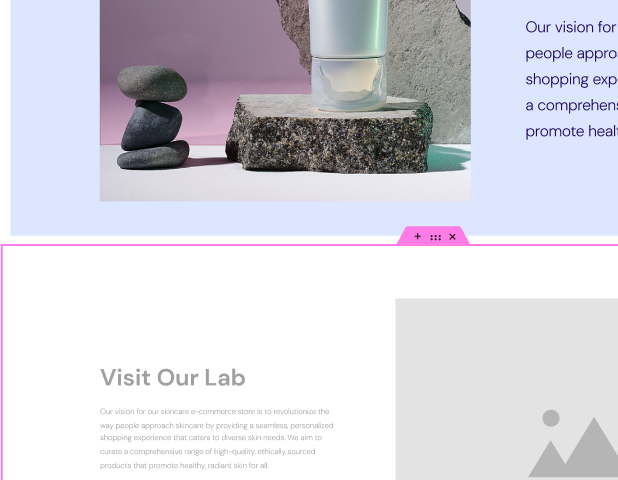
This freedom extends to every part of the site. With the Theme Builder, you can design the Header, Footer, Single Post templates, and 404 pages visually. You do not need to rely on what the theme dictates. You build the theme yourself, visually.
The Power of Dynamic Content
One of the most significant differences between a hobbyist tool and a professional platform is the handling of data. GoDaddy displays static text. Elementor allows for Dynamic Content.
This means you can design a “Single Post Template” once, and it will automatically pull in the title, featured image, and content for every blog post you write. You can connect design elements to custom fields (using tools like ACF), allowing you to build complex listing sites, real estate directories, or recipe databases. GoDaddy lacks this architectural depth.
Advanced AI Integration
Modern web creation requires efficiency. Elementor AI is integrated directly into the editor. It allows you to generate text, write custom code (CSS and HTML), and generate or edit images without leaving the environment.
- Text Generation: You can ask the AI to “write a catchy headline for a coffee shop” or “translate this paragraph to Spanish.”
- Code Generation: If you need a specific hover effect or a custom layout tweak, the AI can write the CSS snippet for you and apply it instantly.
- Image Generation: You can create unique visuals or expand existing images to fit different aspect ratios.
Professional Hosting Infrastructure
A common critique of WordPress is the complexity of hosting. Elementor Hosting resolves this by providing a managed environment that rivals the simplicity of GoDaddy but maintains the freedom of WordPress.
It includes Google Cloud infrastructure, Cloudflare Enterprise CDN, and premium SSL. This setup ensures high performance and security without requiring you to be a server administrator. It simplifies the setup process, so you get the open-source benefits of WordPress with the “sign up and go” experience of a SaaS builder.
Features Breakdown: A Technical Deep Dive
A website is more than just a brochure; it is a business engine. Let’s look at the tools under the hood and how they compare when you need to perform complex tasks.
1. Marketing Tools (Email and Social)
GoDaddy bundles its “Digital Marketing Suite” with most plans. This includes an email marketing tool and a social media post creator.
- Email Marketing: This is a basic newsletter tool. It allows you to send emails to your subscriber list. The limits depend on your plan. While convenient, it lacks advanced automation. You will not find complex logic flows here. It is strictly for broadcast newsletters.
- Social Media: The integration allows you to post to Facebook and Instagram from the GoDaddy dashboard. It is a time-saver for very small teams, but dedicated social media managers will find it lacking compared to standalone tools.
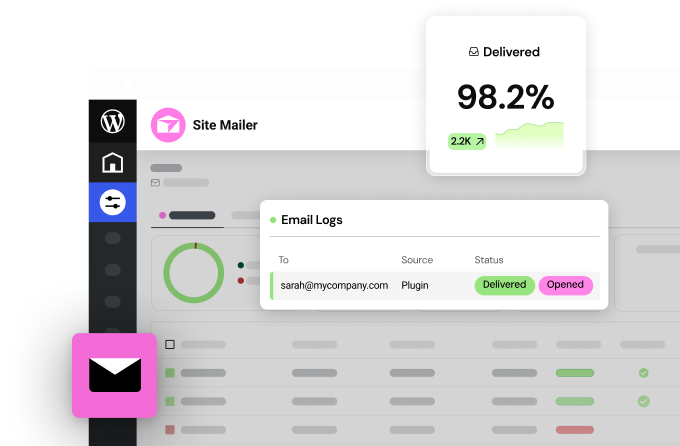
The Elementor Solution: Because Elementor runs on WordPress, you are not limited to one email provider. You can integrate with ActiveCampaign, HubSpot, MailChimp, or Elementor’s own Site Mailer for direct communication. You can build high-converting landing pages that feed data directly into your CRM of choice.
2. Search Engine Optimization (SEO)
SEO is often the biggest pain point for GoDaddy users who try to scale. The platform offers an “SEO Wizard.” This tool asks you questions about your business and suggests keywords. It then walks you through updating your Page Titles and Meta Descriptions.
The Reality: The Wizard helps beginners write meta descriptions, but it stops there.
- Schema Markup: You cannot easily add custom structured data (JSON-LD) to specific pages to help Google understand your content.
- Technical SEO: You have no control over your sitemap.xml or robots.txt file.
- URL Structure: GoDaddy URLs can be rigid.
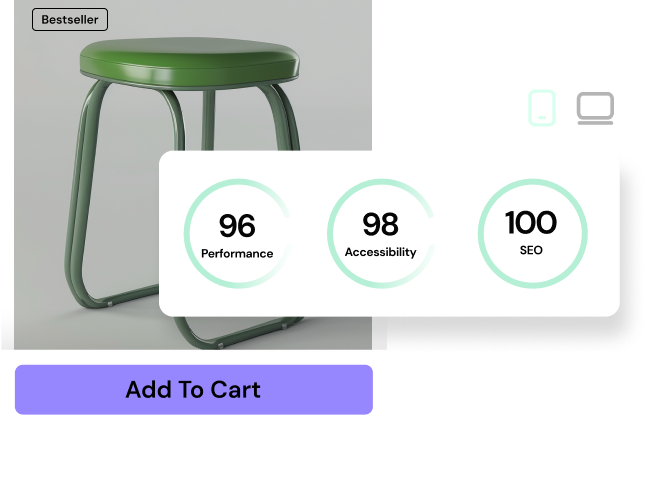
- Speed Optimization: You cannot access the code to minify CSS or defer JavaScript if Google PageSpeed Insights tells you your site is slow.
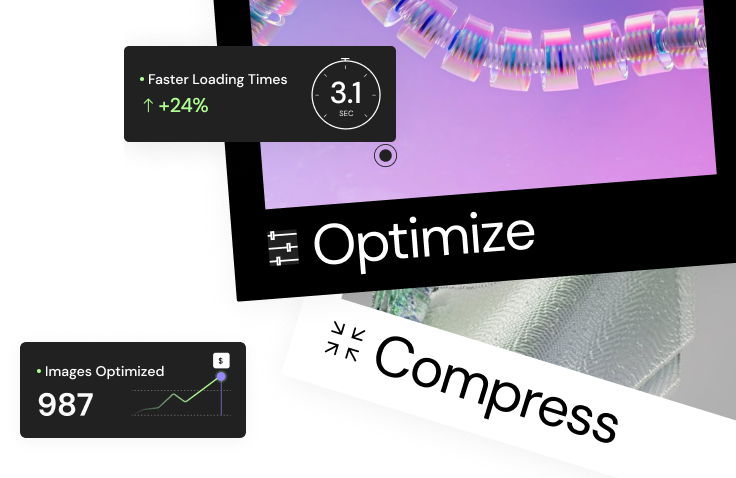
The Elementor Solution: On WordPress, you can use plugins like Yoast SEO or Rank Math. These allow full control over schema, canonical URLs, breadcrumbs, and redirects. Elementor’s Image Optimizer ensures your visuals are compressed and served in Next-Gen formats (WebP) automatically to satisfy Core Web Vitals.
3. Ecommerce Capabilities
GoDaddy has pushed into ecommerce to compete with other proprietary platforms. It supports physical and digital products, appointments, and payments.
- Transaction Fees: GoDaddy charges a transaction fee on sales. This is standard for the industry, but it reduces margins.
- Product Limits: While higher plans offer “unlimited” products, the management interface struggles with high volume.
- Checkout Customization: You cannot customize the checkout experience. You cannot add custom fields to the checkout page unless the specific feature is built-in.
The Elementor Solution: By using the WooCommerce Builder in Elementor Pro, you can customize every part of your store. You can design a custom Product Page template that looks exactly how you want. You can customize the Cart and Checkout pages to reduce friction. Because it is WooCommerce, you can choose from dozens of payment gateways, not just the ones GoDaddy prefers.
Pricing & Value: The Long-Term View
GoDaddy uses a tiered pricing model. It is important to look past the introductory price and check the renewal rate.
- Basic Plan: Good for a simple brochure site. No ecommerce.
- Premium Plan: Adds appointment booking. Essential for service businesses.
- Commerce: Allows you to sell products.
- Commerce Plus: Automated sales tax and deeper marketplace integration.
The Hidden Costs:
- Domain Privacy: Often an upsell.
- Email Hosting: While some plans include a year of Microsoft 365, it renews at a high rate.
- Transaction Fees: These eat into your margins on every sale.
- Renewal Hikes: It is common for the price to increase significantly after the first term expires.
When you compare this to a WordPress setup with Elementor Pro, the initial setup might require more decisions, but the ongoing maintenance is often more predictable. You do not pay transaction fees to Elementor on your sales. You have the freedom to choose affordable email hosting separate from your website host.
Performance & Hosting: The “Shared” Reality
When you use GoDaddy Website Builder, you are on their proprietary hosting cloud. You do not have a “cPanel” or access to the server.
Speed: Generally, GoDaddy sites are reasonably fast for simple pages because the code is light. However, they can suffer from “Time to First Byte” (TTFB) issues common in shared environments. If your site becomes image-heavy, you cannot install a third-party image optimization plugin to fix it; you have to rely on GoDaddy’s built-in compression.
Security: This is a strong point for the “hands-off” user. GoDaddy manages the SSL and firewalls. You do not have to worry about updating plugins.
The Elementor Advantage: With Elementor Hosting, you get the best of both worlds. You get the managed security (SSL, firewalls, backups) but you also get the performance of Google Cloud. You can use caching plugins to fine-tune your speed scores, giving you control that GoDaddy denies.
User Scenarios: When to Choose Which
To make this practical, let’s look at three specific business scenarios.
Scenario 1: The Local Coffee Shop
Goal: A one-page site with a menu, hours, and a map. GoDaddy: This is a good fit. The owner can spend one hour setting it up. The “Menu” section is pre-built. The lack of design control does not matter because simplicity is the goal. Elementor: Also a good fit, especially with Elementor AI Site Planner which can generate the initial structure. However, GoDaddy might be slightly faster for the absolute novice.
Scenario 2: The Fashion Brand
Goal: A visually unique online store with lookbooks, video backgrounds, and a custom checkout flow. GoDaddy: A poor fit. The templates are too rigid to create a unique “vibe.” The product pages are standard and boring. The transaction fees will hurt profitability as volume grows. Elementor: The perfect fit. The designer can use the WooCommerce Builder to create a custom product page layout that highlights the clothing texture. They can use video backgrounds and motion effects to create a premium feel. They avoid transaction fees.
Scenario 3: The Content Publisher
Goal: A blog with different categories, author bios, and a subscription membership. GoDaddy: A poor fit. The blog module is too basic. It lacks robust categorization or author archives. The membership feature is simplistic. Elementor: The right choice. WordPress was built for publishing. The Theme Builder allows for custom blog post layouts. Plugins can handle complex membership tiers.
The “Walled Garden” and Data Lock-In
This is the most critical risk. GoDaddy Website Builder does not allow you to export your website. The code is proprietary. If you decide to move to WordPress or another platform in two years, you cannot take your website with you.
You can export a CSV file of your products, but your design, your pages, your SEO settings, and your blog posts often have to be manually copy-pasted to the new site. This is a massive “switching cost” that traps many businesses on the platform long after they have outgrown it.
With Elementor on WordPress, you are never trapped. You can move your site to any host in the world. You can export your content easily. You own your digital asset.
Verdict: Is GoDaddy Website Builder Good?
The answer depends entirely on your definition of “Good.”
It is GOOD if:
- You need a website live in the next 24 hours.
- You have zero design skills and zero budget to hire a designer.
- Your business is simple (e.g., a local coffee shop with a static menu).
- You do not rely on SEO for your primary income.
It is NOT GOOD if:
- You want your brand to look unique and stand out from competitors.
- You plan to grow your ecommerce store to hundreds of products.
- You want to rank #1 on Google for competitive keywords.
- You want to own your website and have the freedom to move it later.
For the serious entrepreneur who views their website as a long-term asset, GoDaddy is a rental. It is a furnished apartment—convenient, but you cannot knock down a wall, and if you stop paying rent, you leave with nothing but your suitcase.
If you are ready to build a digital asset that you own and control, look toward the Elementor ecosystem. It provides the themes to get started quickly and the Pro features to scale indefinitely.
Frequently Asked Questions (FAQ)
Can I switch from GoDaddy Website Builder to WordPress later? Technically, yes, but not easily. You cannot press a button to “convert” your site. You will have to rebuild the website from scratch on WordPress. You can copy-paste your text and download your images, but the design and layout cannot be transferred. This is why starting on a scalable platform like Elementor is often recommended for businesses with growth plans.
Is GoDaddy Website Builder free? GoDaddy offers a free plan, but it is very limited. You cannot use a custom domain name (your site will be yourname.godaddysites.com), and there will be GoDaddy ads on your site. To look professional, you must upgrade to a paid plan. Elementor also offers a free version, but it includes far more design flexibility than GoDaddy’s free tier.
Does GoDaddy Website Builder work for dropshipping? It has some integrations, but they are limited compared to specialized ecommerce solutions. If dropshipping is your main business model, you will likely find GoDaddy’s inventory management and supplier integration tools restrictive. You would be better served by a WordPress setup where you can choose specific dropshipping plugins that suit your needs.
How good is GoDaddy’s SEO? It is sufficient for “branded search” (people searching for your business name). However, for “non-branded search” (people searching for “best plumber near me”), GoDaddy lacks the advanced technical SEO capabilities (like Core Web Vitals optimization and schema) that give you an edge in competitive markets.
Can I add my own code to GoDaddy Website Builder? You can add a specific “HTML Section” to embed simple widgets (like a third-party calendar or map), but you cannot edit the site’s source code (HTML/CSS/PHP). You cannot modify the <head> file easily on all plans, which limits tracking pixel installation. Elementor allows full code access when needed.
What happens to my email if I cancel GoDaddy? If you purchased a professional email (e.g., [email protected]) through GoDaddy, it is usually tied to your account. If you cancel your website but keep your domain, you can usually keep paying for the email separately, but verify the renewal costs as they often increase.
Is GoDaddy Website Builder mobile-friendly? Yes, all GoDaddy templates are responsive by default. The system automatically adjusts your content to fit mobile screens. However, you cannot customize the mobile view (e.g., hide a specific section only on mobile) like you can with Elementor.
Do I own my domain name if I buy it through GoDaddy? Yes, you own the domain name (URL). Even if you leave GoDaddy Website Builder, you can keep your domain and point it to a new website host. GoDaddy is primarily a domain registrar, and this is their strongest service. You can use a GoDaddy domain with Elementor Hosting easily.
Can I sell services and digital products on GoDaddy? Yes. The Premium and Commerce plans allow for appointment booking and digital product downloads. However, check the file size limits for digital products, as they may be lower than specialized platforms.
How does GoDaddy’s support compare to others? GoDaddy offers 24/7 phone support, which is a significant benefit for beginners who prefer talking to a human. Many other platforms only offer chat or email support. However, support agents are generally trained to help with the platform’s basic functions, not to teach you web design strategy.
Looking for fresh content?
By entering your email, you agree to receive Elementor emails, including marketing emails,
and agree to our Terms & Conditions and Privacy Policy.