Table of Contents
Why the 2026 Privacy Rules Demand Immediate Action
Current data shows 82% of websites globally use third-party cookies for tracking. But operating a website in 2026 requires extreme caution regarding user privacy. Total GDPR fines issued since 2018 surpassed €4.5 billion by mid-2024. And regulators aren’t just targeting tech giants anymore. They’re coming straight for small business websites.
You can’t slap a basic text banner on your site and ignore the technical reality. That lazy approach is legally dangerous. You need strict gdpr cookie compliance that actively blocks tracking scripts before the user clicks anything. So, here’s exactly which consent management platforms actually work right now.
Key Takeaways
- Fines are escalating: Total GDPR penalties exceeded €4.5 billion, with a 15% jump in actions against basic cookie banners.
- Google’s strict deadline: Google Consent Mode v2 is strictly enforced; non-compliance kills your Google Ads remarketing data.
- Performance hits: Poorly coded cookie scripts delay your Largest Contentful Paint (LCP) by 0.5 to 1.2 seconds.
- Opt-in math: Highly optimized banner designs achieve 70% opt-in rates, while confusing interfaces drop below 35%.
- Market dominance: The global CMP market will hit $2.1 billion by 2028 due to aggressive enforcement in the US and EU.
- The WordPress factor: Because WordPress powers 43.3% of the web, it’s the primary target for automated privacy audits.
The Evolution of Global Privacy Enforcement
Compliance isn’t a stagnant checklist. The regulatory environment changes constantly. Regulators actively scan domain registries to issue automated penalties for missing consent mechanisms. This turns non-compliance into an expensive game of roulette.
The California Privacy Rights Act (CPRA) expanded the legal definition of data sharing. It now demands obvious opt-out links for any business holding 100,000 records. And the average cost of a data breach reached $4.88 million recently. That emphasizes the severe financial risk of ignoring data protection.
- Pre-2024: Basic notification banners satisfied regulators temporarily.
- March 2024: Google Consent Mode v2 became mandatory for all websites in the EEA/UK using Google Analytics.
- 2025-2026: Automated auditing bots scan site source code for asynchronous script blocking.
- Future Outlook: Strict enforcement of first-party data strategies as third-party tracking phases out completely.
Criteria for Choosing a Compliance Tool
You’ll notice most free plugins fail modern technical requirements. They show a banner but don’t actually pause the underlying JavaScript. That’s a massive legal vulnerability.
Performance matters just as much. Heavy scripts block the main thread. They destroy your Core Web Vitals. You need an application that handles logic server-side or loads asynchronously.
- Prior Consent Blocking: The script must intercept the DOM before marketing tools fire.
- Google Consent Mode v2: Complete integration with Google’s latest signaling API.
- Granular Control: Users must have the ability to toggle specific tracking categories.
- Visual Integration: The interface shouldn’t look like a broken pop-up from 2012.
- Audit Logging: The database must store cryptographic proof of exactly when a user consented.
1. Cookiez: The Ultimate Elementor-Native Choice
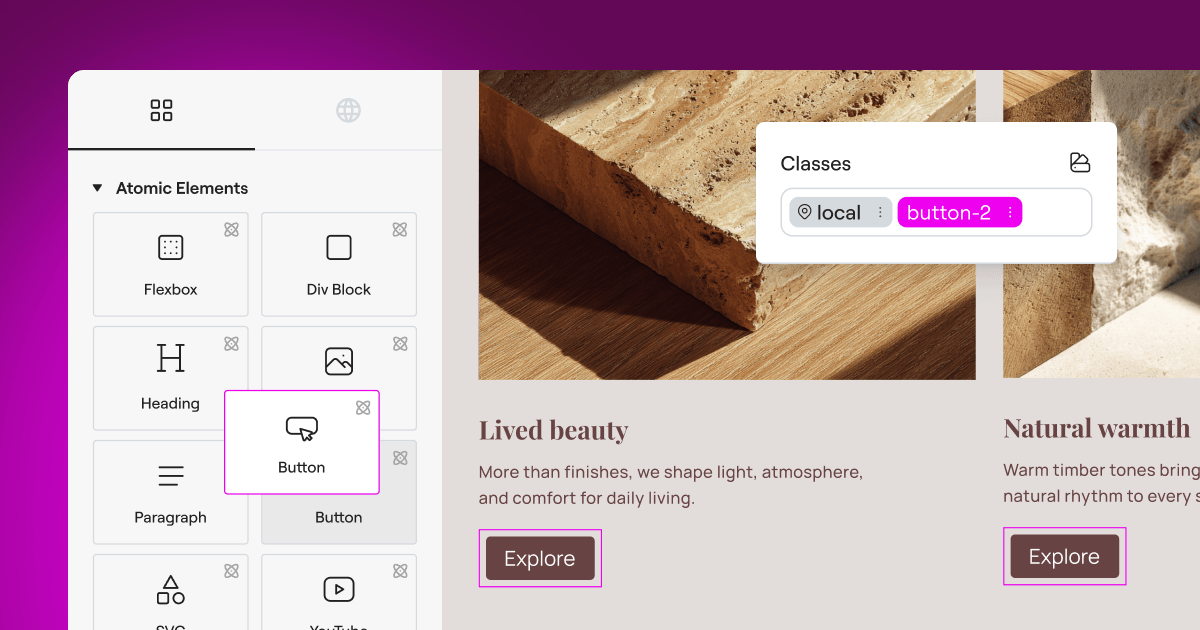
Cookiez fundamentally changes how designers handle legal notices. It’s built specifically for the Elementor ecosystem. You don’t need external stylesheets. You control every pixel directly inside the editor.
Most consent platforms force you to inject heavy external scripts. Cookiez operates natively. It matches your site’s exact branding rules because it pulls variables straight from your global settings. And yes, it fully supports Google Consent Mode v2 right out of the box.
Key Features:
- Native widget integration with the Elementor Editor Pro interface.
- Zero-code styling using your existing global fonts and colors.
- Automatic Google Consent Mode v2 signaling.
- Geo-targeting to show banners only in regulated regions.
- Asynchronous loading to protect Core Web Vitals.
Pricing: Starting at $39/year for a single site license.
Pros:
- Eliminates external script dependency entirely.
- Matches your exact design system automatically.
- Extremely lightweight on the front-end.
- Integrates smoothly with custom post types.
Cons:
- Requires Elementor to unlock its full visual potential.
- Lacks an enterprise-level cross-domain management dashboard.
Verdict: Cookiez is the absolute best choice for Elementor users who demand total design authority without sacrificing page speed.
2. Cookiebot by Usercentrics
Cookiebot operates as a massive cloud-driven scanner. It crawls your entire domain monthly to categorize new trackers automatically. You don’t have to manually update your cookie policy page.
Honestly, this pricing model is frustrating. Charging per subpage punishes content-heavy blogs. A site with 600 articles gets pushed into expensive tiers instantly. But for sheer automation, it’s hard to beat.
Key Features:
- Automated monthly scanning of all domain subpages.
- Auto-generated and auto-updating cookie declaration pages.
- Global CDN delivery for fast script execution.
- Support for 40+ international languages.
Pricing: Free tier strictly for sites under 50 subpages. Paid plans start at €12/month for up to 500 pages.
Pros:
- Highly automated classification system.
- Trusted by major international enterprise brands.
- Excellent technical documentation.
- Maintains a massive database of known trackers.
Cons:
- External script dependency slows down initial render times.
- Monthly subscription fees scale poorly for large blogs.
Verdict: Best for corporate sites that require automated legal scanning and aren’t worried about recurring monthly fees.
3. Complianz: The Complete Privacy Suite
Complianz goes far beyond basic consent. It acts as a complete legal document generator for your WordPress site. It drafts your privacy policy, terms of service, and disclaimer pages based on a detailed wizard.
The setup process asks you extremely specific legal questions. You’ll need about 45 minutes to configure it properly. But once it’s done, your site achieves ironclad compliance across multiple jurisdictions.
Key Features:
- Built-in legal document generation based on regional laws.
- A/B testing capabilities to improve opt-in conversion rates.
- Dedicated script center for blocking custom third-party iframes.
- Specific compliance modes for the EU, US, UK, and Canada.
Pricing: The Premium version starts at $49/year for a single site.
Pros:
- Replaces the need for separate policy generation tools.
- Excellent wizard-based configuration process.
- Continuous updates for changing international laws.
- Integrates deeply with WordPress core functions.
Cons:
- The massive dashboard interface overwhelms beginners.
- Creates a noticeable database footprint.
Verdict: Choose Complianz if you need legally sound privacy documents generated alongside your technical blocking features.
4. CookieYes: The Cloud-Synced Standard
CookieYes currently powers consent on over one million websites. It’s a SaaS platform that syncs directly to your site via a lightweight connector plugin. You manage all your settings on their external server.
This external management is a double-edged sword. It’s fantastic for agencies managing 50 client sites from one login. But solo developers might hate leaving their WordPress dashboard to tweak a color hex code.
Key Features:
- Centralized SaaS dashboard for multi-site management.
- Pre-built customizable banner layouts.
- Historical consent log storage on external servers.
- Direct integration with Google Tag Manager.
Pricing: A generous free tier exists. Pro plans start at $10/month per domain.
Pros:
- Extremely fast initial setup process.
- Clean, intuitive management interface.
- Doesn’t bloat your local WordPress database.
- Reliable Google Consent Mode v2 implementation.
Cons:
- Design flexibility is rigid compared to native builders.
- Relies entirely on external server uptime.
Verdict: A reliable middle-ground for agency owners who want a set-and-forget cloud solution for multiple client sites.
5. WP GDPR Compliance: The Developer Essential
This is one of the oldest compliance tools in the ecosystem. It completely ignores fancy visual builders. Instead, it focuses on adding strict consent checkboxes to your existing data collection points.
You won’t find a drag-and-drop editor here. You’ll find shortcodes and database hooks. It’s explicitly designed to secure your contact forms, comment sections, and WooCommerce checkout pages.
Key Features:
- Direct integration with Contact Form 7 and Gravity Forms.
- Automated user data access request routing.
- Right-to-be-forgotten account deletion protocols.
- Anonymized database auditing.
Pricing: Completely free (donation-based model).
Pros:
- Zero recurring costs.
- Incredibly lightweight code structure.
- Perfect for developers who build custom front-ends.
- Secures vulnerable data collection forms automatically.
Cons:
- Lacks advanced GCM v2 visual automation.
- Requires technical knowledge to style correctly.
Verdict: Best for highly technical developers on a budget who only need to secure basic input forms.
6. Termly: The Agency Policy Platform
Termly markets itself as compliance-as-a-service. It’s built for professional agencies that need to provide client-facing legal guarantees. Research shows 71% of consumers say they’ll stop buying from a company if it shares sensitive data without permission.
They back their software with actual legal review teams. When California updates the CPRA, Termly pushes an automatic update to your policy text. It’s expensive, but it buys serious peace of mind.
Key Features:
- Attorney-drafted policy generation tools.
- Automatic third-party iframe blocking.
- Multi-platform support (WordPress, Shopify, custom HTML).
- Detailed user preference centers.
Pricing: Basic free tier. Full suite costs $15/month per site.
Pros:
- Professional legal backing for all generated text.
- Excellent centralized dashboard for agency portfolios.
- Auto-blocks YouTube and Google Maps until consent.
- Highly professional aesthetic.
Cons:
- High recurring price point for single-site operators.
- Support team response times lag during peak hours.
Verdict: Best for digital agencies that want to resell a professional legal appearance to high-ticket clients.
7. Borlabs Cookie: The DACH Region Gold Standard
If you operate a website in Germany, Austria, or Switzerland, you already know about Borlabs. It’s a German-engineered plugin famous for technical precision. European privacy laws are notoriously strict, and Borlabs leaves zero margin for error.
It physically rewrites your HTML output to intercept scripts before they hit the browser. This is where Borlabs really shines. It doesn’t rely on polite JavaScript promises; it forces compliance at the server level.
Key Features:
- Aggressive content blocking for external media (YouTube, Maps, Vimeo).
- Deep script management and categorization.
- Total local storage, zero external cloud dependencies.
- Flawless Google Consent Mode v2 signaling.
Pricing: €39/year for a single site license.
Pros:
- Bulletproof technical blocking mechanisms.
- Keeps all data entirely on your own server.
- Highly trusted by EU legal professionals.
- Extensive library of pre-configured tracker templates.
Cons:
- The technical interface features a steep learning curve.
- No free tier exists.
Verdict: The absolute top choice for any site operating inside high-regulation zones like the German-speaking DACH market.
8. Usercentrics: The Enterprise Giant
The global CMP market is projected to reach $2.1 billion by 2028. Usercentrics drives a massive portion of that growth. This isn’t a simple WordPress plugin. It’s an enterprise data platform built for multi-national corporations.
You won’t use this for a local bakery website. You’ll use this if you run a massive e-commerce operation spanning twelve countries with localized privacy laws for each region. They provide dedicated account managers and legal strategy support.
Key Features:
- Cross-domain consent sharing via secure tokens.
- Deep analytics on opt-in rates and user behavior.
- Direct integration with enterprise data lakes.
- Dedicated legal support teams.
Pricing: Custom enterprise pricing (typically custom quotes based on traffic volume).
Pros:
- Unmatched scalability for massive traffic spikes.
- Bank-grade security and audit logging.
- Handles insanely complex multi-region legal logic.
- World-class A/B testing suite.
Cons:
- Massive overkill for 95% of standard websites.
- Implementation requires dedicated development time.
Verdict: The definitive solution for corporate entities, massive publishers, and high-revenue international e-commerce stores.
9. OneTrust: The Compliance Heavyweight
OneTrust dominates the Fortune 500 space. It’s a monolithic platform that handles everything from vendor risk management to ESG reporting. Their cookie compliance module is just one piece of a massive corporate puzzle.
Pricing typically starts around $500/month for their core features. You don’t buy OneTrust just to manage cookies. You buy it to protect a publicly traded company from multi-million dollar regulatory fines.
Key Features:
- Automated privacy impact assessments.
- Global incident response management tools.
- Extensive third-party vendor risk tracking.
- AI-driven data discovery and classification.
Pricing: Starts around $500/month, scaling heavily based on modules.
Pros:
- The most complete legal protection available.
- Favored by corporate legal departments globally.
- Massive library of automated workflows.
- Protects against nearly every known data regulation.
Cons:
- Astronomical pricing for small businesses.
- Implementation can take months.
Verdict: Only necessary for enterprise organizations with dedicated legal and compliance departments.
10. Iubenda: The Modular Generator
Iubenda takes a modular approach to legal protection. You pick exactly what you need. Need a privacy policy? Add that module. Need a cookie banner? Add that one. It’s highly customizable and surprisingly affordable.
They maintain a massive team of international lawyers who constantly update their clause database. When a law changes in Brazil, your policy text updates automatically without you lifting a finger.
Key Features:
- Modular legal text generation system.
- Strict prior-blocking of scripts.
- Customizable consent collection forms.
- Offline document exports.
Pricing: Basic plans start around $9/month.
Pros:
- Only pay for the specific modules you require.
- Text generated by actual legal professionals.
- Clean, modern interface.
- Excellent WordPress integration plugin.
Cons:
- Pricing gets complicated as you add multiple languages.
- The visual editor feels slightly rigid.
Verdict: A brilliant choice for international startups that need multi-lingual legal texts without hiring a global law firm.
Side-by-Side Comparison of Top Tools
Numbers don’t lie. When you compare these tools directly, the differences in target audience become glaringly obvious. Look at the pricing structures closely. Some reward high-traffic sites, while others penalize them heavily.
Performance impact is the hidden variable here. Using a lightweight solution on managed cloud hosting keeps your Core Web Vitals in the green.
| Platform | Starting Price | GCM v2 Ready | Best Use Case |
|---|---|---|---|
| Cookiez | $39/year | Yes | Elementor Pro users wanting native design. |
| Cookiebot | Free to €12/mo | Yes | Automated scanning for large sites. |
| Complianz | $49/year | Yes | Full legal document generation. |
| CookieYes | $10/month | Yes | Agencies managing multiple client domains. |
| WP GDPR Compliance | Free | Partial | Basic form and checkout protection. |
| Borlabs Cookie | €39/year | Yes | Strict DACH region legal compliance. |
Choosing the Right Plugin for Your Tech Stack
WordPress powers 43.3% of all websites on the internet. That massive market share makes it a prime target for privacy audits. Your decision here impacts both your legal safety and your search engine visibility.
If you’re already building with Elementor, introducing a heavy external cloud script makes zero sense. You want a tool that understands your existing CSS variables. You need an application that fires quickly and gets out of the way.
Consent isn’t just a legal checkbox; it’s a critical component of technical SEO. When cookie scripts fire indiscriminately, they block the main thread and destroy your Core Web Vitals. The right CMP handles logic server-side or asynchronously, protecting both user privacy and your organic search rankings.
Itamar Haim, SEO Team Lead at Elementor. A digital strategist merging SEO, AEO/GEO, and web development.
- For visual designers: Cookiez offers unmatched styling control natively inside the editor.
- For massive blogs: Complianz handles the legal paperwork while you focus on publishing.
- For global enterprises: Usercentrics provides the audit logs required by corporate legal teams.
Frequently Asked Questions About GDPR in 2026
What happens if I ignore Google Consent Mode v2?
Google will actively block your site from building remarketing audiences in Google Ads. You’ll lose the ability to track detailed conversion data in Google Analytics 4 for any user located in the EEA or UK.
Can I use a free plugin for full compliance?
Usually, no. Most free plugins only display a visual banner but fail to physically block tracking scripts from executing before the user clicks “accept.” That renders the banner legally useless.
How does cookie compliance affect my SEO?
Heavy consent management scripts delay your page loading sequence. If your CMP blocks the main thread, your Core Web Vitals scores will tank, which negatively impacts your organic search rankings.
Are small business websites actually getting fined?
Yes. Regulators now use automated web scrapers to detect missing consent mechanisms. This has led to a 15% increase in enforcement actions targeting small and medium-sized businesses directly.
Do I need a banner if my audience is only in the US?
Yes. The CPRA in California enforces strict opt-out requirements. Several other states introduced similar privacy frameworks recently, making a nationwide consent strategy mandatory for US businesses.
Why do my analytics numbers drop after installing a banner?
Because you’re finally operating legally. When users decline tracking, their data isn’t sent to your analytics platform. Modern tools use modeled data to fill these gaps via Google Consent Mode.
Is Cookiez a standalone desktop application?
No. It’s a specialized plugin designed to integrate directly with your WordPress site. It performs best when paired with native design tools to control the visual output.
How often should I scan my site for new cookies?
You should run a full domain scan monthly. Whenever you embed a new YouTube video, install a new marketing tool, or update an existing plugin, new third-party trackers often slip into your code.
Looking for fresh content?
By entering your email, you agree to receive Elementor emails, including marketing emails,
and agree to our Terms & Conditions and Privacy Policy.