
If you run a website, data privacy rules can feel like a legal textbook written in another language. Don’t worry, it’s more manageable than it looks, and you’ve got this. With privacy laws tightening worldwide, a clear, step-by-step path to compliance matters more than ever. We’ve reviewed the best frameworks and tools for keeping your site aligned with data protection requirements, from a downloadable checklist to a smart WordPress dashboard that handles the heavy lifting.
Key Takeaways
- Compliance is continuous: GDPR isn’t a one-time task, but an ongoing standard that needs regular checks and updates.
- Consent must be active: pre-ticked boxes aren’t acceptable; users must make an active, informed choice.
- WordPress-native is simpler: using tools built right into your dashboard avoids configuration headaches.
- Consent Mode v2 is essential: if you use Google services and target EU traffic, it’s mandatory for tracking.
There’s no shortage of checklists out there, but the right approach depends on your site, your audience, and how much technical work you want automated. From official EU frameworks to dashboard-native WordPress tools, here’s how to find the right fit.
Why Web Privacy Standards Matter in 2026
You might wonder why we’re still talking about privacy regulations years after GDPR arrived. The truth is, regulators aren’t just watching massive tech companies anymore; they’re reviewing everyday business sites, blogs, and shops too. If your site welcomes visitors from the EU, the UK, or California, you fall under these rules, no matter where your business is based.
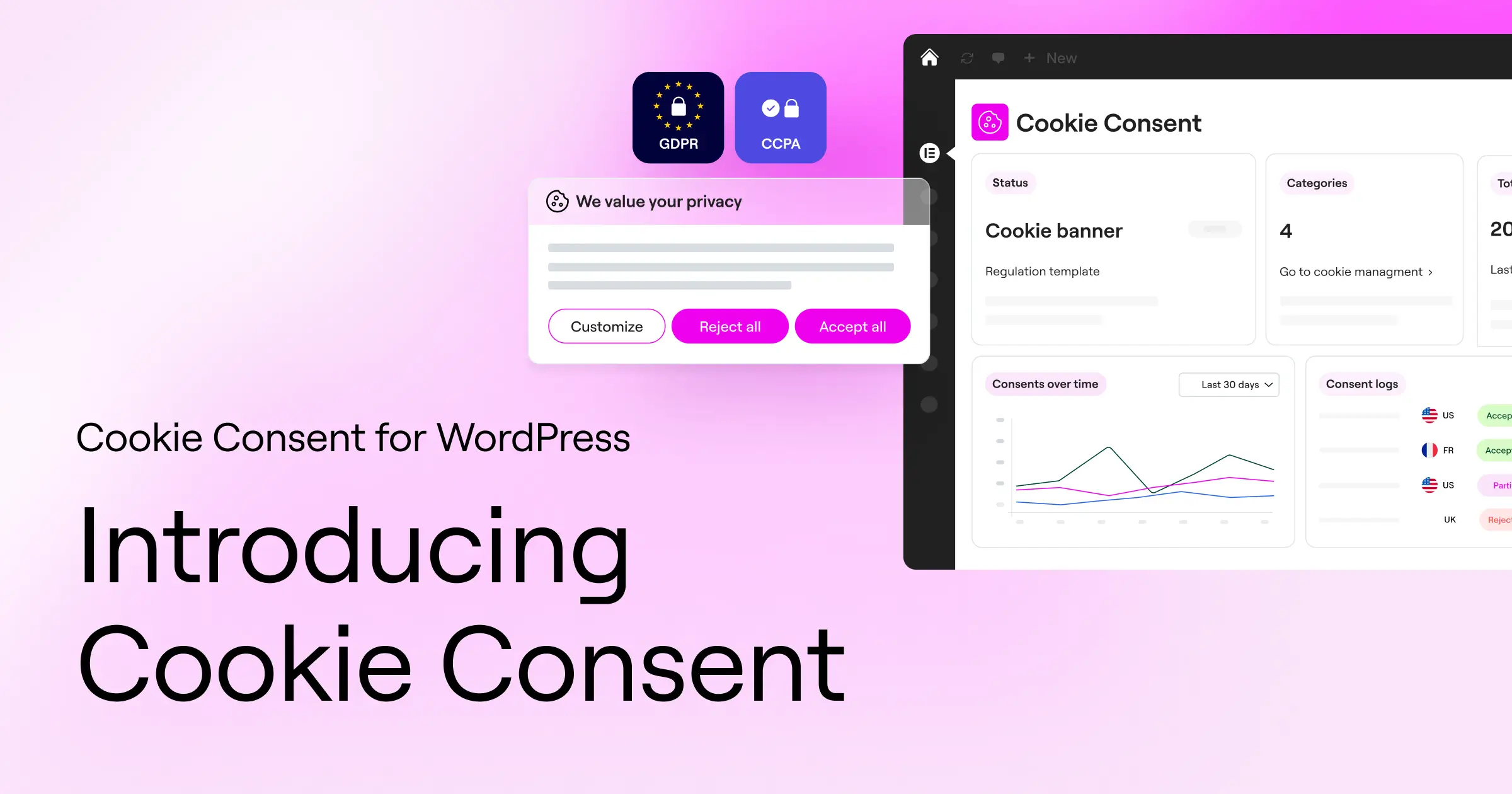
The cost of ignoring these rules goes well beyond fines; it’s really about trust. A clear, professional privacy banner makes visitors feel safe doing business with you, while a confusing popup sends them away.
Major ad networks add their own requirements too. Google Consent Mode v2 is a hard requirement if you use Google services for European audiences, and without a reliable consent setup, your tracking will simply stop working.
Core Pillars of a GDPR Compliance Checklist
Before we get into specific tools, it helps to understand what a complete checklist needs to cover. You don’t need a law degree for this (it’s simpler than it sounds). A solid approach focuses on a handful of key areas.
- Perform a complete data audit-Know what personal data you collect, where it’s stored, and who has access to it.
- Publish a clear, readable privacy policy-Explain what you collect, why, and how users can request its deletion.
- Implement an active consent mechanism-Users must be able to opt in before any non-essential trackers or cookies load.
- Secure your forms and checkout pages-Contact forms and payment fields should protect user information with strong encryption.
- Establish a clear process for data requests-Users can access or delete their data, so you need a fast, documented way to handle those requests.
“True compliance isn’t about adding a generic banner to your website and hoping for the best. It’s about creating a transparent relationship with your users where they have absolute control over their personal data from the very first second they land on your page.”– Itamar Haim, Web Compliance Specialist
The 10 Best GDPR Compliance Checklists and Tools
We’ve reviewed the top frameworks, resources, and compliance management systems out there. Here are ten solid options to keep your website safe and compliant in 2026.
1. Cookie Consent by Elementor
Cookie Consent is a strong choice for handling everything from your WordPress dashboard. Built as a native capability within Elementor, setup takes under five minutes.
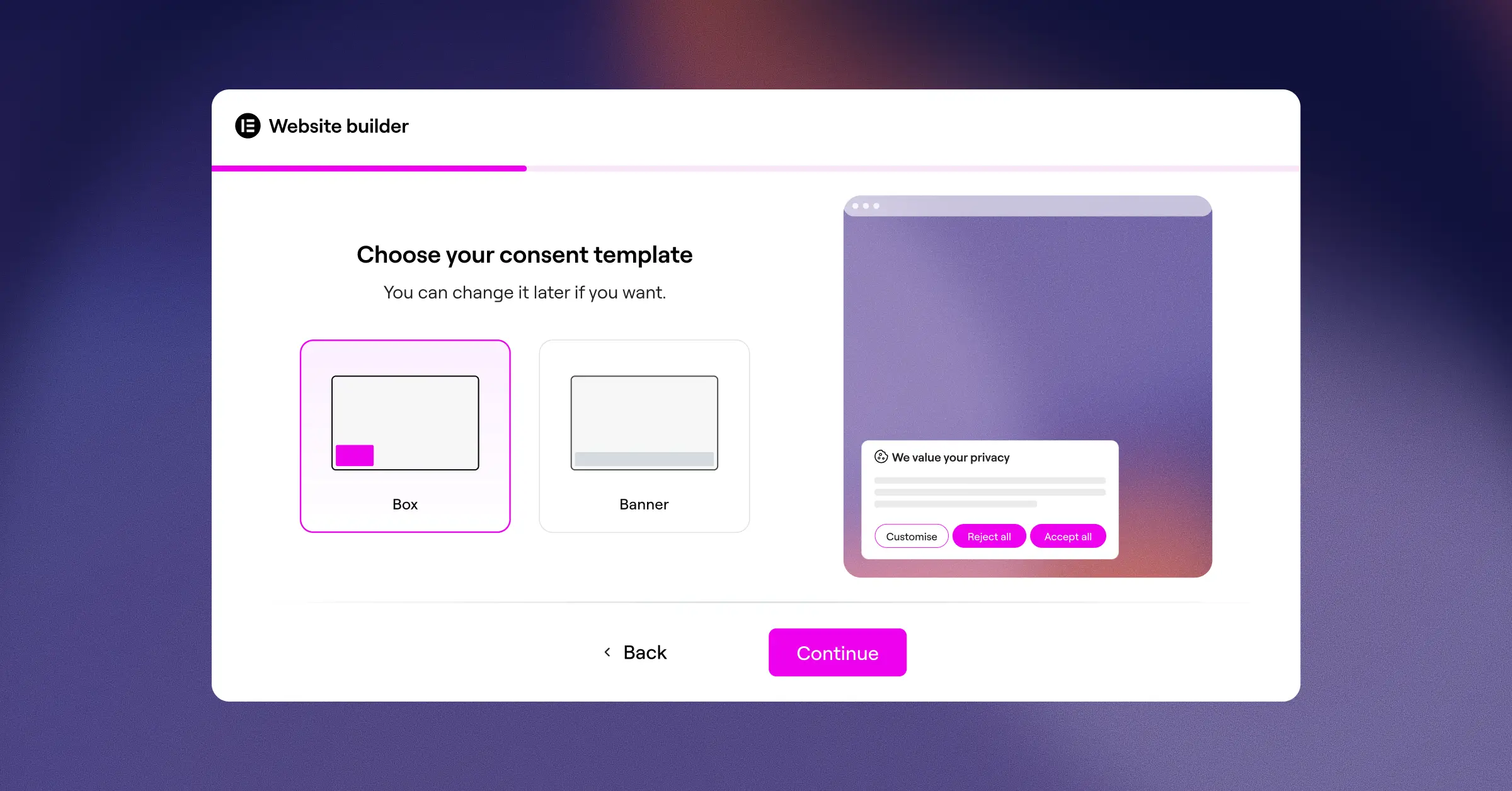
- Scans your site automatically for every cookie.
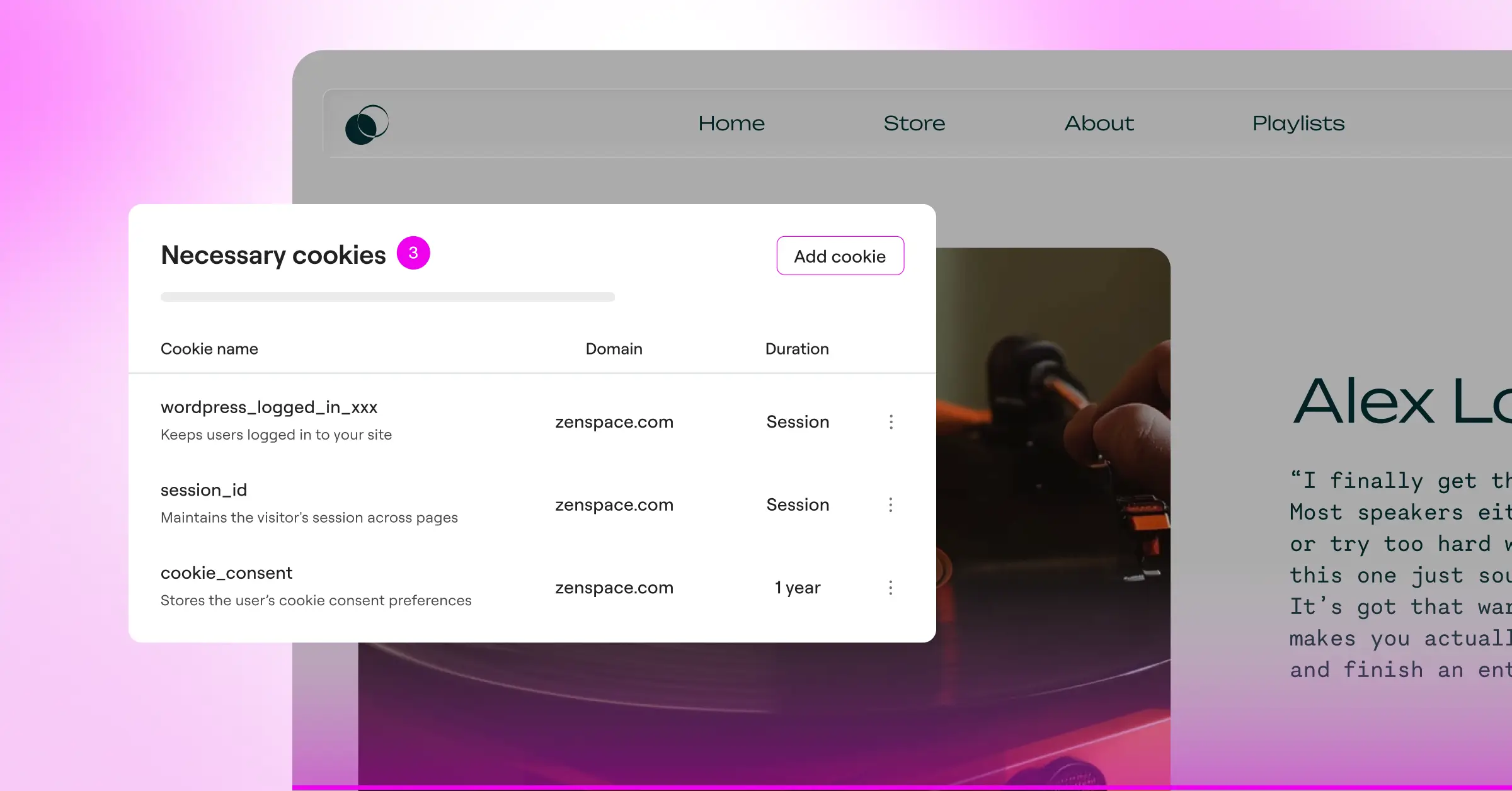
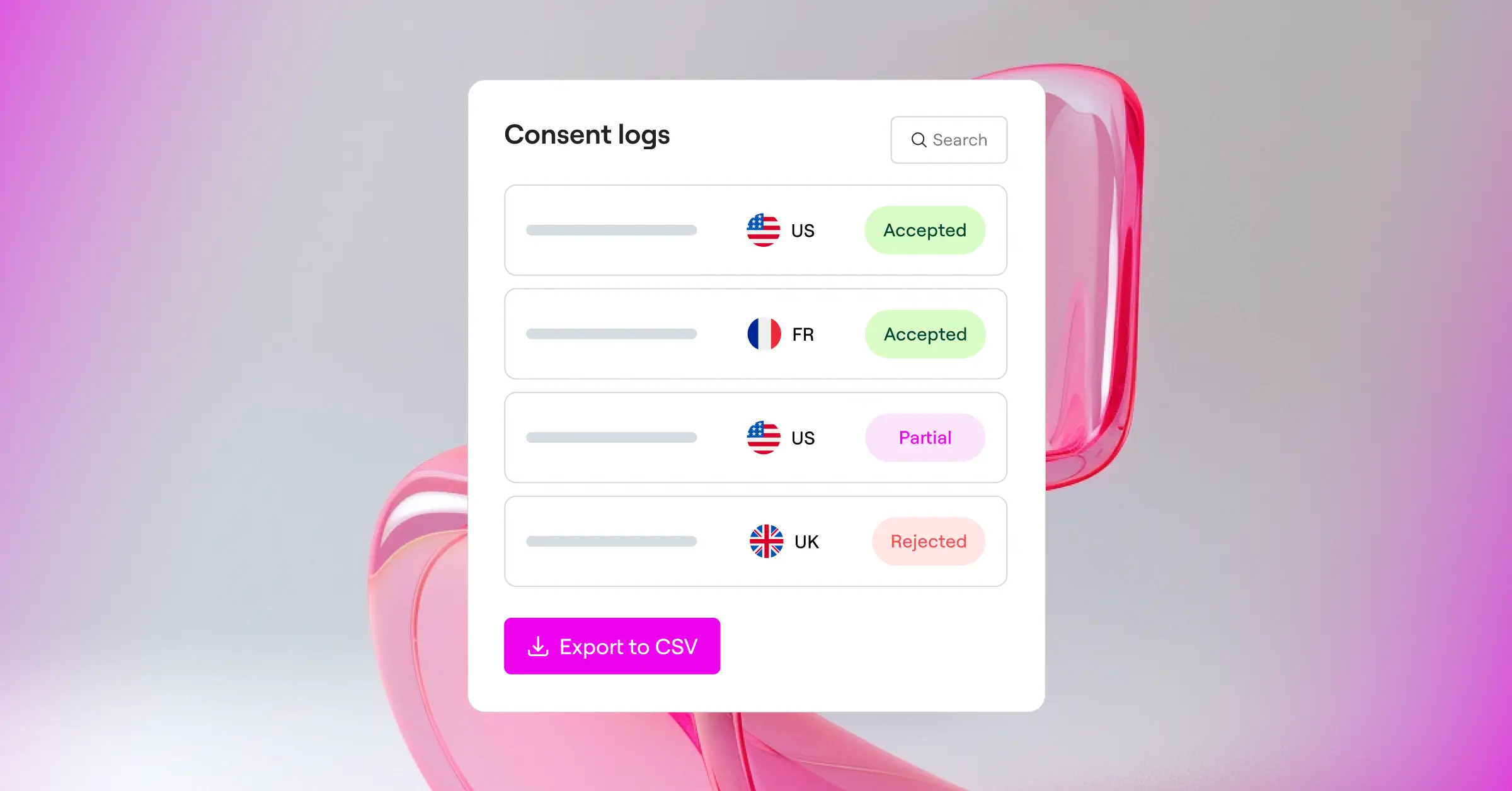
- Logs user consent securely for a clear audit trail.
- Supports Google Consent Mode v2 and Global Privacy Control.
- Targets banners to users by geographic location.
- Translates consent messages into multiple languages.
- Generates full privacy policies with a built-in assistant.
Pros:
– Native WordPress dashboard integration.
– Three-step setup, under five minutes.
– Custom banner designs, no code.
– Free tier available.
Cons:
– Best suited for sites built within the Elementor ecosystem.
Verdict: A strong choice for WordPress users who want a stress-free path to compliance.
2. GDPR.eu Checklist
The GDPR.eu Checklist is an official EU resource guide, co-funded by the Horizon 2020 Framework Programme, covering legal requirements step-by-step.
- Outlines every legal requirement in plain language.
- Explains how to handle subject access requests.
- Defines personal data and consent in exact terms.
- Lists your responsibilities around security and data breaches.
- Details when you need a Data Protection Officer.
- Includes downloadable templates for organizational records.
Pros:
– Completely free, officially backed by the EU.
– Detailed and legally accurate.
– Explains the reasoning behind the rules.
Cons:
– Manual only; you handle the technical work.
Verdict: Essential reading before implementing any technical solution.
3. Cookiebot
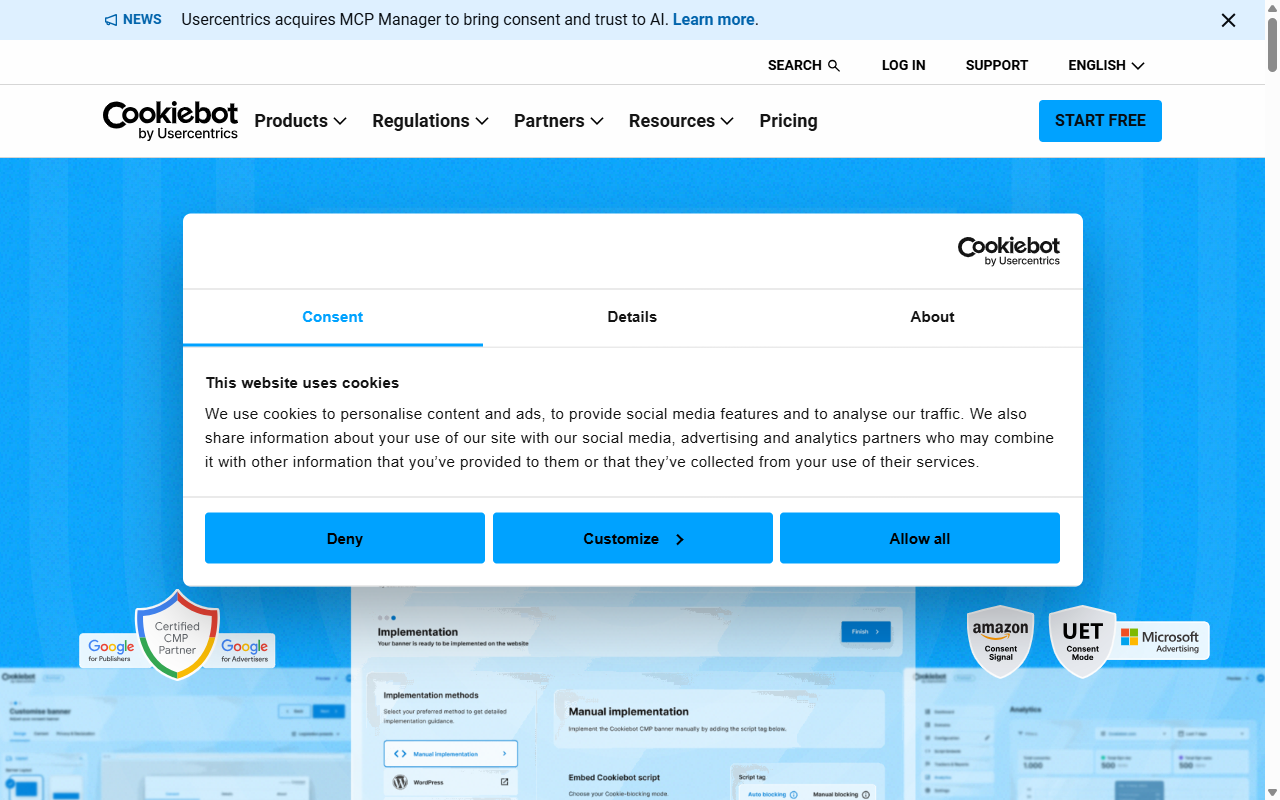
Cookiebot is a widely used, cloud-based platform that automates cookie control with deep monthly scans, a practical choice for a hands-off approach.
- Runs deep monthly scans for hidden tracking scripts.
- Blocks trackers until users give explicit consent.
- Supports global standards including GDPR, CCPA, and LGPD.
- Displays a clean, mobile-friendly interface.
- Stores consent data securely in the cloud.
- Integrates with popular tag managers.
Pros:
– Strong automated script blocking.
– Thorough tracking-cookie database.
– Easy to deploy across multiple platforms.
Cons:
– Dashboard sits outside your main WordPress editing environment.
Verdict: A dependable option for larger sites needing deep scanning outside WordPress.
4. CookieYes
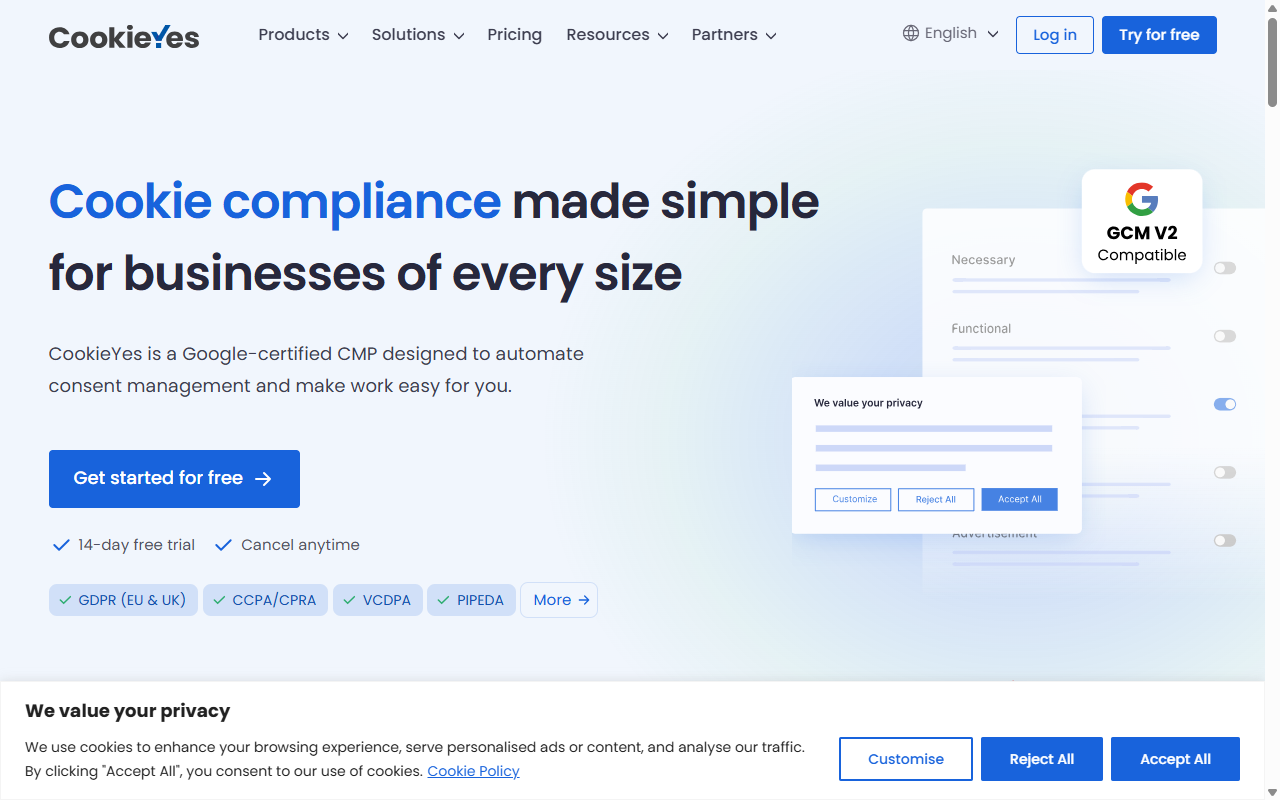
CookieYes is an accessible compliance platform built around simple installation and clean design, made to get small-to-medium sites compliant fast.
- Generates customizable cookie banners to match your site.
- Translates banners into more than thirty languages.
- Keeps complete consent records for legal verification.
- Blocks third-party scripts before consent is given.
- Includes a built-in policy generator.
- Recognizes Global Privacy Control signals.
Pros:
– Clean, modern dashboard.
– Generous entry-level plan.
– Simple single-script installation.
Cons:
– Script setup can be tricky for beginners.
– Advanced customization needs a paid plan.
Verdict: A solid middle-ground choice with a straightforward dashboard and good multilingual support.
5. Complianz
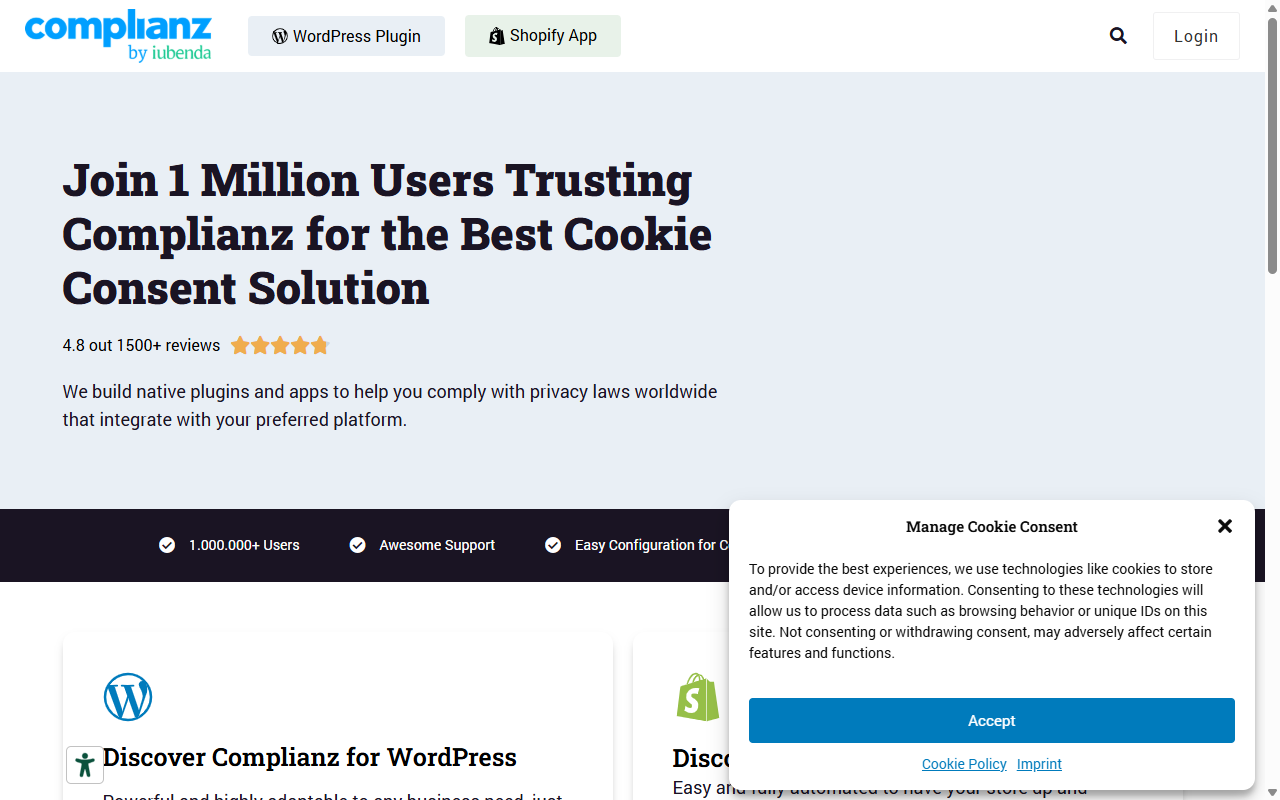
Complianz is a dedicated privacy suite for WordPress users, guided by an interactive wizard based on your business practices.
- Configures settings via an interactive wizard.
- Detects which plugins are setting cookies on your site.
- Generates legal documents including cookie policies and disclaimers.
- Adapts dynamically to regional privacy laws.
- Integrates with contact form and ecommerce tools.
- Supports Google Consent Mode v2.
Pros:
– WordPress-focused wizard, logical and guided.
– Strong integration with WordPress tools.
– Automatically generates structured legal documents.
Cons:
– Settings panel can feel like a lot at first.
– Wizard takes some time to work through.
Verdict: A great choice if you like detailed wizards and a dedicated WordPress privacy toolkit.
6. iubenda
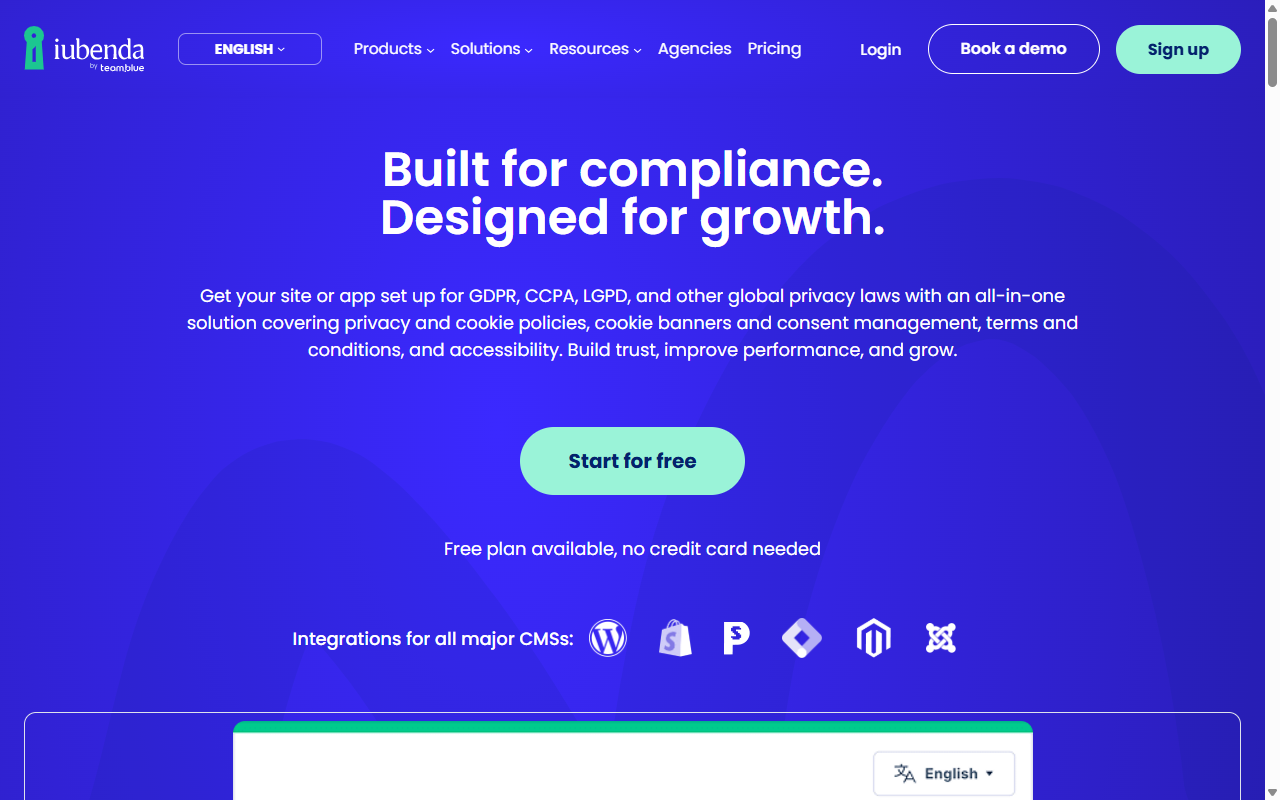
iubenda is a legal suite for drafting privacy and cookie policies and managing consent banners from one dashboard, with real weight on the legal documents.
- Drafts legal documents that update as laws change.
- Customizes your cookie banner to match your site.
- Saves preferences to meet record-keeping requirements.
- Translates legal policies into multiple languages.
- Detects external services for tailored disclosures.
- Supports CCPA, GDPR, and other frameworks.
Pros:
– Professionally drafted, well-maintained policies.
– Good fit for multi-region businesses.
– Clean, clear document presentation.
Cons:
– Dashboard can feel dense given the legal terminology.
Verdict: A strong fit for businesses that need legal policies kept current.
7. OneTrust
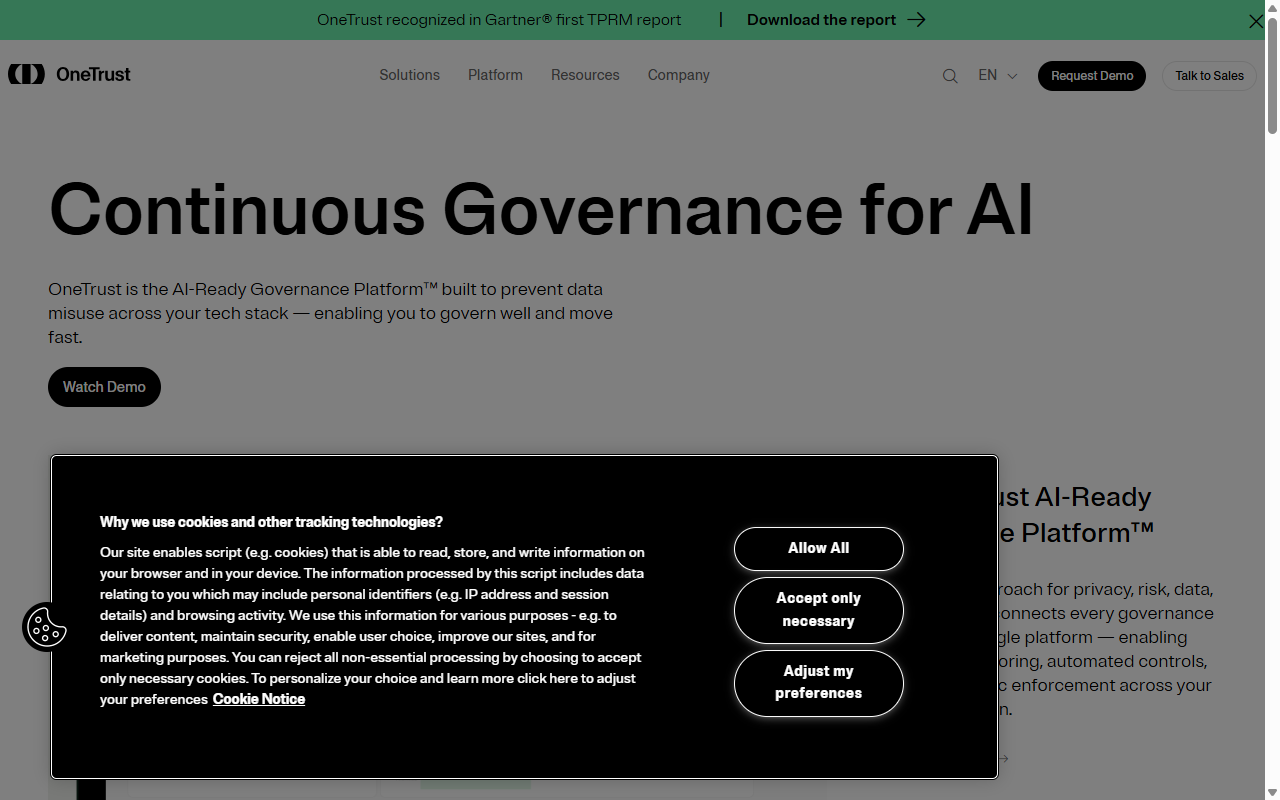
OneTrust is an enterprise-focused privacy platform with deep assessment tools, policy management, and consent systems for large organizations.
- Assesses organizational privacy risks using compliance templates.
- Maps data flows across complex networks.
- Automates subject rights requests securely.
- Tracks vendor compliance and risk profiles over time.
- Deploys advanced cookie consent banners globally.
- Generates audit reports for regulatory reviews.
Pros:
– Broad depth of features and reporting.
– Built for enterprise-level scaling.
– Covers internal and public-facing compliance.
Cons:
– Too complex and pricey for most small sites.
– Setup takes time and often professional help.
Verdict: The standard for enterprise organizations, more than most small sites require.
8. ICO GDPR Checklist for Small Businesses
Provided by the UK’s Information Commissioner’s Office (ICO), this self-assessment checklist helps small businesses review their data practices through plain-language, guided questions.
- Asks clarifying questions to pinpoint areas of non-compliance.
- Shares advice on securing physical and digital data.
- Explains how to train staff on privacy basics.
- Guides you through setting up a data registry.
- Includes tips on customer privacy inquiries.
- Sends a personalized report with next steps.
Pros:
– Practical advice from a leading European regulator.
– Completely free and easy to understand.
– Focuses on real-world operations.
Cons:
– Purely educational, with no website integration or scanning.
Verdict: Useful for understanding the operational side of compliance before choosing a tool.
9. Termly
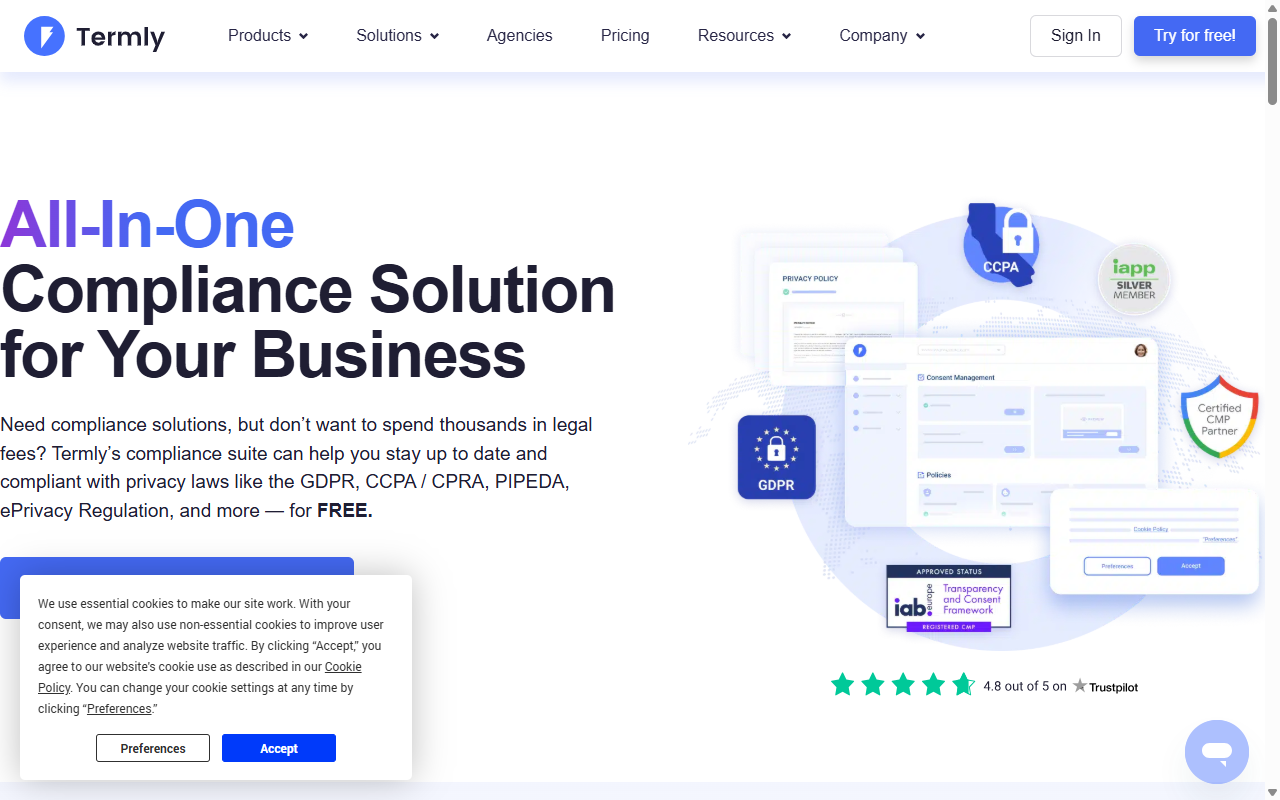
Termly is an approachable compliance suite for startups, with clear templates and simple builders for legal documents and a basic consent banner.
- Builds privacy policies, terms of service, and disclaimer pages.
- Scans your site to identify tracking cookies.
- Generates responsive, clean cookie banners.
- Keeps consent logs to meet verification requirements.
- Updates compliance documents automatically as laws change.
- Includes integration with major website platforms.
Pros:
– User-friendly setup, no technical jargon.
– Competitive pricing for small sites.
– All-in-one bundle for basic legal needs.
Cons:
– Limited advanced features for complex tracking.
– Customization options are fairly basic.
Verdict: A friendly, accessible option for startups’ basic legal and consent needs.
10. Osano
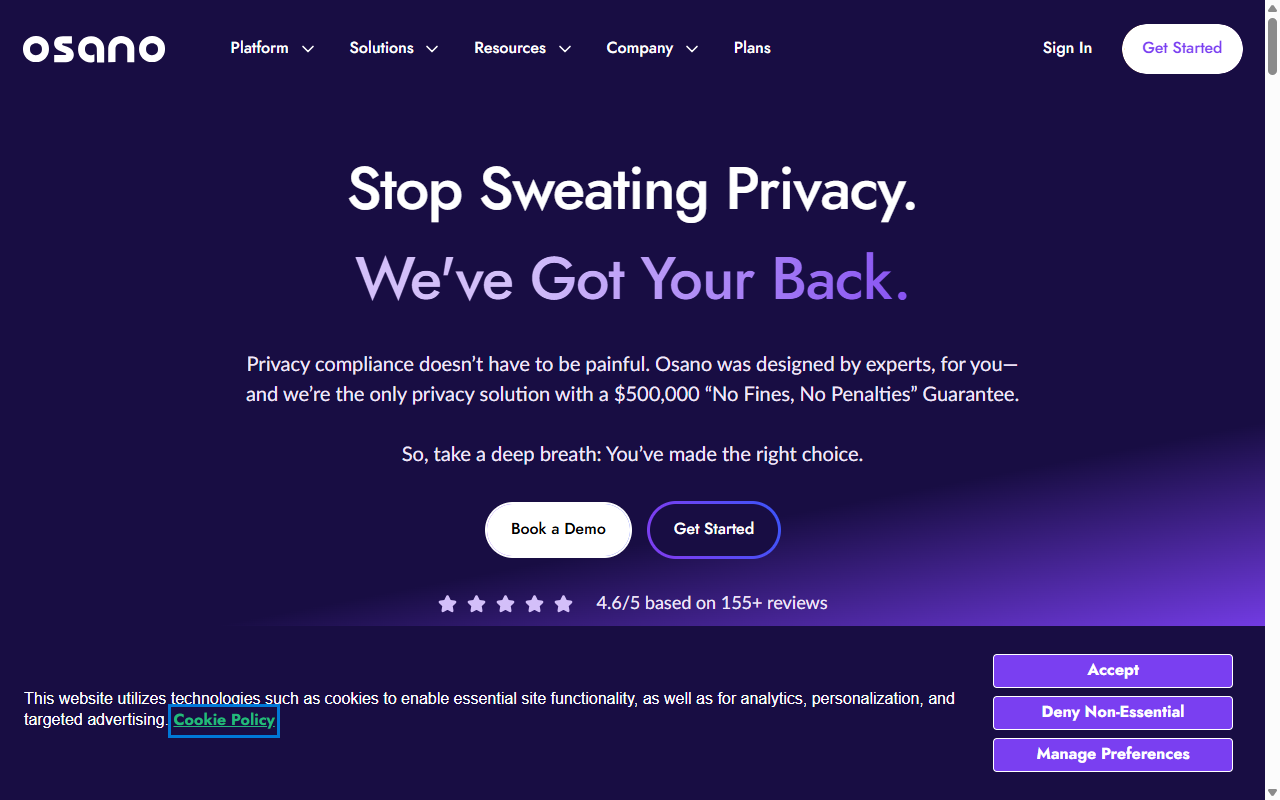
Osano is a cloud-hosted compliance platform built to simplify privacy management, with in-house lawyers reviewing vendor policies, useful for sites relying on outside tools.
- Monitors vendor risk profiles to limit third-party liability.
- Blocks unknown tracking scripts automatically.
- Translates banners into dozens of languages.
- Manages subject access requests through a secure portal.
- Covers compliance across GDPR, CCPA, and other regulations.
- Guarantees legal compliance up to a specified limit.
Pros:
– Unique compliance financial guarantee.
– Strong vendor tracking and risk analysis.
– Good international support with automatic translations.
Cons:
– Higher entry price than simpler WordPress-native options.
– Setup may need fine-tuning for custom applications.
Verdict: A premium option suited to growing companies with vendor management concerns.
Comparison of the Best Compliance Tools
Here’s a quick look at how these options compare on the key technical differences.
| Tool / Checklist | Native WP Dashboard | Google Consent Mode v2 | Target Audience | Key Advantage |
|---|---|---|---|---|
| Cookie Consent by Elementor | Yes | Yes | WordPress Site Owners | Incredibly easy dashboard-native setup, ready under 5 minutes |
| GDPR.eu Checklist | No (Framework) | No | All Web Creators | Official guidelines with step-by-step legal details |
| Cookiebot | No | Yes | Medium to Large Sites | Strong cloud-hosted automated scanning capabilities |
| CookieYes | No | Yes | Small Businesses | Simple external dashboard with a reliable entry-level plan |
| Complianz | Yes | Yes | WordPress Enthusiasts | Detailed setup wizard for WordPress configuration |
| iubenda | No | Yes | Multi-region Businesses | Lawyer-drafted legal policies that update automatically |
| OneTrust | No | Yes | Enterprises | Deep regulatory risk assessment tools |
| ICO Checklist | No (Framework) | No | Small Businesses | Direct regulatory advice with a simple self-audit |
| Termly | No | Yes | Startups & SMBs | Easy-to-use template builders with no technical jargon |
| Osano | No | Yes | Growing Companies | Unique vendor monitoring and compliance legal guarantee |
Step-by-Step GDPR Implementation Guide for WordPress
If you’re ready to make your WordPress site fully compliant, a logical sequence saves hours of trial and error. You don’t need to do it all in one afternoon, but consistent steps keep your site secure.
- Run a complete audit of your current setup-Look through active plugins, contact forms, and analytics accounts, and note what data each collects.
- Choose a dedicated compliance tool-Pick a tool that fits your workflow. If your site runs on Elementor, the built-in Cookie Consent capability keeps everything inside your dashboard.
- Configure your consent banners-Give clear options to Accept, Reject, or manage preferences, and skip pre-ticked checkboxes; they’re not valid under GDPR.
- Generate and link your legal documents-Create clear Privacy Policy and Cookie Policy pages, and link them in your footer.
- Enable Consent Mode and geo-targeting-If you serve visitors worldwide, use geo-targeting to show the banner only where required, and turn on Google Consent Mode v2.
- Test everything before going live-Open an incognito window and visit your site; no tracking cookies should load until you click Accept.
Critical Data Protection Habits to Maintain
Once your tools are active, ongoing compliance comes down to a few good habits that keep your data flows clean and protect your business.
- Collects only the minimum data needed for each task.
- Secures all user contact information with strong encryption.
- Informs users promptly if a data breach happens.
- Removes personal data permanently on formal request.
- Obtains voluntary, explicit consent before activating analytics trackers.
- Maintains accurate logs of when and how visitors gave consent.
If you want consent logging handled automatically, Elementor’s Cookie Consent capability keeps it all inside your WordPress dashboard, so your records stay in one place and ready when you need them.
Frequently Asked Questions
What is GDPR and does my website really need to follow it?
GDPR is the General Data Protection Regulation, an EU law protecting user privacy. If your site gets EU visitors, you need to follow it, even if your business is based elsewhere, since it applies based on visitor location, not business location.
Can I use a free tool for GDPR compliance?
Yes. Many platforms offer free tiers that work well for personal blogs and small sites. Elementor’s Cookie Consent capability, for example, includes a free tier with the essentials.
What is Google Consent Mode v2, and why does it matter?
Google Consent Mode v2 is a technical framework that communicates user consent choices to Google services like Analytics and Ads. It’s now mandatory in Europe for accurate reporting.
How does a WordPress-native cookie consent tool help me?
A WordPress-native tool runs from your site’s admin area, so you skip separate accounts, code snippets, and external editors. It keeps your compliance workflow in one place, saving time and mistakes.
Are pre-ticked opt-in boxes legal under GDPR?
No, pre-ticked boxes aren’t permitted under GDPR. Consent must come from an active, affirmative action: users need to click a box or toggle a switch, not have it assumed from inaction.
Do I need to keep logs of user consent?
Yes. GDPR requires you to show consent was given if an auditor asks. Reliable tools automatically store anonymized records of user choices as a secure audit trail.
What happens if my website doesn’t comply with GDPR?
Penalties for the most serious GDPR violations can reach up to EUR 20 million or 4% of global annual turnover. Smaller sites may face warnings, audits, or ad-account restrictions, and lose user trust.
Does cookie consent affect my search engine rankings?
A properly implemented consent banner won’t hurt your SEO. As long as it doesn’t block crawl bots or hurt mobile experience, search engines will index your content normally.

