Running a WordPress multisite network is a bit like managing a busy train station, with dozens of sub-tracks, hundreds of passengers, and countless moving parts. Add modern privacy law to the mix and things get tricky fast. If your network reaches visitors in Europe, California, or Canada, you can’t skip proper consent management. Don’t worry, it’s easier than it looks, and we tested the top setups to keep your network compliant without blowing your budget.
Key Takeaways
- Native tools cut down on bloat: cookie consent tools built into your dashboard keep database queries low and skip heavy third-party tracking scripts.
- Multisite compliance gets complex: different subdomains often need their own cookie policies depending on audience and location.
- Google Consent Mode v2 matters: if you run ads or analytics on your sub-sites, you need to support Google’s updated standard to keep your data accurate.
- Local logging helps: keeping consent logs inside your database makes audit trails simpler and builds visitor trust.
Why Multisite Cookie Consent is Different
Setting up privacy rules on a single site is simple. Multisite networks add three hurdles single-site admins never face:
- Network-wide vs. sub-site control: Some networks need one banner everywhere; others need different settings per sub-site. You need a setup flexible enough for either.
- Script conflicts: Different subsites often run different plugins and themes. A poorly built compliance tool can clash with active scripts, breaking banners or letting cookies slip through (this trips up a lot of people).
- Performance overhead: Consent scripts across hundreds of subdomains can slow your network down if they rely on constant external database queries. Native setups keep load times in check.
Focus on tools built for multisite environments to secure your network without complicating your workflow.
Deploying compliance tools across a multisite setup requires a unified dashboard approach. When you manage consent centrally, you minimize the risk of missing localized regulatory updates on individual sub-sites.
– Itamar Haim, Web Compliance Specialist
The 10 Best Cookie Consent Setups for WordPress Multisite
Here’s our list of the best cookie consent tools for WordPress multisite networks, with modern, lightweight, native integrations prioritized first to save you time and server resources.
1. Cookie Consent
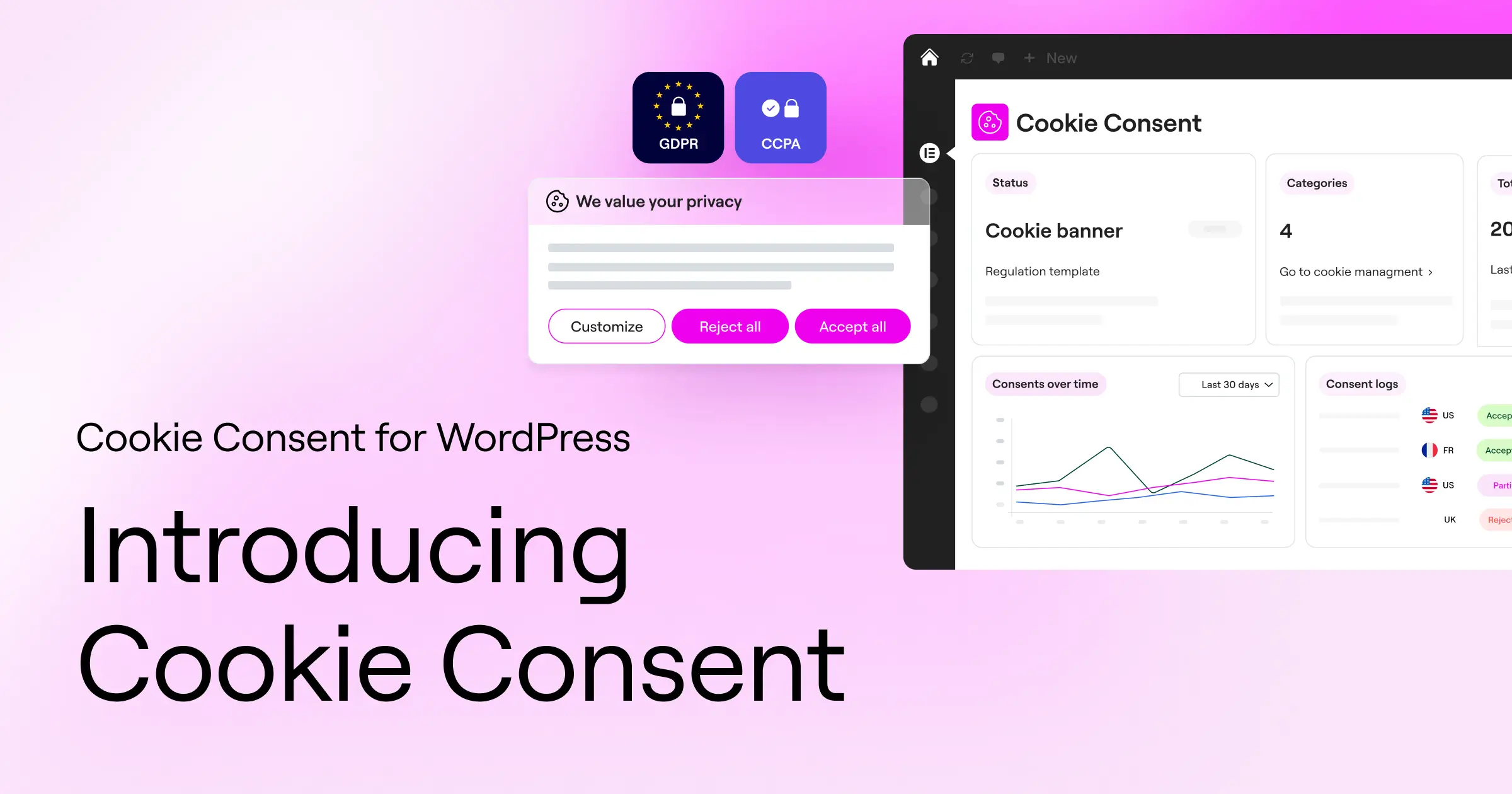
If you use Elementor to build and manage your multisite network, the built-in Cookie Consent capability is your best option. This native feature lives right in the dashboard, so you’re not jumping to an external account just to tweak a banner, and it pairs well with tools like Web Accessibility. Setup takes under five minutes, whether you run local business sites or a complex e-commerce grid.
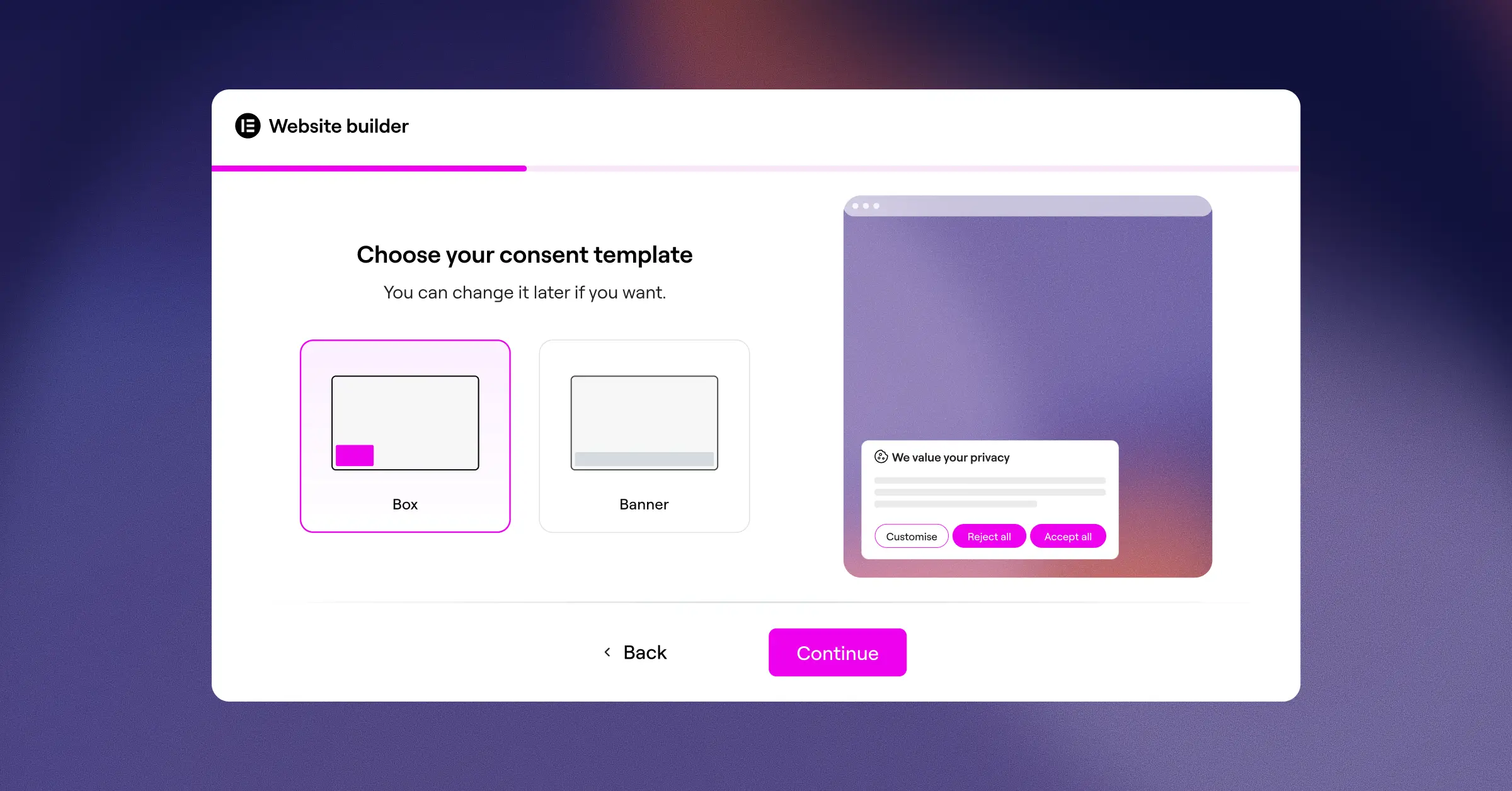
Feature highlights:
- Tracks user consent across subdomains with a lightweight script.
- Builds fully customizable layouts using native design options.
- Connects to Google Consent Mode v2 to keep tracking data accurate.
- Pulls cookie data automatically using built-in scanning.
- Logs consent events locally for a secure, verifiable audit trail.
- Detects visitor locations automatically to show the right banner.
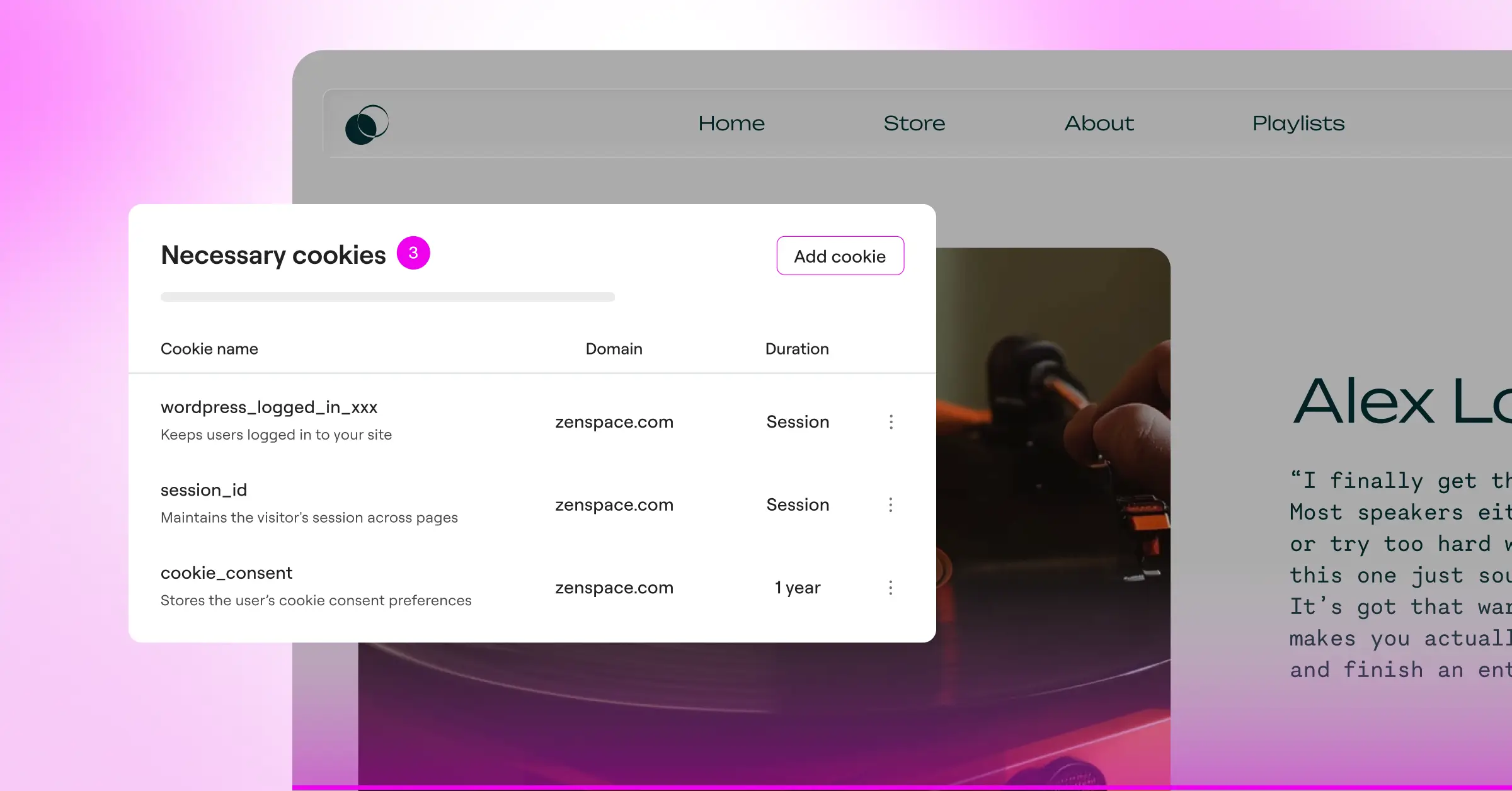
Pros and Cons
- Pros: No external dashboards to manage; fast setup; Google Consent Mode v2 support included; native design integration.
- Cons: Best suited for sites already in the Elementor ecosystem; non-standard setups may need manual script mapping.
Our Verdict
For admins who want a clean, native experience without third-party platforms, this tool is the easiest way to handle multisite compliance in 2026. Learn more on the Cookie Consent feature page.
2. Cookiebot
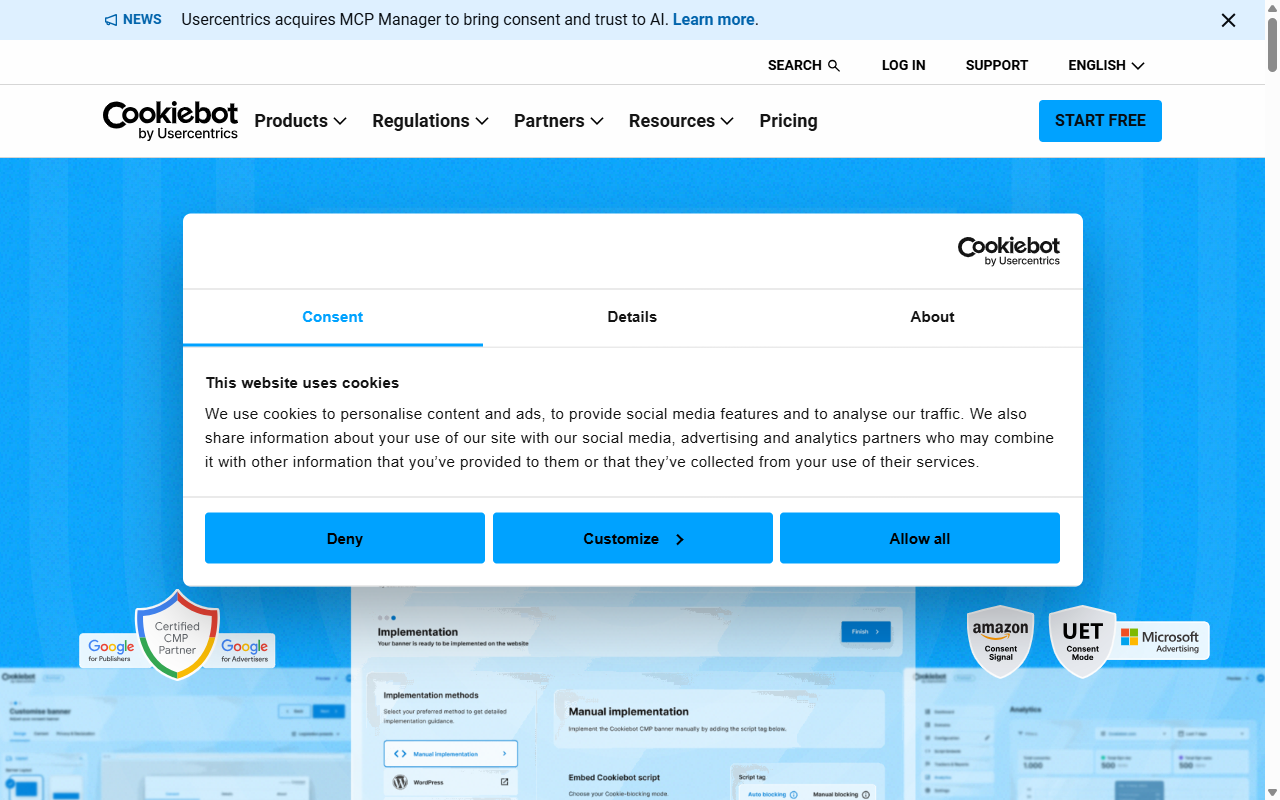
Cookiebot is an established, cloud-based platform known for deep cookie scanning. It runs outside your WordPress database, crawling your network from its own servers to find and categorize every cookie, and banners are managed through an external dashboard.
Key features:
- Tracks visitor consent trends through cloud-based reporting.
- Builds automatic cookie declarations that update after each monthly scan.
- Connects with popular tag managers to control scripts by consent level.
- Pulls detailed compliance reports you can share with legal teams.
Pros and Cons
- Pros: Thorough automated scanning; handles complex tracking scripts; reliable global CDN delivery.
- Cons: Requires an external dashboard and login; banner delivery depends on the cloud connection.
Our Verdict
Cookiebot suits large networks running complex ad-tech integrations that want hands-off cookie scanning.
3. CookieYes
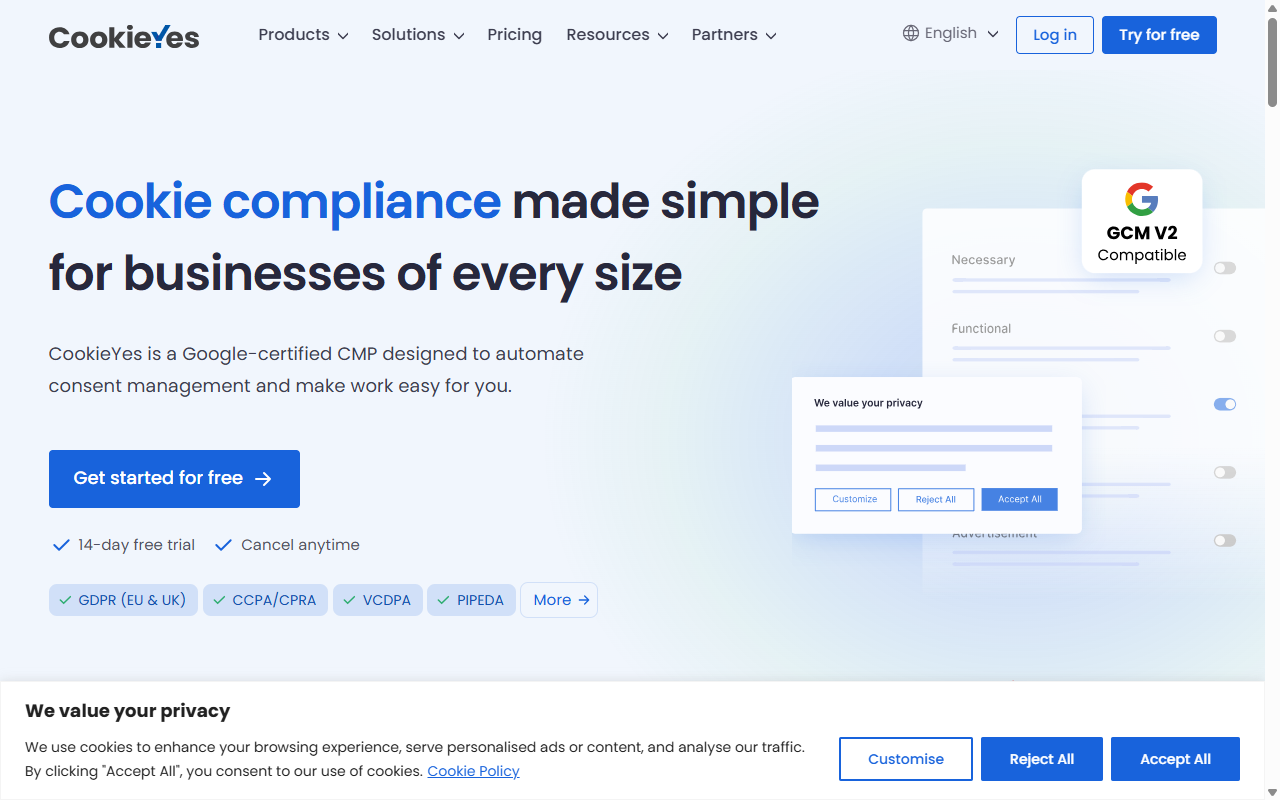
CookieYes blends cloud-based control with simple integration, and supports GDPR and CCPA, making it practical for multisite networks with international content. You manage sub-sites from one central cloud dashboard, customizing banners and reviewing logs without logging into each site separately.
Key features:
- Tracks global consent across multiple domains from one dashboard.
- Builds custom consent banners using mobile-friendly templates.
- Connects with Google Consent Mode v2 for analytics and ad campaigns.
- Pulls detailed cookie audit records showing what’s active.
Pros and Cons
- Pros: Centralized multi-site management in the cloud; straightforward setup; clean interface.
- Cons: The entry-level plan has narrower limits for busy networks; banners need an active external connection.
Our Verdict
A practical mid-range choice for admins who prefer one external dashboard managing several domains.
4. Complianz
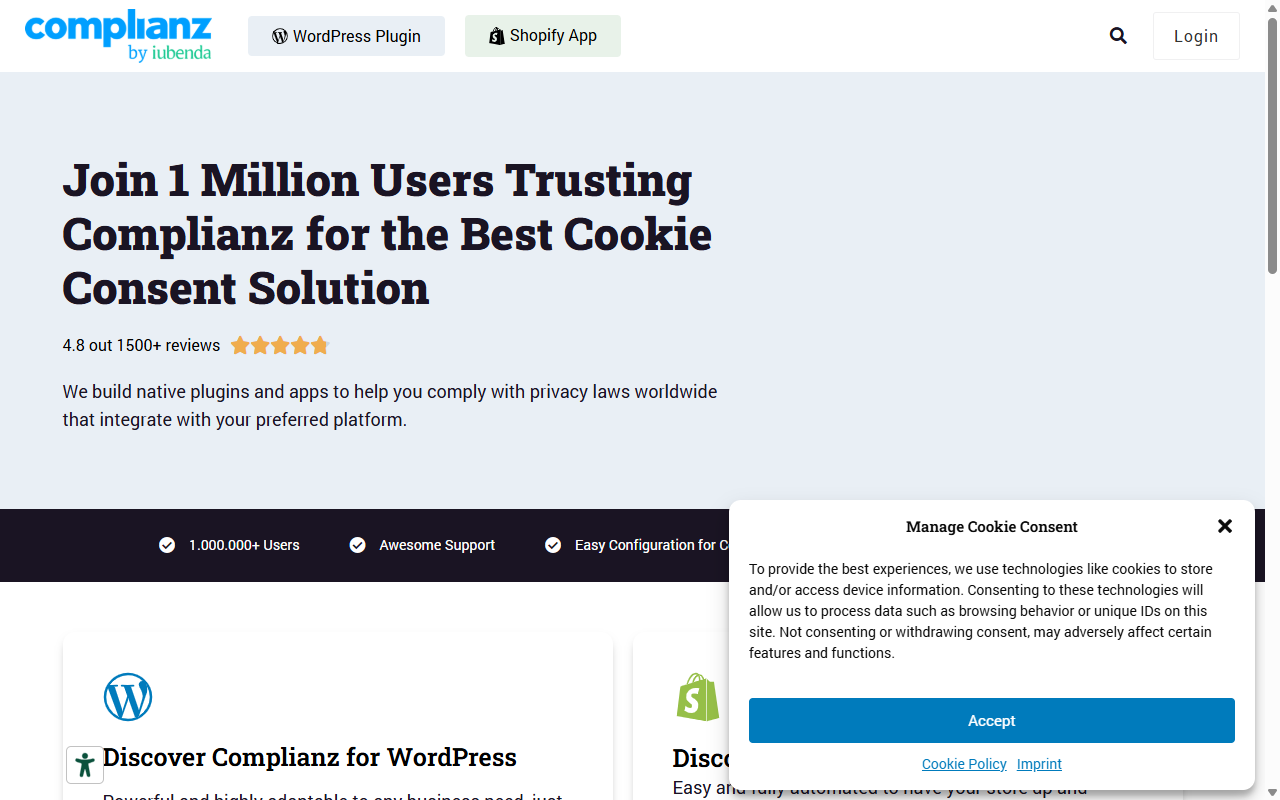
Complianz is a compliance suite built for WordPress, approaching compliance from a legal angle with a question flow that generates a cookie policy for your network. It works inside your WordPress dashboard, with multisite support for global or per sub-site settings.
Key features:
- Tracks local privacy laws to change the banner type by location.
- Builds privacy policies and cookie declarations based on your setup.
- Connects with contact form tools and social embeds to block tracking before consent.
- Pulls script details from your active plugins to block them automatically.
Pros and Cons
- Pros: Deep integration with other WordPress plugins; legal wizard makes setup approachable; supports global privacy regulations.
- Cons: The dashboard includes many configuration screens; premium licenses are priced at higher tiers.
Our Verdict
A great fit for admins who want a legally guided, automated setup entirely inside WordPress.
5. iubenda
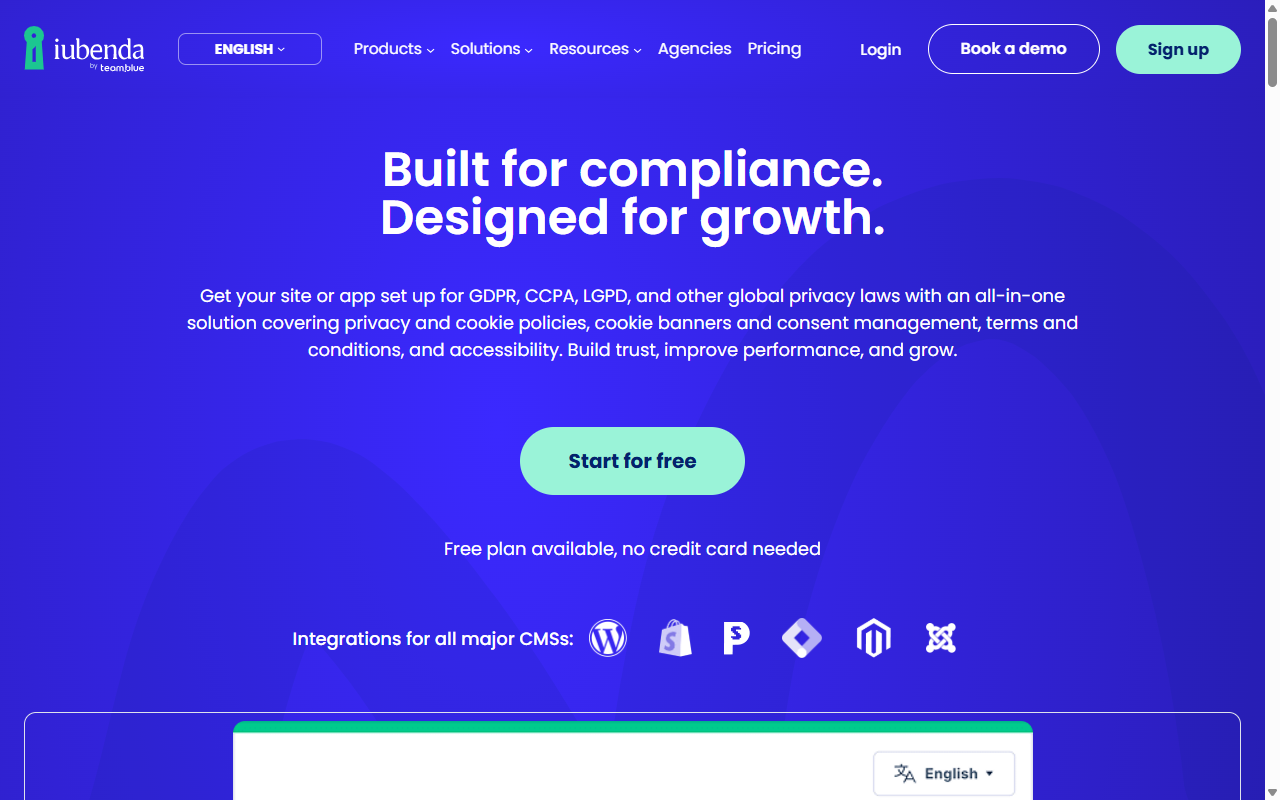
iubenda is a full compliance platform covering cookie banners, privacy policies, terms, and internal consent records, built to satisfy legal teams. Update your privacy policy on its dashboard and the change appears on your WordPress sites right away, no manual code needed.
Key features:
- Tracks consent and preference settings across complex multisite layouts.
- Builds legal documents kept current by a team of lawyers.
- Connects with third-party advertising tools to restrict tracking scripts.
- Pulls auto-detected language settings to show banners in the visitor’s language.
Pros and Cons
- Pros: Auto-updating legal text; covers more than cookie consent; professional compliance standards.
- Cons: Usage is billed through a credit system; matching banner styling takes some setup time.
Our Verdict
If you want solid legal coverage with auto-updating policies from legal professionals, iubenda is a strong contender.
6. OneTrust
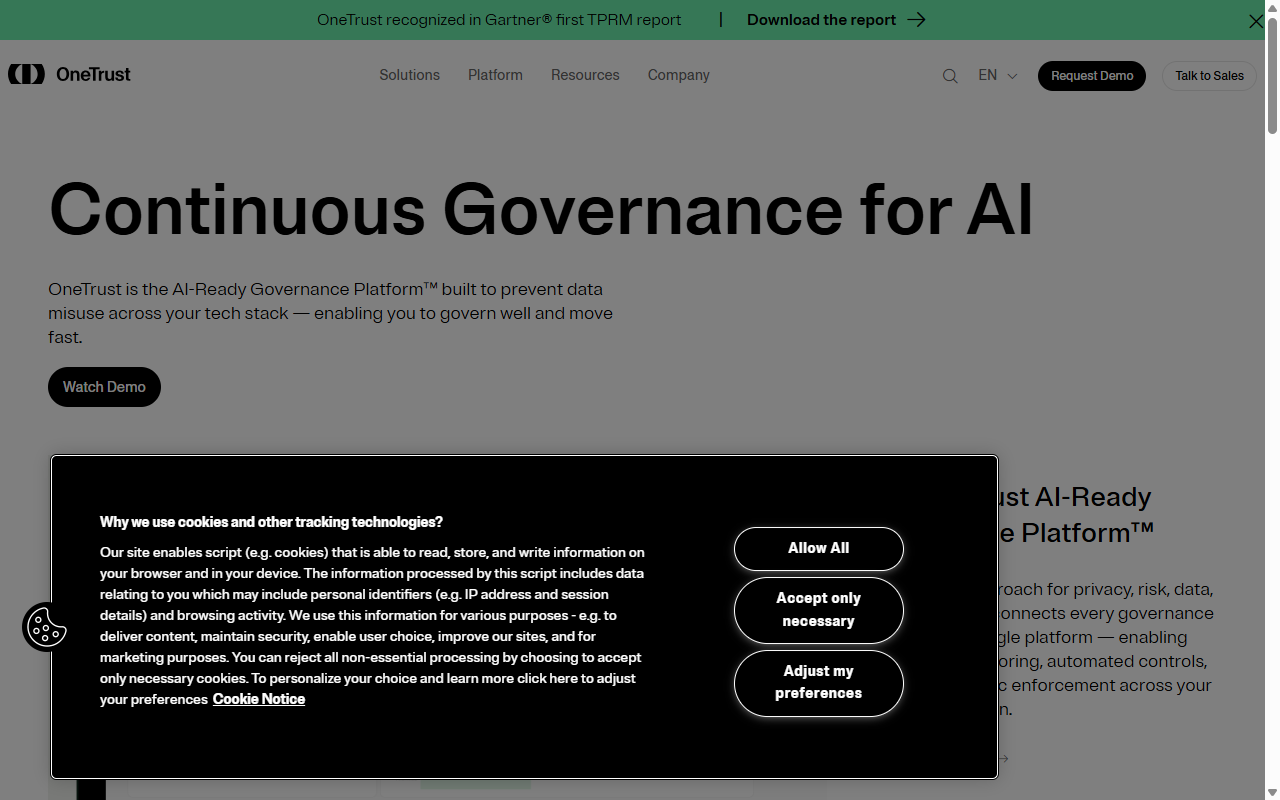
OneTrust is a large, enterprise-grade privacy management platform for organizations running extensive multisite networks with dedicated legal teams. It goes beyond cookie banners, offering vendor risk assessments, data mapping, and compliance audits, more than most blog networks need.
Key features:
- Tracks consent logs across global enterprise networks with detailed audit trails.
- Builds customized preference centers letting visitors control specific tracking types.
- Connects with enterprise databases and CRMs to sync privacy preferences.
- Pulls deep database scans to flag potential privacy risks across sub-sites.
Pros and Cons
- Pros: Extensive depth of features; trusted by large organizations globally; high security standards.
- Cons: Built for large-scale enterprise needs; setup typically involves dedicated training.
Our Verdict
OneTrust suits corporate multisite networks needing enterprise-grade compliance audits and the budget to support them.
7. Termly
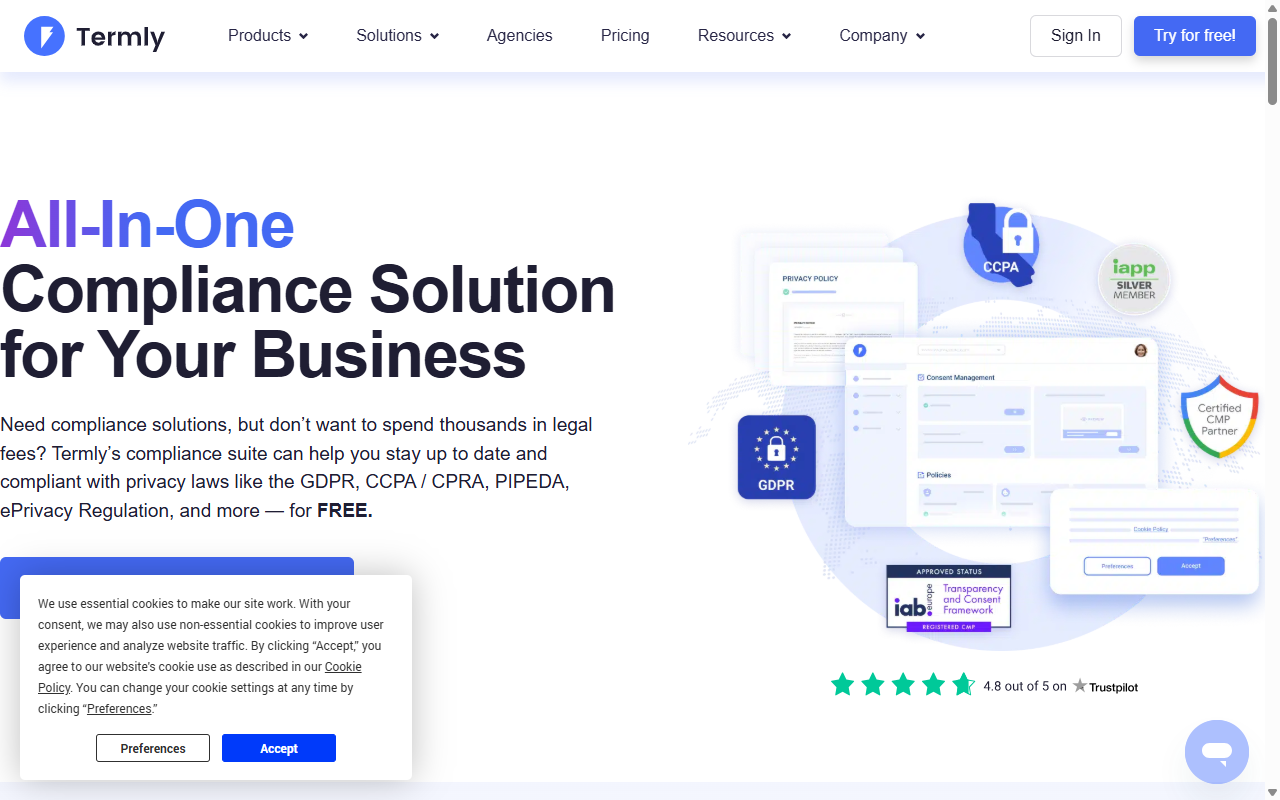
Termly is an accessible compliance builder for small businesses, startups, and independent creators managing their own multisite projects. It pairs an easy policy generator with a straightforward cookie consent manager, and setup runs in an afternoon.
Key features:
- Tracks compliance changes across your network using lightweight scripts.
- Builds customized privacy policies, cookie policies, and terms of service.
- Connects with basic analytics tools to handle initial script blocking.
- Pulls simple compliance reports that flag missing legal declarations.
Pros and Cons
- Pros: User-friendly dashboard; quick setup; clear legal templates for common business models.
- Cons: Script-blocking controls are more basic than developer-focused tools offer.
Our Verdict
Termly works well for small business networks wanting a simple setup covering banners and legal documents.
8. Osano
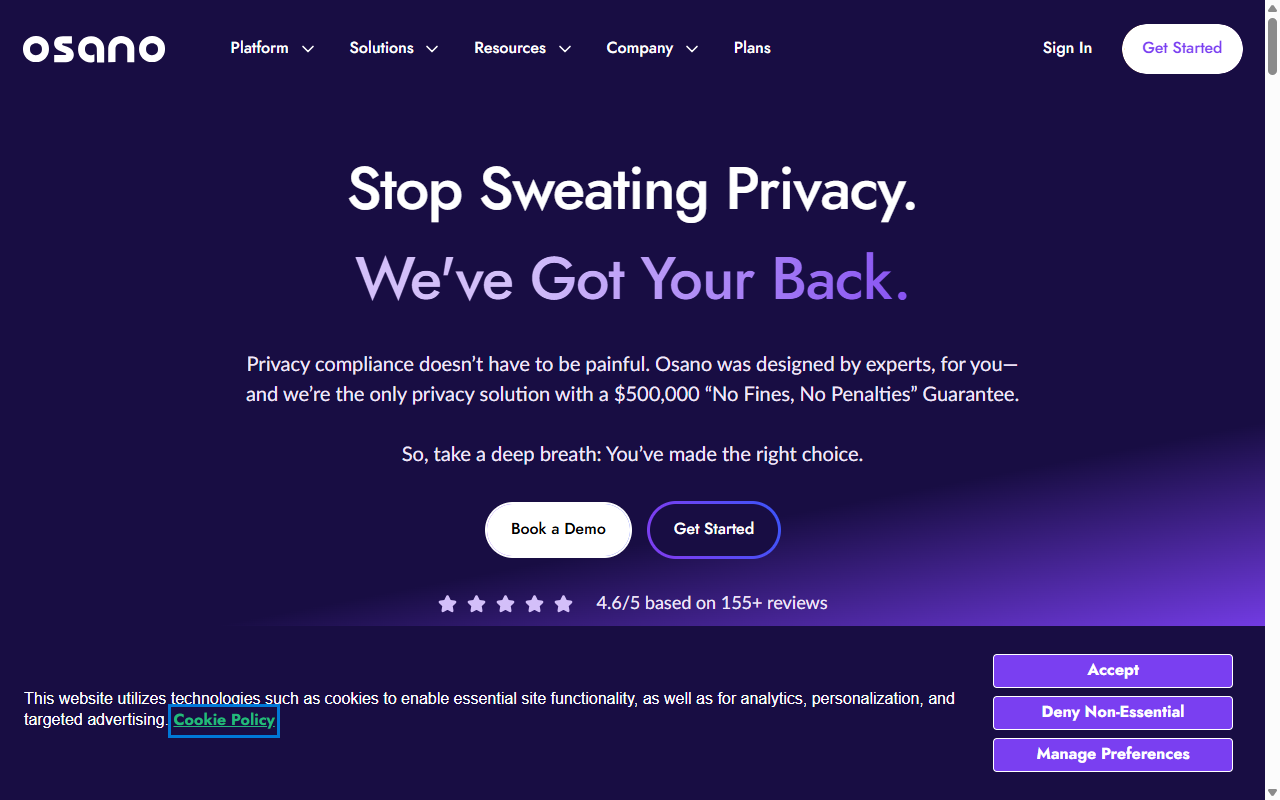
Osano is a B-Corp certified privacy platform known for simple integration and a legal guarantee against privacy fines. It maintains a database of thousands of vendors, letting it block untrusted tracking scripts automatically based on known privacy behaviors.
Key features:
- Tracks vendor compliance scores to flag plugins that may need privacy attention.
- Builds fast-loading consent banners that adapt automatically to local laws.
- Connects with developer frameworks to pass consent preferences to custom apps.
- Pulls instant translations for banners in dozens of languages.
Pros and Cons
- Pros: Unique compliance insurance policy; reliable blocklists; strong translation support.
- Cons: Customization is more limited on basic tiers; enterprise pricing is quote-based.
Our Verdict
A low-maintenance option for companies that want automated protection and prefer external vendor monitoring.
9. Usercentrics
Usercentrics is a consent management platform popular among European businesses and developers needing a highly customizable solution. One dashboard manages cookie consent across your WordPress multisite network, web apps, and mobile apps.
Key features:
- Tracks user consent across web and mobile platforms with unified reporting.
- Builds interactive preference portals so users choose exactly what to allow.
- Connects with programmatic advertising networks to share consent signals (TCF 2.2).
- Pulls automated daily scans so new features get categorized quickly.
Pros and Cons
- Pros: Highly compliant with European standards; good developer documentation; solid translation engine.
- Cons: Setup benefits from technical expertise, and configuration differs from native WordPress options.
Our Verdict
Usercentrics suits European multisite networks running programmatic ads that need close regional compliance.
10. Consent Manager
Consent Manager is a developer-focused compliance platform with flexible implementation options for complex server and database setups. It’s built with performance in mind, with some of the smallest script sizes around, an attractive pick for networks needing fast load times.
Key features:
- Tracks visitor actions across your sites without adding heavy database loads.
- Builds highly customized banner flows that fit complex user processes.
- Connects with internal tracking systems to keep your marketing data clean.
- Pulls performance benchmarks showing whether your banner affects bounce rates.
Pros and Cons
- Pros: Lightweight and fast; deep customization; built-in A/B testing for banner designs.
- Cons: The admin panel uses an older interface style; advanced features need some technical background.
Our Verdict
Consent Manager fits performance-minded developers who want to experiment with different banner styles.
Cookie Consent Setup Comparison
Here’s a quick comparison of how these options stack up on key multisite requirements:
| Setup / Tool | Integration Style | Dashboard Location | Multisite Support | Google Consent Mode v2 |
|---|---|---|---|---|
| Cookie Consent | Native WordPress | WordPress Admin | Yes, central control | Supported natively |
| Cookiebot | Cloud-based | External Site | Yes, via cloud settings | Supported natively |
| CookieYes | Hybrid / Cloud | External Site | Yes, central panel | Supported natively |
| Complianz | WordPress Native | WordPress Admin | Yes, sub-site level control | Supported via settings |
| iubenda | Cloud script | External Site | Yes, credit-based | Supported via settings |
| OneTrust | Enterprise Cloud | External Site | Yes, enterprise groups | Supported natively |
| Termly | Cloud script | External Site | Yes, per-domain setup | Supported via integrations |
| Osano | Cloud-based | External Site | Yes, multi-site rules | Supported natively |
| Usercentrics | Developer API / Cloud | External Site | Yes, cross-platform | Supported natively |
| Consent Manager | Developer Cloud | External Site | Yes, custom rules | Supported natively |
How to Choose the Best Setup for Your Network
Picking the right tool doesn’t have to be a guessing game. A few basic questions about how your multisite is organized will narrow things down fast (it’s simpler than it sounds).
First, think about your day-to-day settings. A native option like Cookie Consent or Complianz keeps you from juggling external accounts.
Second, look at your tracking needs. If your sub-sites run Google Ads or Analytics, Google Consent Mode v2 support isn’t optional, so make sure your pick supports it out of the box.
Finally, think about server performance. Cloud-based scripts keep your database light but can delay banner loading if the third-party server is slow, while native tools run quickly since they skip external lookups. Weigh this against your hosting setup before you commit.
Step-by-Step Multisite Implementation Best Practices
Once you’ve chosen your tool, setting it up correctly across your network is the next step:
- Test on a staging environment first: Roll out any cookie banner on a staging sub-site first, apply your scripts, and use your browser’s developer tools to confirm tracking cookies are actually blocked before a visitor clicks “Accept”.
- Establish global standards with sub-site flexibility: Use a global configuration for your primary design templates and legal texts, but leave sub-site options open so admins can adapt banners to local languages or audiences. The super admin handles network-level settings while site admins adjust per-subsite banners where allowed.
- Run regular scanning audits: Plugins get updated constantly across a network. Set your tool to scan automatically each month to catch new cookies, and keep policy documents current.
Keep your deployment structured, and you protect visitor privacy while keeping your network running smoothly.
Frequently Asked Questions
Do I need a separate cookie consent banner for every site in my multisite network?
It depends on your structure. Sub-sites on different domains targeting different regions need separate banners to match local laws. Subdirectories of one brand can often share a unified banner that carries preferences network-wide.
What happens if a sub-site administrator installs a plugin that drops tracking cookies?
A native tool with automatic scanning catches the new cookies on its next run, adds them to your policy, and blocks them until the visitor consents, which is why centralized admin controls matter so much.
Can I customize the look of my banners to match different sub-site themes?
Yes, many premium and native tools let you customize styles per sub-site. With a native capability like Cookie Consent, you can adjust colors, fonts, and layouts using your existing site builder settings.
What is Google Consent Mode v2, and does my multisite network need it?
It communicates your visitors’ consent choices to Google services like Ads and Analytics. If your network serves EEA visitors and uses Google services, you need it for ads personalization and advanced tracking.
Do native cookie consent tools slow down WordPress multisite performance?
No, well-designed native options don’t slow your network down. Because they run directly from your WordPress database, they skip the delayed loading that comes with connecting to third-party cloud servers.
Can I manage GDPR and CCPA compliance from the same cookie banner?
Yes, modern setups use geo-targeting to detect visitor location, showing a strict opt-in banner (required for GDPR in Europe) to EU visitors and a simpler opt-out link (used for CCPA/CPRA in California) to US visitors.
Is it possible to export consent logs if my network gets audited?
Absolutely, most solid compliance tools keep a local or cloud-based log of every consent event, so you can export those logs as a CSV or PDF from your admin panel if a regulator asks.