Table of Contents
Building an online store isn’t powerful. It’s a mechanical sequence of logical choices regarding platform, design, and data structure. Most beginners fail because they treat an ecommerce build like a standard brochure website. A store is a working software application.
the team created over 200 transactional sites. After 15 years doing this, I can tell you the success of your launch relies entirely on the prep work you do before writing a single line of CSS. Here’s exactly how to plan, design, and launch a fast, profitable store in 2026 without tearing your hair out.
Key Takeaways
- Site speed dictates revenue – A 100-millisecond delay in load time hurts conversion rates by 7%.
- Mobile dominance – 74% of all digital purchases now happen on mobile devices, making breakpoint-specific design mandatory.
- Data structure matters first – Organizing your SKUs and product variations in a spreadsheet prevents 80% of common launch delays.
- Self-hosted flexibility wins – Open-source platforms give you total control over checkout flows and recurring billing logic.
- Transactional email is critical – Order confirmations require specialized mail delivery routing to achieve a 95% inbox placement rate.
- Accessibility is legally required – Modern stores must meet WCAG standards to avoid penalties and serve all potential buyers.
What You Need Before Starting
Don’t touch a server or buy a domain until you’ve assembled your core business assets. Jumping into design too early guarantees you’ll waste hours reworking templates later. You need raw materials first.
Here’s your mandatory pre-build checklist:
- Legal business formation – You can’t open a commercial payment gateway without a valid Tax ID or Employer Identification Number (EIN).
- The master product spreadsheet – Document every item in a CSV file. You need columns for SKU, item name, price, weight, dimensions, and inventory count.
- High-resolution photography – Gather at least four angles per product. Keep file names descriptive (e.g., black-leather-wallet-front.jpg) for basic accessibility and image search indexing.
- Policy documents – Draft your terms of service, privacy policy, shipping rules, and return policy. Payment processors review these pages manually before approving your account.
- Brand guidelines – Lock down your specific hex codes, typography pairings, and logo assets in SVG format.
- Initial capital – Expect to spend roughly $1,250 on premium themes, reliable hosting, plugin licenses, and initial inventory software integrations.
Honestly, skipping the CSV product spreadsheet is the biggest mistake you can make. Trying to type product descriptions directly into a web interface one by one is a massive time sink. Batch your work.
Pro tip: Always assign a unique SKU (Stock Keeping Unit) to every product variation. If you sell a shirt in three sizes and two colors, that’s six distinct SKUs, not one.
Step 1: Choose Your Core Platform Architecture
Your content management system dictates how much freedom you’ll have in the future. You generally face a choice between closed SaaS (Software as a Service) environments and open-source software.
Closed systems restrict access to server-level code. Open-source platforms let you modify everything from the database queries to the final HTML output.
| Feature | Open-Source (e.g., WordPress/WooCommerce) | Hosted SaaS (e.g., Shopify) |
|---|---|---|
| Data Ownership | You own 100% of your customer data and files. | Platform controls the database. |
| Customization | Unlimited. Total access to CSS, PHP, and database. | Restricted to approved APIs and template languages. |
| Monthly Costs | Variable (Pay for hosting and premium tools). | Fixed monthly tier plus app subscriptions. |
| Transaction Fees | None (only standard gateway processing fees). | Platform often charges extra if not using their gateway. |
| Portability | Can move your entire store to any hosting provider. | Locked in. Can’t migrate checkout logic or customer passwords. |
If you want absolute control over your margin and checkout experience, an open source platform is the logical choice. You aren’t renting your store; you own it.
Step 2: Secure Fast Cloud Infrastructure
Shared hosting will kill an online store. Ecommerce sites run heavy, uncached database queries every time a user adds an item to their cart or loads a personalized checkout page. You need dedicated resources.
Here’s how to establish your server architecture:
- Register a short, memorable domain – Keep it under 14 characters. Avoid hyphens. Use a recognized registrar and immediately enable domain privacy protection.
- Provision managed cloud hosting – Look for infrastructure built on Google Cloud C2 machines. Your target metric is Time to First Byte (TTFB). It must be under 200ms.
- Configure an Enterprise CDN – A Content Delivery Network like Cloudflare distributes your static files globally. This ensures a buyer in London gets the same load speed as a buyer in New York.
- Install an SSL certificate – Secure Socket Layer encryption is non-negotiable. Modern browsers block users from entering credit card data on non-HTTPS connections.
- Allocate dedicated RAM – Ensure your server instance provides at least 2GB of dedicated PHP memory specifically for background processing tasks like order exports.
Top-tier infrastructure yields measurable results. Systems optimized for speed frequently hit a 109ms TTFB and maintain 99.9% uptime. Don’t compromise here.
Step 3: Map Out Your Product Taxonomy
How you organize your catalog dictates how easily search engines index your items and how quickly humans find what they want to buy. This is your taxonomy. It consists of categories, subcategories, tags, and attributes.
Let’s look at how to structure this data correctly.
Categories vs. Tags: Think of categories as the broad aisles in a physical supermarket (e.g., “Menswear”). Tags are specific, cross-category details (e.g., “Summer Collection”). Don’t mix them up.
What are Product Attributes?
Attributes define the variable traits of an item. Size, weight, color, and material are attributes. You use these to build filtering sidebars so customers can check a box for “Large” and instantly see only large items.
How deep should subcategories go?
Keep it flat. A user shouldn’t click more than three times to reach a product. For example: Home > Kitchenware > Coffee Makers. Going deeper than three levels causes a 41% drop-off in user navigation.
Look, I’ve cleaned up messy databases on 143 stores where the owner ignored taxonomy rules. Fixing broken category structures after a store has launched and gained indexed URLs is a technical nightmare. Map it out on a whiteboard first.
Step 4: Design the User Interface and Buying Experience
Your design must build trust instantly. A confusing layout sends buyers straight to your competitors. You need a responsive, conversion-optimized interface.
This is where visual site builders become vital. Using Elementor Editor Pro, you can visually construct every phase of the customer process. It includes 118+ widgets (32 Core and 86 Pro) specifically engineered for modern web creation.
Here’s your step-by-step design workflow:
- Define Global Brand Settings – Set your primary, secondary, text, and accent colors at the site level. Apply your typography rules globally. This ensures consistency across hundreds of product pages without manual edits.
- Build the Header and Footer – Create a persistent header featuring a prominent search bar, customer account link, and a dynamic mini-cart icon that updates when items are added.
- Design the Single Product Template – Use the Theme Builder to craft a custom product template. Position the product gallery on the left and the price, attributes, and “Add to Cart” button prominently on the right above the digital fold.
- Customize the Product Archive – Design the category pages. Implement a grid layout with clear product titles, pricing, and distinct “Sale” badges. Ensure the filtering sidebar is highly visible.
- Optimize the Cart and Checkout – Strip away distractions. Hide the main website navigation on the checkout page to trap the user’s attention solely on completing the payment form.
When working with Editor Pro, use its responsive controls per breakpoint. A desktop layout rarely translates perfectly to a six-inch screen. Tweak the padding, font sizes, and stacking order specifically for mobile devices.
Pro tip: In 2026, CSS-first foundations are the standard. Elementor’s Editor V4 (Atomic) uses Classes and Variables to keep the underlying code incredibly lightweight, pushing your Core Web Vitals into the green.
Step 5: Configure Secure Payment Gateways
Getting money out of a customer’s bank account and into yours requires a payment gateway. You need to understand the fees, payout schedules, and supported currencies before signing up.
Here’s a breakdown of how modern gateways operate:
- Direct Gateways (Stripe, Braintree) – These keep the customer on your website during the entire transaction. They require an SSL certificate. They typically charge an industry-standard 2.9% plus 30 cents per successful card charge.
- Redirect Gateways (PayPal Standard) – These send the user away from your site to a third-party login screen, then bounce them back after payment. This can slightly lower conversion rates but is extremely easy to set up.
- Digital Wallets (Apple Pay, Google Pay) – These use biometric authentication on the user’s device. Integrating these buttons on your product pages increases mobile conversion rates by up to 22% because buyers don’t have to type their credit card numbers.
- Buy Now, Pay Later (Klarna, Affirm) – These services split the cost into installments for the buyer while paying you the full amount upfront. Adding BNPL options routinely increases average order value (AOV) by 40%.
But there’s a catch regarding sales tax. Gateways just process money; they don’t calculate local tax jurisdictions. You’ll need dedicated software like Avalara or TaxJar integrated into your checkout to dynamically calculate state and county taxes based on the buyer’s zip code.
Step 6: Set Up Transactional Emails and Automations
Email marketing is how you sell, but transactional email is how you operate. If a customer buys a $400 item and doesn’t get a receipt in their inbox within five seconds, they’ll panic and initiate a chargeback.
Standard server PHP mail functions fail constantly. They get flagged as spam by Gmail and Outlook. You must route your store’s automated messages through a dedicated transactional delivery service.
Here are the core automated flows you must configure:
- New Order Receipt – Fired immediately upon successful payment capture. Must include the order number, itemized list, total paid, and a clear customer service contact email.
- Shipping Confirmation – Triggered when you print the shipping label. This must include the tracking carrier, the tracking URL, and estimated delivery dates.
- Password Reset Requests – These need instant delivery. If a user tries to log in, forgets their password, and the reset email takes ten minutes, they’ve already abandoned the purchase.
- Abandoned Cart Reminders – Set this to trigger 4 hours after a user leaves items in their cart. Include a 5% discount code to force the conversion.
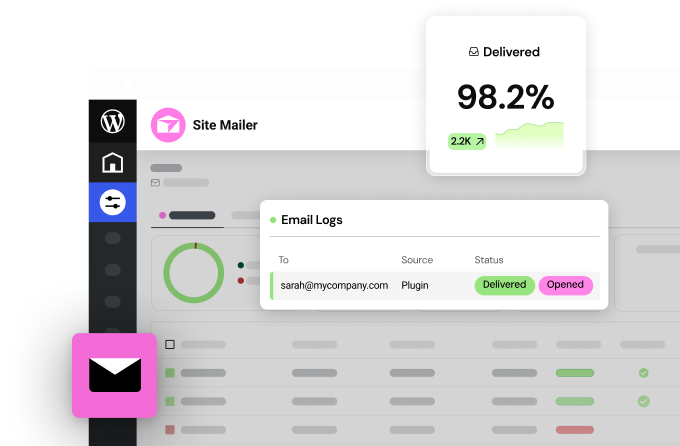
To guarantee delivery, replace your default WordPress SMTP settings. Tools like Elementor Email Deliverability are built specifically for this. It handles transactional routing, achieving a 95% inbox placement rate. It doesn’t send marketing blasts; it ensures your critical operational emails actually arrive.
Step 7: Apply Performance and Accessibility Fixes
A beautiful store that loads slowly or excludes disabled users is a liability. You must optimize your assets before pushing the site live to the public.
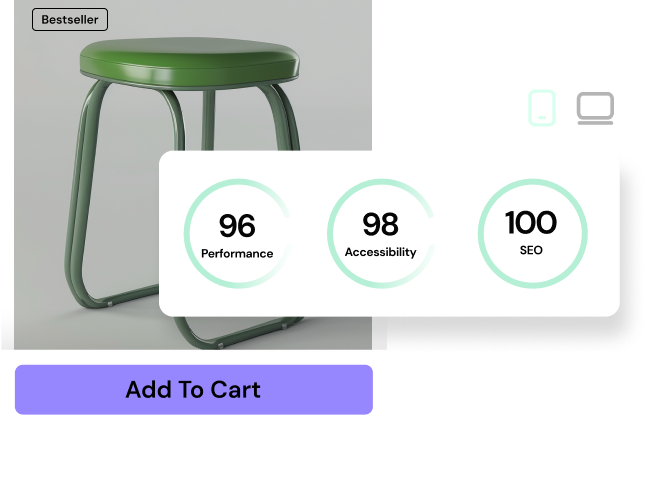
Speed optimization isn’t optional. High-resolution product photos will destroy your load times if left untouched. You should compress everything. Image Optimization automatically reduces file sizes by up to 60% and serves modern formats like WebP and AVIF to supported browsers.
You also need aggressive browser caching. Implement Element Caching to store static HTML versions of your dynamic pages, dramatically reducing server processing time on repeat visits.
Accessibility is just as critical. In 2026, lawsuits targeting non-compliant websites are common. You’ve to actively scan your store for barriers.
- Ensure all product images have descriptive ALT text for screen readers.
- Verify the color contrast ratio between your text and background is at least 4.5:1.
- Check that all interactive elements, like cart drawers and popup modals, can be closed using the “Escape” key.
- Guarantee the entire checkout flow is navigable using only a keyboard’s “Tab” key.
You can use AI-driven tools like Elementor Ally to identify problems. It scans for over 180+ specific WCAG issues, helping you pinpoint exactly where your HTML needs adjustment.
Pro tip: Never auto-play videos on your product pages. It violates accessibility guidelines and causes massive spikes in mobile data usage, frustrating potential buyers on cellular networks.
Step 8: The Pre-Launch Testing Protocol
Testing your store yourself while logged in as an administrator provides a false sense of security. You bypass caching and see admin-level elements. You must test as an anonymous user.
Run through this exact sequence before announcing your launch:
- Open an incognito browser window – Navigate to your homepage. Check how fast the initial banner image loads.
- Test the search bar – Type a misspelled product name. Verify that your search engine offers a logical “Did you mean…?” suggestion rather than returning a blank page.
- Add multiple items to the cart – Change the quantities. Remove an item. Ensure the cart subtotal updates instantly via AJAX without requiring a full page reload.
- Complete a dummy purchase – Put your payment gateway into “Test Mode.” Use the official test credit card numbers provided by Stripe or your processor (usually 4242 4242…). Process the order.
- Verify the fulfillment backend – Log into your dashboard. Confirm the order registered correctly, inventory count decreased by the right amount, and the transactional email hit your test inbox.
Finally, test the site on actual physical devices. Emulators in Chrome developer tools aren’t enough. Borrow an iPhone and an Android device. Tap every single link in the mobile menu. Ensure touch targets are at least 44×44 pixels wide so thumbs don’t misclick.
Expert Advice on Ecommerce SEO
Search Engine Optimization for stores requires a different strategy than blogging. You’re dealing with thin content, duplicate descriptions, and constantly shifting inventory. We asked an industry veteran how to handle the unique challenges of product indexing in 2026.
To rank product pages today, you can’t just stuff keywords into a description. You’ve to structure your schema markup perfectly so search engines understand the exact price, stock status, and review ratings. If you combine flawless technical SEO with highly specific, problem-solving product copy, you naturally capture high-intent buyers who are ready to pull out their credit cards.
Itamar Haim, SEO Team Lead at Elementor. A digital strategist merging SEO, AEO/GEO, and web development.
Follow that advice closely. Implement complete Product Schema on every item page. It pushes your performance optimization and data structure directly into the search results, giving you rich snippets that draw the eye.
Frequently Asked Questions
How many products do I need to launch a store?
You can launch with a single product. Many highly profitable direct-to-consumer brands start with one flagship item and a highly optimized, focused landing page before expanding their catalog.
Can I sell digital and physical products on the same site?
Yes. Platforms like WooCommerce handle this natively. You simply check a box labeling a product as “Virtual” and “Downloadable,” which removes shipping fee calculations at checkout for that specific item.
What happens if my store goes down during a traffic spike?
If you’re on cheap shared hosting, your site crashes and you lose sales. Managed cloud infrastructure scales resources dynamically to handle concurrent checkouts, keeping your store online during major sales events.
Do I need a custom domain for a small store?
Absolutely. Using a free subdomain (like yourstore.freewebsite.com) destroys consumer trust. Buyers won’t input credit card details on a site that looks unprofessional or temporary.
How do I handle international shipping taxes?
Don’t try to calculate international tariffs manually. Integrate a cross-border shipping API that calculates Duties and Taxes at Checkout (DDP), so the buyer pays exact customs fees upfront.
What is an SSL certificate and why do I need it?
An SSL certificate encrypts the data passing between the user’s browser and your server. It’s legally required for handling payment data and changes your URL from HTTP to HTTPS.
Should I force customers to create an account to buy?
No. Always offer a “Guest Checkout” option. Forcing account creation is responsible for a 24% increase in cart abandonment rates. Let them buy quickly, then ask for account creation on the confirmation page.
How long does it take to build an ecommerce site?
If you’ve your product CSV, brand assets, and legal policies ready, you can configure a functional store in 48 hours. The content creation phase is what usually causes delays.
Can I use Elementor AI to write my product descriptions?
Yes. Elementor AI is built directly into the editor and can generate unique, tone-specific product copy based on a few bullet points, saving massive amounts of time on large catalogs.
What is the most important metric to track after launch?
Your Cart Abandonment Rate. If people add items to the cart but don’t finish paying, it usually indicates a broken checkout flow, unexpected shipping costs, or a lack of trusted payment options.
Looking for fresh content?
By entering your email, you agree to receive Elementor emails, including marketing emails,
and agree to our Terms & Conditions and Privacy Policy.