Manage allows you to optimize WordPress databases by removing unnecessary data like post revisions, auto-drafts, spam comments, and expired transients. This process reduces storage usage, improves query speed, and speeds up site backups. Users can perform these cleanups for single sites or in bulk directly from the Managed Sites dashboard.
What is database optimization?
Database optimization is the process of scrubbing unused or outdated entries from your WordPress database. Over time, items like trashed posts and expired transients accumulate, slowing down backend responsiveness. Manage provides a centralized interface to safely remove this clutter across one or multiple sites.
What are the benefits of cleaning your database?
Optimizing your database through the Manage dashboard provides several technical advantages:
- Frees Storage: Reclaims disk space by deleting redundant data logs.
- Boosts Performance: Decreases database size, which leads to faster query execution times.
- Simplifies Maintenance: Results in smaller database files, making site backups and restores more efficient.
- Enhances Site Health: Keeps the site backend responsive and free from data bloat.
Which database items can you remove during a cleanup?
When running the optimization tool, you can select specific data categories for removal:
- Post Revisions: Older versions of pages and posts saved automatically by WordPress.
- Auto Drafts & Trashed Posts: Deleted content and unfinished drafts still occupying database rows.
- Spam & Trashed Comments: Unwanted messages and deleted comments stored in the comments table.
- Expired Transients: Temporary cached data that is no longer valid but remains in the options table.
How do you optimize a single site in Manage?
- Go to your My Elementor dashboard.
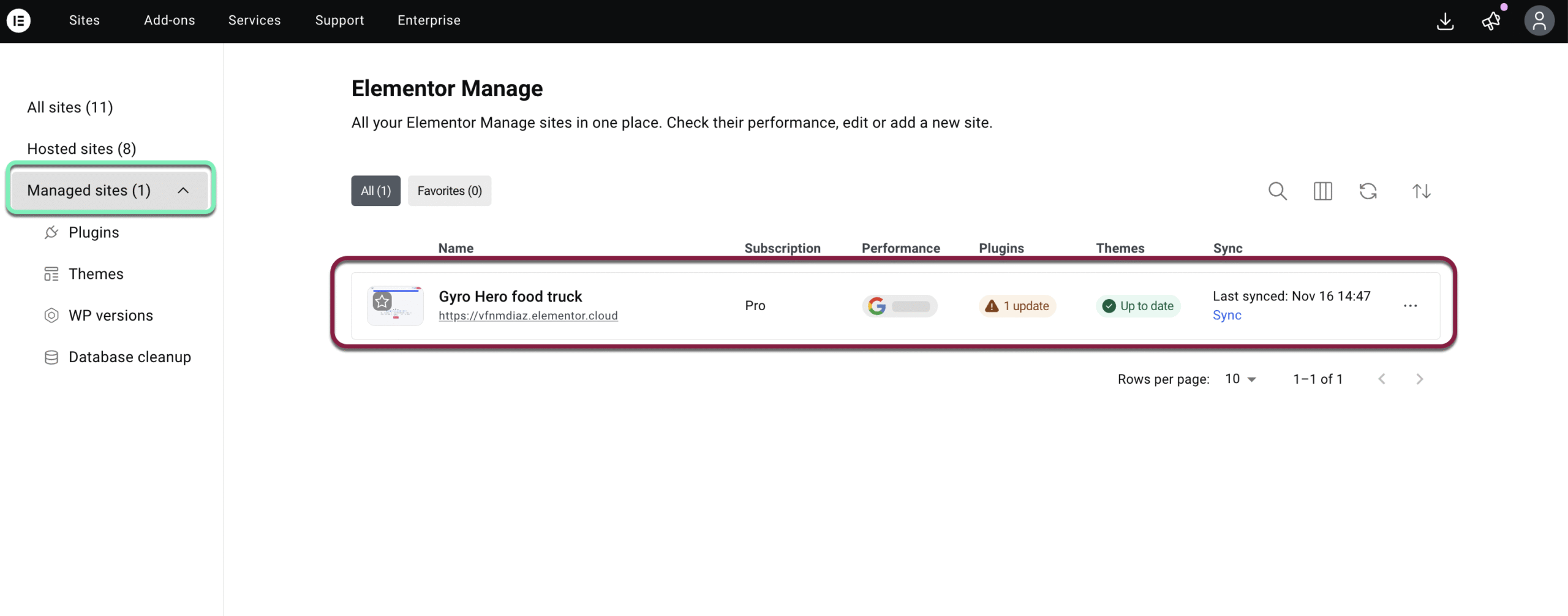
- Under the Sites tab in the top bar, go to Managed Sites.
- Click on the relevant site to go into the Managed site view.
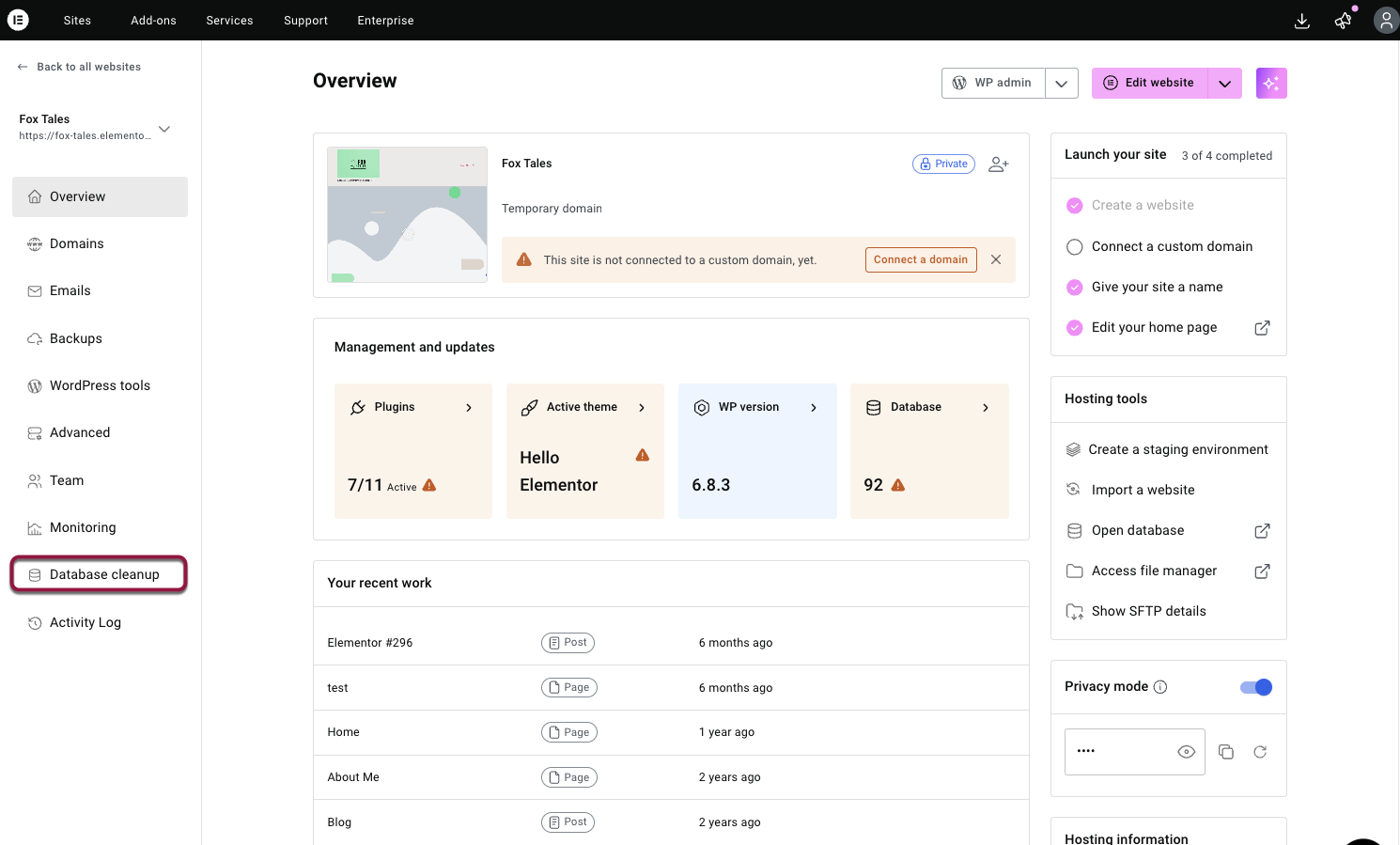
- In the left-hand menu, click Database cleanup. This opens the page where you can manage and optimize database entries.
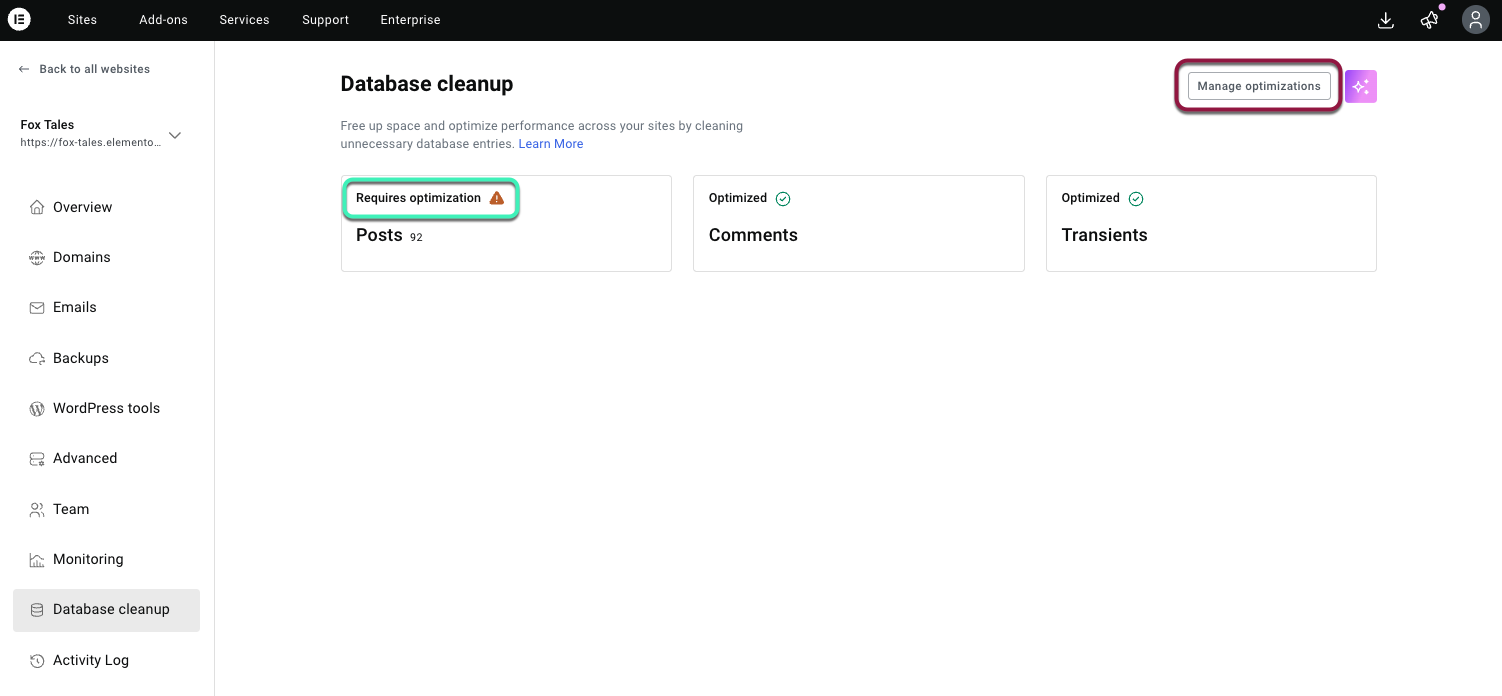
- If there is an optimization to be performed, it will be appear under the relevant column as a “!” warning symbol. Click Manage optimizations on the right side of the screen.
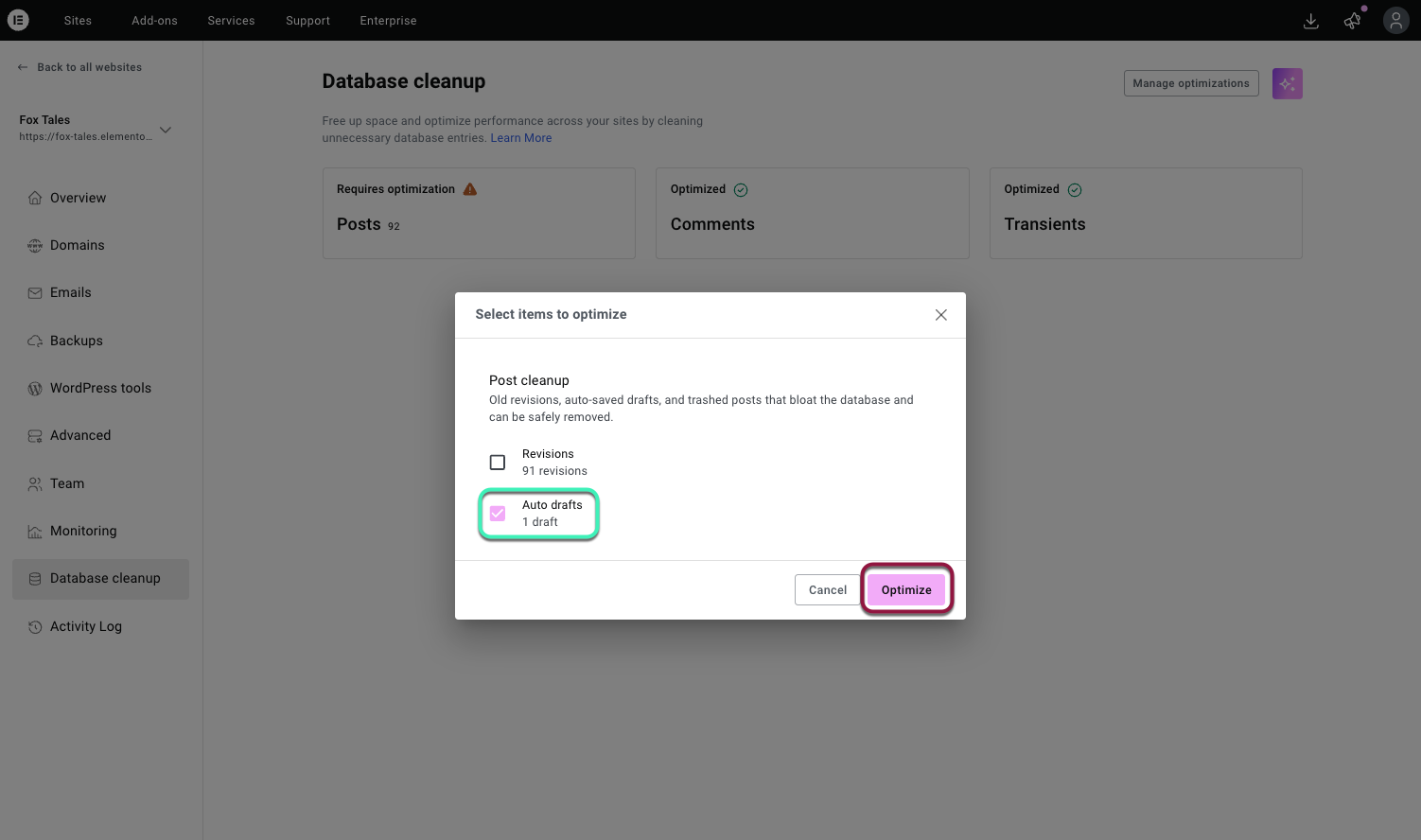
- A list of possible optimizations appears. Check the box next to an item to select it and then click Optimize.
Optimize in bulk
- Go to your My Elementor dashboard.
- Under the Sites tab in the top bar, go to Managed Sites.
- Under Maintenance in the left-hand panel, click Database cleanup. This opens the page where you can manage and optimize database entries.
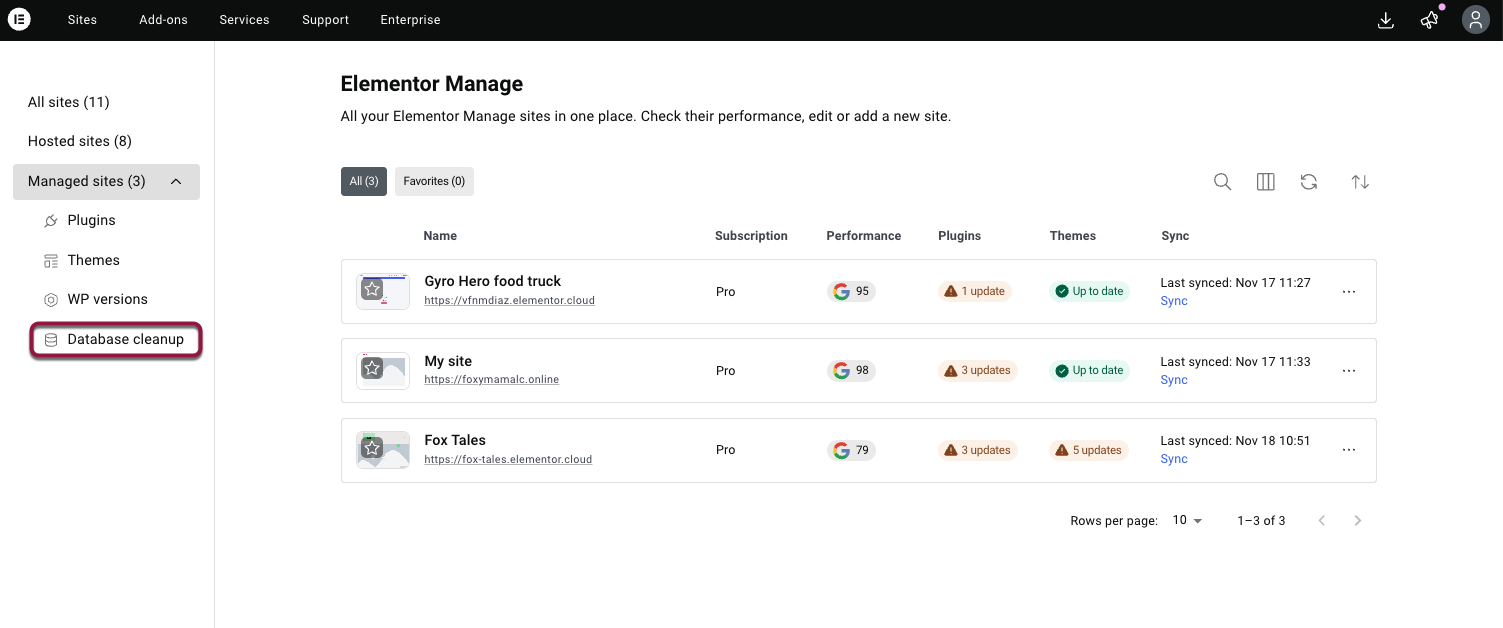
- Check the box next to the websites to select all the optimizations for those sites, then click Select optimizations. NoteIn order to optimize in Bulk, make sure to click Select Optimizations at the top of the list, not next to a specific site.
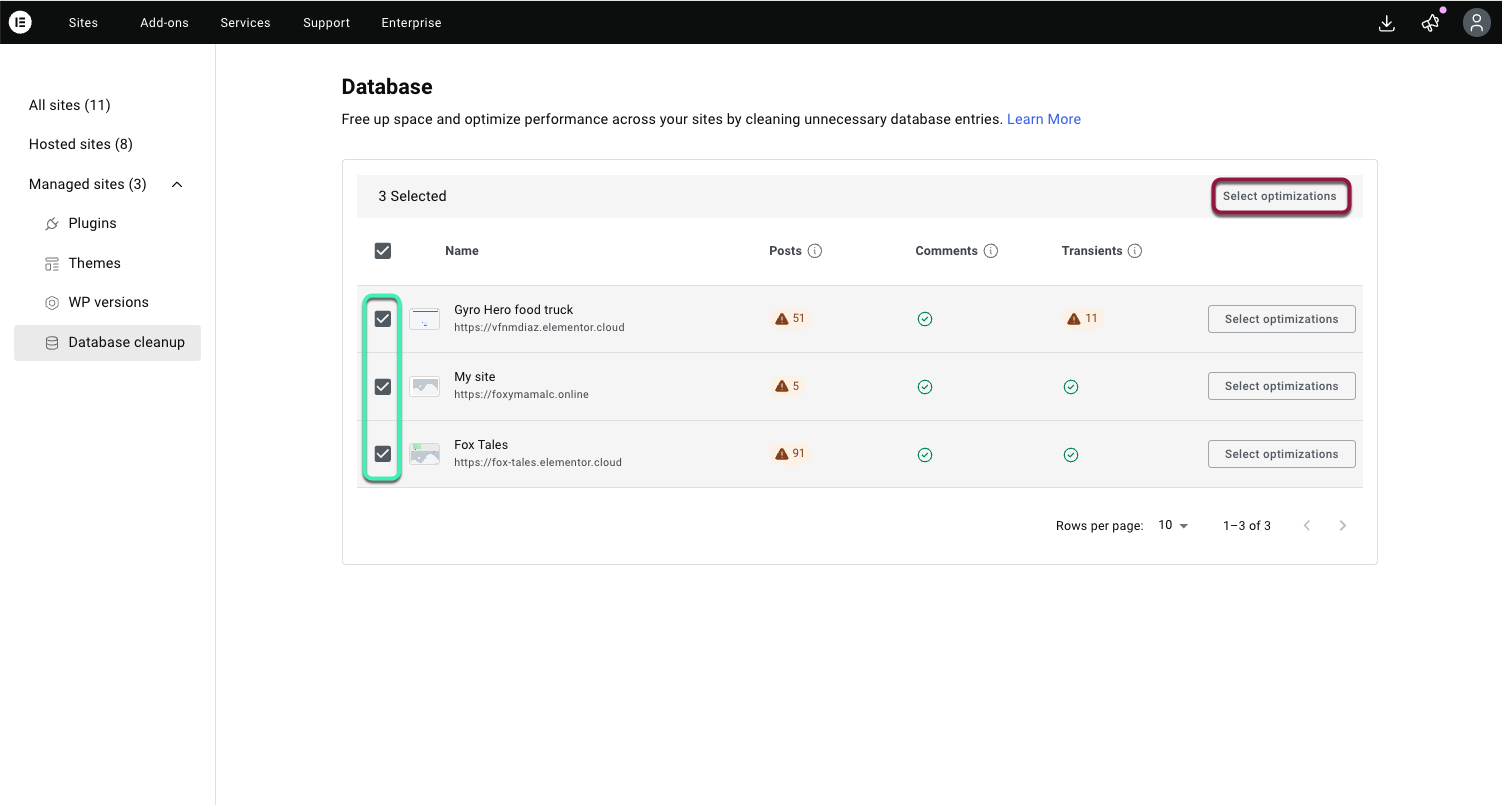
- A list of possible optimizations appears. Check the box next to the items to select it.
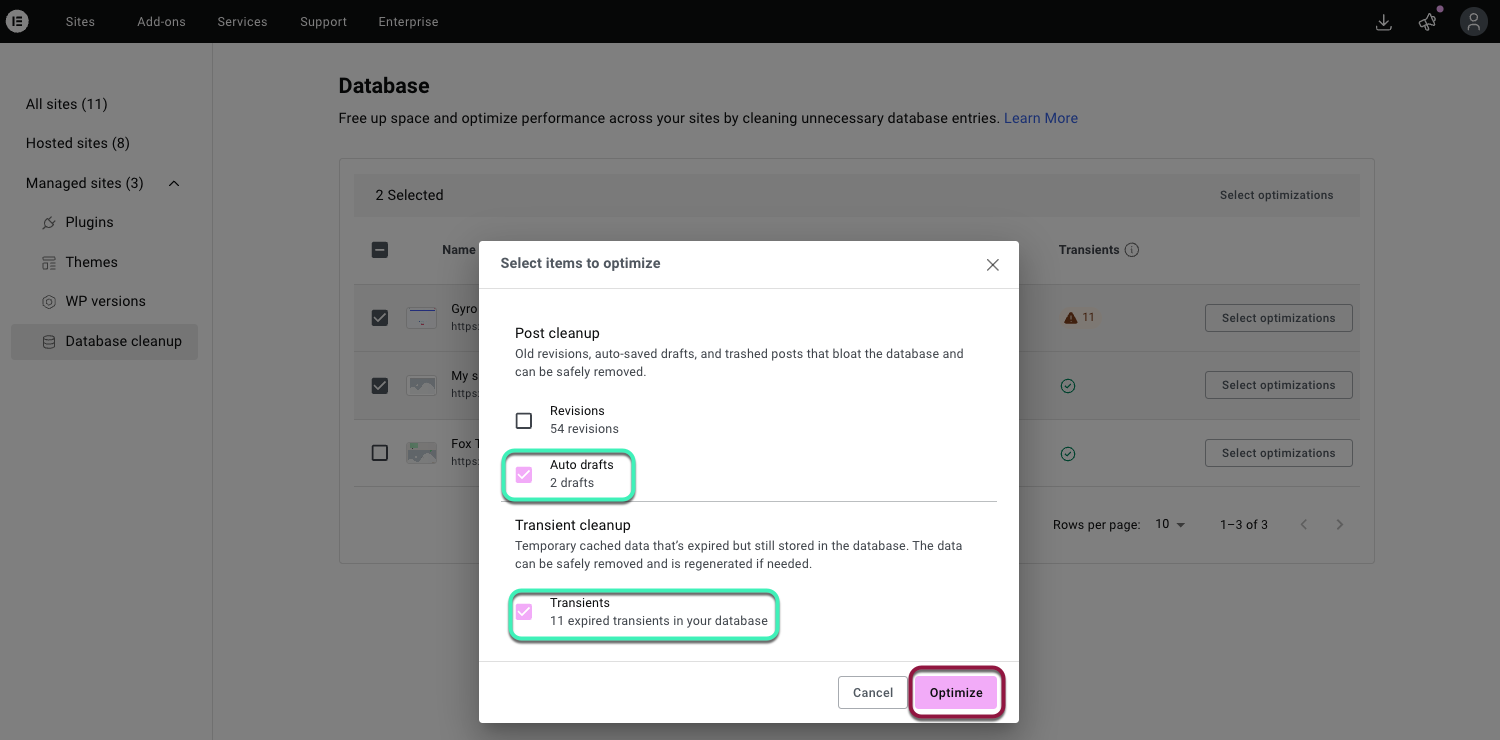
- Click Optimize.
What happens after?
- A status update shows whether the cleanup was successful or failed.
- Your database view will update to reflect the reduced number of unnecessary entries.
- You may also see a summary of how many items were removed.